
2027 Is Cybersecurity Hard? How the Right Program Can Help You Succeed

Co-Founder and Chief Data Scientist
With a projected job growth rate of 2.7% in 2025 alone, cybersecurity stands out as one of the most rewarding and future-proof fields. Not only is it a lucrative career, but it is also a relevant profession that supports every industry. However, getting a cybersecurity degree may pose some academic challenges, especially for students unfamiliar with the discipline.
Similar to other computing and information technology programs, a cybersecurity degree requires strong foundations in programming, networks, data management, and security protocols. Students must be able to grasp these technical areas and learn how to apply them in real-world scenarios.
To help you determine whether this path is for you, this guide will discuss the challenges of pursuing cybersecurity, strategies for overcoming them, and tips for choosing the right program.
Key Things to Know About the Difficulty of Cybersecurity Programs
- Cybersecurity programs often require strong problem-solving skills and logical thinking to tackle complex security issues.
- Students with limited or no background in computer science, IT, or STEM can still succeed in cybersecurity programs by applying effective study strategies and maintaining consistent discipline.
- Information security analysts, one of the most common jobs in the field, earn $128,000 or more annually, highlighting the strong return on investment of a cybersecurity degree.
- Is cybersecurity hard to learn? Difficulty Level
- Why is cybersecurity important? Why is cybersecurity important?
- What is the best degree for a career in cybersecurity? Degree Options
- Can a beginner do cybersecurity? Cybersecurity for Beginners
- How can students choose the right cybersecurity program? Choosing a Program
- What skills do you need to succeed in cybersecurity? Core Skills
- What certifications are most important in cybersecurity? Certifications
- What are the best study tips for cybersecurity students? Study Tips
- What careers can you get in cybersecurity? Careers
- Are affordable cybersecurity degree programs available? Are affordable cybersecurity degree programs available?
- Are cybersecurity jobs in high demand? Outlook
Is cybersecurity hard to learn?
The difficulty of studying cybersecurity is subjective and depends largely on a student’s background, strengths, and learning style. Some may find it approachable, while others may face challenges. For instance, high school students with strong STEM foundations may be more comfortable studying programming, software development, and algorithms.
In comparison, non-STEM students or learners who have struggled with higher-level mathematics may find these topics more demanding. However, this does not mean that they are destined to fail, nor does having a strong STEM background guarantee success. Instead, it means that learners progress differently, and some may require additional resources and support to succeed in technical areas.
Notably, cybersecurity is not all technical. Many degree programs incorporate courses in critical thinking, ethics, communication, data and risk management, and even criminal justice or psychology. These are equally important in preparing professionals who can analyze risks and communicate effectively.
Overall, cybersecurity can be challenging, but with the right approach and determination, it can become an accessible field for anyone. For those curious about how to start a career in tech, cybersecurity offers a strong entry point—combining analytical skills, digital safety awareness, and problem-solving in one of the most in-demand fields today. With consistent learning and hands-on experience, even beginners can build the foundation needed to thrive in this evolving industry.
Why is cybersecurity important?
Cybersecurity concerns all industries, not just technology or business. According to CompTIA, the field safeguards digital assets while also protecting data privacy, ensuring regulatory compliance, and supporting daily operations.
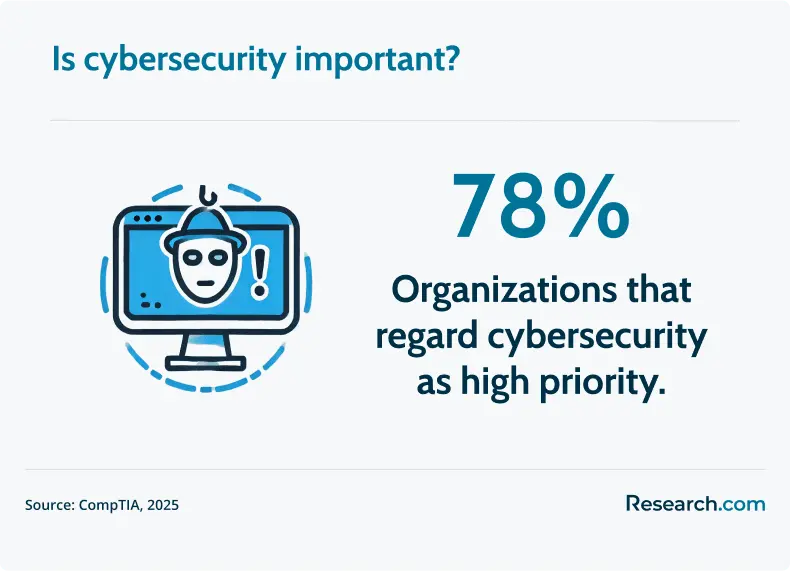
This means security professionals do not just defend against hackers. They also uphold trust between organizations and their clients. Because of its broad impact, about 78% of organizations regard cybersecurity as high priority.
Without cyber protection, the consequences can be devastating. Security breaches can cost companies more than $1 million in lost revenue, regulatory fines, and recovery expenses (Fortinet, 2024). Beyond the financial impact, breaches often lead to loss of sensitive data, reputational damage, and long-term customer distrust.
The importance of cybersecurity also extends to early awareness. Building strong digital habits before college ensures students understand how to protect themselves and others online. To address this, Cyber.org developed Cybersecurity Learning Standards for K–12 schools. This equips students, teachers, and parents with foundational knowledge in computing systems, digital citizenship, and security basics.
Early exposure helps future professionals enter higher education and the workforce better prepared to take on advanced technical training. It also builds a culture of security awareness that benefits society as a whole. In this way, cybersecurity is not just a career path but a crucial skill set in today’s digital world.
For learners exploring pathways into tech, pursuing a master's degree computer science for non CS majors can be an excellent step toward specializing in cybersecurity, as it offers the technical foundation and problem-solving framework needed to thrive in this vital field.
What is the best degree for a career in cybersecurity?
Understanding the different types of cybersecurity degrees can help you determine the skills and career opportunities that align with your goals and timeline. Each covers varying depths of knowledge, from introductory principles to advanced research and leadership skills. The following are the most common options:
- Associate Degree: This initial degree provides introductory knowledge in networking, systems security, and IT fundamentals. Graduates are typically prepared for entry-level jobs, like IT support specialists or cybersecurity technicians.
- Bachelor’s Degree: A bachelor’s offers a much broader foundation to the field and is the most common entry point into the job market. Graduates often qualify for roles like security analysts, systems administrators, or penetration testers.
- Master’s Degree: Master’s programs help students develop technical and strategic skills that prepare them for mid-level to senior roles like security architects, cybersecurity managers, or consultants. This degree is ideal for professionals seeking career advancement or specialization.
- MBA in Cybersecurity: This is a business management degree with specialized training in information security where students learn how to lead security teams, align cyber strategies with organizational goals, and manage risks at an executive level. This is ideal for those aiming for leadership roles.
- Doctorate: A doctorate is designed for professionals aiming for research, academic, or policy-making careers in cybersecurity. Coursework and research emphasize innovation, critical analysis, and high-level leadership in the field.
- Boot Camps: Short-term intensive courses, such as a fast track software engineering bootcamp online, are not degree programs, but they provide hands-on training in cybersecurity and related IT fields. They are designed for rapid skill development, making them ideal for career changers or professionals seeking practical expertise.
With 56% of professionals planning to pursue workforce training to close skill gaps (CompTIA, 2025), selecting a degree that builds strong foundations is essential. From there, ongoing education will ensure you remain adaptable in an evolving field.
Can a beginner do cybersecurity?
A beginner can take on cybersecurity roles—with the proper training and guidance. Naturally, earning a degree in cybersecurity is the standard since it equips students and career changers with essential knowledge and practical skills, even for those without prior programming experience.
However, there are now more accessible pathways for newcomers to build competence. For example, many opt for boot camps and often pursue professional or industry credentials, such as the shortest online ethical hacking dual certification, to cement their credibility and improve employability.
Several universities also offer master’s bridge programs, which include basic computer science, algorithms, programming, and other introductory courses before moving on to the more advanced cybersecurity curricula. Others provide separate short courses for essential cybersecurity topics, which can then be used as stepping stones to formal degrees.
The growing demand for cybersecurity professionals has also shifted how organizations approach talent development. To address workforce shortages, companies are adopting a skills-first approach. According to the World Economic Forum (2025), 23% of organizations now recruit candidates without traditional cybersecurity degrees or credentials, while 76% focus on upskilling existing employees.
This evolution creates more opportunities for beginners to enter the field. These options can help learners build a foundation that prepares them for entry-level roles while gaining valuable certifications.
This chart reveals how companies are coping with the cyber skills gap.
How can students choose the right cybersecurity program?
With so many cybersecurity degree types, certifications, and training paths available, students need to focus on programs that fit their learning styles, budget, and long-term professional aspirations. Below are key factors to consider when evaluating different options:
- Student Services: Access to academic advising can significantly improve student success. Joining student tutoring groups in math or algebra can also be helpful to students struggling to build confidence in these areas.
- Hands-On Learning Opportunities: Cybersecurity is highly practical, and labs, simulations, and capstone projects strengthen technical skills. Access to internships, co-ops, or industry partnerships provides valuable workplace exposure.
- Career Services and Networking: Look for programs that feature resume workshops, interview preparation, and internship placement. Strong networks can open doors to job opportunities after graduation.
- Accreditation and Reputation: Accreditation ensures a program meets recognized academic and industry standards. A program’s reputation also signals the quality of its curriculum and faculty.
- Program Flexibility: Consider online, hybrid, part-time, or accelerated formats, which make cybersecurity education more accessible.
- Cost and Financial Aid: Assess the program’s scholarships and other financial aid options to offset educational costs. Working students should also consider employer tuition reimbursement programs.
By carefully weighing these factors, students can identify a program that matches their skills, career goals, and financial situation. A thoughtful choice not only builds a strong academic foundation but also positions them for long-term success in the cybersecurity workforce.
Likewise, learners interested in fields that blend technology with information management—such as library and data systems—might explore MLIS online ALA accredited programs, which uphold high academic and professional standards similar to those found in quality cybersecurity degrees.
What skills do you need to succeed in cybersecurity?
Success in cybersecurity requires a combination of technical expertise and transferable skills that prepare professionals to adapt in a constantly changing field. Employers are increasingly focused on finding candidates who can solve problems, analyze complex data, and communicate clearly.
- Analytical Skills: Cybersecurity professionals must evaluate data and identify patterns that indicate vulnerabilities or threats. With 36% of organizations noting a need for better data analysis skills, this area is essential for addressing modern challenges.
- Communication: Clear communication is necessary when explaining technical issues to non-technical colleagues or stakeholders. Cyber professionals often prepare reports, present findings, or guide teams through incidents.
- Problem-Solving: Every cyber incident demands quick thinking and resourcefulness, so professionals must devise creative solutions to prevent, detect, and resolve attacks. This aligns with industry concerns about strengthening knowledge of the threat landscape, cited as a 37% skills gap.
- Attention to Detail: Small oversights can create serious vulnerabilities. Cybersecurity requires meticulous review of systems, logs, and processes to catch issues before they escalate.
- Creativity: Hackers constantly innovate, which means defenders must think just as inventively. Creativity fuels new strategies for securing systems, designing countermeasures, and anticipating threats.
- Teamwork and Collaboration: Cybersecurity is rarely an individual effort. Professionals often work within cross-disciplinary teams to secure systems and respond to threats.
By strengthening these skills, students and professionals alike can position themselves for success in cybersecurity careers. For those who want to take their expertise even further and integrate advanced analytics into cybersecurity strategy, pursuing an online doctorate in data science degree can provide the research-driven foundation needed to lead innovation in both data protection and intelligent threat analysis.
This chart displays the skills that need improvement among cyber professionals.
What certifications are most important in cybersecurity?
Certifications play a vital role in helping cybersecurity professionals validate their skills and stand out in a competitive job market. Common options include the following:
- CompTIA Security+: Fast-track CompTIA Security+ online training programs that lead to this entry-level certification verifies fundamental cybersecurity knowledge. It is widely regarded as a starting point for beginners who want to establish credibility.
- Certified Information Systems Security Professional: Offered by the ISC2, this advanced certification is for professionals aiming for leadership or senior-level positions. CISSP holders often qualify for higher salaries and management roles.
- Certified Ethical Hacker: A CEH credential demonstrates the ability to think like a hacker in order to identify vulnerabilities before malicious actors do. Offered by the EC-Council, it teaches hands-on penetration testing and real-world security assessment techniques.
- Certified Information Security Manager: This ISACA credential targets professionals looking for management or policy-focused roles. The CISM certification focuses on governance, compliance, and aligning cybersecurity with organizational goals.
- Certified Cloud Security Professional: Also from the ISC2, the CCSP credential validates expertise in cloud architecture and data protection. It demonstrates an ability to manage security in complex cloud environments.
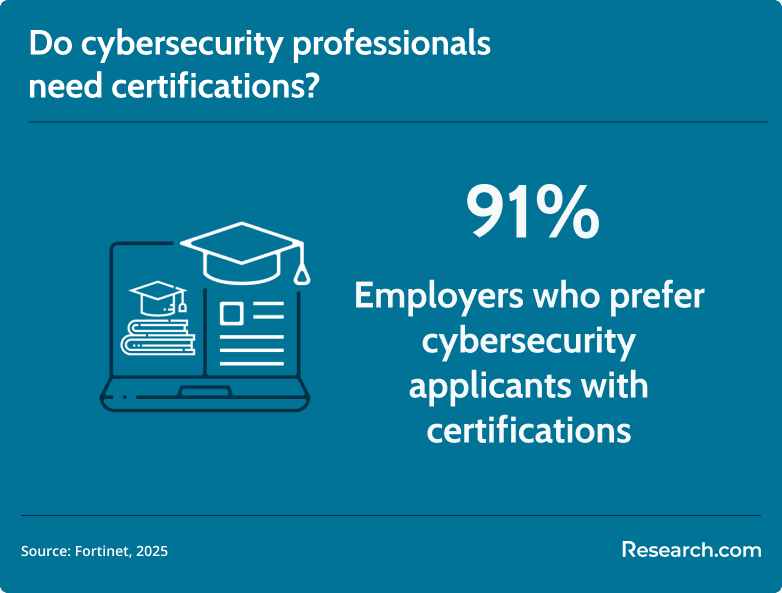
According to Fortinet, 91% of employers prefer hiring candidates with certifications, and 89% are even willing to pay for employees to earn one. This demand reflects the growing need for expertise, especially since IT leaders point to skill gaps and training shortages as leading causes of security breaches (Fortinet, 2024).
Certifications are not just badges but career accelerators that demonstrate both skill and commitment to the field, and earning the right one can lead to better opportunities that help address the industry’s ongoing shortage.
What are the best study tips for cybersecurity students?
Students often face steep learning curves when studying cybersecurity, especially if they come from non-technical backgrounds. Implementing practical strategies can help ease this transition and provide the confidence needed to thrive in courses and certifications like fast-track online CompTIA CySa+ training.
- Connect With an Academic Advisor: Advisors can guide you in selecting the right courses and balancing workloads. Regular check-ins with an advisor also help you stay on track academically.
- Join Tutoring Groups: Tutoring sessions in math, programming, or networking can fill knowledge gaps. Group learning and peer support often boost confidence and create a sense of community, making you feel less alone in facing academic difficulties.
- Explore Free Online Resources: Apps, video tutorials, and practice platforms provide additional ways to learn. These tools can help reinforce classroom lessons and introduce real-world scenarios.
- Consider Professional Memberships: Joining associations like the National Cybersecurity Student Association gives access to workshops, certifications, and exclusive resources. Memberships also provide networking opportunities with industry professionals.
- Practice Regularly: Regular repetition through practice strengthens technical skills. It also builds problem-solving confidence in real-world scenarios.
- Look for Apprenticeship Programs or Internships: These provide valuable work and network experience while you are still in school. Here, you can seek a mentor or gain more real-world experience.
- Stay Updated on Industry Trends: Cybersecurity evolves quickly, making continuous learning essential. Reading reports, attending webinars, or following industry news helps you remain competitive.
By combining academic support with practical training, cybersecurity students can strengthen their learning experience and prepare for long-term success. A proactive approach ensures that even the most complex concepts feel manageable and achievable over time.
What careers can you get in cybersecurity?
A cybersecurity professional earns $127,730 annually, with salary ranges landing between $69,660 and $186,420 or more. Although this is the most common pathway, cybersecurity offers a wide range of career options.
- IT Support Specialists ($79,610): They provide technical assistance to users by troubleshooting hardware, software, and network issues. They ensure systems run smoothly, reducing downtime and improving efficiency across organizations.
- IT Auditors ($80,173): They evaluate an organization’s IT systems and processes. These professionals check for compliance with regulations and internal policies.
- Systems Administrators ($107,440): They manage and maintain an organization’s IT infrastructure. They also ensure systems are running efficiently and handle updates, user permissions, and troubleshooting.
- Cryptographers ($115,178): They create algorithms and encryption methods to protect sensitive data. Moreover, they ensure secure communication and storage across digital platforms.
- Security Consultants ($131,892): They advise organizations on security best practices. They also assess risks, design strategies, and recommend technologies.
- Ethical Hackers ($135,269): These professionals test systems by simulating real-world cyberattacks. They identify vulnerabilities before malicious hackers exploit them.
- Security Software Developers ($144,570): They design and build secure software applications. They also integrate encryption, authentication, and security protocols into code.
- Cloud Security Engineers ($157,379): They design and implement security measures to protect data, applications, and infrastructure within cloud environments. Their work involves managing compliance requirements and responding to incidents that could compromise cloud systems.
With career options ranging from hands-on technical work to advisory and investigative roles, cybersecurity offers pathways for nearly every interest and skill set. The demand for talent across these diverse positions continues to grow, making this one of the most dynamic career fields today.
This chart shows the average wages of cybersecurity jobs.
Are affordable cybersecurity degree programs available?
Cost-effective pathways in cybersecurity education exist for students seeking quality without excessive financial burden. Evaluating options such as tuition rates, financial aid, and scholarships is crucial for long-term return on investment. Many institutions now offer flexible online programs and part-time scheduling, reducing associated costs while delivering rigorous curricula. Prospective students are advised to compare program costs and benefits carefully; for instance, resources like cheapest online cyber security degree provide detailed analyses of affordable alternatives in the field.
Are cybersecurity jobs in high demand?
Cybersecurity is one of the fastest-growing career fields. According to the U.S. Bureau of Labor Statistics, employment for information security analysts is projected to grow 28.5% from 2024 to 2034. This creates about 16,000 new jobs annually, which is much faster than the average for all occupations.
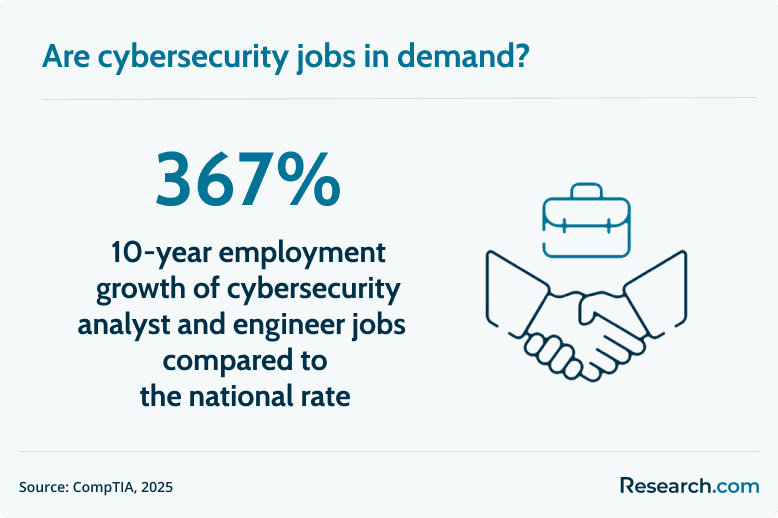
CompTIA also reports that cybersecurity analysts and engineers are the second fastest-growing tech jobs, just behind data scientists and analysts, with projected growth of 367% higher than the national rate for all occupations.
Several factors are driving this rapid demand. For one, businesses are investing heavily in digital transformation, moving data, operations, and customer services online. At the same time, advanced threats, such as ransomware, phishing, and AI-powered attacks, require stronger defenses. Regulatory compliance in healthcare, government, and finance also pushes organizations to expand their security teams.
While opportunities are expanding, challenges remain for both employers and workers. Companies face a shortage of qualified professionals, with skill gaps in many areas, especially AI integration. For new and current professionals, this means staying ahead requires ongoing training and sometimes exploring accelerated CyberOps training bootcamps online to quickly build or update in-demand expertise.
The job market for cybersecurity shows no signs of slowing down, offering long-term stability and growth potential for aspiring professionals. As organizations continue to prioritize data protection and resilience, those entering the field will find abundant opportunities but must also be ready to continuously learn and adapt to new threats and technologies.
Here’s What Graduates Have to Say About the Difficulty of Cybersecurity Programs
- Kira: "When I started my cybersecurity degree, I struggled with the heavy programming requirements because I had little coding experience. The first semester was tough, and I spent extra hours in tutoring groups just to keep up. Over time, practice and supportive professors helped me turn my weakest skill into a strength. Now, I realize that that struggle made my career readiness even more rewarding."
- Lester: "I found the legal and ethical courses easier than the technical labs, and that worried me. At first, I doubted I could handle penetration testing or risk management projects. But with mentorship from my professors, I improved drastically. Now, I specialize in threat detection, and overcoming those doubts gave me confidence I didn’t think I had."
- Avery: "Math and networking concepts were initially overwhelming for me as a cybersecurity student. I failed many quizzes and nearly thought about quitting. With encouragement from my peers and structured study habits, I slowly built my confidence. Looking back, the challenge was worth every moment."
Key Findings
- 78% of organizations regard cybersecurity a high priority.
- 56% of professionals plan to pursue workforce training to close skill gaps.
- 23% of organizations now recruit candidates without traditional cybersecurity degrees or credentials, while 76% focus on upskilling existing employees.
- 91% of employers prefer hiring candidates with certifications, and 89% are even willing to pay for employees to earn one.
- The employment for information security analysts is projected to grow 28.5% from 2024 to 2034, creating 16,000 new jobs annually.
References:
- CompTIA. (2025a). CompTIA State of Cybersecurity 2025. https://www.comptia.org/en/resources/research/state-of-cybersecurity-2025
- CompTIA. (2025b). State of the Tech Workforce 2025. https://www.comptia.org/en/resources/research/state-of-the-tech-workforce-2025
- Fortinet. (2024). 2024 Cybersecurity Skills Gap Global Research Report. https://www.fortinet.com/content/dam/fortinet/assets/reports/2024-cybersecurity-skills-gap-report.pdf
- PayScale. (2025, June 8). Average Information Technology (IT) Auditor Salary. Retrieved September 17, 2025, from https://www.payscale.com/research/US/Job=Information_Technology_(IT)_Auditor/Salary
- U.S. Bureau of Labor Statistics. (2024). Information security analysts [Interactive data]. Occupational Employment and Wage Statistics (OEWS) Profiles. Retrieved September 17, 2025, from https://data.bls.gov/oesprofile
- U.S. Bureau of Labor Statistics. (2025, August 28). Occupational projections, 2024–2034, and worker characteristics, 2024 (Employment in thousands). Employment Projections. https://www.bls.gov/emp/tables/occupational-projections-and-characteristics.htm
- ZipRecruiter. (2025, September 9). Ethical Hacker Salary. Retrieved September 17, 2025, from https://www.ziprecruiter.com/Salaries/Ethical-Hacker-Salary
Other Things You Should Know About the Difficulty of Cybersecurity Programs
Becoming proficient in cybersecurity in 2027 typically takes anywhere from six months to two years, depending on individual commitment and the selected program. Accelerated bootcamps may offer a faster pace, while degree programs provide a more comprehensive education over several years.
In 2027, a right program can simplify cybersecurity by offering tailored coursework, hands-on labs, and mentorship to enhance skills in threat analysis, network security, and risk management. Access to up-to-date tools and real-world simulations prepares students for evolving challenges, paving the way for a successful career.
A future-focused program in 2027 streamlines your learning journey by integrating real-world scenarios and adaptive technologies. This practical approach equips students with hands-on experience and the ability to tackle evolving cybersecurity challenges, making success more attainable.


