
2027 Best Online ALA-Accredited MLIS Programs

Co-Founder and Chief Data Scientist
With over 120,000 professionals holding a graduate-level degree in library and information science, the standard for career entry is set. But this makes your next choice critical. You're not just seeking technical skills, like those in a database management program; you're pursuing a degree centered on ethical information access. How do you find an online program that delivers on this promise and is worth your investment? The fear of choosing a degree employers won't respect is a major, valid concern.
That's why our career planning experts, with over a decade of experience, built this guide. We'll show you how to identify the best ALA-accredited online MLIS programs and make a strategic choice for your future.
What are the benefits of getting an online ALA-accredited MLIS program?
- Earning this credential is the definitive step to securing a professional-level career, moving you into leadership roles in libraries, archives, and corporate information centers.
- Your earning potential increases significantly, with graduates in top-paying sectors like the federal government earning an average salary of $102,320.
- The flexibility of an online ALA-accredited MLIS program means you can earn this essential credential and advance your career without having to pause your professional or personal life.
What can I expect from an online ALA-accredited MLIS program?
With over 120,000 professionals in this field holding a graduate degree, this is the established standard for the profession, and the programs reflect that.
You can expect a rigorous, graduate-level curriculum that is identical in quality and challenge to its on-campus equivalent. A common misconception is that "online" means easier or entirely self-paced, but that isn't the case for these programs. They are structured, often cohort-based, with regular deadlines and significant interaction with both faculty and fellow students using modern digital collaboration tools.
While a degree in database management focuses on the technical side of data, an MLIS program grounds you in the ethics and theory of information access. You're not just learning a technical skill; you're preparing for a career centered on community impact and the responsible management of knowledge.
Where can I work with an online ALA-accredited MLIS?
An online ALA-accredited MLIS prepares you for influential roles in any organization that values the strategic management of information. While high-paying opportunities exist in specialized sectors like federal agencies and scientific research, the primary employment areas provide a stable foundation for a long-term career.
According to 2024 industry data, the largest employers of librarians and information specialists are:
- Local Government: Employs 32% of graduates, primarily in public library systems that serve as vital community hubs for learning and access to information.
- Elementary and Secondary Schools: Employs 31% of graduates in essential roles as school librarians and media specialists who guide student research and digital literacy.
- Colleges and Universities: Employs a combined 18% of graduates as academic librarians and subject matter experts who support faculty research and student learning.
- Web Portals and Information Services: Employs 5% of graduates in a growing sector that includes roles in corporate knowledge management, digital asset management, and competitive intelligence for businesses and tech companies.
How much can I make with an online ALA-accredited MLIS?
Your salary will depend on factors like specialization, location, and, most importantly, the industry you choose. This credential is the key to accessing specialized, high-paying sectors that value expert information management.
As of 2024, several industries offer highly competitive average salaries for professionals with these skills:
- Federal, State, and Local Government: $102,320 per year
- Scientific Research and Development Services: $93,100 per year
- Legal Services: $90,840 per year
- Media Streaming and Social Networks: $84,400 per year
- Management of Companies and Enterprises: $81,260 per year
- List of the Best Online ALA-Accredited MLIS Programs for 2027 List of Programs
- How long does it take to complete an online ALA-accredited MLIS program? Completion Time
- How does an online ALA-accredited MLIS program compare to an on-campus program? How does an online ALA-accredited MLIS program compare to an on-campus program?
- What is the average cost of an online ALA-accredited MLIS program? Program Cost
- What are the financial aid options for students enrolling in an online ALA-accredited MLIS program? Financial Aid
- What are the prerequisites for enrolling in an online ALA-accredited MLIS program? What are the prerequisites for enrolling in an online ALA-accredited MLIS program?
- What courses are typically in an online ALA-accredited MLIS program? What courses are typically in an online ALA-accredited MLIS program?
- What types of specializations are available in an online ALA-accredited MLIS program? Specializations
- How to Choose the Best Online ALA-Accredited MLIS Program How to Choose the Best Online ALA-Accredited MLIS Program
- What career paths are available for graduates of an online ALA-accredited MLIS program? Career Paths
- What is the job market for graduates of an online ALA-accredited MLIS program? Job Market
- Should I Combine My Online MLIS with EdD online programs for Leadership Roles? Should I Combine My Online MLIS with EdD online programs for Leadership Roles?
Best Online ALA-Accredited MLIS Programs for 2027: What to Know Before You Apply
An online ALA-accredited MLIS program can open the door to professional librarian, archivist, school media, digital curation, and information management roles without requiring you to relocate or pause your career. The important decision is not simply whether to study online. It is whether the program is accredited, affordable for your situation, aligned with your target role, and flexible enough for the way you actually live and work.
This guide is for prospective graduate students comparing online Master of Library and Information Science programs, especially those who need American Library Association recognition for professional credibility. You will learn which programs stand out, how long they take, what they cost, how online study compares with campus-based study, what admissions committees usually expect, and how to evaluate career outcomes before committing to a degree.
Quick Answer: Is an Online ALA-Accredited MLIS Worth Considering?
Yes, an online ALA-accredited MLIS is worth considering if you want professional librarian or information science roles and need a credential recognized by employers in the field. The key is ALA accreditation. Delivery format matters less than whether the program meets the American Library Association’s standards, offers relevant specializations, provides practical experience, and fits your budget and schedule.
Most full-time students complete these programs in about two years, while part-time students commonly take three to four years. Tuition varies widely, with total degree costs typically ranging from $17,000 to $67,000. Graduates may pursue work in public libraries, academic libraries, school media centers, archives, museums, corporate knowledge management, government agencies, and digital information roles.
How We Rank Online ALA-Accredited MLIS Programs
Because a graduate degree is a major financial and professional commitment, our ranking process is designed to help students compare programs using transparent, verifiable information. Research.com uses established education data sources, including the IPEDS database, Peterson's database, the College Scorecard database, and The National Center for Education Statistics.
These sources help evaluate online ALA-accredited MLIS programs using factors that matter to students, such as institutional data, program characteristics, affordability, and academic quality indicators. For a fuller explanation of how Research.com evaluates schools and programs, visit our methodology page.
Best Online ALA-Accredited MLIS Programs
The programs below are designed for students seeking a recognized graduate credential in library and information science. Use the list as a starting point, then compare each program’s accreditation status, curriculum, cost per credit, practicum expectations, certification pathways, and fit with your career goals.
| School and Program | Best Fit | Program Length | Credits | Cost per Credit | Accreditation |
| Syracuse University - Library and Information Science Master’s Degree: School Media Concentration | Students interested in school media, youth services, digital curation, and New York certification pathways | 18 months | 36 | $1,945 | American Library Association (ALA) |
| University of Southern Mississippi - Library and Information Science (MLIS) | Students who want live online classes and a lower listed cost per credit | 1-3 years | 40 | $578.12 | American Library Association (ALA) |
| University of Alabama - Master of Library and Information Studies (MLIS) | Working professionals who want a cohort model and options in archives or school library media | Less than 2 years | 36 | $480 | American Library Association (ALA) |
| University of Kentucky - Master's Degree in Library & Information Science (MSLS) | Students interested in health information, youth services, and knowledge-organization systems | 2 years | 36 | $790 | American Library Association (ALA) |
| University of Maryland - Master of Library and Information Science (MLIS) | Students seeking multiple focus areas and access to opportunities connected to the Washington D.C. region | 2.22 years | 36 | $878 (in-state); $1,878 (out-of-state) | American Library Association (ALA) |
| Drexel University - Master of Science in Information: Library & Information Science | Students looking for a technology-centered curriculum on a quarter system | 1 year | 45 quarter credits | $1,000 per quarter credit | American Library Association (ALA) |
| University of Washington - Master of Library and Information Science | Part-time students who want experiential learning, research options, and a social justice emphasis | 3 years (Part-time) | 63 quarter credits | $961 per quarter credit | American Library Association (ALA) |
| Louisiana State University - Master of Library & Information Science | Working adults who need a fully online and 100% asynchronous format | 2 years | 36 | $560 | American Library Association (ALA) |
| Simmons University - Master of Library and Information Science (MS) | Students who want a customizable curriculum, archives options, and internship access | 2 years | 36 | $1,415 | American Library Association (ALA) |
| University of Missouri - Mizzou Online - Master of Library and Information Science | Students who want online coursework with a required practicum and possible dual-degree study | 2-4 years | 39 | $589.90 | American Library Association (ALA) |
1. Syracuse University - Library and Information Science Master’s Degree: School Media Concentration
The Syracuse University program is built around information justice, equity, human-centered design, and technology-rich library practice. Its School Media concentration is especially relevant for students who want to become school library media specialists, and the program offers a pathway connected to New York Department of Education certification.
- Program Length: 18 months
- Specializations: School Media; Archives and Special Collections; Children and Youth Services; and Digital Curation
- Required Credits to Graduate: 36
- Cost per Credit: $1,945
- Accreditation: American Library Association (ALA)
2. University of Southern Mississippi - Library and Information Science (MLIS)
The University of Southern Mississippi offers an online MLIS with live, synchronous classes, which can be a strong fit for students who want scheduled interaction with faculty and classmates. The curriculum covers areas such as library management and web design while maintaining a community-oriented learning environment.
- Program Length: 1-3 years
- Required Credits to Graduate: 40
- Cost per Credit: $578.12
- Accreditation: American Library Association (ALA)
3. University of Alabama - Master of Library and Information Studies (MLIS)
The University of Alabama uses a cohort-based format that can help students build professional relationships while progressing through the program. Its curriculum emphasizes socially responsible information management and is structured for professionals who need a graduate degree that supports career mobility.
- Program Length: Less than 2 years
- Concentrations: Archival Studies; and School Library Media
- Required Credits to Graduate: 36
- Cost per Credit: $480
- Accreditation: American Library Association (ALA)
4. University of Kentucky - Master's Degree in Library & Information Science (MSLS)
The University of Kentucky frames its MSLS around the relationship between people, technology, and information. Students can build skills in knowledge organization and information system design while exploring strengths such as Health Information and Youth Services.
- Program Length: 2 years
- Required Credits to Graduate: 36
- Cost per Credit: $790
- Accreditation: American Library Association (ALA)
5. University of Maryland - Master of Library and Information Science (MLIS)
The University of Maryland offers a flexible MLIS with focus areas connected to digital curation, ethics, analytics, youth learning, legal informatics, and school library certification. Its location near Washington D.C. may be valuable for students interested in government, policy, research, or major information agencies.
- Program Length: 2.22 years
- Focus Areas: Archives and Digital Curation; Diversity and Inclusion; Youth Experience; Intelligence and Analytics; Legal Informatics; and School Library Certification
- Required Credits to Graduate: 36
- Cost per Credit: $878 (in-state); $1,878 (out-of-state)
- Accreditation: American Library Association (ALA)
6. Drexel University - Master of Science in Information: Library & Information Science
Drexel University offers a technology-forward program delivered on a quarter system. Students interested in digital information management may find the embedded certificates useful, especially if they want to connect library science with metadata, curation, digital technologies, or user services.
- Program Length: 1 year
- Embedded Certificates: Archives and Curation; Metadata and Digital Technologies; and Users and Library Services
- Required Quarter Credits to Graduate: 45
- Cost per Quarter Credit: $1,000
- Accreditation: American Library Association (ALA)
7. University of Washington - Master of Library and Information Science
The University of Washington program emphasizes diversity, inclusion, social justice, fieldwork, and research. Its part-time structure may appeal to students who want to remain employed while preparing for information-centered roles in libraries, communities, and other organizations.
- Program Length: 3 years (Part-time)
- Required Quarter Credits to Graduate: 63
- Cost per Quarter Credit: $961
- Accreditation: American Library Association (ALA)
8. Louisiana State University - Master of Library & Information Science
The Louisiana State University MLIS is fully online and 100% asynchronous, making it a practical option for students who need maximum scheduling flexibility. As the state’s only ALA-accredited option, it prepares students for areas such as librarianship, digital content management, and archives.
- Program Length: 2 years
- Required Credits to Graduate: 36
- Cost per Credit: $560
- Accreditation: American Library Association (ALA)
9. Simmons University - Master of Library and Information Science (MS)
Simmons University offers a flexible MS in Library and Information Science with a “Design-Your-Own” option and concentrations across archives, cultural heritage, information technology, librarianship, and school library teaching. Its internship and work opportunities may be useful for students who want applied experience while completing the degree.
- Program Length: 2 years
- Concentrations: Archives Management; Cultural Heritage Informatics; Information Science and Technology; Libraries and Librarianship; and School Library Teacher
- Required Credits to Graduate: 36
- Cost per Credit: $1,415
- Accreditation: American Library Association (ALA)
10. University of Missouri - Mizzou Online - Master of Library and Information Science
The University of Missouri combines online coursework with a required practicum, giving students a structured way to gain field experience. As part of the international iSchools coalition, the program may appeal to students interested in research, leadership, and the option to pursue a dual degree with a Master of Public Affairs.
- Program Length: 2-4 years
- Required Credits to Graduate: 39
- Cost per Credit: $589.90
- Accreditation: American Library Association (ALA)
How Long Does It Take to Complete an Online ALA-Accredited MLIS Program?
Most full-time students finish an online ALA-accredited MLIS in about two years. Students who study part time, which is common among working adults, often complete the degree in three to four years.
Online does not always mean self-paced. Many programs follow a semester or quarter calendar, with weekly assignments, discussion expectations, group projects, exams, practicum deadlines, or live sessions. The flexibility usually comes from where and when you complete coursework, not from the absence of structure.
| Study Pace | Typical Completion Time | Best For | Trade-Off |
| Full-time | About two years | Students who can dedicate substantial weekly time to graduate study | Faster completion but heavier workload |
| Accelerated | As short as 1 year in some listed programs | Students with strong time management and fewer outside obligations | Intense schedule with limited room for delays |
| Part-time | Three to four years | Working professionals, caregivers, and students balancing multiple commitments | Longer timeline but more manageable weekly workload |
How to Choose the Right Pace
The best pace is the one you can sustain. A part-time MLIS can be a smart choice if you want to keep earning income, maintain benefits, and apply coursework directly to a current library, education, nonprofit, government, or information role. A full-time path may make sense if you want to enter the field quickly and have the financial and personal capacity to prioritize school.
Before enrolling, estimate your weekly study time, review whether courses are synchronous or asynchronous, and ask how often group work is required. Burnout is a real risk in graduate school, especially for students who underestimate the demands of reading-heavy, project-based online programs.
If your larger question is whether the degree is necessary at all, start with Research.com’s guide on whether you need a master’s to work in a library. Some entry-level library jobs may accept a bachelor’s degree, but many professional, academic, specialized, and leadership roles expect an MLIS or closely related graduate credential.
Online vs. On-Campus ALA-Accredited MLIS Programs
For most employers in library and information science, ALA accreditation is more important than whether the degree was earned online or on campus. An online program accredited by the American Library Association is held to the same professional standard as an accredited campus-based program.
The American Library Association (ALA) accreditation process evaluates programs against recognized expectations for library and information science education. This is why students should be far more cautious about unaccredited programs than about online delivery itself.
| Factor | Online ALA-Accredited MLIS | On-Campus ALA-Accredited MLIS |
| Employer recognition | Generally accepted when ALA-accredited | Generally accepted when ALA-accredited |
| Schedule | Often better for working adults and students outside commuting distance | May offer more fixed class times and campus routines |
| Networking | Requires intentional participation in online discussions, internships, conferences, and professional groups | May provide easier informal contact with classmates and faculty |
| Practical experience | May include local practica, internships, virtual projects, or field placements | May include campus libraries, local placements, and in-person labs |
| Main risk | Choosing a program for convenience without checking accreditation, practicum support, or state certification rules | Choosing a program based only on location or reputation without comparing cost and outcomes |
How Employers View Online MLIS Degrees
Online learning is now common in graduate education, and many information organizations rely on remote collaboration, digital collections, cloud-based systems, and virtual service models. Graduates of strong online programs can demonstrate skills in independent work, digital communication, remote project coordination, and technology-mediated user support.
The larger concern is not online study. The bigger mistake is enrolling in a program that is not ALA-accredited if your target employers expect that credential. Always verify accreditation directly before applying.
What Is the Average Cost of an Online ALA-Accredited MLIS Program?
Online ALA-accredited MLIS costs vary substantially. Based on the programs listed here, students should expect a broad tuition range, with total degree costs typically falling between $17,000 and $67,000. The final cost depends on the institution, public or private status, residency pricing, number of credits, fees, pace, and whether you qualify for aid or employer tuition support.
Online students may avoid some expenses associated with relocating, commuting, and studying on campus every week. However, the lowest tuition is not always the best value. A program with strong placement support, the right specialization, and practical field experience may provide better long-term fit than a cheaper program that does not align with your goals.
What to Include When Comparing Costs
- Tuition per credit: Compare the listed credit price and the number of credits required to graduate.
- Fees: Ask about technology fees, distance learning fees, graduation fees, practicum fees, and course materials.
- Residency pricing: Some public universities charge different rates for in-state and out-of-state students.
- Time to completion: A longer timeline can affect living costs, loan interest, and opportunity cost.
- Practicum requirements: Fieldwork can be valuable, but it may require schedule flexibility or local placement coordination.
- Career relevance: The right specialization can matter more than the lowest sticker price if it helps you qualify for your intended role.
Understanding Return on Investment
ROI depends on your starting salary, target career path, location, debt level, and willingness to pursue specialized roles. The average salary for a librarian is around $65,000, while top earners in specialized corporate or federal roles can make $94,000 or more. These figures should be treated as context, not a guarantee. Your outcome will depend on experience, employer type, market demand, and the skills you build during the program.
The chart below provides additional salary context for students evaluating the financial side of an MLIS decision.
Financial Aid Options for Online ALA-Accredited MLIS Students
Graduate school funding usually requires combining multiple sources. Do not assume online students are automatically excluded from aid. Many online graduate students use federal aid, institutional scholarships, external awards, employer reimbursement, payment plans, or a combination of options.
Federal Financial Aid
U.S. citizens and eligible non-citizens should begin by completing the Free Application for Federal Student Aid (FAFSA). The FAFSA is used to determine eligibility for federal aid programs, including direct loans and other forms of assistance that may apply to graduate students.
Scholarships and Grants
Look for awards through universities, professional associations, local library organizations, state library associations, and identity- or specialty-based scholarship programs. MLIS students pursuing school librarianship, archives, youth services, diversity and inclusion work, or digital curation may find scholarships tied to specific professional goals.
Employer Tuition Assistance
If you already work in a library, school, university, government office, nonprofit, law firm, hospital, or technology-adjacent role, ask your HR department about tuition assistance or reimbursement. Some employers support degrees that improve information management, research, compliance, user training, data governance, or educational services.
Questions to Ask Before Borrowing
- How much will I need to borrow after scholarships, grants, and employer aid?
- Will I study full time or keep working while enrolled?
- Does the program have placement data for my intended career path?
- Can I reduce costs through transfer credit, assistantships, or a slower pace?
- What monthly payment could I realistically manage after graduation?
Benefits and Total Compensation
Salary is only one part of career value. Many library and information roles also include benefits such as health coverage, retirement plans, paid leave, and professional development support. These benefits can materially affect long-term financial stability, so consider total compensation when comparing the cost of the degree with possible career outcomes.
Prerequisites for Online ALA-Accredited MLIS Programs
Most online ALA-accredited MLIS programs use holistic admissions. That means the committee may consider your academic record, professional background, writing ability, recommendations, career goals, and readiness for graduate-level work rather than relying on one metric alone.
| Application Requirement | What It Usually Means | How to Strengthen Your Application |
| Bachelor's degree | You generally need a bachelor’s degree from an accredited college or university. | Show how your academic background prepared you for research, service, technology, teaching, archives, or information work. Students from liberal arts backgrounds may also explore related pathways such as online humanities degrees. |
| Minimum GPA | Many programs look for a 3.0 or higher undergraduate GPA, although this may not always function as an absolute cutoff. | If your GPA is lower, use your statement and recommendations to demonstrate growth, work experience, and readiness. |
| Letters of recommendation | Programs commonly request two or three letters. | Choose recommenders who can speak specifically about your writing, reliability, analytical ability, leadership, service orientation, or professional judgment. |
| Statement of purpose | This essay explains why you want the MLIS and how it fits your career plan. | Be specific. Name the population, setting, specialization, or information challenge you want to work with. |
For applicants with substantial work experience, the statement of purpose can be the strongest part of the application. Use it to connect your past responsibilities with your future goals. If you are prioritizing programs that do not require standardized testing, review Research.com’s guide to the best online master's in library science no GRE options.
Common Courses in an Online ALA-Accredited MLIS Program
An MLIS curriculum usually combines foundational library science, information organization, user services, research, technology, ethics, and applied practice. Exact course names differ by school, but accredited programs generally prepare students to manage information resources, support users, evaluate systems, and make ethical decisions about access and preservation.
- Information Organization: Students learn how cataloging, classification, metadata, and controlled vocabularies make information findable and usable.
- User Services and Instruction: Coursework may cover reference interviews, community needs assessment, information literacy teaching, and service design.
- Research Methods: Students build skills for evaluating professional literature, using evidence, and applying data to library and information decisions.
- Database Management: Courses may introduce database design, digital collections, and structured information systems. Students who want deeper technical preparation can also compare options for a masters in database management online.
- Digital Preservation: This area focuses on maintaining long-term access to digital materials, including documents, audiovisual records, datasets, and born-digital archives.
Students aiming for systems librarianship, digital infrastructure, or technical services may also supplement an MLIS with technology credentials. For example, those who want networking knowledge can compare a top CompTIA Network plus certification online with other IT training options.
Online ALA-Accredited MLIS Specializations
A specialization helps turn a broad MLIS into a more targeted career credential. The right choice depends on the type of institution you want to work in, the communities you want to serve, and whether you prefer public-facing service, technical systems, preservation, education, data governance, or management.
| Specialization | What You Study | Possible Work Settings | Best For |
| Archival Studies | Records management, appraisal, preservation, arrangement, description, and access | Archives, museums, universities, government agencies, corporations | Students interested in primary sources, institutional memory, cultural heritage, and preservation |
| Digital Curation/Asset Management | Digital lifecycle management, metadata, preservation, repositories, access systems | Corporations, research organizations, universities, media organizations, government agencies | Students who want technology-centered information roles |
| School Librarianship | K-12 library services, media instruction, youth literacy, curriculum support, digital citizenship | Elementary, middle, and high schools | Students who want to work with children, teachers, and school communities |
| Information Science and Technology | Systems, databases, digital services, information architecture, and user experience | Libraries, companies, nonprofits, universities, information centers | Students who want to connect technology with information access and organization |
Archival Studies
Archival studies is a good fit if you want to preserve, organize, and provide access to historical records, institutional documents, audiovisual materials, or born-digital collections. Because modern archives often include sensitive digital holdings, students may also benefit from security awareness. A related option to explore is the best CompTIA CYSA+ online certification.
Digital Curation and Digital Asset Management
Digital curation focuses on managing digital materials from creation through storage, description, preservation, access, and reuse. This path can lead toward roles involving institutional repositories, research data, digital collections, content systems, and digital asset management.
School Librarianship
School librarianship prepares students to work in K-12 library and media settings. Because certification rules can vary, students should confirm whether an online MLIS program meets the school library credential requirements in the state where they plan to work.
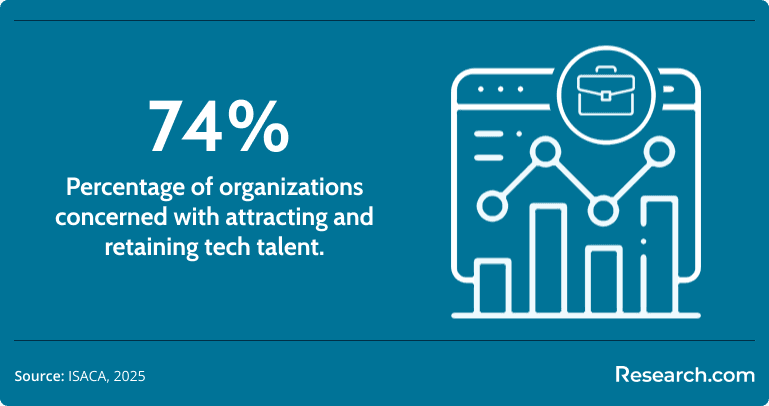
Specialization matters because employers often look for role-specific skills. With 74% of organizations concerned about attracting and retaining tech talent, students who combine information science with digital systems, metadata, data governance, or cybersecurity awareness may be better positioned for specialized information roles.
How to Choose the Best Online ALA-Accredited MLIS Program
The best online MLIS program is not automatically the most famous, fastest, or cheapest. It is the program that is accredited, financially realistic, aligned with your career path, and structured in a way you can complete successfully.
- Confirm ALA accreditation before anything else. Check the program directly through the American Library Association’s accredited program information. If your target jobs require an ALA-accredited degree, an unaccredited program can limit your options.
- Match the curriculum to your intended role. A future school librarian, archivist, systems librarian, public librarian, and corporate knowledge manager should not evaluate programs using the same priorities.
- Review faculty expertise. Look for faculty whose research, professional work, or teaching areas overlap with your goals, such as youth services, digital preservation, information ethics, archives, metadata, or knowledge management.
- Ask about practical experience. Find out whether the program includes a practicum, internship, portfolio, capstone, field placement, or applied project.
- Compare total cost, not just tuition per credit. Include required credits, fees, residency status, technology expenses, books, travel, and the cost of taking longer to finish.
- Evaluate career support. Ask whether the school provides job boards, alumni contacts, resume support, interview coaching, internship connections, and career advising specific to library and information science.
- Check state rules for school librarian roles. If you want K-12 certification, confirm the program meets requirements in the state where you plan to work.
Questions to Ask Admissions Advisors
- Is the program currently ALA-accredited?
- Are classes synchronous, asynchronous, or a mix of both?
- How many hours per week should students expect to study?
- Does the program require a practicum, internship, capstone, or portfolio?
- Can students complete fieldwork near where they live?
- What specializations are available online?
- What career services are available to online students?
- What are typical roles graduates pursue after completing the program?
- Are there additional requirements for school library certification?
- What scholarships, assistantships, payment plans, or employer partnership options exist?
The same decision framework also applies to students comparing adjacent technology pathways. If you are weighing library science against broader information technology roles, Research.com’s guide on how to start a career in IT explains how education, experience, and certifications can fit together.
Career Paths for Online ALA-Accredited MLIS Graduates
An online ALA-accredited MLIS can prepare graduates for roles that involve organizing information, helping users access knowledge, preserving records, supporting research, teaching information literacy, and managing digital resources. The right career path depends heavily on specialization, internships, prior experience, location, and technical skills.
| Career Path | Typical Responsibilities | Useful MLIS Focus Areas |
| Public librarian | Community programming, reference services, reader advisory, digital literacy, collection development | User services, public libraries, youth services, community engagement |
| Academic librarian | Research support, instruction, scholarly resources, subject liaison work, collection strategy | Research methods, instruction, information literacy, scholarly communication |
| School library media specialist | K-12 library services, student instruction, media resources, curriculum collaboration | School librarianship, youth services, digital literacy |
| Archivist | Preserving, arranging, describing, and providing access to records and collections | Archival studies, digital preservation, metadata |
| Digital asset manager | Managing digital files, metadata, repositories, workflows, and access policies | Digital curation, metadata, database management, information systems |
| Corporate knowledge manager | Organizing internal information, research resources, competitive intelligence, and knowledge systems | Knowledge management, information architecture, data governance |
Academic and Public Librarianship
Academic and public librarians support learning, research, digital access, and community services. These roles can be especially appealing for students who want public-facing work and care about equitable access to information.
Corporate Knowledge Management
Corporate knowledge managers organize information inside businesses, law firms, consulting organizations, healthcare systems, and other institutions. Students pursuing this path may benefit from stronger technology preparation, including cloud concepts. One related option is a CompTIA Cloud+ certification boot camp online.
Archives, Museums, and Cultural Heritage
Archivists and museum information professionals preserve and describe materials that document history, culture, science, organizations, and communities. Increasingly, these roles require comfort with digital preservation, metadata standards, rights management, and public access tools.
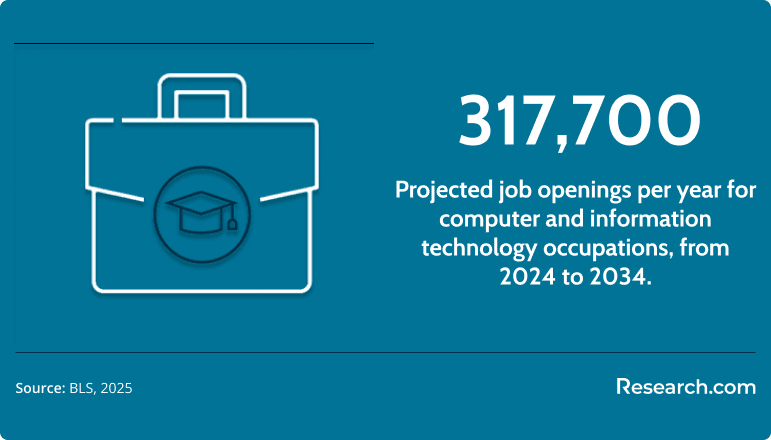
Some MLIS graduates also work in the broader information economy. There are a projected 317,700 job openings each year in the broader computer and information technology sector, and information professionals can contribute by organizing, governing, securing, and making information usable across complex systems.
Job Market Outlook for Online ALA-Accredited MLIS Graduates
The job market for librarians and library media specialists is relatively stable rather than fast-growing. Overall growth for the profession is projected at 2%, with approximately 13,500 job openings projected each year. Much of that opportunity is tied to replacement demand as experienced workers retire or move into other roles.
How AI and Digital Information Are Changing the Field
AI is not eliminating the need for information professionals. It is changing the type of expertise organizations need. As more institutions rely on automated systems, digital collections, algorithmic search, and data-intensive tools, they need professionals who understand metadata, information quality, privacy, ethics, access, and long-term preservation.
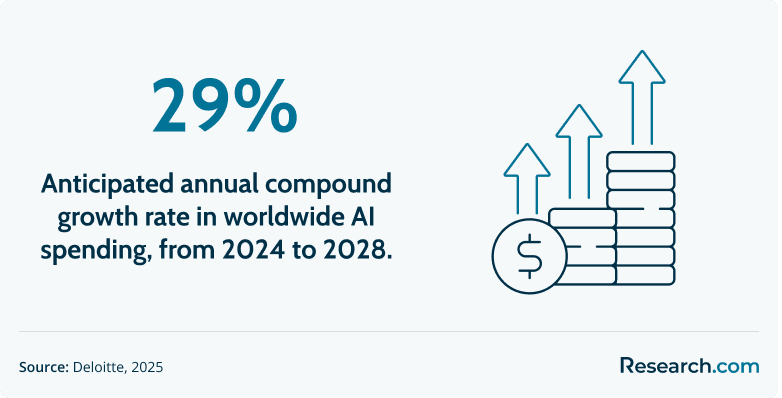
Worldwide spending on AI is expected to grow at an annual rate of 29% through 2028. For MLIS students, this trend reinforces the value of skills in ethical information governance, data quality, trustworthy systems, and secure access. Students interested in cloud security and protected digital environments may also explore top online CCSP training as a complementary credential.
Common Mistakes to Avoid
- Choosing a program without verifying ALA accreditation. This is the most important quality check for many professional library roles.
- Looking only at tuition per credit. Required credits, fees, timeline, and lost income can change the real cost.
- Assuming online means easy. Online graduate programs can be demanding, especially when they include group projects, practica, and heavy reading loads.
- Ignoring state certification requirements. School librarian roles may require specific coursework, field experience, or certification approval.
- Relying only on rankings. Rankings can help narrow the field, but your best program depends on specialization, cost, format, and career fit.
- Skipping practical experience. Internships, practicums, volunteer experience, or library work can make a significant difference when applying for jobs.
- Assuming salary outcomes are guaranteed. Pay varies by employer, location, specialization, experience, and labor market conditions.
Should You Combine an Online MLIS with EdD Online Programs for Leadership Roles?
Combining an online MLIS with doctoral-level leadership study can make sense for students who want senior roles in education, academic administration, public service, library systems, or learning organizations. The MLIS provides specialized preparation in information access, digital curation, ethics, and knowledge management, while EdD online programs may add training in organizational leadership, policy, applied research, and change management.
This combination is not necessary for every student. It is most relevant if your long-term goals include directing a library system, leading instructional technology initiatives, managing large educational programs, shaping information policy, or moving into executive-level roles. Before pursuing both credentials, compare cost, time commitment, dissertation or capstone requirements, faculty mentoring, and whether the additional degree is expected in your target leadership market.
What Graduates Say About Online ALA-Accredited MLIS Programs
- Rhiannon: "I had worked as a paralegal for ten years and wanted a different career, but leaving my job was not realistic. The online MLIS gave me a way to change direction while still working. My legal research experience translated well, and I now work as a corporate law librarian in a role that feels like a much better fit."
- Jian: "My background was in software development, but I wanted my technical skills to serve a clearer public purpose. The MLIS helped me connect technology with information access, digital equity, and ethical decision-making. Learning online with classmates from libraries, nonprofits, and universities also broadened how I thought about the field."
- Declan: "I worried that an online degree might be viewed differently, but the coursework was rigorous and the faculty were highly engaged. During interviews, employers focused on the ALA accreditation. No one treated the online format as a disadvantage."
Key Insights
- ALA accreditation is the first filter. If you want professional library roles, especially in academic, public, school, or specialized settings, verify ALA accreditation before comparing cost or convenience.
- Online and on-campus degrees can carry similar professional value when accredited. Employers in the field generally care more about accreditation, skills, experience, and specialization than delivery format.
- Program fit depends on career direction. A future school librarian should evaluate certification pathways, while a future archivist should prioritize preservation, metadata, and field experience. A future corporate knowledge manager should look for digital systems and information governance coursework.
- Cost varies widely. Total tuition commonly falls between $17,000 and $67,000, so students should compare required credits, fees, residency rates, aid, and employer reimbursement before borrowing.
- Experience matters. Practicums, internships, library work, volunteer service, capstone projects, and technical credentials can strengthen your job search after graduation.
- AI is changing the value of information science skills. As organizations invest more in AI and digital systems, MLIS graduates with strengths in data quality, metadata, ethics, digital preservation, and secure access may find new ways to apply the degree.
- The best program is the one you can complete and use. Choose based on accreditation, specialization, affordability, schedule, faculty expertise, practical training, and career support—not rankings alone.
References:
- Cockcroft, M. (2023, February 21). Under pressure: Survey provides insight into librarians’ job satisfaction. School Library Journal. Retrieved September 16, 2025, from https://www.slj.com/story/Under-pressure-insight-into-librarians-Job-Satisfaction-from-LJ-SLJ-survey-school-and-youth-services-libraries
- Data USA. (n.d.). Librarians and media collections specialists. Retrieved September 16, 2025, from https://datausa.io/profile/soc/librarians-and-media-collections-specialists
- Deloitte. (2025, February 11). 2025 technology industry outlook. Deloitte Insights. Retrieved September 16, 2025, from https://www.deloitte.com/us/en/insights/industry/technology/technology-media-telecom-outlooks/technology-industry-outlook.html
- ISACA. (2025, March 17). ISACA research explores retention concerns, stress levels and job satisfaction for IT careers. Retrieved September 16, 2025, from https://www.isaca.org/resources/news-and-trends/newsletters/atisaca/2025/volume-6/isaca-research-explores-retention-concerns-stress-levels-and-job-satisfaction-for-it-careers
- Payscale. (2025, August 12). Librarian salary. Retrieved September 16, 2025, from https://www.payscale.com/research/US/Job=Librarian/Salary
- Richter, F. (2025, May 12). Which jobs are most often done remotely? Statista. Retrieved September 16, 2025, from https://www.statista.com/chart/34444/share-of-remote-workers-by-occupation-group
- U.S. Bureau of Labor Statistics. (2024, April 3). Librarians and media collections specialists. Occupational Employment and Wage Statistics. Retrieved September 16, 2025, from https://www.bls.gov/oes/2023/may/oes254022.htm
- U.S. Bureau of Labor Statistics. (2025, August 28). Computer and information technology occupations. Occupational Outlook Handbook. Retrieved September 16, 2025, from https://www.bls.gov/ooh/computer-and-information-technology/
- U.S. Bureau of Labor Statistics. (2025, August 28). Field of degree: Computer and information technology. Occupational Outlook Handbook. Retrieved September 16, 2025, from https://www.bls.gov/ooh/field-of-degree/computer-and-information/computer-and-information-technology-field-of-degree.htm
- U.S. Bureau of Labor Statistics. (2025, August 28). Librarians and library media specialists. Occupational Outlook Handbook. Retrieved September 16, 2025, from https://www.bls.gov/ooh/education-training-and-library/librarians.htm
- U.S. Bureau of Labor Statistics. (n.d.). Computer and mathematical workers [Fact sheet]. Occupational Requirements Survey. Retrieved September 16, 2025, from https://www.bls.gov/ors/factsheet/pdf/computer-and-mathematical-occupations.pdf
- ZipRecruiter. (n.d.). Information technology salary. Retrieved September 16, 2025, from https://www.ziprecruiter.com/Salaries/Information-Technology-Salary#TableView
- ZipRecruiter. (n.d.). Librarian salary. Retrieved September 16, 2025, from https://www.ziprecruiter.com/Salaries/Librarian-Salary#TableView
- Zippia. (2025, January 8). Information technology professional demographics and statistics in the US. Retrieved September 16, 2025, from https://www.zippia.com/information-technology-professional-jobs/demographics/
Other Things You Should Know About Online ALA-Accredited MLIS Programs
In 2027, several online ALA-accredited MLIS programs offer unique specializations. The University of Washington emphasizes digital curation, while Syracuse University provides data science specializations. These programs equip students with skills to meet the evolving demands of the information management field.
Online ALA-accredited MLIS programs in 2027 typically require completing 36 to 42 credit hours for graduation. Specific requirements may vary by institution, so prospective students should verify the number of credit hours needed for their chosen program.
In 2027, application requirements for online ALA-accredited MLIS programs typically include a bachelor's degree, a minimum GPA (often around 3.0), letters of recommendation, a statement of purpose, and a resume. Some programs may ask for GRE scores or a portfolio of relevant work.


