
2027 Best Online Master's Degree in Database Management

Co-Founder and Chief Data Scientist
Recent industry data shows that over 54% of tech professionals report heavy workloads, with 43% citing long hours. This pressure creates a career ceiling where your deep technical skills don't lead to leadership roles. You're stuck in a tactical loop while others advance into strategic positions.
This guide is different. It's not for academic theorists or those on a community-focused track. It's a strategic plan from career experts with over a decade of experience, designed to build a clear business case for how an online master's in database management moves you from high-stress execution to a high-reward role in corporate leadership.
What are the benefits of getting an online Master's Degree in Database Management?
- Qualify for high-paying leadership and architect roles in top industries like finance, tech, and manufacturing.
- Unlock access to top-tier salaries, with the highest earners reaching the $163,000 range.
- Gain these valuable skills with the flexibility to study online, allowing you to advance your career without pausing it.
What can I expect from an online Master's Degree in Database Management?
You should expect a fundamental shift in perspective. This isn't just about learning more advanced technical skills; it's about learning to manage data as a strategic business asset. The curriculum is designed to teach you the language of risk, governance, and value creation that executives understand.
The reality is that a graduate degree is becoming the standard for senior roles. You're competing with nearly 40,000 peers who already hold one. With an average age of 43 for professionals in this field, this degree is designed for experienced practitioners like you, not recent undergrads.
Companies are facing billion-dollar fines from thousands of annual data compromises. An online master's in database management gives you the toolkit to mitigate that corporate risk. This focus on business strategy is what separates it from a community-focused degree like an MLIS.
Where can I work with an online Master's Degree in Database Management?
An online master's in database management prepares you for strategic leadership roles across a wide range of industries. Your expertise in data architecture, governance, and security is a valuable asset in any sector undergoing digital transformation. Based on recent employment data, the largest employers of database professionals include:
- Computer Systems Design and Related Services (14%): The core tech industry, offering roles like Database Architect, Cloud Solutions Manager, and IT Director.
- Finance and Insurance (12%): A sector with high demand for Data Governance Managers and Financial Systems Architects to ensure security and regulatory compliance.
- Educational Services (11%): Universities and ed-tech companies need leaders to manage complex student, research, and operational data systems.
- Information (9%): This includes media, publishing, and data service companies with roles like Data Warehouse Manager or Business Intelligence Lead.
- Management of Companies and Enterprises (7%): Corporate headquarters roles focused on overseeing data strategy for an entire organization, such as Director of Data Management.
How much can I make with an online Master's Degree in Database Management?
As of May 2024, median annual wages for database professionals in top-paying industries were as follows:
- Monetary Authorities-Central Bank: $148,690
- General Merchandise Retailers: $147,000
- Computer and Peripheral Equipment Manufacturing: $142,250
- Finance and Insurance: $118,180
- Management of Companies and Enterprises: $117,740
- List of the Best Online Master's Degree in Database Management Programs for 2027 List of Programs
- How long does it take to complete an online Master's Degree in Database Management program? Completion Time
- How does an online Master's Degree in Database Management program compare to an on-campus program? How does an online Master's Degree in Database Management program compare to an on-campus program?
- What is the average cost of an online Master's Degree in Database Management program? Program Cost
- What are the financial aid options for students enrolling in an online Master's Degree in Database Management program? Financial Aid
- What are the prerequisites for enrolling in an online Master's Degree in Database Management program? What are the prerequisites for enrolling in an online Master's Degree in Database Management program?
- What courses are typically in an online Master's Degree in Database Management program? What courses are typically in an online Master's Degree in Database Management program?
- What types of specializations are available in an online Master's Degree in Database Management program? Specializations
- How to Choose the Best Online Master's Degree in Database Management Program How to Choose the Best Online Master's Degree in Database Management Program
- What career paths are available for graduates of an online Master's Degree in Database Management program? Career Paths
- What is the job market for graduates of an online Master's Degree in Database Management program? Job Market
List of the Best Online Master's Degree in Database Management Programs for 2027
How do we rank schools?
Recognizing that paying for a degree is a significant investment, our ranking methodology ensures that students can make informed decisions based on comprehensive and transparent information. The ranking draws upon reliable sources such as the IPEDS database, Peterson's database, the College Scorecard database, and The National Center for Education Statistics.
These sources provide a robust foundation of data to evaluate and rank online Master's Degree in Database Management programs. For more details on our methodology, please visit Research.com’s methodology page.
1. Boston University - Master of Science in Computer Information Systems, Database Management & Business Intelligence Concentration
Through extensive hands-on training with tools such as Oracle and SQL, students at Boston University gain the expertise needed to design and implement operational databases. The program emphasizes blending information technology with business strategy, preparing graduates to thrive as database designers, developers, or business intelligence analysts.
- Program Length: 12 - 20 months
- Required Credits to Graduate: 40
- Cost per Credit: $882.98
- Accreditation: New England Commission of Higher Education (NECHE)
2. Florida Institute of Technology - Master of Science in Information Technology with a concentration in Database Administration
Florida Institute of Technology focuses on developing IT leaders who can effectively communicate the value of cloud-based data to business stakeholders. The curriculum provides a working knowledge of industry-relevant software for designing, transitioning, and securing modern databases in a 100% online format.
- Program Length: 15 months
- Required Credits to Graduate: 33
- Cost per Credit: $686.67
- Accreditation: Southern Association of Colleges and Schools Commission on Colleges (SACSCOC)
3. University of Denver - Master of Science in Information Technology with a concentration in Database Design and Administration
The University of Denver's program equips you with strategic skills in data architecture, warehousing, and modeling using technologies like Oracle and Microsoft SQL. This asynchronous online curriculum is designed to be completed in as few as 18 months, preparing graduates to build and maintain database applications.
- Program Length: As quick as 18 months
- Required Quarter Credits to Graduate: 48
- Cost per Credit: $859
- Accreditation: Higher Learning Commission (HLC)
4. University of Maryland Global Campus - Online Master of Science in IT: Database Systems Technology
University of Maryland Global Campus offers a program designed for working professionals, focusing on market-tested skills in data warehousing, modeling, and mining. The curriculum prepares you to design and implement relational and distributed databases, with coursework that can help you prepare for key industry certifications.
- Program Length: 2 years
- Required Credits to Graduate: 36
- Cost per Credit: $544 (in-state); $659 (out-of-state)
- Accreditation: Middle States Commission on Higher Education (MSCHE)
5. University of Arizona - Master of Science in Data Science
The University of Arizona offers a program at the intersection of technology, people, and information, with a strong foundation in information science. You will gain expertise in the entire data lifecycle, from collection and storage to analysis and presentation, preparing you for data-rich workplace environments.
- Program Length: 2 years
- Required Credits to Graduate: 30
- Cost per Credit: $650
- Accreditation: WASC Senior College and University Commission (WSCUC)
6. San Diego State University - Master of Science in Big Data Analytics
Blending technology, business, and science, the San Diego State University program takes a transdisciplinary approach to analyzing large data sets for strategic insights. Its flexible dual-core curriculum builds both computational programming expertise and advanced analytical methods, enabling students to apply data models in business contexts and complete the degree in just 16 months.
- Program Length: 16 months
- Required Credits to Graduate: 30
- Cost per Credit: $975.30
- Accreditation: WASC Senior College and University Commission (WSCUC)
7. University of Pittsburgh - Master of Data Science
The University of Pittsburgh's program is uniquely designed to unlock the ethical use of data, teaching you to explore the social impact of data science. In this fully online curriculum, you will learn to program in Python and R and work with relational and graph databases.
- Program Length: 20-36 months
- Required Credits to Graduate: 30
- Total Tuition: $15,000
- Accreditation: Middle States Commission on Higher Education (MSCHE)
8. Syracuse University - Master’s in Applied Data Science
Syracuse University's program equips you with cutting-edge technical expertise and the ability to translate complex data into actionable business insights. The curriculum combines information science with management principles, offering practical experience with industry-relevant data sets to prepare you for impactful decision-making roles.
- Program Length: As little as 1 year
- Concentrations: Artificial Intelligence; Big Data; Data and Business Analytics; Data Pipelines and Platforms; Language Analytics; Project Management; and Visual Analytics
- Required Credits to Graduate: 34
- Cost per Credit: $1,945
- Accreditation: Middle States Commission on Higher Education (MSCHE)
9. Marquette University - Master of Science in Data Science
With a mix of theory-driven coursework and practical training, students at Marquette University strengthen their skills in both data analytics and computing. The program offers flexibility through in-demand specializations or the option to pursue a traditional research-based thesis, allowing learners to shape the degree around their professional goals.
- Program Length: 2 years
- Specializations: Big Data; Machine Learning; and Statistics and Modeling
- Required Credits to Graduate: 33
- Cost per Credit: $1,400
- Accreditation: Higher Learning Commission (HLC)
10. Illinois Institute of Technology - Master of Applied Science in Data Science
At the Illinois Institute of Technology, advanced training in mathematics, statistics, and computer science is paired with an emphasis on clear and effective communication. Students are guaranteed hands-on experience through research and internships, building the practical foundation needed to step into Chicago’s fast-growing tech industry and beyond.
- Program Length: 2 years
- Required Credits to Graduate: 33
- Cost per Credit: $1,851
- Accreditation: Higher Learning Commission (HLC)
How long does it take to complete an online Master's Degree in Database Management program?
Most online master's programs in database management take about 18 to 24 months to complete if you're studying full-time. If you choose a part-time track to balance your studies with your current career, you can expect to finish in three to five years.
The right timeline for you depends on your personal and professional goals.
Accelerated vs. Part-Time: Choosing Your Pace
An accelerated, full-time program gets you to a higher earning potential faster. However, a part-time pace offers sustainability and a unique advantage: you can immediately apply what you learn at your current job. This reinforces your new skills and demonstrates immediate value to your employer.
While some fields offer very accelerated options, like the shortest online master's in business analytics programs, it's crucial to weigh that speed against your personal and professional bandwidth. The best choice is the one that allows you to truly master the material without leading to burnout.
How does an online Master's Degree in Database Management program compare to an on-campus program?
In the tech industry, what matters to employers is the quality and accreditation of the institution you attended, not the delivery format of your degree. Any outdated idea that online programs are inferior is simply no longer relevant in today's market.
The key is to choose a reputable, accredited university. A degree from a top-tier institution holds the same weight and commands the same respect, whether you earned it online or on campus.
Flexibility and the Modern Professional Network
The normalization of remote work has completely erased any remaining stigma around online education. For an experienced professional, an online program is often the more strategic choice. It offers the flexibility to learn without disrupting your career and personal life.
Furthermore, your professional network in an online program is often more valuable. You'll be in a cohort with other mid-career professionals from diverse industries and locations, not recent undergraduates. This creates a powerful, relevant network of peers you can rely on throughout your career. The availability of high-quality programs, including some of the fastest online data analytics degree programs, makes it easier than ever to find a format that fits your needs.
What is the average cost of an online Master's Degree in Database Management program?
The total tuition for an online master's in database management typically ranges from $15,000 to over $66,000. It's important to look beyond the sticker price, as you'll also need to factor in potential costs for technology fees, textbooks, and other university charges.
However, the most important number isn't the cost; it's the potential return on your investment.
The ROI of a Master's Degree
The smart way to approach this decision is to calculate your potential return on investment (ROI). A less expensive program isn't always the better value. A degree from a more expensive, top-tier university can often lead to a much higher starting salary and faster career advancement, generating a significantly better long-term financial return.
When you compare the total cost of the degree to the salary potential, the business case becomes clear. Top earners in this field can make over $163,000, which means the right program can pay for itself in just a few years.
Many students also boost the value of their degree by pairing it with industry-recognized credentials. While database professionals often pursue certifications aligned with platforms like AWS, Oracle, or Microsoft, it's worth noting that strategic credential stacking is common across multiple fields. For example, professionals in the construction and project management sector frequently increase their earning potential through the best construction management certifications, which can similarly accelerate advancement and open doors to higher-level leadership roles.
The chart below breaks down the typical salary ranges for database managers, illustrating the potential return on this educational investment.
What are the financial aid options for students enrolling in an online Master's Degree in Database Management program?
For mid-career professionals, the primary funding sources are employer tuition assistance, federal and private loans, and merit-based scholarships. Many people assume they earn too much to qualify for aid, but there are excellent options available that are not based on financial need.
Leveraging Employer Tuition Assistance
This is often the most valuable and underutilized resource. Companies are highly motivated to retain senior talent, and many have dedicated budgets for professional development. Frame your request as a business case, not a personal favor. Explain how the skills you'll gain in data governance, security, and architecture will directly help the company mitigate risk and improve its data strategy.
Navigating Federal and Private Loans
Graduate student loans have different terms and interest rates than undergraduate loans. Start by filling out the Free Application for Federal Student Aid (FAFSA) to see what federal loans you qualify for. After that, you can explore private loan options from banks and credit unions to find the most favorable terms.
Finding Merit-Based Scholarships and Grants
Don't overlook scholarships. Many are specifically designed for graduate students and are awarded based on professional merit or for belonging to a specific demographic, such as women in tech. Professional organizations in the data management field are also a great source for these types of awards.
In addition to financial aid, many students increase their career value by stacking professional certifications alongside their degree. For those interested in security-focused database roles, reviewing the best certifications for security consultants can help clarify which credentials align with leadership pathways in data protection, compliance, and enterprise risk management. This combination of a graduate degree plus targeted certifications can significantly accelerate advancement and earning potential.
What are the prerequisites for enrolling in an online Master's Degree in Database Management program?
For an online master's in database management, universities are looking for a combination of academic background and professional experience. Don't worry if your undergraduate degree isn't in computer science or if your GPA is from a decade ago; your work history is often the most important factor.
Here are the typical requirements:
- A bachelor's degree: This is a standard requirement from an accredited institution.
- Relevant professional experience: Most programs value several years of hands-on experience in IT or data-related roles.
- A strong statement of purpose: This is your chance to explain your career goals and why the program is the right fit for you.
- Standardized test scores (GRE/GMAT): Many universities now waive this requirement for applicants with significant professional experience.
Bridging the Gap: Preparing Your Application
Admissions committees are increasingly taking a holistic view of candidates. They understand that valuable skills are built on the job, not just in the classroom. The key is to frame your experience as a unique strength in your application.
Focus your statement of purpose on a specific business problem you solved or a project you led. This demonstrates your strategic thinking and readiness for graduate-level work. If you feel you have a specific technical gap in your background, you can proactively address it. Enrolling in one of the many available accelerated data analytics training programs can be a great way to strengthen your profile before you apply.
What courses are typically in an online Master's Degree in Database Management program?
You can expect the curriculum to be focused on the strategic and business aspects of data management, not just advanced technical implementation. This is the toolkit that prepares you for leadership.
Core courses typically cover these key areas:
- IT Governance: Learning the frameworks for aligning data strategy with business goals.
- Information Security Policy: Mastering the principles of protecting data assets and managing risk.
- Data Warehousing and Business Intelligence: Designing systems that turn raw data into actionable insights.
- Data Ethics and Privacy: Understanding the legal and ethical responsibilities of data stewardship.
- Cloud Data Management: Architecting and managing data ecosystems in modern cloud environments.
Leadership Skills as a Retention Solution
These courses are designed to solve real-world business problems. When you learn about IT governance and security policy, you're learning how to protect your company from the massive financial and legal risks of a data breach.
More than that, you're learning the leadership skills that companies are desperate for. The management and strategic planning competencies taught in these programs are a direct solution to the tech industry's talent retention problem.
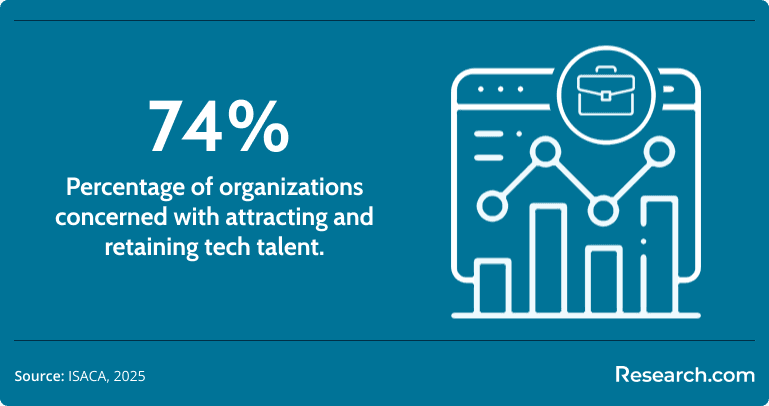
This focus on leadership is critical, as a recent survey shows that a vast majority of tech organizations are concerned about retaining talent, a problem that effective managers can help solve.
Students coming from technical or cybersecurity backgrounds often find the material aligns closely with the strategic considerations they may have already encountered. If you're comparing fields and wondering how hard is a cyber security degree relative to database management, the key difference lies in focus: cybersecurity programs emphasize threat defense and system protection, while database management programs emphasize data strategy, governance, and enterprise-level decision-making. Both fields are rigorous—but each attracts learners with slightly different strengths and career goals.
What types of specializations are available in an online Master's Degree in Database Management program?
Many programs offer specializations that allow you to build deep expertise in a high-growth area. The best choice isn't necessarily the trendiest one; it's the one that aligns with your specific career goals and builds on your existing experience.
Business Intelligence
A specialization in business intelligence (BI) focuses on turning an organization's raw data into actionable insights. You'll master the tools and techniques for data analysis, visualization, and reporting that drive strategic business decision-making at the highest levels. This is a great path for those who want to bridge the gap between the technical and business sides of an organization.
Specializing in Cloud Architecture
With nearly all new data infrastructure being built in the cloud, this specialization is in high demand. It focuses on designing, building, and managing scalable and secure data systems on platforms like AWS, Azure, and Google Cloud. For those interested in this path, researching some of the top cloud computing online degrees can provide additional context on curriculum and career outcomes.
The AI Specialization: Riding the Next Wave
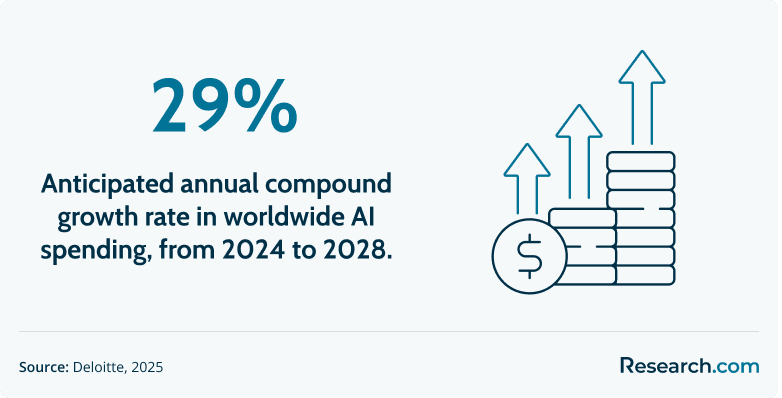
This is one of the fastest-growing areas in the entire tech industry. This specialization focuses on building the robust data pipelines and ecosystems that power artificial intelligence and machine learning applications. The demand for this specialization is exploding, driven by a projected 29% compound annual growth rate in AI spending worldwide.
How to Choose the Best Online Master's Degree in Database Management Program
Choosing the right program is about finding the best fit for your specific career goals, not just picking the one at the top of a ranking list. A systematic approach will help you cut through the marketing and find a program that delivers real value.
Here are the four key steps to follow:
- Verify Accreditation: This is the most important step. Ensure the university is regionally accredited, such as the MSCHE and other accreditation bodies, which is the gold standard of institutional quality. This guarantees your degree will be recognized and respected by employers.
- Evaluate Curriculum Relevance and Faculty Expertise: Look for a curriculum that focuses on the strategic topics you need, like governance, security, and cloud architecture. Research the faculty to see if they are active practitioners with real-world industry experience.
- Research Measurable Alumni Outcomes: Reputable universities are transparent about their graduates' success. Look for hard data on job placement rates, average starting salaries, and the companies that hire their alumni.
- Assess Program Flexibility and Support Services: Make sure the program's format fits your life. Look for strong student support services, including academic advising and career counseling, that are specifically designed for online students.
Avoiding the "Diploma Mill" Danger
The online education market is crowded, and it's easy to be misled by slick marketing. The single best way to protect your investment is to focus on measurable outcomes. A low-quality program will make vague promises, but a high-quality one will show you the data. If a university can't provide clear statistics on the career success of its graduates, that's a major red flag.
What career paths are available for graduates of an online Master's Degree in Database Management program?
This degree is your launchpad into senior technical leadership, strategic management, and high-value consulting roles. It moves you beyond a purely technical function and prepares you to oversee an organization's entire data ecosystem.
This is a corporate-focused track, distinct from a public-sector path you might pursue with a Master's in Library and Information Science (MLIS).
The Database Architect Path
As a database architect, you are the technical leader responsible for designing and overseeing an organization's data infrastructure. You'll make the high-level design choices, set the standards for data storage and access, and ensure the entire system is scalable, secure, and efficient. It's a role that combines deep technical expertise with strategic vision.
The Data Governance Manager Path
This is a strategic management role focused on the business side of data. You'll be responsible for data quality, security, and compliance with regulations like GDPR and CCPA. You'll work with business leaders across the organization to create policies and processes that treat data as a secure, strategic asset. For those who enjoy this management track, a fast-track master's in management information systems online can also be a compelling option.
The Independent Consultant Path
With this specialized expertise, you can build a lucrative career as an independent consultant. You'll leverage your knowledge to advise multiple clients on data strategy, cloud migration, and architecture. This path offers the ultimate in flexibility and high earning potential, allowing you to become your own boss.
These roles are concentrated in key economic hubs, as shown in the chart of top states for database professionals below.
What is the job market for graduates of an online Master's Degree in Database Management program?
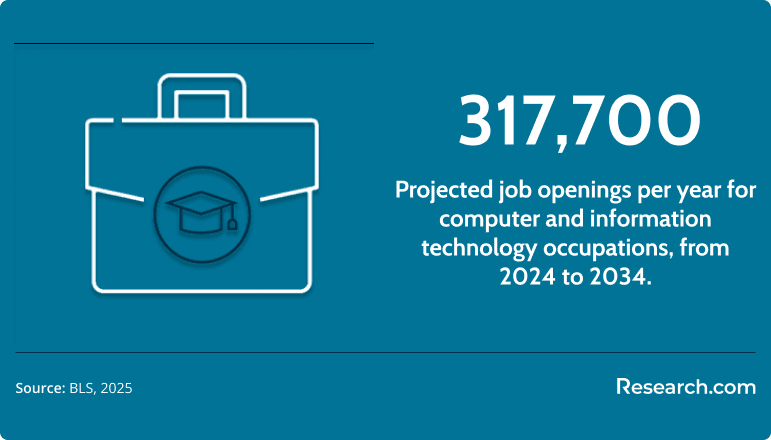
Projections show an average of 317,700 job openings for computer and IT occupations each year for the next decade.
While that broad growth is impressive, the outlook for the core profession is also stable and healthy, with a projected growth rate of 6-8% and about 5,300 openings for database administrators and architects annually. An online master's in database management positions you perfectly to compete for the best of these roles.
The AI Boom: The Next Frontier of Demand
The steady growth in traditional data roles is only half the story; the explosive growth of artificial intelligence is creating a massive new wave of demand.
AI systems are entirely dependent on well-architected, high-quality data ecosystems. Professionals who have mastered data governance, security, and architecture are the ones who will build the foundations for this multi-trillion dollar industry shift. This degree is the key to future-proofing your career and positioning yourself at the center of the next technological frontier.
The continued demand for data-savvy professionals also appeals to those comparing career paths across healthcare, cybersecurity, and IT. For example, students often ask "is a health information technology degree challenging compared to database management?" Both fields require analytical thinking and comfort with data systems, but database management programs tend to place greater emphasis on enterprise-wide strategy and large-scale system architecture—skills that are increasingly sought after in organizations preparing for the AI-driven future.
Here’s What Graduates Have to Say about Their Online Master's Degree in Database Management Program
- Renna: "I spent the first part of my career at a small company where I was the entire data department. I was good at my job, but I always felt I was just patching things together without a real framework. This program gave me the formal, structured knowledge I was missing. The online discussions with classmates from massive corporations were like getting the mentorship I never had. I brought that knowledge back and built a real data governance model from the ground up."
- Elric: "As a project manager, I was constantly leading teams of data engineers and DBAs without truly speaking their language. My projects would hit data-related roadblocks that I didn't have the depth to anticipate. I got this degree not to become a DBA, but to become a more effective leader of technical teams. The online format was perfect because I wasn't changing careers, just augmenting my skills. My projects now run smoother, and I've earned a new level of respect from my technical staff."
- Selene: "My five-year plan was to relocate from Ohio to the West Coast, but I knew it would be hard to break into such a competitive market remotely. I strategically enrolled in an online master's program from a university with a strong reputation in California. I used their virtual career fairs and alumni network to make connections. I had a job offer in San Diego three months before I even graduated, all because the degree gave me a local network before I even moved."
Key Findings
- A master's degree is becoming the new standard for senior roles, with nearly 40,000 professionals in the database field already holding a graduate-level credential.
- The degree provides a clear path to top-tier compensation, as the highest 10% of earners in database management roles reach salaries of $163,000.
- The overall tech job market is exceptionally strong, with a projected 317,700 new job openings expected each year, ensuring long-term career security for graduates.
- More than 54% of tech professionals report heavy workloads, highlighting the need for a strategic career shift from high-stress tactical roles to more sustainable leadership positions.
- The explosive 29% projected annual growth in AI spending is creating massive demand for data architects who can build the ecosystems that power this new technology.
- With 74% of organizations concerned about retaining tech talent, companies are highly motivated to invest in their employees' education, making employer tuition assistance a key financial aid option.
References:
- Data USA. (2023). Database administrators & architects. Retrieved September 16, 2025, from https://datausa.io/profile/soc/database-administrators-and-architects
- Deloitte. (2024). 2025 technology industry outlook. Retrieved September 16, 2025, from https://www.deloitte.com/us/en/insights/industry/technology/technology-media-telecom-outlooks/technology-industry-outlook.html
- Gartner. (2023, August 24). Gartner predicts fines related to mismanagement of data subject rights will exceed $1 billion by 2026. Retrieved September 16, 2025, from https://www.gartner.com/en/newsroom/press-releases/2023-08-24-gartner-predicts-fines-related-to-mismanagement-of-data-subject-rights-will-exceed-1-billion-dollars-by-2026
- ISACA. (2025). ISACA research explores retention concerns, stress levels and job satisfaction for IT careers. @ISACA. Retrieved September 16, 2025, from https://www.isaca.org/resources/news-and-trends/newsletters/atisaca/2025/volume-6/isaca-research-explores-retention-concerns-stress-levels-and-job-satisfaction-for-it-careers
- Payscale. (2025). Average Database Manager Salary. Retrieved September 16, 2025, from https://www.payscale.com/research/US/Job=Database_Manager/Salary
- Statista. (2025). Number of data breaches and victims in the United States from 2005 to 2024. Retrieved September 16, 2025, from https://www.statista.com/statistics/273550/data-breaches-recorded-in-the-united-states-by-number-of-breaches-and-records-exposed
- Statista. (2025, April). Where working from home is most common. Retrieved September 16, 2025, from https://www.statista.com/chart/34444/share-of-remote-workers-by-occupation-group
- U.S. Bureau of Labor Statistics. (2024, April 3). 15-1242 Database Administrators. Occupational Employment and Wage Statistics. Retrieved September 16, 2025, from https://www.bls.gov/oes/2023/may/oes151242.htm
- U.S. Bureau of Labor Statistics. (2024, May). Work context of computer and mathematical occupations [Fact sheet]. Occupational Requirements Survey. Retrieved September 16, 2025, from https://www.bls.gov/ors/factsheet/pdf/computer-and-mathematical-occupations.pdf
- U.S. Bureau of Labor Statistics. (2024, September 4). Computer and information technology. Field of Degree. Retrieved September 16, 2025, from https://www.bls.gov/ooh/field-of-degree/computer-and-information/computer-and-information-technology-field-of-degree.htm
- U.S. Bureau of Labor Statistics. (2024, September 4). Computer and information technology occupations. Occupational Outlook Handbook. Retrieved September 16, 2025, from https://www.bls.gov/ooh/computer-and-information-technology/
- U.S. Bureau of Labor Statistics. (2024, September 4). Database administrators. Occupational Outlook Handbook. Retrieved September 16, 2025, from https://www.bls.gov/ooh/computer-and-information-technology/database-administrators.htm
- U.S. Department of Labor, Employment and Training Administration. (n.d.). 15-1242.00 - Database Administrators. O*NET OnLine. Retrieved September 16, 2025, from https://www.onetonline.org/link/summary/15-1242.00
- Zippia. (2024, February 9). Information technology professional demographics and statistics in the US. Retrieved September 16, 2025, from https://www.zippia.com/information-technology-professional-jobs/demographics/
- ZipRecruiter. (n.d.). Database Manager Salary. Retrieved September 16, 2025, from https://www.ziprecruiter.com/Salaries/Database-Manager-Salary#TableView
- ZipRecruiter. (n.d.). Information Technology Salary. Retrieved September 16, 2025, from https://www.ziprecruiter.com/Salaries/Information-Technology-Salary
Other Things You Should Know About Online Master's Degree in Database Management Programs
An online Master's in Database Management in 2027 can significantly enhance career prospects by equipping students with advanced database skills in cloud computing, data analytics, and cyber-security. Graduates can pursue roles such as Data Architects, Database Administrators, and Database Managers, leading to potential salary increases and leadership opportunities in tech-driven fields.
Graduates of a 2026 online Master's Degree in Database Management can typically expect a salary increase of 15-25% compared to those with a bachelor's degree. This boost reflects enhanced skills in handling complex data tasks, which are increasingly valued in fields like IT, finance, and healthcare.


