
2027 Do You Need a Master's to Work in a Library: Librarian Salary & Job Growth?

Co-Founder and Chief Data Scientist
Far from the outdated stereotype of a quiet bookkeeper, modern librarians are dynamic information professionals, community leaders, and technology educators. They play a vital role in an increasingly digital world, especially in fulfilling library work requirements, from deciphering fake news to accessing critical resources.
As libraries adapt to evolving digital trends, the demand for skilled professionals remains steady, particularly in areas like information management and digital archiving. The U.S. Bureau of Labor Statistics (BLS) projects 13,500 openings for librarians and library media specialists each year until 2034.
A Master’s in Library Science (MLS) is typically the traditional route to join this profession. However, is it possible to pursue this pathway without an MLS degree? This guide looks at what it takes to become a successful librarian in today’s modern setting.
What are the benefits of getting a Master’s in Library Science degree?
- An MLS degree qualifies graduates for professional librarian roles in public, academic, school, and special libraries, as well as positions in archives, information management, and digital services.
- According to the U.S. Bureau of Labor Statistics, librarians and media collections specialists earn a median annual salary of around $64,000, with higher pay in academic and specialized library settings.
- Pursuing this degree online offers flexibility for working professionals, allowing them to balance career and study while accessing updated curriculum on emerging technologies, digital resources, and library work requirements and trends.
- What degree is required to become a librarian in the U.S.? Educational Requirements
- Can you work in a library without a Master’s in Library Science degree? Can you work in a library without a Master’s in Library Science degree?
- How much can librarians earn? Average Salary
- What are the different types of libraries? What are the different types of libraries?
- How can you specialize in a library career? Specializations
- What is the job outlook for librarians? Job Outlook
- What are some non-traditional career paths for someone with a library science degree? Non-Traditional Career Paths
- How can I get library work experience while still in school? How can I get library work experience while still in school?
- Should I pursue a doctorate to accelerate my library career? Should I pursue a doctorate to accelerate my library career?
- What are the essential qualities of a good librarian beyond a degree? Essential Skills
- How are libraries evolving to meet community needs beyond just books? How are libraries evolving to meet community needs beyond just books?
What degree is required to become a librarian in the U.S.?
To become a professional librarian in the U.S., the standard and most widely accepted requirement is a Master's degree in Library Science, or a similar graduate degree.
This degree is also often referred to as a Master of Library and Information Science (MLIS), Master of Information (MI), or Master of Arts (MA) in Librarianship.
While a few entry-level or non-professional library positions may not require this degree, the vast majority of professional librarian jobs in public, academic, and special libraries, especially those that offer opportunities for career advancement and higher pay, will require a master's degree from a program accredited by the American Library Association (ALA).
ALA accreditation signifies that a program meets the highest professional standards and is a key credential for securing a professional position. This is why it can be beneficial to enroll in ALA-accredited traditional or online MLIS programs or similar degrees.
Which undergraduate majors are best for aspiring librarians?
One of the great advantages of pursuing a master’s in library science is that there is no single required undergraduate major.
Library science graduate programs welcome students from a wide range of academic backgrounds. In fact, having a diverse undergraduate degree can be a significant asset, as it allows you to specialize and bring a unique perspective to the field.
While many aspiring librarians come from a humanities background, such as English, History, or Literature, other popular and beneficial undergraduate majors include:
- Technology and Information Sciences: Degrees in computer science, information technology, or data science are highly valuable. A strong tech background can make you an ideal candidate for roles as a digital archivist, metadata librarian, or systems librarian, which are increasingly in demand.
- Social Sciences: Having a background in psychology or sociology, and even graduating from either the most popular, fastest, easiest, or cheapest online anthropology degree, can be beneficial, as modern librarianship is deeply rooted in understanding community needs and human information-seeking behavior.
- Education: A major in education or a related field can be particularly useful if you intend to work as a school librarian or in youth services, as it provides a strong foundation in teaching and learning.
Ultimately, the best undergraduate major is one that you are passionate about, as it will provide a foundation of knowledge and research skills that you can apply to a rewarding career in the evolving field of library and information science.
Can you work in a library without a Master’s in Library Science degree?
Generally, you can work in a library without an MLS degree. However, the positions will usually be support or entry-level roles rather than professional librarian jobs.
Common options include:
- Library Assistant/Library Associate: Managing the circulation desk, checking books in and out, assisting patrons with basic questions, handling overdue fines, and shelving materials.
- Library Clerk/Page: These are typically the most entry-level positions, often part-time, and are perfect for students or those looking to gain initial experience. The primary responsibility of a library page is to re-shelve books and maintain the order of the library collection.
- Library Technician: Involves more specialized tasks, such as cataloging new materials, managing interlibrary loans, or assisting with technical services.
- Programming and Outreach: Planning and running events like story times, summer reading or language learning programs, or adult education workshops. This can be a good option for those who have completed accelerated online ESL graduate certificate programs.
- IT and Technology Support: Assisting patrons with computer use, printing, and digital resources.
- Marketing and Communications: Promoting library events and services through social media, flyers, and press releases.
The library work requirements for such roles typically include only a high school diploma, an associate degree, or sometimes a bachelor’s degree.
Working in these non-librarian roles provides invaluable hands-on experience and a realistic view of the daily operations of a library, which can help you decide if pursuing a master's degree is the right next step for your career.
According to data from the Department for Professional Employees, there were approximately 289,400 professional and technical workers employed in libraries in the U.S in 2024. The chart below provides additional details.
How much can librarians earn?
According to the most current data from the U.S. Bureau of Labor Statistics, the median annual wage for librarians and library media specialists was $64,320 as of May 2024.
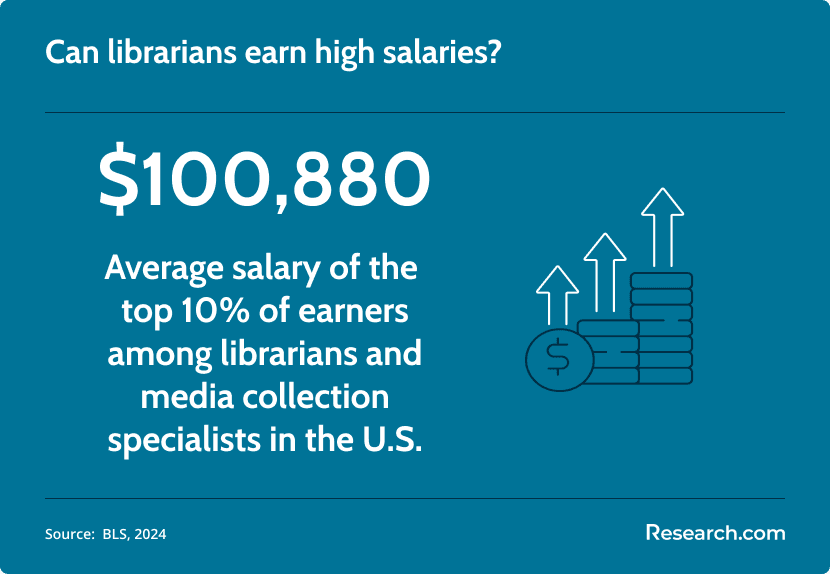
This figure represents the middle of the pay scale, meaning that half of all librarians earned more than this amount, and half earned less. The range of salaries is quite broad, with the lowest 10% of earners making less than $38,920 and the highest 10% earning over $100,880.
Factors Influencing Librarian Salaries
A librarian's salary can be significantly influenced by several key factors:
- Type of Library: The type of institution you work for plays a major role. For instance, librarians in elementary and secondary schools and those in colleges and universities generally have higher median wages than those in public libraries.
- Experience and Specialization: As with many professions, years of experience and specialized skills can lead to higher earnings. Librarians with expertise in areas like data management, digital services, or archives are often in higher demand and can command higher salaries.
- Job Role and Seniority: A librarian's specific role within the organization is a major factor. Library directors, department heads, and other administrative roles typically earn substantially more than entry-level librarians.
- Geographic Location: Salaries vary widely by state and metropolitan area. High-cost-of-living areas, particularly on the coasts, often have higher salaries to compensate. For example, salaries in states like Washington and California tend to be well above the national average.
Using the most recent salary data from BLS, here are the states with the highest annual median wage for librarians and media collections specialists as of 2024:
- Washington - $ 94,400
- District of Columbia - $93,740
- California - $86,590
- Maryland - $81,690
- Nevada - $79,710
What are the different types of libraries?
Libraries in the U.S. and across the globe come in several main types, each serving distinct audiences and purposes. For students exploring a future in any of these settings, flexible degree options like a master's in library science online no GRE can make entering the field more accessible, especially for working adults or career changers.
1. Public Libraries
- Serve the general public with free access to books, media, and community programs
- Often funded by local government
- Focus on literacy, lifelong learning, and community engagement
2. Academic Libraries
- Found in colleges and universities
- Support curriculum, research, and student learning with scholarly resources
- Often include special collections and digital databases
3. School Libraries
- Located in elementary, middle, and high schools
- Provide resources supporting the school curriculum and student development
- Typically managed by library media specialists or school librarians
4. Special Libraries
- Serve specific organizations, such as corporations, government agencies, law firms, hospitals, or museums
- Focus on specialized information needs related to their fields
- Examples include law libraries, medical libraries, and corporate libraries
5. National Libraries
- Serve as legal depositories and centers of national cultural heritage
- Collect and preserve published materials of the country
- Some examples are the United States Library of Congress and the British Library in the United Kingdom
6. Digital Libraries
- Collections exist in electronic or digital formats accessible online
- Support open access, research, and digital preservation
Figures from the American Library Association reveal that there are 124,903 libraries of all kinds in the United States as of this writing.
Here is a breakdown of the different library types:
How can you specialize in a library career?
You can specialize in a library career by tailoring your education, certifications, and experience toward a specific type of library or subject area. Some students even explore dual masters doctorate degree programs if they want to combine advanced expertise in library science with another specialized field, particularly for roles in academic or research-intensive environments.
Here are a few common pathways:
- Medical Libraries: Consider dual training in health sciences or medical informatics, and certifications from the Medical Library Association (MLA). Specialized knowledge in clinical research and evidence-based resources is highly valued.
- Academic Libraries: Pursue one of the easiest library science degree programs with coursework in research methods, scholarly communication, and instructional services. Gaining experience as a graduate assistant or in a university library helps build credentials.
- Law Libraries: Combine an MLS or MLIS with a law degree or paralegal background. Many law librarians hold a Juris Doctor (JD) alongside their library credentials.
- School Libraries: The library work requirements for this specialization typically include earning state certification in school librarianship, often requiring both a master’s in library science and a teacher education background.
- Special Libraries: Develop subject expertise (e.g., business, history, or technology) and pursue relevant professional associations for networking and training.
What is the job outlook for librarians?
The job outlook for librarians in the U.S. shows modest growth with some challenges posed by changes in technology and funding:
- The U.S. Bureau of Labor Statistics projects librarian employment to grow 2% from 2024 to 2034, slower than the average for all occupations.
- The job market growth rate is considered steady but limited compared to other fields, influenced by budget constraints in many libraries and the increasing use of electronic resources accessible remotely.
- Despite slower growth, about 13,500 job openings each year are expected due to replacements as current librarians retire or leave the profession.
- The American Library Association notes continued demand for librarians with evolving roles in digital resources, research, and community engagement, but traditional librarian jobs are being redefined or supplemented by library technicians and digital specialists.
- The 2024 Public Library Staffing Report from the Public Library Association highlights that 96.4% of libraries continue to support staff advancement within the field in one or more ways.
- New opportunities are emerging for librarians in specialized roles such as research librarians, digital archivists, and information managers in private and nonprofit sectors.
In summary, librarian careers will remain relevant with steady replacement demand, but job seekers should be prepared for competition and the evolving nature of library work due to technological and budgetary changes.
To give you a better picture of the job outlook, here are employment projections from the U.S. BLS.
What are some non-traditional career paths for someone with a library science degree?
The skills gained from a Master's in Library Science are highly transferable and valuable far beyond the walls of a traditional library. The core competencies for library work requirements—organizing, analyzing, and providing access to information—are in high demand across various industries. This opens up a world of non-traditional career paths for library science graduates.
And just as students sometimes compare programs by asking questions like how many years is a master's degree in education, library science students may explore program length, specialization options, and outcomes that align with their broader career goals.
Here are some alternatives:
- Information Architect/User Experience (UX) Specialist: Designing how digital information is structured and accessed on websites and apps.
- Data Curator/Data Manager: Organizing, preserving, and ensuring accessibility of research or organizational data.
- Archivist or Digital Preservation Specialist: Working in museums, corporations, or nonprofits to maintain digital and historical records.
- Knowledge Manager/Corporate Information Specialist: Streamlining information flow in businesses or government agencies.
- Competitive Intelligence Analyst: Gathering and analyzing market and industry information for strategic decision-making.
- Records Manager: Overseeing compliance and organization of company or legal records.
- Metadata Specialist/Cataloger: Creating systems that make large collections of digital content searchable and usable.
- Instructional Designer/E-learning Specialist: Developing online learning resources and information literacy training.
- Health Informatics Specialist: Managing and interpreting medical data for hospitals, research institutions, or public health agencies.
- Government Research Analyst: Supporting policy, legal, or public service projects with research and data expertise.
- Community Engagement Director: Leads programs and outreach to connect community members with library or organizational resources.
- Development/Grant Writing Coordinator: Manages fundraising, grant proposals, and donor relations for libraries or nonprofits.
How can I get library work experience while still in school?
You can start building experience and meeting library work requirements while still in school through a variety of practical opportunities. In fact, many students gain these skills even if they are in the process of exploring new programs or learning how to transfer grad schools, since library work experience is often transferable and valued across institutions.
You can look into a variety of practical opportunities, including:
- On-Campus Jobs: Many universities hire students as library assistants, circulation desk clerks, or shelvers.
- Internships and Practicums: MLS programs often include fieldwork; you can request placements in public, school, or special libraries.
- Volunteering: Public libraries and community archives frequently welcome student volunteers for events, cataloging, or literacy programs.
- Research or Graduate Assistantships: Academic libraries employ students to support faculty research, manage databases, or staff reference desks.
- Professional Associations: Joining groups like the American Library Association can connect you to mentorships, workshops, and student networking opportunities.
Should I pursue a doctorate to accelerate my library career?
Advanced academic credentials can open pathways for enhanced leadership, innovative research, and strategic management within library science. Pursuing doctoral studies not only refines advanced analytical and critical thinking skills but also positions professionals to drive policy and digital transformation in evolving library environments. Moreover, managers in community-focused institutions often benefit from the research and academic networks that accompany doctoral studies. For a streamlined approach to further education that limits career disruption, explore accelerated doctoral programs in education online.
What are the essential qualities of a good librarian beyond a degree?
Beyond a degree, a good librarian possesses a unique blend of personal qualities and professional skills that are crucial for success in the evolving field of library science.
- Strong Communication Skills: Effectively assisting patrons, collaborating with colleagues, and explaining complex information clearly.
- Organizational Skills and Attention to Detail: Managing collections, cataloging materials, and maintaining accurate records requires precision.
- Adaptability and Lifelong Learning: Embracing new technologies, trends, and evolving user needs to stay relevant.
- Customer Service Orientation: Being approachable, patient, and responsive to diverse community needs and questions.
- Critical Thinking and Problem-Solving: Addressing unique challenges, evaluating sources, and optimizing library resources.
- Empathy and Patience: Understanding users’ varied backgrounds and providing supportive, respectful assistance.
- Leadership and Collaboration: Leading teams, advocating for library services, and working well with others.
- Ethical Values: Upholding privacy, intellectual freedom, and equitable access to information.
- Technological Proficiency: Comfort with databases, digital catalogs, e-resources, and emerging library technologies.
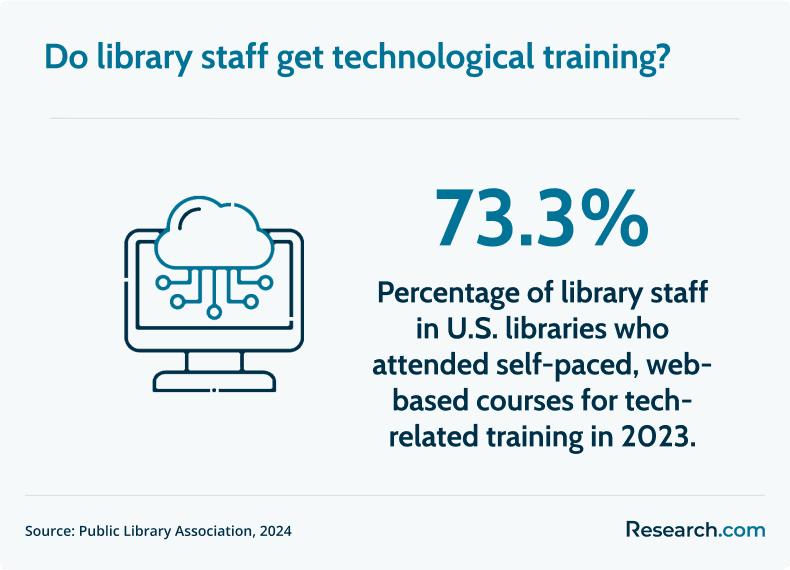
Many librarians complement their master’s degree with additional training in technological and digital specializations, such as the shortest Microsoft Azure dual certification programs online. Data from ALA shows that 73.3% of library staff participated in self-paced, web-based courses in 2023.
The qualities mentioned above allow librarians to not only meet library work requirements but also provide excellent service, adapt to changing environments, and foster inclusive, effective learning communities.
These skills also help future librarians to be better equipped to face the challenges of today’s libraries, including censorship campaigns. The ALA reports a 65% increase in the number of unique titles challenged in 2023 compared to the previous year.
How are libraries evolving to meet community needs beyond just books?
Libraries are evolving far beyond just lending books to meet the diverse and growing needs of their communities. Among the key ways they are adapting include:
- Digital Resource Hubs: Offering access to e-books, audiobooks, academic journals, and online databases that patrons can access remotely, breaking physical and economic barriers to knowledge.
- Makerspaces and Innovation Labs: Providing tools like 3D printers, virtual reality, and laser cutters to foster creativity, skill-building, and innovation among users.
- Collaborative Workspaces: Creating spaces equipped with high-speed internet, computers, and meeting rooms to support freelancers, students, and entrepreneurs.
- Technology Access and Digital Literacy Training: Addressing the digital divide by providing free Wi-Fi, computers, and training in emerging technologies, coding, and online safety.
- Archival and Preservation Services: Preserving local history and cultural heritage through digitization and access to historical documents, photos, and oral histories.
- Social Services and Community Support: Partnering with social service agencies to provide legal aid, housing assistance, and hiring social workers to support vulnerable populations. A recent study emphasizes the importance of community librarianship in today’s setting.
- Environmental Sustainability Initiatives: Promoting eco-friendly practices and lending tools for sustainable living, contributing to community education on environmental stewardship.
These innovations position libraries as dynamic community centers for learning, creativity, social support, and digital inclusion, ensuring they remain vital in the digital age.
Here’s What Graduates Have to Say About Their Master’s in Library Science Degree
- Brad: "Earning my Master’s in Library Science gave me the professional credentials I needed to qualify for librarian certification. Beyond that, the experience deepened my love for connecting people with information and gave me a sense of purpose in my career."
- Joy: "My MLS studies expanded my skills far beyond cataloging and reference work—I gained expertise in digital tools, archives, and user experience. That versatility has made me more confident and competitive in a rapidly changing job market."
- Rita: "Completing my Master’s in Library Science was a turning point; the coursework challenged me intellectually while the practicum gave me real-world experience. I now feel proud to serve my community as both an educator and an advocate for lifelong learning."
Key Findings
- The range of salaries for librarians is quite broad, with the lowest 10% of earners making less than $38,920 and the highest 10% earning over $100,880.
- The American Library Association reports 124,903 libraries of all kinds in the United States, offering plenty of job opportunities for aspiring librarians.
- Approximately 289,400 professional and technical workers are employed in libraries in the U.S as of 2024.
- The U.S. Bureau of Labor Statistics projects librarian employment to grow 2% from 2024 to 2034.
- 96.4% of libraries continue to support staff advancement within the field in one or more ways.
- 73.3% of library staff in U.S. libraries attended self-paced, web-based courses for additional technology-related training in 2023.
References:
- American Library Association (2025). State of America's Libraries 2024. https://live-alaorg.pantheonsite.io/sites/default/files/2024-04/state-of-americas-libraries-report-2024-accessible-web-version_0.pdf
- American Library Association (February 2025). Library Statistics and Figures: Number of Libraries in the United States. https://libguides.ala.org/c.php?g=751692&p=9132142
- Department for Professional Employees (August 2025). Library Professionals: Facts & Figures. https://www.dpeaflcio.org/factsheets/library-professionals-facts-and-figures
- Public Library Association (2024). 2023 Public Library Technology Survey: Summary Report. https://www.ala.org/sites/default/files/2024-07/PLA_Tech_Survey_Report_2024.pdf
- U.S. Bureau of Labor Statistics (n.d.). Occupational Employment and Wage Statistics, Industry: Cross-industry, Private, Federal, State, and Local Government, Period: May 2024. https://data.bls.gov/oes/#/industry/000000 Data retrieved September 2025
- U.S. Bureau of Labor Statistics (n.d.). Occupational Employment and Wage Statistics (OEWS) Profiles, May 2024 OEWS Profiles. https://data.bls.gov/oesprofile Data Retrieved September 2025
- U.S. Bureau of Labor Statistics (April 2025). Read up on libraries during National Library Week. https://www.bls.gov/opub/ted/2025/read-up-on-libraries-during-national-library-week.htm
- U.S. Bureau of Labor Statistics (August 2025). Occupational Outlook Handbook, Librarians and Library Media Specialists. https://www.bls.gov/ooh/education-training-and-library/librarians.htm
Other Things You Should Know About a Master’s in Library Science Degree
In 2027, the value of library experience versus formal education depends on the library role and location. Library technician positions may prioritize experience, whereas librarian roles often require an MLS degree. Employers value practical skills too, blending formal education with hands-on experience is usually the preferred path.
In 2027, most professional librarian positions do require a Master's in Library Science (MLS) or an equivalent. However, certain library roles such as library technicians or assistants may not require a master's, though they might benefit from some form of library-related education or experience.


