
2027 How Long Does It Take to Get a Master's Degree in Teaching? Program Length Requirements

Co-Founder and Chief Data Scientist
Teaching remains one of the most in-demand yet underfilled professions, with thousands of schools across the U.S. struggling to staff classrooms. For many aspiring educators, earning a master's degree in teaching is the path to both higher qualifications and stronger career prospects. But how long does it actually take to complete this degree?
In this article, we’ll break down program length requirements, factors that speed up or slow completion, and what prospective students should know before committing to a master’s program.
Key Things You Should Know About Master's Degree in Teaching
- A master's degree in teaching is designed for those who want to become licensed K–12 teachers. It emphasizes classroom instruction, pedagogy, and curriculum development, preparing graduates to lead in real school settings rather than focusing on research or policy.
- Most master's degree in teaching programs require around 30 to 45 credit hours, depending on the institution and state requirements. Completion time varies, but full-time students can typically finish in 12 to 24 months, while part-time learners may take two to three years.
- Many master's degree in teaching programs include a supervised teaching practicum or student teaching component. This hands-on requirement is critical for licensure, giving students practical classroom experience and ensuring they can apply what they’ve learned before becoming full-time teachers.
- How long does it take to get a master's degree in teaching? Program Length
- How many credit hours does a master's in teaching usually require? Credit Requirements
- Can I finish this master's program in one year? One-Year Completion
- Will part-time or online options affect how long it takes? Part-Time & Online
- Does prior teaching or education experience shorten the timeline? Prior Experience Impact
- Do programs include student teaching, internships, or capstone projects? Practicum & Projects
- Are accelerated formats or summer-only tracks available? Accelerated & Summer Tracks
- How much do full-time vs. part-time schedules change completion time? Full-Time vs Part-Time
- What external factors can extend how long it takes to graduate? What external factors can extend how long it takes to graduate?
- What are the admission requirements for a master’s degree in teaching? What are the admission requirements for a master’s degree in teaching?
- How does a master's degree in teaching compare to a doctorate in education? How does a master's degree in teaching compare to a doctorate in education?
- Does program accreditation influence career success? career
How long does it take to get a master's degree in teaching?
The time it takes to earn a master's degree in teaching, like a Master of Arts in Teaching (MAT), depends on program structure, course load, and a student’s prior experience. On average, most master's degree in teaching programs can be completed in 12 to 24 months for full-time students. Accelerated formats may shorten this to just one year, while part-time learners often take two to three years. Credit requirements usually range from 30 to 45 hours, covering core teaching methods, subject-area specialization, and practicum components.
Fieldwork and student teaching are key factors that add time to completion. Programs that integrate extended practicums, especially in states with stricter licensure standards, may require closer to two years even for full-time students. Online and hybrid formats offer flexibility, but the timeline still hinges on credit pacing and fieldwork availability.
Ultimately, your timeline also depends on career goals. If you’re weighing options such as what can I do with a teaching degree, understanding program length helps in planning how soon you can transition into the classroom or advance into specialized roles.
How many credit hours does a master's in teaching usually require?
A master's degree in teaching, an MAT for instance, typically requires 30 to 45 credit hours to complete, though exact totals vary by institution and state standards. These credits are spread across core education courses, subject-specific classes, and required fieldwork. While the overall number gives students a general sense of workload, understanding how those hours are distributed is essential.
- Roughly 12 to 18 credits often go into foundations of education, teaching theory, and classroom management.
- Subject specialization—such as English, math, or science—usually accounts for 9 to 12 credits.
- Methods courses, including curriculum design and instructional strategies, can make up another 6 to 9 credits.
- Finally, many programs dedicate 6 to 12 credits to a practicum or student teaching placement, which provides supervised classroom experience.
Credit load also influences program speed. Full-time enrollment allows students to graduate faster, while part-time or extended fieldwork stretches the timeline. Some universities even offer accelerated formats within these requirements, such as the fastest online master of arts in teaching programs, which condense coursework without eliminating essential practicum hours.
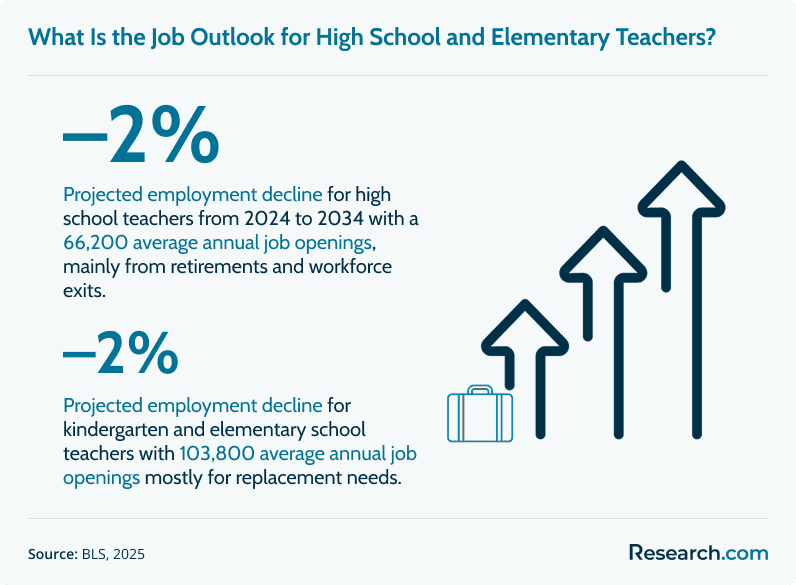
Understanding credit hour breakdowns clarifies not only workload but also career timing. The infographic below shows how these requirements connect to broader job outlook trends for high school and elementary teachers, emphasizing how replacement needs shape opportunities in teaching.
Can I finish this master's program in one year?
For motivated students, completing a master's degree in teaching in one year is possible, but it requires an accelerated or intensive program structure. These one-year programs typically compress coursework into three or four consecutive semesters, including summer terms. Students must be ready for a heavy workload, balancing classes, practicums, and exams in a shorter timeframe.
The feasibility also depends on prior academic background and scheduling flexibility. Candidates who already hold education-related experience or have completed prerequisite coursework may move through requirements more quickly. Online or hybrid formats can also help by removing commute time and offering asynchronous learning, though practicum hours still require in-person placement.
However, not all states recognize accelerated paths equally. Some require extended student teaching or additional certification steps, which may extend the timeline. Prospective students should carefully review their state’s licensure requirements before enrolling in a one-year program.
For some students, the motivation to complete their degree quickly is tied to career advancement. Earning a master's sooner can open doors to leadership roles, curriculum coordination, and some of the highest paying early childhood education jobs, where advanced credentials are often preferred or required.
The chart below highlights teacher shortages by subject in 2024–25. It underscores why accelerated master's degree in teaching programs exist: to quickly prepare teachers in high-demand fields like special education, science, and mathematics where states report the most critical staffing needs.
Will part-time or online options affect how long it takes?
Yes, choosing a part-time or online format can significantly affect how long it takes to finish a master's degree in teaching. Part-time enrollment usually spreads coursework across fewer credits per semester, meaning students may take two to four years instead of the typical 12 to 24 months. This slower pace benefits those balancing work, family, or other commitments but naturally extends program completion time.
Online programs can offer greater flexibility, but the duration depends on how courses are structured. Some universities design fully asynchronous classes that allow faster progress if students handle heavier course loads, while others maintain strict semester schedules. Regardless of delivery format, student teaching or practicum requirements are still mandatory and must be completed in person, often limiting how quickly the degree can be finished.
For many, online or hybrid options make graduate study feasible without relocating or leaving employment. Exploring questions like “Can I earn a teaching degree online?” helps prospective teachers understand which formats fit best with their timelines. Ultimately, while these options may extend or shorten completion depending on pacing, they are designed to open the master's degree in teaching pathway to a broader range of students.
Does prior teaching or education experience shorten the timeline?
Prior teaching or education experience can often reduce the time required to complete a master's degree in teaching, though the extent depends on the program and state licensure rules. Some universities grant course waivers or advanced standing if applicants already hold teaching certificates, have completed substantial education coursework, or bring years of classroom experience. This can trim several credits from the total requirement, potentially shortening the program by a semester or more.
Additionally, prior fieldwork or student teaching can sometimes satisfy practicum requirements. For example, paraprofessionals or long-term substitutes may be allowed to count existing experience toward supervised practice hours, though documentation and program approval are required. In contrast, candidates entering a master's degree in teaching from unrelated fields with no teaching background must complete the full sequence, including extensive practicum work.
Overall, having prior teaching or education experience does not guarantee a dramatically faster master's degree in teaching, but it can provide meaningful advantages. These may include reduced coursework, lighter practicum loads, or access to accelerated program tracks designed specifically for licensed teachers seeking advanced credentials.
For students who are new to the field and need to pursue certification from scratch, some programs also offer structured guidance on how to get a teaching license online, which can streamline the process while allowing students to complete foundational requirements remotely.
Do programs include student teaching, internships, or capstone projects?
Yes, most master's degree in teaching programs include practical, hands-on components that go beyond traditional coursework. Student teaching is usually the centerpiece, requiring candidates to spend a semester or more working in real classrooms under the supervision of experienced educators. This allows graduate students to apply instructional strategies, manage classroom dynamics, and adapt lessons in real time.
Some programs also incorporate internships, especially in districts experiencing teacher shortages. These internships often combine paid teaching responsibilities with ongoing graduate coursework, giving students valuable experience while addressing immediate staffing needs. Capstone projects may also be required, typically in the form of a research paper, action research project, or portfolio that demonstrates mastery of teaching competencies and reflective practice.
These elements are critical because they connect theory with practice. They ensure graduates not only meet licensure requirements but are fully prepared to handle the day-to-day demands of teaching. Without them, master's degree in teaching programs would risk leaving future teachers underprepared for classroom realities.
For individuals who are still exploring the field or beginning their journey, gaining classroom experience through substitute teaching, tutoring, or online teaching jobs no experience roles can provide valuable preparation and confidence before entering a formal graduate program.
The chart below highlights the skills employers most often look for in teachers. These align closely with what student teaching, internships, and capstone projects are designed to develop, bridging academic preparation with the skills hiring schools actually demand.
Are accelerated formats or summer-only tracks available?
Yes, many universities offer accelerated or summer-intensive formats for students of a master's degree in teaching who want to enter the classroom as quickly as possible. Accelerated programs condense coursework into a shorter time frame—often 12 months—by requiring heavier course loads, year-round enrollment, and intensive practicum placements. These are well-suited for students who can commit full-time and balance the demands of both study and teaching practice.
Summer-only tracks are less common but do exist, especially for career changers who work during the academic year. These programs typically spread required courses across several consecutive summers, allowing students to earn their degree in two to three years without leaving full-time employment. While convenient, this option often delays entry into full-time teaching compared to traditional or accelerated models.
Both accelerated and summer formats come with trade-offs. Accelerated programs demand high intensity and can be overwhelming, while summer-only tracks extend the overall timeline. Ultimately, the right choice depends on personal schedules, financial needs, and how quickly a candidate wants to transition into a teaching role.
Some students also explore related or alternative educational paths, such as school counseling. In this case, understanding career outcomes can be helpful—for example, new graduates often ask how much does a licensed counselor make, especially when comparing long-term earning potential across education-focused professions.
How much do full-time vs. part-time schedules change completion time?
The pace of your master's degree in teaching program depends heavily on whether you enroll full-time or part-time. A full-time schedule typically allows students to finish within 12 to 24 months, assuming consistent year-round enrollment. This path requires balancing a heavy course load with practicum or student teaching commitments, making it the fastest but most demanding option.
In contrast, part-time study spreads coursework over a longer timeline, usually two to four years. This format is popular among working professionals or career changers who cannot step away from employment while pursuing graduate education. Although it extends completion time, it provides flexibility and sustainability for students with family or job responsibilities.
Some institutions allow students to shift between part-time and full-time enrollment as life circumstances change. This flexibility ensures that even if challenges arise, progress toward licensure and degree completion is not derailed. Program structure and state licensure rules—such as special education teaching requirements—also affect how quickly coursework and practicum obligations can be completed.
The chart below highlights the highest-paying master's degree in teaching-aligned roles. It demonstrates how, regardless of study pace, these teaching positions can lead to strong career outcomes and competitive salaries once the degree is completed.
What external factors can extend how long it takes to graduate?
Even with a structured program plan, external factors can add months or even years to completing a master's degree in teaching.
- One common factor is state licensure requirements. Some states mandate longer student teaching placements or additional certification exams, which extend the timeline regardless of course completion speed.
- Employment and personal obligations also influence pace. Students who work full-time or manage family responsibilities often need to reduce credit loads, which stretches program duration. Similarly, access to practicum placements can delay graduation if local schools face shortages or scheduling conflicts.
- Financial constraints play a role as well. Taking fewer classes per term to spread tuition costs may be necessary for some students, but it prolongs completion. Unexpected life events—such as health issues or relocation—can also disrupt continuity. Even academic challenges, like needing to retake courses, may add time.
Understanding these factors helps prospective students plan realistically. For example, learning about the roles of a teaching assistant shows how support positions in education can both provide experience and introduce scheduling constraints that impact graduate study timelines.
What are the admission requirements for a master’s degree in teaching?
Admission requirements for a master's degree in teaching vary by institution and state, but most programs share common criteria that ensure students are ready to transition into graduate-level teacher preparation. These requirements help set a baseline for academic readiness, professional commitment, and suitability for working in classrooms.
- Bachelor’s Degree: Applicants must hold a bachelor’s degree, often in education or a related subject area, though some programs accept diverse majors.
- Minimum GPA: Many schools require at least a 2.75 to 3.0 undergraduate GPA as evidence of academic readiness.
- Entrance Exams: Some programs ask for GRE or Praxis Core scores, while others have dropped standardized tests in favor of holistic admissions.
- Letters of Recommendation: Professional or academic references validate an applicant’s potential to succeed in graduate-level teaching preparation.
- Personal Statement: A written essay highlights motivation for entering teaching, relevant experience, and long-term goals.
- Background Check: Required to ensure candidates meet school district standards for working with children.
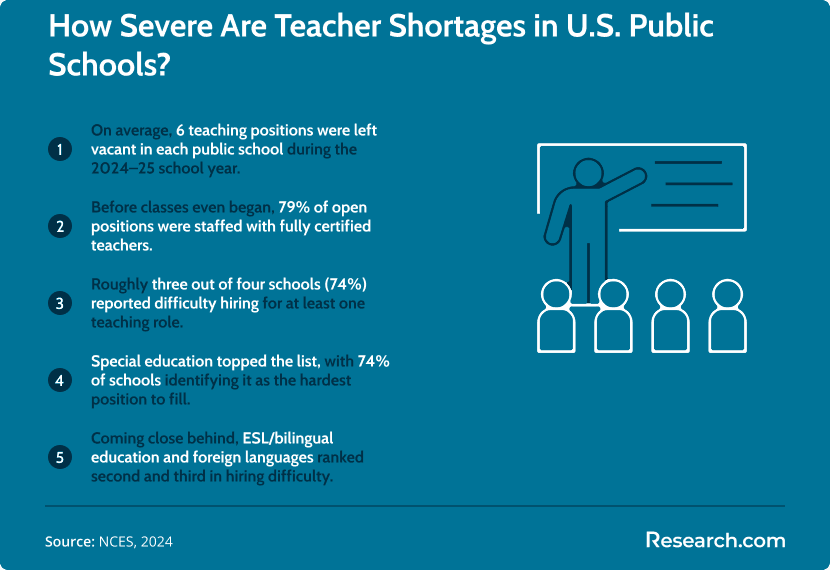
Given persistent staffing shortages, meeting requirements is only part of the challenge. As demand grows, particularly in high-need fields like special education and early childhood teaching certification, the admissions process takes on greater urgency.
The infographic below illustrates how widespread these shortages have become and why new teachers are urgently needed.
How does a master's degree in teaching compare to a doctorate in education?
A master’s degree in teaching is primarily designed to develop practical classroom skills and expedite entry into teaching careers, whereas a doctorate in education emphasizes research, policy development, and advanced leadership in education. Doctoral programs typically require a longer commitment, a more intensive research component, and a focus on theoretical frameworks that inform educational practice on a broader scale. In contrast, master’s programs center on applied learning experiences and fieldwork that directly translate to classroom expertise. For professionals considering a further academic challenge beyond the master’s level, exploring options like the shortest EdD program can be a strategic next step when seeking accelerated pathways into educational leadership and policy roles.
Does program accreditation influence career success?
Accreditation serves as a critical benchmark of program quality, ensuring that curriculum standards, faculty expertise, and state licensure requirements are met consistently. Recognized accreditation can enhance job market credibility, broaden professional networking opportunities, and establish a foundation for career advancement. Evaluating a program’s accreditation can also provide insight into financial aid eligibility and overall cost-effectiveness—comparable to exploring the most affordable MLIS degree online as part of a comprehensive review of educational investments.
Here's What Graduates Have to Say About Their Master's Degree in Teaching Program
- Elara: "Balancing work and study seemed impossible at first, but the online format made it manageable. I finished in under two years while teaching full-time, and the practicum experience directly strengthened my classroom management skills. The program gave me both the confidence and credentials to step into leadership roles."
- Corvin: "What surprised me most was how engaging online classes could be. Discussions were interactive, projects were collaborative, and professors provided constant feedback. The flexibility allowed me to stay close to my family while earning my degree. Today, I feel well-prepared for the challenges of teaching diverse learners."
- Maris: "I entered a master's degree in teaching with no prior teaching background, so the structured online coursework and supportive mentors were vital. The program emphasized practical strategies and gave me tools I could use immediately during student teaching. It wasn’t just about finishing a degree—it reshaped my perspective on education."
Key Findings
- Most master's degree in teaching programs require 30 to 45 credit hours and take 12 to 24 months full-time to complete.
- Accelerated master's degree in teaching tracks can finish in one year, while part-time study often takes two to four years.
- High school teachers earn a median annual wage of $64,580, while elementary teachers earn about $62,310.
- Teacher shortages remain critical: 45 states report special education shortages, and 41 states report science shortages.
- Despite projected –2% job declines, schools need about 66,200 high school teacher openings and 103,800 elementary teacher openings yearly due to retirements.
- Online and hybrid master's degree in teaching formats provide flexibility but practicum requirements still must be completed in person.
References:
- Bureau of Labor Statistics. High School Teachers, Occupational Outlook Handbook.
- Bureau of Labor Statistics. Kindergarten and Elementary School Teachers, Occupational Outlook Handbook.
- Bureau of Labor Statistics. Occupational Employment and Wage Statistics (OEWS) Database.
- Bureau of Labor Statistics. Occupational Employment and Wage Statistics: Additional Resources.
- Bureau of Labor Statistics. Occupational Employment and Wage Statistics: Research Estimates 2024.
- Bureau of Labor Statistics. Occupational Employment and Wage Statistics: Tables.
- Learning Policy Institute. Teacher Shortages by Subject, 2024–25.
- Learning Policy Institute. Teacher Workforce Trends and Shortages Report.
- National Center for Education Statistics. Condition of Education: Teacher Openings.
- National Center for Education Statistics. NCES Press Release: Public School Staffing Challenges (October 17, 2024).
- National Center for Education Statistics. NCES Press Release: Teacher Vacancies (December 12, 2024).
- National Council of Teachers of English. 2024 Annual Report.
- National Education Association. Rankings & Estimates: Rankings of the States 2025 and Estimates of School Statistics 2025.
- ZipRecruiter. Teachers Must-Have Resume Skills and Keywords.
Other Things You Should Know About a Master's Degree in Teaching
Typical admission requirements for a master's degree in teaching include a bachelor's degree, letters of recommendation, a minimum GPA, and often a passing score on exams like the GRE or Praxis. Some programs might also require prior teaching experience or interviews.
Specializing in a subject can extend the duration of a master's program in teaching. While a general teaching master's might take around 1-2 years, adding a specialization often involves additional courses or certifications, potentially extending the program by several months to accommodate the extra requirements.


