
2027 Highest-Paying Early Childhood Education Jobs to Pursue

Co-Founder and Chief Data Scientist
Teaching young children is a noble profession. However, many working in the field are still underpaid and underappreciated, despite how early childhood education jobs can be demanding and challenging. Fortunately, several roles can provide you with high income potential.
To help you build a lucrative education career, I created this guide to the highest-paying early childhood education jobs. Explore profitable entry-level to high-level roles, top-paying US states, and the ways by which you can increase your salary potential in the academic community.
What are the benefits of pursuing early childhood education jobs?
- Early childhood education consists of diverse professionals that help young children develop essential skills through engaging learning activities and environments. These roles include teachers, librarians, and speech-language pathologists.
- Several early childhood education jobs had 2024 median annual wages that are above the $49,500 median annual wage of all US occupations, such as special education teachers, with $64,270, and kindergarten teachers, with $61,430 (US BLS, 2025).
- Deciding to enter the field of early childhood education is the start of a meaningful and impactful career. Becoming part of the formative years of kids means contributing to their future successes.
- What are the highest-paying entry-level to mid-level early childhood education jobs? Entry- to Mid-level Jobs
- What are the top-paying high-level early childhood education jobs? High-level Jobs
- Which states pay entry-level to mid-level early childhood educators the highest salaries? Entry-level Jobs by State
- Which states pay high-level early childhood educators the highest salaries? High-level Jobs by State
- How can you increase your salary in early childhood education? Increasing Income
- Which graduate degrees can I take up to advance my early childhood education career? Which graduate degrees can I take up to advance my early childhood education career?
- How do salaries in early childhood education compare to salaries in secondary education? How do salaries in early childhood education compare to salaries in secondary education?
- How do salaries in early childhood education compare to salaries in postsecondary education? How do salaries in early childhood education compare to salaries in postsecondary education?
- What is the job outlook for the highest-paying early childhood education jobs? What is the job outlook for the highest-paying early childhood education jobs?
- What alternative early childhood education jobs can I explore? Alternative Jobs
- How can a doctoral degree enhance leadership roles in early childhood education? How can a doctoral degree enhance leadership roles in early childhood education?
- How can advanced certifications boost my early childhood education career? boost
What are the highest-paying entry-level to mid-level early childhood education jobs?
Several entry-level to mid-level early childhood education jobs provide competitive salaries while offering rewarding experiences. The following are some of the highest-paying roles in the US (US BLS, 2025):
- Speech-language Pathologists ($95,410): Speech-language pathologists (SLPs) employed in the education sector diagnose and treat communication and swallowing disorders in young children. Their expertise helps children overcome developmental challenges and makes them one of the most lucrative and impactful professionals in early education.
- Librarians and Library Media Specialists ($64,320): Working in schools and community libraries, librarians and library media specialists guide children in developing literacy skills, critical thinking, and a love for reading. Their role is central to supporting early academic success.
- Special Education Teachers ($64,270): Focused on children with developmental delays or disabilities, special education teachers create personalized learning plans and interventions. They provide both academic and emotional support and ensure that every child has the chance to thrive.
- Kindergarten and Elementary School Teachers ($62,310): As foundational educators, these teachers introduce children to structured learning environments. They build core skills in reading, writing, math, and social development.
What are the top-paying high-level early childhood education jobs?
Education professionals who advance into leadership, administrative, or higher-level academic positions in early childhood education can also improve their salary potential. These higher-ranking early childhood education jobs, which often require advanced degrees and strong work experience, include the following (US BLS, 2025):
- Elementary, Middle, and High School Principals ($104,070): Principals oversee school operations, manage staff, and implement policies that directly impact student learning. Their leadership ensures that educational standards required are met.
- Postsecondary Teachers (Including in Early Childhood Education Degree Programs) ($83,980): Postsecondary teachers in early childhood education degree programs mentor future early childhood professionals at colleges and universities. They combine academic instruction with research and often shape curriculum development.
- Instructional Coordinators ($74,720): Also known as curriculum specialists, instructional coordinators design and implement educational programs and training. Their work ensures that teachers are equipped with effective strategies to improve student outcomes.
- Preschool and Childcare Center Directors ($56,270): These directors manage staff, budgets, and program quality in preschools and childcare centers. While income varies by employer and geographic location, this leadership role can offer strong career stability and meaningful impact.
Many of these leadership positions require or strongly prefer advanced education, such as a master’s degree in teaching or early childhood education. For individuals planning their career timeline, understanding how long does it take to get a master's degree in teaching can help when mapping out the steps needed to qualify for these roles—most programs typically range from one to two years depending on whether the student is attending full-time, part-time, or through an accelerated format.
The chart below provides a visualization of the median annual wages of the top-paying high-level early childhood education jobs in the US in 2024, according to 2025 data from the US BLS.
Which states pay entry-level to mid-level early childhood educators the highest salaries?
In 2024, 1,539,800 kindergarten and elementary school teachers were employed in the US. For these kindergarten teachers, the following were the highest-paying US states that year (US BLS, 2025):
- Rhode Island: $86,390
- California: $84,550
- Washington: $84,500
- Connecticut: $83,920
- Massachusetts: $82,440
In the same year, 559,500 special education teachers in general worked across the country. For special education teachers at the preschool level, the following were the highest-paying US states in 2024 (US BLS, 2025):
- New York: $129,860
- New Jersey: $86,650
- Massachusetts: $82,740
- Washington: $80,080
- Georgia: $78,300
Moreover, the following were the highest-paying US states for special education teachers at the kindergarten and elementary school levels in 2024 (US BLS, 2025):
- California: $90,530
- Washington: $85,340
- District of Columbia: $82,400
- Connecticut: $81,220
- New York: $80,750
Meanwhile, 187,400 speech-language pathologists were employed in the US in 2024. For these professionals, the following were the highest-paying US states that year (US BLS, 2025):
- California: $116,000
- New York: $108,870
- Hawaii: $108,230
- Colorado: $108,070
- District of Columbia: $106,950
Even in states with competitive salaries, some educators choose to supplement their income or explore flexible work options. For those interested in virtual roles, learning how to get an online teaching job with no experience can be helpful—many platforms offer entry-level positions, especially for tutoring, ESL instruction, or classroom support. Starting online can also help educators build teaching portfolios that strengthen applications for future in-person or higher-paying roles.
The chart below provides a visualization of the highest-paying states for kindergarten teachers in the US in 2024 in terms of median annual wages, according to 2025 data from the US BLS.
Which states pay high-level early childhood educators the highest salaries?
In 2024, the following were the highest-paying US states for education and childcare administrators at the preschool and daycare levels (US BLS, 2025):
- New York: $79,660
- District of Columbia: $76,270
- Massachusetts: $68,660
- New Mexico: $68,660
- New Jersey: $66,360
For education administrators at the kindergarten and secondary-school levels, the following were the highest-paying US states in the same year (US BLS, 2025):
- Washington: $161,090
- California: $151,890
- Connecticut: $146,460
- New York: $137,870
- New Jersey: $137,260
Meanwhile, instructional coordinators had the following as the highest-paying US states in 2024 (US BLS, 2025):
- District of Columbia: $102,010
- California: $97,960
- Maryland: $95,570
- Connecticut: $95,560
- Washington: $91,470
For those aiming to pursue these higher-level roles, gaining advanced credentials can be an important step. Flexible pathways such as online teacher certification programs allow working educators to expand their qualifications without stepping away from current employment. This can make career advancement more accessible, especially for those balancing professional and personal responsibilities.
How can you increase your salary in early childhood education?
Professionals in the field of early childhood education can access diverse opportunities to boost their earning potential. They may pursue the following growth-oriented strategies:
- Education and Credentials: Professionals may earn advanced degrees, such as a master’s or doctorate, or earn specialized certifications. Many employers reward additional qualifications with increased salaries and advancement opportunities. Individuals aiming to get advanced education may want to explore options for accelerated online master’s degree for early childhood education programs.
- Leadership or Specialized Roles: Transitioning into higher-ranking positions, such as subject-area coordinator and preschool director, or specialized roles, such as special education teacher, can significantly increase income. These occupations usually carry greater responsibility, which may translate into higher compensation.
- Location and Employer Type: Salaries differ widely by location and organization. Professionals working in urban areas, government programs, or private academic institutions often earn more than those employed in rural areas or nonprofit settings. Choosing the employer and location that is suitable for you can have a major impact on your pay.
Which graduate degrees can I take up to advance my early childhood education career?
Early childhood education professionals can pursue graduate degrees for specialization and career advancement. Common advanced degrees include the following:
- Master of Education (MEd) in Early Childhood Education: A MEd in early childhood education deepens knowledge in child development, curriculum design, and classroom management. Graduates are prepared for leadership roles, such as lead teachers or program directors.
- Master of Education (MEd) in Special Education: With this degree, professionals become experts in supporting children with developmental delays and disabilities. It qualifies educators for specialized teaching positions that are in high demand and often come with higher salaries.
- Doctor of Education (EdD or PhD): A doctoral degree prepares professionals for top-level roles in research, policy, or higher education. Graduates can become professors, policymakers, or consultants in early childhood education.
Some students also begin their academic journey with an accelerated online early childhood development degree, which provides a faster route to advanced studies and career growth.
How do salaries in early childhood education compare to salaries in secondary education?
Income potential in early childhood education often differs significantly from the salary potential offered in secondary education. Early childhood education jobs, such as preschool teachers and childcare workers, usually earn less due to lower entry requirements.
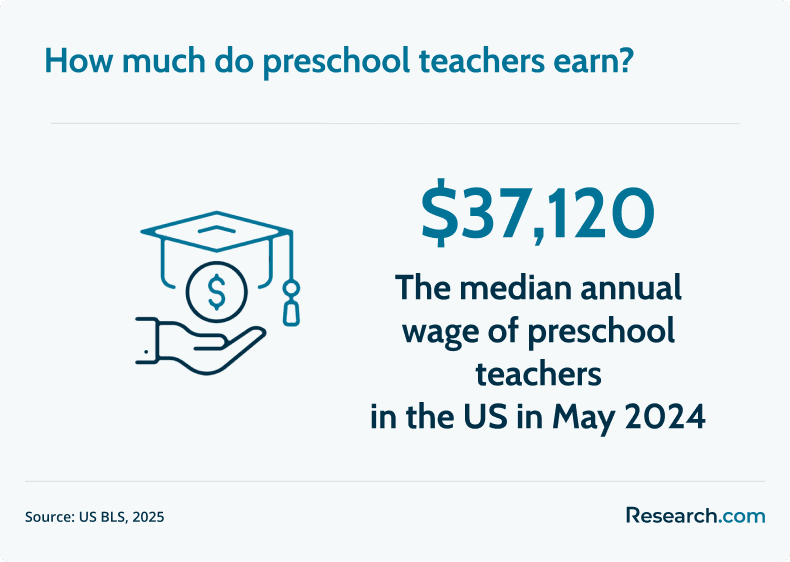
For instance, childcare workers in the US had a median annual wage of $32,050 in May 2024, while preschool teachers had $37,120. These figures are already much lower than the $49,500 median annual wage of all US occupations in the same period. Fortunately, preschool and childcare center directors had a higher median annual wage, with $56,270 (US BLS, 2025).
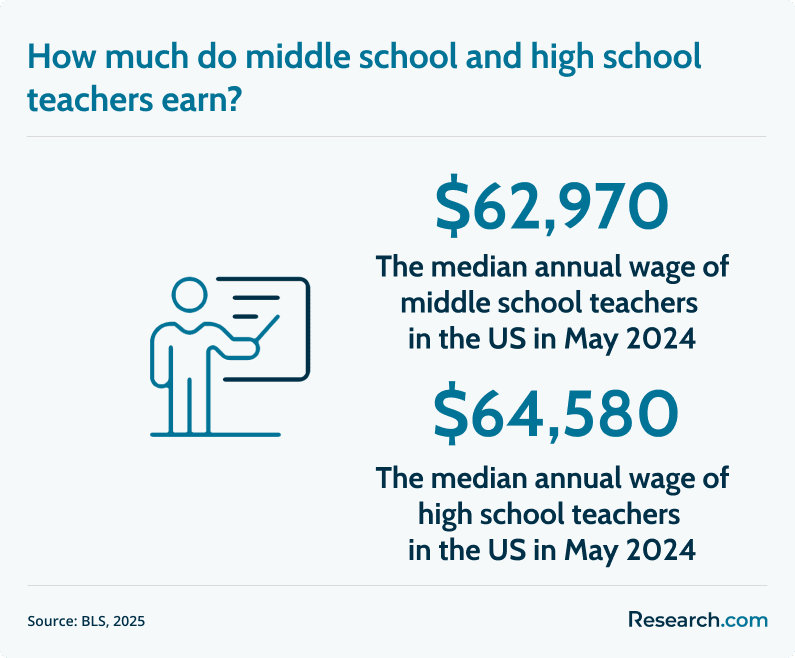
Notably, high school teachers employed in the US had a higher median annual wage ($64,580) than that of preschool and childcare center directors in May 2024. The figure is also higher than the $62,970 median annual wage of middle school teachers across the country in the same period (US BLS, 2025).
These data points may demonstrate that teaching older students generally offers higher compensation than teaching young children. However, specialized early childhood education jobs, such as speech-language pathologists ($95,410) or instructional coordinators ($74,720), can compete with or surpass secondary teacher salaries, particularly occupations that require advanced degrees and certifications.
Professionals who pursue the shortest bachelor’s degree in early childhood education online may also unlock access to better-paying roles more quickly.
How do salaries in early childhood education compare to salaries in postsecondary education?
Several early childhood education jobs provide salaries that are lower than those of postsecondary education roles.
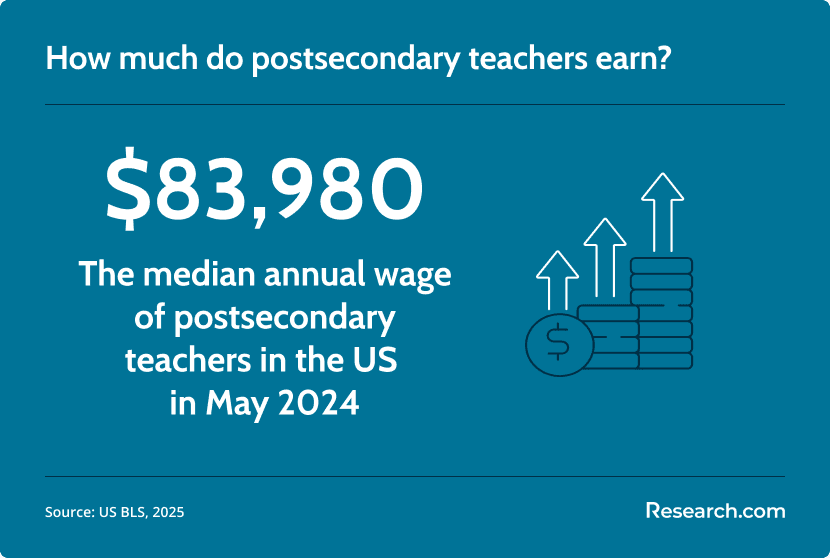
For example, in May 2024, preschool teachers working in the US had a median annual wage of $37,120; preschool and childcare center directors had $56,270; and middle school teachers had $62,970. These figures are lower than the median annual wage of postsecondary teachers ($83,980) and postsecondary education administrators ($103,960) employed in the US in the same period (US BLS, 2025).
The difference in income potential may reflect the advanced degrees and expertise required by postsecondary education occupations. While both career paths contribute meaningfully to education, postsecondary education jobs may offer greater long-term financial rewards. Moreover, early childhood education can provide a direct, formative impact on young learners despite lower salaries.
For some educators, financial considerations—combined with an interest in student guidance and well-being—may inspire a career change from teacher to school counselor. Transitioning into counseling can open doors to more specialized roles, different work environments, and in some cases, higher earning potential while still remaining closely connected to student development.
What is the job outlook for the highest-paying early childhood education jobs?
Some non-teaching early childhood education jobs, such as speech-language pathologists (SLPS) and instructional coordinators, are expected to have a positive job-growth rate from 2024 to 2034. Meanwhile, employment for several teaching jobs in the field, such as special education teachers and kindergarten teachers, has been forecasted to have a negative job-growth rate.
Notably, employment for these teaching and non-teaching early childhood education jobs is expected to have thousands of annual job openings over the decade.
Employment for speech-language pathologists in the US is expected to increase by 15%, which is much faster than the average job-growth rate for all occupations in the country. The figure translates to an average of about 13,300 annual job openings over the decade (US BLS, 2025).
Meanwhile, employment for instructional coordinators is expected to increase by 1% during the same period, which is slower than the average job-growth rate for all US occupations. The figure translates to an average of around 21,900 yearly job openings over the decade (US BLS, 2025).
However, special education teachers are expected to have a job-growth rate of -1% from 2024 to 2034, translating to an average of about 37,800 job openings each year over the decade. Moreover, kindergarten and elementary school teachers are expected to have a -2% job-growth rate in the same period, which is equivalent to an average of around 103,800 annual job openings over the decade (US BLS, 2025).
Aspiring professionals may explore the shortest online elementary education programs to quickly enter the field and take advantage of the large number of openings despite slower projected growth.
What alternative early childhood education jobs can I explore?
Early childhood education professionals may choose to pursue the occupations below. They may not be the highest-paying jobs in the field, but they still make a meaningful impact on young learners.
- Preschool Teachers ($37,120): Preschool teachers introduce children to structured learning environments. They focus on basic literacy, numeracy, and social skills. These teachers play an important role in preparing children for kindergarten and beyond.
- Teacher Assistants ($35,240): Working under lead teachers, teacher assistants provide classroom support by helping manage activities and supervise children. They may also offer one-on-one guidance. Becoming a teacher assistant is an excellent entry point for professionals gaining experience while pursuing further education.
- Childcare Workers ($32,050): Childcare workers are often employed in daycare centers or private homes. They focus on nurturing, supervising, and engaging children in play-based learning. Their responsibilities emphasize safety and emotional development.
Some professionals in these roles may pursue an accelerated graduate certificate in early childhood education online to enhance their qualifications and access higher-paying opportunities.
How can a doctoral degree enhance leadership roles in early childhood education?
Earning a doctoral degree can open pathways to senior leadership and transformational roles within early childhood education. Advanced study equips professionals with specialized research skills, strategic planning capabilities, and a deeper understanding of educational policies necessary for steering institutional change. Pursuing a doctorate may lead directly to increased responsibilities that translate into higher compensation and greater influence in decision-making forums. For those eager to expedite their academic enhancement, exploring the fastest online EdD programs ensures access to a curriculum designed to fast-track career advancement while maintaining flexibility.
How can advanced certifications boost my early childhood education career?
Integrating advanced certifications into your professional profile can unlock niche expertise and broaden your career trajectory. Targeted certifications in fields like digital learning, educational leadership, or adjacent specialties such as library science provide a competitive edge. For instance, earning the most affordable masters in library science online not only diversifies your skillset but also strengthens cross-disciplinary collaboration, enhancing both curriculum development and community engagement. These specialized credentials demonstrate commitment and adaptability, paving the way for innovative roles and long-term career growth.
Here’s What Early Childhood Education Professionals Say about Their Careers
- Jeffrey: "Working as a preschool teacher has been a rewarding experience for me. Every day, I help children discover new skills, build confidence, and develop curiosity. The joy of watching them grow and knowing I’m helping shape their early foundations makes this career incredibly meaningful."
- Agnes: "As a childcare center director, I’ve enjoyed leading passionate educators while ensuring that children receive quality care. This career offers leadership opportunities, competitive pay, and the chance to influence young learners’ development at a broader level. It’s both challenging and deeply fulfilling."
- Mary: "Working in early childhood special education allows me to make a lasting impact on children with diverse needs. The role is demanding, but seeing students thrive with the right support is worth every effort. I’m growing professionally and personally because I’m in this field."
Key Findings
- Speech-language pathologists (SLPs) working in the education sector diagnose and treat communication and swallowing disorders in young children. Their expertise helps children overcome developmental challenges. In May 2024, they had a median annual wage of $95,410 (US BLS, 2025).
- Elementary school principals are some of the highest-paid early childhood education professionals. In May 2024, elementary, middle, and high school principals working in the US had a median annual wage of $104,070 (US BLS, 2025).
- For kindergarten and elementary school teachers, Rhode Island was the top-paying state in May 2024, with a median annual wage of $86,390 for these educators (US BLS, 2025).
- Childcare workers working in the US had a median annual wage of $32,050 in May 2024, while preschool teachers had $37,120. These figures are already much lower than the $49,500 median annual wage of all US occupations in the same period US BLS, 2025).
- Employment for speech-language pathologists in the US is expected to increase by 15%, which is much faster than the average job-growth rate for all occupations in the country. The figure translates to an average of about 13,300 annual job openings over the decade (US BLS, 2025).
References:
- US Bureau of Labor Statistics. (2025, August 28). Childcare Workers. Occupational Outlook Handbook. https://www.bls.gov/ooh/personal-care-and-service/childcare-workers.htm
- US Bureau of Labor Statistics. (2025, August 28). Elementary, Middle, and High School Principals. Occupational Outlook Handbook. https://www.bls.gov/ooh/management/elementary-middle-and-high-school-principals.htm
- US Bureau of Labor Statistics. (2025, August 28). High School Teachers. Occupational Outlook Handbook. https://www.bls.gov/ooh/education-training-and-library/high-school-teachers.htm
- US Bureau of Labor Statistics. (2025, August 28). Instructional Coordinators. Occupational Outlook Handbook. https://www.bls.gov/ooh/education-training-and-library/instructional-coordinators.htm
- US Bureau of Labor Statistics. (2025, August 28). Kindergarten and Elementary School Teachers. Occupational Outlook Handbook. https://www.bls.gov/ooh/education-training-and-library/kindergarten-and-elementary-school-teachers.htm
- US Bureau of Labor Statistics. (2025, August 28). Librarians and Library Media Specialists. Occupational Outlook Handbook. https://www.bls.gov/ooh/education-training-and-library/librarians.htm
- US Bureau of Labor Statistics. (2025). May 2024 OEWS Profiles. Occupational Employment and Wage Statistics (OEWS) Profiles. https://data.bls.gov/oesprofile
- US Bureau of Labor Statistics. (2025, August 28). Middle School Teachers. Occupational Outlook Handbook. https://www.bls.gov/ooh/education-training-and-library/middle-school-teachers.htm
- US Bureau of Labor Statistics. (2025, August 28). Postsecondary Teachers. Occupational Outlook Handbook. https://www.bls.gov/ooh/education-training-and-library/postsecondary-teachers.htm
- US Bureau of Labor Statistics. (2025, August 28). Preschool and Childcare Center Directors. Occupational Outlook Handbook. https://www.bls.gov/ooh/management/preschool-and-childcare-center-directors.htm
- US Bureau of Labor Statistics. (2025, August 28). Preschool Teachers. Occupational Outlook Handbook. https://www.bls.gov/ooh/education-training-and-library/preschool-teachers.htm
- US Bureau of Labor Statistics. (2025, August 28). Special Education Teachers. Occupational Outlook Handbook. https://www.bls.gov/ooh/education-training-and-library/special-education-teachers.htm
- US Bureau of Labor Statistics. (2025, August 28). Speech-Language Pathologists. Occupational Outlook Handbook. https://www.bls.gov/ooh/healthcare/speech-language-pathologists.htm
- US Bureau of Labor Statistics. (2025, August 28). Teacher Assistants. Occupational Outlook Handbook. https://www.bls.gov/ooh/education-training-and-library/teacher-assistants.htm
Other Things You Should Know about Early Childhood Education Jobs
To qualify for top-paying positions in early childhood education in 2027, most employers require a bachelor's degree in education or a related field, along with state certification. Leadership roles may also demand a master's degree or specialized credentials in educational administration.
Effective strategies to negotiate a higher salary in early childhood education for 2026 include obtaining advanced certifications, gaining additional experience, and pursuing continuous professional development. Highlighting unique skills and demonstrating a strong track record of success can also strengthen your negotiation position.


