
2027 What Degree Do You Need To Be a Social Worker: Education Requirements in Massachusetts

Co-Founder and Chief Data Scientist
Recent data shows that Massachusetts employs over 14,000 social workers, reflecting sustained demand for qualified professionals who meet rigorous academic standards. Earning a relevant degree not only fulfills licensing criteria but also enhances job prospects and capacity to influence community well-being.
This article clarifies degree requirements in Massachusetts, addressing common uncertainties with evidence-based insights. It provides clear guidance on academic credentials and licensure steps, helping readers make informed decisions and navigate the pathway to meaningful social work careers.
Key Things to Know About Social Work Education Requirements in Massachusetts
- A Bachelor of Social Work (BSW) is the minimum education required for entry-level positions but limits clinical practice options in Massachusetts.
- A Master of Social Work (MSW) is necessary for clinical licensure (LCSW) and advanced roles, reflecting the state’s emphasis on graduate education for professional practice.
- Massachusetts also recognizes out-of-state degrees if they meet educational and supervised experience standards, though state-specific exams remain mandatory for licensure.
- What is the minimum degree required to become a licensed social worker in Massachusetts?
- What courses are covered in a social work degree program in Massachusetts?
- How long does it take to complete a social work degree program in Massachusetts?
- How much does a social work degree cost in Massachusetts?
- What degrees are required for different social work specializations in Massachusetts?
- What financial aid options are available to social work students in Massachusetts?
- What are the licensure and continuing education requirements for social workers in Massachusetts?
- What are the career prospects for social workers in Massachusetts?
- What are the alternative pathways to become a social worker in Massachusetts?
- Are online social work degrees recognized in Massachusetts?
- What organizations accredit social work degree programs in Massachusetts?
- What are the top institutions offering social work degree programs in Massachusetts?
What is the minimum degree required to become a licensed social worker in Massachusetts?
Massachusetts offers multiple credentialing pathways for social workers, reflecting diverse educational backgrounds and practical experience. The state’s flexibility contrasts with other jurisdictions and aligns with its evolving workforce demands, including specialized areas like senior social care.
- Licensed Social Work Associate (LSWA): Requires an associate degree in a human services field or a bachelor’s degree in any discipline, with eligibility also possible through significant supervised work experience.
- Licensed Social Worker (LSW): Typically necessitates a Bachelor of Social Work (BSW) from a CSWE-accredited program, though substantial supervised experience or other relevant bachelor degrees may qualify some applicants.
- Licensed Certified Social Worker (LCSW): Entails obtaining a Master of Social Work (MSW) from a CSWE-accredited institution; this is the minimum degree required for independent non-clinical social work practice in Massachusetts.
- Licensed Independent Clinical Social Worker (LICSW): Builds on the MSW requirement with additional post-graduate supervised clinical experience, allowing for independent clinical practice including psychotherapy.
The state’s allowance for licensure across various educational levels not only opens doors to a broad spectrum of candidates but also supports workforce growth in response to health care and community service needs. This approach recognizes that while accredited social work degree requirements secure professional standards, relevant supervised experience remains a critical component in qualifying for licensure at multiple levels.
What courses are covered in a social work degree program in Massachusetts?
Carefully chosen coursework in social work degree programs shapes the competencies necessary for effective professional practice. The curriculum in Massachusetts reflects national standards while addressing local workforce needs, as illustrated below:
- Introduction to Social Services: Foundations of the profession, including historical context, core values, and primary fields, provide a crucial conceptual base.
- Life Span Human Behavior: Examination of physical, psychological, and social development at all life stages to support informed interventions.
- Social Policy and Social Change: Critical analysis of policies affecting marginalized groups and strategies for systemic advocacy.
- Generalist Practice (Individuals, Families, Groups, Communities): Core intervention skills across micro, mezzo, and macro levels emphasizing diverse client needs.
- Field Work and Seminar: Hands-on experience mandated by Massachusetts programs, requiring up to 425 hours for bachelor’s and 600–1,000 hours for master’s students.
- Research Methods for Health Professions: Introduction to research design and data analysis underpinning evidence-based practice.
- Oppression, Prejudice, Discrimination: Exploration of systemic inequities and social justice concepts essential to ethical social work.
- Human Biology: Natural science coursework supporting a holistic understanding of client health and well-being.
- Statistical Methods: Quantitative skills for program evaluation and practice outcome measurement.
- State-Specific Requirements: Massachusetts emphasizes integrated health and behavioral health practice, tailoring practicum placements to local systems without mandating unique courses beyond CSWE standards.
How long does it take to complete a social work degree program in Massachusetts?
Planning the timeline for social work education in Massachusetts requires a clear understanding of how degree length varies by program type, study format, and individual circumstances. These factors directly influence when you can enter the workforce and begin professional practice in this competitive field. The following points summarize typical completion times and key influences on program duration.
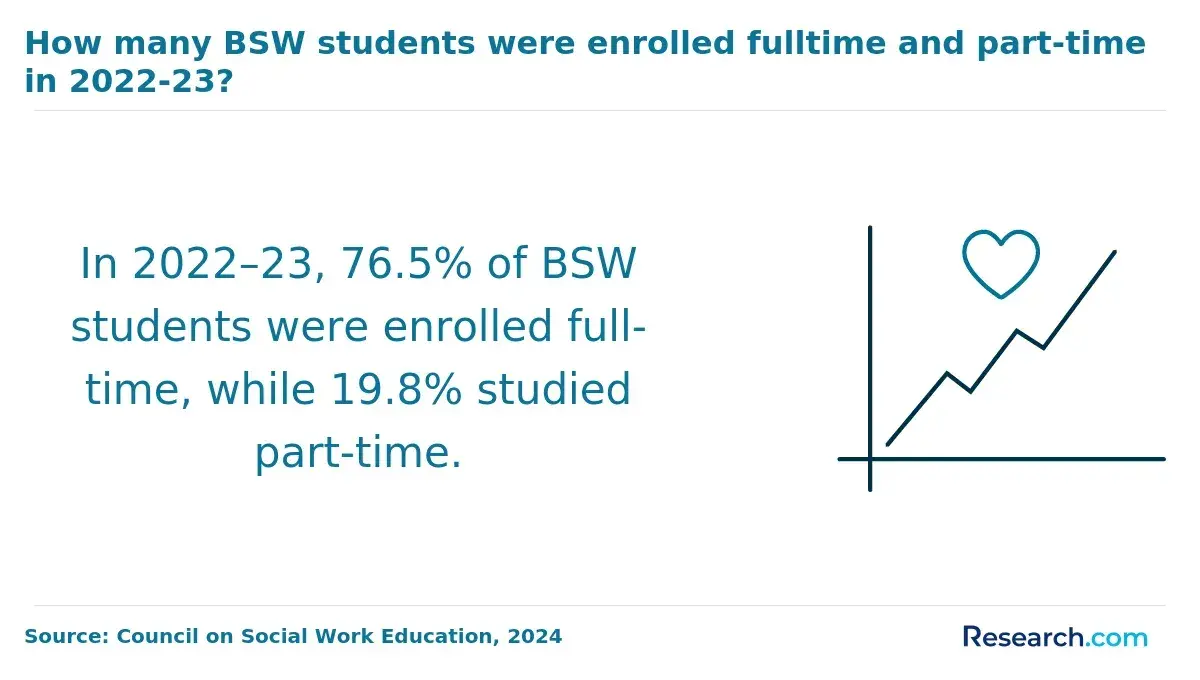
- Bachelor of Social Work (BSW): Full-time students usually finish in four years, while part-time study can extend this to five years or more, depending on course availability and personal commitments.
- Master of Social Work (MSW): Traditional full-time MSW programs take around two years, often including summer terms; part-time tracks generally require three to four years due to reduced course loads and fieldwork demands.
- MSW Advanced Standing: For students with a recent CSWE-accredited BSW, advanced standing can shorten MSW study to 12–16 months full-time or about two years part-time, but eligibility depends on how recently the prior degree was earned and sometimes relevant work experience.
- Doctoral Programs (DSW/PhD): These advanced degrees typically span three to five years full-time; part-time study schedules can extend beyond six years owing to research, dissertation work, and teaching commitments.
Among factors impacting the duration are extensive fieldwork requirements—often 600 to over 1,000 practicum hours—which must be balanced with coursework and personal life. Choosing full-time versus part-time study greatly affects completion speed, especially for working adults. Additionally, institutional policies and the pursuit of specializations or certifications can lengthen program timelines.
Reflecting on this, a Massachusetts social worker I spoke with shared that her journey through the MSW program took nearly four years. She started full-time but switched to part-time study after becoming a parent, balancing field placements with family duties.
Though it required patience and flexibility, she found that each semester deepened her professional readiness, emphasizing that the time invested was “not just about completing a degree, but truly preparing to serve the community.” Her experience underscores that program length can be fluid, influenced by life’s demands and personal goals, rather than a fixed deadline.
How much does a social work degree cost in Massachusetts?
Careful consideration of the cost of a social work degree in Massachusetts helps students plan their finances and weigh program options responsibly. Tuition and associated expenses vary widely depending on degree level, residency status, and institution type, making it essential to examine typical fees closely.
- BSW tuition Massachusetts: Public universities charge $12,000 to $18,000 per year for in-state students and $25,000 to $35,000 for out-of-state; private colleges range from $35,000 to $55,000 annually, sometimes offset by scholarships.
- Cost of MSW programs in Massachusetts: Public MSW tuition ranges from $13,000 to $20,000 for residents and $25,000 to $35,000 for non-residents, while private institutions often exceed $45,000 per year, with online options potentially adding technology fees but offering more flexibility.
- DSW programs: Less common and focused on leadership, DSW tuition typically runs $25,000 to $40,000 annually, with less variation between in-state and out-of-state students and available hybrid formats.
- PhD in Social Work: Public PhD tuition ranges from $15,000 to $30,000 yearly, whereas private programs may exceed $40,000, though stipends or assistantships can reduce costs for research-active students.
- Additional factors: Public schools generally offer lower tuition for residents; online programs might have slightly higher tuition but save commuting costs. Students should also anticipate fees, textbooks, and living expenses, all influencing overall financial planning.
For those evaluating potential returns on investment in social work education, it is useful to explore how much do social workers make across states to align costs with prospective earnings.
What degrees are required for different social work specializations in Massachusetts?
The degree requirements for social work specializations in Massachusetts vary according to the responsibilities and licensure levels associated with each role. Different levels of education reflect the complexity of practice and legal mandates for supervision or independent clinical work.
- Clinical Social Work: A Master of Social Work (MSW) from a CSWE-accredited program is required, along with 3,500 hours of supervised clinical experience and passing the clinical ASWB exam to become a Licensed Independent Clinical Social Worker (LICSW).
- School Social Work: Typically demands an MSW from a CSWE-accredited program, with some positions requiring additional state licensure or certification from the Massachusetts Department of Elementary and Secondary Education.
- Healthcare Social Work: Most roles require an MSW, especially for counseling or case management, while entry-level support positions may accept a Bachelor of Social Work (BSW) though advancement requires a master’s degree and licensure.
- Child and Family Services: Entry-level jobs usually require a BSW, but supervisory or clinical roles need an MSW; specialized MSW tracks in child, youth, and family social work are available in Massachusetts programs.
Other pathways include the Licensed Social Work Associate (LSWA), which requires an associate or bachelor’s degree but mandates supervised practice, and the Licensed Social Worker (LSW), attainable with a BSW and allowing non-clinical practice under supervision. The Licensed Certified Social Worker (LCSW) requires an MSW and prepares graduates for a broader range of services, though clinical practice demands further experience and credentials.
These degree requirements for social work specializations in Massachusetts demonstrate the layered educational and experiential commitments necessary to meet the diverse needs of the population served. Building on these advanced pathways, the chart below highlights the most popular jobs pursued by graduates with a PhD in Social Work.
What financial aid options are available to social work students in Massachusetts?
Financial aid is essential for students pursuing social work degrees in Massachusetts, as it helps alleviate the substantial tuition and living costs that can otherwise limit access to this profession. By securing scholarships, grants, and other funding, students can focus more on their studies and less on financial strain, making a career in social work more achievable and sustainable.
Key financial aid options for social work students in Massachusetts include:
- Federal Grants: Pell Grants and Supplemental Educational Opportunity Grants (FSEOG) support undergraduate students demonstrating financial need, offering funds that do not require repayment.
- State Scholarships and Grants: Programs like MASSGrant and MASSGrant Plus provide income-based awards to Massachusetts residents attending in-state colleges, helping to cover tuition and mandatory fees.
- Behavioral Health Workforce Scholarship Program: This Massachusetts initiative offers scholarships to graduate students committed to working in critical behavioral health fields, prioritizing mental health and substance use disorder specialties.
- Scholarships for BSW and MSW Programs: Many universities offer scholarships, including merit-based awards and fellowships; for example, Boston College grants automatic scholarships to all admitted MSW students, while Boston University provides named scholarships and occasional full-tuition awards.
- Field Placement Stipends and Graduate Assistantships: These opportunities provide stipends and partial tuition remission in exchange for work during field placements or departmental assistance.
- Federal Work-Study Programs: Eligible students can earn wages through part-time jobs on campus or community organizations, gaining professional experience while funding their education.
- Student Loans: Federal Direct Unsubsidized Loans are accessible to both undergraduate and graduate students, with credit-based loans available for additional funding needs.
- Funding from Professional Organizations: National and state groups, including the NASW-Massachusetts Chapter, offer scholarships and funding lists that support both BSW and MSW students, with extra awards for veterans and alumni of service programs.
- Employer Tuition Reimbursement: Part-time students employed full-time may qualify for reimbursement from employers, particularly in health, education, or community service sectors.
Those seeking alternative paths may also explore cheap online MSW programs, which can offer more flexible and cost-effective options. Overall, financial aid for social work students in Massachusetts encompasses a comprehensive mix of federal, state, institutional, and external resources designed to reduce tuition burdens and expand access to essential social work education. To further understand the financial landscape, the chart below shows the average salary of social work faculty members.
What are the licensure and continuing education requirements for social workers in Massachusetts?
In Massachusetts, obtaining and maintaining licensure involves clearly defined steps beyond degree completion. Candidates must meet distinct criteria based on the level of practice—whether pursuing Licensed Social Work Associate (LSWA), Licensed Social Worker (LSW), or Licensed Certified Social Worker (LCSW) credentials. Each licensure tier requires a combination of academic credentials from a CSWE-accredited program, a set number of supervised practicum or fieldwork hours, and successful passage of state-administered examinations.
Furthermore, licensed professionals are mandated to complete a predefined number of continuing education hours during each renewal cycle. These credit requirements ensure that practitioners remain current with evolving clinical practices and ethical standards, reinforcing the profession’s commitment to quality service. For detailed guidance on navigating both initial licensure and subsequent renewals, please review how to become a social worker in Massachusetts.
What are the career prospects for social workers in Massachusetts?
In Massachusetts, social work graduates benefit from a dynamic job market with diverse roles across healthcare, education, and community services. Employers value CSWE-accredited qualifications and hands-on experience, resulting in competitive starting salaries and steady career progression. Recent labor statistics indicate a growing demand for social work professionals, driven by an aging population and increasing community support needs. Professionals can enhance their credentials by obtaining additional certifications and specialized experience to access leadership and clinical practice roles. For professionals considering a complementary route, exploring the fastest way to become a counselor in Massachusetts may offer parallel growth opportunities and expanded client service capabilities.
What are the alternative pathways to become a social worker in Massachusetts?
Individuals with degrees in psychology, sociology, or other related fields can enter social work in Massachusetts without beginning their education anew. The state values diverse academic and professional backgrounds, offering multiple pathways to licensure that acknowledge prior learning and experience.
- MSW Without a BSW: Applicants with non-social work bachelor’s degrees may choose a traditional two-year MSW program instead of the one-year advanced standing track available to BSW holders.
- Degrees in Psychology or Sociology: These fields provide relevant foundations accepted for MSW admission, supporting a smooth transition into social work education.
- Post-Bachelor’s Certificates: Programs like Boston University’s certificate help explore social work and prepare candidates for MSW curricula.
- State-Specific Certification: Individuals with any bachelor’s degree can pursue LSW licensure by completing supervised experience and passing the ASWB bachelor’s exam.
A social worker from Massachusetts who graduated from a local university shared that transitioning from a prior career in education was both challenging and rewarding. He recalled feeling uncertain about starting over but found the alternative certification routes welcoming and flexible. “Navigating supervised hours while balancing work was tough, but having prior firsthand experience with people helped,” he reflected.
The structured pathways offered him a clear goal without dismissing his previous skills. This journey highlights how Massachusetts accommodates those shifting careers, emphasizing practical experience alongside formal education as key to entering the profession.
Are online social work degrees recognized in Massachusetts?
Online Bachelor of Social Work (BSW) and Master of Social Work (MSW) programs have gained popularity due to their flexibility, especially for working adults and those unable to relocate. However, the key issue remains whether these degrees are recognized for licensure and employment in Massachusetts. Recognition affects graduates’ capacity to obtain state licensure and secure jobs within the social work field, making it a critical consideration beyond convenience.
The recognition of online social work degrees in Massachusetts hinges on accreditation by the Council on Social Work Education (CSWE). The Massachusetts Board of Registration of Social Workers mandates that degrees—whether earned online or on campus—must come from CSWE-accredited programs to qualify for licensure.
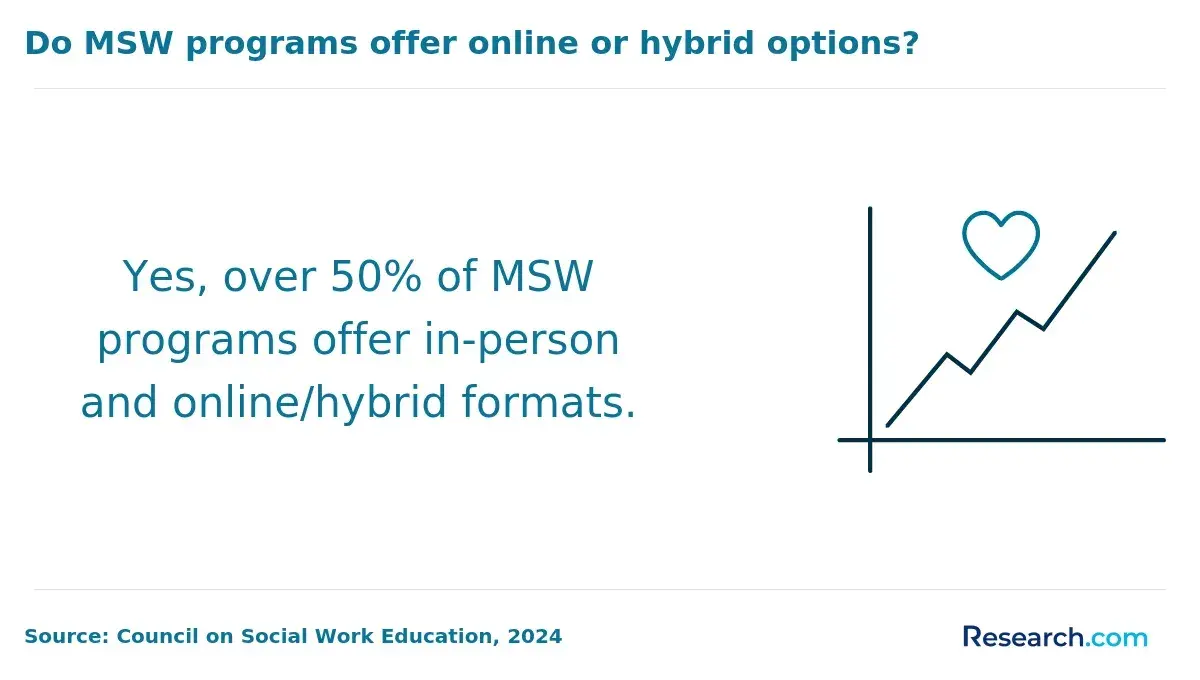
By 2022, over 40% of MSW students nationwide were enrolled in online or hybrid formats. Moreover, a 2023 survey found over 80% of employers perceive CSWE-accredited online degrees as equivalent to traditional ones, emphasizing accreditation and fieldwork over delivery method.
Students should note that supervised fieldwork remains essential, regardless of program format, requiring local in-person practicums. Hybrid programs offering both online coursework and occasional on-campus sessions may benefit those seeking more interaction. Crucially, only degrees from current CSWE-accredited institutions recognized by the Massachusetts Board are accepted for licensure; programs lacking this accreditation can impede career progress despite flexibility.
What organizations accredit social work degree programs in Massachusetts?
Accreditation plays a critical role in maintaining high standards for social work education, ensuring that programs deliver comprehensive curricula and qualified faculty support. For those pursuing social work careers in Massachusetts, graduation from an accredited program is essential for licensure eligibility and is valued by employers as evidence of professional preparation.
- Council on Social Work Education (CSWE): This national body accredits social work degree programs in the United States. Graduates of CSWE accredited social work programs in Massachusetts, including Bachelor of Social Work (BSW) and Master of Social Work (MSW) programs, are eligible to sit for state licensing exams required for clinical and professional practice.
- New England Commission of Higher Education (NECHE): As the regional accreditation organization, NECHE reviews Massachusetts colleges and universities to ensure institutional quality and integrity. Its approval supports federal financial aid access and broad recognition of degrees beyond just social work, underpinning overall academic standards.
- Massachusetts Board of Registration of Social Workers: Although not an accrediting agency, this state board evaluates and approves social work programs specific to Massachusetts licensure requirements. Applicants must present transcripts from programs sanctioned by the Board to move forward with licensure applications.
Choosing a program without proper accreditation may limit licensure options and employment prospects, emphasizing the importance of selecting from board-approved and nationally recognized programs. Furthermore, data indicates a steady demand for qualified social workers in Massachusetts, with growing opportunities for those who complete accredited training.
For those considering the career path, examining factors like program accreditation alongside potential future earnings, such as typical social worker salary, will provide a clearer perspective on the profession’s benefits and challenges.
What are the top institutions offering social work degree programs in Massachusetts?
Choosing the right institution for your social work education in Massachusetts is critical to ensure your degree is fully accredited, prepares you effectively for licensure, and represents a wise financial investment. With a variety of programs available, it is important to evaluate schools based on curriculum rigor, fieldwork opportunities, and flexible learning options.
The best social work schools in Massachusetts include:
- Boston College School of Social Work: Ranked among the top 10 programs nationwide, it offers MSW degrees with clinical and macro practice tracks and robust dual degrees, including JD/MSW and MBA/MSW, plus 1,200 hours of field practice.
- Boston University School of Social Work: Known for its accredited BSW and MSW programs, BU integrates social justice themes into its urban-focused curriculum and boasts a broad network of field placements and alumni.
- Simmons University: Provides an accredited MSW program available in flexible online formats, enabling advanced standing students to finish in as few as nine months while preparing them well for LCSW licensure.
- Westfield State University: Specializes in clinical social work with advanced standing options and four focused areas including Substance Use and Latinx Community Health, requiring 500 hours of field experience and offering a cost-effective path.
- University of Massachusetts Amherst: Offers strong BSW and MSW programs emphasizing community engagement and interdisciplinary research, with extensive field placements that cover both rural and urban Western Massachusetts.
Many students also consider accelerating their graduate education through advanced standing programs or exploring flexible learning options such as an online PhD social work. Selecting accredited MSW programs in Massachusetts that combine rigorous academics with practical experience remains essential for those aiming to meet licensure requirements and navigate the competitive social work employment landscape effectively.
What Do Social Workers in Massachusetts Say About Their Degree
Completing my social work degree at Boston University truly shaped my approach to community engagement. The program’s focus on urban challenges in Massachusetts prepared me to address complex social issues with empathy and practical solutions. Starting my career in a local school, I’ve had the privilege to foster meaningful change in children’s lives, helping them overcome adversity with support and resilience. The rich cultural diversity of the state keeps my work dynamic and deeply rewarding. Darnell
Studying social work at the University of Massachusetts Amherst offered me incredible professional development opportunities that I hadn’t anticipated. The curriculum balanced theory with hands-on experience, and the strong network of local schools allowed me to step confidently into my first role. Working in education here has been a fulfilling way to contribute positively to young people’s well-being while growing my expertise in social advocacy. Massachusetts’ resources and community programs give me hope every day for expanded impact. Sofia
Reflecting on my time at Simmons University, I realize how much the intimate class environment and dedicated faculty fueled my passion for social work. In Massachusetts, the emphasis on social justice resonates strongly, and I’ve encountered unique challenges and opportunities tied to the state’s socioeconomic landscape. Beginning my career in a local school setting has not only honed my skills but also deepened my commitment to empowering families and children. This journey has been both professionally enriching and personally transformative. Jimmy
Related Articles for Nearby States
- 2027 What Degree Do You Need To Be a Social Worker: Education Requirements in Rhode Island
- 2027 What Degree Do You Need To Be a Social Worker: Education Requirements in Connecticut
- 2027 What Degree Do You Need to Be a Social Worker: Education Requirements in New Hampshire
- 2027 What Degree Do You Need To Be a Social Worker: Education Requirements in New York
- 2027 What Degree Do You Need To Be a Social Worker: Education Requirements in Vermont
- 2027 What Degree Do You Need To Be a Social Worker: Education Requirements in New Jersey
- 2027 What Degree Do You Need To Be a Social Worker: Education Requirements in Maine
- 2027 What Degree Do You Need To Be a Social Worker: Education Requirements in Pennsylvania
- 2027 What Degree Do You Need To Be a Social Worker: Education Requirements in Delaware
- 2027 What Degree Do You Need To Be a Social Worker: Education Requirements in Maryland
References:
- Association of Social Work Boards. (2025, August 27). New applicant instructions - Association of Social Work Boards. aswb.org.
- Bunker Hill Community College. (n.d.). Social Work - Bunker Hill Community College. bhcc.edu.
- Greenfield Community College. (n.d.). Human Services. gcc.mass.edu.
- Lasuertmer, D. (n.d.). How to Become a Social Worker in Massachusetts. bestmswprograms.com.
- Mass.gov. (n.d.). Social worker licensing | Commonwealth of Massachusetts. mass.gov.
- Simmons Online. (2022, May 20). How to become a LICSW. online.simmons.edu.
- socialworklicensemap.com. (2023, July 6). How to become a social worker in Massachusetts. socialworklicensemap.com.
- Tobin, J. (2025, July 9). Learn how to become a licensed social worker in MA. Psychology.org. psychology.org.
- Vasquez, E. (2025, August 29). BSW Programs in Massachusetts 2025 | 5 accredited schools. Social Work Degrees - Search 1300+ Social Work Degrees Online. socialworkdegrees.org.
Other Things You Should Know About What Degree You Need to Be a Social Worker in Massachusetts
In Massachusetts, to start a career in social work by 2026, a Bachelor's degree in Social Work (BSW) is typically required for entry-level positions, while a Master’s in Social Work (MSW) is necessary for clinical roles. Community colleges may offer associate degrees or courses beneficial for transfer but not sufficient for licensure.
Community colleges in Massachusetts typically do not offer dedicated social work degrees, as accredited social work programs are most commonly found at four-year colleges and universities. However, many community colleges provide related degrees or certificates in human services or behavioral health that can serve as foundational stepping stones.
These programs often prepare students for entry-level positions in social service agencies or help them transfer credits toward a bachelor’s degree in social work. For those committed to becoming licensed social workers in Massachusetts, pursuing a bachelor's or master’s degree in social work from a Council on Social Work Education (CSWE) accredited institution remains essential.
To pursue a career in social work in Massachusetts, start by earning a Bachelor of Social Work (BSW) from an accredited institution. Afterward, a Master of Social Work (MSW) is typically required, especially for clinical roles. Consider internship opportunities and obtain the necessary licensure to practice.


