
2027 What Degree Do You Need To Be a Social Worker: Education Requirements in Pennsylvania

Co-Founder and Chief Data Scientist
Many aspiring social workers in Pennsylvania face uncertainty about the necessary education to enter the field. With over 24,000 social workers employed statewide, understanding the degree requirements is crucial to accessing rewarding career opportunities. Pursuing a Bachelor's or Master of Social Work not only meets licensure mandates but also enhances professional skills and earning potential.
This article, crafted by seasoned career planning experts, breaks down Pennsylvania’s education standards, licensure pathways, and the value of accredited programs. It offers clear, practical guidance to help you confidently navigate your journey toward becoming a licensed social worker in Pennsylvania.
Key Things to Know About Social Work Education Requirements in Pennsylvania
- A Bachelor’s degree in Social Work (BSW) is the minimum requirement for entry-level positions in Pennsylvania’s social work field.
- To obtain licensure as a Licensed Social Worker (LSW), you must hold a Master of Social Work (MSW) from a program accredited by the Council on Social Work Education.
- Pennsylvania requires clinical social workers to hold a Licensed Clinical Social Worker (LCSW) credential, which entails a supervised post-master’s experience, usually 3,000 hours over two years.
- What is the minimum degree required to become a licensed social worker in Pennsylvania?
- What courses are covered in a social work degree program in Pennsylvania?
- How long does it take to complete a social work degree program in Pennsylvania?
- How much does a social work degree cost in Pennsylvania?
- What degrees are required for different social work specializations in Pennsylvania?
- What financial aid options are available to social work students in Pennsylvania?
- What are the alternative pathways to become a social worker in Pennsylvania?
- What Are the Career Prospects for Social Work Graduates in Pennsylvania?
- Are online social work degrees recognized in Pennsylvania?
- What organizations accredit social work degree programs in Pennsylvania?
- What are the top institutions offering social work degree programs in Pennsylvania?
- What professional development opportunities can enhance your social work career in Pennsylvania?
What is the minimum degree required to become a licensed social worker in Pennsylvania?
The road to becoming a licensed social worker in Pennsylvania is defined by clear, accredited social work degree requirements Pennsylvania recognize. These degrees build a strong foundation for your professional practice and advancement.
- Bachelor of Social Work (BSW): The minimum degree for social worker license in Pennsylvania, the BSW must come from a CSWE-accredited program. Holding this degree allows you to take the ASWB Bachelor’s Examination and qualify for entry-level licensure.
- Master of Social Work (MSW): Required for Licensed Social Worker (LSW) and Licensed Clinical Social Worker (LCSW) credentials, the MSW is obtained from a CSWE-accredited institution. It prepares you for advanced clinical roles and requires passing the ASWB Master’s Examination along with supervised clinical hours for the LCSW license.
- Doctorate in Social Work (DSW or PhD): While not mandatory, a doctoral degree from a CSWE-accredited program qualifies you for LSW and LCSW licensure and enhances opportunities in leadership, policy, or academic careers.
Choosing the right accredited social work degree requirements Pennsylvania relies on sets the stage for a meaningful career. For those interested in social work with older adults, these degrees provide the credentials necessary to serve diverse populations with expertise and compassion.
What courses are covered in a social work degree program in Pennsylvania?
Choosing the right coursework in a social work degree program is key to developing the skills and ethical foundation needed for effective practice. In Pennsylvania, programs are designed to provide a comprehensive education aligned with professional standards and state requirements. The core courses commonly included are:
- Introduction to Social Work: Offers insight into the profession’s history, mission, and core values, setting the stage for understanding various social work fields.
- Human Behavior and the Social Environment: Explores human development theories and social systems, helping students grasp complex individual and societal interactions.
- Social Welfare Policy and Services: Focuses on policy evolution and its impact on service delivery and social justice efforts.
- Social Work Practice with Individuals, Families, and Groups: Teaches practical methods and skills essential for diverse client engagement.
- Diversity and Social Justice: Addresses equity and inclusion, preparing students to serve varied populations effectively.
- Research Methods in Social Work: Introduces evidence-based practices through research design and data analysis.
- Field Education/Practicum: Provides supervised, hands-on experience; BSW candidates complete 400–450 hours, while MSW students must fulfill at least 900 hours.
- Ethics and Professional Conduct: Emphasizes ethical decision-making grounded in the NASW Code of Ethics.
- Child Abuse Recognition and Reporting: A mandatory Pennsylvania state requirement ensuring all licensed social workers are trained in identifying and reporting child abuse.
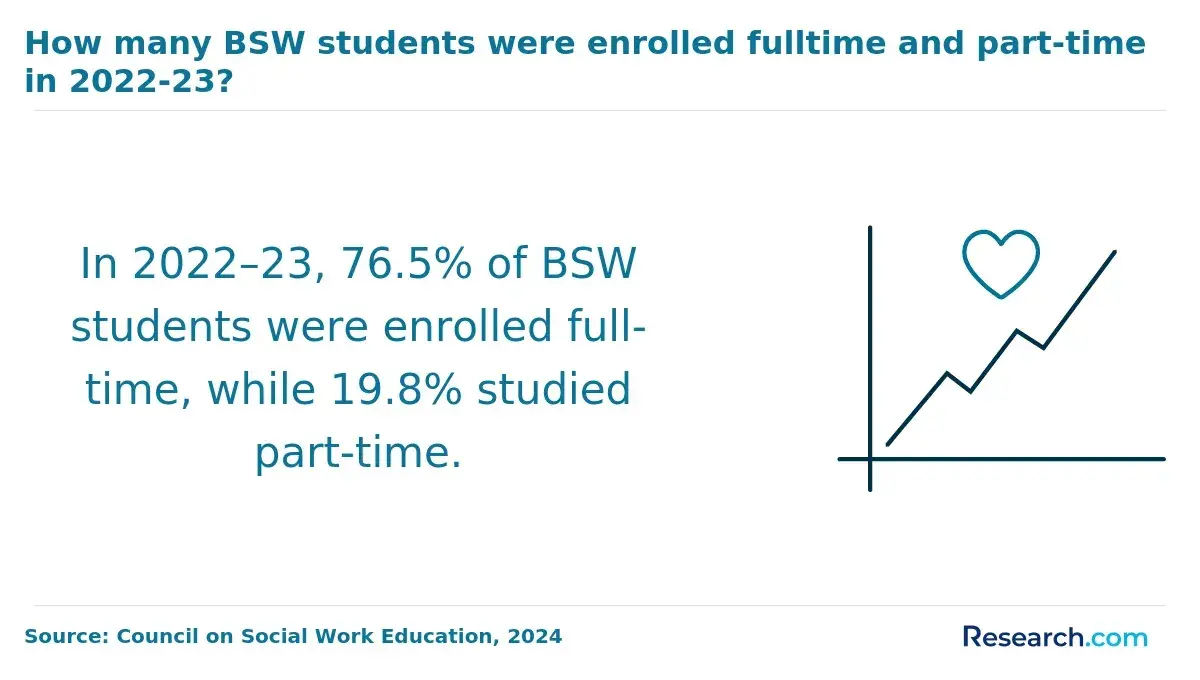
This visual highlights enrollment trends to complement the coursework discussion. The chart reinforces how most BSW students in Pennsylvania pursue their studies full-time, while a smaller portion attend part-time. Understanding these enrollment patterns helps contextualize how programs balance course offerings and fieldwork requirements.
How long does it take to complete a social work degree program in Pennsylvania?
Timing is a vital factor when planning your social work education in Pennsylvania. Knowing how long each degree program typically takes helps you balance goals, work, and life commitments effectively. Here’s a clear look at what to expect as you embark on this rewarding path.
- Bachelor of Social Work (BSW): Usually completed in 4 years of full-time study, though part-time attendance, internships, or additional fieldwork can extend this timeline.
- Master of Social Work (MSW): Regular Standing: Typically a 2-year full-time program (60–62 credits), open to all bachelor’s degree holders; part-time students may take up to 4 years depending on course load.
- Master of Social Work (MSW): Advanced Standing: For those with a CSWE-accredited BSW, this accelerated option can be finished in as little as 1 year full-time (33–39 credits), with part-time plans lasting up to 2 years.
- Doctor of Social Work (DSW): Generally requires 3 to 5 years of full-time study aimed at advanced clinical or leadership roles; some programs offer part-time flexibility.
- PhD in Social Work: Demands 4 to 6 years full-time, depending on dissertation and assistantship commitments, with part-time paths available.
- Full-Time vs. Part-Time Study: Full-time enrollments shorten your journey, while part-time lets you balance other responsibilities but usually takes longer to graduate.
- Advanced Standing Options: Having a BSW from an accredited program can waive foundational courses, reducing your MSW time significantly.
- Fieldwork Requirements: Extensive supervised field placements—often 600 to 900 hours—are essential and may influence how quickly you can finish.
A social worker from Pennsylvania who graduated from a local university shared that her journey to earning her MSW took just over three years. Balancing evening classes with a part-time job and demanding field placements stretched the timeline beyond the typical two years. She reflected, “It wasn’t just about coursework — managing 900 hours of supervised practice alongside real-life responsibilities was the real test.”
Yet, she found gratification in the process, appreciating how every challenge shaped her resilience and passion. Her experience underscores that while program durations can vary, dedication and flexibility are key ingredients to success in Pennsylvania’s social work education landscape.
How much does a social work degree cost in Pennsylvania?
Knowing the cost of a social work degree in Pennsylvania helps you plan effectively and avoid unexpected financial challenges while pursuing your career goals. Tuition for BSW/MSW programs varies widely, so understanding these differences will guide you in making smart educational choices.
- Bachelor of Social Work (BSW): In-state tuition at public schools ranges from $8,000 to $15,000 per year, while out-of-state students pay between $15,000 and $25,000. Private colleges charge significantly more, often between $30,000 and $50,000 annually, with online programs typically aligning with in-state rates.
- Master of Social Work (MSW): Public universities charge in-state students $12,000 to $22,000 per year and out-of-state students $22,000 to $35,000. Private MSW programs range from $35,000 to $55,000 annually, while online options may offer per-credit pricing from $600 to $1,200, making tuition for MSW programs in Pennsylvania more flexible.
- Doctor of Social Work (DSW): These programs usually cost $25,000 to $40,000 per year at private schools, often with cohort-based formats and extra seminar fees. Online DSW offerings provide scheduling flexibility but rarely reduce tuition substantially.
- PhD in Social Work: Public research universities typically charge $15,000 to $25,000 per year for in-state students, with private institutions asking for $35,000 to $55,000. Many doctoral candidates secure assistantships that ease tuition expenses.
Public institutions offer lower tuition than private schools, and in-state students benefit from significantly reduced costs compared to out-of-state peers. Online programs can cut costs related to commuting and housing, making education more affordable overall. For deeper insights into choosing between related professions, check out this school counselor vs school social worker comparison.
What degrees are required for different social work specializations in Pennsylvania?
Different social work roles in Pennsylvania require specific educational levels because each specialization demands unique skills, knowledge, and licensure to serve distinct populations effectively. Knowing the degree requirements for social work specializations in Pennsylvania helps you plan a clear academic path toward your chosen career.
- Clinical Social Work (Licensed Clinical Social Worker - LCSW): Requires a Master of Social Work (MSW) from a CSWE-accredited program, plus 3,000 hours of post-master’s supervised clinical experience and passing the ASWB Clinical Exam. This prepares you for independent mental health assessment, diagnosis, and therapy.
- School Social Work: Typically calls for an MSW focused on child development and school-based practice, often coupled with Pennsylvania Department of Education certification and mandated training in child abuse recognition and reporting.
- Healthcare Social Work: A Bachelor of Social Work (BSW) is the minimum, but an MSW is strongly preferred for advanced roles, which usually require licensure as an LSW or LCSW and specialized medical social work training.
- Child and Family Services: Entry-level positions accept a BSW, yet an MSW is increasingly preferred for supervisory or specialized intervention roles; state-approved training in child abuse reporting and family systems is required.
- Community and Organizational Social Work: A BSW qualifies you for entry-level jobs, but an MSW with a focus on community practice or leadership is common for management positions; doctoral degrees (DSW or PhD) support research, teaching, or policy work.
This chart highlights where PhD graduates in social work typically build their careers, with tenure-track positions in CSWE-accredited programs leading the way. It illustrates how advanced degrees expand opportunities beyond clinical practice, opening doors in academia, research, and leadership roles across educational and organizational settings.
What financial aid options are available to social work students in Pennsylvania?
Financial aid is essential for students pursuing social work degrees as it makes higher education more accessible and helps ease the burden of tuition and related costs. Understanding the variety of financial aid for social work students in Pennsylvania can greatly reduce financial stress, allowing you to focus on your education and future career.
- Federal Grants: These include programs like the Pell Grant, which are awarded based on financial need and do not require repayment. Completing the Free Application for Federal Student Aid (FAFSA) is the first step to access these funds.
- State Scholarships and Grants: Pennsylvania offers need-based aid such as the Pennsylvania State Grant and specialized programs like the Foster Ed Tuition Waiver for former foster care students, helping cover tuition and fees at approved institutions.
- University and School-Specific Scholarships: Many schools such as the University of Pittsburgh and West Chester University offer scholarships targeted toward BSW and MSW students, including awards like Kutztown University’s Child Welfare Education for Baccalaureates (CWEB) program and the Julia Nattle Striving for Excellence Direct Scholarship.
- Work-Study Programs: Federal Work-Study enables students to earn money through part-time roles on campus or in community service, providing valuable experience while helping with educational expenses.
- Student Loans: Federal loans accessed via FAFSA typically offer lower interest rates and flexible repayment, including options like Direct PLUS Loans for graduate social work students, supplementing other financial aid.
- Funding from Professional Organizations and Social Work Associations: Groups such as the National Association of Social Workers Pennsylvania Chapter and university alumni often provide scholarships and awards for students committed to the social work profession.
- Fellowships and Assistantships: Graduate programs may offer tuition waivers and stipends in exchange for teaching or research work, including full funding opportunities at institutions like the University of Pennsylvania.
- Special Population Scholarships: Some scholarships focus on diversity, inclusion, or specific academic achievement, such as awards recognizing students devoted to serving diverse communities or excelling academically.
For those considering accelerated pathways, exploring options like 1 year MSW programs online no BSW can also open avenues for cost-effective, timely completion of social work degrees.
What are the alternative pathways to become a social worker in Pennsylvania?
If you come from a related field or hold a degree in psychology, sociology, or a similar area, you don’t have to start over to become a social worker in Pennsylvania. Several alternative pathways let you build on your prior education and experience, making your transition smoother and faster.
- Traditional MSW Track for Non-BSW Holders: Use your bachelor’s degree to enter a Master of Social Work program, typically completed in two years full-time.
- Advanced Standing MSW Track: If you have a Bachelor of Social Work (BSW), you can finish your MSW in about 12 months through advanced standing.
- Post-Bachelor’s Certificate or Bridge Programs: These fill knowledge gaps for those without a BSW, preparing you for MSW admission.
- School Social Worker Certification (HSV Pathway): Until August 1, 2026, educators with related credentials can convert HSV certification by meeting license and service requirements.
A social worker from Pennsylvania who took one of these alternative routes shared how challenging yet rewarding the experience was. Graduating from a local school after years in education, he said, “Switching careers wasn’t easy—balancing work, study, and family took real determination.” He valued programs that recognized his previous experience and allowed him to shorten his path. “The bridge program gave me the confidence and knowledge I needed without going back to square one.” His journey shows how flexible pathways can open doors for passionate individuals ready to serve their communities.
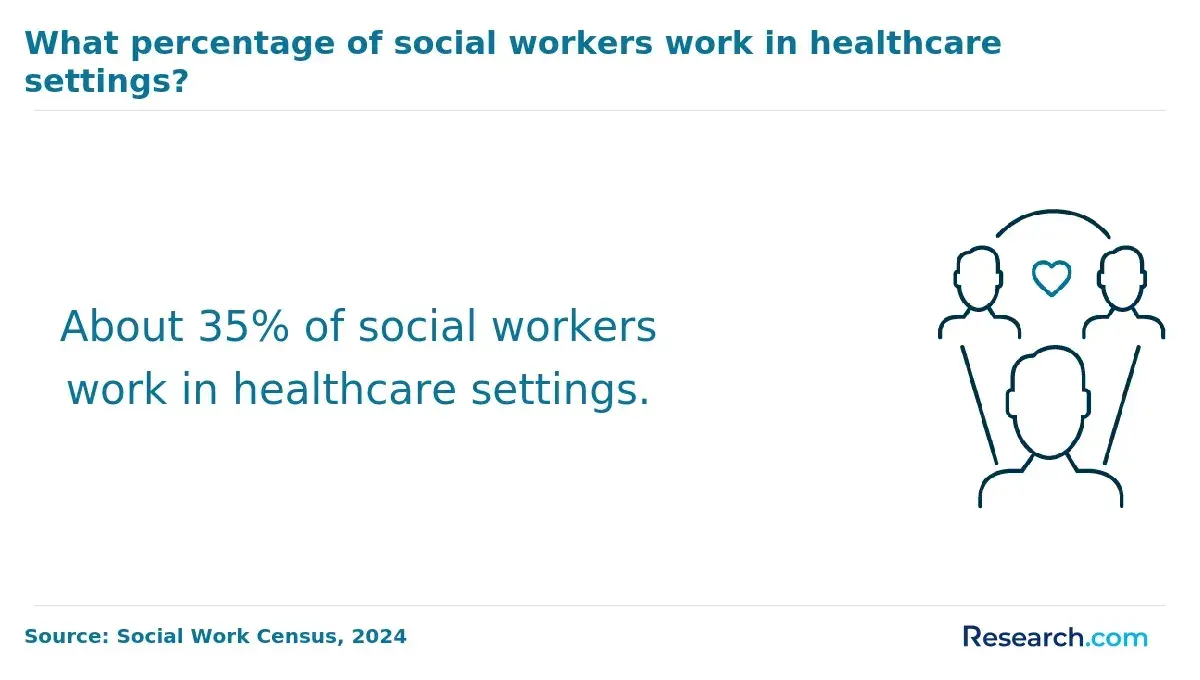
This image reinforces how healthcare plays a major role in social work career opportunities. With about 35% of social workers employed in healthcare settings, it highlights the demand for professionals who can bridge medical care and social support—an important consideration when exploring alternative career pathways.
What Are the Career Prospects for Social Work Graduates in Pennsylvania?
Social work graduates in Pennsylvania find a wide range of career opportunities across healthcare, education, government, and non-profit organizations. With credentials such as a BSW or MSW, professionals can secure roles in clinical practice, community outreach, policy development, and program management. Demand is driven by the state’s evolving social services landscape, which values innovative approaches and practical experience. Competitive salaries and clear pathways for advancement further strengthen the appeal of the profession. For additional guidance on educational and professional steps, refer to how to become a social worker in Pennsylvania.
Are online social work degrees recognized in Pennsylvania?
Online Bachelor of Social Work (BSW) and Master of Social Work (MSW) programs have grown rapidly, offering flexibility for professionals balancing work and family. Recognition of these degrees is essential because only accredited programs qualify graduates to sit for Pennsylvania’s licensure exams and secure jobs in social services. Without this recognition, your degree might not open the doors you’re striving for in healthcare, schools, or community organizations.
Recognition depends heavily on accreditation by the Council on Social Work Education (CSWE), Pennsylvania’s licensing board rules, and employer acceptance. Today, nearly 30% of social work students nationwide enroll in online or hybrid programs. Encouragingly, 75% of Pennsylvania social work employers view CSWE-accredited online degrees as equal to on-campus ones. Universities like PennWest provide fully online, accredited degrees explicitly designed to meet state licensure standards, ensuring your education holds real weight with employers.
When choosing a program, also consider the supervised fieldwork requirement: hundreds of local practicum hours are mandatory for licensure. Many online programs arrange real-world placements in your community, and some, like Widener University, blend online coursework with in-person experiences in hybrid models. Always verify that your chosen school is CSWE-accredited and prepared to guide you through Pennsylvania’s licensure to confidently launch your social work career.
This chart illustrates the range of delivery methods available for BSW programs, from fully in-person to blended, hybrid, and online formats. It highlights the increasing flexibility in program design, helping students choose the path that best balances accreditation requirements with their personal and professional commitments.
What organizations accredit social work degree programs in Pennsylvania?
Accreditation guarantees that social work programs maintain high standards in curriculum, faculty qualifications, and student support—key factors that prepare you to excel professionally. It also ensures your degree is recognized for licensure eligibility and valued by employers, making it a critical step in your career path.
- Council on Social Work Education (CSWE): CSWE accreditation is the hallmark of quality for social work education nationwide and in Pennsylvania. Graduates of CSWE-accredited Bachelor of Social Work (BSW) or Master of Social Work (MSW) programs must hold this accreditation to qualify for social work licensure in Pennsylvania.
- Regional Higher Education Accrediting Bodies: Institutions offering social work degrees must be accredited by recognized regional bodies like the Middle States Commission on Higher Education (MSCHE). This institutional accreditation upholds academic quality, supports credit transfer, and opens doors for advanced study in accredited social work programs in Pennsylvania.
- Pennsylvania Department of Education (PDE): While PDE authorizes schools to operate and confer degrees within the state, it does not provide program-specific accreditation. State authorization assures you that the institution meets essential operational standards but does not replace the need for CSWE programmatic accreditation.
For those aiming to further their credentials into clinical roles, understanding the distinctions between an MSW and LCSW is valuable in planning your professional pathway.
What are the top institutions offering social work degree programs in Pennsylvania?
Choosing the right institution for your social work degree is critical to ensure you enroll in an accredited program that meets licensure requirements while offering strong career preparation. This investment not only opens doors to essential field placements but also connects you with networks that can support your professional growth in Pennsylvania’s competitive social work environment.
- University of Pennsylvania: School of Social Policy & Practice: An Ivy League leader ranked 8th nationally, offering an MSW with 11 specializations and over 500 field placement sites emphasizing social justice and leadership.
- University of Pittsburgh: School of Social Work: Known for its ranked BSW and MSW programs, Pitt provides 1,080 hours of field practice, flexible part-time and online options, and multiple dual degree opportunities.
- Pennsylvania Western University (PennWest): This online MSW program focuses on trauma-informed and rural social work with a flexible format and a strong local field placement network promoting direct employment.
- Slippery Rock University: Offering a CSWE-accredited MSW program with hybrid delivery and an embedded Cognitive Behavioral Therapy Certificate, ideal for advanced clinical practice.
- Bryn Mawr College: Recognized for its community-oriented MSW, small class sizes, and emphasis on clinical social work and advocacy with personalized mentorship opportunities.
When exploring the best social work schools in Pennsylvania, make sure to verify their accreditation and the quality of practicum experiences offered. These factors, combined with specialized tracks, will shape your ability to meet licensure requirements and excel in the field. For a deeper understanding of roles within the profession, consider learning about the distinction between a licensed clinical social worker vs therapist.
What professional development opportunities can enhance your social work career in Pennsylvania?
Social work professionals can leverage a range of continuing education programs, specialized trainings, workshops, and certifications tailored to emerging industry trends. These development opportunities not only augment clinical and administrative skills but also create access to influential networking events and mentorship programs organized by professional associations. Additionally, select courses focus on interdisciplinary collaboration and leadership, effectively positioning practitioners for advanced roles. For those looking to diversify their expertise, exploring the fastest way to become a counselor in Pennsylvania can serve as a strategic career enhancement.
What Do Social Workers in Pennsylvania Say About Their Degree
- Completing my social work degree at Temple University gave me a deep understanding of Pennsylvania’s diverse communities. The program’s focus on urban social issues prepared me well for my career, and starting work in a local school has been incredibly rewarding. Each day, I see the positive impact we can have on students’ lives, helping them overcome challenges and thrive. It’s fulfilling to contribute to their well-being in a city that values support and resilience. David
- My journey through the University of Pittsburgh’s social work program was both challenging and inspiring. The faculty’s emphasis on professional growth helped me develop a strong foundation in evidence-based practices, which I now use daily in my role at a local school. Working in Pennsylvania, I appreciate the unique blend of rural and urban issues, which keeps my work engaging and impactful. I’m proud to advance my career in a state that offers stable opportunities and values lifelong learning. Haley
- Studying social work at West Chester University opened my eyes to how deeply connected Pennsylvania’s communities are to their history and environment. The program encouraged personal growth and community engagement, which I carry with me as I support students at a local school. The chance to address specific regional challenges while fostering positive change keeps me passionate about my work. Living and working here means I can genuinely make a difference where I feel most connected. Jane
Related Articles for Nearby States
- 2027 What Degree Do You Need To Be a Social Worker: Education Requirements in New Jersey
- 2027 What Degree Do You Need To Be a Social Worker: Education Requirements in Delaware
- 2027 What Degree Do You Need To Be a Social Worker: Education Requirements in Maryland
- 2027 What Degree Do You Need To Be a Social Worker: Education Requirements in New York
- 2027 What Degree Do You Need To Be a Social Worker: Education Requirements in West Virginia
- 2027 What Degree Do You Need To Be a Social Worker: Education Requirements in Ohio
- 2027 What Degree Do You Need To Be a Social Worker: Education Requirements in Virginia
- 2027 What Degree Do You Need To Be a Social Worker: Education Requirements in Connecticut
- 2027 What Degree Do You Need To Be a Social Worker: Education Requirements in Rhode Island
- 2027 What Degree Do You Need To Be a Social Worker: Education Requirements in Massachusetts
References:
- Keuka College. How to Become a Social Worker in Pennsylvania.
- NASW-PA Chapter. Professional Development.
- Pennsylvania Social Work License Map. How to Become a Social Worker in Pennsylvania.
- Psychology.org. Pennsylvania Social Work License Requirements And Programs.
- Public Health Online. Pennsylvania Social Work License to Become an LSW & LCSW in PA.
- Shippensburg University. PA Licensure.
- University of Pennsylvania. Master of Social Work (MSW).
- University of Pittsburgh, School of Social Work. Social Work Licensure.
- West Chester University of Pennsylvania. Bachelor of Science in Social Work.
- Widener University. How to Get Your Social Work License Online in Pennsylvania.
Other Things You Need to Know About Education Requirements in Pennsylvania
In Pennsylvania, licensed social workers must complete 30 hours of continuing education every two years to maintain their license. This must include at least 3 hours of ethics training and can encompass various relevant fields to ensure the social worker remains updated with current practices.
In 2027, to become a licensed social worker in Pennsylvania, you'll typically need a Master of Social Work (MSW) degree from an accredited program. This is the educational standard required to apply for a license and practice as a social worker in the state.
In 2027, aspiring licensed social workers in Pennsylvania need at least a Bachelor of Social Work (BSW) to enter the field. A Master of Social Work (MSW) is often required for advanced practice roles such as clinical social work or specialized areas. Additionally, completing an MSW from a CSWE-accredited program is essential for state licensure.


