
2027 What Degree Do You Need To Be a Social Worker: Education Requirements in Connecticut

Co-Founder and Chief Data Scientist
Many aspiring social workers in Connecticut face uncertainty about the exact educational path needed to enter the profession. With over 4,000 social workers currently practicing in the state, demand continues to grow due to rising social and healthcare needs. Pursuing a degree aligned with state licensure requirements increases employment prospects and ensures professional competence.
This article clarifies the specific degree and licensure criteria required to become a licensed social worker in Connecticut. Prepared by career planning experts, it guides readers step-by-step through the educational milestones and credentials necessary to build a successful social work career in this region.
Key Things to Know About Social Work Education Requirements in Connecticut
- A Bachelor of Social Work (BSW) is the minimum requirement for entry-level social work roles in Connecticut, providing foundational skills and eligibility for state licensure.
- A Master of Social Work (MSW) is required for clinical positions and advanced practice, with Connecticut law mandating this degree for Licensed Clinical Social Workers (LCSW).
- Graduates must complete supervised fieldwork as part of their degree; Connecticut emphasizes practical experience to ensure readiness for complex social challenges.
- What is the minimum degree required to become a licensed social worker in Connecticut?
- What courses are covered in a social work degree program in Connecticut?
- How long does it take to complete a social work degree program in Connecticut?
- How much does a social work degree cost in Connecticut?
- What degrees are required for different social work specializations in Connecticut?
- What financial aid options are available to social work students in Connecticut?
- What are the alternative pathways to become a social worker in Connecticut?
- What are the essential steps to achieve social work licensure in Connecticut?
- How can social work graduates transition to counseling roles in Connecticut?
- Are online social work degrees recognized in Connecticut?
- What organizations accredit social work degree programs in Connecticut?
- What are the top institutions offering social work degree programs in Connecticut?
What is the minimum degree required to become a licensed social worker in Connecticut?
Choosing the right educational path sets the foundation for a successful career in social work in Connecticut. Understanding the minimum education requirements for social worker in Connecticut helps clarify which degree aligns best with your professional goals.
- Bachelor of Social Work (BSW): A BSW from a CSWE-accredited program provides essential foundational knowledge but is not sufficient for licensure in Connecticut.
- Master of Social Work (MSW): This is the minimum degree required to obtain licensure as a social worker, including both Licensed Master Social Worker (LMSW) and Licensed Clinical Social Worker (LCSW) credentials. It must be earned from a program accredited by the Council on Social Work Education (CSWE).
- Doctorate in Social Work (DSW or PhD): Though less common, a doctoral degree from a CSWE-accredited program qualifies for LCSW licensure and can expand opportunities in advanced practice, research, and leadership roles.
- School Social Worker Certification: Requires a master’s degree in social work from a CSWE-accredited program plus additional state Department of Education criteria to qualify for certification in school settings.
Familiarizing yourself with accredited social work degree Connecticut options not only ensures meeting state requirements but also prepares you to impact communities effectively. For those exploring careers with a masters in social work, the MSW remains pivotal, offering both clinical and generalist pathways aligned with licensure prerequisites.
What courses are covered in a social work degree program in Connecticut?
Carefully chosen coursework is fundamental to equipping social work students with the skills and knowledge necessary to navigate complex societal challenges. In Connecticut, degree programs emphasize both theoretical foundations and practical experience, reflecting the state’s unique social and policy environment. The core courses typically include:
- Introduction to Social Work: Offers a comprehensive overview of the profession’s history, values, and social roles, grounding students in the mission of social justice and change.
- History of Social Welfare: Explores the evolution of social welfare institutions and policies, with specific attention to Connecticut’s historical context.
- Human Behavior in the Social Environment: Analyzes the interplay of social, psychological, and biological influences on individuals and groups throughout life.
- Diversity, Equity, and Inclusion: Develops cultural competence and awareness of oppression and privilege, emphasizing engagement with diverse Connecticut populations.
- Social Welfare Policy and Analysis: Focuses on evaluating and advocating for effective policies, including Connecticut-specific regulations and systems.
- Research Methods in Social Work: Introduces crucial skills in research design and evidence-based practice for program evaluation.
- Direct Practice with Individuals, Families, and Groups: Builds assessment and intervention skills for varied clinical and community settings.
- Macro Social Work Practice: Addresses broader systemic approaches such as community organization and policy advocacy.
- Practicum/Field Experience: Includes supervised real-world training, with some Connecticut programs requiring multiple practicum placements across semesters.
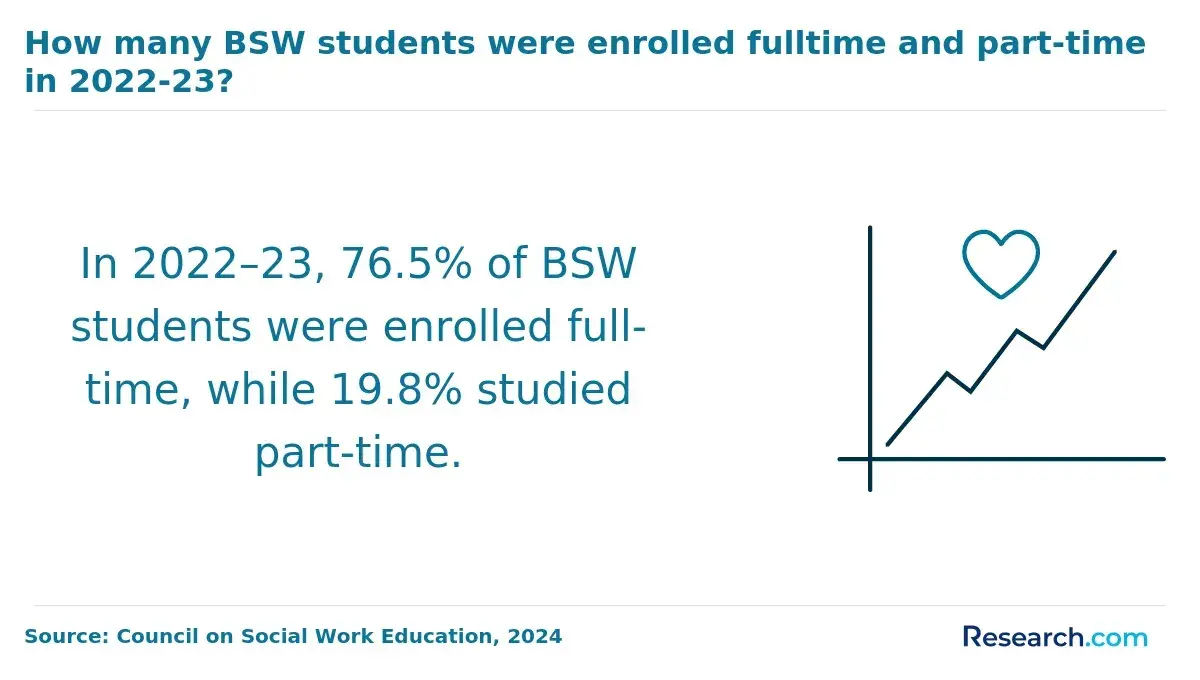
Connecticut’s curriculum integrates specialized practicum requirements and state-focused policy analysis, ensuring graduates are prepared for local workforce demands in areas such as child welfare, aging, and substance abuse services. This trend in enrollment, shown in the image, highlights how most BSW students pursue full-time study, while a smaller portion balance part-time paths. These patterns shape the design and delivery of Connecticut’s social work programs.
How long does it take to complete a social work degree program in Connecticut?
When planning your path to becoming a social worker in Connecticut, knowing how long social work degree programs take is key to setting realistic goals and managing your time effectively. Program length influences how quickly you can gain licensure and enter the field, which is especially important if you have work or family responsibilities. Here’s an overview of typical completion times and factors that impact them.
- Bachelor of Social Work (BSW): Typically completed in four years full-time, including general education and social work courses. Part-time students may take five years or more, and some colleges require summer terms for on-time graduation.
- Master of Social Work (MSW): A standard full-time MSW usually takes two years with around 60 credits, including fieldwork. Part-time enrollment often extends this to three or four years, depending on course load.
- Advanced Standing MSW: For students holding a BSW from an accredited program, this option shortens study to one year full-time or up to two years part-time by waiving foundational coursework.
- Doctor of Social Work (DSW) and PhD: These doctoral programs generally require three to five years full-time after the MSW, with time varying for part-time study and research demands.
Multiple factors influence how long your program will take. Full-time students typically move through coursework and practicum more quickly than part-timers, who balance fewer courses each semester. Fieldwork placements are essential but can add complexity to scheduling, especially if you have outside commitments. Advanced standing eligibility offers a significant shortcut if you qualify, while summer sessions may either be mandatory or optional acceleration tools depending on the institution.
Speaking with a social worker from Connecticut who graduated recently, she shared how balancing her part-time MSW took a little over three years. “Juggling work, family, and the extensive fieldwork was challenging,” she reflected, “but it made each step feel meaningful because I was applying what I learned right away.”
She emphasized that while the length felt long at times, having flexibility in course scheduling and supportive faculty helped her persevere. “Knowing there was an option for advanced standing earlier made me appreciate starting with the right undergraduate program,” she added. Her experience highlights how individual circumstances shape the educational timeline beyond just credit hours and course requirements.
How much does a social work degree cost in Connecticut?
Careful consideration of tuition and fees helps aspiring social workers manage the financial impact of their education and plan responsibly for their future careers. Knowing the cost of a social work degree in Connecticut supports smarter decisions about where and how to study.
- Bachelor of Social Work (BSW): In-state tuition at public universities generally ranges from $12,000 to $15,000 per year, while out-of-state students may face fees between $30,000 and $35,000. Private schools typically charge over $40,000 annually for BSW programs.
- Master of Social Work (MSW): Public MSW tuition for in-state students is usually $13,000 to $16,000 per year, with out-of-state costs rising to $31,000–$36,000, and private institutions often pricing between $40,000 and $50,000. Online MSW programs may offer comparable rates but sometimes provide in-state tuition to all students.
- Doctor of Social Work (DSW): Less common locally, DSW programs at private or out-of-state schools range from $20,000 to $35,000 yearly. Online options exist but Connecticut-based offerings are limited, affecting cost and access.
- PhD in Social Work: Tuition resembles DSW rates, typically $20,000 to $35,000 per year at private institutions. Some public universities offer discounts or tuition waivers, which can significantly lower expenses for doctoral candidates.
- Public vs. Private & Residency Impact: Public universities provide substantial tuition discounts for in-state residents compared to private schools, which have higher tuition but may offer more institutional aid. Out-of-state students often pay two to three times more than in-state peers.
- On-Campus vs. Online: Online social work programs generally maintain similar tuition levels to on-campus options; however, they offer savings on housing and commuting and, in some cases, in-state tuition rates regardless of residency.
When considering tuition for BSW/MSW programs, it’s important to balance costs with expected earnings and available financial aid. Exploring opportunities like scholarships, loan forgiveness, and grants can make pursuing a social work degree more affordable, helping you invest wisely in your professional path and achieve a successful career with a solid financial foundation. For an insightful comparison of career outcomes, see the social work vs counseling salary discussion.
What degrees are required for different social work specializations in Connecticut?
Different social work roles in Connecticut require tailored educational pathways because each specialization demands specific skills and professional competencies. Recognizing the degree requirements for social work specializations in Connecticut will help you align your education with your career ambitions and licensure goals.
- Clinical Social Work: A Master of Social Work (MSW) or Doctor of Social Work (DSW) from a CSWE-accredited program is essential, along with 3,000 hours of supervised post-master fieldwork and passing the ASWB Clinical Level Examination to become a Licensed Clinical Social Worker (LCSW).
- School Social Work: Requires a master’s degree in social work from a CSWE-accredited program plus additional coursework in special education to qualify for certification by the Connecticut State Department of Education.
- Healthcare Social Work: Most roles demand at least an MSW, especially in clinical settings, while some non-clinical positions may accept a Bachelor of Social Work (BSW) with limited advancement opportunities.
- Child and Family Services: Entry-level roles typically need a BSW, but an MSW is preferred for therapy, supervisory, or specialized intervention positions, with advanced roles often requiring state licensure.
- Community Social Work/Advocacy: A BSW is acceptable for many community roles; however, a MSW is increasingly preferred for leadership and program development positions.
- Substance Abuse and Addiction Social Work: Most positions require an MSW with specialized addiction counseling training; some entry-level roles may be available to BSW holders with relevant experience, but clinical licensure is necessary for diagnosis and treatment planning.
The chart illustrates where advanced social work graduates most often find employment, with tenure-track and research roles leading the way. These outcomes underscore how degree level shapes opportunities, linking specialization choices directly to long-term career trajectories.
What financial aid options are available to social work students in Connecticut?
Financial aid is essential for students pursuing social work degrees in Connecticut, as it helps ease the financial strain of tuition and related expenses. By accessing various funding sources, students can focus more effectively on their education and professional development. Several practical financial aid options are available to support social work students in Connecticut. These opportunities can significantly offset costs and provide valuable experience throughout their academic journey.
- Federal Grants: Need-based grants like the Federal Pell Grant and Federal Supplemental Educational Opportunity Grant (FSEOG) offer financial assistance that does not require repayment, helping students with demonstrated need.
- State Scholarships and Grants: Programs such as the Connecticut Health Horizons Grant and the Mary Ann Handley Award provide tuition support specifically for eligible MSW students and may cover full tuition at public institutions.
- Institutional Scholarships: Universities like the University of Connecticut and Sacred Heart University offer scholarships for BSW and MSW students, including those targeting BIPOC and other underrepresented groups, awarded based on merit or need.
- Work-Study Programs: The Federal Work-Study Program enables students to earn income through part-time jobs, often related to social services, allowing them to gain experience while supporting their education.
- Student Loans: Federal Direct Subsidized and Unsubsidized Loans are available upon FAFSA completion, with subsidized options offering lower overall borrowing costs due to deferred interest accrual during enrollment.
- Stipend Internship Programs: Some MSW programs, like those at UConn, provide stipend-funded field placements, allowing students to gain hands-on experience with financial compensation.
- Funding from Professional Organizations: Associations such as the National Association of Social Workers Connecticut Chapter offer scholarships and small grants supporting BSW and MSW programs, plus opportunities for attendance at conferences or research initiatives.
- Workforce Development and Specialized Grants: Initiatives like SNAP Employment and Training and the Workforce Innovation and Opportunity Act (WIOA) assist eligible students with tuition and career support, particularly those who are unemployed or underemployed.
For students considering various educational paths, exploring options like accelerated MSW programs can provide both time and cost savings. Awareness of available financial aid for social work students in Connecticut can empower prospective professionals to approach their studies strategically and reduce their long-term debt burden.
What are the alternative pathways to become a social worker in Connecticut?
Many individuals with backgrounds in psychology, sociology, or other human services find pathways into social work in Connecticut that build on their existing knowledge without starting over. These alternative routes honor prior learning and experience, offering flexible options to meet professional goals.
- MSW Without a BSW (Traditional Track): For those with bachelor’s degrees outside social work, this route involves completing a full two-year MSW program, often available part-time or online.
- Advanced Standing MSW Programs: BSW graduates may complete an accelerated one-year MSW, leveraging their prior social work education.
- Utilizing Related Degrees: Degrees in psychology, sociology, or counseling provide a strong foundation for MSW admission and career transition.
- Post-Bachelor’s Certificate and Bridge Programs: These prepare career changers with prerequisite coursework before entering an MSW program.
- State-Specific Alternative Certification: Connecticut offers specialized certification routes for school social workers that may not require an MSW but focus on educator credentials and service experience.
A social worker from Connecticut shared how transitioning from a career in mental health counseling felt both challenging and rewarding. “Balancing coursework with work wasn’t easy, especially moving into a rigorous MSW program without a BSW,” he reflected. After graduating locally, he valued how prior experience helped him connect theory to practice, and how programs accommodated his nontraditional background. “It made me realize that pathways aren’t one-size-fits-all—there’s room to grow from wherever you start.” This perspective highlights how alternative routes can effectively bridge diverse experiences into meaningful social work careers.
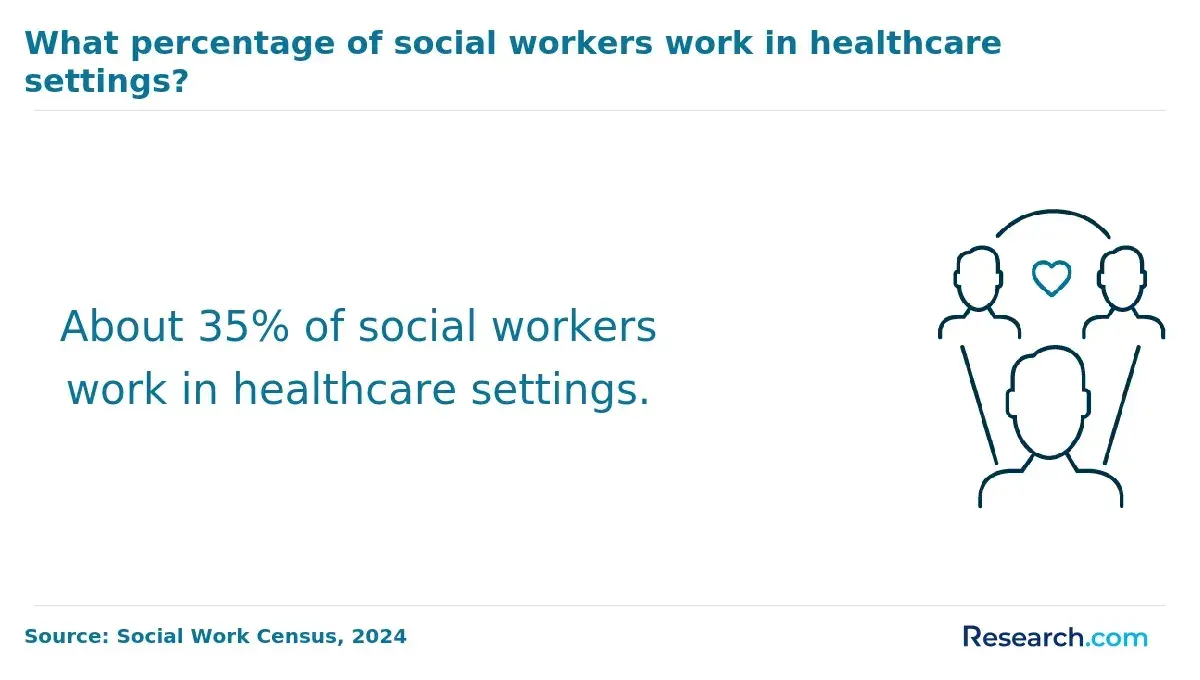
The image reinforces how alternative pathways can still lead to meaningful opportunities, particularly in healthcare, where about 35% of social workers practice. This underscores the flexibility of social work careers and the importance of educational routes that meet evolving workforce needs.
What are the essential steps to achieve social work licensure in Connecticut?
After completing an accredited social work degree, candidates must secure the requisite supervised fieldwork hours, pass the standardized licensure examination, and compile all necessary documentation for the state licensing board. Applicants should verify that their practicum experience meets Connecticut’s specific regulatory criteria and carefully follow the application protocols to avoid delays. For detailed guidance on the complete process, see how to become a social worker in Connecticut.
How can social work graduates transition to counseling roles in Connecticut?
Social work education equips professionals with skills in empathy, ethical decision-making, and crisis management, yet some graduates may wish to expand their practice into counseling. Targeted clinical training and certification programs provide an effective pathway for this career transition. Graduates are encouraged to explore bridging programs and connect with industry mentors who offer insights on navigating distinct licensure requirements for counseling. Additionally, aligning practical experience with continuing education in counseling-specific methodologies can help streamline the shift. For a detailed exploration of this pathway, refer to the fastest way to become a counselor in Connecticut.
Are online social work degrees recognized in Connecticut?
Online Bachelor of Social Work (BSW) and Master of Social Work (MSW) degrees have become increasingly popular as students seek flexible learning options. In Connecticut, this trend is evident with several universities offering hybrid or fully online programs. Recognition of these degrees is vital because social work licensure depends on meeting state board requirements, and employers expect degrees from reputable institutions. Without recognized credentials, graduates may face barriers in obtaining licensure and securing meaningful employment.
Recognition mainly hinges on accreditation by the Council on Social Work Education (CSWE), the only recognized accrediting body for social work programs in the U.S. Connecticut requires CSWE-accredited degrees for licensure eligibility, whether earned online or on campus. Recent data shows employer attitudes shifting positively: nearly 80% consider accredited online MSW graduates as well-prepared as on-campus peers. National enrollment in online MSW programs has risen about 36% over five years, reflecting growing acceptance of these pathways.
Beyond accreditation, students must ensure their program includes supervised fieldwork locally, which is mandatory for licensure. Hybrid programs offering in-person experiences can enhance learning and networking opportunities. Ultimately, selecting a CSWE-accredited institution that aligns with Connecticut’s licensure criteria is essential to safeguard both licensure success and career prospects.
The chart highlights the delivery methods available for BSW programs, showing that while entirely in-person formats remain dominant, blended, hybrid, and online options are increasingly common. This growth reflects Connecticut’s recognition of flexible, CSWE-accredited pathways that still meet licensure and employer standards.
What organizations accredit social work degree programs in Connecticut?
Accreditation plays a crucial role in maintaining high standards for social work education, ensuring that programs deliver quality training aligned with professional ethical guidelines. For those pursuing licensure or employment in Connecticut, attending a CSWE accredited social work programs in Connecticut is essential to meet both educational and regulatory expectations.
- Council on Social Work Education (CSWE): CSWE serves as the national accrediting body for social work degree programs. Graduates from CSWE-accredited Bachelor of Social Work (BSW) or Master of Social Work (MSW) programs qualify to apply for licensure, a critical step for professional practice in Connecticut.
- Regional Higher Education Accrediting Bodies: All colleges offering social work degrees in Connecticut must be accredited regionally, typically through the New England Commission of Higher Education (NECHE). This accreditation validates the overall academic integrity of the institution and is mandatory for federal aid and employer acceptance.
- Connecticut Department of Public Health (DPH): Though the DPH does not directly accredit social work programs, it enforces licensure requirements tied to completion of a CSWE-accredited degree. This oversight ensures only well-prepared professionals enter the workforce at the LMSW and LCSW levels.
For international students or professionals exploring options, understanding these social work accreditation organizations in Connecticut provides a clearer path toward a respected credential. Additionally, researching the easiest MSW programs to get into can help guide your academic decisions without compromising on recognized standards.
What are the top institutions offering social work degree programs in Connecticut?
Choosing the right institution for your social work education is a pivotal step that impacts accreditation, career readiness, and financial commitment. The best social work degree programs in Connecticut ensure their students meet licensure requirements while providing meaningful field experiences and flexibility. In Connecticut, several schools stand out for offering CSWE-accredited BSW, MSW, or advanced social work programs:
- University of Connecticut (UConn): Ranked #1 in Connecticut, UConn offers diverse specializations and over 250 field placements, supported by extensive research funding that enhances learning opportunities.
- Sacred Heart University: Known for its fully online MSW option, Sacred Heart suits working professionals seeking clinical and community practice training with flexible schedules.
- Southern Connecticut State University (SCSU): SCSU emphasizes community partnerships and offers both micro and macro social work specializations, providing comprehensive hands-on experience.
- Quinnipiac University: This program highlights holistic, person-centered practice and interprofessional collaboration, with strong faculty support and internship placements.
- University of Saint Joseph: With small class sizes and a focus on ethical practice, it provides access to Hartford’s health agencies, enriching fieldwork and employment options.
Selecting from among the best MSW schools in Connecticut can greatly influence your professional journey. Those exploring how much does a social work degree cost will find that investing in programs with strong reputations and practical training yields long-term benefits.
What Do Social Workers in Connecticut Say About Their Degree
- Pursuing my social work degree at the University of Connecticut allowed me to connect deeply with the community I serve. The program’s focus on local issues and resources helped me develop practical skills tailored to Connecticut’s unique social landscape. Since graduating, I’ve started my career working within a local school where I’m passionate about supporting students’ mental health and academic success. The stability and supportive environment here have fueled my desire to make a long-term difference. I’m grateful for the combination of rigorous training and community impact opportunities that shaped my path. Lawrence
- Completing my degree at Yale School of Social Work was a transformative experience that blended academic rigor with hands-on opportunities in Connecticut’s diverse neighborhoods. Beginning my professional journey in a local school setting, I quickly realized how valuable the program’s emphasis on clinical practice was for addressing the real challenges faced by children and families. The collaborative culture in Connecticut’s social work field encourages continual professional growth and networking, which has opened doors for career advancement I hadn’t expected. Reflecting on this, I recognize how vital local education and career support are to achieving my goals. Lara
- The personal growth I experienced while studying at Central Connecticut State University was profound, especially as it related to understanding the cultural richness and challenges within the state. My coursework and fieldwork gave me insight into how Connecticut’s resources can be leveraged to empower underserved populations. Starting work at a local school, I felt equipped to address not only individual student needs but also larger systemic issues affecting their well-being. Being able to contribute to community resilience here has been both rewarding and inspiring, reinforcing my commitment to lifelong learning and service. Merley
Related Articles for Nearby States
- 2027 What Degree Do You Need To Be a Social Worker: Education Requirements in New York
- 2027 What Degree Do You Need To Be a Social Worker: Education Requirements in Rhode Island
- 2027 What Degree Do You Need To Be a Social Worker: Education Requirements in Massachusetts
- 2027 What Degree Do You Need To Be a Social Worker: Education Requirements in New Jersey
- 2027 What Degree Do You Need To Be a Social Worker: Education Requirements in Pennsylvania
- 2027 What Degree Do You Need To Be a Social Worker: Education Requirements in Vermont
- 2027 What Degree Do You Need to Be a Social Worker: Education Requirements in New Hampshire
- 2027 What Degree Do You Need To Be a Social Worker: Education Requirements in Delaware
- 2027 What Degree Do You Need To Be a Social Worker: Education Requirements in Maryland
- 2027 What Degree Do You Need To Be a Social Worker: Education Requirements in Maine
References:
- Charter Oak State College. Social Work Bachelor’s Degree Program (BSW) Online.
- Eastern Connecticut State University. Social Work Major.
- Regis College. Bachelor of Social Work Licensure Requirements by State.
- Sacred Heart University. Social Work - BA.
- School of Social Work (UConn). BSW Coursework.
- Social Work License Map. How to Become a Social Worker in Connecticut.
- Southern Connecticut State University. Social Work, B.S.
- University of Connecticut. Social Work (BSW) | Academic Catalog.
- University of Saint Joseph CT. Social Work, BSW Completion Program.
Other Things You Need to Know About Education Requirements in Connecticut
To become a social worker in Connecticut in 2027, a Bachelor’s degree in Social Work (BSW) is typically required for entry-level positions. For clinical social work, a Master of Social Work (MSW) is necessary, and licensure requirements must be met for practice.
In Connecticut, a doctorate is not required to become a clinical social worker. The state primarily requires a master's degree in social work from an accredited program, along with supervised clinical experience and passing a licensing exam. While a doctorate can enhance expertise and career opportunities, it is not mandatory for licensure or practice. This approach ensures that professionals meet standardized education and clinical requirements without the additional time and expense of doctoral study.
In Connecticut, becoming a licensed social worker typically requires a Bachelor of Social Work (BSW) or a Master of Social Work (MSW). While related fields might offer employment opportunities, obtaining professional licensure, required for most social work positions, will likely necessitate an accredited social work degree.
To become a licensed social worker in Connecticut in 2027, a Bachelor of Social Work (BSW) is typically the minimum requirement, but a Master of Social Work (MSW) is often necessary for clinical roles. Higher educational credentials can provide more opportunities and flexibility in this field.


![2027 Best Advanced Standing Online MSW Programs [CSWE Accredited] thumbnail](https://research.com/resized/uploads/Online_Advanced_Standing_MSW_301dbd5368.jpg?format=thumbnail)


