
2027 Is Psychology a STEM Major? What You Need to Know

Co-Founder and Chief Data Scientist
Choosing a psychology degree is a significant financial decision, and its value in today's job market depends on one critical factor: pursuing it as a science. The U.S. government now officially recognizes specific, data-intensive psychology fields as STEM degrees. This designation is the key that unlocks a direct path to lucrative, in-demand careers, with some roles earning over $147,000 annually.
Think of this article as your strategic guide for navigating this path. We'll cut through the confusion and give you the definitive information you need. You will learn which programs are on the official government STEM list, what the career and salary advantages are, and how to position yourself for success in a competitive job market.
Key Things You Should Know About Psychology
- U.S. government bodies, including the Department of Homeland Security (DHS), now classify many areas of psychology as STEM fields.
- STEM designation depends on the specific, research-intensive subfield of psychology you choose.
- A Bachelor of Science is more likely to meet STEM criteria than a Bachelor of Arts because of its heavy focus on science, research methods, and statistics.
- A STEM-designated psychology degree unlocks access to higher salaries and a growing job market.
- The STEM designation provides significant advantages for international students, including extended post-graduation work opportunities.
- What is the official government definition of a STEM field? STEM Definition
- Which psychology programs are on the official DHS STEM list? DHS STEM Psychology
- Why was psychology's STEM status recently updated? Why was psychology's STEM status recently updated?
- What makes a psychology subfield qualify as STEM? What makes a psychology subfield qualify as STEM?
- What are the most common STEM-focused psychology subfields? STEM Psychology Subfields
- How do STEM psychology programs differ from traditional ones? STEM vs Traditional
- What are the salary and job growth prospects for STEM psychology careers? What are the salary and job growth prospects for STEM psychology careers?
- What specific jobs can you get with a STEM psychology degree? STEM Psychology Jobs
- How does the STEM designation benefit international students? How does the STEM designation benefit international students?
- How can you choose the right STEM psychology program for you? How can you choose the right STEM psychology program for you?
- What skills should you focus on to succeed in a STEM psychology track? Top Skills
- How can you maximize real-world experience in a STEM psychology program? How can you maximize real-world experience in a STEM psychology program?
- Is a STEM psychology degree the right choice for your future? Is a STEM psychology degree the right choice for your future?
What is the official government definition of a STEM field?
STEM stands for Science, Technology, Engineering, and Mathematics. In the United States, the government decides which academic programs officially receive this designation. The definitive source is a document managed by the Department of Homeland Security (DHS).
This document is called the STEM Designated Degree Program List. It is the official list used to determine eligibility for certain federal programs, most notably the student visa work extension for international students.
Beyond immigration policy, the list also signals which programs are considered critical to national innovation, workforce development, and competitiveness. For students, earning a degree included on this list confirms that their program is not only science-driven but also directly tied to high-demand sectors of the job market.
Which psychology programs are on the official DHS STEM list?
To identify STEM fields, the U.S. government uses a system called the Classification of Instructional Programs (CIP), which assigns a unique code to every academic program. Your program's specific CIP code is what officially determines its STEM status.
When considering whether your program qualifies, it’s also important to check its accreditation for psychology programs, as accreditation confirms that the curriculum meets recognized academic and professional standards.
While a "general psychology" major might not qualify, the DHS explicitly lists the following data-driven specializations as STEM degrees:
- Cognitive Psychology and Psycholinguistics: Studies mental processes like memory, decision-making, and how we use language.
- Comparative Psychology: Analyzes and compares the behavior of different animal species to better understand human behavior.
- Developmental and Child Psychology: Focuses on how humans grow, change, and learn throughout their lives, from infancy to old age.
- Experimental Psychology: Uses controlled experiments and rigorous research methods to investigate the fundamental principles of behavior.
- Industrial and Organizational (I/O) Psychology: Applies psychological principles to the workplace to improve productivity, employee selection, and job satisfaction.
- Neuroscience: Explores the direct link between the brain, the nervous system, and behavior.
- Personality Psychology: Examines the unique traits, patterns of thought, and characteristics that make each individual different.
- Physiological Psychology/Psychobiology: Investigates the biological basis of psychological processes, such as emotions, learning, and motivation.
- Psychometrics and Quantitative Psychology: Specializes in the science of psychological measurement, creating valid tests and analyzing behavioral data.
- Social Psychology: Studies how individuals' thoughts, feelings, and behaviors are influenced by the presence of other people.
If your goal is a STEM-designated degree, you need to find programs with these or very similar titles and confirm their CIP code with the university.
The visual below shows the employment distribution of STEM jobs across various professions.
Why was psychology's STEM status recently updated?
The government's growing recognition of psychology as a STEM field is not a sudden change; it's a response to how the field has evolved. Modern psychology is less about abstract theory and more about concrete data. Today's leading programs use sophisticated tools—from advanced statistical software to brain-imaging technology—to conduct research.
This shift to a data-first approach means students are being trained as scientists. Major organizations like the American Psychological Association (APA) have successfully argued that this scientific rigor deserves official STEM status. The government now acknowledges that these subfields are applied sciences that prepare graduates to solve real-world problems in high-value sectors like technology, business, and healthcare.
What makes a psychology subfield qualify as STEM?
A psychology subfield earns its STEM designation based on the curriculum's focus on scientific and mathematical principles. These programs are structured to produce graduates who can conduct rigorous, data-driven research. The core components of a STEM psychology program always include:
- Advanced Research Methods: You won't just learn about research; you will design and execute controlled experiments, collect original data, and follow the scientific method from hypothesis to conclusion.
- Heavy Emphasis on Statistics: Coursework goes far beyond introductory concepts, requiring you to use statistical software (like R or SPSS) to analyze complex data sets and interpret the results.
- Hard Science Foundations: These programs often require foundational courses in biology, chemistry, and neuroscience to understand the biological and chemical processes that drive behavior.
- Computational or Technical Skills: Many programs include training in areas like data modeling, survey design, or the use of specialized lab equipment, providing measurable technical skills for your resume.
What are the most common STEM-focused psychology subfields?
While the official DHS list is long, a few key specializations represent the most common and fastest-growing career paths at the intersection of psychology and STEM. These fields are in high demand across the tech, business, and healthcare industries:
- Industrial-Organizational Psychology: This is the science of human behavior at work. I-O psychologists use data to help companies make smarter decisions about hiring, training, and management, directly impacting business performance.
- Cognitive Psychology & Neuroscience: This field explores the "how" behind our thoughts, memories, and decisions. Graduates are highly sought after in tech for roles in user experience (UX) research and artificial intelligence (AI) development.
- Human Factors / Engineering Psychology: This practical subfield bridges the gap between human capabilities and product design. Professionals in this area work to make technology—from aircraft cockpits to smartphone apps—safer, more intuitive, and easier to use.
- Quantitative Psychology: This specialization focuses on the mathematical and statistical side of psychology. These experts build the models and design the measurements that all other researchers use, often working as data scientists or research methodologists.
- Health Psychology: This field uses the scientific method to understand the connection between our minds and our physical health. It is a data-driven discipline that informs public health policy, patient treatment programs, and medical technology.
How do STEM psychology programs differ from traditional ones?
The most significant difference between a STEM-focused psychology track and a traditional one often comes down to the type of undergraduate degree you pursue: a Bachelor of Science (B.S.) versus a Bachelor of Arts (B.A.). While both are valuable, they are designed to prepare you for very different career paths.
Bachelor of Science in Psychology — The STEM Path
- Core Focus: Heavily emphasizes psychology as a hard science. This is the degree most likely to carry an official STEM designation.
- Required Coursework: Includes advanced statistics, rigorous research methodology labs, and foundational classes in biology, chemistry, and computer science.
- Career Preparation: Directly prepares you for graduate school in a research-focused field or for data-centric jobs in tech, healthcare, and business analysis right after graduation.
Bachelor of Arts in Psychology — The Liberal Arts Path
- Core Focus: Explores psychology within a broader liberal arts context, emphasizing critical thinking and qualitative understanding.
- Required Coursework: Typically includes fewer math and science requirements, instead requiring foreign language proficiency and electives in humanities and social sciences.
- Career Preparation: Excellent preparation for careers that rely on understanding people, such as social work, human resources, or marketing, but often requires a graduate degree for specialized clinical roles.
For students aiming for a career in a designated STEM field, choosing a B.S. program is the most direct and reliable strategy.
What are the salary and job growth prospects for STEM psychology careers?
This is where a STEM-designated degree truly pays off. Choosing a science-focused path in psychology unlocks access to some of the highest-paying and fastest-growing jobs in the field. The U.S. Bureau of Labor Statistics (BLS) projects a 6% job growth for psychologists through 2032, faster than the average for all occupations. Indeed also shows over 32,000 openings for STEM jobs in the country.
While careers like those reflected in a typical forensic psychology salary are well-known, the data show that STEM-focused roles often have the highest earning potential:
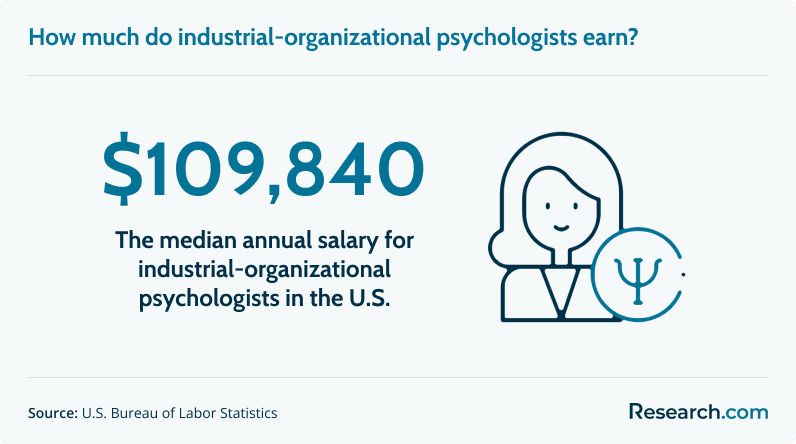
- Industrial-Organizational Psychologist: This is one of the most lucrative fields in psychology. According to the BLS, the median annual salary for I-O psychologists was $147,420 in May 2023.
- Neuropsychologist: Professionals specializing in the brain and cognitive science are in high demand, particularly in medical and research settings. Salaries often exceed $100,000.
- UX Researcher / Human Factors Specialist: Working primarily in the tech industry, these professionals command competitive salaries. While the BLS doesn't track this role specifically, industry data shows average salaries often ranging from $90,000 to over $150,000, depending on experience.
Meanwhile, those who have trouble affording or at least budgeting for their education can obtain various modes of financial aid. You can start by applying for the Free Application for Federal Student Aid (FAFSA), which enables you to access different types of federal aid.
What specific jobs can you get with a STEM psychology degree?
A STEM psychology degree prepares you for roles where you can apply the scientific method to solve practical human problems. Instead of traditional clinical paths, these careers are typically found in corporate, tech, and research environments. Some even delve into sporting events and offer a decent sports psychologist salary.
Here are some of the most common job titles:
How does the STEM designation benefit international students?
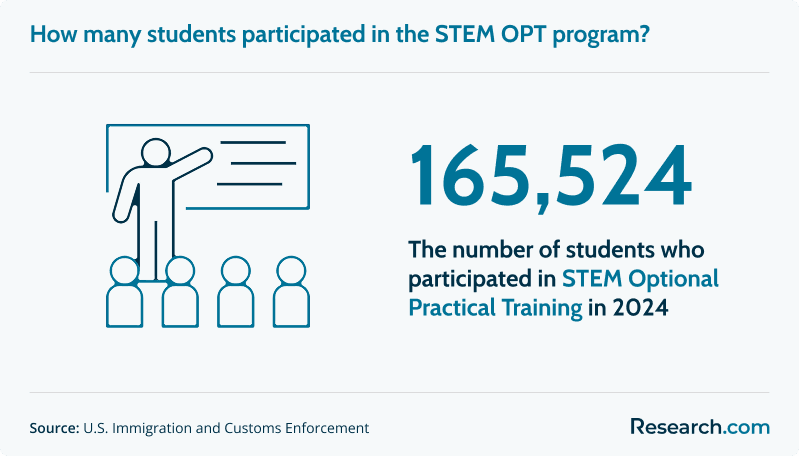
For international students on an F-1 visa, the STEM designation is arguably the most important factor in their career planning, as it directly impacts their ability to work in the U.S. after graduation. The benefit comes from a program called Optional Practical Training (OPT).
- Standard Degree (Non-STEM): Graduates are eligible for up to 12 months of post-graduation employment in the U.S.
- STEM-Designated Degree: Graduates are eligible for a 24-month extension, allowing for a total of up to 36 months of post-graduation employment.
This longer work authorization period is particularly valuable for those in healthcare and advanced practice roles, such as adult gerontology acute care NP careers.
The additional months provide a massive competitive advantage. It offers a much longer runway to gain professional experience and secure a long-term position. Crucially, it gives graduates multiple opportunities to be sponsored for a work visa, such as the H-1B, as they are not limited to a single, high-pressure application cycle.
In short, choosing a STEM-designated psychology program transforms the feasibility of building a long-term career in the United States.
This advantage is particularly relevant when comparing career outcomes across specialties—for example, students researching child and adolescent psychology salary trends may find that combining their interest in mental health with a STEM-recognized track can significantly expand both their career options and earning potential.
The chart below shows the college majors most foreign students pursue.
How can you choose the right STEM psychology program for you?
Finding the right program requires more than just looking at a university's marketing materials. You need to investigate the program's official status and academic focus. Here is a simple process to ensure a program meets the STEM criteria:
Verify the Official CIP Code.
This is the most important step. Before you even apply, contact the university's registrar or admissions office and ask for the specific CIP code for the degree you are interested in. Then, check that exact code against the official DHS STEM Designated Degree Program List. This is the only way to be 100% certain of its status.
Scrutinize the B.S. Curriculum.
Look for a Bachelor of Science degree plan. The required coursework should be your checklist: Does it mandate multiple advanced statistics courses? Does it require lab-based research methods classes? Are there requirements for foundational science courses like biology or computer science? If the curriculum looks more like a liberal arts degree, it likely isn't a STEM track.
Investigate the Faculty's Research.
A department's focus is a direct reflection of its professors' work. Go to the psychology department's website and look at the faculty profiles. Are they publishing research in neuroscience, cognitive science, or I-O psychology journals? Do they run active research labs? A faculty heavily engaged in scientific research is a clear sign of a STEM-focused program.
For example, programs that highlight faculty who mentor students toward specialized credentials—such as becoming a board certified behavior analyst (BCBA)—often demonstrate the scientific rigor and applied focus expected of STEM-designated pathways.
What skills should you focus on to succeed in a STEM psychology track?
Success in a STEM psychology program and career depends on developing a specific blend of technical and analytical skills. Beyond just getting good grades, you should actively focus on building a resume that showcases your expertise in these key areas. These abilities are what set you apart in competitive careers in psychology research.
Core Technical Skills (Hard Skills)
- Statistical Programming: Go beyond basic SPSS. Gaining proficiency in a programming language widely used in data science, like R or Python, will give you a significant competitive edge in the job market.
- Research Design and Execution: Actively seek opportunities to work in a professor's research lab. This provides hands-on experience in designing experiments, collecting data, and managing a project from start to finish.
Essential Professional Skills (Soft Skills)
- Data Storytelling: It's not enough to analyze data; you must be able to explain what it means. Focus on skills that help you communicate complex findings to a non-expert audience, whether through writing or presentations.
- Systematic Problem-Solving: Learn to approach complex human behaviors as scientific challenges. This involves breaking down a problem, forming a testable hypothesis, gathering evidence, and drawing logical conclusions.
- Ethical Judgment: A deep understanding of research ethics is non-negotiable. This skill protects participants, ensures the validity of your research, and builds professional credibility.
How can you maximize real-world experience in a STEM psychology program?
Leveraging hands-on opportunities is essential for translating academic knowledge into industry-ready skills. Seek internships, research assistantships, and cooperative education placements that align with your technical and analytical strengths. Engage with faculty-led projects and industry-sponsored research to build a practical portfolio that distinguishes you in a competitive job market. For those aiming for specialized credentials in applied behavior analysis, consider supplementing your academic experience with targeted online certifications – check out the cheapest BCBA online program for further information.
Is a STEM psychology degree the right choice for your future?
Choosing a STEM-designated psychology degree is a powerful strategy for turning a passion for human behavior into a secure and high-paying career. It directly aligns your education with the demands of the modern economy, where data skills are highly valued.
This path is an excellent fit for students who are fascinated by the "why" behind human action and believe in using science to find the answers. It is designed for those who enjoy working with data, solving complex problems, and using technology to gain insights.
However, it is a specialized path and distinct from the journey to becoming a licensed therapist. For those asking, "Do you need a psychology degree to be a therapist?" the answer is generally yes, but that career requires a clinical or counseling focus rather than a STEM research one. The STEM route is ideal if your goal is a career in a high-growth industry like tech, data science, or research, rather than a clinical practice.
Ultimately, a STEM psychology degree offers a unique combination of human-centered inquiry and analytical rigor. For the right student, it provides the tools not just for a job, but for a future-proof career, shaping the way we understand the mind and interact with the world.
The chart below highlights the disciplines with the highest student enrollment.
Here’s What Graduates Have to Say About Their STEM Psychology Programs
- Chris: "I was worried my psychology degree would be too "soft" for the current job market. My program’s heavy focus on statistics using R completely changed that. Learning to code and handle large datasets gave me a huge confidence boost during interviews. I landed a behavioral data analyst role before I even graduated."
- Santi: "I was definitely concerned about the investment for my master's in I-O psychology. But the program was so focused on applied skills that were in high demand by corporations. The emphasis on organizational effectiveness and personnel analytics made me a very competitive candidate, and the job offer I accepted made the financial commitment worth it almost immediately."
- Denise: "Honestly, the amount of advanced statistics and required biology courses intimidated me at first. I always saw myself as more of a "people person" than a "numbers person." But the professors were incredible at making the material accessible, and I found I actually enjoyed the challenge of finding stories in the data."
Key Findings
- The financial return on a specialized psychology degree is significant, with STEM-designated roles like Industrial-Organizational Psychologist showing a median annual salary of $147,420.
- For international students, a STEM-designated degree provides a critical career advantage by making them eligible for up to 36 months of post-graduation employment in the U.S.
- A program's STEM status is not a matter of opinion; it is an official designation determined by its specific Classification of Instructional Programs (CIP) code on the DHS list.
- The field offers strong job security, with the U.S. Bureau of Labor Statistics projecting a 6% growth rate for psychologists, which is faster than the average for all occupations.
- The choice between a Bachelor of Science (B.S.) and a Bachelor of Arts (B.A.) is one of the most important strategic decisions, as a B.S. with its heavy focus on science and statistics is the most reliable path to a STEM designation.
- High earning potential extends across various tech-focused roles, with positions like UX Researcher commanding average salaries between $90,000 and $150,000, depending on experience.
References:
- Hanson, M. (2025). College enrollment statistics. Education Data. Retrieved October 1, 2025, from https://educationdata.org/college-enrollment-statistics
- UNESCO. (2025). Gender equality in education. Retrieved October 1, 2025, from https://www.unesco.org/en/gender-equality/education/
- U.S. Bureau of Labor Statistics. (2025a). Employment in STEM occupations. Retrieved October 1, 2025, from https://www.bls.gov/emp/tables/stem-employment.htm
- U.S. Bureau of Labor Statistics. (2025b). Psychology: A popular field of study for college students. Retrieved October 1, 2025, from https://www.bls.gov/ooh/field-of-degree/psychology/psychology-field-of-degree.htm
- U.S. Bureau of Labor Statistics. (2025c). STEM fields: Alternate definitions. Retrieved October 1, 2025, from https://www.bls.gov/opub/btn/volume-14/stem-alternate-definitions.htm
- U.S. Immigration and Customs Enforcement. (2025). Read the 2024 SEVIS by the numbers report. Study in the States. Retrieved October 1, 2025, from https://studyinthestates.dhs.gov/2025/06/read-the-2024-sevis-by-the-numbers-report
Other Things You Should Know About STEM Psychology Programs
A STEM-designated psychology degree offers benefits such as eligibility for STEM-specific grants and scholarships, enhanced job opportunities in research and technology fields, and possibly an extended OPT duration for international students on an F-1 visa seeking work experience in the U.S.
Yes, it is still possible to pivot into a STEM-focused career with a Bachelor of Arts (B.A.) degree. The best path is often to pursue a master's degree in a designated STEM subfield like quantitative psychology or human factors. You can also strengthen your resume by completing data science bootcamps, learning statistical programming languages like R or Python, and gaining hands-on experience in a research lab.
The tuition for a psychology program is typically determined by the university's overall rate, not by whether the specific major has a STEM designation. Therefore, a B.S. in psychology should not be more expensive than a B.A. at the same institution. The key financial difference is not the cost of the degree, but the significantly higher return on investment from the salary and career opportunities that a STEM-designated path provides.


