
2027 Top Careers in Research Psychology

Co-Founder and Chief Data Scientist
A research psychology career centers on studying human thought, emotion, and behavior, combining theory with practice that shapes education, healthcare, business, and public policy. Research psychologists design experiments, analyze data, and publish findings, creating evidence-based insights that influence how individuals and groups function in society.
For those with a passion for both science and people, a research psychology career offers a unique pathway to contribute meaningful insights that impact society at large. Each path requires a mix of advanced education, specialized skills, and a strong grasp of research methods.
In this guide, I will explore the top careers in research psychology, outlining what each role entails, the skills required, and the potential earning power. You’ll also learn about the educational paths that lead to these careers and the industries where they’re most valued.
What are the benefits of pursuing the top careers in research psychology?
- Top earners in research psychology can make up to $132,500 annually, reflecting their advanced expertise and specialized knowledge (ZipRecruiter, n.d.).
- Employment of psychologists across all specializations, including research psychology, is projected to grow 6% from 2024 to 2034 (BLS, 2025).
- A research psychology career offers diverse paths, from academia to government roles, giving professionals the flexibility to tailor their work environment.
- What are the career opportunities for research psychologists in academia? Career Paths
- How do research psychologists fit into careers in the corporate sector? Corporate Roles
- What roles do research psychologists play in hospital settings? Hospital Career Paths
- How do research psychologists contribute to marketing and advertising? How do research psychologists contribute to marketing and advertising?
- Can research psychologists pursue a career in legal and criminal justice? Can research psychologists pursue a career in legal and criminal justice?
- What is the salary potential in a research psychology career? Earning Potential
- Which companies pay research psychologists the most? Top-Paying Companies
- How to land top careers in research psychology? Landing Top Careers
- What are the biggest industry trends you need to know as a research psychologist? Industry Trends
- What is the job outlook for research psychologists over the next 10 years? Job Outlook
- Which additional certifications can accelerate your research psychology career? Which additional certifications can accelerate your research psychology career?
What are the career opportunities for research psychologists in academia?
Academia remains one of the most prominent research psychology careers, offering opportunities to combine teaching, mentorship, and groundbreaking research. Professionals in this space shape future generations of psychologists while contributing to the broader scientific community through publications and funded studies.
Below are some of the key academic research psychology career opportunities:
- Professor in Psychology: Leads psychology courses at the undergraduate or graduate level and publishes research in scholarly journals.
- Research Scientist: Focuses primarily on designing and conducting psychology studies, often supported by grants or institutional funding.
- Department Chair: Oversees academic programs, manages faculty, and steers the research agenda of a psychology department.
- Postdoctoral Fellow: Gains advanced research training while contributing to high-impact projects, often as a stepping stone to faculty roles.
- Academic Advisor: Guides students through academic pathways and supports their involvement in research psychology opportunities.
- Lab Director: Manages a psychology research lab, coordinates studies, and supervises graduate and undergraduate researchers.
Pairing general psychology with school psychology can prepare you to both conduct research and mentor the next generation of students, which is one of the many benefits of pursuing a dual degree in psychology.
How do research psychologists fit into careers in the corporate sector?
The corporate world offers dynamic research psychology career opportunities. From understanding consumer behavior to optimizing workplace performance, companies of all sizes rely on psychological research to drive growth, innovation, and employee well-being, a choice similar to deciding on the best online dual master's in counseling programs.
Here are some of the most common corporate research psychology career paths:
- Market Research Analyst: Uses psychological methods to study consumer behavior, preferences, and decision-making to inform marketing strategies.
- User Experience (UX) Researcher: Applies cognitive and behavioral research to improve product design, usability, and customer satisfaction.
- Organizational Development Specialist: Studies workplace dynamics and develops programs that enhance productivity, leadership, and employee engagement.
- Talent Assessment Consultant: Designs and validates assessments to support hiring, training, and leadership development initiatives.
- Consumer Insights Specialist: Leverages psychological data to forecast market trends and guide product innovation.
- Corporate Trainer: Develops evidence-based training programs that improve communication, leadership, and performance across teams.
A thriving research psychology career requires not only advanced degrees but also versatility and practical training. We recommend building a solid foundation through psychology undergraduate certifications to gain a competitive edge when transitioning into business-focused roles.
What roles do research psychologists play in hospital settings?
Hospitals rely on research psychologists to bridge the gap between science and patient care. By studying behavior, treatment outcomes, and patient-provider interactions, they help improve both the quality of care and the efficiency of medical practices, much like the pursuit of side hustles for nurses.
Here are some of the key roles research psychologists play in hospital environments:
- Clinical Researcher: Designs and conducts studies to evaluate new treatments, therapies, and patient care strategies.
- Health Psychologist: Examines how lifestyle, stress, and behavior influence physical health and recovery outcomes.
- Neuropsychology Researcher: Studies the relationships between brain function and behavior, often working with patients recovering from injuries or neurological disorders.
- Behavioral Health Researcher: Investigates interventions for mental health conditions, addiction, and behavioral challenges within hospital populations.
- Program Evaluator: Assesses the effectiveness of hospital programs, from patient education to preventative care initiatives.
- Pediatric Research Psychologist: Focuses on child development and behavioral health in pediatric hospital settings.
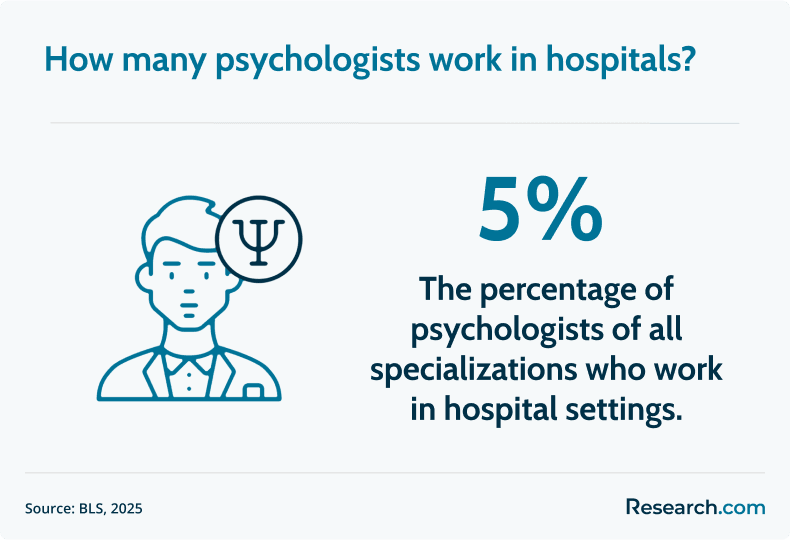
Recent data shows that 5% of psychologists across all specializations work in hospitals. This highlights the specialized yet vital role these professionals play in healthcare. For research psychologists, this path provides the chance to shape evidence-based practices that improve both medical outcomes and patient well-being.
How do research psychologists contribute to marketing and advertising?
Research psychologists bring a scientific lens to how people think, feel, and behave as consumers. By studying decision-making patterns, motivations, and emotional triggers, they help brands understand not just what people buy, but why they buy it.
Here are some of the key ways research psychologists shape marketing and advertising strategies:
- Consumer Behavior Analysis: Uncover how psychological principles—like perception, attention, and memory—influence buying choices.
- Emotional Drivers: Identify the feelings and subconscious factors that guide consumer loyalty and brand attachment.
- Message Framing: Study how the wording, visuals, or context of an ad affects how audiences interpret and respond.
- Decision-Making Insights: Examine the shortcuts and biases (heuristics) that steer people toward certain products or services.
- User Experience Research: Apply psychological testing to optimize website design, product layouts, or digital interactions for maximum engagement.
By applying these insights, research psychologists don’t just help brands sell more; they help them build trust, loyalty, and long-term customer relationships. For students interested in blending consumer psychology with modern digital channels, an online social media marketing degree can provide the practical skills to pair with psychological expertise.
Can research psychologists pursue a career in legal and criminal justice?
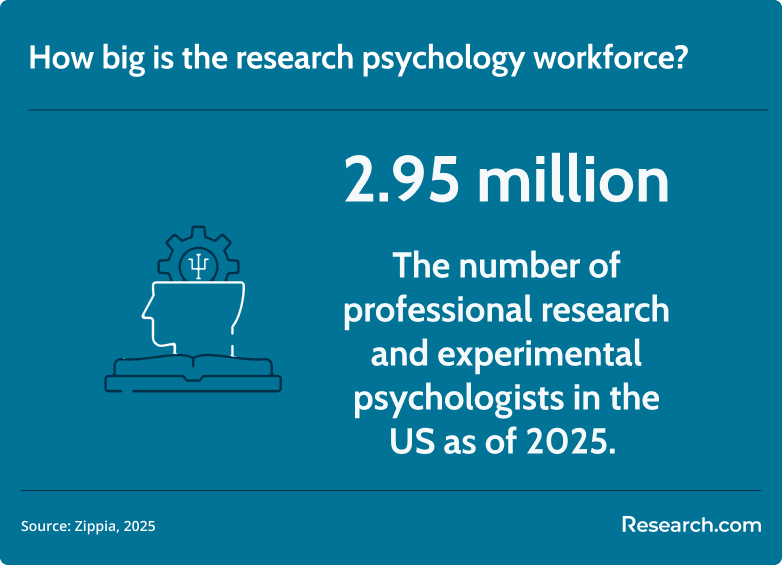
Research and experimental psychology as a sector is steadily growing, with 2.95 million professionals in the workforce. Under its umbrella is a myriad of fields, and legal and criminal justice is one of the most impactful career paths. The short answer? Yes, this area allows psychologists to apply scientific methods to real-world legal challenges.
In this setting, research psychologists study behavior patterns, decision-making under pressure, and memory reliability. Their findings can shed light on jury biases, eyewitness accuracy, and the effectiveness of rehabilitation programs. These insights not only advance academic knowledge but also directly shape courtroom and correctional strategies.
The career potential here is significant, combining job stability with meaningful societal impact. For those seeking both scientific rigor and tangible influence, legal and criminal justice offers a compelling career path.
What is the salary potential in a research psychology career?
A research psychology career not only offers the chance to advance science and improve lives, but it also provides strong financial incentives. After all, research psychologists earn about $99,577 per year. For professionals who pursue advanced education— through online psychology master’s programs, for example—the financial rewards can be even greater.
At the top of the pay scale, earnings can reach as high as $132,500 annually. This reflects both the depth of training required and the impact research psychologists have in industries ranging from healthcare and academia to corporate and government sectors.
For those considering this path, understanding how salaries scale with experience is essential. Below is a breakdown of research psychology salaries by percentile, giving you a clearer picture of what to expect at different stages of your career, and the same consideration applies when evaluating types of EdD programs.
Which companies pay research psychologists the most?
Compensation in a research psychology career doesn’t just depend on education and experience; it can also hinge on the company you work for. Some organizations stand out for offering top-tier salaries, reflecting the complexity of their projects and the value they place on behavioral science expertise, similar to what's considered when choosing a WGU nursing program.
At the top of the list is Parexel International, a clinical research organization headquartered in Newton, Massachusetts, where research psychologists earn an average of $97,848 annually while contributing to clinical trials and behavioral research in drug development.
Close behind is the Alaka`ina Foundation Family of Companies in Honolulu, Hawaii, offering an average salary of $93,789 annually for research psychologists supporting Department of Defense programs in training, health, and performance optimization.
Meanwhile, the CIA in Langley, Virginia, compensates research psychologists at around $93,287 annually, reflecting the importance of behavioral insights in national security and intelligence operations
To give you a clearer view of where salaries peak, here’s a breakdown of the 10 best-paying companies for research psychologists and what they offer:
How to land top careers in research psychology?
Launching a successful research psychology career demands a mix of specialized training, practical experience, and the ability to adapt to evolving industry needs. Whether your goal is to work in academia, healthcare, corporate settings, or government, positioning yourself as a strong candidate starts with laying the right foundation.
Here are some of the most effective strategies to land top careers in research psychology:
- Earn Advanced Psychology Degrees: A master’s or doctorate in psychology is often essential, particularly for positions that require designing studies, publishing research, or leading projects.
- Build Research Experience: Hands-on work in labs, internships, or assistantships demonstrates not only your skills but also your ability to apply theory to real-world questions.
- Develop Data Proficiency: Strong command of statistical software, research methodologies, and data interpretation sets you apart in both academic and corporate research environments.
- Network Strategically: Attending research psychology conferences, joining professional associations, and connecting with mentors can open doors to job opportunities and collaborations.
- Stay Interdisciplinary: Combining psychology with related fields—such as neuroscience, education, or business—broadens your career options and makes your expertise more marketable.
Ultimately, the path to success is about blending education with opportunity. For those seeking flexible ways to strengthen their qualifications, pursuing an applied psychology degree online can provide the credentials and versatility needed to thrive in today’s competitive market.
What are the biggest industry trends you need to know as a research psychologist?
A successful research psychology career means staying up-to-date with the latest industry trends. Staying competitive means keeping your work (and library of knowledge) relevant to where the industry is headed, not just where it’s been.
Here are some of the most important trends shaping the field right now:
Adapting to Research Policy Constraints
A 2025 Nature survey revealed that 75% of U.S. scientists are considering leaving the country due to policy restrictions and funding challenges. Research psychologists must prepare for turbulence and stay adaptive in how and where they conduct research.
Universities as Innovation Engines
Programs like those at Central Michigan University are evolving into incubators for applied research in cognitive and health psychology. These institutional hubs increasingly serve as springboards for real-world impact.
The Screen Time Reckoning for Children
Studies from the American Psychological Association (2025) warn that excessive screen use in children correlates with anxiety, aggression, and other socio-emotional problems. Diving into these societal challenges helps research psychologists stay relevant and influential.
The Resurgence of Correlational Research
Once seen as a softer method compared to experiments, correlational research is regaining prominence as psychologists leverage big datasets and advanced statistical tools. This approach allows researchers to uncover meaningful associations across variables in ways that experiments alone can’t capture (Very Well Mind, 2025).
What is the job outlook for research psychologists over the next 10 years?
The future looks promising for those considering a research psychology career. With a growing need for expertise in mental health, human behavior, and data-driven decision-making, research psychologists will continue to play an increasingly critical role across industries.
Here are the key employment trends shaping the field over the next decade:
- Strong Overall Growth: Psychologists as a whole are projected to see a 6% employment increase, driven by expanding demand for behavioral science expertise in healthcare, education, and business sectors.
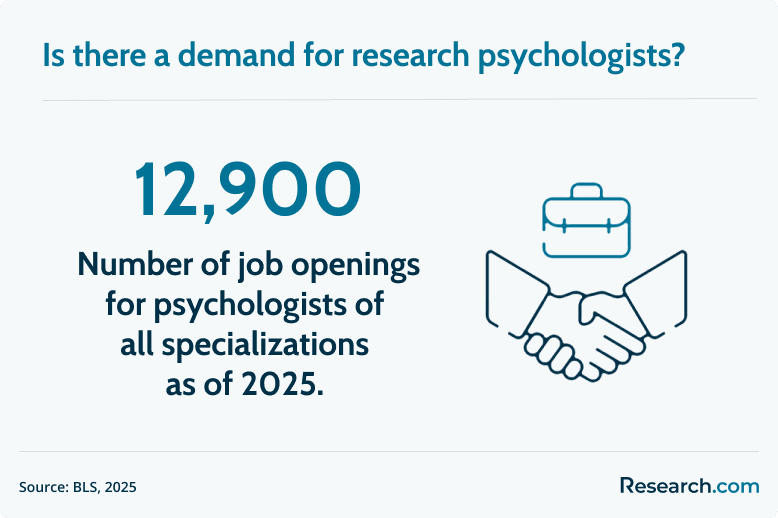
- Consistent Openings: About 12,900 psychology jobs will open each year, with many opportunities arising from retirements or career transitions.
- Research-Driven Expansion: The expanding use of behavioral science in marketing, tech, policy, and public health opens new paths beyond traditional academic or healthcare roles.
While the competition for top positions can be intense, the steady growth across specializations ensures that research psychologists will remain in demand.
Which additional certifications can accelerate your research psychology career?
Ongoing professional development through specialized certifications can complement advanced degrees by broadening a research psychologist’s expertise and marketability. Pursuing focused credentials in areas such as quantitative analysis, neuropsychological assessment, or applied behavior interventions can enhance one’s ability to lead innovative projects and secure competitive research grants. Accredited online courses can provide flexible, cost-effective training options, including access to the cheapest BCBA master's programs online, without sacrificing quality. Furthermore, these certifications often offer networking opportunities and exposure to the latest methodological advancements, ultimately strengthening professional credibility and career growth.
Here’s What Research Psychologists Have to Say About Their Careers
- Samuel: "Pursuing a career in research psychology gave me the tools to analyze human behavior in ways that directly impact healthcare policy. I was promoted to a senior research role within two years, and the increase in pay reflected the demand for these skills. Beyond the financial rewards, the sense of purpose I feel in influencing change makes the effort worthwhile."
- Kimberly: "After completing my advanced studies, I transitioned into corporate research where my background in psychology helps guide product development strategies. The move nearly doubled my salary compared to my entry-level role in academia. More importantly, I finally feel like my work shapes outcomes people use every day."
- Kelsey: "A research psychology career opened doors I never thought possible. I started in education but was able to step into a clinical research position with higher pay and far more growth potential. The chance to contribute to real-world change makes the long training worth every moment."
Key Findings
- 5% of psychologists across all specializations work in hospitals, highlighting the specialized yet vital role these professionals play in healthcare.
- Research psychology is a steadily growing field, with 2.95 million professionals in the workforce.
- Research psychologists earn an average of $99,577 per year.
- At the top of the pay scale, earnings for research psychologists can reach as high as $132,500 annually.
- Parexel International, a clinical research firm in Newton, Massachusetts, is the top-paying employer for research psychologists, offering an average salary of $97,848 annually.
- About 12,900 psychology jobs will open each year, with many opportunities arising from retirements or career transitions.
References:
- American Psychological Association. (2025). Screen time problems in children. APA News Release. Apa.org. Retrieved 25 September 2025.
- Data USA. (n.d.). Research & experimental psychology. Datausa.io. Retrieved 25 September 2025.
- LibGuides Central Michigan University. (n.d.). Psychology research career resources. Libguides.cmich.edu.. Retrieved 25 September 2025.
- Nature. (2025). 75% of US scientists who answered Nature poll consider leaving. Nature.com. Retrieved 25 September 2025, from
- US Bureau of Labor Statistics. (n.d.). Psychologists: Occupational outlook. Bls.gov. Retrieved 25 September 2025.
- Very Well Mind (2025). Correlation Studies in Psychology Research. Verywellmind.com. Retrieved 25 September 2025.
- Zippia. (2025). Research psychologist salary & demographic jobs outlook. Zippia.com. Retrieved 25 September 2025.
- ZipRecruiter. (n.d.). Research psychologist salary. Ziprecruiter.com. Retrieved 25 September 2025.
Other Things You Need to Know About Top Research Psychology Careers
Essential skills include statistical analysis, proficiency in research methodologies, and familiarity with software tools like SPSS or R. Strong communication skills and the ability to work collaboratively across interdisciplinary teams are also important for advancing in research psychology in 2027.
In 2027, research psychologists find employment across diverse industries, including healthcare, technology, academia, government, and private research firms. They apply their expertise in areas like human behavior analysis, data interpretation, and cognitive research to drive innovation, improve mental health services, and contribute to policy development.
In 2027, careers in research psychology typically require a master's or doctoral degree in psychology. Strong analytical skills, proficiency in statistics, and experience with research methodologies are essential. Practical experience, such as internships or related roles in academic or applied settings, can also be highly beneficial.


