
2027 WGU Online Nursing Degree Programs

Co-Founder and Chief Data Scientist
Western Governors University (WGU) is a fully accredited, nonprofit online university designed to make higher education flexible, affordable, and career-focused. Known for its competency-based learning model, WGU allows students to progress at their own pace—perfect for busy working professionals, especially those in healthcare.
WGU offers a wide range of online nursing degree programs, from bachelor’s and master’s degrees to specialized tracks, making it easier for aspiring and current nurses to advance their careers without putting their lives on hold. In this article, we’ll explore WGU’s online nursing programs, their benefits, and how they can help you reach your professional goals in nursing.
What are the benefits of pursuing a WGU online nursing degree program?
- Flexible, self-paced learning: Progress through courses on your schedule, making it easier to balance work, family, and education.
- Affordable tuition: Flat-rate tuition per term allows you to take more courses without increasing costs, helping you save money.
- Competency-based model: Advance by demonstrating mastery of skills and knowledge, not by sitting through lengthy semesters.
- Accredited and recognized programs: WGU’s nursing degrees are accredited, ensuring your credentials are respected by employers nationwide.
- Career-focused outcomes: Programs are designed in collaboration with healthcare leaders to align with industry needs and open doors to new opportunities.
What can you do with a WGU online nursing degree?
A WGU online nursing degree can open doors to a variety of career paths and advancement opportunities within the healthcare field. Whether you’re beginning your nursing journey or seeking to expand your current role, WGU’s programs are designed to prepare you for meaningful and rewarding positions.
With a WGU nursing degree, you can:
- Become a Registered Nurse (RN): If you’re starting with a BSN track, you’ll be equipped to pursue licensure and begin working directly with patients.
- Advance into leadership roles: Master’s programs can prepare you for nurse manager, director of nursing, or healthcare administration positions.
- Specialize in education: With WGU’s MSN in Nursing Education, you can train the next generation of nurses as a faculty member or clinical instructor.
- Pursue advanced practice pathways: WGU degrees can serve as a foundation for further graduate study toward becoming a Nurse Practitioner (NP) or other advanced roles.
- Enhance career stability and earning potential: Higher-level nursing degrees can lead to more job security, higher salaries, and greater professional growth.
Where can you work with a WGU online nursing degree?
A WGU online nursing degree equips you with the skills and credentials to work in a wide range of healthcare settings. Because the programs are accredited and respected nationwide, graduates can pursue opportunities in both traditional and nontraditional environments.
With a WGU nursing degree, you can work in:
- Hospitals and clinics: Provide direct patient care or take on leadership roles in fast-paced healthcare facilities.
- Community health centers: Support underserved populations by promoting wellness and preventive care.
- Long-term care facilities: Work with aging populations in nursing homes, rehabilitation centers, or assisted living facilities.
- Educational institutions: Teach and mentor future nurses as a clinical instructor or faculty member.
- Public health and government agencies: Contribute to community health initiatives, policy development, and public health education.
- Private healthcare organizations: Apply your expertise in healthcare consulting, administration, or specialized care services.
How much can you earn with a WGU online nursing degree?
When you earn a nursing degree—especially from a well-recognized institution like WGU—you open the door to roles that command competitive salaries. Using the latest U.S. Bureau of Labor Statistics (BLS) data from 2024, here’s a snapshot of what you might expect to earn:
- Registered Nurses: The 2024 mean annual wage for registered nurses is approximately $98,430 (about $47.32 per hour).
- Advanced Practice Nurses / Nurse Practitioners: For nurses who go on to advanced practice roles, the mean annual wage is $132,000, while the median annual wage is about $129,210 in 2024.
- Top earners in nursing: Nurses at the higher end of specialty or leadership roles—like nurse anesthetists, nurse executives, or clinical specialists—can exceed these median figures significantly (though such roles often require additional certification or education beyond a standard nursing degree).
These figures are national averages and medians for the U.S. Actual salaries will vary based on factors such as geographic location, workplace setting (hospital, outpatient, rural vs. urban), years of experience, and specialization. A WGU degree helps position you for many of these higher-paying roles—but your exact earning potential will still depend on which direction you take in your nursing career.
- What is WGU, and why should you consider pursuing its online nursing degree programs? What is WGU
- What does WGU's competency-based learning model mean? What does WGU's competency-based learning model mean?
- How do WGU's online nursing students go about practical or clinical experience? How do WGU's online nursing students go about practical or clinical experience?
- Are online nursing programs at WGU credible and recognized by employers? Are online nursing programs at WGU credible and recognized by employers?
- List of WGU Online Nursing Degree Programs List of Programs
- What financial aid is available for WGU's online nursing degree students? Financial Aid
- What is WGU's NCLEX passing rate? NCLEX Pass Rate
- What are the differences between on-campus and online nursing degree programs? What are the differences between on-campus and online nursing degree programs?
- What is the job outlook for graduates of online nursing degree programs? Job Outlook
- What are the challenges of pursuing an online nursing degree program? What are the challenges of pursuing an online nursing degree program?
What is WGU, and why should you consider pursuing its online nursing degree programs?
Western Governors University (WGU) is a nonprofit, accredited online university known for its innovative competency-based learning model. Instead of following rigid semester schedules, WGU allows students to progress once they demonstrate mastery of the material, making it especially flexible for working professionals.
WGU is based in Salt Lake City, Utah. While its headquarters are in Utah, WGU serves online students across all 50 U.S. states, meaning you don’t need to live near its campus to enroll or complete your degree.
For aspiring and current nurses, WGU offers a variety of online degree programs, including a Bachelor of Science in Nursing, a Master of Science in Nursing, and specialized tracks in education, leadership, and advanced practice. Tuition is offered at a flat rate per term, meaning motivated students can save time and money by moving faster through their studies. Programs are designed with input from healthcare experts, ensuring coursework is relevant, up to date, and aligned with industry needs. Choosing WGU means gaining a respected degree that can expand your career opportunities while fitting into your busy life.
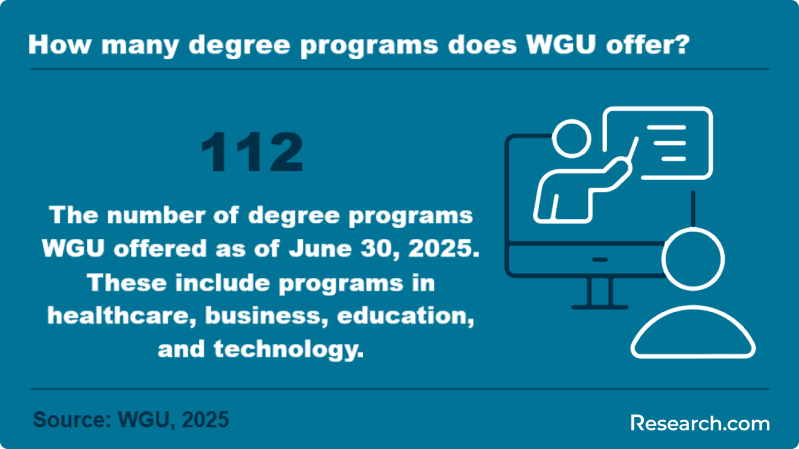
What does WGU's competency-based learning model mean?
WGU’s competency-based learning model is a distinctive approach that focuses on what students know and can do, rather than how much time they spend in class. Instead of following a traditional semester schedule, students progress through courses as soon as they demonstrate mastery of specific skills and knowledge.
Here’s what that means in practice:
- Progress at your own pace: Students can move quickly through material they already understand and spend more time on challenging topics.
- Mastery over seat time: Advancement is based on demonstrating competence through assessments, projects, or performance tasks—not on logging classroom hours.
- Flexible scheduling: Because coursework is available online 24/7, learners can fit their studies around work, family, and personal commitments.
- Personalized support: Every student is paired with a faculty mentor who provides academic guidance and helps set achievable goals.
- Real-world relevance: Courses are designed around industry standards, ensuring that each competency mastered directly applies to professional nursing practice.
This model allows WGU students to earn their degrees efficiently while ensuring they graduate with the practical knowledge and confidence needed to succeed in today’s healthcare environment.
How do WGU's online nursing students go about practical or clinical experience?
While WGU’s nursing programs are delivered online, they still include essential hands-on learning to prepare students for real-world healthcare environments. Clinical and practical experiences are arranged in partnership with healthcare facilities in various states to ensure students gain direct patient care exposure and meet program requirements. Students seeking to broaden their professional scope in mental health or human services can also explore dual master of counseling programs online, which combine advanced study in counseling specializations with flexible online learning formats.
Here’s how WGU supports nursing students with clinical experience:
- Pre-licensure programs: Students pursuing initial licensure (like BSN) complete supervised clinical rotations in hospitals and clinics arranged by WGU.
- Post-licensure programs: For RNs advancing their education, clinical requirements are often project-based and can be completed within a student’s current workplace or approved healthcare settings.
- Simulation and skills labs: Depending on the program and location, students may also participate in labs or simulations to build critical skills before entering clinical practice.
- Faculty and mentor support: WGU provides guidance and coordination to ensure placements meet accreditation standards and give students the competencies they need.
This blended approach ensures that WGU students graduate not only with strong academic knowledge but also with practical skills that translate directly into professional nursing practice.
How WGU Arranges Clinical Placements
- WGU has a Clinical and Placement Support Team (also called Clinical Learning & Placement Support) whose role is to assist students in finding suitable clinical sites and preceptors. They help set up required affiliation agreements with clinical sites as needed.
- For specific advanced programs, like the Family Nurse Practitioner (FNP) track, students work with a Placement Coordinator well in advance (around a year before internships begin) to identify clinical sites and preceptors. The Coordinator helps with compliance, documentation, and site-approval even if the facility doesn’t already have an agreement with WGU.
- WGU requires that both clinical sites and preceptors meet certain standards: licensed practice, ability to provide a range of patient exposure (lifespan, complexity), etc. Students often submit a profile of their proposed clinical site/preceptor, which is reviewed and approved by WGU.
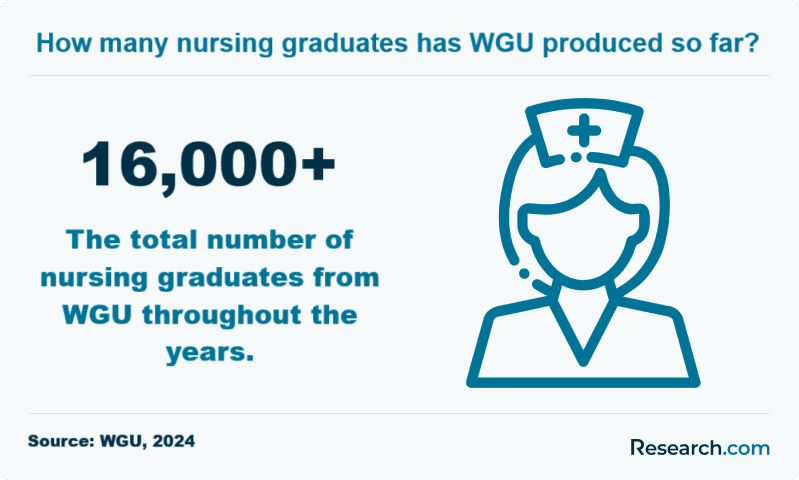
The infographic below shows the number of nursing graduates that WGU has produced thus far.
Are online nursing programs at WGU credible and recognized by employers?
Yes — by several important measures, WGU’s online nursing programs are credible, well-recognized, and respected by employers. Here are the key points that support this:
- WGU is institutionally accredited by the Northwest Commission on Colleges and Universities (NWCCU), one of the regional accrediting bodies recognized by the U.S. Department of Education. This means the entire institution meets rigorous standards of quality.
- Its nursing programs are accredited by the Commission on Collegiate Nursing Education (CCNE). This is a leading, respected accreditor specifically for nursing education.
- WGU’s College of Health Professions has also been recognized by the National League for Nursing (NLN) as a “Center of Excellence for Enhanced Student Learning and Professional Development.” Such designations further validate the programs’ quality.
- Employers generally focus on whether the graduate’s degree is from an accredited institution, whether the required clinical or hands-on training has been completed, and whether the graduate passed the necessary licensure exams (for example, NCLEX for registered nurses). Because WGU’s nursing degrees satisfy these factors, its graduates are considered qualified.
- The CCNE accreditation ensures that WGU’s nursing programs are held to the standards that many hospitals and health systems expect. Degrees from CCNE-accredited programs are more readily accepted in clinical settings, for licensure, and for advanced training.
Students who want to pursue further specialization in mental health or behavioral sciences might also consider an online master’s in clinical counseling and applied psychology program to build advanced therapeutic and assessment skills.
Because WGU’s nursing degrees are accredited both institutionally (NWCCU) and specifically in nursing (CCNE), and because the university has earned additional recognitions (e.g., by NLN), the programs are legitimate and meet high standards. For most employers, graduates from WGU online nursing programs will be considered on equal footing to graduates of traditional nursing schools — provided all licensure, clinical, and competency requirements are fulfilled. Those exploring related fields in public safety or healthcare administration might also find criminal justice certificate programs online useful for expanding their credentials and career flexibility.
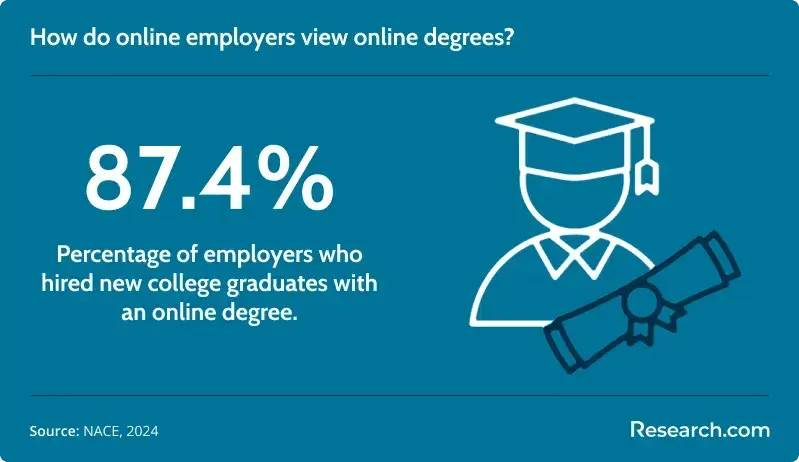
The infographic below shows a growing affinity for online degrees among employers.
List of WGU Online Nursing Degree Programs
The Leavitt School of Health at WGU offers a number of online nursing degree programs to choose from. They feature flexible schedules and high-quality education to equip you with the knowledge and skills you need.
WGU’s online nursing programs share several common features that make them both flexible and career-focused. All programs are built on a competency-based education model, allowing students to move forward once they’ve demonstrated mastery of the material. Tuition is charged at a flat-rate per term, which encourages motivated learners to complete more courses without added costs.
Courses are designed in collaboration with healthcare experts, ensuring that the curriculum is relevant to current industry standards and employer needs. In addition, every student is paired with a dedicated faculty mentor, providing ongoing guidance and support throughout their academic journey.
Those interested in expanding their career options in mental health and human services might explore a master's in counseling online no GRE program, which offers flexibility and accessibility similar to WGU’s model. Together, these features create a learning experience that is affordable, adaptable, and highly practical for working nurses.
Online Bachelor’s Degrees In Nursing
1. Pre-licensure Nursing BSN
WGU’s pre-licensure BSN is designed for students who are not yet registered nurses. This program, however, is available only to students who live in the following states:
- Arkansas
- Florida
- Idaho
- Indiana
- Iowa
- Kansas
- Kentucky
- Michigan
- Minnesota
- Mississippi
- Missouri
- Nevada
- New Mexico
- North Carolina
- Ohio, Oklahoma
- South Carolina
- South Dakota
- Tennessee
- Texas
- Utah
- Virginia
- West Virginia
- Wisconsin
You can take the online coursework at any time and at your own pace. But you can go faster through certain courses when you demonstrate mastery via competency-based assessments. The pre-nursing coursework includes general education courses and introductory medical coursework. After finishing the pre-nursing coursework, students can proceed to the nursing coursework.
The program also involves seven in-person clinical rotations in local, prearranged, and assigned healthcare facilities. WGU has partnered with healthcare employers that not only provide these practice sites but also offer clinical coaches and preceptors to help mentor the students. These clinical rotation locations are available within 60 miles of their listed districts.
Students also need to attend two in-person learning lab experiences. WGU Clinical Learning and Simulation Centers (Labs) are located in Missouri, Utah, and Texas. WGU has also partnered with labs in Indiana and Florida. Students in other states are required to travel to their nearest assigned labs.
- Program length: 4 years
- Cost: $8,755 (tuition per six-month term)
- Expected number of hours spent on the program: 30 hours/week
- Accreditation: The Commission on Collegiate Nursing Education (CCNE); the National League for Nursing (NLN)
2. Nursing (RN to BSN)
This nursing bachelor's degree is designed for current RNs with an associate degree in nursing (ADN) and who are ready to step up and upgrade. RNs with a BSN can improve patient outcomes and community health. They are also in better positions to assume more responsibilities at work and have a higher earning potential. Earning a BSN degree adds theoretical and policy depth to your practical knowledge as RN.
This BSN program has these embedded professional development certifications:
- Genetics and Genomics
- Palliative Care
- Evidence-Based Practice
- Protection of Human Subjects in Research
- Cultural Competence
The clinical process has been streamlined and requires only 35 clinical hours, ensuring you get the hands-on experience you need while earning the RN to BSN degree in as little as one year. Students from an accredited program can transfer up to 90 credits.
- Program length: 1 year
- Number of courses: 23
- Number of clinical hours: 35
- Cost: $5,325 (tuition per six-month term)
- Accreditation: CCNE; NLN
Online Master’s Degrees in Nursing: BSN-to-MSN
1. BSN-to-MSN - Leadership & Management
This program is designed for RNs with a BSN degree who already have an established career in nursing care and are ready to take on a leadership or managerial role.
Pursuing this degree gives you clinical practice experiences such as real-time simulation using immersive virtual reality training. Additionally, you'll earn the NAHQ (National Association for Healthcare Quality) HQ Principles certificate along with your MSN degree. This will help you boost your résumé before you even graduate.
- Program length: 23 months
- Cost: $5,035 (tuition per six-month term)
- Number of courses: 15
- Maximum transfer credits accepted: 17 units
- Accreditation: CCNE; NLN
2. BSN-to-MSN - Nursing Informatics
This nursing informatics program combines nursing science with data management, analyzation, and communication. You will learn systems-thinking strategies and skills to transform data into valuable insights that will influence healthcare-related policies and procedures that will save lives and improve patient outcomes.
This online degree program also includes clinical practice experiences such as analyzing and visually displaying data from a dataset. You will also have the opportunity to earn the National Association for Healthcare Quality (NAHQ) HQ Principles certificate along with your degree.
- Program length: 24 months
- Number of courses: 14
- Cost: $5,035 (tuition per six-month term)
- Maximum transfer credit accepted: 17 units
- Accreditation: CCNE; NLN
3. BSN-to-MSN - Nursing Education
A BSN-to-MSN nursing education program is designed to prepare RNs with a BSN to become nurse educators. The program will equip you with the skills you need to help train the next generation of nurses and improve health systems in your community.
This online nursing education degree program also includes clinical practice experiences that will allow you to demonstrate advanced nursing practice competence and curriculum development. Additionally, you'll have the opportunity to earn the NAHQ HQ Principles certificate along with your degree.
- Program length: 24 months
- Number of courses: 15
- Cost: $5,035 (tuition per six-month term)
- Maximum transfer credit accepted: 17 units
- Accreditation: CCNE; NLN
4. BSN-to-MSN - Family Nurse Practitioner
The MSN-FNP curriculum is evidence-based and is designed to make you an effective and caring nurse practitioner and healthcare provider. Courses are consistent with the National Organization of Nurse Practitioner Faculties (NONPF) standards for nurse practitioners. You will complete your MSN-FNP degree mostly online, but the program will culminate with the clinical internship courses, which involve 650 direct patient care clinical hours in your home community. Due to these clinical requirements, this program is currently not available to students who are permanent residents and who intend to obtain initial APRN licensure in the following states: California, District of Columbia, Louisiana, New York, North Dakota, Washington.
- Program length: 2.5 years
- Number of courses: 16
- Cost: $6,955 (tuition per six-month term)
- Accreditation: CCNE; NLN
5. BSN-to-MSN - Psychiatric Mental Health Nurse Practitioner
The MSN-PMHNP program is specifically designed to prepare BSN-holding nurses to become compassionate, effective, and dedicated psychiatric mental health practitioners. This program is certified by the American Nurses Credentialing Center (ANCC), helping ensure that it is rigorous and will prepare students for real-world situations as PMHNPs.
Due to its clinical requirements, this degree program is currently not open to students who have a permanent residence in and active license from California, District of Columbia, Louisiana, New York, North Dakota, and Washington.
- Program length: 2.5 years
- Number of courses: 17
- Cost: $6,955 (tuition per six-month term)
- Accreditation: CCNE; NLN
Online Master’s Degrees in Nursing: RN-to-MSN
The RN-to-MSN bridge programs at WGU are designed for RNs who hold an associate degree in nursing. These programs allow you to complete your BSN and then move forward to earning your MSN degree. There is no RN work requirement for these programs, which means you don't need to be currently working as an RN.
You can choose from three specialties: Leadership & Management, Nursing Informatics, and Nursing Education.
1. RN-to-MSN - Leadership & Management
The BSN portion of these programs focuses on contemporary nursing practice. Earning a BSN adds theoretical and policy depth to the practical knowledge you already have as an RN. Meanwhile, the MSN portion addresses the complexities of healthcare, access, quality, and costs for diverse populations.
In the leadership and management specialization, you'll master topics like leadership theories, strategic planning, and financial and HR management.
- Program length: 37 months
- Number of courses: 32
- Cost: $5,325 (tuition per six-month term)
- Maximum transfer credit accepted: 90 units
- Accreditation: CCNE; NLN
2. RN-to-MSN - Nursing Informatics
This RN-to-MSN in Nursing Informatics degree prepares RNs with an associate degree to ultimately play an integral role in enhancing the level of care offered by their healthcare facilities. With this specialization, you'll develop skills like applying systems-thinking strategies to transform data into valuable knowledge and using current technologies to work with teams across disciplines for the development and implementation of health education programs, evidence-based practices, and point-of-care policies.
- Program length: 36 months
- Number of courses: 31
- Cost: $5,325 (tuition per six-month term)
- Maximum transfer credit accepted: 90 units
- Accreditation: CCNE; NLN
3. RN-to-MSN - Nursing Education
The nurse educator specialization in this RN to MSN online degree program covers topics like curriculum development, learning styles, assessment, and more. This is a mostly online nursing program that you will complete by studying and working independently with instruction and support from WGU faculty. You will be expected to complete at least 8 competency units (WGU's equivalent of the credit hour) each 6-month term. (Each course is typically 3 or 4 units.)
- Program length: 38 months
- Number of courses: 32
- Cost: $5,325 (tuition per six-month term)
- Maximum transfer credit accepted: 90 units
- Accreditation: CCNE; NLN
What financial aid is available for WGU's online nursing degree students?
WGU offers a variety of financial aid options to help students manage the cost of an online nursing degree. These include scholarships, grants, federal aid, and other assistance:
Federal Aid
WGU is approved by the U.S. Department of Education to offer federal student aid in all of its degree programs. Because of its more affordable tuition, WGU students are able to graduate without large amounts of student debt to repay. If you qualify for and accept federal student aid, it will cover most, if not all, of your direct education expenses.
Eligible students can complete the Free Application for Federal Student Aid (FAFSA) to access:
- Pell Grants (need-based, do not need to be repaid)
- Federal Supplemental Educational Opportunity Grant (FSEOG) for high-need students
- Federal Direct Loans (both subsidized and unsubsidized) for undergraduate work
Institutional Scholarships & Grants
WGU runs scholarship programs specifically for nursing and health-related students, including:
- Future of Nursing Scholarship: Up to $8,000, for new or returning students in the Bachelor of Science in Nursing (Prelicensure) program.
- WGU Celebrates Nurses Scholarship: Up to $4,000, available to both BSN and MSN nursing or health-care students at WGU’s Leavitt School of Health.
- ANPD Excellence in Nursing Education Scholarship: Up to $2,500 for ANPD members in certain nursing or healthcare programs.
- DaVita Nursing Clinical Support Scholarship: A one-time award (e.g. up to $1,000) to assist with clinical expenses.
Special Grants / Need-Based Awards
- Opportunity Grant: For undergraduate students who are not eligible for traditional state or federal funding; helps with access barriers.
- Online Access Scholarships: Support for technology and internet access, such as laptops, credit for hotspot/webcam, etc.
Veterans & Military Benefits
WGU participates in GI Bill® education benefits and offers tuition assistance for active duty, reserve, and National Guard service members.
Employer Tuition Reimbursement & Partner-Scholarships
Some students may receive tuition reimbursement from their employer or qualify for partner scholarships via organizations (for example community health centers, etc.). These external supports can often be used in addition to WGU aid programs.
What is WGU's NCLEX passing rate?
One of the strongest indicators of a nursing program’s quality is how well its graduates perform on the National Council Licensure Examination (NCLEX-RN), the licensing test required to become a registered nurse.
WGU’s overall NCLEX-RN pass rate for 2024 was 91.79%. For the 8th consecutive year, the WGU NCLEX pass rate is at or above the national average for all NCLEX testers, which means that students in the WGU Prelicensure BSN program are likely to pass their NCLEX-RN exam and move forward with their licensure.
According to the National Council of State Boards of Nursing (NCSBN), the average NCLEX-RN pass rate for U.S.-educated students taking the exam for the first time in 2024 was 91.2%.
These figures suggest WGU’s nursing graduates are well-prepared to pass the NCLEX on their first attempt, which reflects favorably on the program’s curriculum, faculty support, and emphasis on clinical readiness.
In recent years, WGU’s five-year average first-time NCLEX-RN pass rate is 89.21%, which exceeds the national five-year average for BSN programs. Overall, the average NCLEX pass rate for 2024 was 73.3%. The chart below shows the average 2024 NCLEX-RN passing rates for various types of exam takers.
What are the differences between on-campus and online nursing degree programs?
While both on-campus and online nursing programs prepare students for rewarding careers in healthcare, they differ in structure, flexibility, and learning style. Understanding these differences can help you choose the path that best fits your lifestyle and career goals.
Here are the main distinctions:
- Learning Format: On-campus programs follow traditional classroom schedules with face-to-face lectures, while online programs—like those at WGU—deliver coursework through virtual platforms accessible anytime.
- Flexibility: Online programs offer greater flexibility, allowing students to study at their own pace and balance work or family responsibilities. On-campus programs typically require fixed class times and in-person attendance.
- Clinical Experience: Both formats include hands-on clinical training, but online students often complete these requirements in approved healthcare settings near their location rather than at a university-affiliated hospital.
- Cost and Duration: Online programs can be more cost-effective, especially with WGU’s flat-rate tuition model that rewards faster progress. Traditional programs often have additional costs related to housing, transportation, and campus fees.
- Learning Support: While on-campus students engage directly with faculty and peers, online learners receive personalized mentoring, virtual discussion opportunities, and tech-driven academic support to ensure they stay on track.
In essence, both options lead to the same goal—a nursing degree and licensure—but online programs offer a more flexible and accessible route for busy professionals or nontraditional students.
What is the job outlook for graduates of online nursing degree programs?
Graduates of online nursing programs—including those from reputable schools like WGU—can generally expect a strong job outlook. Here’s what current U.S. Bureau of Labor Statistics (BLS) data suggests:
- Registered Nurses: Employment for RNs is projected to grow by about 5% from 2024 to 2034. This growth is faster than average for all occupations.
- Advanced Practice Registered Nurses: The employment of APRNs, which include nurse practitioners, nurse midwives, and nurse anesthetists, is expected to grow 35% from 2024 to 2034, far above the average.
Several factors drive this positive employment outlook:
- Aging population: As the U.S. population gets older, the need for healthcare services—and hence qualified nursing care—increases.
- Growing prevalence of chronic illness: More patients will need long-term care, preventive care, and management of chronic diseases, boosting the need for RNs and APRNs.
- Expanding roles for APRNs: In many areas, APRNs are being given more autonomy and responsibility. Policy changes in some states allow them to perform more functions traditionally done by physicians, especially in primary care or underserved regions.
Because many online nursing programs—including WGU’s—produce graduates who are licensed, accredited, and clinically prepared, those graduates are well-positioned to benefit from the growth in the job market. The demand for RNs remains solid, while roles requiring advanced education (master’s or higher) are among the fastest growing.
If you choose to pursue specialties or roles with advanced practice (like nurse practitioner or nurse midwife), you’re likely to see even greater opportunity and growth over the next decade.
The table below shows the projected employment growth rate for RNs and APRNs from 2024 to 2034, as well as their median annual salary for 2024.
| Employment Growth Rate (2024-2034) | Median Annual Salary (2024) | |
| Registered Nurses | 5% | $93,600 |
| Nurse Practitioners | 40% | $128,790 |
| Nurse Midwives | 11% | $129,210 |
| Nurse Anesthetists | 9% | $223,210 |
What are the challenges of pursuing an online nursing degree program?
While online nursing programs offer flexibility and accessibility, they also come with unique challenges that students must be prepared to manage. Success in an online setting requires strong organization, self-discipline, and proactive communication.
Here are some of the common challenges nursing students may face:
- Time management: Without fixed class times, students must create and stick to their own study schedules to stay on track with coursework and deadlines.
- Limited face-to-face interaction: Online learning can feel isolating at times, as most communication with instructors and peers happens virtually.
- Balancing work, study, and personal life: Many online nursing students are working professionals or caregivers, making it difficult to juggle multiple responsibilities.
- Technology demands: Reliable internet access and comfort with online platforms are essential for completing assignments, attending virtual meetings, and participating in simulations.
- Coordinating clinical placements: Depending on the program, arranging or commuting to clinical sites can require extra planning and time management.
Despite these challenges, many students find that the flexibility and career benefits of an online nursing degree outweigh the difficulties—especially with strong support systems like WGU’s mentorship and structured guidance.
Key Findings
- There were about 3,282,010 employed registered nurses in the U.S. as of 2024.
- The average annual salary for RNs as of 2024 was $98,430. The median annual salary was $93,600.
- As of May 2024, the median wage for these advanced practice registered nurses was $132,050 per year.
- Employment for RNs is projected to grow by 5% from 2024 to 2034.
- The employment of nurse anesthetists, nurse midwives, and nurse practitioners is projected to grow by 35% from 2024 to 2034.
- In 2024, the average NCLEX-RN pass rate for first-time takers among U.S.-educated graduates was 91.2%. The pass rate for repeat takers was 50.9%. The average pass rate for all candidates, including U.S.- and internationally educated graduates, was 73.3%.
- WGU’s NCLEX-RN pass rate for 2024 was 91.7%.
Here’s What Online Nursing Degree Graduates Have to Say About Their Career
- Jenna: "Balancing work and family made it impossible for me to attend traditional classes, but the flexibility of my online nursing program changed everything. I could study after my shifts and still keep up with deadlines at my own pace. The online simulations and mentorships gave me hands-on skills that translated directly to my hospital work. Thanks to the program, I was able to earn my BSN without putting my career on hold. "
- Derrick: "I was nervous about learning online, but my nursing program provided incredible support through virtual labs and real-time instructor feedback. The platform was easy to navigate, and discussion boards helped me connect with peers across the country. After graduating, I landed a nurse leadership position because my degree showed employers I could manage both clinical and digital responsibilities effectively. "
- Tonee: "Studying online allowed me to transition from an LPN to an RN while continuing to work full-time in a long-term care facility. The competency-based approach meant I could move faster through areas I already understood and focus on the ones I needed to strengthen. It was empowering to see how flexible learning could lead to such a big step forward in my nursing career."
References:
- National Council of State Boards of Nursing. (2025). NCLEX Pass Rates. NCSBN.
- United States Bureau or Labor Statistics. (2025). Occupational Employment and Wage Statistics Query System. BLS.
- United States Bureau or Labor Statistics. (2025, August 28). Occupational Outlook Handbook | Nurse Anesthetists, Nurse Midwives, and Nurse Practitioners. BLS.
- United States Bureau or Labor Statistics. (2025, August 28). Occupational Outlook Handbook | Registered Nurses. BLS.
- Western Governors University. (2023, December 15). Is an Online Nursing Degree Credible? WGU.
- Western Governors University. (2025). NCLEX-RN Exam. WGU.
- Western Governors University. (2024, July 16). WGU Impacts Nursing Workforce: Launches BSN Prelicensure in 7 New States. WGU.
Other Things You Should Know About Online Nursing Degree Programs
WGU supports its online nursing students in 2027 through various means. Students have access to faculty mentors for personalized guidance, course instructors for academic support, an online library for resources, and career services to assist with job placement. Virtual labs and interactive modules also augment learning experiences.
WGU's online nursing programs in 2027 require students to complete clinical practice hours in a healthcare setting. These hours, which vary by program, must be supervised by a licensed healthcare professional to meet state nursing board requirements for licensure.
For WGU’s online nursing programs in 2027, students need a reliable computer with internet access, a webcam, and a headset with a microphone. Compatibility with specific software tools used by faculty and access to a secure testing environment are also essential.


