
2027 Top Accrediting Bodies for Counseling Degrees

Co-Founder and Chief Data Scientist
When choosing a counseling degree, accreditation should be one of the first things students look for. Accreditation is more than just a stamp of approval—it’s a quality assurance process that ensures programs meet rigorous academic and professional standards.
For aspiring counselors, enrolling in an accredited program is often the difference between being eligible for licensure, qualifying for financial aid, and gaining recognition in the job market.
Because counseling is a regulated profession, accreditation directly impacts your career path. The right accrediting body can determine whether you’re able to practice in clinical, school, or academic settings. This guide explores the top accrediting bodies for counseling degrees, how they differ, and why choosing the right one is essential for your professional future.
What are the benefits of attending an accredited counseling degree?
- Most state licensing boards require graduation from an accredited program (often CACREP or APA-accredited) to sit for exams and become a licensed counselor.
- Accreditation ensures programs meet rigorous academic, ethical, and professional standards, giving students confidence in the training they receive.
- Only accredited institutions qualify for federal financial aid programs like grants and student loans, making education more affordable.
- Employers often prefer or require candidates from accredited programs, as it signals proper training and professional readiness.
- What is accreditation and why does it matter for counseling degrees? Accreditation
- What are the key accrediting bodies for counseling degrees? Main Accreditors
- Which accreditor should students prioritize based on career goals? Accreditor for Career
- Where can students check a program’s accreditation status? Checking Accreditation
- What key questions should students ask schools before enrolling? Questions to Ask
- How do CACREP, MPCAC, and APA differ in scope and recognition? CACREP vc MPCAC vs APA
- How do institutional and programmatic accreditation differ? How do institutional and programmatic accreditation differ?
- What role do program costs and financial aid play in choosing an accredited counseling degree? What role do program costs and financial aid play in choosing an accredited counseling degree?
What is accreditation and why does it matter for counseling degrees?
Accreditation is a process where independent organizations review and approve academic programs to ensure they meet national standards for quality, rigor, and professional preparation.
For counseling degrees, accreditation is especially important because it not only validates the quality of your education but also determines whether you’re eligible for licensure and certain career paths.
Similar to researching career-focused programs—like asking what can you do with an MSN in health systems management—students must also evaluate how accreditation shapes long-term opportunities.
Programs recognized by bodies like the Council for Accreditation of Counseling and Related Educational Programs (CACREP) or the Masters in Psychology and Counseling Accreditation Council (MPCAC) give students a trusted pathway to becoming licensed counselors.
Choosing an accredited counseling program matters because it impacts nearly every stage of your professional journey, from accessing financial aid to qualifying for jobs and state licensure exams. Without it, graduates may find themselves limited in employment options and professional growth.
Here is why accreditation is important:
- Quality Assurance: Confirms that faculty, curriculum, and training meet national standards.
- Licensure Pathway: Most states require accredited degrees for counselor licensure exams.
- Career Readiness: Employers often prefer or require accredited program graduates.
- Transferability: Credits are easier to transfer to other accredited schools or advanced programs.
- Financial Aid Access: Federal aid is typically only available to accredited programs.
What are the key accrediting bodies for counseling degrees?
Several key accrediting bodies oversee counseling and psychology programs in the United States, each with its own standards and career implications, much like the career paths associated with what can you do with an associate degree in early childhood education.
Understanding the differences between organizations such as the Council for Accreditation of Counseling and Related Educational Programs (CACREP), the Masters in Psychology and Counseling Accreditation Council (MPCAC), and the American Psychological Association (APA) can help students make informed choices about their educational paths.
Council for Accreditation of Counseling and Related Educational Programs (CACREP)
The Council for Accreditation of Counseling and Related Educational Programs (CACREP) is the leading accreditor for master’s and doctoral counseling programs in the U.S. CACREP accreditation is widely recognized as the gold standard for preparing students to become licensed professional counselors.
Many state licensure boards specifically require or prefer graduates from CACREP-accredited programs when evaluating eligibility for exams such as the LPC or LMHC. For students committed to direct clinical practice in counseling, this is often the most important accreditation to look for.
Masters in Psychology and Counseling Accreditation Council (MPCAC)
The Masters in Psychology and Counseling Accreditation Council (MPCAC) accredits graduate programs that integrate counseling and psychology, with an emphasis on evidence-based practice and mental health service delivery.
While not as universally required for licensure as CACREP, MPCAC accreditation supports a strong foundation for clinical practice and is often chosen by students pursuing careers in mental health counseling or preparing for doctoral-level psychology programs.
MPCAC programs may appeal to those seeking a broader blend of counseling and psychological training.
American Psychological Association (APA) – Commission on Accreditation
The American Psychological Association’s Commission on Accreditation (APA-CoA) is the primary accreditor for doctoral-level psychology programs, including Ph.D. and Psy.D. tracks, much like the process for selecting the best online bible colleges. APA accreditation is required for licensure as a psychologist in most U.S. states, making it essential for students planning to become licensed clinical, counseling, or school psychologists.
While APA does not accredit master’s-level programs, its role in accrediting doctoral programs makes it central for students on the psychology pathway rather than counseling alone.
Regional Institutional Accrediting Agencies (e.g., Middle States, HLC, SACSCOC, etc.)
Beyond program-specific accreditors, regional institutional accrediting agencies—such as the Middle States Commission on Higher Education (MSCHE), Higher Learning Commission (HLC), and Southern Association of Colleges and Schools Commission on Colleges (SACSCOC)—evaluate entire colleges and universities.
While not counseling-specific, regional accreditation ensures the overall academic quality of an institution. It also enables students to access federal financial aid, transfer credits more easily, and pursue further study at other accredited institutions. A counseling program should ideally hold both regional accreditation and program-specific accreditation (CACREP, MPCAC, or APA).
Among the many accreditors for counseling degrees, CACREP has accredited nearly 1,000 masters and doctoral programs. These programs are offered by more than 470 educational institutions all over US.
Which accreditor should students prioritize based on career goals?
Not all accrediting bodies serve the same purpose, so the right choice depends on a student’s professional goals.
For counseling degrees, the most common accreditors are the Council for Accreditation of Counseling and Related Educational Programs (CACREP), the Masters in Psychology and Counseling Accreditation Council (MPCAC), and the American Psychological Association (APA). Each aligns with specific licensure and career pathways.
Students planning to work as licensed professional counselors should generally prioritize CACREP-accredited programs, since many states explicitly require or prefer this accreditation for licensure.
On the other hand, those who see themselves in psychology-related roles or pursuing doctoral study may consider MPCAC or APA-accredited programs, depending on their focus.
According to Zippia, only 18% of counselors have a masters degree, while the majority of counselors hold a bachelor's degree, as illustrated below.
Where can students check a program’s accreditation status?
Verifying accreditation is an essential step before enrolling in a counseling program. Fortunately, accrediting bodies and regional agencies make this information publicly accessible, and most schools also highlight their status on official websites.
Just as you would carefully research a human services bachelors degree online to confirm its credibility, students should always cross-check counseling program claims directly with the accrediting organization to avoid outdated or misleading information.
Here are some ways to check a program’s accreditation:
- Accreditor Websites: Use the official directories of accrediting bodies like
- Regional Accreditor Listings: Each regional accrediting commission maintains a searchable database of accredited institutions.
- School’s Official Website: Most universities list their current accreditations on program pages or accreditation/disclosures sections.
- U.S. Department of Education Database: The Database of Accredited Postsecondary Institutions and Programs (DAPIP) provides a government-verified record of institutional and programmatic accreditation.
- CHEA Directory: The Council for Higher Education Accreditation (CHEA) also maintains a searchable database of recognized accreditors and accredited programs.
At the moment, only the APA is recognized on the DAPIP, so it is important to cross reference the CHEA directory for other accreditors for counseling programs.
What key questions should students ask schools before enrolling?
Before committing to a counseling degree, students should make sure the program truly supports their long-term goals. Asking the right questions up front can save time, money, and frustration later—especially when it comes to licensure and career readiness.
Just as researching trends like organizational communication salary can help communication students plan their futures, counseling students should use program evaluations to ensure their degree leads to the outcomes they want. Here are the most important areas to cover when evaluating schools:
Accreditation and Licensure
- Is the program accredited by CACREP, MPCAC, or APA?
- Will this degree meet my state’s requirements for licensure?
- How long has the program been accredited, and what success have past graduates had with licensure?
Curriculum & Training
- What counseling specializations are available (clinical mental health, school counseling, etc.)?
- How many supervised practicum and internship hours are required?
- Does the curriculum emphasize evidence-based practices and cultural competence?
Faculty and Student Support
- What professional experience and qualifications do the faculty bring to the classroom?
- How accessible are professors for mentorship, supervision, and guidance?
- What kinds of student support services are provided (academic advising, tutoring, career counseling)?
Career Outcomes
- What percentage of graduates pass the licensure exam?
- How many secure counseling-related jobs within the first year after graduation?
- Does the school partner with clinics, schools, or community organizations for internships and job placements?
Flexibility and Cost
- Is the program offered online, on-campus, or in a hybrid format?
- Can I enroll part-time while balancing work or family responsibilities?
- What is the tuition, and are financial aid options, scholarships, or graduate assistantships available?
By asking these questions early, students can better compare programs and ensure they choose one that aligns with both their career path and personal circumstances, and understand essential elements like is psychology a STEM major.
To provide you with context on the demand for the different counseling specializations available, the table below summarizes the demand for mental health counselors, social workers, and other counselor occupations:
How do CACREP, MPCAC, and APA differ in scope and recognition?
While all three accrediting bodies serve the counseling field, they differ in focus, scope, and how widely they are recognized for licensure and professional practice. Just as students considering an online sociology bachelor's degree need to verify program credibility, counseling students should understand how accreditation impacts their career and licensure options.
Council for Accreditation of Counseling and Related Educational Programs (CACREP)
- Scope: Accredits master’s and doctoral programs in counseling specialties such as clinical mental health, school counseling, marriage and family counseling, and addiction counseling.
- Recognition: Considered the gold standard for counseling education in the U.S. Many state licensing boards require or strongly prefer CACREP-accredited programs for licensure.
Masters in Psychology and Counseling Accreditation Council (MPCAC)
- Scope: Accredits master’s programs that blend psychology and counseling, with a focus on human development, multicultural competence, and applied practice.
- Recognition: Growing in acceptance, though some states still limit licensure eligibility for MPCAC graduates compared to CACREP. It is especially relevant for students who want flexibility between psychology and counseling career paths.
American Psychological Association (APA) – Commission on Accreditation
- Scope: Accredits doctoral programs, internships, and postdoctoral residencies in psychology, including counseling psychology.
- Recognition: Required for those pursuing careers as counseling psychologists at the doctoral level. APA accreditation is essential for psychology licensure and academic or research careers but does not apply to master’s-level counseling programs, which is a key factor when considering is an ABA worth it for special education teachers.
How do institutional and programmatic accreditation differ?
In the U.S., accreditation works at two levels. There’s institutional accreditation, which reviews the overall quality of a college or university. Only 19 recognized accrediting organizations handle this process, ensuring schools meet standards for academics, governance, financial stability, and student support.
This type of accreditation is essential because it makes a school eligible for federal financial aid and helps your credits transfer more easily if you continue your education elsewhere, whether that means pursuing a counseling degree or advancing to a doctorate in human services online.
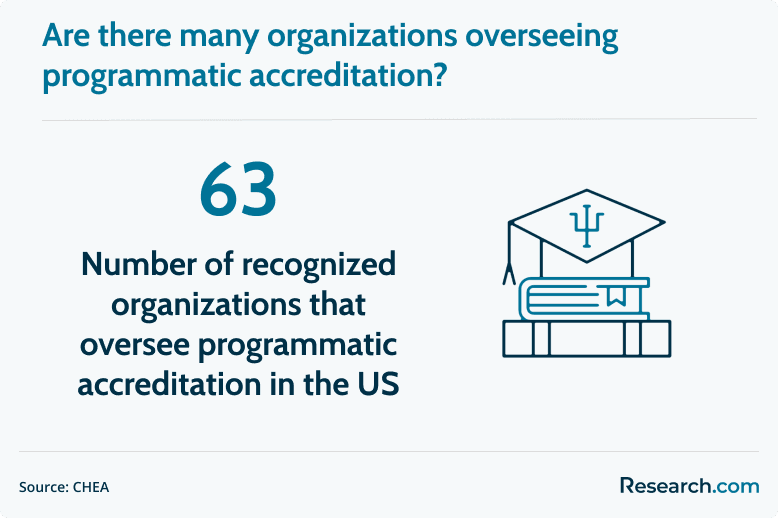
There’s also programmatic accreditation, overseen by about 63 recognized accrediting organizations according to CHEA. This focuses on specific degree programs, such as counseling, nursing, or business.
For counseling students, programmatic accreditation from bodies like CACREP, MPCAC, or APA confirms that your program provides the right curriculum, supervised training, and faculty expertise needed for licensure.
Together, institutional and programmatic accreditation give students confidence that both the school and the degree program meet recognized standards—supporting career readiness and long-term success.
What role do program costs and financial aid play in choosing an accredited counseling degree?
Evaluating financial considerations is integral to selecting an accredited counseling program. Tuition fees and associated costs can vary significantly among similarly accredited institutions. Comparing available financial aid options—such as scholarships, grants, and loan programs—helps ensure that the educational investment aligns with long-term career earnings. Rely on independent analysis and resources like the most affordable online counseling degrees to assess cost-effectiveness without compromising academic quality or licensure preparation.
Key Findings
- The projected demand for substance abuse, behavioral disorder, and mental health counselors over the next decade is expected to grow by 17%.
- According to the Council for Higher Education Accreditation (CHEA), about 63 recognized organizations oversee programmatic accreditation across fields such as counseling, nursing, and business.
- There are currently 983 CACREP-accredited programs.
- There are 19 organizations that oversee institutional accreditation.
- Counselors, social workers, and other community and social service specialists are expected to be 8% more in demand over the next decade.
References:
- CHEA. (n.d.). About accreditation | Council for Higher Education Accreditation. https://www.chea.org/about-accreditation
- DAPIP. (n.d.). https://ope.ed.gov/dapip/#/agency-list
- US BLS. (2025). Substance Abuse, Behavioral Disorder, and Mental Health Counselors. https://www.bls.gov/ooh/community-and-social-service/substance-abuse-behavioral-disorder-and-mental-health-counselors.htm
Other Things to Know About Pursuing an Accredited Counseling Degree
Accreditation ensures that counseling degree programs meet established standards of quality and rigor, which are critical for preparing students for licensure. It guarantees that the curriculum aligns with industry requirements, thus aiding graduates in obtaining licensure and ensuring they are well-prepared for professional practice in 2027.
Counseling programs must undergo periodic reviews, typically every 8 years, by accrediting bodies like CACREP to maintain their status in 2027. This involves demonstrating compliance with updated standards, submitting detailed reports, and possibly site visits to ensure consistent educational quality and relevance.
In 2027, CACREP emphasizes competency in clinical mental health counseling, while MPCAC focuses on a broader counseling educational framework. APA accreditation, primarily associated with psychology programs, stresses a scientific foundation and clinical skills in psychology. Each accreditation aligns differently with specific career paths and licensure requirements.


