
2027 Is an ABA Worth It for Special Education Teachers? Benefits of Earning a Master's Degree in Applied Behavior Analysis

Co-Founder and Chief Data Scientist
Whether you feel you’ve hit a professional ceiling as an educator or you’re looking for more effective, evidence-based tools to manage challenging classroom dynamics, a master’s degree in applied behavior analysis (ABA) offers a strategic way forward. In fact, demand for behavior analysts surged 58% from 2023 to 2024, underlining how urgently schools and organizations need professionals with this expertise.
This guide is designed to give you a clear, data-driven answer to the question: Is ABA for special education worth it? You’ll discover how this specialized degree can launch you into roles like Board Certified Behavior Analyst (BCBA), enhance your classroom effectiveness, and future-proof your career with skills in behavior intervention, data analysis, and systems change
Key Things You Should Know About Master's Degrees in Applied Behavior Analysis
- The Behavior Analyst Certification Board (BACB) reports a 21% annual increase in demand for individuals holding a BCBA credential, signaling a stable and growing career field.
- An entry-level BCBA can expect to earn around $68,310, with experienced professionals earning upwards of $82,460, offering a clear financial return.
- Earning this master's degree is the primary educational step required to pursue certification as a BCBA, a respected specialist role.
- An ABA master's is a critical prerequisite, but becoming a BCBA requires additional steps, including supervised fieldwork and passing a certification exam.
- You do not need to become a BCBA to benefit. The evidence-based strategies taught in an ABA program can transform your classroom management and make you an invaluable behavioral expert in your school.
- What is a master's in applied behavior analysis? ABA Definition
- What is a Board Certified Behavior Analyst (BCBA)? BCBA Definition
- How does the role of a BCBA differ from a special education teacher? BCBA vs SPED Teacher
- How much does a master's degree in ABA typically cost? ABA Master's Cost
- What are the steps to becoming a BCBA after earning your master's degree? What are the steps to becoming a BCBA after earning your master's degree?
- How long does it take to complete the degree and certification process? How long does it take to complete the degree and certification process?
- What is the salary potential for a BCBA? BCBA Salary
- What is the job outlook for behavior analysts? Job Outlook
- What specific career paths does a BCBA credential unlock for a teacher? What specific career paths does a BCBA credential unlock for a teacher?
- What are the primary benefits of earning an ABA master's degree? What are the primary benefits of earning an ABA master's degree?
- Are there any downsides or challenges to consider? Are there any downsides or challenges to consider?
- How do you know if becoming a BCBA is the right career move for you? How do you know if becoming a BCBA is the right career move for you?
- How can I evaluate the quality and affordability of an ABA master’s program? How can I evaluate the quality and affordability of an ABA master’s program?
What is a master's in applied behavior analysis?
A master's in applied behavior analysis (ABA) provides a graduate-level education in the science of how we learn and act. It is a program designed to give you a systematic, evidence-based methodology for creating meaningful behavioral change.
Students learn to move beyond guesswork, using precise data collection and analysis to develop effective interventions for individuals in settings that range from schools to clinical environments.
Many people associate ABA exclusively with therapy for developmental disabilities, but that is only part of the picture. For an educator, this degree is a powerful toolkit for understanding the function of any behavior and designing a classroom environment that proactively supports student success.
The skills learned are distinct from those in fields like master's in adult education jobs, as ABA is less about curriculum delivery and more about the fundamental mechanics of behavior itself.
This degree offers a robust scientific framework, and for many, it serves as the necessary first step toward earning a professional credential that opens up new career pathways.
What is a Board Certified Behavior Analyst (BCBA)?
A BCBA is a graduate-level certified professional who provides behavior analysis services. This certification is granted by the BACB and is the recognized standard for practice in the field.
Think of the BCBA not as an academic title, but as a professional license that signifies you have met rigorous standards for competence and ethics.
It's crucial to understand the relationship between the master's degree and this credential. The ABA master's degree provides the essential knowledge, but it is the first major step on the path to certification, not the final destination. Many students pursue specialized options such as HBCU online master's programs to gain this foundational education in a culturally rich and supportive learning environment.
To earn the BCBA, a candidate must complete a specific accredited master's program, followed by a period of supervised fieldwork, and finally pass the official BCBA examination.
Achieving a graduate-level credential like this is a proven path to higher earning potential. According to the U.S. Bureau of Labor Statistics, the median weekly earnings for workers with a master's degree were $1,796, a significant jump from the $1,432 earned by those with only a bachelor's degree.
This demonstrates the tangible value employers place on advanced, specialized expertise.
How does the role of a BCBA differ from a special education teacher?
The primary difference lies in their core function: a special education teacher is an expert in implementing instruction, while a BCBA is an expert in designing behavioral interventions. While both roles are vital, they focus on different aspects of student support. This distinction in specialization is similar to how workforce demand varies across fields—for example, understanding the nursing shortage by state helps highlight where professionals are most needed, just as educators and behavior analysts fill unique but complementary roles in schools.
Special Education Teacher
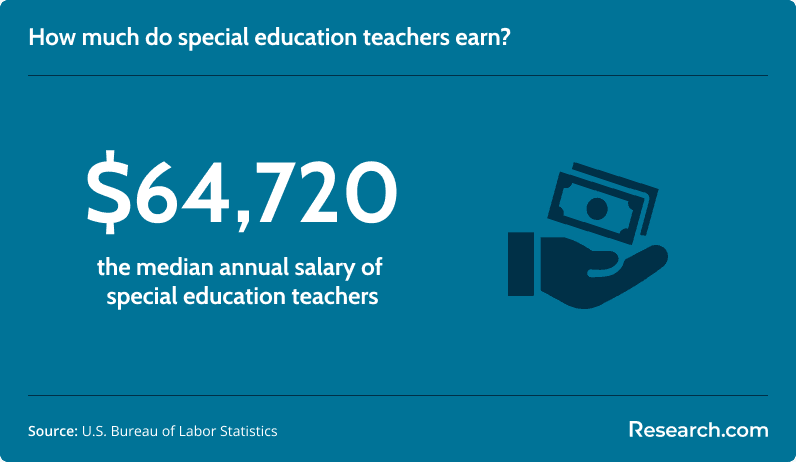
A special education teacher, who earns a median salary of $64,270, is centered on the academic and daily management of the classroom.
- Focus: Delivering academic curriculum, adapting lesson plans, and managing group instruction to meet the goals in a student's Individualized Education Program (IEP).
- Primary Skill Set: Pedagogy, differentiated instruction, and classroom management.
- Core Goal: To advance students' academic and functional skills through teaching.
BCBA
In contrast, a BCBA operates as a clinical specialist focused on the underlying causes of behavior.
- Focus: Conducting functional behavior assessments (FBAs), analyzing data to identify the "why" behind a behavior, and creating formal Behavior Intervention Plans (BIPs).
- Primary Skill Set: Data analysis, clinical assessment, and intervention design.
- Core Goal: To create systemic, individualized behavioral change and train others (like teachers) to implement the plan.
Expert Analysis: A Shift in Professional Focus
This distinction represents a fundamental shift in professional activity. The BCBA's work is highly focused on creating individual or small-group change, a very different kind of impact from the large-scale, systemic change pursued in an education policy career path.
Reflecting on this is key: do you find more fulfillment in the art of direct instruction, or in the science of clinical analysis and intervention design? The answer helps clarify your best path forward.
How much does a master's degree in ABA typically cost?
The average tuition for a master's degree in applied behavior analysis ranges from $15,000 to $65,000 for the entire program. This wide spectrum reflects differences between public and private universities and online versus in-person formats.
A critical first step in managing this cost is to complete the Free Application for Federal Student Aid (FAFSA), which can determine your eligibility for federal loans, grants, and other financial assistance.
While this is a significant investment, it's helpful to place it in the larger context of graduate education. With the average debt from graduate school alone reaching $94,141, many ABA programs represent a more financially accessible path.
So, is ABA for special education worth it? Researching programs and financial aid options is a vital step in determining if there won't be any serious financial concerns.
Understanding the financial commitment is the first part of evaluating the investment. Next, we need to look at the procedural requirements you must complete to earn the professional credential.
What are the steps to becoming a BCBA after earning your master's degree?
After you complete your ABA master's degree, the path to becoming a Board Certified Behavior Analyst is a clear, three-step process managed by the BACB. Similar to how professionals explore career changes for nurses to expand their impact and earning potential, the BCBA pathway allows you to transition into a more specialized and rewarding role within behavioral health.
- Complete an accredited master's program. This is the foundational step. The program you choose must meet the BACB's specific coursework requirements to ensure you have the necessary theoretical and practical knowledge.
- Complete supervised fieldwork. This is a critical, non-negotiable requirement that takes place after or during your degree program. You will work under the mentorship of a certified BCBA to apply your skills in a real-world setting, accumulating a significant number of practice hours.
- Pass the BCBA examination. This is the final gate to certification. The exam is a comprehensive test designed to assess your professional knowledge and ensure you are competent to practice ethically and effectively.
Successfully completing these three stages demonstrates that you have met the high professional standards required to earn the BCBA credential.
How long does it take to complete the degree and certification process?
You should plan for a total of three to four years to complete the entire process from starting your master's degree to becoming a certified BCBA. It's important to view this as a full professional transition rather than just the length of an academic program.
The master's degree itself typically takes between 1.5 and 2 years to complete, depending on the program's structure and whether you study full-time or part-time. Following or concurrent with your coursework, you will need to accumulate the required supervised fieldwork hours, a process that often takes an additional one to two years to finish.
This combined timeline is comparable to the commitment required for some of the fastest online EdS degree in special education programs, which also represent a significant investment in career advancement.
Now that we have a clear picture of the investment required—in terms of cost, steps, and time—we can turn to the most critical part of the equation: the professional and financial payoff.
What is the salary potential for a BCBA?
The salary potential for a BCB) is strong, with significant growth over the course of a career, starting at over $68,000 annually. This earning power is a central component of the return on investment for pursuing the degree and certification.
According to 2025 data from Payscale, the financial progression is clear. An entry-level BCBA earns an average of $68,310, which already represents a notable increase over the median salary for special education teachers. From there, the potential grows steadily:
- Early-Career: $71,840
- Mid-Career: $77,690
- Experienced: $82,460+
This clear upward trajectory provides a compelling financial answer to the question, "Is ABA for special education worth it?" It isn’t just about the initial salary bump; it's about unlocking a career path with a substantially higher long-term earning potential.
Much like the opportunities available through master's in mental health counseling careers, this progression demonstrates a powerful return on the investment of time and tuition. A strong salary is a powerful motivator, but true career security also comes from knowing that your skills are in high demand.
What is the job outlook for behavior analysts?
The job outlook for behavior analysts is exceptionally strong, characterized by rapid and sustained growth. This high demand provides a powerful layer of career security for those who pursue certification.
A key piece of data from the BACB reveals a 21% annual increase in demand for individuals holding a BCBA credential. This indicates a thriving and expanding field.
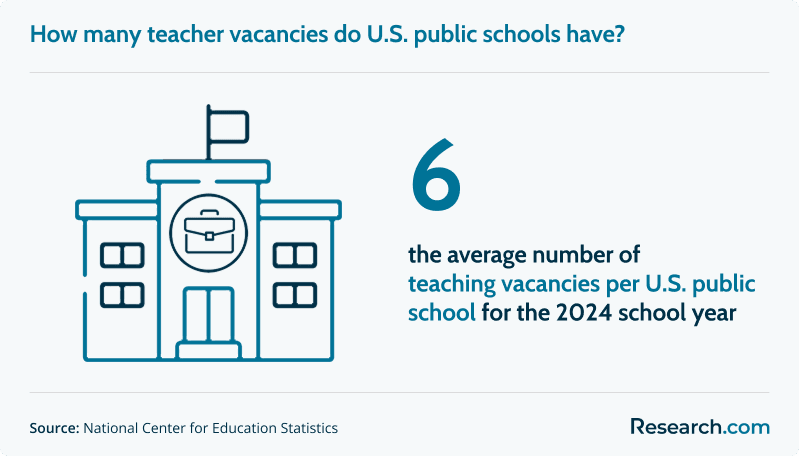
This stability is notable when compared to the broader education landscape, where U.S. public schools report an average of 6 teaching vacancies. While many sectors face uncertainty, the data shows that behavior analysis is a field defined by opportunity.
Meanwhile, 53% of public schools reported being understaffed, with 65% citing shortages in special education teachers. Shortages drive demand.
This high-growth environment means that as a certified professional, you are not just entering a stable career; you are entering a market where your specialized skills are actively sought after. This gives you greater leverage and control in choosing a work environment that aligns with your professional goals.
What specific career paths does a BCBA credential unlock for a teacher?
For a teacher, the BCBA credential unlocks a diverse range of career paths that extend far beyond the traditional school classroom, offering greater professional autonomy and new settings for your expertise. It allows you to transition from the role of instructional implementer to a clinical specialist.
- Clinical Supervisor: In this role, you would oversee a team of behavior technicians or other analysts in a clinic or agency setting. You would be responsible for case management, treatment planning, and ensuring the quality of services provided.
- School-Based Consultant: Instead of managing one classroom, you would work with multiple teachers across a school or district. Your job is to provide expert guidance, conduct assessments, and help teams solve their most complex behavioral challenges.
- Program Director: This is a leadership role where you manage the operations of an ABA clinic or program. Responsibilities often include staff development, program evaluation, and ensuring compliance with healthcare standards.
- Private Practitioner: The BCBA credential allows you to open your own practice. This path offers the highest level of autonomy, giving you the freedom to choose your clients, set your own schedule, and build a business around your specific interests.
- In-Home Therapist: Many BCBAs work directly with families in their homes to implement behavior plans in a natural environment. This role is highly relational and allows for deep, focused work with individual clients.
Each of these paths allows you to leverage your background in education while moving into a more specialized, clinical role. You can also focus your expertise on a specific population, similar to specializing in early childhood education certificate jobs.
Having explored the investment and the potential career outcomes, the final step is to synthesize this information to determine if this move is right for you.
What are the primary benefits of earning an ABA master's degree?
Earning a master's degree in applied behavior analysis offers distinct, powerful benefits, directly answering the question, “Is ABA for special education worth it?” for educators seeking a new career or aiming to master their current one. Here are the primary advantages it delivers:
- Unlock a new career path. For special education teachers, this degree is the primary key to pivoting into a clinical role as a BCBA, a high-demand, high-growth profession.
- Significantly increase your earning potential. The BCBA career track comes with a clear salary ladder that offers a substantially higher long-term earning potential than a traditional teacher's pay scale.
- Gain greater professional autonomy. Moving into a BCBA role allows you to transition from implementing instruction to designing interventions, giving you more control and specialized authority in your work.
- Achieve classroom mastery. For teachers who want to remain in the classroom, the degree provides an elite, evidence-based toolkit to effectively manage challenging behaviors, reduce burnout, and create a more productive learning environment.
- Become an invaluable in-school expert. By mastering the science of behavior, you position yourself as a campus leader, opening doors to mentorship, behavioral coaching, and other school-based leadership opportunities.
To make a fully informed decision, however, it's just as important to consider the potential challenges of this path.
Are there any downsides or challenges to consider?
It’s wise to approach any major educational investment with a critical eye, especially when public confidence in higher education is mixed. A 2025 Gallup poll found that only 42% of adults have a great deal of confidence in the institution. With that in mind, it is important to acknowledge the significant challenges on the path to becoming a BCBA.
The primary difficulties are the financial cost of the degree, the academic rigor of a graduate-level program, and, most notably, the time and effort required to complete the supervised fieldwork.
This fieldwork is a substantial commitment beyond your coursework, demanding hundreds of hours of mentored practice. It requires careful planning and coordination to balance with work and personal life.
These challenges are not insurmountable, but they are real. Success requires a clear-eyed understanding of the commitment you are making. Acknowledging these hurdles is the first step in creating a realistic plan to overcome them and achieve your professional goals.
Before diving deeper into the personal and professional challenges of pursuing this path, it’s helpful to step back and consider the broader context. Public sentiment toward higher education in the U.S. has shifted in recent years, and understanding these perceptions provides valuable perspective for anyone weighing the commitment of graduate study.
The chart below highlights current levels of public confidence in higher education, offering a backdrop against which to evaluate the pursuit of an advanced degree like the BCBA.
How do you know if becoming a BCBA is the right career move for you?
The decision to pursue an ABA master's hinges on a practical assessment of your career goals. The choice boils down to whether you see the degree as a key to a new job or as a high-value upgrade for your current one.
If your goal is a concrete career change that comes with a higher salary ceiling and different daily responsibilities, then you should view the degree as a launchpad. Committing to the full BCBA certification process is the necessary vehicle to achieve these tangible results.
If your goal is to improve your daily professional life and increase your effectiveness and job security in your current role, then you should view the degree as a toolkit. The skills you gain can directly translate into better classroom outcomes and make you a more valuable asset to your school.
So, is ABA for special education worth it? The answer is yes, provided the outcome aligns with your practical needs.
If this analysis leads you to a different conclusion, other specializations offer their own clear benefits, such as those found by researching what can you do with a master's degree in gifted education. A well-informed choice is a powerful career move.
How can I evaluate the quality and affordability of an ABA master’s program?
Review the program’s accreditation status and confirm it meets the standards set by the Behavior Analyst Certification Board (BACB). Assess the curriculum quality by examining faculty expertise, course structure, and available fieldwork opportunities. Investigate financial aid options and compare tuition costs across institutions. For data-driven comparisons, consider resources like the cheapest BCBA online masters programs to guide your decision.
Here’s What Graduates Have to Say About Their Master's Degree in Applied Behavior Analysis
- Alison: "I was a special education teacher for eight years and felt like I had hit a professional wall. Finding a master's program with the flexibility I needed was key to balancing my work and family life while making a real change. Now, as a BCBA, I have so much more autonomy and a renewed sense of purpose in my career, designing programs that create profound change for my clients."
- Jason: "I was worried about the cost, but the numbers speak for themselves. The program was structured in a way that allowed me to continue working full-time, so I didn't lose my income while I was studying. Within my first year as a BCBA, my salary increased by nearly 30% compared to my teaching salary, making the investment in my education worth every penny."
- Charles: "I was hesitant because I knew I wanted to stay in the classroom and wasn't sure if a whole master's degree was a justifiable expense. The skills I learned were so practical that I saw a difference in my students' engagement within the first few months. The degree paid for itself in job satisfaction and a renewed passion for teaching."
Key Findings
- The career pivot from special education teacher to BCBA offers a significant and immediate financial return, with an entry-level salary of $68,310, surpassing the median teacher salary of $64,270.
- The field of behavior analysis offers exceptional career security, with a 21% annual increase in demand for BCBAs, providing a stable alternative to the general education sector, which sees an average of 6 teaching vacancies per school.
- While a significant investment, the typical tuition for an ABA master's degree ($15,000 to $65,000) is often well below the average graduate school debt of $94,141, making it a potentially more accessible advanced degree.
- Pursuing a master's degree provides a proven earnings boost, with degree holders earning a median of 25.4% more than those with a bachelor's, justifying the investment for teachers even if they don't pursue full certification.
- The value of an ABA master's is not singular; it serves as both a direct launchpad into a new clinical career and as a powerful toolkit for mastering classroom management in a current teaching role.
- Becoming a BCBA is a multi-year commitment that extends beyond academics, requiring a significant investment of time in supervised fieldwork after the degree is completed.
References:
- Gallup. (2025). Public trust in higher ed rises from recent low. Gallup. Retrieved October 1, 2025, from https://news.gallup.com/poll/692519/public-trust-higher-rises-recent-low.aspx
- National Center for Education Statistics. (2024). Press Release: October 17, 2024. U.S. Department of Education. Retrieved October 1, 2025, from https://nces.ed.gov/whatsnew/press_releases/10_17_2024.asp
- U.S. Bureau of Labor Statistics. (2024). Education pays. U.S. Department of Labor. Retrieved October 1, 2025, from https://www.bls.gov/careeroutlook/2024/data-on-display/education-pays.htm
- USAFacts. (2025). How much do teachers get paid in the U.S.? USAFacts. Retrieved October 1, 2025, from https://usafacts.org/answers/how-much-do-teachers-get-paid-in-the-us/country/united-states/
- USAFacts. (2025). *Where are students moving to attend college?* USAFacts. Retrieved October 1, 2025, from https://usafacts.org/articles/where-are-students-moving-to-attend-college/
Other Things You Need To Know About Master’s Degrees in Applied Behavior Analysis
By 2026, having a master's in Applied Behavior Analysis (ABA) is essential for special education teachers who aim to effectively support students with special needs. This degree offers specialized knowledge and skills that enable teachers to create more effective, evidence-based interventions and tailor strategies to individual student needs, enhancing educational outcomes.
Prerequisites typically include a bachelor's degree in education or a related field, a minimum GPA requirement, and possibly relevant work experience. Some programs may require specific coursework in psychology or education. Check each school's requirements for detailed conditions.


