
2027 Top 10 Things to Know About a Mental Health Counseling Master's Program

Co-Founder and Chief Data Scientist
Deciding on a mental health counseling master’s program can feel overwhelming. Unclear admission steps, rising tuition, rigorous clinical training, and uncertainty about career outcomes leave many unsure of the right move. Adding to the pressure, the U.S. Bureau of Labor Statistics projects an 18% job growth for mental health counselors from 2022 to 2032, making the choice feel urgent but complex.
This article breaks down the top 10 things to know about a mental health counseling master’s program in 2027. Backed by career planning experts, it offers practical insights to clear the confusion and help chart a confident path forward.
Key Benefits of Mental Health Counseling Master's Programs
- Qualifies graduates for roles such as Licensed Professional Counselor (LPC), clinical mental health counselor, or therapist in hospitals, schools, and private practice.
- The median annual salary for mental health counselors is around $53,710, with higher pay in private practice and specialized areas.
- Provides the advanced skills and credentials needed to practice independently, meet licensure requirements, and make a direct impact on communities in need.
- What are the admission requirements for a mental health counseling master’s program? Requirements
- How much does a mental health counseling master’s program cost? Cost
- How long does it take to finish a master’s in mental health counseling? How long does it take to finish a master’s in mental health counseling?
- What courses are included in a mental health counseling curriculum? Courses
- What practical training is required in a counseling master’s program? What practical training is required in a counseling master’s program?
- What careers are available with a master’s in mental health counseling? Careers
- What is the salary outlook for mental health counselors with a master’s degree? Salary
- How does licensure work after a counseling master’s program? How does licensure work after a counseling master’s program?
- What are the differences between online and campus-based counseling programs? What are the differences between online and campus-based counseling programs?
- What is the job outlook for mental health counselors in 2025 and beyond? Job Outlook
- How can I verify a counseling program’s accreditation standards? How can I verify a counseling program’s accreditation standards?
What are the admission requirements for a mental health counseling master’s program?
Admission to a mental health counseling master’s program usually requires a bachelor’s degree, a solid academic record, and supporting application materials. While schools may differ, most programs look for evidence that students can handle graduate-level coursework and are committed to the counseling field.
Just as students may explore options like affordable online HVAC certifications to build career skills in other industries, future counselors benefit from understanding the prerequisites and expectations before applying.
Typical requirements include:
- Bachelor’s degree: Often in psychology, counseling, social work, or a related field, though other majors may be accepted.
- Minimum GPA: Many schools set a threshold, often around 3.0 on a 4.0 scale.
- Prerequisite courses: Some programs may ask for classes in psychology, statistics, or human development.
- Letters of recommendation: Usually two or three, highlighting academic or professional strengths.
- Personal statement: Explaining interest in counseling and future career goals.
- Interview: Some programs include this step to assess readiness for clinical work.
- GRE test scores: Increasingly optional in 2027, but required by certain universities.
These requirements help programs select students who can succeed academically and grow into skilled, ethical counselors. Preparing in advance ensures a smoother application process and a stronger chance of admission.
How much does a mental health counseling master’s program cost?
The cost of a mental health counseling program varies widely, but students can expect tuition to range from moderate to high depending on the institution and format. Public universities generally charge lower rates for in-state students, while private schools often carry higher tuition regardless of residency. Online programs may reduce housing and commuting expenses, but tuition itself is usually comparable to on-campus options.
Just as students often look into fast-track game design degrees online for more affordable and flexible options, counseling students should carefully evaluate program formats and overall costs.
In addition to tuition, students should budget for textbooks, technology fees, clinical supervision, and liability insurance for practicum and internship placements. Travel costs may also arise if clinical hours must be completed off-site. Financial aid, scholarships, and graduate assistantships can ease the burden, making strategic planning essential.
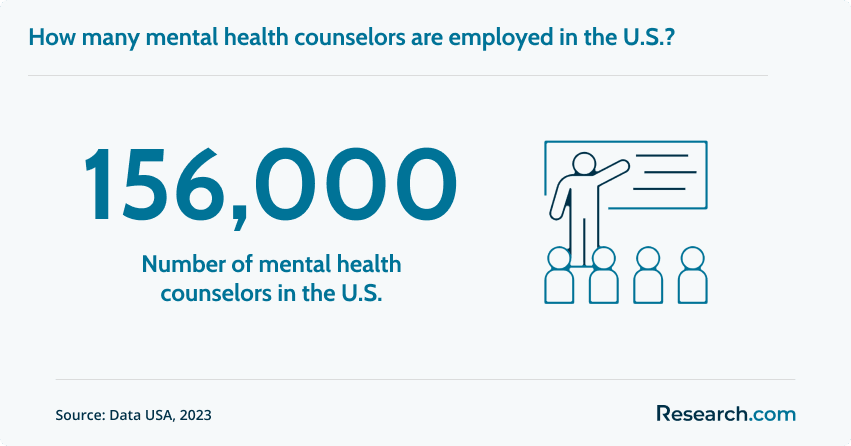
The investment is often balanced by strong job security and demand in the field. According to workforce data, there were 156,000 mental health counselors employed in the U.S. in 2023, a number that continues to grow with rising needs for mental health services. This shows that while the upfront cost can be significant, the long-term career outlook and stability make the degree a valuable investment.
How long does it take to finish a master’s in mental health counseling?
A master’s in mental health counseling program usually takes two to three years of full-time study to complete. Most programs require between 48 and 60 credit hours, which include coursework, supervised practicum, and internship experiences. The timeline varies depending on program structure and whether a student studies full-time or part-time.
Similar to how students may pursue an accelerated online architecture degree to shorten their academic path, some counseling programs offer faster options for motivated learners.
Some universities offer accelerated tracks that allow completion in less than two years, often with intensive course loads or shorter terms. By contrast, part-time students, particularly those balancing work and family, may need three to four years to finish. Clinical training requirements, such as practicum and internship hours, are also a key factor that can lengthen the degree timeline.
The growing demand for mental health services makes the investment of time worthwhile. According to the Bureau of Labor Statistics (2023–2033 projections), healthcare will see the largest employment growth with 1.6 million new jobs, while social assistance—a field directly tied to counseling—will add nearly 649,000 jobs. This steady expansion highlights why completing a counseling master’s, even if it takes longer, aligns with strong workforce needs.
What courses are included in a mental health counseling curriculum?
A mental health counseling program curriculum blends theory, practical skills, and supervised training to prepare students for licensure and clinical practice. While exact course offerings differ by school, most programs cover foundational areas that help students develop both professional knowledge and counseling techniques.
Just as students pursuing an accelerated masters in sports analytics online gain specialized skills through a focused curriculum, counseling students take structured courses that build expertise in their field.
Common courses include:
- Counseling theories and techniques: Introduction to major therapeutic approaches and evidence-based practices.
- Human growth and development: Study of psychological, emotional, and social development across the lifespan.
- Assessment and diagnosis: Training in evaluating mental health concerns and using tools like the DSM-5.
- Multicultural counseling: Focus on cultural awareness and serving diverse populations.
- Ethics and professional standards: Exploration of legal and ethical responsibilities in counseling.
- Research methods: Basics of program evaluation and applying research to clinical practice.
- Practicum and internship: Supervised clinical experiences in real-world counseling settings.
Together, these courses provide a balance of academic knowledge and applied learning. By the end of the program, students gain the skills needed to serve clients effectively and meet the requirements for state licensure.
What practical training is required in a counseling master’s program?
Practical training is a core part of every counseling master’s program, ensuring students move beyond theory into real-world application. These experiences are designed to build counseling skills, provide supervised practice, and prepare students for licensure. Much like students in a fast track online sustainability bachelor's degree gain applied, hands-on learning to complement coursework, counseling students progress through structured training that gradually increases responsibility.
Practicum Experience
Students begin with a practicum, which is an introductory hands-on training in a supervised setting. This stage usually requires around 100 to 150 hours, including both direct client contact and observation. The practicum helps students apply classroom concepts in real-world situations while building confidence in basic counseling skills.
Internship Requirements
After the practicum, students complete a more extensive internship. Most programs require 600 or more hours, often spread over two semesters. During this period, students work directly with clients under the supervision of a licensed counselor, gaining experience in assessment, treatment planning, and therapy sessions.
Supervision and Feedback
Both practicum and internship experiences are closely monitored by faculty and site supervisors. Students meet regularly for individual or group supervision, where they review client cases, receive feedback, and refine their skills. This process ensures they are developing professionally and ethically.
Professional Readiness
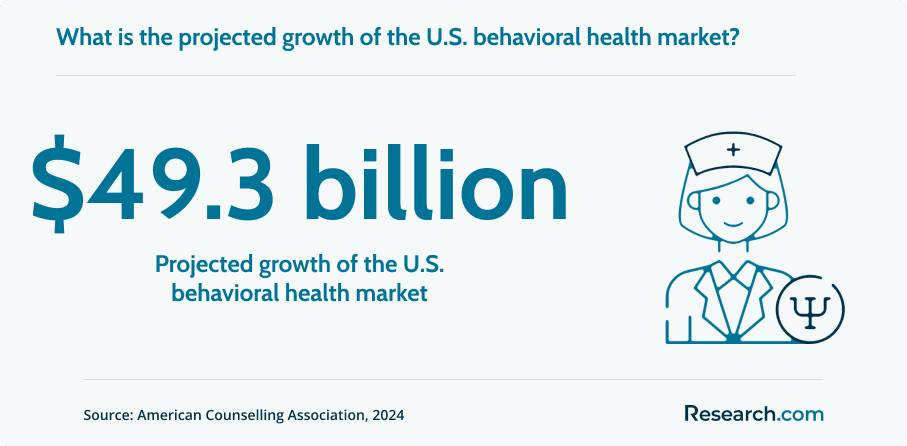
Practical training is more than just a degree requirement—it prepares students for the licensing process and the realities of clinical practice. With the U.S. behavioral health market projected to grow by $49.3 billion, graduates entering the workforce with strong applied training will be especially well-positioned to meet rising demand for services.
What careers are available with a master’s in mental health counseling?
Earning a master’s in mental health counseling program opens the door to a wide range of career paths in clinical and non-clinical settings. With proper licensure, graduates can work directly with clients, but the degree also supports roles in education, advocacy, and administration, similar to exploring what can you do with a masters in special education.
Common career options include:
- Licensed Professional Counselor (LPC): Providing therapy to individuals, couples, or groups in private practice or clinics.
- Substance abuse counselor: Specializing in treatment for addiction and recovery support.
- School or college counselor: Supporting student mental health and academic success.
- Rehabilitation counselor: Helping clients with disabilities or injuries adjust and thrive.
- Program director or administrator: Managing mental health services within organizations or agencies.
The industries employing the highest number of counselors reflect these diverse opportunities. According to the Bureau of Labor Statistics (2024), the largest share of employment is in Offices of Other Health Practitioners (8,040) and Individual and Family Services (6,900). State and local governments also employ thousands of counselors, while Outpatient Care Centers (2,340) remain a key setting for direct clinical practice.
What is the salary outlook for mental health counselors with a master’s degree?
Counselors with a master’s degree often earn higher salaries because the degree is a key requirement for licensure. According to the U.S. Bureau of Labor Statistics, the median annual wage for substance abuse, behavioral disorder, and mental health counselors was about $59,190 in May 2024. This figure reflects a strong baseline for the field, with opportunities for increased earnings as experience and credentials grow.
Location and specialization play major roles in shaping salaries. Licensed Professional Counselors (LPCs), for example, report average earnings of around $81,977 per year, with ranges that can go as high as $130,000+ in high-demand regions. States such as Alaska, Oregon, and New Jersey consistently rank near the top for counselor pay, with averages ranging from the mid-$70,000s to nearly $90,000.
Over time, professionals with a master’s in counseling can expect salary growth tied to experience, licensure, and advanced roles. Those who pursue private practice, specialize in areas like addiction or trauma, or step into supervisory positions often exceed the national average. For many, the degree represents not only meaningful work but also a stable and steadily rising income path, which is also a goal for students looking into HBCU online MSW programs.
How does licensure work after a counseling master’s program?
Earning a master’s degree in counseling is only the first step toward independent practice. Licensure ensures that counselors meet professional standards, gain supervised experience, and demonstrate the competencies needed to provide safe and effective care. The process varies by state, but most follow a similar pathway with education, exams, and post-graduate training requirements.
Educational Foundation
Graduates must complete a counseling master’s program accredited or approved by the state board. Most states require 48 to 60 credit hours, including coursework in counseling theory, ethics, human development, and supervised clinical training.
Post-Graduate Supervised Hours
After graduation, counselors typically complete 2,000 to 3,000 hours of supervised clinical practice. These hours are usually spread over two to three years and are guided by a licensed supervisor. This stage allows new counselors to refine skills in real-world settings before practicing independently.
Licensing Examinations
Most states require passing a national exam, such as the National Counselor Examination (NCE) or the National Clinical Mental Health Counseling Examination (NCMHCE). Some states may also include a jurisprudence exam on local laws and ethics.
State-Specific Requirements
Each state sets its own regulations, so applicants must verify details with their local licensing board. Some states may require background checks, additional coursework, or continuing education before full licensure is granted.
Full Licensure and Maintenance
Once requirements are met, graduates can apply for full licensure, often titled Licensed Professional Counselor (LPC) or its state-specific equivalent. To maintain licensure, counselors must complete continuing education and adhere to professional ethical codes throughout their career.
How can I verify a counseling program’s accreditation standards?
Accreditation is a strong indicator of a program’s quality and its alignment with professional standards. Applicants should confirm that the mental health counseling master’s program is accredited by recognized agencies such as the Council for Accreditation of Counseling and Related Educational Programs (CACREP) or relevant state-specific bodies. Verification can be done by reviewing official agency directories and the institution's published accreditation details, ensuring that the coursework and practicum experiences meet licensure requirements. Additionally, candidates might find it useful to explore options via the most affordable online counseling degrees to compare cost-effective, accredited programs.
What are the differences between online and campus-based counseling programs?
Choosing between an online and a campus-based counseling master’s program depends on personal learning style, lifestyle, and career goals. Both formats lead to the same degree and can meet licensure requirements, but they differ in flexibility, cost, and student experience. Understanding these distinctions can help applicants select the program that fits their needs best, similar to deciding between the best music schools in the US.
Flexibility and Scheduling
Online programs often provide greater flexibility, allowing students to complete coursework at their own pace and fit studies around work or family obligations. Campus-based programs, on the other hand, follow structured schedules that require in-person attendance.
Learning Environment
Campus programs emphasize face-to-face interaction with professors and peers, creating opportunities for networking and group learning. Online programs rely on virtual classrooms, discussion boards, and video calls, which can provide convenience but may feel less personal.
Cost Considerations
While tuition is often similar, online students may save on commuting, housing, and campus fees. Campus-based students, however, may have access to more on-site resources, such as libraries, labs, and student services, a consideration when looking at the best online bachelor's in legal studies.
Clinical Training Requirements
Regardless of format, students must complete in-person practicum and internship hours to qualify for licensure. Online students typically arrange these placements in their local communities, while campus students often rely on university partnerships.
Employer Perceptions
Employers generally view online and campus counseling degrees equally, as long as the program is accredited. What matters most is accreditation, licensure eligibility, and the quality of supervised training rather than the delivery format.
What is the job outlook for mental health counselors in 2027 and beyond?
Demand for mental health counselors is expected to grow much faster than average in the coming decade. The U.S. Bureau of Labor Statistics projects employment of substance abuse, behavioral disorder, and mental health counselors to increase by about 17 percent from 2024 to 2034, adding roughly 81,000 new roles.
Several trends will help drive this growth:
- Greater public awareness of mental health and reduced stigma, increasing people’s willingness to seek care
- Expanded insurance coverage and legislation mandating mental health services
- Rising demand in schools, community clinics, telehealth platforms, and integrated healthcare settings
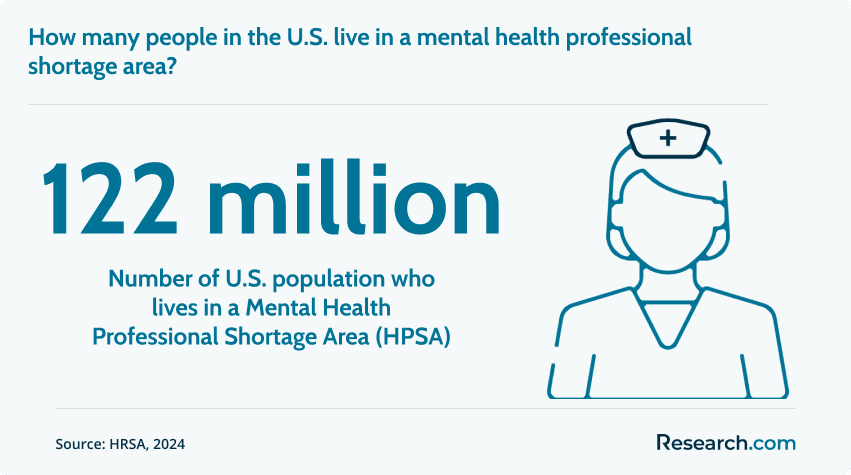
For graduates, this translates to strong job stability and multiple avenues for specialization. While entry-level pay may start lower, experienced and licensed counselors in high-demand areas can command higher salaries and greater choice of roles. Importantly, the shortage of providers also fuels demand: as of August 2024, 122 million Americans—over one-third of the U.S. population—live in a Mental Health Professional Shortage Area (HPSA).
Key Findings
- As of 2023, there are about 156,000 mental health counselors employed in the U.S., reflecting a solid and growing professional workforce.
- The U.S. behavioral health market is projected to grow by $49.3 billion, highlighting rising demand for counseling and related services.
- Between 2023 and 2033, the healthcare sector alone will add 1.6 million jobs, with social assistance also growing significantly by nearly 649,000 jobs, both directly tied to counseling careers.
- Counselors are most employed in Offices of Other Health Practitioners (8,040) and Individual and Family Services (6,900), followed by state and local government roles.
- As of August 2024, over 122 million Americans—more than one-third of the population—live in Mental Health Professional Shortage Areas (HPSAs), underscoring the urgent need for more licensed counselors.
Here’s What Graduates Have to Say About Mental Health Counseling Master’s Program
- Athena: "The hands-on training in my master’s program gave me the real-world confidence I needed to step into counseling sessions with clients. I feel prepared and supported knowing I’m entering a field where demand is rising every year. "
- Yuri: "The coursework challenged me to grow not only as a professional but also as a person. Learning about trauma, crisis intervention, and cultural sensitivity has shaped the way I see people and the impact I can make. "
- Denise: "Completing my counseling master’s program opened doors to career opportunities I never thought possible. The blend of theory and practicum helped me find my true passion for guiding others toward healing. "
References
- Altarum. (2024). Health Care Employment Growth is Projected to Moderate but Remain Higher Than Other Industries. Altarum.
- American Counseling Association. (2024). Counseling Workforce Report. American Counseling Association.
- Data USA. (2023). Mental Health Counselors. Data USA.
- Health Resources & Services Administration. (2024). State of the Behavioral Health Workforce Report 2024. HRSA.
- U.S. Bureau of Labor Statistics. (2024, May). Counselors, All Other (21-1019) — Occupational Employment and Wages, May 2023. BLS.
Other Things You Should Know About Mental Health Counseling Master’s Program
In 2027, a Mental Health Counseling Master's Program typically includes coursework in psychotherapy, assessment, and ethics. Programs often require internships for practical experience. Accreditation by entities like CACREP ensures quality. Graduates need to pass licensure exams and fulfill state-specific requirements to practice.
In 2027, mental health counseling master's programs incorporate trends like the rise in anxiety and depression, teletherapy, and diversity issues into the curriculum, ensuring students are well-prepared for contemporary challenges. This reflects the evolving demands and expectations in the mental health field, equipping graduates with relevant skills.


