
2027 Best Music Schools in the US

Co-Founder and Chief Data Scientist
The music industry presents a tough paradox. Professional musicians command a median hourly wage of over $42, yet the field's job growth is projected at only 1%. This reality creates a difficult question for aspiring artists and their families: how do you confidently invest in your passion?
This is where a strategic plan becomes essential. To help you, our career planning experts, with over 10 years of experience, have developed this guide. It goes beyond a simple ranking of the best music schools in the US to give you a clear framework for making the right choice for your future.
What are the benefits of getting a music degree?
- It opens doors to a portfolio career as a performer, composer, or private instructor, and allows you to pursue impactful work in music education.
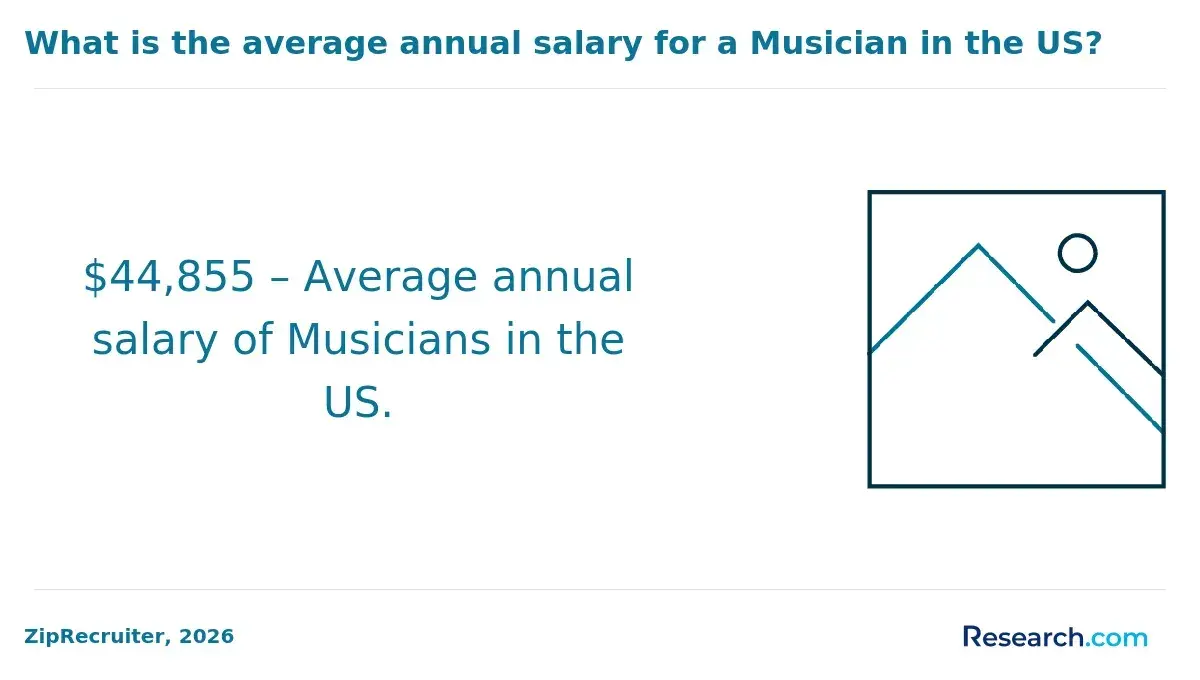
- Graduates can expect a median annual salary of around $57,257, with top earners in key markets making significantly more.
- For non-performance fields like music business or theory, an online degree offers the flexibility to study from anywhere while balancing other commitments.
What can I expect from a music degree?
You can expect an intense and highly structured schedule. Your days will be filled with a demanding mix of private lessons, ensemble rehearsals, individual practice hours, and academic classes in music theory and history. The most important thing to understand is the fundamental choice between two types of undergraduate music degrees.
A Bachelor of Music (B.M.) is a pre-professional degree, usually offered at a conservatory. The curriculum is heavily focused on performance, with about two-thirds of your coursework dedicated to music. A Bachelor of Arts (B.A.) in Music, offered at a liberal arts college or university, provides a broader education. Here, music studies make up a smaller portion of your overall credits.
Where can I work with a music degree?
For a modern musician, the question isn't "where can I work?" but rather "what roles will I fill?" A music career is rarely one full-time job. Instead, you build a "portfolio career" by combining several different professional roles.
This typically means blending work as a performer, a private or classroom teacher, and a creator, such as a composer or arranger. The industry data confirms this: with 47% of musicians working as self-employed professionals, versatility is the key to a sustainable career. The goal of attending one of the best music schools in the US is to develop the high-level skills needed to succeed in this dynamic, entrepreneurial environment.
How much can I make with a music degree?
The median annual salary for professional musicians is $57,257. However, that number doesn't tell the whole story. The median hourly wage is a very strong $42.45.
This difference highlights the reality of a freelance-driven career. Your artistic skill is highly valued, but your total income is determined by your ability to consistently line up enough performing, teaching, and recording work. Successful musicians learn to be entrepreneurs, building multiple income streams to create a stable and rewarding financial life.
- List of the Best Music Schools for 2027 List of Schools
- How long does it take to complete a music degreeprogram? Completion Time
- What are the financial aid options for students enrolling in a music degree program? Financial Aid
- What are the prerequisites for enrolling in a music degree program? What are the prerequisites for enrolling in a music degree program?
- What courses are typically in a music degree program? What courses are typically in a music degree program?
- What types of specializations are available in a music degree program? Specializations
- How to Choose the Best Music School How to Choose the Best Music School
- What career paths are available for graduates of a music degree program? Career Paths
- What is the job market for graduates of a music degree program? Job Market
- Can Supplementary Online Programs Enhance My Music Career? Can Supplementary Online Programs Enhance My Music Career?
List of the Best Music Schools for 2027
How do we rank the programs?
Recognizing that paying for an music degree is a significant investment, our ranking methodology ensures that students can make informed decisions based on comprehensive and transparent information. The ranking draws upon reliable sources such as the IPEDS database, Peterson's database, the College Scorecard database, and The National Center for Education Statistics.
These sources provide a robust foundation of data to evaluate and rank best music schools in the US. For more details on our methodology, please visit Research.com's methodology page.
1. The Juilliard School
The Juilliard School develops musicianship as a means to engage and inspire global communities, preparing students for impactful careers as both artists and citizens. The curriculum emphasizes collaborative experiences, blending intensive training with opportunities to perform alongside the school's renowned dance and drama divisions.
- Program Length: 4 years
- Required Credits to Graduate: At least 120 credits
- Total Tuition: $277,560
- Accreditation: Middle States Commission on Higher Education (MSCHE)
2. Curtis Institute of Music
Curtis Institute of Music provides an unparalleled education based on a "learn-by-doing" philosophy, with personalized attention from a faculty of actively performing musicians. Admission is based solely on artistic promise, as all students receive full-tuition scholarships to ensure access for the most talented applicants.
- Program Length: 3-5 years
- Required Credits to Graduate: At least 133 credit hours
- Total Tuition: $0 (All students receive a full-tuition scholarship)
- Accreditation: Middle States Commission on Higher Education (MSCHE)
3. Berklee College of Music
Berklee College of Music offers a wide range of contemporary majors, preparing students for diverse careers in performance, production, and music business. The curriculum combines specialized music studies with a liberal arts foundation, equipping graduates with the context and skills for the modern music industry.
- Program Length: 4 years
- Specializations: Black Music and Culture; Composition; Contemporary Writing and Production; Electronic Production and Design; Film and Media Scoring; Game and Interactive Media Scoring; Independent Recording and Production; Jazz Composition; Music Business/Management; Music Education; Music Production and Engineering; Music Therapy; Performance; Professional Music; and Songwriting
- Required Credits to Graduate: At least 120 credits
- Total Tuition: $221,160
- Accreditation: New England Commission of Higher Education (NECHE)
4. University of Southern California Thornton School of Music
The University of Southern California Thornton School of Music prepares students for well-rounded careers through cross-genre experiences across its classical, contemporary, and scholarly divisions. This structure exposes students to diverse styles and techniques, ensuring they are prepared to succeed at the highest professional level.
- Program Length: 4 years
- Required Credits to Graduate: 128-132 credits
- Total Tuition: $279,616
- Accreditation: Western Association of Schools and Colleges, Senior College and University Commission (WSCUC)
5. New England Conservatory of Music
New England Conservatory of Music immerses students in an intensive artistic atmosphere, combining rigorous training with a broad liberal arts education. Set in Boston, the program provides a rich educational experience that prepares students for a multifaceted life in music.
- Program Length: 4 years
- Specializations: Composition; Contemporary Musical Arts; Jazz Studies; Music History; Music Theory; and Vocal Performance
- Required Credits to Graduate: At least 120 credits
- Total Tuition: $233,440
- Accreditation: New England Commission of Higher Education (NECHE)
6. Manhattan School of Music
Manhattan School of Music builds on a century-long tradition of excellence, offering students an immersive education in a thriving international community of artists. Located in New York City, the conservatory prepares students for leadership roles in music, the arts, and the wider cultural community.
- Program Length: 4 years
- Specializations: Piano; Vocal Arts; Musical Theatre; Orchestral Performance; Jazz Arts; Composition; and Contemporary Performance
- Required Credits to Graduate: At least 120 credits
- Total Tuition: $221,400
- Accreditation: Middle States Commission on Higher Education (MSCHE)
7. Indiana University Jacobs School of Music
Indiana University Jacobs School of Music combines the intensity of a world-class conservatory with the broad academic offerings of a major research university. Students receive mentorship from an internationally celebrated faculty while utilizing state-of-the-art performance and library facilities.
- Program Length: 4 years
- Specializations: Ballet; Brass; Composition; Guitar; Jazz Studies; Music Education; Music Theory; Organ; Piano; Strings; Voice; and Woodwinds
- Required Credits to Graduate: At least 120 credits
- Total In-State Tuition: $64,144
- Total Out-of-State Tuition: $181,504
- Accreditation: Higher Learning Commission (HLC)
8. University of Rochester Eastman School of Music
The University of Rochester's Eastman School of Music develops students' performance abilities alongside their practical and academic skills for a comprehensive education. The curriculum is designed to foster the self-discipline and intellectual curiosity needed to succeed as a performing musician, educator, or composer.
- Program Length: 4 years
- Specializations: Applied Music (Classical Performance); Composition; Jazz Studies & Contemporary Media; Music Education; and Theory
- Required Credits to Graduate: At least 120 credits
- Total Tuition: $266,784
- Accreditation: Middle States Commission on Higher Education (MSCHE)
How long does it take to complete a music degree program?
A bachelor's degree in music typically takes four years of full-time study to complete. This is the standard timeline for undergraduate degrees across all fields and is designed to give you a comprehensive foundation in your area of study. Students who plan carefully with their FAFSA and academic advisors can often optimize their course load and financial aid to stay on track for timely graduation.
This timeframe allows for the deep immersion required to develop advanced technical skill, a strong theoretical understanding, and the performance experience needed for a professional career.
Investing Time in a Major Professional Field
It’s helpful to view these four years as a direct investment toward entering a large and established professional field. You are preparing to join a significant workforce.
Government data shows there are currently 169,800 jobs for musicians and singers in the U.S. The four-year degree structure is the standard pathway to develop the skills necessary to compete and succeed in this professional landscape.
What is the average cost of a music degree program?
The average annual tuition for the programs on our list can range from around $20,000 for in-state public universities to over $80,000 for elite private conservatories. Many students offset these costs through music scholarships, which can significantly reduce tuition expenses, especially for those with strong performance or composition portfolios.
It is important to note that these figures are based on the schools in our rankings and do not include the additional costs of room, board, and fees. They are not representative of the entire market.
Calculating the ROI on Your Investment
You should view this cost not as an expense, but as an investment in your future. You are investing in four years of immersive training, access to a world-class professional network, and a lifetime of mentorship.
When you consider that the median annual salary for musicians is $57,257, you can begin to calculate the long-term return on this crucial career investment. The goal is to choose a program that gives you the best possible foundation for future success.
What are the financial aid options for students enrolling in a music degree program?
Financial aid for music students is unique because it relies heavily on artistic merit in addition to financial need. You have two primary avenues for funding your education.
- Need-Based Aid: This is determined by the information you provide on the Free Application for Federal Student Aid (FAFSA) and is awarded through federal grants, loans, and work-study programs.
- Talent-Based Merit Scholarships: This is the most significant source of funding for musicians, and it is awarded by the schools themselves based on the strength of your audition.
For talented musicians, the audition is the scholarship application. A strong performance can unlock substantial aid that makes even the most expensive schools affordable. As you plan your finances, you might also explore related fields with fast-track communication management degrees online.
What are the prerequisites for enrolling in a music degree program?
To enroll in a music degree program, you will need to submit a high school diploma or equivalent, your academic transcripts, and letters of recommendation.
However, for any serious music program, the single most important prerequisite is a successful audition. For composers, this takes the form of a portfolio submission. Your performance in the audition is the primary factor that determines both admission and your eligibility for talent-based scholarships. If you want to better understand what makes a quality early childhood education program, the same principles of excellence, preparation, and skill evaluation apply when assessing music programs as well.
Why a Bachelor's is the Standard Prerequisite
You are applying to join a professional field where a formal education is the established norm. The demanding prerequisites exist because the bachelor's degree is the foundational credential for a career in music.
Data on working musicians makes this clear. Earning a degree from one of the best music schools in the US prepares you to enter a profession where the majority of your peers hold a similar qualification, giving you the training you need to succeed. Understanding the difference between a graduate certificate vs masters degree can also help you plan your next academic step once you’ve earned your undergraduate degree.
What courses are typically in a music degree program?
A music degree is designed to build a complete musician, blending intensive artistic training with essential academic and practical knowledge. Your coursework will be balanced across several core areas.
- Private Lessons: You will have a weekly one-on-one lesson with a professor on your primary instrument, which is the cornerstone of your artistic development.
- Major Ensembles: Participation in groups like orchestras, choirs, or jazz ensembles is required to build collaborative skills and repertoire knowledge.
- Music Theory and History: These academic courses provide the critical intellectual framework for understanding the structure, language, and evolution of music.
- Music Business and Technology: Modern programs include courses on entrepreneurship and technology to prepare you for the industry, a nod to the 9% of musicians who majored in business.
Many students also explore the shortest online degree in entertainment business to further enhance their entrepreneurial skills.
What types of specializations are available in a music degree program?
Most music schools allow you to specialize your studies, tailoring your degree to a specific career path. This choice will shape your curriculum and the professional skills you develop.
- Performance: This is the most common track, focusing on intensive training to prepare for a career as a classical or jazz performer.
- Composition: This specialization is for students who want to write music, which can include everything from concert music to scoring for film and video games. For example, some composers also explore the best online cinematography degree programs to better understand visual media.
- Jazz Studies: This track provides specialized training in improvisation, arranging, and the history and theory of jazz.
- Music Education: This path prepares you for a career teaching music in K-12 schools and includes state licensure requirements.
- Music Production: A growing number of programs offer specializations in audio engineering, recording, and music technology.
Your specialization should align with your long-term career goals. It's also wise to consider geographic specialization, as salaries and opportunities vary significantly by state.
How to Choose the Best Music School
There is no single "best school." The best school for you is the one that is the best fit for your specific goals, and the single most important factor in that decision is your studio professor.
A great teacher will be your mentor, advocate, and primary connection to the professional world. Your choice of school should be driven by the faculty member with whom you want to study. Use this checklist to guide your decision.
- Research the professor. This is the most critical step; find a teacher whose playing you admire and whose students succeed professionally.
- Consider the program type. Decide whether a conservatory's pre-professional focus (B.M.) or a university's broader approach (B.A.) is right for you. Understanding the difference between upper and lower division classes can also help you gauge how coursework will progress through your degree.
- Assess the school's culture. Look for a learning environment—whether competitive or collaborative—where you will feel motivated and supported.
- Compare financial aid offers. After auditions, compare the talent-based scholarship packages from the best music schools in the US that have accepted you.
What career paths are available for graduates of a music degree program?
A music degree prepares you for a variety of roles that you will likely combine to build a sustainable portfolio career. Graduates find work across several major sectors of the industry.
- Self-Employed Professional: This is the largest category, and it includes work as a freelance performer, a private lesson instructor, a composer, or a recording session musician.
- Religious and Civic Organizations: Many musicians find stable work as music directors for houses of worship or as performers in military bands and community orchestras.
- Performing Arts Industry: This includes salaried positions as a member of a major orchestra, opera company, or theater pit orchestra.
As the data shows, nearly half of all musicians are self-employed. This reality underscores the importance of an entrepreneurial mindset. Some musicians even branch into related visual fields, exploring the shortest cinematography programs online to broaden their skillset.
What is the job market for graduates of a music degree program?
The job market for musicians is highly competitive. Projections show a growth rate of only 1% over the next decade.
However, that slow growth rate doesn't mean there is no opportunity. The field is expected to have about 19,400 openings each year, mostly from the need to replace musicians who retire or change careers. This creates a consistent demand for new, highly qualified professionals.
Creating Your Own Market
The most successful graduates from the best music schools in the US understand that a music career is not about finding a job, but about creating your own work. The data supports this entrepreneurial reality.
While the field is competitive, the unemployment rate for artists is a low 3.9%. This suggests that musicians are incredibly resourceful and effective at building their own sustainable careers. The right degree doesn't just teach you to be a great artist; it teaches you how to be a successful professional who can navigate this dynamic market. If you plan to advance your education later, understanding the difference between a master of science vs master of arts can help you choose the graduate path that best fits your professional goals.
Can Supplementary Online Programs Enhance My Music Career?
Integrating targeted online programs can equip music graduates with complementary skills that support entrepreneurial pursuits and diversify income streams. These digital courses offer practical training in areas such as business management, digital marketing, and technology application, which are essential for navigating today’s dynamic music industry. Leveraging such education not only enhances creative expertise but also improves career resilience in an evolving market, as seen with trends in the highest paying online degrees.
Here’s What Graduates Have to Say about Their Music Program
- Daniella: "Returning to school as an adult was intimidating, but the program treated me like a serious artist from day one. The intensity of the practice schedule and the level of talent around me was exactly the challenge I needed. I finally had the time and the world-class guidance to push my voice to a place I only dreamed of. It was a profound personal and artistic pursuit."
- Liam: "I came into the program thinking it was all about solitary hours in a practice room. But the real surprise was the collaborative spirit. The friends I made in the orchestra and in my theory classes are now my professional colleagues. We recommend each other for gigs, form our own chamber groups, and support each other's work constantly. That network is priceless."
- Ava: "The pressure of the audition process was intense, but it prepared me for the reality of the professional world. Nailing my audition and getting that talent scholarship was the moment I knew I could do this. It wasn't just about the money; it was the school telling me they believed in my potential. That validation gave me the confidence I needed to thrive."
Key Findings
- A bachelor's degree is the standard credential in the field, as 61% of working musicians hold one, making it a foundational step for a professional career.
- The modern music career is highly entrepreneurial, with 47% of musicians working as self-employed professionals, requiring a versatile "portfolio" skillset.
- While the median hourly wage for musicians is a strong $42.45, the median annual salary of $57,257 reflects the freelance challenge of booking consistent hours.
- The job market is competitive with only 1% projected growth, but it remains dynamic with approximately 19,400 job openings expected annually.
- Geographic location is a key factor in earning potential, with musicians in top states like New York earning an average annual salary of $97,790.
- Despite market competition, musicians are incredibly resourceful, with a low artist unemployment rate of 3.9% suggesting they are effective at creating their own work.
References:
- Artist Tools. (2025). Top Music Streaming Statistics You Need to Know in 2025. https://www.artist.tools/post/top-music-streaming-statistics-you-need-to-know-in-2025
- U.S. Bureau of Labor Statistics. (n.d.). Musicians and singers. Occupational Outlook Handbook. Retrieved October 6, 2025, from https://www.bls.gov/ooh/entertainment-and-sports/musicians-and-singers.htm
- Zippia. (n.d.). How to become a musician. Retrieved October 6, 2025, from https://www.zippia.com/musician-jobs/education/
- Zippia. (n.d.). Musician demographics and statistics in the US. Retrieved October 6, 2025, from https://www.zippia.com/musician-jobs/
- Zippia. (n.d.). The best states for musicians in 2024. Retrieved October 6, 2025, from https://www.zippia.com/musician-jobs/best-states/
Other Things You Should Know About the Best Music Schools in the US
In 2027, some of the best music schools in the United States include the Juilliard School, Berklee College of Music, Curtis Institute of Music, Eastman School of Music, and Manhattan School of Music. These institutions are renowned for their comprehensive programs, experienced faculty, and exceptional resources, catering to various musical disciplines and helping students achieve excellence in their fields.
Yes, top US music schools in 2027 offer unique scholarships, such as merit-based awards for exceptional audition performances. Specific scholarships may be tied to particular instruments or genres, and students should check each school's financial aid office for detailed criteria and application deadlines.


