
2027 Best HBCU Online Master’s Programs

Co-Founder and Chief Data Scientist
Navigating your career path can feel like an uphill battle, especially when your hard work isn't fully recognized. Data shows you're not alone; about 41% of Black workers report facing discrimination, and 64% see hiring bias as a major problem. This isn't a reflection of your skills—it's a systemic challenge.
Our career planning experts, with over 10 years of experience, created this guide to focus specifically on flexible online options, with a companion piece for on-campus programs. Here, we explore the best HBCU online graduate programs as a tool to validate your expertise and unlock the leadership roles you've earned.
What are the benefits of getting an HBCU online master's program?
- Opens doors to leadership roles and advanced career opportunities across all major sectors.
- Provides a significant increase in earning potential, with graduates aiming for the 75th percentile of salaries, often exceeding $95,000 annually.
- Offers the flexibility to earn your degree while maintaining your current career and personal commitments.
What can I expect from an HBCU online master's?
You can expect a challenging and culturally rich academic experience. It's a format that requires a high degree of self-discipline and proactive engagement to succeed. A common myth is that online programs are easier, but the curriculum is just as rigorous as an on-campus program.
Another concern people often have is isolation. Modern online programs are built for connection, and you'll be collaborating on projects, engaging in discussions, and building relationships with faculty and a cohort of experienced peers.
The digital collaboration and time management skills you'll master are exactly what employers are looking for in today's work environment. This guide focuses on the best HBCU online graduate programs, but resources are also available for those considering a traditional on-campus experience.
Where can I work with an HBCU online master's?
A master's degree from an HBCU opens leadership pathways across every major sector, and recent data shows a clear hiring advantage for graduates in key industries. Hiring growth rates for HBCU graduates significantly outpaced those from other schools in the following areas:
- Educational Leadership: HBCU graduates saw a 28.0% hiring growth rate, signaling strong demand for roles in administration, policy, and school system management.
- Healthcare Administration: In the hospital and healthcare sector, hiring for HBCU graduates grew by 25.3%, positioning you for management and public health leadership roles.
- Government and Public Administration: With a 23.8% hiring growth rate, there is a clear and rising demand for skilled HBCU graduates to lead in public service.
- Financial Services: Hiring for HBCU graduates in this sector rose by 8.2%, creating opportunities in banking, investment management, and corporate finance.
How much can I make with an HBCU online master's?
The goal is to position yourself to enter the 75th percentile of earners, where salaries often exceed $95,000 annually, and to qualify for high-paying specialized roles.
Based on our research, related career paths with strong earning potential include:
- Part-Time Adjunct Professor: $140,525 per year
- Adjunct Spanish Instructor: $101,824 per year
- Medical Entomologist: $61,528 per year
- Forensic Sociology: $61,156 per year
Affordable Online Degree Programs in 2027
Many students are looking for a cost-effective and fast bachelor’s degree to launch their careers quickly. To support that goal, we’ve compiled a list of ten programs worth considering. Here are the options:
1. Management Information Systems
A degree in Management Information Systems (MIS) prepares students to bridge the gap between business and technology. Students learn to design, implement, and manage information systems that support organizational goals. Online programs in MIS often include courses in database management, cybersecurity, systems analysis, and project management. Graduates are well-positioned for careers as IT managers, systems analysts, or business technology consultants. Many accredited programs offer flexible schedules and access to virtual labs to gain hands-on experience.
2. Social Work
An online degree in Social Work equips students to support communities and individuals in need. Coursework typically covers human behavior, social policy, counseling techniques, and ethics. Many programs include supervised field placements that can be completed locally, ensuring practical experience. Graduates may pursue roles in healthcare, schools, government agencies, or nonprofit organizations. Accredited programs ensure eligibility for licensure, which is crucial for professional practice.
3. Business Administration
Online Business Administration programs provide a broad foundation in management, finance, marketing, and operations. Students develop strategic thinking and leadership skills applicable across industries. Courses often include case studies, team projects, and real-world simulations. Graduates can pursue management roles in corporate, nonprofit, or entrepreneurial settings. Accredited programs may also offer networking opportunities and career services for online learners.
4. Special Education
A Special Education online program prepares educators to work with students with diverse learning needs. Students learn about individualized education plans, teaching strategies, and behavior management techniques. Programs often include field experiences in local schools or virtual classrooms. Graduates are equipped to support learners in public and private educational settings. Accreditation ensures the program meets state licensure requirements for teachers.
5. Economics
Online Economics programs provide students with analytical tools to study markets, policy, and financial systems. Coursework covers microeconomics, macroeconomics, statistics, and econometrics. Many programs emphasize practical applications, including data analysis and policy evaluation. Graduates can pursue careers in finance, government, research, or consulting. Flexible online options make it accessible to working students or those balancing other commitments.
6. Nursing
Online nursing programs, particularly RN-to-BSN or accelerated options, allow students to advance their careers while balancing work. Coursework combines health sciences, patient care, and leadership training. Many programs include clinical practicum hours that can be completed locally. Graduates are prepared for bedside nursing, management, or specialty certifications. Accredited programs ensure eligibility for licensure and professional growth.
7. Accounting
An online Accounting degree equips students with skills in financial reporting, auditing, taxation, and management accounting. Programs often integrate accounting software and case studies to develop real-world competence. Graduates are prepared for careers in corporate finance, public accounting, or government roles. Many programs align with CPA requirements to facilitate licensure. Online delivery provides flexibility for working professionals or students with other obligations.
8. Management
Online Management programs focus on leadership, strategic planning, and organizational behavior. Students learn to manage teams, projects, and operations effectively. Coursework often includes business ethics, human resources, and decision-making simulations. Graduates are prepared for managerial roles in a variety of industries. Accredited programs often provide career support and networking opportunities for online learners.
9. Computer Science
Online Computer Science programs teach students programming, algorithms, software development, and data structures. Many programs also cover emerging fields like artificial intelligence, cybersecurity, and cloud computing. Students often complete projects that demonstrate practical problem-solving skills. Graduates are prepared for careers in software engineering, data science, or IT consulting. Accredited programs ensure the curriculum meets industry standards and supports future certifications.
10. Healthcare Administration
An online Healthcare Administration degree prepares students to manage healthcare organizations, policies, and resources. Courses cover healthcare law, finance, quality management, and operations. Programs often include case studies and capstone projects that simulate real-world healthcare management scenarios. Graduates can pursue leadership roles in hospitals, clinics, insurance companies, or public health organizations. Accreditation ensures programs meet industry standards and support professional advancement.
- List of the Best HBCU Online Master's Programs for 2027 List of Programs
- How long does it take to complete an HBCU online master's program? Completion Time
- How does an HBCU online master's program compare to an on-campus program? How does an HBCU online master's program compare to an on-campus program?
- What is the average cost of an HBCU online master's program? Program Cost
- What are the financial aid options for students enrolling in an HBCU online master's program? Financial Aid
- What are the prerequisites for enrolling in an HBCU online master's program? What are the prerequisites for enrolling in an HBCU online master's program?
- What courses are typically in an HBCU online master's program? What courses are typically in an HBCU online master's program?
- What types of specializations are available in an HBCU online master's program? Specializations
- How to Choose the Best HBCU Online Master's Program How to Choose the Best HBCU Online Master's Program
- What career paths are available for graduates of an HBCU online master's program? Career Paths
- What is the job market for graduates of an HBCU online master's program? Job Market
- What is the return on investment of an HBCU online master's program? What is the return on investment of an HBCU online master's program?
List of the Best HBCU Online Master's Programs for 2027
How do we rank schools?
Recognizing that paying for a degree is a significant investment, our ranking methodology ensures that students can make informed decisions based on comprehensive and transparent information. The ranking draws upon reliable sources such as the IPEDS database, Peterson's database, the College Scorecard database, and The National Center for Education Statistics.
These sources provide a robust foundation of data to evaluate and rank best HBCU online master's programs. For more details on our methodology, please visit Research.com’s methodology page.
1. Howard University - Online MBA program
Howard University delivers its high-quality MBA curriculum in a flexible online format designed for working professionals. The program emphasizes strategic leadership and an entrepreneurial mindset to prepare graduates for executive readiness and career advancement within a powerful global business network.
- Program Length: 2.5 years
- Required Credits to Graduate: 48
- Cost per Credit: $2,020
- Accreditation: Association to Advance Collegiate Schools of Business (AACSB)
2. North Carolina A&T State University - Master of Science in Computer Science
Grounded in both theory and application, the computer science program at North Carolina A&T State University equips students to master emerging technologies. Coursework emphasizes problem-solving in areas such as cybersecurity, artificial intelligence, and software engineering, preparing graduates for careers in fast-growing sectors.
- Program Length: 3-4 terms
- Required Credits to Graduate: 30
- Specializations: Software Engineering ; Cyber Security ; and Artificial Intelligence and Data Science
- Cost per Credit: $260 (in-state); $887 (out-of-state)
- Accreditation: Southern Association of Colleges and Schools Commission on Colleges (SACSCOC)
3. Lincoln University Missouri - M.A. in Higher Education (HBCU concentration)
With a focus on strengthening historically Black colleges and universities, Lincoln University’s online program develops leaders who can navigate the complexities of higher education. Students gain strategic leadership training while also learning how to advance diversity, equity, and inclusion across academic institutions.
- Program Length: 15 months
- Required Credits to Graduate: 36
- Cost per Credit: $372 (in-state); $690 (out-of-state)
- Accreditation: Middle States Commission on Higher Education (MSCHE)
4. Xavier University of Louisiana - Master of Science degree in Health Informatics
Xavier University of Louisiana offers a flexible online program designed to prepare professionals who can use and analyze health data to improve patient care. With both thesis and non-thesis options, the curriculum equips graduates to lead organizational efforts in health informatics.
- Program Length: 2 years
- Required Credits to Graduate: 36
- Concentrations: Population Health Informatics ; Clinical Informatics ; and Bioinformatics
- Total Tuition: $27,321
- Accreditation: Southern Association of Colleges and Schools Commission on Colleges (SACSCOC)
5. Bowie State University - Master of Science in Information Systems & Sciences
Designed for careers in both business and government, the IT program at Bowie State University trains professionals to create, manage, and optimize technology systems. Students interested in cybersecurity can pursue the Information Assurance concentration, a track recognized by both the NSA and DHS.
- Program Length: 2 years
- Required Credits to Graduate: 36
- Concentrations: Enterprise Information Systems ; Data Analytics and Business Intelligence ; and Information Systems Security
- Cost per Credit: $466 (in-state); $745 (out-of-state)
- Accreditation: Middle States Commission on Higher Education (MSCHE)
6. Alabama State University - Master of Accountancy
Alabama State University's one-year online program, developed with KPMG, provides a strong foundation in accounting with a focus on data and analytics. The curriculum is specifically designed to satisfy the 150-hour requirement for the CPA exam and prepare graduates for success in the evolving field.
- Program Length: 1 year
- Required Credits to Graduate: 30
- Cost per Credit: $477
- Accreditation: Accreditation Council for Business Schools and Programs (ACBSP)
7. Dillard University - Master of Science in Nursing (MSN)
Blending online study with on-campus experiences, the hybrid MSN program at Dillard University develops nurse leaders committed to advancing patient care and community health. Students can choose pathways in education, administration, or entrepreneurship, with coursework emphasizing cultural competence and strong communication skills.
- Program Length: 4 semesters
- Required Credits to Graduate: 36-39
- Specializations: Nurse Educator ; Nurse Administrator ; and Nurse Entrepreneur
- Cost per Credit: $683.33
- Accreditation: Accreditation Commission for Education in Nursing (ACEN)
8. Alabama A&M University - Master of Education in Instructional Leadership
Educators aiming for leadership roles in P–12 schools can advance their careers through the online M.Ed. program at Alabama A&M University. The coursework blends theory with hands-on application and fulfills the requirements for Alabama Class A Instructional Leader Certification.
- Program Length: 2 years
- Required Credits to Graduate: 30
- Cost per Credit: $787 (in-state); $1,205 (out-of-state)
- Accreditation: Southern Association of Colleges and Schools Commission on Colleges (SACSCOC)
9. Delaware State University - Master of Science in Sport Administration
Delaware State University offers a flexible, 100% online program that prepares professionals for advanced administrative responsibilities in the competitive sports industry. This accelerated, 12-month curriculum gives graduates the business savvy and professional edge to lead sport-related organizations.
- Program Length: 12 months
- Required Credits to Graduate: 30
- Cost per Credit: $455
- Accreditation: Middle States Commission on Higher Education (MSCHE)
10. Hampton University - Master of Arts in Counseling with a Concentration in General Counseling
Through a flexible online format, Hampton University’s M.A. program introduces students to the fundamentals of the counseling profession. Coursework builds essential knowledge and prepares graduates to qualify for Virginia certification as a Mental Health Provider.
- Program Length: 2 years
- Required Credits to Graduate: 31
- Cost per Credit: $695
- Accreditation: Council for Accreditation of Counseling and Related Educational Programs (CACREP)
How long does it take to complete an HBCU online master's program?
Most online master's programs take about 18 to 24 months to complete if you're studying full-time. If you choose a part-time track, which is the typical path for working professionals, you can expect to finish in about 2.5 to 4 years.
The right choice isn't just about finishing faster; it's about finding a sustainable pace that fits your life.
Choosing the Right Pace for Your Career
For most mid-career professionals, going part-time is the most strategic option. It allows you to continue building your career, avoid burnout, and immediately apply what you're learning on the job. This real-time application reinforces your new skills and can lead to immediate recognition at work.
While these are typical timelines, the range of programs is broad. Some fields offer accelerated tracks, such as the shortest master's degree in homeland security online, for those needing to credential quickly. The key is to assess your personal and professional commitments honestly.
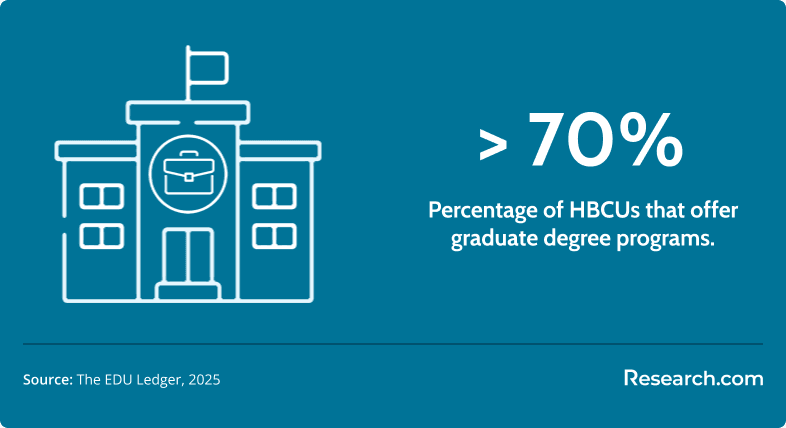
The good news is that the options are plentiful. With more than 70% of HBCUs offering graduate degree programs, you can find a high-quality program with the flexibility you need to succeed without putting your life on hold.
How does an HBCU online master's program compare to an on-campus program?
From an academic standpoint, they are identical. You receive the same degree, learn from the same high-quality faculty, and are held to the same rigorous standards. The outdated idea that an online degree is "lesser" simply doesn't hold up. The only difference is the delivery method, which offers the flexibility working professionals need.
The most significant distinction comes down to the experience, particularly in how you build your network.
A New Model for Professional Networking
People often wonder if they'll miss out on networking by studying online. The answer is that you don't miss out; you just network differently. On-campus programs foster spontaneous, social connections. Online programs, however, create a space for deliberate, professional networking.
Your cohort will be made up of other experienced professionals from various industries and locations. The connections you make are not just social—they are with peers who can offer immediate, career-relevant insights and become part of your long-term professional circle. For those focused on career advancement, this model can be even more powerful.
What is the average cost of an HBCU online master's program?
You can expect the total tuition for a program to typically range from $20,000 to $40,000. It's important to look beyond the sticker price, as some programs may have additional technology or student fees.
The key is to shift your thinking from cost to investment. A cheaper program isn't always the better choice if a more expensive one offers a significantly higher return.
The Bigger Picture: Is the Investment Worth It?
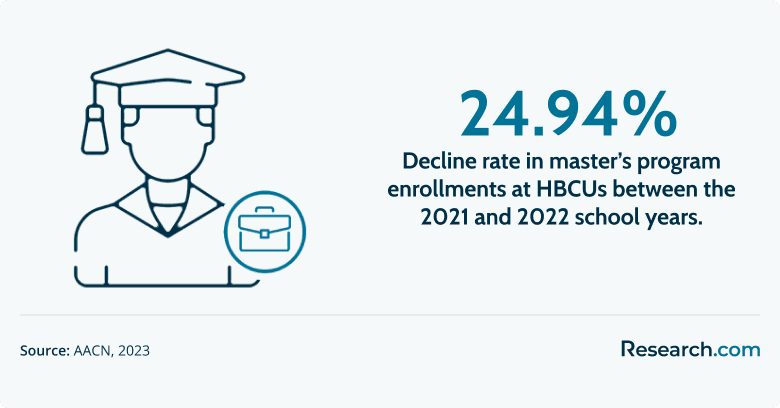
National data shows a recent enrollment decline of 24.94% in master's programs at HBCUs, highlighting that students are carefully considering the financial commitment. This is a smart approach.
Our research shows that total tuition can range from as low as $7,800 to over $96,000, depending on the school and program. Costs also vary significantly by field of study; for example, the cheapest online master's in history will have a different price point than an MBA. The best HBCU online graduate programs are the ones that offer a clear return on investment, positioning you for a salary increase that makes the initial cost a worthwhile and strategic career move.
What are the financial aid options for students enrolling in an HBCU online master's program?
A wide range of options are available to help fund your degree, and you don't have to be a full-time or low-income student to qualify. The key is to be proactive and explore every avenue available to you.
Many working professionals successfully fund their education by combining several different sources.
Federal & University Aid
This is the most common starting point. Your first step should be to complete the Free Application for Federal Student Aid (FAFSA), which determines your eligibility for federal loans. Additionally, be sure to check directly with the financial aid office of each university you're considering, as they often have their own institutional scholarships and grants.
HBCU-Specific Scholarships & Grants
This is a critical resource that many applicants overlook. Organizations like the UNCF and Thurgood Marshall College Fund offer scholarships specifically for students attending HBCUs. The fact that Black women represent 65% of all Black master's degree holders has also led to the creation of many targeted grants and scholarships from corporations and non-profits looking to support this talent pipeline, especially for high-demand specialized roles like knowing what is the role of a psychiatric nurse practitioner.
Employer Tuition Assistance
Don't leave money on the table. Many companies offer tuition reimbursement or assistance programs for employees pursuing graduate studies. Check with your HR department about your company's policy. These programs often come with a service commitment, but they are one of the best ways to earn your degree at a significantly reduced cost.
What are the prerequisites for enrolling in an HBCU online master's program?
While each program has its own specific requirements, most applications are built around the same core components. You will typically need to provide the following:
- An accredited bachelor's degree
- A minimum undergraduate GPA (often around a 3.0)
- Letters of recommendation
- A personal statement or essay
Many people worry that an old GPA will hold them back, but the admissions landscape has changed, especially for programs designed for working professionals.
How Your Professional Experience Gives You an Edge
Admissions committees are increasingly using a holistic review process. This means they look at your entire story, not just your transcript. For mid-career applicants, a strong record of professional achievements and a compelling personal statement can absolutely outweigh academic metrics from years ago.
Many programs have also waived standardized test requirements like the GRE for experienced applicants. They understand that your real-world expertise is a far better indicator of your potential for success. The admissions process for a fast track master of divinity online will naturally differ from an MBA, but the trend is clear: your professional experience is your advantage.
What courses are typically in an HBCU online master's program?
A typical curriculum is designed to give you a comprehensive understanding of your field. It's usually structured around three core components that build upon each other:
- Core foundational courses that establish the essential theories and practices of the discipline. For instance, in a mental health field, this would include developing mental health nursing skills.
- Advanced specialized electives that allow you to tailor your studies to your specific career interests.
- A capstone project or thesis where you apply everything you've learned to solve a real-world problem.
While the core knowledge is universal, the way it's taught can give you a significant competitive edge.
The HBCU Advantage in the Classroom
The curriculum in an HBCU master's program often delivers content with a unique and culturally relevant perspective. This approach doesn't just teach you the subject matter; it prepares you to lead in a diverse and complex world.
Many programs intentionally integrate courses designed to build critical leadership and DEI (Diversity, Equity, and Inclusion) skills. This is a direct response to the market's demand for leaders with high cultural competence. This commitment to diversity extends to specific programs, such as those detailing nurse practitioner programs for international students, including pathways for foreign medical graduates.
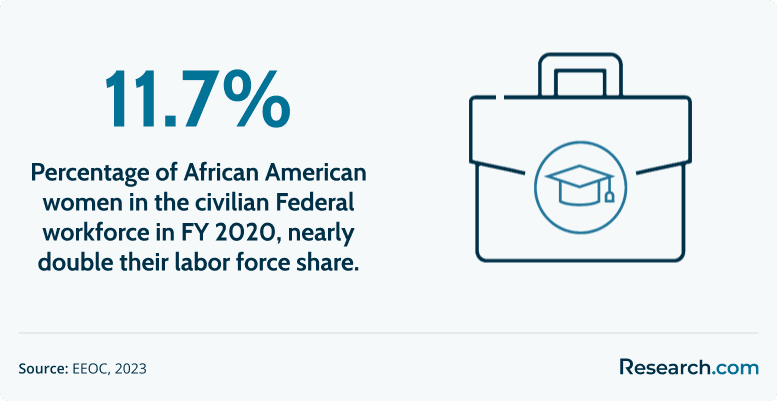
For example, a Master of Public Administration curriculum might prepare you to excel in the public sector, where African American women already represent 11.7% of the civilian Federal workforce and are positioned to advance into leadership.
What types of specializations are available in an HBCU online master's program?
You'll find a wide range of specializations designed to align your degree with specific, high-growth career tracks. This is one of the most important decisions you'll make, as your choice of concentration directly impacts your future career trajectory and earning potential.
It's crucial to balance your personal interests with current market demand to ensure the highest return on your investment.
High-Growth Tech Specializations
Given the significant underrepresentation of Black professionals in STEM fields, choosing a tech-focused specialization can position you as a high-value candidate in a sector that is desperate for talent. Concentrations in areas like Data Science, Cybersecurity, and IT Management offer excellent job prospects and strong salary potential. These fields are not just growing; they are foundational to the modern economy.
Strategic Business Specializations
For those aiming for executive leadership, specializations in core business functions are a powerful choice. Concentrations in Finance, Marketing, and Public Administration are designed to build the strategic skills needed to lead teams, manage budgets, and drive organizational growth. The options are broad and can be quite specific, including niche fields like the shortest sports management mba online, allowing you to find the perfect fit for your career goals.
How to Choose the Best HBCU Online Master's Program
Finding the right program can feel overwhelming, but a structured approach can make the process clear and manageable. Use these four steps to evaluate your options and make a confident choice.
- Verify Accreditation. This is non-negotiable. Ensure the university and the specific program are accredited by a recognized agency, such as ACEN or ACBSP, which guarantees academic quality and the value of your degree.
- Evaluate Faculty and Curriculum. Look at the faculty's professional backgrounds. Are they experts in the field? Does the curriculum offer the specialized courses you need to advance in your career?
- Research Alumni Outcomes. Don't be afraid to ask the admissions office about the career paths of recent graduates. Look for alumni on LinkedIn to see where they are working and what roles they hold.
- Assess Career Services and Support. A strong program should offer robust career services, including resume help, interview coaching, and access to an active alumni network.
Defining 'Best' for Your Goals
This framework is your tool to cut through the information overload. The goal is to find the program that will give you the highest return on your investment of time and money. The best HBCU online graduate programs are the ones that align perfectly with your career aspirations and provide the specific skills, knowledge, and network you need to achieve them. Use these steps to build your shortlist and choose the program that will serve as your launchpad for the next stage of your career.
What career paths are available for graduates of an HBCU online master's program?
This degree is a powerful tool for accelerating your career and moving into senior-level leadership roles. It's not just about getting a promotion; it's about gaining the credentials and strategic skills to pivot, reinvent, and take control of your professional trajectory. For instance, a career in school leadership may require you to meet specific special education administration requirements.
Corporate Leadership Tracks
In the corporate world, this degree is your ticket to the executive track. Graduates are well-positioned for roles like Director, Vice President, and other senior management positions in finance, marketing, operations, and human resources. The degree signals to employers that you have the advanced knowledge and strategic mindset required to lead at the highest levels. This is particularly true in technical fields, where the shortest online master's in mathematics programs can lead to high-value leadership roles.
Public Sector & Government Roles
For those drawn to public service, a master's degree is often a prerequisite for advancement. It qualifies you for senior positions in federal, state, and local government, as well as executive director roles in the non-profit sector. The goal is to move from roles where Black workers have high representation, such as postal clerks and transit drivers, into the leadership positions where policy and strategy are made.
What is the job market for graduates of an HBCU online master's program?
The job market for individuals with a master's degree is strong, offering greater career stability and significantly higher long-term earning potential. Any concern that the market is biased against online or HBCU credentials is outweighed by the clear demand for candidates with advanced, specialized skills.
Your degree, combined with your experience, makes you a highly competitive candidate for senior-level roles.
Why You'll Be a High-Value Candidate
Employers across all sectors are struggling to find talent to fill the "skills gap"—the space between the demands of a job and the qualifications of the workforce. As a master's degree holder, you don't just enter the job market as a candidate; you enter it as a solution to that problem.
The best HBCU online graduate programs equip you with the advanced, specialized knowledge that companies are desperate for. This value is reflected directly in your earning power. Data shows that the median weekly pay for Black men with advanced degrees is $1,053, while for women it is $942, demonstrating the tangible financial stability and growth you can expect.
Here’s What Graduates Have to Say about Their HBCU Online Master's Program
- Theron: "I saw how my older cousins struggled to get out of entry-level roles after college. I decided to get my master's right away to build a stronger foundation for my career. The best part of the online format was that my cohort wasn't just other recent grads; they were experienced professionals I could learn from and network with from day one."
- Kenna: "As a Black woman, I've often felt I had to be twice as good to get half as far. This program gave me the unshakeable confidence that comes from deep subject matter expertise. Now, when I walk into a boardroom, I know that my voice is backed not just by my experience, but by a master's-level credential that speaks for itself."
- Nyla: "My goal was always to start my own business, but I knew I needed a stronger network. Studying online connected me with ambitious peers from Atlanta to Oakland, a network I never could have built in a local on-campus program. The relationships I formed have been invaluable for advice, support, and even future business partnerships."
What is the return on investment of an HBCU online master's program?
Investing in an HBCU online master's program can yield significant long-term benefits beyond immediate salary increases. Graduates typically experience accelerated career advancement and improved earning potential due to the specialized skills and leadership competencies developed during the program. Moreover, the strong professional networks and tailored industry insights provided by HBCUs contribute to sustainable career growth. Evaluating the balance between tuition costs, time commitment, and future earnings is key to understanding the value of this educational investment, similar to reviewing the best degrees online for comparison.
Key Findings
- Data reveals that 41% of Black workers face discrimination and 64% see hiring bias as a major issue, underscoring the need for a master's degree as a strategic tool to ensure objective evaluation of skills and experience.
- Earning a master's degree is a direct path to financial advancement, positioning graduates to enter the 75th percentile of earners with salaries often exceeding $95,000 annually.
- HBCU graduates have a distinct advantage in the job market, with hiring growth rates significantly outpacing other graduates in key sectors like healthcare (25.3%) and government (23.8%).
- With over 70% of HBCUs offering graduate programs, prospective students have a wide range of flexible online options, making advanced education more accessible for working professionals.
- A master's degree can accelerate advancement in the public sector, where African American women already comprise 11.7% of the federal workforce, creating a strong pipeline into leadership roles.
- Black women are a driving force in higher education, earning 65% of all master's degrees held by Black adults, which has led to a strong network of support and targeted scholarship opportunities.
References:
- American Association of Colleges of Nursing. (n.d.). Data spotlight: Changes in master’s program enrollments and graduations. Retrieved October 9, 2025, from https://www.aacnnursing.org/news-data/all-news/data-spotlight-changes-in-masters-program-enrollments-and-graduations
- Bureau of Labor Statistics. (n.d.). Usual weekly earnings of wage and salary workers, current quarter by race and sex. U.S. Department of Labor. Retrieved October 9, 2025, from https://www.bls.gov/charts/usual-weekly-earnings/usual-weekly-earnings-current-quarter-by-race-and-sex.htm
- Equal Employment Opportunity Commission. (n.d.). African American women in the federal sector. U.S. Equal Employment Opportunity Commission. Retrieved October 9, 2025, from https://www.eeoc.gov/federal-sector/reports/african-american-women-federal-sector
- Journal of Blacks in Higher Education. (2025, September). Three in ten Black Americans over age 25 hold a bachelor’s degree. Retrieved October 9, 2025, from https://jbhe.com/2025/09/three-in-ten-black-americans-over-age-25-hold-a-bachelors-degree
- LinkedIn. (n.d.). Who’s opening doors for Black talent? Sectors that click with HBCU grads [Article by Anders]. Retrieved October 9, 2025, from https://www.linkedin.com/pulse/whos-opening-doors-black-talent-sectors-click-hbcu-grads-anders
- National Center for Education Statistics. (n.d.). Fast facts. U.S. Department of Education. Retrieved October 9, 2025, from https://nces.ed.gov/fastfacts/display.asp?id=667
- Pew Research Center. (2023, August 31). Black workers’ views and experiences in the U.S. labor force stand out in key ways. Retrieved October 9, 2025, from https://www.pewresearch.org/short-reads/2023/08/31/black-workers-views-and-experiences-in-the-us-labor-force-stand-out-in-key-ways
- Pew Research Center. (2024, December 10). Key labor force trends. Retrieved October 9, 2025, from https://www.pewresearch.org/social-trends/2024/12/10/key-labor-force-trends
- The Edu Ledger. (n.d.). HBCUs expand graduate offerings to meet growing demand. Retrieved October 9, 2025, from https://www.theeduledger.com/institutions/hbcus/article/15752007/hbcus-expand-graduate-offerings-to-meet-growing-demand
- ZipRecruiter. (n.d.). African American salary. Retrieved October 9, 2025, from https://www.ziprecruiter.com/Salaries/African-American-Salary#TableView
Other Things You Should Know About HBCU Online Master's Programs
Admission requirements typically include a bachelor's degree from an accredited institution, a minimum GPA of 3.0, official transcripts, recommendation letters, and a statement of purpose. Some programs may also require GRE scores and a professional resume for the 2027 intake.
Many HBCU online master's programs accept transfer credits from other accredited institutions. The specific number of credits and the eligibility of courses depend on the university's transfer policy. You should contact the admissions office of your desired program to review your transcript and see which of your previous graduate-level courses may apply.
In 2027, students in HBCU online master's programs can engage with professors through various methods such as video conferencing, discussion forums, email, and virtual office hours. These platforms facilitate direct communication, allowing students to seek guidance, discuss course content, and receive feedback efficiently.
Online master's degrees from HBCUs are increasingly respected by employers, especially when the programs are accredited. These programs often combine innovation with traditional academic rigor, producing graduates who are well-prepared for the workforce. Employers value the cultural competency and diverse perspectives that HBCU graduates bring to the table.


