
2027 What Makes a Good Mental Health Nurse: Top 5 Skills Needed

Co-Founder and Chief Data Scientist
Mental illness affects more than one in five U.S. adults each year, yet the shortage of qualified psychiatric nurses continues to grow. For students and professionals considering this path, the question isn’t just what the job is but what it takes to succeed.
This article breaks down the top five skills every mental health nurse needs in 2027—from communication and emotional intelligence to risk management and resilience. By the end, you’ll know exactly which abilities matter most and how they shape effective, compassionate psychiatric care.
Key Things You Should Know About Mental Health Nurses
- Mental health nurses are registered nurses who specialize in caring for patients with psychiatric or behavioral conditions, working in hospitals, outpatient clinics, correctional facilities, and community health centers. Their role is vital in bridging medical treatment with therapeutic support.
- The demand for psychiatric nurses is rising as the U.S. faces a mental health crisis. With retirements looming and more patients seeking care, opportunities in this specialty are projected to expand, making it a stable and high-impact career path.
- This field requires both medical expertise and interpersonal skills. Beyond administering medication or monitoring health, mental health nurses must build trust, communicate effectively, and support patients in managing complex emotional and psychological challenges daily.
- What makes a good mental health nurse? Good Nurse Qualities
- What skills do nurses need to work in psychiatric care? Key Psychiatric Care Skills
- How important is communication in mental health nursing? Communication in Nursing
- What role does emotional intelligence play for mental health nurses? Emotional Intelligence Role
- How do mental health nurses assess and manage risk? Assessing & Managing Risk
- What knowledge of psychiatric disorders is required for mental health nurses? Knowledge of Disorders
- How do mental health nurses build therapeutic relationships? Building Relationships
- What are the challenges mental health nurses face and how can skills help? Challenges & Skills
- How can mental health nurses maintain self-care and resilience? How can mental health nurses maintain self-care and resilience?
- What education or training boosts a mental health nurse’s competence? What education or training boosts a mental health nurse’s competence?
What makes a good mental health nurse?
A good mental health nurse combines clinical competence with deep empathy, resilience, and strong interpersonal skills. They don’t just treat symptoms — they build trust, assess underlying needs, collaborate across disciplines, and advocate for patients’ mental well-being.
Here are key attributes beyond technical skills:
- Empathy and active listening: understanding patients’ emotional states and validating their experience.
- Emotional resilience: managing stress, avoiding burnout, and staying composed under pressure.
- Ethical judgment and integrity: making decisions that respect patient autonomy, confidentiality, and rights.
- Cultural humility and sensitivity: adapting care to diverse backgrounds, beliefs, and identities.
- Advocacy mindset: championing access to care, social support, and reduction of stigma.
A competent mental health nurse must also continuously learn — staying current in psychiatric pharmacology, therapy modalities, and best practices. Many nurses pursue advanced roles; some enroll in 1 year nurse practitioner programs to fast-track into advanced practice nursing, which broadens both their scope and influence in mental health care. Ultimately, what distinguishes a good mental health nurse is the ability to integrate clinical acumen with human connection, patience, and a commitment to holistic healing.
What skills do nurses need to work in psychiatric care?
Mental health nurses need a wide range of skills that blend clinical knowledge with interpersonal ability. These skills are essential because psychiatric care involves treating both the mind and body while supporting patients through sensitive, often complex situations.
- Communication: clear, compassionate dialogue helps patients feel heard and fosters trust.
- Active listening: picking up on verbal and nonverbal cues to better assess patient needs.
- Emotional intelligence: managing one’s own emotions and responding empathetically to patients.
- Crisis intervention: remaining calm and effective when patients are at risk of harming themselves or others.
- Risk assessment: evaluating patient safety and planning preventive strategies.
- Clinical knowledge: understanding psychiatric medications, treatments, and co-occurring conditions.
- Collaboration: working with doctors, therapists, and families to build holistic care plans.
- Cultural competence: adapting care to respect cultural, social, and religious backgrounds.
- Patience and resilience: enduring stressful encounters without losing composure.
- Advocacy: ensuring patients receive fair treatment and access to needed resources.
Many aspiring nurses strengthen these skills through specialized training or graduate education. For instance, some pursue advanced study through the easiest MSN programs to get into, which open doors to psychiatric nurse practitioner roles and expanded responsibilities in patient care.
The chart below illustrates which skills employers most often demand in psychiatric nursing job postings, reinforcing the importance of the abilities described in this section.
How important is communication in mental health nursing?
Communication is the cornerstone of mental health nursing because it directly affects patient trust, treatment outcomes, and safety. Without clear and empathetic communication, patients may feel misunderstood, dismissed, or even unsafe in a clinical setting.
For example, a patient experiencing acute anxiety may struggle to describe their feelings. A nurse who listens carefully, asks clear follow-up questions, and uses calm, reassuring language can de-escalate the situation and encourage the patient to engage in treatment. In contrast, poor communication could heighten fear and resistance, making care far less effective.
The principles of effective, empathetic communication are also core to many other service and counseling professions, with some students choosing to pursue degrees from online bible colleges to prepare for ministry or faith-based counseling roles.
Good communication also extends beyond patient interaction. Nurses must effectively convey information to psychiatrists, therapists, and family members, ensuring continuity of care and accurate decision-making. In high-pressure settings like psychiatric emergency units, communication can be the difference between a crisis resolved and a crisis escalated.
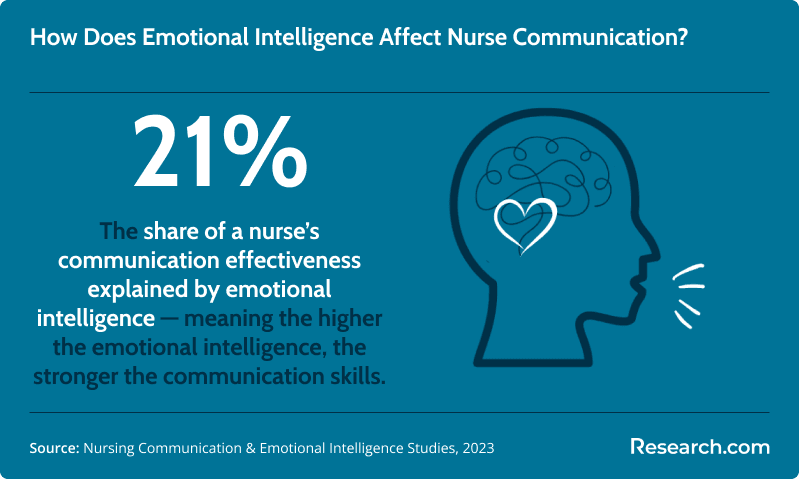
The infographic below shows how emotional intelligence directly impacts communication skills, reinforcing why strong communication is more than a soft skill—it’s a measurable factor in patient care.
What role does emotional intelligence play for mental health nurses?
Emotional intelligence (EI) is vital for mental health nurses because it shapes how they understand, respond to, and manage patients’ emotions.
- Nurses with strong EI can recognize subtle cues in body language, tone, or behavior that may reveal a patient’s true mental state, even when the patient struggles to articulate it. This ability allows nurses to build trust, defuse tension, and create a therapeutic environment where patients feel safe.
- EI also strengthens teamwork and collaboration. In psychiatric care, nurses often coordinate with physicians, therapists, and families. A nurse who can regulate their own emotions, show empathy, and respond thoughtfully under pressure contributes to smoother communication and better treatment outcomes.
For aspiring nurses, developing EI is just as important as clinical training. Specialized pathways such as learning how to become a GNP emphasize both technical and interpersonal competencies, reflecting the balance modern nursing requires.
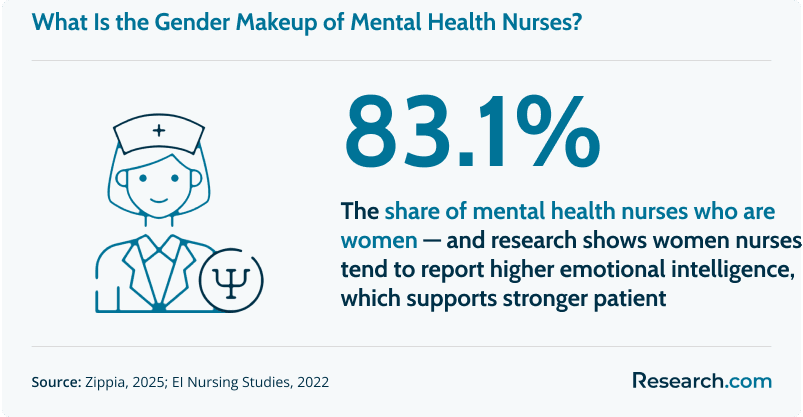
The infographic below highlights how gender makeup in the profession aligns with emotional intelligence. Since women make up most of the mental health nursing workforce and tend to score higher in EI studies, their presence helps reinforce patient trust and supportive relationships.
How do mental health nurses assess and manage risk?
Mental health nurses assess and manage risk by identifying potential threats to a patient’s safety and developing strategies to reduce those risks.
Risk may involve
- self-harm,
- suicide,
- aggression toward others, or
- noncompliance with medication.
Nurses use structured assessment tools, observation, and clinical judgment to evaluate warning signs and determine the level of intervention needed.
For example, if a patient expresses suicidal thoughts, the nurse immediately conducts a risk assessment, documents findings, and collaborates with the healthcare team to create a safety plan. This may involve close monitoring, restricting access to harmful objects, and arranging counseling or crisis intervention. In other cases, when a patient becomes agitated, the nurse may use de-escalation techniques such as calm communication and redirection before considering restraints or medication.
Through vigilance, empathy, and timely decision-making, mental health nurses balance patient autonomy with protection, ensuring care that is both safe and supportive. Advanced study, such as an online counseling psychology PhD program, can further deepen a professional's understanding of risk assessment, intervention strategies, and therapeutic modalities.
What knowledge of psychiatric disorders is required for mental health nurses?
Mental health nurses need a strong understanding of psychiatric disorders to recognize symptoms, support treatment, and provide safe, effective care. Without this knowledge, they cannot accurately assess patients, collaborate with physicians, or deliver appropriate interventions.
Key areas of knowledge include:
- Mood disorders such as depression and bipolar disorder, which require careful monitoring for shifts in mood and risk of self-harm.
- Anxiety disorders, including generalized anxiety, PTSD, and panic disorder, where nurses must identify triggers and apply calming interventions.
- Psychotic disorders like schizophrenia, which demand vigilance in medication management and communication strategies.
- Personality disorders, where understanding behavioral patterns supports boundary-setting and therapeutic consistency.
- Substance use disorders, requiring awareness of withdrawal risks and relapse prevention. The interface of mental health, substance abuse, and the legal system often requires professionals to have knowledge of both clinical and legal frameworks; to prepare for roles in the legal aspects of such issues, some may pursue criminal justice certificate programs online.
- Neurodevelopmental disorders, such as autism spectrum disorder, to provide tailored approaches to care.
- Cognitive disorders like dementia, where nurses must adapt care plans for safety and quality of life.
This foundational knowledge is also relevant for nurses exploring specialized fields such as online pediatric nurse practitioner programs, where child and adolescent mental health concerns often overlap with developmental conditions. A broad grasp of psychiatric disorders equips nurses to provide holistic, patient-centered care.
How do mental health nurses build therapeutic relationships?
Mental health nurses build therapeutic relationships by establishing trust, showing empathy, and maintaining professional boundaries that foster patient confidence. These relationships are the foundation of effective mental health care, enabling patients to feel supported and engaged in their treatment.
Ways mental health nurses build therapeutic relationships include:
- Active listening to fully understand patient concerns without judgment.
- Empathy and compassion to validate feelings and reduce stigma.
- Consistency and reliability in actions and communication, which strengthens trust.
- Respect for autonomy, encouraging patients to participate in decisions about their care.
- Clear communication that avoids medical jargon and promotes understanding.
- Maintaining confidentiality to protect privacy and build confidence in the care process.
- Demonstrating patience, especially when progress is slow or setbacks occur.
- Collaborating with families and support networks to provide holistic care.
The development of these advanced relational and treatment skills is a major component of graduate education for mental health professionals, including those enrolled in dual master's in counseling programs online.
By practicing these approaches, mental health nurses create safe, supportive spaces where patients are more likely to engage openly, follow treatment plans, and make meaningful progress in their recovery.
What are the challenges mental health nurses face and how can skills help?
Mental health nurses face challenges such as high patient acuity, emotional strain, and workforce shortages, and these issues can be addressed through strong clinical and interpersonal skills. Their ability to adapt, communicate, and apply evidence-based care directly influences patient outcomes and workplace resilience.
Key challenges include:
- Workforce shortages: With an aging workforce and projected retirements, adaptability and mentorship skills help prepare younger nurses to step into critical roles.
- Emotional burnout: Self-care strategies and emotional intelligence help nurses manage stress while maintaining compassion for patients.
- Complex cases: Knowledge of psychiatric disorders and risk assessment skills allow nurses to navigate co-occurring conditions effectively.
- Stigma and communication barriers: Strong communication and advocacy skills help reduce stigma and foster understanding in care environments.
- Safety concerns: De-escalation skills and situational awareness ensure safer outcomes in crisis situations.
The age distribution of the mental health nursing workforce highlights why these challenges persist. The chart below shows how an older workforce dominates the field, underscoring the importance of skills in sustaining patient care as retirements approach.
How can mental health nurses maintain self-care and resilience?
Mental health nurses maintain self-care and resilience by balancing professional demands with strategies that protect their emotional, physical, and mental well-being. Because their work often involves high-stress situations and emotional strain, prioritizing resilience helps them sustain long-term effectiveness and job satisfaction.
Key ways include:
- Setting boundaries: Learning when to say no and protecting personal time prevents emotional exhaustion.
- Peer support and supervision: Talking with colleagues or mentors offers validation and perspective in managing stress.
- Mindfulness practices: Techniques like meditation, yoga, or breathing exercises lower stress and improve focus.
- Healthy lifestyle choices: Adequate sleep, balanced nutrition, and regular exercise strengthen overall resilience.
- Professional growth: Engaging in training or clarifying roles, such as understanding what is an APRN vs NP, enhances confidence and reduces uncertainty.
- Accessing counseling: Seeking therapy ensures personal challenges don’t spill into patient care.
By practicing these approaches, mental health nurses not only protect themselves from burnout but also model healthy coping strategies that benefit the patients they serve.
What education or training boosts a mental health nurse’s competence?
Education and training boost a mental health nurse’s competence by providing the knowledge and skills needed to handle complex psychiatric cases with confidence. Formal education, ongoing certifications, and hands-on training ensure nurses stay equipped to meet the rising demand for mental health services.
Key pathways include:
- Bachelor of Science in Nursing (BSN): Builds a strong foundation in general nursing with exposure to mental health care.
- Associate Degree in Nursing (ADN): A faster entry point into nursing, though further study may be needed for specialization.
- Master of Science in Nursing (MSN): Prepares nurses for advanced psychiatric roles, often required for leadership and practitioner positions.
- Specialty certifications (e.g., PMHNP, CNA): Strengthen expertise in psychiatric-mental health nursing and expand career opportunities.
- Continuing education: Keeps nurses updated on evolving best practices, medications, and treatment approaches.
- Clinical placements and internships: Provide hands-on training and real-world exposure to psychiatric care settings.
- Career exploration: Understanding roles such as what is a family nurse practitioner helps nurses make informed choices about their advancement.
The chart below highlights the most common educational pathways for mental health nurses. By comparing degree levels, readers can see how most enter the profession and which advanced qualifications lead to higher competence.
Here's What Graduates Have to Say About What Makes a Good Mental Health Nurse
- Liora: "Studying mental health nursing online gave me the flexibility to work part-time while completing my degree. The program’s focus on patient-centered care helped me develop practical skills I now use daily in psychiatric units. I never felt like I missed out compared to in-person training. "
- Keiran: "The online program exceeded my expectations. I gained evidence-based knowledge on psychiatric disorders, practiced therapeutic communication in virtual simulations, and connected with professors who were always available. It prepared me not only academically but also emotionally for the challenges of mental health care."
- Amara: "Balancing family and study seemed impossible until I enrolled online. The structure let me learn at my own pace while building resilience and critical thinking skills. By graduation, I felt prepared to step into complex patient situations with confidence and compassion."
Key Findings
- 59% of mental health nurses are over age 40, showing an experienced but aging workforce.
- 83.1% of mental health nurses are women, with research linking this to higher emotional intelligence.
- The most common degree is a Bachelor’s, held by 43% of mental health nurses.
- Top employer-demanded skill is Psychiatry at 23.06% of job postings.
- 21% of a nurse’s communication effectiveness is explained by emotional intelligence.
- San Francisco mental health nurses earn the highest pay, averaging $117,376 annually.
References:
- American Psychiatric Nurses Association (APNA). Psychiatric-Mental Health Nursing Workforce Survey Data Report.
- American Psychiatric Nurses Association (APNA). Psychiatric-Mental Health Nurses: Key to Addressing Nation’s Mental Health Crisis.
- Clinical Advisor. Psychiatric-Mental Health Nursing Workforce Survey Results.
- Mental Health America (MHA). The State of Mental Health in America.
- National Institute of Mental Health (NIMH). Mental Illness Statistics.
- PubMed. Psychiatric Nursing Workforce Survey: Results and Implications.
- ResearchGate. Communication Skills and Emotional Intelligence Among Nursing Students on Patient’s Outcome.
- Zippia. Mental Health Nurse Jobs.
- ZipRecruiter. Psychiatric Nurse Resume Keywords and Skills.
Other Things You Should Know About What Makes a Good Mental Health Nurse
The most challenging aspect of stress faced by mental health nurses in 2027 is the emotional toll of managing complex patient cases while coping with staff shortages. Developing resilience and accessing support systems are crucial for mitigating burnout.
The top five skills needed for mental health nurses in 2027 include strong communication, empathy, resilience, critical thinking, and teamwork. These skills help nurses effectively support and advocate for patients, navigate complex situations, and work collaboratively within healthcare teams.


