
2027 Best Online Counseling Psychology PhD Programs

Co-Founder and Chief Data Scientist
With one in five U.S. adults experiencing mental illness, the need for mental health leadership is critical. For many seasoned practitioners, this reality creates a desire to move beyond direct service and into roles that shape the entire field. A doctorate is the key qualification for becoming a licensed psychologist, professor, or researcher, yet only 10% of counseling psychologists hold one.
To help you navigate this path, our career planning experts, with over 10 years of experience, have created this comprehensive guide. We will provide a clear, data-driven roadmap to the best online counseling psychology PhD programs to help you make a confident, strategic decision.
What are the benefits of getting an online counseling psychology PhD program?
- This degree unlocks top-tier career paths in academia, high-level research, and roles as a licensed psychologist.
- You can achieve significant earning potential, with median salaries around $96,000 and a 25% earnings premium over a master's degree.
- The online delivery of coursework gives you the flexibility to access the best programs and mentors without needing to relocate.
What can I expect from an online counseling psychology PhD program?
You can expect a rigorous, multi-year commitment that blends online coursework with mandatory, in-person clinical and research requirements. These are not fully remote degrees. They are hybrid programs designed for serious scholars who need flexibility.
The online part of the program applies to your didactic learning, such as lectures and seminars. This format allows you to access top programs without having to move.
However, the core of your doctoral training is hands-on. Your research apprenticeship with a faculty mentor and your supervised clinical internship hours must be completed in person. The academic standards, accreditation, and the final qualification you receive are identical to those of a traditional on-campus program.
Where can I work with an online counseling psychology PhD program?
A PhD in counseling psychology opens doors to leadership and research roles across several key sectors. Graduates primarily work in environments where they can train others, conduct research, or lead complex clinical programs.
- Academia: Nearly half of all graduates (47%) work in education as professors and researchers at universities and colleges.
- Large Organizations: Many PhDs (29%) find roles in large organizations with over 1,000 employees, including in corporate and government settings.
- Government and Private Sector: A substantial number of graduates (48%) secure permanent positions in government agencies or the private sector.
- Healthcare Settings: A significant portion work in hospitals, clinics, and integrated care systems, often in leadership or research roles.
How much can I make with an online counseling psychology PhD program?
Graduates with a PhD in counseling psychology can expect a strong median annual wage of approximately $95,830. Several factors influence your specific earning potential.
- Industry Variation: Salaries vary by sector, with roles in government being particularly lucrative, averaging around $126,990.
- Specialization: The advanced specialization a doctorate provides allows you to command higher earnings, with PhD holders earning about 25% more than those with only a master’s degree.
- Experience-Based Growth: Your earning potential grows significantly with experience, with salaries for seasoned professionals often exceeding $87,000.
- Location: Geographic location plays a key role, with psychologists in major metropolitan areas often earning $115,000 or more.
- List of the Best Online Counseling Psychology PhD Programs for 2027 List of Programs
- How long does it take to complete an online counseling psychology PhD program? Completion Time
- How does an online counseling psychology PhD program compare to an on-campus program? How does an online counseling psychology PhD program compare to an on-campus program?
- What is the average cost of an online counseling psychology PhD program? Program Cost
- What are the financial aid options for students enrolling in an online counseling psychology PhD program? Financial Aid
- What are the prerequisites for enrolling in an online counseling psychology PhD program? What are the prerequisites for enrolling in an online counseling psychology PhD program?
- What courses are typically in an online counseling psychology PhD program? What courses are typically in an online counseling psychology PhD program?
- What types of specializations are available in online counseling psychology PhD programs? Specializations
- How to Choose the Best Online Counseling Psychology PhD Program How to Choose the Best Online Counseling Psychology PhD Program
- What career paths are available for graduates of an online counseling psychology PhD program? Career Paths
- What is the job market for graduates of an online counseling psychology PhD program? Job Market
- How Can I Evaluate Faculty Research Alignment in Online Counseling Psychology PhD Programs? How Can I Evaluate Faculty Research Alignment in Online Counseling Psychology PhD Programs?
List of the Best Online Counseling Psychology PhD Programs for 2027
How do we rank schools?
Recognizing that paying for a degree is a significant investment, our ranking methodology ensures that students can make informed decisions based on comprehensive and transparent information. The ranking draws upon reliable sources such as the IPEDS database, Peterson's database, the College Scorecard database, and The National Center for Education Statistics.
These sources provide a robust foundation of data to evaluate and rank online counseling psychology PhD programs. For more details on our methodology, please visit Research.com’s methodology page.
1. Walden University - PhD in Counselor Education and Supervision
Walden University prepares counselors for leadership roles in teaching and supervision through a flexible online format. The program emphasizes advanced counseling theory and research, qualifying graduates to teach in CACREP-accredited master’s programs and influence the next generation of counselors.
- Program Length: Up to 8 years
- Required Credits to Graduate: 85
- Cost per Credit: $625
- Accreditation: Council for the Accreditation of Counseling and Related Educational Programs (CACREP)
2. Regent University - Ph.D. in Counseling & Psychological Studies
Regent University offers a non-licensure doctoral program that integrates a Christian worldview with a core curriculum in research, statistics, and leadership. Students can choose elective courses to prepare for specialized work in academia, research, or mental health administration.
- Program Length: 3.5 years
- Required Credits to Graduate: 51
- Cost per Credit: $695
- Accreditation: Southern Association of Colleges and Schools Commission on Colleges (SACSCOC)
3. University of Wisconsin–Madison - PhD in Counseling Psychology
The University of Wisconsin–Madison grounds its program in the scientist-practitioner model, integrating scientific inquiry with supervised practice. With a special emphasis on multicultural competence and social justice, the curriculum prepares ethical researchers, teachers, and practitioners.
- Program Length: 5 years (post-master's)
- Required Credits to Graduate: 77
- Cost per Credit: $160.06 (in-state); $333.13 (out-of-state)
- Accreditation: American Psychological Association (APA)
4. Barry University - Doctor of Philosophy in Counseling (PhD)
Barry University provides a program with a unique specialization in marital, couple, and family counseling, grounded in a commitment to social justice. The curriculum prepares graduates to become highly skilled counselor educators, supervisors, and researchers engaged in their communities.
- Program Length: Up to 8 years
- Required Credits to Graduate: 57
- Cost per Credit: $1,195
- Accreditation: Council for Accreditation of Counseling and Related Educational Programs (CACREP)
5. University of the Pacific - Doctor of Philosophy – Counseling Psychology
University of the Pacific offers a hybrid PhD program designed to fit the schedules of busy professionals, requiring only one to two days of in-person classes. The curriculum provides a deep knowledge base in psychology and guarantees hands-on field experience through a required internship.
- Program Length: 4 years
- Required Credits to Graduate: 100
- Cost per Credit: $1,245
- Accreditation: WASC Senior College and University Commission (WSCUC)
6. James Madison University - Doctor of Philosophy (Ph.D.) in Counseling and Supervision
James Madison University utilizes a low-residency model that blends online coursework with four required on-campus visits per year. The program is designed to create leaders and advocates, preparing master counselors for advanced roles as supervisors, educators, and scholars.
- Program Length: 3 years (full-time)
- Required Credits to Graduate: 60
- Cost per Credit: $573 (in-state); $757 (out-of-state)
- Accreditation: Council for Accreditation of Counseling and Related Educational Programs (CACREP)
7. Oregon State University - Ph.D. in Counseling
Oregon State University delivers a hybrid program that combines online learning with periodic in-person classes in Portland. The curriculum is structured for working professionals, preparing them to become advanced practitioners, clinical supervisors, and counselor educators in a collaborative cohort model.
- Program Length: 3 to 5 years
- Required Credits to Graduate: 150
- Cost per Credit: $614
- Accreditation: Council for Accreditation of Counseling and Related Educational Programs (CACREP)
8. National University - Doctor of Philosophy in Psychology (PhD-PSY), Specialization in Counseling Psychology
National University offers a fully online program for licensed or pre-licensed mental health professionals seeking to advance their expertise. The curriculum integrates theory, research, and scholarship, allowing students to deepen their knowledge in areas like clinical supervision and psychopharmacology.
- Program Length: 46 months
- Required Credits to Graduate: 60
- Cost per Credit: $1,114
- Accreditation: WASC Senior College and University Commission (WSCUC)
How long does it take to complete an online counseling psychology PhD program?
An online counseling psychology PhD program typically takes five to seven years to complete after a bachelor's degree. This timeline includes advanced coursework, comprehensive exams, a supervised internship, and the dissertation. The dissertation phase, which requires you to produce a substantial piece of original research, is the most variable and often longest part of the program.
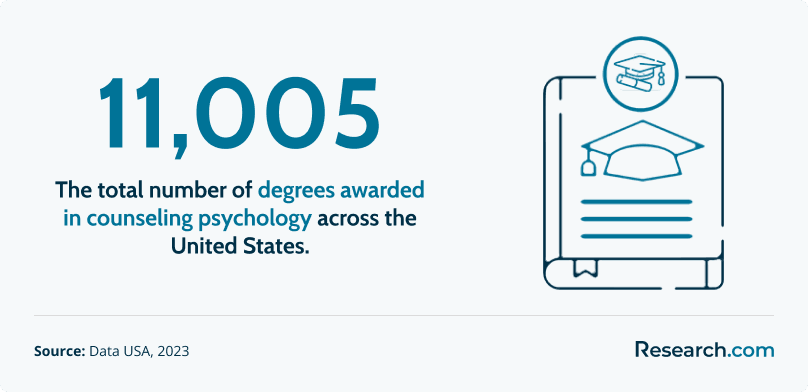
While some credits from a master's degree may transfer, you should not expect it to dramatically shorten the overall time. The doctoral dissertation is a unique requirement. It is also common for established professionals to pursue this path, as the average age for doctoral graduates is 42. With 11,005 degrees awarded in a recent year, you would join a large community of peers who decided the time was right. Many of them have already completed some of the best online counseling psychology degree programs at the master's level before taking this next step.
How does an online counseling psychology PhD program compare to an on-campus program?
When comparing online and on-campus programs, the academic rigor and accreditation standards are identical. The choice between them often comes down to your personal learning style and need for flexibility, especially since 39.8% of all graduate students are now enrolled in online programs.
Online PhD Programs
This format offers significant flexibility, allowing you to complete coursework asynchronously while managing professional and personal commitments. The biggest advantage is the ability to access top faculty mentors nationwide without having to relocate. This path requires a high degree of self-discipline to stay connected to your research lab and meet deadlines. Remember, your clinicals and research will still require in-person engagement. Understanding the difference between a coding bootcamp vs CS degree can provide a useful comparison for evaluating program intensity, structure, and the level of academic commitment needed for success.
On-Campus PhD Programs
A traditional on-campus program provides a structured, immersive experience in a research environment. You benefit from daily, informal access to faculty and peers, which can foster collaboration and mentorship. This format is ideal for those who thrive in a traditional academic setting and can dedicate themselves to full-time, in-person study with all the campus resources that provides.
What is the average cost of an online counseling psychology PhD program?
While the listed tuition for an online counseling psychology PhD program can appear high. Tuition costs may range from $792 to $837 per credit, with total tuition averaging between $61,973 and $65,019. However, the standard for any reputable, research-focused PhD program is to be fully funded. This means you should not have to pay tuition. Instead, the university waives tuition and provides a living stipend, so the most important financial factor is securing a funded offer.
The true cost of the degree is the five-to-seven-year time commitment and the associated opportunity cost. Because of the funded model, the return on investment for a PhD is exceptionally high, as you can graduate debt-free. This provides a monumental financial advantage as you begin your career at a high earning level.
Understanding how research-driven fields differ—such as the distinction between a data scientist vs analyst—can help you appreciate the specialized analytical and research skills that make a PhD in counseling psychology so valuable. The long-term salary growth for counseling psychologists, as shown in the chart below, clearly justifies this strategic investment of your time.
What are the financial aid options for students enrolling in an online counseling psychology PhD program?
Financial support for a PhD in counseling psychology operates differently from other degrees. With 57% of full-time psychology doctoral students receiving financial assistance, you should focus on securing a funded position rather than relying on traditional loans.
- The Funded Position: This is the primary form of aid, where the university waives your tuition and pays you a living stipend.
- Assistantships: You will work part-time for the university as a Teaching Assistant (TA) or Research Assistant (RA) in exchange for this funding.
- Fellowships and Scholarships: These are competitive, merit-based awards that can supplement or replace an assistantship, often providing more research freedom.
- Federal Loans: While available, relying on loans for a PhD is highly discouraged and often a sign of a low-quality or predatory program.
- Employer Assistance: Some students may have employers willing to help fund a degree that aligns with their professional roles.
What are the prerequisites for enrolling in an online counseling psychology PhD program?
Gaining admission to a competitive online counseling psychology PhD program requires a strong academic background and specific, relevant experience. Admissions committees are looking for future scholars, and they prioritize the following prerequisites.
- Research Experience: This is the most critical component, as committees want to see hands-on experience in a research lab, including data collection, analysis, or co-authoring a paper.
- Master's Degree: A master's degree in counseling, psychology, or a related field is typically required, though some programs admit students directly from a bachelor's program.
- Statement of Purpose: You need a detailed essay that clearly articulates your research interests and explains why you are a perfect fit for a specific faculty mentor's lab. Understanding the difference between NP and MD can also help clarify how psychologists collaborate with other healthcare professionals in multidisciplinary environments.
- Letters of Recommendation: Strong letters from academic mentors who can speak directly to your research potential are essential.
- Competitive GPA: A high GPA, typically 3.5 or above, in your previous graduate coursework is the standard expectation.
For applicants, building this profile early is key, and some find that pursuing certification programs in psychology for undergraduate students can be a valuable first step. When searching for programs, note that most accredited options, as shown in the chart, are offered by private not-for-profit institutions.
What courses are typically in an online counseling psychology PhD program?
The curriculum in an online counseling psychology PhD program is designed to build your expertise as a scholar and researcher. While specific course titles vary, the coursework is focused on transforming you from a practitioner into an independent scientist. You can expect to master the following core areas, similar to how students in the top majors in biology develop deep specialization through research-driven coursework and scientific inquiry.
- Advanced Research Methods: This includes in-depth training on designing, conducting, and evaluating empirical research studies.
- Quantitative Statistics: You will take multiple courses on advanced statistical analysis, which is the foundation of modern psychological research.
- Psychological Assessment: This involves training in administering and interpreting cognitive and personality assessment tools.
- Theories of Psychotherapy: You will complete a doctoral-level exploration of the major theoretical orientations that guide counseling practice.
- Ethics and Professional Standards: This is a critical review of the legal and ethical issues facing psychologists in research and practice.
- Cognitive and Affective Bases of Behavior: This is an examination of the core scientific principles of human thought and emotion.
This research-intensive focus is what distinguishes the PhD from other advanced credentials, such as online PMHNP graduate certificate programs, which are centered on advanced clinical practice.
What types of specializations are available in online counseling psychology PhD programs?
Specializations in online counseling psychology PhD programs are not chosen from a pre-set menu. They are defined by the specific research expertise of the faculty mentors you choose to work with. Your specialization becomes the area of study you pursue under their guidance.
Below are common examples of these faculty-led research specializations:
- Trauma and Resilience: This area focuses on the psychological effects of traumatic events and the factors that promote recovery and resilience.
- Multicultural Counseling: Research in this specialization explores culturally competent therapeutic approaches for diverse populations.
- Health Psychology: This specialization examines the relationship between psychological factors and physical health, including stress, coping, and behavior change.
- Vocational Psychology: This area focuses on career development, work-life balance, and the psychological factors that influence job satisfaction.
- Child and Adolescent Psychology: This specialization involves research on the developmental, social, and emotional issues affecting children and teenagers.
While these are distinct fields, they can overlap with related disciplines, such as a social psychology online degree, which focuses more on group behavior. As the chart below shows, students come to these specializations from a variety of academic backgrounds.
How to Choose the Best Online Counseling Psychology PhD Program
Choosing the best online counseling psychology PhD program means finding the ideal research mentor for your specific academic goals. With 983 accredited programs available, a focused strategy is essential. Follow this process to identify the right fit.
- Define Your Niche: Narrow your broad interests into two or three specific, researchable questions that excite you.
- Identify Key Scholars: Use academic search engines like Google Scholar or PsycINFO to find the leading professors who are actively publishing on your topic.
- Analyze Their Research: Read their recent publications to ensure your interests truly align and to understand their current work.
- Vet Their Mentorship Record: Investigate where their graduate students have ended up. A strong track record of placing graduates in good academic or clinical positions is a key indicator of quality mentorship.
- Initiate Contact: Write a professional, concise email that demonstrates your familiarity with their work and asks if they are accepting new students for the upcoming admissions cycle.
- Prioritize Program Fit: Apply only to the programs where you have identified one or more ideal mentors who have confirmed they are accepting students.
What career paths are available for graduates of an online counseling psychology PhD program?
A doctorate in counseling psychology from one of the top online counseling psychology PhD programs qualifies you for the most advanced and influential roles in the mental health field. While many graduates (43.6%) work in healthcare, the career paths available span academia, research, and organizational leadership.
1. University Professor
This role involves teaching courses, mentoring graduate students, and conducting original research to publish in academic journals. It is a primary career track for PhD graduates who are passionate about advancing the science of psychology and training the next generation.
Median salary: $85,000 per year.
2. Licensed Psychologist
In this capacity, you can provide psychotherapy and conduct psychological assessments in private practice, hospitals, or clinics. The title "psychologist" is legally protected and reserved for doctorate holders, granting a wider scope of practice.
Median salary: $96,000 per year.
3. Clinical Director
PhDs often take on leadership roles, managing mental health programs and supervising clinical staff in hospitals or large community health organizations. This path leverages both clinical expertise and the advanced administrative skills gained in a doctoral program.
Median salary: $98,000 per year.
4. Research Scientist
This path involves designing and leading research studies for government agencies like the NIH, non-profit research institutes, or large healthcare systems. These roles are ideal for those who want to focus purely on scientific discovery.
Median salary: $105,000 per year.
5. Consultant
Many PhDs leverage their expertise to consult for corporations, educational institutions, or legal firms on issues related to human behavior and mental health. This career path allows for a high degree of autonomy and can be quite lucrative, and may even involve collaborating with professionals who have an online MSN PMHNP.
Median salary: $100,000 per year.
What is the job market for graduates of an online counseling psychology PhD program?
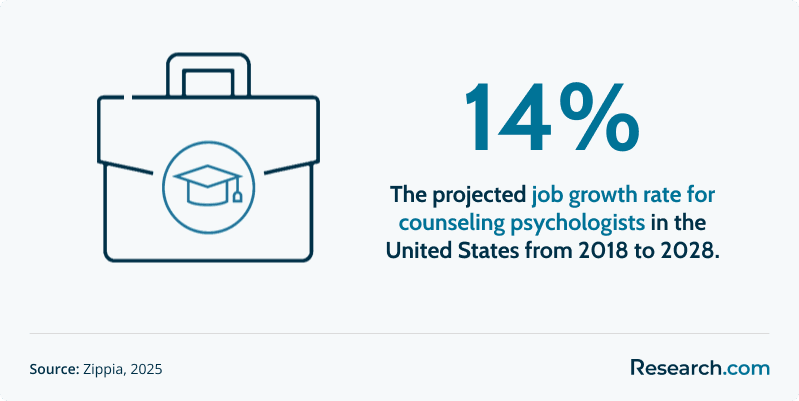
The job market for graduates with a PhD in counseling psychology is exceptionally strong, characterized by high demand and significant growth. Projections show the field is expected to grow by 14% over the next decade. This expansion is projected to create more new jobs, providing graduates with excellent career security and a wide range of opportunities across academia, healthcare, and research.
This robust demand creates a highly favorable market for graduates. There are significantly more job openings than there are professionals to fill them, with recent data showing 12,337 annual openings for only 7,618 employed professionals. This imbalance gives PhD holders significant leverage in their job search and career negotiations. It ensures that your advanced expertise is not only valued but also highly sought after across multiple sectors.
How Can I Evaluate Faculty Research Alignment in Online Counseling Psychology PhD Programs?
Evaluating faculty research alignment is essential for ensuring that your academic goals match the program’s strengths. Prospective students should review faculty profiles, recent publications, and ongoing projects to gauge the quality of mentorship and available research opportunities. Look for programs that facilitate direct communication with potential mentors, maintain updated research labs, and support interdisciplinary initiatives. A detailed analysis of these factors can inform your decision-making process and help secure a research environment that complements your career aspirations. For information on alternative pathways and funding options, consider exploring the cheapest BCBA masters programs online.
Here’s What Graduates Have to Say about Their Online Counseling Psychology PhD Program
- Alvin: "The thought of taking on more student debt was my biggest hesitation. When I learned that reputable PhDs are funded, it changed my entire perspective on what was possible. I earned a stipend as a research assistant that covered my living expenses. Graduating with my doctorate and no new loans gave me the freedom to choose the academic job I truly wanted."
- Dianna: "I had years of clinical experience but felt like I had hit a professional ceiling. The PhD program taught me the language of research, which was the missing piece to advance my career. The online format was the only way I could manage the coursework while keeping my full-time job. Now, I'm designing the mental health programs that help thousands, not just the clients in my office."
- Joseph: "As a master's-level therapist, I used evidence-based practices every day. This doctoral program taught me how to create that evidence. Learning advanced statistics online was challenging, but it completely changed how I think about the profession. Now, as a university professor, I get to contribute to the field in a whole new way."
Key Findings
- Graduates can expect strong financial returns, with a median salary of around $96,000 and an earnings premium of 25% over a master's degree.
- The job market is exceptionally strong, with a projected 14% growth rate and significantly more annual job openings (12,337) than currently employed professionals.
- A PhD is the primary pathway to a career in academia, with nearly half of all graduates (47%) working as professors and researchers.
- This degree path is common for established professionals, as the average age for doctoral graduates is 42, with 58% of them being over the age of 40.
- Financial support is the standard for reputable programs, with 57% of full-time psychology doctoral students receiving assistance, primarily through funded positions.
- Online learning is a mainstream and viable path in higher education, with nearly 40% of all graduate students now enrolled in online programs.
References:
- Bureau of Labor Statistics. (2024). Psychologists: Occupational outlook handbook. Retrieved from BLS
- Council for Accreditation of Counseling and Related Educational Programs. (2024). 2023 vital statistics report. Retrieved from CACREP
- Council for Accreditation of Counseling and Related Educational Programs. (2025). 2024 vital statistics report. Retrieved from CACREP
- Data USA. (n.d.). Counseling psychology profile. Retrieved from Data USA
- Health Resources and Services Administration. (2024). State of the behavioral health workforce report. Retrieved from HRSA
- National Alliance on Mental Illness. (2024). Mental health by the numbers. Retrieved from NAMI
- National University. (2024). Doctorate degree statistics. Retrieved from National University
- Salary.com. (2024). Counseling psychologist salary. Retrieved from Salary
- University of Minnesota. (2024). PhD employment statistics. Retrieved from University of Minnesota
- Zippia. (2024). Counseling psychologist demographics. Retrieved from Zippia
- Zippia. (2024). Counseling psychologist education. Retrieved from Zippia
- Zippia. (2024). Counseling psychologist trends. Retrieved from Zippia
Other Things You Should Know About Online Counseling Psychology PhD Programs
Yes, APA (American Psychological Association) accreditation is essential. Graduating from an APA-accredited program is a requirement for licensure as a psychologist in most states. Attending a non-accredited program can make it impossible to get licensed, which would severely limit your career options. You should always verify a program's APA accreditation status before applying.
In 2027, some online counseling psychology PhD programs may still require GRE scores, but many are waiving them to focus more on academic and professional backgrounds. Prospective students should verify specific admission requirements for each program they consider.
In 2027, online counseling psychology PhD programs are increasingly focusing on teletherapy skills and multicultural competency. Programs are also enhancing platforms for virtual clinical training, allowing students to gain necessary hands-on experience remotely, reflecting today's digital counseling landscape.


