
2027 What It's Like to Work as a Psychiatric Mental Health Nurse Practitioner

Co-Founder and Chief Data Scientist
A prospective student or professional often feels overwhelmed when considering an advanced practice nursing career, particularly in determining what a psychiatric mental health nurse practitioner (PMHNP) actually does day-to-day. Many people are unsure about the necessary education, job responsibilities, and the profound influence this role has on patients.
Data shows that the demand for PMHNPs will grow by a projected 35% over the next ten years, creating a highly appealing, yet competitive, career field. The Research.com team offers a comprehensive guide to clarify this essential healthcare position. You can then make a confident, informed decision about your future in mental health.
Key Things to Know About What It’s Like to Work as a PMHNP
- The core role of a PMHNP is to deliver comprehensive psychiatric care, including diagnosing conditions, prescribing and managing medications, providing psychotherapy for disorders like depression and anxiety, and addressing ethical dilemmas such as balancing autonomy with beneficence.
- The career boasts an extremely positive outlook, driven by a chronic mental health provider shortage, with employment projected to grow by a robust 35% over the next decade and an average PMHNP salary of approximately $141,112 per year in 2025.
- Becoming a PMHNP requires an active RN license, completion of an accredited graduate program (MSN/DNP) with a minimum of 500 supervised clinical hours, and ANCC certification.
- What is a typical day in the life of a psychiatric mental health nurse practitioner? Typical Day
- What are the key clinical skills and responsibilities of a psychiatric mental health nurse practitioner? Key Skills
- How does a PMHNP collaborate effectively with psychiatrists and therapists on a treatment team? Collaboration
- What are the most common mental health disorders PMHNPs treat in different settings? What are the most common mental health disorders PMHNPs treat in different settings?
- What are the main ethical dilemmas a PMHNP faces when treating challenging patients? Ethical Dilemmas
- What are the current regulations for PMHNP practice authority (full, reduced, restricted)? Current Regulations
- How does the PMHNP's scope of practice differ from a psychiatrist or a psychiatric RN? Scope of Practice
- What is the average PMHNP salary in the US? Average Salary
- What is the job outlook and demand for a psychiatric mental health nurse practitioner? Job Outlook
- What are the essential PMHNP educational requirements for RNs? Educational Requirements
- What additional certifications or training can a PMHNP pursue to increase marketability? Certifications
What is a typical day in the life of a psychiatric mental health nurse practitioner?
A typical day in the life of a psychiatric mental health nurse practitioner (PMHNP) involves diagnosing and treating mental health disorders through patient evaluations, prescribing and managing medications, providing psychotherapy, and collaborating with other health professionals.
A day might start with reviewing patient schedules and records, followed by patient consultations, including comprehensive assessments for new patients and follow-up care for existing patients.
The PMHNP prescribes medication, monitors treatment effectiveness, offers supportive counseling, and coordinates care with therapists and primary care providers. In addition to patient care, administrative tasks such as charting, medication refills, and team collaboration are common throughout the day.
The work setting influences specific duties, ranging from hospital or clinic roles supporting psychiatrists to more independent practice in private clinics, with shifts often running from morning till late afternoon or early evening.
Typical hours are usually Monday through Friday, with patient visits ranging from 30 minutes for return visits to 60 minutes for new patient assessments. Emotional intelligence, empathy, and strong communication skills are essential attributes for PMHNPs, as they provide both clinical and emotional support to patients who may experience stigma and psychological distress.
For those already holding a master’s degree in nursing and looking to pivot into a different advanced role, comparing the best online MSN in clinical nurse leadership programs can offer a pathway to mastering organizational management and quality improvement within healthcare settings.
What are the key clinical skills and responsibilities of a psychiatric mental health nurse practitioner?
The key clinical skills and responsibilities of a psychiatric mental health nurse practitioner include:
- Clinical Assessment and Diagnosis: PMHNPs perform comprehensive mental health evaluations through psychiatric histories, mental status exams, and use of DSM-5 criteria to diagnose disorders. They assess risk factors such as suicide risk and medical issues affecting mental health.
- Developing and Managing Treatment Plans: They formulate individualized treatment plans combining psychotherapy and medication management. PMHNPs prescribe psychotropic medications, including antidepressants, mood stabilizers, antipsychotics, and anxiolytics, adjusting dosages as needed.
- Psychotherapy Delivery: Depending on training, PMHNPs provide brief counseling and extended psychotherapy sessions using modalities such as cognitive-behavioral therapy or trauma-informed therapy to support mental health.
- Care Coordination and Referral: They collaborate with psychologists, social workers, primary care providers, and other professionals to coordinate holistic care, referring patients to inpatient care or support services when needed.
- Patient and Family Education: Educating patients, families, and communities about mental health, medication adherence, coping strategies, and stigma reduction is a vital part of their role.
- Advanced Health Assessment and Diagnostic Interpretation: They also order, perform, and interpret lab tests or diagnostic studies that impact psychiatric treatment.
- Crisis and Long-term Care Management: PMHNPs manage acute psychiatric crises and provide long-term care for chronic mental illnesses, addressing both mental and physical health aspects concurrently.
- Emotional Intelligence and Therapeutic Relationship Skills: High emotional intelligence is essential to create safe, trusting environments, allowing patients to express feelings and participate in treatment openly. Professionals in advanced fields, whether in clinical practice or those considering MBA engineering management jobs, rely on a strong foundation of professional and critical thinking skills.
The scope of advanced practice nursing is broad, offering various specialization paths beyond psychiatric care. For instance, nurses looking for opportunities focused on reproductive and gynecological health should research careers with a women’s health NP graduate certificate.
How does a PMHNP collaborate effectively with psychiatrists and therapists on a treatment team?
A psychiatric mental health nurse practitioner collaborates effectively with psychiatrists and therapists on a treatment team through several key practices:
- Coordinated Care Plans: PMHNPs work closely with psychiatrists and therapists to develop comprehensive, personalized treatment plans that integrate medication management and therapeutic interventions.
- Communication and Information Sharing: Frequent communication among team members allows PMHNPs to communicate with therapists regarding behavioral and emotional changes, enabling timely adjustments to treatments.
- Collaborative Decision-Making: In treatment team discussions, PMHNPs, psychiatrists, and therapists jointly evaluate patient needs and treatment effectiveness, combining their medical, therapeutic, and nursing perspectives.
- Role Complementation: PMHNPs often bridge gaps between medical and therapeutic care by managing medication, conducting assessments, and providing nursing care and education.
- Advocacy and Integration: PMHNPs advocate for patient mental health needs within the healthcare system and promote behavioral health integration by collaborating with diverse providers, including case managers and primary care teams. For example, aspiring social workers may want to look into the top HBCU master's social work programs to prepare for roles that support this integrated care.
- Regular Team Meetings: Participating in interdisciplinary team meetings and case reviews helps PMHNPs align treatment goals, discuss patient outcomes, and plan coordinated interventions, improving overall mental health outcomes through a unified team effort.
What are the most common mental health disorders PMHNPs treat in different settings?
The most common mental health disorders treated by psychiatric mental health nurse practitioners across different settings include:
- Anxiety Disorders: PMHNPs diagnose these conditions, provide therapies like cognitive-behavioral therapy (CBT), and prescribe medications such as SSRIs.
- Depression: PMHNPs develop personalized treatment plans that combine medication and psychotherapy.
- Bipolar Disorder: Characterized by mood swings between mania and depression, requiring medication management and psychoeducation by PMHNPs.
- Eating Disorders: Including anorexia nervosa, bulimia nervosa, and binge eating disorder. Treatment involves collaboration with dietitians and therapists to address medical and emotional needs.
- Attention-Deficit/Hyperactivity Disorder (ADHD): Many adult patients with ADHD are treated by PMHNPs through medication and behavioral strategies.
- Obsessive-Compulsive Disorder (OCD): Involving persistent unwanted thoughts and repetitive behaviors, treated with exposure therapy and medications.
- Post-Traumatic Stress Disorder (PTSD): Managed using trauma-informed care approaches, including EMDR therapy and medications.
- Personality Disorders: Including borderline and antisocial personality disorders, often requiring dialectical behavior therapy (DBT) and medication management.
- Substance Use Disorders: PMHNPs provide medication-assisted treatment (MAT), counseling, and harm reduction strategies for patients with addiction issues.
What are the main ethical dilemmas a PMHNP faces when treating challenging patients?
Psychiatric mental health nurse practitioners face several key ethical dilemmas when treating challenging patients, including:
- Autonomy vs. Beneficence: Balancing respect for patient autonomy with the need to provide beneficial care can be difficult, especially when patients refuse treatment or are deemed incapable of making safe decisions, sometimes leading to coercive measures.
- Use of Coercive Measures: In inpatient settings, ethical challenges arise around the use of restraint, seclusion, or forced medication to protect patients or others while minimizing infringement on patient dignity and freedom.
- Confidentiality vs. Duty to Warn: PMHNPs must navigate maintaining patient confidentiality while deciding when to breach it to warn others if a patient poses a danger to themselves or others, creating ethical tension.
- Informed Consent and Comprehension: Ensuring patients understand their diagnosis and treatment plan is challenging, especially with cognitive impairment, severe symptoms, or distrust, potentially leading to ethical concerns if patients cannot fully consent.
- Managing Dual Loyalties: PMHNPs sometimes face ethical conflict between obligations to patients and institutional policies, family wishes, or legal requirements, complicating care decisions.
- Moral Distress: Facing staffing shortages, resource limitations, or unclear policies may cause moral distress as PMHNPs struggle to provide optimal care while adhering to ethical principles.
- Cultural Sensitivity and Respect: Ethical care requires addressing diverse cultural values around mental illness, treatment approaches, and stigma while maintaining clinical standards. This focus on values and principles is also critical in other highly specialized education fields, such as those found at the top music schools in the US.
What are the current regulations for PMHNP practice authority (full, reduced, restricted)?
Psychiatric mental health nurse practitioners practice under one of three main types of state regulation regarding their practice authority: Full, Reduced, or Restricted.
Full Practice Authority (FPA)
PMHNPs in these states have the autonomy to evaluate patients, diagnose, order and interpret diagnostic tests, and initiate and manage treatments, including prescribing medications independently, without physician oversight or collaboration requirements. This model allows NPs to practice to the full extent of their education and training.
- Current Count: Approximately 29 U.S. states plus Washington, D.C., and U.S. territories grant full practice authority to nurse practitioners, including PMHNPs.
- Notable FPA States: Alaska, Arizona, Colorado, Maine, Massachusetts, New York, Oregon, Washington, and Wyoming.
Reduced Practice Authority
In these states, PMHNPs must enter into a career-long regulated collaborative agreement with a physician to provide patient care, which may limit some aspects of practice, such as prescriptive authority or the setting in which they can practice. These states require some level of supervision, consultation, or teamwork, but not direct, career-long oversight.
- Current Count: Approximately 12 U.S. states are classified as having Reduced Practice Authority.
- Notable Reduced States: Illinois, Indiana, New Jersey, Ohio, Pennsylvania, and Wisconsin.
Restricted Practice Authority
In these states, PMHNPs face more stringent regulations, requiring career-long supervision, delegation, or team management by a physician for various practice elements. This is the most restrictive model and can severely limit the ability to prescribe medications or independently manage patients.
- Current Count: Approximately 11 U.S. states are classified as having Restricted Practice Authority.
- Notable Restricted States: California, Florida, Georgia, Michigan, North Carolina, and Texas.
Those interested in the legal and regulatory structures underpinning healthcare and other fields might pursue a bachelor's degree in legal studies online to understand these frameworks better. California enacted legislation (AB 890) creating a Transition-to-Practice (TTP) period (a minimum of 4,600 hours). NPs who complete this period can practice independently. However, the state is still broadly classified as Restricted while NPs are in this transition phase.
How does the PMHNP's scope of practice differ from a psychiatrist or a psychiatric RN?
Psychiatric mental health nurse practitioners have a scope of practice that differs significantly from psychiatrists and psychiatric registered nurses (RNs) primarily due to differences in education, autonomy, and clinical roles. Psychiatrists are medical doctors who have completed specialized residency training in psychiatry.
They have the broadest scope, with full authority to diagnose mental health conditions, prescribe any psychiatric medications, perform procedures like electroconvulsive therapy (ECT), and manage complex medical and psychiatric cases. Their treatment approach emphasizes the biological and medical aspects of mental health disorders.
PMHNPs are advanced practice registered nurses with graduate-level education (master’s or doctorate) specializing in psychiatric mental health. They provide comprehensive psychiatric assessments, diagnose and treat mental health conditions, prescribe psychotropic medications, and deliver psychotherapy.
While their autonomy varies by state law, many PMHNPs practice independently or collaboratively. Their role blends medical knowledge with a nursing approach that emphasizes holistic, patient-centered care, including attention to psychological, social, and biological factors.
PMHNPs also often provide individual, group, and family therapy and focus on education and self-management strategies for patients.
In contrast, psychiatric RNs typically hold an associate or bachelor’s degree in nursing and work under the supervision of psychiatrists, PMHNPs, or other advanced providers. Their duties generally involve direct patient care, medication administration, monitoring patient behavior and health status, providing education, and supporting therapeutic activities, but they do not diagnose or prescribe treatments.
Nurses aiming to enhance their skills in areas like data management and electronic health records to support any of these roles might consider pursuing a graduate certificate in nursing informatics online.
What is the average PMHNP salary in the US?
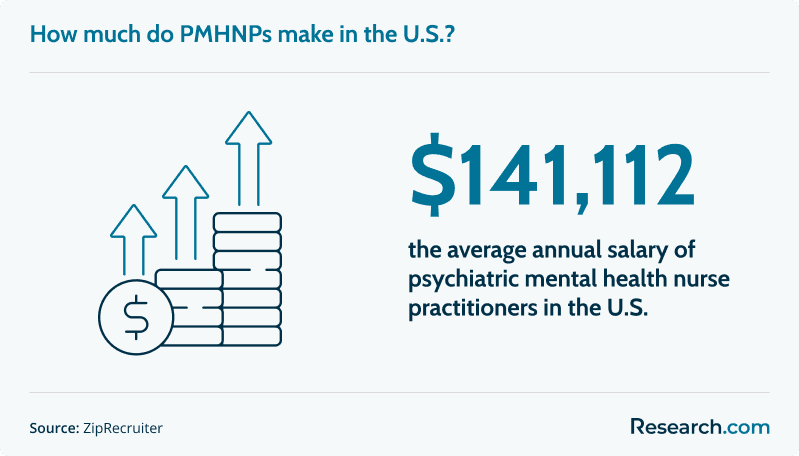
The average salary for a psychiatric mental health nurse practitioner (PMHNP) in the United States in 2027 is approximately $141,112 per year, reflecting the high demand for advanced mental health providers.
However, actual earnings can vary significantly based on factors such as geographic location, years of experience, and type of healthcare facility. For example, PMHNPs working in urban hospital systems or private practices often command higher salaries compared to those in rural community clinics.
Work setting also plays a key role. Those in inpatient psychiatric hospitals or specialized mental health centers typically earn more than PMHNPs working in outpatient clinics or academic institutions.
Additionally, PMHNPs with subspecialty training in areas like child and adolescent psychiatry or addiction treatment may see higher earning potential. Overall, the compensation reflects both the advanced clinical expertise required for the role and the growing national emphasis on expanding access to mental health services.
Looking ahead, salaries for PMHNPs are expected to remain strong due to the nationwide shortage of mental health professionals.
The chart below shows the top five states with the highest salaries for PMHNP.
What is the job outlook and demand for a psychiatric mental health nurse practitioner?
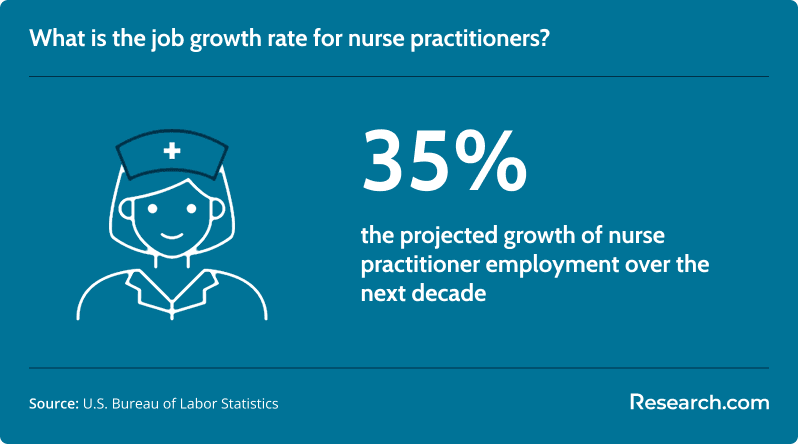
The job outlook for psychiatric mental health nurse practitioners in the U.S. is extremely positive and among the strongest in healthcare professions. The U.S. Bureau of Labor Statistics (BLS) projects a 35% growth in nurse practitioner employment from 2024 to 2034, significantly outpacing the average growth rate for all occupations.
This growth is driven by multiple factors, including an aging population with increasing behavioral health needs, expanded insurance coverage for mental health under healthcare reforms, and rising public awareness about the importance of mental health care.
PMHNPs are particularly in high demand due to a chronic shortage of mental health providers. According to the U.S. Health Resources and Services Administration (HRSA), 122 million Americans live in areas with a shortage of mental health professionals, with a projected need for thousands more mental healthcare providers.
Rural and underserved urban areas are especially affected, where PMHNPs serve critical roles in expanding access to care.
Beyond direct patient care, the need to manage and scale mental health services also creates administrative opportunities; professionals who combine clinical insight with management skills may find competitive master's in health systems management jobs within hospital networks or community mental health organizations.
Meanwhile, the chart below shows the current supply in typical behavioral health occupations.
What are the essential PMHNP educational requirements for RNs?
To become a psychiatric mental health nurse practitioner, registered nurses must meet several essential educational requirements. First, the individual must hold an active RN license by completing an accredited nursing program, which may be an Associate Degree in Nursing, a diploma, or, more commonly, a Bachelor of Science in Nursing.
After earning RN licensure by passing the NCLEX-RN exam, the nurse must then apply to an accredited graduate-level PMHNP program, either a Master of Science in Nursing or a Doctor of Nursing Practice with a PMHNP specialization.
These graduate programs must be accredited by organizations such as the Commission on Collegiate Nursing Education (CCNE) or the Accreditation Commission for Education in Nursing (ACEN) to ensure quality standards.
The PMHNP program includes didactic coursework in advanced psychiatric nursing, psychopharmacology, psychotherapy, and neurobiology, as well as a clinical practicum requiring at least 500 faculty-supervised clinical hours focused on psychiatric mental health care.
After completing the graduate program and clinical requirements, candidates must pass the Psychiatric-Mental Health Nurse Practitioner certification exam administered by the American Nurses Credentialing Center (ANCC).
Once certified, PMHNPs apply for state-level licensure to practice, which varies by state in terms of scope and authority. Ongoing certification renewal typically requires continuing education and practice hours every five years to maintain expertise and compliance with evolving clinical standards.
While an MSN or DNP is the standard graduate requirement for entry into the PMHNP field, the actual degrees held by working psychiatric nurse practitioners vary, as shown in the following data.
What additional certifications or training can a PMHNP pursue to increase marketability?
To increase marketability, psychiatric mental health nurse practitioners can pursue several additional certifications and specialized training beyond their initial PMHNP board certification (PMHNP-BC) offered by the ANCC.
While the national PMHNP-BC certification covers a broad range of psychiatric mental health care skills across the lifespan, advanced certifications or training in specific areas can enhance expertise and open up specialized career opportunities.
Some valuable options include:
- Post-master's or post-doctoral certificate programs focusing on specialties such as child and adolescent psychiatry, substance use disorder treatment, geriatric mental health, or trauma-informed care. These can deepen clinical knowledge and clinical experience in high-demand subfields.
- Certification in psychotherapy modalities such as Cognitive Behavioral Therapy (CBT), Dialectical Behavior Therapy (DBT), or Eye Movement Desensitization and Reprocessing (EMDR). Training in these therapies allows PMHNPs to expand their ability to provide evidence-based counseling.
- Certification in Psychiatric Rehabilitation or Case Management for PMHNPs interested in community mental health roles and care coordination.
- Prescriptive authority enhancements or specialized training in managing complex medication regimens for disorders like ADHD, bipolar disorder, or schizophrenia.
- Additional certifications in related fields, such as addiction counseling, forensic nursing, or telepsychiatry, to diversify practice settings and patient populations.
- Leadership, teaching, or research certification programs to prepare for roles in academia, administration, or clinical research.
For those looking to transition or expand their practice beyond psychiatric specialization, it may also be beneficial to research the diverse career paths and high-demand jobs for DNP FNP graduates, which combine terminal and family practice expertise.
Here's what PMHNPs have to say about their work:
- Rose: "Being a psychiatric mental health nurse practitioner allows me to truly bridge the gap in mental health care access, especially in rural areas where psychiatrists are scarce. I feel profoundly grateful that my advanced training empowers me to offer holistic, evidence-based treatment, bringing stability and hope to patients who desperately need it. The daily experience of helping someone reclaim their life is incredibly rewarding."
- Michael: "The autonomy I have as a PMHNP is a game-changer; I diagnose, prescribe medication, and provide psychotherapy, creating comprehensive treatment plans that truly address the whole person. It’s an intellectually challenging and emotionally balanced role that offers immense professional satisfaction, knowing I'm applying the highest level of clinical nursing practice. Seeing a patient achieve long-term recovery is the best part of my job. "
- Cory: "Working in integrated behavioral health has been a powerful experience, positioning me as a leader who consults across disciplines to improve system-wide care and reduce the stigma surrounding mental illness. My DNP-level training ensures I have the authority and expertise to advocate for patients, driving essential quality improvements and population health outcomes. This career provides constant growth and immense purpose. "
Key Findings
- The demand for PMHNPs is projected to grow by 35% over the next ten years, significantly outpacing the average growth rate for all occupations.
- The average PMHNP salary in the United States is approximately $141,112 per year in 2025.
- PMHNP graduate programs require a clinical practicum of at least 500 faculty-supervised clinical hours.
- Approximately 29 U.S. states, plus Washington, D.C., and U.S. territories, grant PMHNPs Full Practice Authority to prescribe medications independently.
- 122 million Americans live in areas with a shortage of mental health professionals, highlighting the critical demand for PMHNPs in underserved regions.
References:
- How to become a psychiatric nurse practitioner: What it is and career path - Zippia. (2025, January 8). https://www.zippia.com/psychiatric-nurse-practitioner-jobs
- Manderius, C., Clintståhl, K., Sjöström, K., & Örmon, K. (2023). The psychiatric mental health nurse’s ethical considerations regarding the use of coercive measures – a qualitative interview study. BMC Nursing, 22(1). https://doi.org/10.1186/s12912-023-01186-z
- Nurse Anesthetists, Nurse Midwives, and Nurse Practitioners. (2025, August 28). U.S. Bureau of Labor Statistics. Retrieved September 29, 2025, from https://www.bls.gov/ooh/healthcare/nurse-anesthetists-nurse-midwives-and-nurse-practitioners.htm#tab-6
- Psychiatric nurse practitioner salary. (2025). ZipRecruiter. Retrieved September 29, 2025, from https://www.ziprecruiter.com/Salaries/Psychiatric-Nurse-Practitioner-Salary
- State of the Behavioral Health Workforce, 2024. (2024, November). HRSA Health Workforce. Retrieved September 29, 2025, from https://bhw.hrsa.gov/sites/default/files/bureau-health-workforce/state-of-the-behavioral-health-workforce-report-2024.pdf
- State practice environment. (n.d.). American Association of Nurse Practitioners. https://www.aanp.org/advocacy/state/state-practice-environment
- What Is the Average PMHNP Salary by State? (2025). ZipRecruiter. Retrieved September 29, 2025, from https://www.ziprecruiter.com/Salaries/What-Is-the-Average-Pmhnp-Salary-by-State
Other Things You Should Know About What It’s Like to Work as a PMHNP
In 2027, psychiatric mental health nurse practitioners require excellent communication and critical thinking skills, profound empathy, and cultural competence. Knowledge of digital health tools for telepsychiatry and an understanding of the latest mental health treatments are also critical for practicing effectively.
In 2027, psychiatric mental health nurse practitioners often utilize telehealth platforms for remote consultations. Additionally, electronic health records (EHRs) and AI-driven diagnostic tools play significant roles, enhancing patient care and streamlining administrative tasks. Technology integration is crucial in their everyday practice.


