
2027 Is a Bachelor's in Health Science Worth It: Demand, Opportunities & Career Paths

Co-Founder and Chief Data Scientist
The healthcare industry is expanding rapidly, creating a huge demand for professionals beyond traditional doctors and nurses. A bachelor's in health science is your entry point into this non-clinical world of healthcare management, education, and policy.
With many options available, the main question is clear: Is a bachelor's in health science worth it? This expert guide provides a data-backed look at the high-growth career paths available within a field set to add nearly 2 million jobs each year, helping you decide if this versatile degree is the right fit for your goals.
Key Things You Should Know About Bachelor's in Health Science Programs
- The U.S. healthcare field is projected to add approximately 1.9 million new positions each year over the next decade, ensuring high demand for qualified professionals.
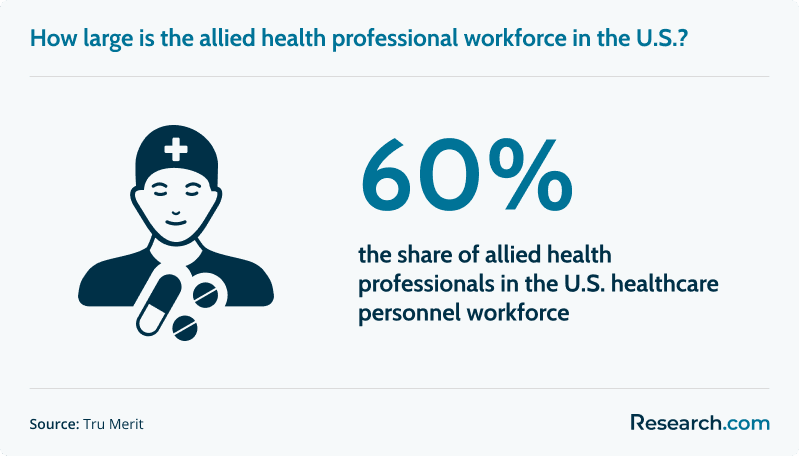
- Allied health professionals make up nearly 60% of all U.S. healthcare personnel, and this degree is a primary pathway into these essential non-clinical roles.
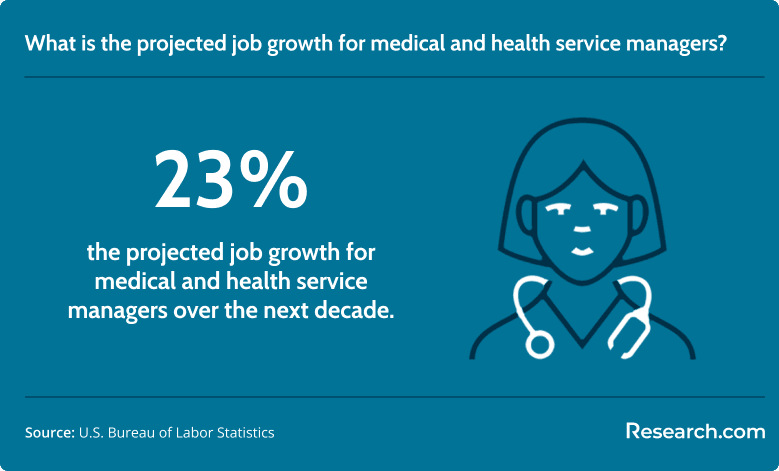
- The role of medical and health services manager is a common destination for graduates, and this profession is projected to grow 23 percent from 2024 to 2034, much faster than the average.
- The average annual salary for a professional with a bachelor's in health science degree is $109,580, demonstrating the significant financial return possible in this field.
- A bachelor's in health science is a highly common and recommended undergraduate pathway for advanced degrees like a Doctor of Physical Therapy (DPT), Doctor of Occupational Therapy (OTD), or a Master of Public Health (MPH).
- Is a bachelor's in health science a good investment today? Investment Value
- How much does it cost to get a bachelor's in health science? Program Cost
- What core skills and knowledge do you gain from a health science program? Core Skills
- What are the benefits of getting a bachelor's in health science? Advantages
- What is the biggest risk of getting a health science degree? Biggest Risk
- Who is a health science degree a great fit for? Who is a health science degree a great fit for?
- What is the earning potential and salary progression of a health science career? Earning Potential
- What is the job outlook for health science graduates? Job Outlook
- What does the long-term career progression for a health science graduate look like? Career Progression
- How do you calculate your personal ROI for a health science career? How do you calculate your personal ROI for a health science career?
- What are the top alternative careers to consider for a health science degree? What are the top alternative careers to consider for a health science degree?
- How do you decide if a health science career is worth it for you? How do you decide if a health science career is worth it for you?
Is a bachelor's in health science a good investment today?
Yes, an objective analysis of labor market data confirms that a bachelor's in health science is a sound investment today. Its value proposition rests on three verifiable pillars: high demand, strong compensation, and strategic versatility.
First, with 1.9 million new healthcare jobs projected annually, the demand for qualified graduates is exceptionally high. Second, an average annual salary of $109,580 ensures a significant financial return.
Third, it serves as a robust foundation for numerous career paths. This combination of factors provides a confident answer to the critical question: Is a bachelor's in health science worth it? But every complete return on investment calculation must start by quantifying the initial outlay.
When evaluating degree investments, it helps to compare them with other specialized educational paths. For example, exploring the difference between MBA and BA can show how academic focus and professional outcomes vary widely between general business and healthcare-oriented programs.
How much does it cost to get a bachelor's in health science?
The estimated annual cost for a bachelor's degree in health science can range from approximately $39,000 to over $153,000. This wide range is not specific to the health science major itself but depends almost entirely on the type of institution you choose.
A bachelor's degree in health science typically takes four years and consists of about 120 credits, but the price per credit can differ significantly.
To accurately estimate your potential investment, it's crucial to look at three key factors: the school type (public or private), your residency status (in-state or out-of-state), and your living situation (on-campus or at home). As the data shows, these factors are the primary drivers of the total cost.
An important insider tip is to focus on the net price rather than the sticker price. Always research financial aid packages, scholarships, and grants, which can dramatically lower the real cost of your education. You can also apply for the Free Application for Federal Student Aid (FAFSA) to see the types of federal aid you can obtain.
Understanding the full financial picture is the first step, but it's equally important to know what you're getting for that investment: the specific skills and knowledge you'll acquire.
Students seeking more cost-effective pathways might also consider schools known for affordable HBCUs, which often provide excellent academic quality with lower tuition and stronger community support, helping minimize long-term student debt.
What core skills and knowledge do you gain from a health science program?
You gain a balanced and highly practical mix of both technical "hard skills" and crucial interpersonal "soft skills."
While some assume health science is a "soft" field, the curriculum is designed to produce well-rounded professionals who can both analyze data and communicate effectively within complex healthcare systems. This dual focus is precisely what makes graduates so adaptable and valuable.
This balanced skill set prepares you to join the allied health workforce, a group that makes up nearly 60% of all U.S. healthcare personnel.
For those interested in advancing their careers in healthcare education or leadership, understanding the reasons to get a master's degree in curriculum and instruction can also be helpful. Health science graduates who move into teaching or training roles often pursue such advanced credentials to improve their instructional design and leadership capabilities in clinical or academic environments.
Hard Skills vs. Soft Skills: Building a Versatile Toolkit
A key takeaway is how the program builds your professional toolkit with two distinct but complementary types of abilities.
Hard Skills
These are the tangible, technical abilities you'll use to measure, analyze, and evaluate health challenges. A strong curriculum will provide you with a solid foundation in:
- Biostatistics
- Data analysis
- Research methods
- Program evaluation
Soft Skills
These are the interpersonal and cognitive abilities required to apply your technical knowledge in the real world. You will learn the nuances of:
- Health communication
- Ethical reasoning
- Cross-cultural competency
- Health policy analysis
Now that we've defined the full investment of cost and curriculum, let's explore the full range of benefits this investment can unlock.
What are the benefits of getting a bachelor's in health science?
The primary benefit of a health science degree is its strategic versatility, which opens doors to numerous opportunities. It provides a distinct advantage by equipping you with skills that are in high demand across the healthcare industry.
- High Job Market Demand. The degree positions you directly within the booming U.S. healthcare sector, a field projected to add approximately 1.9 million new jobs each year, ensuring long-term career stability.
- A Clear Pathway to Leadership. It provides a direct route to management, with roles like Medical and Health Services Manager projected to grow 23 percent from 2024 to 2034—much faster than the average for all occupations.
- Strong Preparation for Graduate School. The curriculum is a highly common and recommended pathway for competitive advanced degrees, including Doctor of Physical Therapy (DPT), Doctor of Occupational Therapy (OTD), and Master of Public Health (MPH).
- A Balanced, In-Demand Skill Set. You acquire a versatile mix of technical hard skills (like data analysis) and essential soft skills (like health communication) that are valuable across many different non-clinical roles.
- Built-in Career Optionality. The degree serves as a "two-in-one" path for both immediate employment and further study, giving you a high-value safety net if your long-term career goals change. For students targeting physical therapy, majors like health science or the shortest online exercise science degrees provide this crucial foundation.
A balanced evaluation, however, must also consider the potential downsides. Let's honestly examine the biggest risk associated with this degree.
What is the biggest risk of getting a health science degree?
The biggest risk is that a health science degree is a generalist program, not a direct vocational license that qualifies you for a specific clinical job like a nursing degree does. However, this perceived risk is also its greatest strength: strategic flexibility. For students evaluating whether a bachelor's in health science is worth it, understanding this trade-off is the most important part of the decision.
While a single-track program seems secure, it can be limiting. With studies showing that attrition rates in some allied health disciplines can be as high as 41%, having the flexibility to pivot within the larger healthcare field is a major advantage. This degree provides a safety net that a highly specialized credential does not.
Graduates who want to expand their clinical or behavioral health options might explore related fields, such as OT vs ABA, to understand how therapy disciplines differ in focus and career scope. This kind of exploration helps health science students identify the most compatible and rewarding specialization for their professional goals.
Understanding the Generalist vs. Specialist Trade-Off
The choice between a generalist and a specialist degree comes down to your career certainty. A highly vocational program is designed to train you for one specific job title. For instance, a fast track early childhood development online degree is a specialist program that leads directly to a defined set of roles within that field.
A health science degree, by contrast, prepares you for a broad industry. It equips you with a versatile toolkit to solve problems in management, education, data analysis, or policy, giving you more options to find the right long-term fit. Given this trade-off, the degree isn't for everyone. So, who is it a great fit for?
Who is a health science degree a great fit for?
A health science degree is an excellent fit for two main types of students: the "systems thinker" and the "future specialist." If you see yourself in either of these profiles, this major is likely a strong match for your career aspirations.
The systems thinker is interested in the business and operational side of healthcare. You are drawn to solving complex problems like managing departmental budgets, improving patient workflow efficiency, or designing community programs to lower disease transmission rates. You see yourself as a future manager, health educator, or policy advocate.
The future specialist has a clear goal of attending graduate school for a specific clinical profession, such as physical therapy, occupational therapy, or public health. You need a bachelor's degree that comprehensively covers the science and health prerequisites to make your graduate school application as competitive as possible.
The focus on systems and populations differs significantly from that of a highly specialized investigative field. For example, a blood spatter analyst career path requires a deep focus on forensic science, a much narrower discipline than the broad, systems-level view offered by health science. If you identify with the systems-thinker or future specialist profile, the next logical step is to examine the concrete career and salary outcomes in detail.
What is the earning potential and salary progression of a health science career?
The earning potential for a health science graduate is strong, with salaries for common career paths typically ranging from around $63,000 to over $117,000 annually. It is important to understand that your specific salary will depend on the career path you choose, your level of experience, the industry you work in, and your geographic location.
Graduates can pursue a variety of roles with different compensation levels. For example, the average annual salary for a health education specialist is around $63,000, while an occupational health and safety specialist earns approximately $78,900.
One of the most lucrative career paths is becoming a medical and health services manager, with an average annual salary of $117,960.
Your salary progression often involves moving into management roles over time or specializing in a high-demand area. While the high earning potential provides a clear financial return, salary is only one part of the equation. Job security is just as important, so let's look at the actual demand for these graduates in the current market.
What is the job outlook for health science graduates?
The job outlook for health science graduates is excellent, with projected growth that is much faster than the average for all occupations. This high demand is driven by the overall expansion of the healthcare industry, ensuring a secure and stable career path for those entering the field.
While the outlook is strong across the board, some roles are experiencing explosive growth. The employment of medical and health services managers, for example, is projected to grow 23% between 2024 and 2034.
To make that number more concrete, there are about 62,100 openings for these managers projected each year, on average, over the next decade. Moreover, there are over 16,000 job openings for healthcare administration roles.
Other related careers also show healthy growth, such as community health worker (11%) and occupational health and safety specialist (12%).
The strong demand and high starting salary are notable, but it's also important to understand what the career path looks like 10 or 15 years down the line.
The chart below displays the job outlooks for various potential careers.
What does the long-term career progression for a health science graduate look like?
The long-term career progression for a health science graduate often leads to senior leadership and management positions. While entry-level roles focus on specific tasks in areas like community health or patient education, the career trajectory is geared toward taking on greater responsibility for managing people, budgets, and strategy within a healthcare organization.
This path allows you to build on your foundational degree and experience, moving from practitioner to leader over time. Your career can evolve from a specialist role into a director or executive role overseeing entire departments or facilities.
From Practitioner to Leader: The Management Track
A common and lucrative long-term career path is to become a medical and health services manager. An employee might start as a community health worker and, after gaining experience, move into a management role overseeing a team of workers. As they continue to advance, they could become the director of a public health department or a manager within a large hospital system.
The peak earning potential on this track is significant, with the top-paying industries for managers being government and hospitals, where average salaries exceed $130,000. While a bachelor's degree is sufficient to begin this journey, some professionals choose to accelerate their path into specialized leadership roles.
For instance, pursuing an accelerated master's degree in management information systems online can unlock high-paying leadership opportunities in the growing field of health informatics.
How do you calculate your personal ROI for a health science career?
You can calculate your personal return on investment by systematically comparing your estimated educational costs with your projected future earnings. This simple framework will help you move beyond national averages and make a data-driven decision based on your specific situation.
This is the ultimate way to answer the question: Is a bachelor's in health science worth it for you?
- Estimate your total degree cost. Referring back to our breakdown of degree costs, research the net price of two or three specific programs you are considering. Factor in tuition, fees, and living expenses for all four years to arrive at a total investment figure.
- Identify your target career and starting salary. Based on the career paths discussed previously, choose the one that aligns most with your interests. Research the average starting salary for that specific role in the city or state where you plan to work.
- Project your earnings and find your break-even point. Project your total earnings over the first 5 and 10 years of your career, factoring in modest raises. Compare this to your total investment cost to estimate your break-even point, the moment when your earnings have officially surpassed the cost of your degree.
Before you make a final decision based on this calculation, it's wise to consider the top alternatives to ensure you're making a fully informed choice.
What are the top alternative careers to consider for a health science degree?
While a health science degree offers great versatility, several specialized alternatives might be a better fit depending on your specific career goals. It's an insider tip to remember that these aren't competing degrees, but different tools for different jobs.
Here are the top alternatives and the specific career paths they are designed for.
- Biology: This degree focuses on the life sciences and is best for students aiming for research-heavy roles or medical school (MD). It provides a deeper dive into microbiology and genetics than a typical health science curriculum.
- Bachelor of Science in Nursing (BSN): This is the required, licensed path for hands-on clinical patient care. It is the correct choice if your primary goal is to become a registered nurse and eventually move into advanced practice roles. As you advance, you might even consider roles that require further specialization, asking yourself, "What does a clinical nurse leader do?"
- Public Health: This degree focuses on population-level health, policy, and the study of disease distribution (epidemiology). It is ideal for students who want to work in government or for non-profits on large-scale health initiatives.
- Kinesiology: This degree focuses specifically on human movement and is ideal for students pursuing physical therapy or athletic training careers. Its curriculum is more narrowly focused on exercise science and biomechanics.
We've analyzed the investment, the return, and the alternatives. Now, it's time to bring it all together for a final decision.
How do you decide if a health science career is worth it for you?
The final decision comes down to a simple, two-part equation: the objective data and your subjective personal fit. This guide has provided the objective evidence, showing that a health science degree offers a strong return on investment, high job security, and excellent career versatility. The data overwhelmingly confirms the degree's value in today's market.
The second part of the equation is about you, and only you can answer it. The numbers only make sense if the career path aligns with your interests and passions. To make your final choice, reflect on these key questions:
- Am I genuinely more interested in the systems, policies, and management of healthcare than in direct, hands-on patient care?
- Do the typical career paths, like health services manager or community health educator, solve the kinds of problems I find engaging?
- Does the salary potential for these roles align with my personal financial goals?
If your answers to the data-driven questions and these personal-fit questions are both "yes," then you have a clear and confident answer to the question, "Is a bachelor's in health science worth it?" You are well-prepared to make a decision that aligns both your financial future and your professional satisfaction.
Here’s What Graduates Have to Say about Their Bachelor's in Health Science Program
- Raymund: "I knew I wanted to go to medical school, but I was anxious about picking a major that would make me a competitive applicant. Health science was the perfect choice because it allowed me to complete all my hard science prerequisites while also learning about the policy and ethical side of medicine. It gave me a much more holistic perspective that really stood out in my med school interviews. I felt so much more prepared."
- Myrene: "After a decade in retail management, I wanted a change but was worried my skills wouldn't transfer. The health science program was surprisingly practical, teaching me about healthcare finance and operations. I was able to directly apply my management background to what I was learning. Now I manage a small outpatient clinic, and it feels like the perfect blend of my past experience and new expertise."
- Diego: "Completing my degree wasn't just about getting a promotion; it was about establishing a long-term professional trajectory. My BSHS gave me the credentials and the system-level knowledge to move into a healthcare administration role with a clear ladder for advancement. I can finally see a future where I am growing, taking on more responsibility, and making a real difference in how patient care is delivered."
Key Findings
- The degree provides entry into a remarkably secure job market, with the U.S. healthcare field projected to add approximately 1.9 million new positions each year, ensuring long-term stability for graduates.
- A primary career track in medical and health services management is not only lucrative but also experiencing explosive growth, with a projected increase in employment of 23 percent from 2024 to 2034.
- The demand for healthcare managers is vast and tangible, with an average of about 62,100 job openings projected each year over the next decade.
- The degree’s generalist nature acts as a crucial career insurance policy, as high attrition rates in some specialized allied health fields (up to 41%) highlight the value of having flexible career options.
- For students with long-term academic goals, a health science degree is a well-established and highly common pathway for gaining acceptance into competitive graduate programs like a Doctor of Physical Therapy (DPT) or a Master of Public Health (MPH).
- The financial return on investment is strong and clear, with the average annual salary for a professional holding a Bachelor's in Health Science degree standing at $109,580.
References:
- Hanson, M. (2025). Average Cost of College & Tuition. Education Data. Retrieved October 14, 2025, from https://educationdata.org/average-cost-of-college
- Hanson, M. (2025). College Enrollment & Student Demographic Statistics. Education Data. Retrieved October 14, 2025, from https://educationdata.org/college-enrollment-statistics
- National Student Clearinghouse Research Center. (2025). Current Term Enrollment Estimates: Spring 2025. Retrieved October 14, 2025, from https://nscresearchcenter.org/current-term-enrollment-estimates/
- The University of Kansas. (n.d.). How Long Does It Take to Get a Bachelor's Degree?. Retrieved October 14, 2025, from https://admissions.ku.edu/blog/How-Long-Does-It-Take-to-Get-a-Bachelors-Degree
- TruMerit. (n.d.). Allied Health. Retrieved October 14, 2025, from https://www.trumerit.org/health-workforce/allied-health/
- U.S. Bureau of Labor Statistics. (n.d.). Occupational Outlook Handbook: Healthcare Occupations. Retrieved October 14, 2025, from https://www.bls.gov/ooh/healthcare/
- U.S. Bureau of Labor Statistics. (n.d.). Occupational Outlook Handbook: Medical and Health Services Managers. Retrieved October 14, 2025, from https://www.bls.gov/ooh/management/medical-and-health-services-managers.htm
- U.S. Bureau of Labor Statistics. (2025). Occupational Outlook Handbook: Community Health Worker. Retrieved October 14, 2025, from https://www.bls.gov/ooh/community-and-social-service/community-health-workers.htm U.S. Bureau of Labor Statistics. (2025). Occupational Outlook Handbook: Health Education Specialist. Retrieved October 14, 2025, from https://www.bls.gov/ooh/community-and-social-service/health-educators.htm
- U.S. Bureau of Labor Statistics. (2025). Occupational Outlook Handbook: Occupational Health and Safety Specialist and Technician. Retrieved October 14, 2025, from https://www.bls.gov/ooh/healthcare/occupational-health-and-safety-specialists-and-technicians.htm
- Yeoh, S. A., Kumar, S., Phillips, A., & Li, L. S. K. (2024). Unveiling the exodus: A scoping review of attrition in allied health. PLOS One. Retrieved October 14, 2025, from https://pmc.ncbi.nlm.nih.gov/articles/PMC11379274/
- ZipRecruiter. (2025). Health Sciences Degree Salary. Retrieved October 14, 2025, from https://www.ziprecruiter.com/Salaries/Health-Sciences-Degree-Salary
Other Things You Should Know About Bachelor's in Health Science Programs
In 2027, a Bachelor's in Health Science is worth it due to a strong demand for health professionals, driven by an aging population and advances in healthcare technology. The degree opens doors to various roles in healthcare management, public health, and clinical settings, ensuring diverse career paths.
In 2027, health science graduates can pursue careers in healthcare administration, public health, and health education. Opportunities also exist in research, health informatics, and biotechnology, reflecting the ongoing demand for health-oriented professionals in various sectors.
In 2027, the average salary for health science graduates varies, but entry-level positions can expect around $45,000 to $55,000 annually, depending on the region and sector. Specialized areas like health administration or data analysis may offer higher starting salaries due to increased demand.


