
2027 MBA vs. BA in Business: Explaining the Difference

Co-Founder and Chief Data Scientist
A lot of people assume a business degree is a business degree, but the gap between a BA in Business and an MBA is wider than most realize. One is built for launching a career; the other is built for leveling it up. Understanding the difference is essential if you want to make the smartest investment in your future.
While a BA in Business lays the foundation of business fundamentals, an MBA shifts the focus to strategy, leadership, and high-level decision-making. The contrast isn’t just academic depth; it’s timing, purpose, and career outcomes. The right choice depends entirely on where you are today and how far you want to go.
In this guide, I will break down the core differences between a BA in Business and an MBA for 2027. We’ll compare program structure, cost, career paths, salary potential, and real-world ROI.
Key Things You Should Know About MBA vs. BA in Business
- MBA holders earn an average salary of $165,372, while those with a BA in Business earn an average of $69,117 per year (ZipRecruiter, n.d.).
- There are over 104,523 business administrators currently employed in the United States, many of whom hold either a BA in Business or an MBA (Zippia, 2025).
- Business is a high-earning career path, with management and finance roles consistently ranking among the top-paying jobs in the US.
- What is the key difference between an MBA vs. BA in Business? MBA vs. BA
- How does MBA coursework differ from BA coursework? Coursework
- What are the tuition costs for MBA vs. BA in Business degrees? Tuition Costs
- How long does it take to complete an MBA vs. BA in Business? Completion Time
- What skills do MBA emphasize compared to a BA in Business? Emphasized Skills
- What is the salary outlook for MBA vs. BA in Business graduates? Salary Outlook
- Which industries typically hire MBA vs. BA in Business graduates? List of Industries
- What emerging business trends do MBA and BA graduates need to know? What emerging business trends do MBA and BA graduates need to know?
- What is the job outlook for MBA and BA in Business graduates over the next 10 years? Job Outlook
- MBA vs. BA in Business: Which is better for you? MBA vs. BA in Business: Which is better for you?
- How can I balance affordability with quality in my business degree? How can I balance affordability with quality in my business degree?
What is the key difference between an MBA vs. BA in Business?
The key difference between a BA in Business and an MBA is the purpose. A BA in Business is designed to build a foundation in core business functions like marketing, management, finance, and economics. It prepares students for entry-level roles and provides general business literacy that can be applied across many industries.
An MBA, on the other hand, is built for career advancement and leadership development. It assumes you already understand business fundamentals and shifts the focus to strategic thinking, executive decision-making, and organizational leadership. The goal is not just to work in business, but to lead teams, manage departments, or drive company growth.
If you have an existing master’s degree in a different field, you may be considering whether adding business expertise could elevate your career. For example, to those asking—what can you do with a dual MSN MBA degree?— the answer is simple: combine nursing expertise with business acumen to gain competitive advantage against other MBA graduates.
How does MBA coursework differ from BA coursework?
Both degrees teach business, but they do it with different depth and focus. A BA in Business builds foundational skills through general, all-encompassing business courses, while an MBA develops strategic leadership and executive decision-making.
Here's how their coursework differs:
BA in Business Coursework
- Principles of Marketing: Introduction to consumer behavior, branding, and promotional strategies.
- Financial Accounting: Basics of financial statements, ledgers, and business reporting.
- Business Communication: Professional writing, presentations, and workplace communication.
- Introduction to Management: Fundamentals of managing teams, projects, and business operations.
MBA Coursework
- Strategic Management: High-level decision-making and competitive business strategy.
- Managerial Finance: Corporate financial planning, risk analysis, and capital budgeting.
- Leadership and Organizational Behavior: Leading teams through change, motivation, and performance.
- Business Analytics: Data analysis for strategic decisions using real business cases.
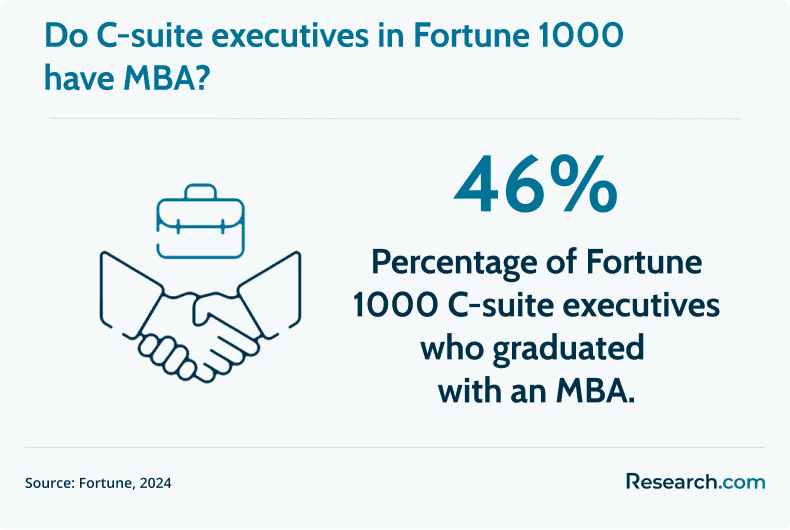
MBA coursework goes far beyond textbook learning—it is designed to mirror real executive challenges and build decision-making confidence. That’s why many professionals use an MBA as a launchpad into leadership. In fact, 46% of C-suite executives in the Fortune 1000 are MBA graduates, showing how strongly advanced business education is linked to optimal career growth.
This contrast between foundational and advanced learning mirrors other academic pairings, such as ECE certification vs degree, where one emphasizes entry-level fundamentals and the other deepens expertise for long-term career advancement.
What are the tuition costs for MBA vs. BA in Business degrees?
The average cost of an MBA in the United States is $60,410, but that number can climb past $100,000 at top business schools. Tuition varies based on whether the program is full-time, part-time, or online. Reputation and ranking also drive cost, especially for elite MBA programs.
A BA in Business is significantly more affordable, especially at public universities. The median in-state tuition is $6,930 per year, while private institutions average $32,282 per year. See our list of the core subjects in a business administration program and their costs to estimate your potential expenses.
To help visualize the cost difference between the two degrees, here’s a quick side-by-side comparison of tuition averages. The chart below breaks down typical expenses based on school type and program level. Use it to estimate what you might actually pay:
How long does it take to complete an MBA vs. BA in Business?
A BA in Business is a four-year commitment built around general education plus core business training (Indeed, 2025). It’s the launchpad degree—the one that gets your foot in the door and builds long-term career fundamentals. Most students follow the traditional timeline, though accelerated paths exist.
An MBA is a faster, higher-impact climb; usually two years full-time. Some programs compress it to 12–18 months for career-driven professionals, while executive and part-time MBAs stretch to three years to fit work schedules. The timeline depends less on school and more on how aggressively you want to advance.
For those who value speed, flexibility, and career momentum, modern learning has changed the game. Many schools now offer an online MBA general business program that lets you move at your own pace without putting your career on pause. Your timeline is no longer defined by tradition—it’s defined by your ambition.
What skills do MBA emphasize compared to a BA in Business?
A BA in Business teaches you how business works. An MBA teaches you how to run one. While a bachelor’s degree builds the fundamentals employers expect, an MBA levels up your ability to make decisions, lead teams, and drive results in high-stakes environments.
Here’s how the skill sets stack up:
BA in Business
- Business Fundamentals: Builds understanding of core areas like marketing, finance, operations, and management.
- Professional Communication: Strengthens writing, presentations, teamwork, and collaboration in business settings.
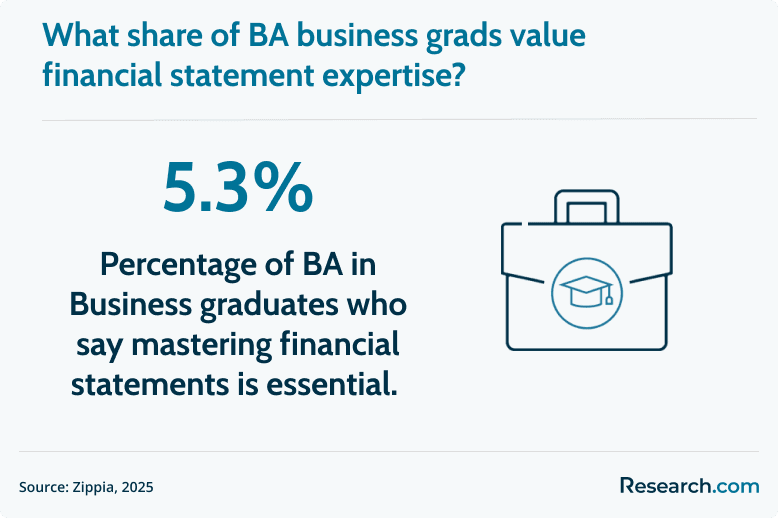
- Finance Expertise: 5.3% of BA in Business graduates report that mastering financial statements is essential for industry success, especially in entry-level analyst roles.
- Entry-Level Business Tools: Develops proficiency in Excel, CRM platforms, and basic financial and project software.
MBA – Skill Development
- Strategic Leadership: Prepares professionals to lead teams, manage change, and drive business growth.
- Executive Decision-Making: Focuses on solving complex business problems using data, insight, and strategy.
- Global Business Strategy: Builds insight into international operations, trade dynamics, and cross-border competition.
- Negotiation and Influence: Enhances high-level communication and persuasion skills for executive settings.
Today, many professionals want these advanced skills without stepping away from their careers. That’s why programs like an online Master of Business Administration in Analytics have become popular—they combine leadership training with data expertise to meet modern business demands. It’s one more example of how MBA-level learning can be tailored to real career goals
What is the salary outlook for MBA vs. BA in Business graduates?
When it comes to earning power, MBAs have a clear advantage. The average salary for MBA holders is $165,372, with top earners making up to $221,500. This jump in income reflects the leadership and strategy roles MBA graduates typically qualify for.
A BA in Business offers a solid starting salary, averaging $69,117 per year. With experience, top earners can reach $103,000, especially in roles like financial analyst, operations manager, or sales strategist. However, growth typically depends on climbing the corporate ladder or pursuing advanced education.
Salary growth still depends on specialization and industry choice. Many professionals begin with a BA in Business and later pursue an MBA to unlock higher-paying executive roles. With affordable AACSB accredited online MBA programs now widely available, upgrading your credentials (and your earning power) has never been more accessible.
To see how earnings compare across different career levels, industries, and experience tiers, the chart below breaks down salary differences between BA in Business and MBA graduates.
Which industries typically hire MBA vs. BA in Business graduates?
BA in Business graduates typically begin in analyst, coordinator, or specialist positions, while MBA graduates enter at a higher level, often in strategy, leadership, or revenue-driving roles. Below is a breakdown of industries that frequently hire each group and the types of roles they pursue:
Recommended Industries for BA in Business Graduates
- Retail and E-commerce: Entry roles in merchandising, customer insights, supply chain coordination, and sales analytics.
- Banking and Financial Services: Credit analyst, financial associate, loan officer, and operations analyst roles.
- Marketing and Advertising: Account coordinator, marketing analyst, campaign strategist in agency or brand settings.
- Logistics and Supply Chain: Inventory analyst, procurement specialist, and operations coordinator positions.
- Human Resources: Talent acquisition coordinator and HR generalist roles supporting recruiting and workforce planning.
Recommended Industries for MBA Graduates
- Management Consulting: Strategy consultant and engagement manager roles solving complex business problems.
- Investment Banking and Private Equity: Associate roles handling financial modeling, deal evaluation, and capital strategy.
- Technology: Product manager, go-to-market strategist, and business operations lead roles at tech firms.
- Corporate Leadership: General manager, director of strategy, or business development lead roles across industries.
- Entrepreneurship and Startups: Founders, startup operators, and venture-backed business leaders driving early-stage growth.
Your career path often depends on the industry you choose—and your degree can open different doors. See how hiring trends compare across sectors, and how an accelerated entrepreneurship master's degree online can help you fast-track advancement without putting your career on pause.
What emerging business trends do MBA and BA graduates need to know?
Business evolves by the minute—and the professionals who win aren’t just smart, they’re adaptable. Whether you’re on the MBA path or building from a BA in Business, staying relevant means mastering the trends reshaping modern leadership.
Here’s what you need to know in today’s business landscape:
Leading With Emotional IQ, Not Ego
Today’s most effective leaders don’t manage through authority—they build trust. Empathy fuels collaboration, prevents burnout, and boosts retention, making it a measurable business advantage. That’s why companies like Microsoft invest heavily in emotional intelligence training for managers to strengthen team culture and performance.
Profit Meets Purpose Leadership
Sustainability has shifted from corporate slogan to core strategy. Investors now evaluate companies on ESG performance, and consumers reward brands that act responsibly. Tesla and Patagonia proved that sustainability isn’t a tradeoff—it’s a growth engine that drives innovation and loyalty.
The Rise of Tech-Savvy Decision Makers
You don’t need to code to lead, but you do need to speak the language of AI, automation, and analytics. Companies want leaders who can align technology with revenue goals and operational scalability. That’s why digital transformation skills are now considered essential in consulting, finance, manufacturing, and healthcare.
Culture Architects Win Markets
Inclusion is now a business strategy because diverse teams outthink and outperform. Modern leaders build systems where ideas compete—not identities. Salesforce is a strong example of how putting structure around diversity creates innovation advantages and market trust.
Agility as a Leadership Superpower
In a world where market shifts are weekly events, rigid strategies fail fast. Agile leadership prioritizes rapid decision cycles, experimentation, and resilience under pressure. Startups thrive because they execute this way—and now Fortune 500 companies are adapting the same mindset to stay relevant.
These same principles of adaptability and continuous learning also appear in global education settings—like TEFL vs ESL, where professionals must evolve their methods to meet cultural and industry shifts, just as modern business leaders must evolve their leadership styles.
What is the job outlook for MBA and BA in Business graduates over the next 10 years?
The demand for business professionals remains steady—but the types of roles and expectations are shifting fast. Both MBA and BA in Business graduates are entering a market that rewards specialization, leadership readiness, and data fluency.
Here’s what the next decade looks like based on current labor trends.
- Steady Job Growth Ahead: Business administration roles are expected to grow 5% from 2018 to 2028, keeping demand reliable across industries like finance, tech, and healthcare.
- Tens of Thousands of Open Roles: More than 18,200 new business administration jobs will open over the next decade, signaling strong long-term career stability.
- Competitive Job Market Right Now: The field has over 103,025 active job openings today for BA in Business and MBA graduates.
- Salary Growth Continues: Average business administration salaries have climbed 9% in just the past five years, reflecting growing responsibility placed on these roles.
- Healthy Employment Base: There are currently 104,523 business administrators employed in the US, showing that demand spans both corporate and startup environments.
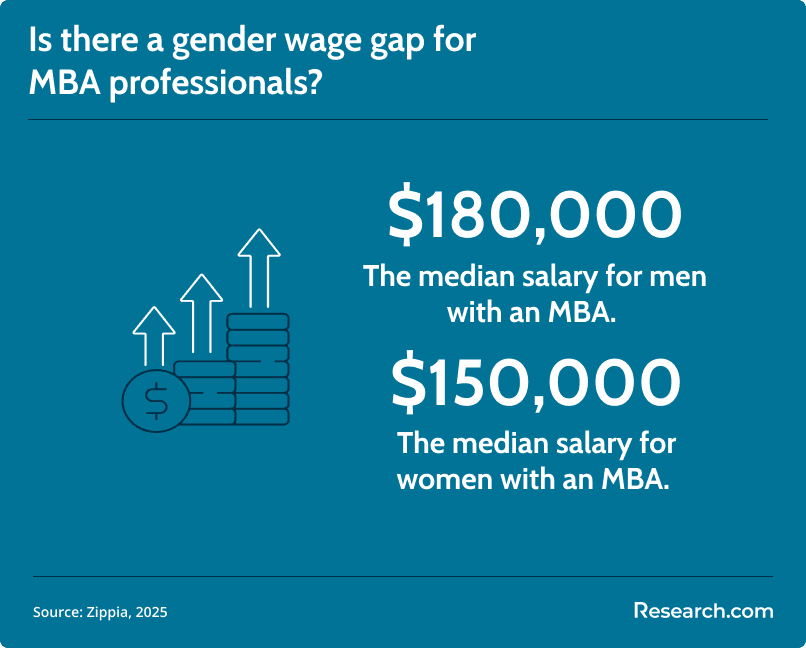
- Gender Pay Gap Persists: Men with an MBA earn an average of $180,000 annually compared to $150,000 for women, a gap that highlights ongoing inequities in executive pay.
- MBA Timing Trends: The average age of incoming MBA students is 28, as many professionals return to school after gaining early career experience to accelerate advancement.
The next decade clearly favors business professionals who combine education with real-world skill development. The takeaway is simple: business careers aren’t disappearing—they’re transforming, and now is the time to prepare for that shift.
This long-term growth trajectory aligns with patterns seen in other advanced professional fields, such as DNP vs nurse practitioner, where postgraduate specialization drives higher pay, greater autonomy, and sustained career relevance.
MBA vs. BA in Business: Which is better for you?
Deciding between a BA in Business and an MBA isn’t about which degree is better; it’s about which one matches where you are in your career and where you want to go next. One builds your foundation, the other accelerates your trajectory.
The real question is: are you entering the game or leveling up? Here’s what you should consider:
Choose a BA in Business if You...
- Want to launch your business career quickly and gain experience early.
- Need a cost-effective degree that opens doors to entry-level business roles.
- Are still exploring areas like marketing, finance, HR, or operations.
- Want to build essential business fundamentals and workplace skills.
- Plan to gain experience first, then potentially pursue an MBA later.
Choose an MBA if You...
- Are ready to move into management or executive-track roles.
- Want a competitive edge in industries like consulting, tech, or finance.
- Aim to significantly increase your salary and leadership opportunities.
- Prefer advanced training in strategy, analytics, or business growth.
- Already have work experience and want to accelerate your career path.
In a nutshell: if you’re building momentum, start with a BA in Business. If you’re ready to expand your impact and influence, an MBA may be your next strategic move.
The same logic applies across education—whether you’re choosing between degrees or certifications. For example, educators comparing advanced paths like is an EdD in higher education worth it face similar questions about timing, career goals, and long-term return on investment.
Here’s What MBA and BA in Business Professionals Have to Say About Their Careers
- Amanda: "Earning my MBA gave me the strategic mindset I needed to move from operations into executive leadership. Within a year of graduating, I was promoted to Director of Business Strategy and increased my salary by 40%. The program sharpened how I think—now I solve problems like a leader, not just a manager."
- Tracy: "My BA in Business helped me land my first role as a business analyst right out of college. What surprised me most wasn’t just the foundation in finance and marketing—it was how much the program improved my communication and professional confidence. That made all the difference in job interviews."
- Glenn: "I used my MBA to transition from engineering into product management at a tech company. The hands-on case studies and networking were game changers, and the business analytics courses helped me compete in a data-driven industry. It wasn’t just a degree—it was a restart button for my career."
Key Findings
- 46% of C-suite executives in the Fortune 1000 are MBA graduates, showing just how strongly advanced business education is linked to career growth.
- The average cost of an MBA in the US is $60,410, but that number can climb past $100,000 at top business schools.
- A BA in Business is significantly more affordable: median in-state tuition is $6,930 per year, while private institutions average $32,282 per year.
- 5.3% of BA in Business graduates report that mastering financial statements is essential for industry success, especially in entry-level analyst roles.
- Men with an MBA earn an average of $180,000 annually compared to $150,000 for women, a gap that highlights ongoing inequities in executive pay.
How can I balance affordability with quality in my business degree?
When evaluating a business degree, focus on optimizing long-term value rather than just upfront costs. Assess program accreditation, curriculum relevance, and career support services to ensure the education you receive meets your professional goals. Investigate financial aid options, scholarships, and tuition structures that can ease the burden of higher costs. For instance, explore opportunities such as the lowest cost online MBA to maintain quality while managing expenses. Compare total investment by considering potential salary growth and career advancement to ensure your educational investment aligns with market demands.
References:
- Boston Institute of Analytics. (n.d.). 5 emerging trends in business leadership for MBA graduates. Bostoninstituteofanalytics.org. Retrieved 10 October 2025.
- Data USA. (n.d.). General business administration & management: Tuition costs. Datausa.io. Retrieved 10 October 2025.
- EducationData. (n.d.). Average cost of a master’s degree. Educationdata.org. Retrieved 10 October 2025.
- Fortune. (n.d.). Fortune 1000 executives MBA alma mater. Fortune.com. Retrieved 10 October 2025.
- Indeed. (n.d.). BBA vs MBA: Which degree is right for you? Indeed.com. Retrieved 10 October 2025.
- ZipRecruiter. (n.d.). Bachelor of Business Administration salary. Ziprecruiter.com. Retrieved 10 October 2025.
- ZipRecruiter. (n.d.). MBA salary. Ziprecruiter.com. Retrieved 10 October 2025.
- Zippia. (n.d.). Business administrator demographics. Zippia.com. Retrieved 10 October 2025.
Other Things You Should Know About MBA vs. BA in Business
In 2027, a BA in Business provides foundational knowledge in business principles, while an MBA focuses on advanced management and leadership skills. An MBA emphasizes strategic thinking, networking, and specialized electives, whereas a BA offers a broad overview of business disciplines.
In 2027, an MBA is typically better for entrepreneurship, providing advanced business knowledge and strategic skills. A BA in Business offers a solid foundation, but an MBA equips graduates with in-depth expertise and networking opportunities crucial for entrepreneurial success.


