
2027 Best PsyD Programs in Wyoming: APA Accredited Online & Campus

Co-Founder and Chief Data Scientist
Choosing a PsyD program in Wyoming requires selecting a training path aligned with professional goals and clinical aspirations, especially as the state faces a critical shortage of licensed psychologists, with only 18 per 100,000 residents. APA-accredited online or campus programs provide essential skills for licensure and successful PsyD careers.
In this guide, I will help aspiring professionals understand how each option supports their training needs, from clinical practicum access to supervision quality and program flexibility. I will also share what Wyoming-based and online APA-accredited PsyD programs offer, how they differ, and which factors matter most when selecting the right route to professional practice.
Key Benefits of APA Accredited PsyD Programs in Wyoming
- Online APA-accredited PsyD programs offer flexible scheduling, enabling students to balance work and study while meeting rigorous accreditation standards.
- These programs increase accessibility, with data showing a 25% rise in enrollment for remote learners seeking licensed psychologist status.
- On-campus programs in Wyoming provide hands-on clinical training in diverse community settings, enhancing real-world experience critical for state licensure.
- How many APA accredited PsyD programs are available in Wyoming?
- What are the best APA accredited PsyD programs in Wyoming?
- Who is eligible to apply to APA accredited PsyD programs in Wyoming?
- What are the requirements to get into an APA accredited PsyD program in Wyoming?
- What PsyD specializations are available in Wyoming?
- What courses are typically included in APA accredited PsyD programs in Wyoming?
- How do PsyD students find internships in Wyoming?
- What are the pros and cons of online and campus PsyD programs in Wyoming?
- What jobs can you get with a PsyD in Wyoming?
- What is the average salary of PsyD graduates in Wyoming?
How many APA accredited PsyD programs are available in Wyoming?
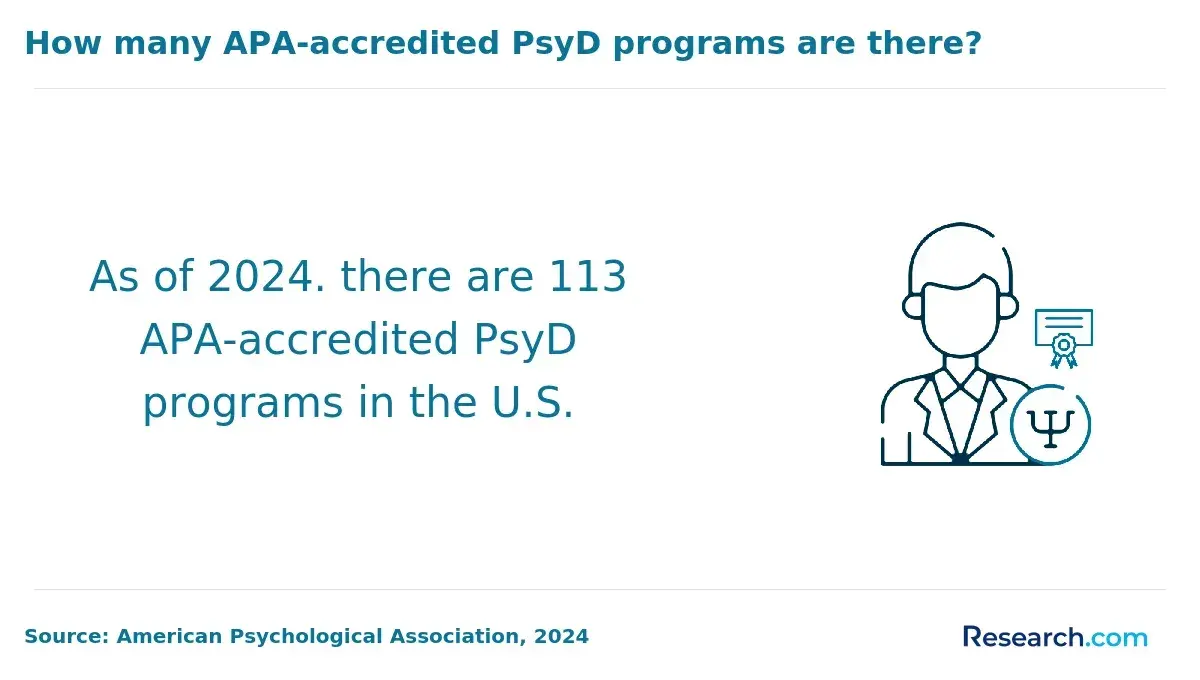
As of 2025, there are no APA-accredited PsyD (Doctor of Psychology) programs available in Wyoming, either on-campus or online. The state's only APA-accredited doctoral program in psychology is the PhD in Clinical Psychology at the University of Wyoming, which has been continuously accredited since 1972.
The American Psychological Association (APA) accredits psychology doctoral programs based on rigorous standards in curriculum, clinical training, faculty qualifications, and student outcomes, with ongoing reviews to maintain quality. APA accreditation is essential for licensure eligibility in most states, including Wyoming, and it also enhances professional credibility and mobility.
For those seeking PsyD degrees, alternatives include accredited online or hybrid programs such as Fielding Graduate University, The Chicago School of Professional Psychology, and Walden University, all of which offer APA-accredited PsyD options recognized for licensure purposes.
Recent trends in Wyoming's psychology doctorate education indicate a growth in online and hybrid program availability that meets state licensure requirements, reflecting increased flexibility for students outside traditional campus settings. Demand for clinical psychologists is rising across Wyoming, paralleling national workforce needs, which pressures expansions in accessible training pathways. While the University of Wyoming maintains a strong in-state APA-accredited PhD program, the lack of in-state PsyD options directs many to out-of-state or online programs that uphold accreditation standards. Wyoming's licensure process favors APA-accredited credentials, though it allows alternative routes with greater scrutiny.
What are the best APA accredited PsyD programs in Wyoming?
Students evaluating APA-accredited PsyD programs in Wyoming should consider faculty expertise, research opportunities, clinical training partnerships, and student licensure outcomes. APA accreditation confirms that programs uphold national standards for quality education and prepare graduates for psychologist licensure.
- University of Wyoming - Clinical Psychology PhD (Campus-Based): The only on-campus, APA-accredited doctoral program in Wyoming, offering a PhD with a 94% licensure rate among graduates (2014-2024). Although not a PsyD, it provides comprehensive research and clinical training over 5-7 years.
- Capella University - Online PsyD in Clinical Psychology (Hybrid): Accredited by the Higher Learning Commission, this program includes online coursework combined with in-person residencies and clinical placements designed to meet Wyoming's licensure requirements through supervised experience.
- Fielding Graduate University - Hybrid/Distributed Learning PsyD: Features regional cohorts facilitating practicum and internship placements, supporting Wyoming students with robust clinical training resources.
- The Chicago School of Professional Psychology - Online PsyD: Offers an APA-accredited online PsyD with national internship networks and practicum support accessible to Wyoming residents.
- Walden University - Online PsyD: Provides multiple specializations with practicum and internship assistance; students should verify APA accreditation status and ensure clinical requirements align with Wyoming's licensure standards.
Given Wyoming's lack of campus-based APA-accredited PsyD programs, candidates often choose the University of Wyoming's PhD or reputable online/hybrid PsyD options that emphasize clinical training and licensure preparation. For clarity on program distinctions and career paths, it is helpful to understand what is the difference between RBT and BCBA, guiding informed decisions about professional qualifications and training requirements.
Who is eligible to apply to APA accredited PsyD programs in Wyoming?
Applicants best suited for on-campus APA-accredited PsyD programs in Wyoming typically include recent graduates from psychology or closely related fields, as well as career changers seeking clinical licensure. These students often prefer in-person training environments that offer direct mentorship from faculty and rich collaboration with peers.
The emphasis on hands-on clinical experience and structured classroom learning supports the development of essential skills required for meeting Wyoming's 3,000-hour supervised practice requirement. Many in these programs value opportunities for face-to-face supervision during practicum and internship phases, which are crucial components for preparing competent psychologists.
The cohort dynamic also fosters research collaboration and professional networking that benefits students throughout their careers.
Online or hybrid APA-accredited PsyD programs generally attract working professionals, individuals balancing family responsibilities, and students living in remote regions where campus access is limited. These programs offer flexibility through self-paced study while maintaining rigorous clinical standards, including at least three years of full-time study and 1,500 hours of supervised clinical experience comparable to on-campus education.
This accessibility accommodates those who require adaptable schedules without compromising the quality of training necessary for licensure. Additionally, mature students and career changers often find online formats more compatible with their lifestyles and existing commitments. Some may also explore related paths, such as the board certified behavior analyst how to start as complementary expertise alongside clinical psychology.
programs
What are the requirements to get into an APA accredited PsyD program in Wyoming?
APA-accredited PsyD programs in Wyoming have specific academic and professional requirements designed to prepare students for doctoral-level clinical psychology training. Meeting these requirements helps ensure applicants are well-prepared for the rigors of both online and campus-based PsyD programs in Wyoming.
- Educational Background: Applicants must hold a bachelor's or master's degree, typically in psychology or a closely related field, with prerequisite psychology coursework often required.
- Minimum GPA: A strong cumulative GPA, generally between 3.0 and 3.5, is expected to remain competitive.
- Prerequisite Coursework: Foundational courses such as abnormal psychology, statistics, research methods, and developmental psychology are commonly required to ensure readiness for doctoral study.
- Relevant Experience: Prior research, clinical, or volunteer experience in psychology-such as internships or assistantships in mental health settings-is highly valued for demonstrating commitment to the field.
- Standardized Tests (GRE): While some programs require GRE scores, many-including several online programs-are waiving this requirement.
- Letters of Recommendation: Usually 2-3 letters from academic or professional sources are needed to verify suitability for doctoral clinical training.
- Personal Statement: A detailed statement outlining interests in clinical psychology, relevant experience, career goals, and motivation for pursuing a PsyD is required.
- Interview or Assessment: Qualified applicants may participate in interviews assessing interpersonal skills, ethical reasoning, and fit with program values.
The University of Wyoming hosts the only APA-accredited clinical psychology doctoral program in the state, following these standards. Applicants interested in online options should consider that Wyoming licensure recognizes APA-accredited doctoral degrees from other institutions meeting core requirements, which can influence careers with applied behavior analysis degree pathways.
For more details on related career options, see careers with applied behavior analysis degree.
What PsyD specializations are available in Wyoming?
Choosing a PsyD specialization in Wyoming is essential for aligning doctoral education with specific career objectives and professional interests in the field of psychology. Specializations enable students to gain focused expertise that increases their effectiveness and employability in targeted practice areas.
Below is an overview of the most common PsyD specializations accessible through APA-accredited programs in Wyoming, highlighting their distinct focus areas and skill development.
The options include:
- Clinical Psychology: Emphasizing assessment, diagnosis, and evidence-based treatment of mental health disorders, this specialization prepares graduates for licensure and clinical roles in hospitals, community centers, and private practice.
- Applied Behavior Analysis (ABA): Focused on behavioral interventions for autism and developmental disabilities, ABA specialists develop assessment and intervention planning skills often utilized in educational and clinical environments.
- Cognitive Psychology: Concentrating on mental processes such as memory and perception, this track equips students for research and neuropsychological roles, particularly in academic and healthcare settings.
- Developmental Psychology: Covering human growth across the lifespan, students learn to assess and intervene at various stages, with career opportunities in schools, pediatric clinics, and family services.
- Forensic Psychology: Integrating psychology with legal systems, this specialization trains students for court assessments, legal consultation, and forensic clinical practice.
- Health Psychology: Available through some online programs, focusing on psychological factors in medical settings, preparing graduates for integrated care and rehabilitation work.
- Neuropsychology: Concentrating on brain-behavior relationships and disorders like ADHD, training prepares students for hospital evaluation and cognitive rehabilitation roles.
- Child and Adolescent Psychology / School Psychology: Addressing mental health and educational needs of youth, graduates typically serve schools, advocacy groups, and pediatric populations.
- Substance Use and Addiction Psychology: Offered through select online programs, this specialization focuses on addiction interventions and prevention strategies, especially beneficial in rural communities.
Several Wyoming residents also benefit from APA-accredited online PsyD programs with flexible hybrid models and specialization options tailored to specific interests, ensuring practical practicum placements within the state.
When asked about his experience selecting a PsyD specialization, a psychologist from Wyoming shared that navigating the range of options online initially felt overwhelming. He recalled, "Balancing career goals with program availability was challenging, especially assessing how each specialization aligned with my passion for community mental health." The decision-making process involved deep reflection on clinical versus research-oriented tracks.
He appreciated the flexibility of online programs that allowed access to less common specializations like health psychology, which ultimately matched his interest in integrated care. The psychologist reflected that choosing a specialization was not only an academic decision but a defining step in shaping his professional identity, offering both focus and motivation throughout his studies.
What courses are typically included in APA accredited PsyD programs in Wyoming?
Analyzing curriculum content is vital to assess how effectively Wyoming's APA-accredited PsyD programs prepare students in clinical, research, and professional domains. Course offerings develop competencies from psychological assessment to ethical decision-making, shaping graduates for licensure and practice.
The following core courses illustrate the comprehensive training typical in both online/hybrid and campus-based formats.
- Developmental Psychopathology: Focuses on the etiology and diagnosis of mental disorders across the lifespan, enhancing skills in diagnostic formulation and developmental understanding.
- Assessment and Diagnosis: Covers cognitive and achievement testing, emphasizing test administration, scoring, and interpretation crucial for clinical assessment roles.
- Diversity and Cultural Competence: Addresses multicultural awareness and equity in care, preparing students to serve diverse populations effectively.
- Theories and Techniques of Psychotherapy: Teaches evidence-based intervention methods, fostering treatment planning and therapeutic alliance skills.
- Professional Ethics: Reviews APA ethics and legal standards, essential for ethical clinical practice and licensure.
How do PsyD students find internships in Wyoming?
Clinical internships in APA-accredited PsyD programs are critical for Wyoming students, providing essential supervised experience that bridges academic learning and independent practice. These internships not only fulfill state licensure requirements but also cultivate advanced skills in assessment, intervention, and professional collaboration. To successfully secure placements, PsyD students often rely on a combination of strategies tailored to both campus-based and online learning formats.
Common resources and approaches to obtaining internships in Wyoming include:
- APPIC Match Process: The primary pathway for PsyD students is the APPIC Match, which facilitates placement at APA-accredited sites nationwide. With roughly 76.7% of PsyD students matching nationally, applicants optimize their chances by applying to 15-18 sites, balancing competitive and safety options. Both campus and online students participate equally when enrolled in accredited programs.
- Regional Consortia: The High Plains Psychology Internship Consortium aggregates placements across Wyoming and neighboring states, offering rural and clinical experiences relevant to local populations. This consortium is accessible to APA-accredited program students, including those studying online, and emphasizes diverse clinical settings like crisis intervention and psychological assessment.
- Local and State Agencies: Institutions such as the Cheyenne VA Medical Center recruit interns from accredited doctoral programs, with selection based on clinical prerequisites and fit with agency training models. These opportunities support both on-campus and online candidates who meet the necessary qualifications.
- Director of Clinical Training (DCT) Support: DCTs provide critical mentorship and insider knowledge about internship sites, application strategies, and the match process. Online students typically access this support through virtual advising, enabling effective guidance regardless of location.
- Online Job Boards and Networking: Platforms like ZipRecruiter expand internship visibility beyond traditional channels, while professional associations offer networking, webinars, and updated directories. Virtual events particularly benefit online and hybrid students by facilitating connections and access to timely site openings.
A psychologist from Wyoming, who completed her PsyD on campus, shared her experience navigating this process: "Finding the right internship felt daunting at first, especially given Wyoming's rural context. I relied heavily on my program's Director of Clinical Training, whose insight helped me target sites aligned with my clinical interests.
Applying broadly through the APPIC Match was essential, but the real breakthrough came with a regional consortium placement that offered hands-on experience I hadn't anticipated. The process involved stress and uncertainty, especially waiting for match results, but having a strong support network and flexible program options made all the difference."
What are the pros and cons of online and campus PsyD programs in Wyoming?
Both online and campus-based PsyD programs in Wyoming present unique advantages and challenges for students pursuing APA-accredited doctoral training. Understanding these distinctions is essential for applicants to select the format that best aligns with their professional goals, learning preferences, and personal circumstances.
Pros and Cons of Online PsyD Programs in Wyoming
- Flexibility: Online and hybrid PsyD programs enable students to balance coursework with work or family commitments, ideal for professionals managing multiple responsibilities.
- Accessibility: These programs serve students in rural or remote regions of Wyoming, providing access where on-campus options are limited or unavailable.
- Comparable Academic Standards: Accredited online programs maintain rigorous academic and clinical standards equivalent to campus-based tracks, preserving learning quality and outcomes.
- Reduced Costs: Eliminating relocation and commuting expenses is a significant financial benefit, especially in Wyoming's geographically dispersed communities.
- In-Person Clinical Requirements: Despite online coursework, substantial in-person clinical practicum and internship hours are mandatory, limiting full remote completion flexibility.
- Self-Discipline Demands: Success requires strong time management and independent work skills, which can challenge students without structured support.
- Limited Networking: Virtual interactions replace face-to-face engagement, potentially restricting mentorship opportunities and professional relationship building.
Pros and Cons of Campus-Based PsyD Programs in Wyoming
- Structured Learning Environment: On-campus programs offer consistent, immersive classroom instruction and direct faculty supervision that reinforce skill development.
- Immediate Resource Access: Students benefit from university facilities like research labs and psychological assessment centers that foster hands-on learning.
- Strong Professional Networks: Face-to-face interaction cultivates robust peer and faculty relationships, enhancing collaboration and career support.
- Reduced Flexibility: Full-time attendance and fixed schedules can pose challenges for those balancing work, family, or living at a distance.
- Higher Opportunity Costs: Relocation and commuting requirements add financial and time burdens that can disrupt personal and professional responsibilities.
- Limited Program Availability: Wyoming offers very few APA-accredited campus PsyD programs, concentrating demand and limiting student options within the state.
What jobs can you get with a PsyD in Wyoming?
A PsyD degree prepares graduates for clinical, counseling, and assessment-focused careers across both traditional and emerging practice settings. APA-accredited PsyD programs in Wyoming, whether online or campus-based, ensure students gain the clinical competencies necessary for licensure and advanced professional roles.
- Licensed Clinical Psychologist: Provide individual, group, and family therapy, conduct psychological assessments, and develop treatment plans. They work in hospitals, community mental health centers, private practice, or integrated healthcare settings, with strong demand across Wyoming including at the Cheyenne VA and federal correctional facilities.
- School Psychologist: Assess, diagnose, and support students with learning, behavioral, or emotional challenges in K-12 or postsecondary educational institutions. Employment is common within public school districts and higher education institutions statewide.
- Behavioral Health/Drug Treatment Program Coordinator: Lead mental health and substance abuse programs in outpatient clinics, hospitals, or correctional settings. PsyD graduates often fill coordinator roles at federal facilities requiring expertise in complex behavioral health interventions.
- Academic or Research Psychologist: Teach undergraduate or graduate courses, supervise trainees, and conduct research at universities or specialized research centers. Wyoming doctoral graduates have secured faculty and research management positions nationwide, contributing to healthcare and private industry projects.
- Healthcare Administrator or Policy Analyst: Utilize clinical and research skills to shape mental health policy, manage behavioral health services, or oversee quality assurance in healthcare systems, government agencies, or nonprofits. Alumni have advanced to leadership roles such as Associate Chief of Mental Health at the Cheyenne VA and Population Health Analyst in regional organizations.
As the mental health field evolves, professionals with a PsyD can also explore interdisciplinary roles, for example integrating behavioral health with primary care settings. Some programs nationwide offer pathways like a ranking of fastest masters in applied behavior analysis online to complement PsyD training and expand career versatility.
What is the average salary of PsyD graduates in Wyoming?
PsyD-trained psychologists in Wyoming earn an average annual salary ranging from $79,890 to $124,974, with clinical psychologists typically making between $70,360 and $105,632. Counseling psychologists and specialists may receive higher pay, but data show no significant salary differences between graduates from online versus traditional APA-accredited PsyD programs in the state.
Nationally, clinical and counseling psychologists average about $106,600 annually, according to the U.S. Bureau of Labor Statistics and APA workforce reports, offering useful benchmarks for comparison.
Key Factors Influencing PsyD Salary Levels in Wyoming:
- Licensure Status: Fully licensed psychologists command higher salaries due to independent practice and insurance billing capabilities.
- Years of Experience: Salary increases markedly with experience, often exceeding $110,000 for seasoned clinicians.
- Specialization and Advanced Training: Fields like neuropsychology or forensic psychology attract premium pay reflecting expertise.
- Employer Type: Private practice and healthcare system roles generally pay more than academia or the public sector.
- Regional Demand: Rural areas may offer bonuses for qualified psychologists despite fewer openings.
Prospective students interested in the cost of getting masters in applied behavior analysis should consider that licensure and specialization strongly affect earning potential beyond program modality.
What APA Accredited PsyD Graduates in Wyoming Say About Their Degree
- Completing my PsyD through the online program at the University of Wyoming was a transformative experience that balanced rigorous academics with the flexibility I needed living in a rural part of the state. The ability to stay connected with my local community while pursuing advanced studies allowed me to immediately apply my knowledge when I began working in a local school setting. This program's accreditation ensured a high standard that boosted my confidence and career opportunities. I deeply value how this degree has equipped me to make a meaningful difference in the mental health and development of young people in Wyoming's unique educational landscape. Ara
- Enrolling in the online PsyD program at Regis University introduced me to a world of possibilities without having to relocate from Wyoming. The program nurtured my passion for educational psychology and provided me with practical skills that helped me start my career in a local school with a solid foundation. Living in Wyoming gave me unique insights into community challenges like isolation and resource scarcity, which enriched my professional growth. My journey was both intellectually fulfilling and personally rewarding, knowing I contribute daily to student well-being in a meaningful way. Suri
- Attending a traditional APA-accredited PsyD program at Rocky Mountain College was demanding but incredibly rewarding. Being on campus in Wyoming allowed me to engage directly with faculty and peers, fostering a collaborative environment critical for my professional development. Starting my career in a local school has been an inspiring challenge, allowing me to understand the specific needs and strengths of students in this state. The connections I built and the hands-on experience gained through this program continue to propel my career and deepen my commitment to positive community impact. Carl
Related Articles for Nearby States
- 2027 Best PsyD Programs in Montana: APA Accredited Online & Campus
- 2027 Best PsyD Programs in South Dakota: APA Accredited Online & Campus
- 2027 Best PsyD Programs in Nebraska: APA Accredited Online & Campus
- 2027 Best PsyD Programs in Colorado: APA Accredited Online & Campus
- 2027 Best PsyD Programs in Idaho: APA Accredited Online & Campus
- 2027 Best PsyD Programs in Utah: APA Accredited Online & Campus
- 2027 Best PsyD Programs in North Dakota: APA Accredited Online & Campus
- 2027 Best PsyD Programs in Kansas: APA Accredited Online & Campus
- 2027 Best PsyD Programs in Iowa: APA Accredited Online & Campus
- 2027 Best PsyD Programs in Nevada: APA Accredited Online & Campus
References:
- The Online Graduate PhD Degree: Questions, Answers, and Case Analysis https://www.psichi.org/page/282Eye-The-Online-Graduate-PhD-Degree
- Licensed Clinical Psychologist (PsyD) https://www.gothamenterprisesltd.com/find-jobs/cytotechnologist-jobs/cmbxsa40sg511zyfopppj3bhs/licensed-clinical-psychologist-psyd-in-green-river-wyoming
- Practicums Vs Internships: A Complete Guide | Psychology.org https://www.psychology.org/resources/internships-and-practicums/
- Licensed Clinical Psychologist - Pediatric Experience - Full-Time (PSYPACT Eligible or Certified) in Remote at Lyra Health https://careers.lyrahealth.com/job/remote/licensed-clinical-psychologist-pediatric-experience-full-time-psypact-certified/43250/86991612800
- PsyD Programs and Graduate Schools in Wyoming 2025+ https://www.gradschools.com/doctorate/psychology
- 19 Psychology Careers with PsyD: Salary Guide 2025 https://psydprograms.org/psychology-careers-salary-psyd/
- PhD/PsyD - Making waves as an intern | Student Doctor Network https://forums.studentdoctor.net/threads/making-waves-as-an-intern.1469722/
- Doctor of Psychology (PsyD) Online Degree Program https://www.calsouthern.edu/online-degree-programs/behavioral-sciences/doctor-psychology-psyd/
- Doctor of Clinical Psychology (PsyD) Program | National University https://www.nu.edu/degrees/jfk-psychology/programs/doctor-of-clinical-psychology/
- Clinical Psychologist Salary by State (Median Annual Pay) https://www.allpsychologyschools.com/clinical-psychology/salary/
Other Things You Need to Know About The Best PsyD Programs in Wyoming
As of 2027, Wyoming does not offer any APA-accredited PsyD programs. Prospective students should consider nearby states or online programs for APA-accredited options.
APA-accredited PsyD programs in Wyoming require extensive clinical training, including at least 1,500 hours of supervised internship experience and practicum placements in diverse settings, ensuring exposure to multiple psychological disciplines. This is essential for licensure eligibility.


