
2027 Is Earning an EdD in Higher Education Worth It?

Co-Founder and Chief Data Scientist
For ambitious professionals aiming for the highest levels of university leadership, long-term planning is everything. The path to becoming a dean, provost, or president is paved with strategic decisions, and one of the most critical is choosing the right terminal degree. Making the wrong choice can cost you years and significant financial resources, so it's essential to ask upfront: Is an EdD in higher education worth it for my specific long-term ambitions?
According to the U.S. Bureau of Labor Statistics, employment of postsecondary education administrators is projected to grow 3% from 2023 to 2033, reflecting steady demand for leadership roles in colleges and universities. This guide is designed by career planning experts to serve as your strategic roadmap. We’ll clarify the exact roles this degree unlocks and provide the data you need to build a confident career plan.
Key Things You Should Know About EdD in Higher Education Programs
- The EdD (Doctor of Education) is a professional doctorate focused on applying research to solve real-world administrative, policy, and governance challenges in postsecondary institutions.
- Unlike a research-focused PhD, the EdD is specifically designed to prepare professionals for C-suite roles like Dean, Provost, and University President.
- Data from the American Council on Education shows that 85% of university presidents held a doctorate, making it a near-universal expectation for executive eligibility.
- Most programs designed for working professionals take three to five years to complete and can range in cost from $30,000 to over $90,000.
- Top programs typically require a master's degree and 5-10 years of significant professional experience in higher education.
- What is an EdD in higher education? EdD in Higher Education
- Who is an EdD in higher education designed for? Who is an EdD in higher education designed for?
- How does an EdD differ from a PhD in higher education? EdD vs. PhD
- How much does an EdD in higher education typically cost? Program Cost
- How long does it take to earn an EdD while working full-time? Program Duration
- What are the typical admission requirements for an EdD program? Admission Requirements
- What is the salary potential for graduates with an EdD in higher education? Earning Potential
- What specific leadership jobs require or strongly prefer an EdD? What specific leadership jobs require or strongly prefer an EdD?
- What is the job outlook for postsecondary education administrators? Job Outlook
- What are the primary advantages of earning an EdD for a mid-career professional? What are the primary advantages of earning an EdD for a mid-career professional?
- Is an Online EdD a Viable Option for the Modern Higher Education Leader? Is an Online EdD a Viable Option for the Modern Higher Education Leader?
- Are there any downsides or alternatives to pursuing a doctorate? Are there any downsides or alternatives to pursuing a doctorate?
- How do you know if an EdD is the right terminal degree for your career goals? How do you know if an EdD is the right terminal degree for your career goals?
What is an EdD in higher education?
An EdD in higher education is a terminal, professional doctorate designed for experienced practitioners aiming for administrative and leadership roles within postsecondary institutions.
Unlike a traditional PhD that focuses on creating new theoretical research, the EdD's core purpose is to apply existing research to solve complex, real-world problems in areas like university governance, finance, student affairs, and policy.
Think of it as the practitioner's doctorate. The curriculum is structured to build advanced leadership and organizational management skills. Instead of a purely theoretical dissertation, EdD candidates often complete a "dissertation in practice."
This is an intensive research project that identifies a pressing issue—often within the candidate's own workplace—and develops a data-driven, actionable solution. This practical focus is what distinguishes the degree as a strategic tool for leaders who are responsible for institutional effectiveness and navigating change.
Many education professionals compare the EdD’s applied focus to distinctions found in other professional doctorates—such as DNP vs NP in nursing—where one path emphasizes leadership and system-level impact, while the other centers on direct practice. The EdD serves that same purpose for academic leaders aiming to drive institutional transformation rather than conduct purely theoretical research.
Who is an EdD in higher education designed for?
The EdD in Higher Education is specifically designed for mid-to-senior career professionals who are already working in or aspire to lead within postsecondary institutions.
The ideal candidate is not a novice academic; rather, they are an experienced administrator, department head, student affairs director, or associate dean who has hit a promotional ceiling. They are driven by a desire to lead organizational change, improve institutional effectiveness, and solve the complex challenges facing colleges and universities today.
This focus on the postsecondary environment is a critical distinction, as the degree is tailored to a specific leadership track.
Who This Degree Is Not For
While K-12 administrators are proven leaders, this particular specialization is not the optimal choice for them. The curriculum and research are tailored to the unique governance, finance, and policy environments of colleges and universities. Leaders in the K-12 system, who face distinct challenges like teacher vacancies, would be better served by a doctorate focused on educational leadership.
For many, a great first step toward that goal is a fast track online master's degree in educational leadership.
So, is an EdD in higher education worth it? A key part of determining such is ensuring your career is firmly on the postsecondary track. However, understanding who the EdD is for leads to the most common point of confusion: how does it differ from the PhD?
How does an EdD differ from a PhD in higher education?
The single most important distinction for an aspiring leader to understand is that the EdD and the PhD unlock different career ladders. While both are prestigious terminal degrees, they are designed with fundamentally different goals in mind, serving professionals in distinct segments of the higher education landscape, from states with high in-state enrollment to those with smaller student bodies.
Choosing the correct degree is a critical strategic decision. The primary differences can be broken down into three key areas:
- Core Focus: An EdD centers on applied practice, preparing leaders to use existing research to solve real-world administrative challenges. A PhD (Doctor of Philosophy) in Higher Education centers on theoretical research, preparing scholars to generate new, original knowledge for the field.
- Final Project: The capstone for an EdD is typically a dissertation-in-practice, which tackles a tangible problem within an organization. The capstone for a PhD is a traditional dissertation that must present an original contribution to the body of academic literature.
- Primary Career Ladder: The EdD is the primary credential for the administrative leadership track, leading to roles like Dean, Provost, and University President. The PhD is the primary credential for the research-faculty track, leading to roles like tenure-track professor.
This isn't a question of which degree is better, but which one is the right key for the specific door you want to open in your career. Understanding this distinction provides the clarity needed to invest with confidence.
The chart below displays the US states with the highest college enrollment rates. Leaders considering their next step might think of this comparison as similar to evaluating MA vs MFA programs—one rooted in applied professional development, the other in academic scholarship.
The chart below displays the US states with the highest college enrollment rates.
How much does an EdD in higher education typically cost?
The total tuition for a Doctor of Education in Higher Education typically ranges from $30,000 to over $90,000, depending on the institution and program format. This significant figure places it squarely in the upper tier of educational investments.
To put it in perspective, data shows that debt from graduate school alone averages $94,141, making the cost of an EdD a serious but not uncommon commitment for a terminal degree.
This high cost reflects the degree's specific purpose: it is an investment designed to propel you from a mid-career salary into an executive pay bracket. For context, many professionals pursue this path to move beyond the earning potential of roles like K-12 teaching, where salaries often peak in the mid-$60,000s.
The EdD is a comprehensive terminal degree, different in scale and career outcome from a more targeted credential like the shortest master's degree in reading and literacy online. The most accurate way to frame the cost is to see it as a direct investment in your future executive earning potential.
Beyond the financial cost, the other major part of the investment is your time. So, how long will this journey take?
How long does it take to earn an EdD while working full-time?
Most EdD in Higher Education programs designed for working professionals take between three and five years to complete. This timeline is structured to be manageable alongside a demanding full-time career. Institutions understand their candidates are experienced leaders, not traditional full-time students, and have built their programs accordingly.
A key detail is that many programs use a cohort model, where you progress through the coursework with the same group of peers. This creates a powerful professional network and a built-in support system. Programs are also typically offered in flexible formats, such as online or hybrid models with limited on-campus residencies, which eliminates the need to relocate or leave your current role.
The multi-year commitment is a significant factor, but it is a structured and predictable timeline. This deliberate pacing is a crucial part of the calculation when pondering the question "Is an EdD in higher education worth it for your life and career?"
Now that you understand the investment of time and money, the next question is: Are you a competitive candidate?
The chart below details the median yearly salary of educators teaching at various education levels, according to data from the U.S. Bureau of Labor Statistics (BLS).
For perspective, doctoral professionals in other fields—such as public health—often compare MSPH vs MPH options to balance time, cost, and long-term outcomes. Similarly, EdD candidates must weigh flexibility and workload against their leadership goals.
What are the typical admission requirements for an EdD program?
A key indicator of an EdD program's value is the rigor of its admission requirements. Top-tier programs set a high bar for entry, not to be exclusive, but to ensure every candidate has the requisite professional experience to contribute to a curriculum based on real-world leadership challenges.
The requirements themselves serve as a valuable benchmark for you to assess if this is the right degree at the right time for your career. Here are the key criteria programs use to assess your readiness:
- Hold a master's degree from an accredited institution. This is the foundational academic requirement, proving you have the necessary background in research and writing to succeed in doctoral-level coursework.
- Demonstrate significant professional experience. Programs typically require 5-10+ years of meaningful work in higher education. This experience is crucial because the curriculum will require you to apply complex theories to real-world administrative problems you have personally encountered.
- Articulate a compelling statement of purpose. You must be able to clearly define a specific problem of practice you wish to investigate. This shows the admissions committee that you are a strategic thinker who can use the program to create tangible value.
- Secure strong letters of recommendation. Recommendations from senior leaders who can speak to your leadership potential and capacity for doctoral work are essential. They provide third-party validation of your readiness for this commitment.
If your career has prepared you to meet these standards, it is a strong indicator that you are ready for the investment.
Just as healthcare credentials like pharmacy technician license vs certification require prior education and hands-on experience, EdD programs look for evidence of both academic readiness and professional depth to ensure candidates can immediately apply what they learn to real institutional contexts.
What is the salary potential for graduates with an EdD in higher education?
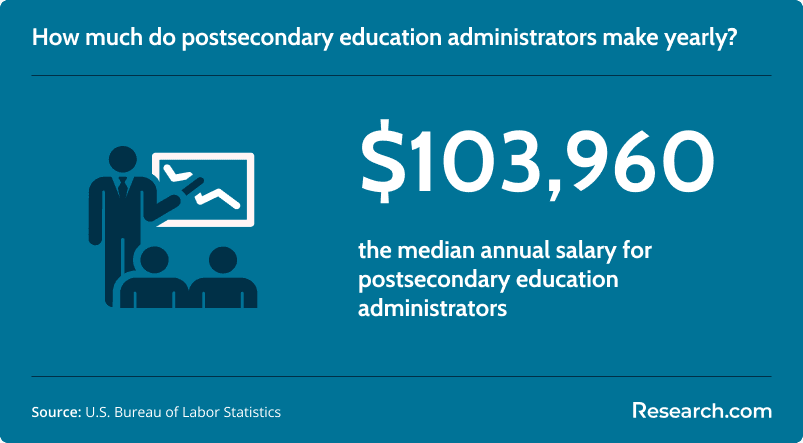
The median annual salary for postsecondary education administrators was $103,960 as of 2024, according to the BLS. While this figure provides a solid financial baseline for the field, it's crucial to understand that the primary value of an EdD is not just to meet this median—it's to significantly exceed it.
The six-figure median salary represents a broad range of administrative positions, many of which are accessible with a master's degree. The true financial power of the EdD lies in its ability to unlock access to the top tier of leadership roles. Executive positions like Dean, Provost, and Vice President come with compensation packages that are in the upper percentile of the field's salary range, often far surpassing the median figure.
The doctorate is the credential that makes you a viable candidate for these high-paying, high-impact roles. The ROI calculation isn't about the average salary in the field; it's about the salary of the specific executive positions the EdD makes attainable.
A higher salary is a direct result of accessing higher-level jobs. Let's look at the specific roles this degree unlocks.
What specific leadership jobs require or strongly prefer an EdD?
An EdD in Higher Education is the credential that makes you a viable candidate for the most senior roles in university administration, but it also opens doors to other influential career paths outside the C-suite. The degree develops a versatile leadership skill set applicable in academic, policy, and teaching environments.
Here are the primary career pathways an EdD in Higher Education unlocks:
- C-Suite University Leadership: This is the primary track the degree prepares you for. Roles like University President, Provost, Dean, and Vice President often require a terminal degree. In fact, a 2023 American Council on Education survey found that 85% of university presidents held a doctorate, making it a professional standard for top-tier eligibility.
- University-Level Teaching: Graduates are highly qualified for non-tenure track teaching positions, such as Professor of Practice or clinical faculty in graduate leadership programs, where deep industry experience is valued over a purely research-focused background.
- Hybrid Administrative and Faculty Roles: The degree prepares you to lead academic units as a Department Chair or Program Director. These roles blend administrative duties with faculty oversight, such as directing a program for multilingual learners, a pathway that often begins with a credential like the fastest online master's in multilingual learner education.
- Policy and Advocacy Leadership: Your expertise becomes valuable in shaping the future of higher education within government agencies, non-profit foundations, and educational think tanks, where you can influence policy at a systemic level.
This combination of a direct path to executive leadership and the flexibility to pivot into teaching or policy makes the EdD a powerful career asset. Accessing these top jobs is one thing, but what does the overall market look like?
The chart below shows the highest degrees earned by college presidents in the United States.
What is the job outlook for postsecondary education administrators?
The BLS projects a modest 2% job growth for postsecondary education administrators from 2024 to 2034. While this number seems low, it's essential to view it from an executive leadership perspective. The question "Is an EdD in higher education worth it?" is not about the overall number of jobs, but about the intense competition for the most senior and impactful positions.
In a slow-growth environment, and with public confidence in higher education divided, the competition for C-suite roles becomes even more fierce. Institutions are not just filling vacancies; they are seeking transformative leaders who can navigate complex financial, political, and social challenges.
In this landscape, a terminal degree like the EdD is no longer optional; it becomes a critical differentiator. It signals to a hiring committee that you have the highest level of training in organizational leadership and applied research, making you a more competitive and compelling candidate for the very best positions available.
This makes the degree less about market growth and more about securing your position at the top of a highly competitive field.
What are the primary advantages of earning an EdD for a mid-career professional?
For an experienced administrator, the decision to pursue an EdD is a strategic move to accelerate a career that has reached a plateau. The degree provides a clear and powerful set of advantages that directly address the goals of an aspiring executive.
- Unlock executive eligibility. This is the most critical benefit. The EdD is the credential that makes you a viable candidate for C-suite positions like dean, provost, and university president, breaking through the "glass ceiling" that often stalls highly experienced professionals who hold a master's degree.
- Access executive-level salary potential. The degree qualifies you for the highest-paying jobs in university administration, providing a direct and significant return on your financial investment.
- Develop advanced leadership competencies. The curriculum is specifically designed to build your skills in organizational strategy, data-informed decision-making, and leading institutional change, preparing you for the real-world challenges of a top-tier role.
- Build an elite professional network. EdD programs bring together experienced leaders from diverse institutions. This cohort becomes an invaluable professional network for the rest of your career, providing opportunities for collaboration, mentorship, and future career moves.
- Expand your career flexibility. The EdD opens doors to alternative career paths in university teaching, policy advising, and educational consulting, providing you with more options and long-term career security. This is true for generalists as well as specialists, such as those who begin their careers with a fast track master's in gifted education online and rise to lead university-level programs.
While the advantages are compelling, a strategic decision requires looking at the other side of the coin.
Is an Online EdD a Viable Option for the Modern Higher Education Leader?
Today’s digital landscape has transformed how mid-career professionals advance their leadership skills. An online EdD platform offers flexible scheduling, immediate access to cutting-edge resources, and innovative virtual collaboration that mirrors the rigor of traditional classroom settings. These programs often integrate well-structured asynchronous modules, interactive digital residencies, and strategic mentorship components designed to meet the high standards of academic and professional excellence. Prospective candidates should evaluate whether the flexibility of online study aligns with their career responsibilities and personal commitments while ensuring the program’s accreditation and curriculum integrity. For those seeking a fast, efficient route without compromising quality, high-caliber EdD online programs represent a compelling option.
Are there any downsides or alternatives to pursuing a doctorate?
Yes, there are significant downsides and valuable alternatives to an EdD that every prospective candidate must consider. Acknowledging these realities is a crucial part of making a well-informed decision.
The most substantial drawbacks are the immense investment of time and money. A multi-year commitment can strain personal and professional resources, and the financial cost requires careful planning. The risk of burnout while balancing a demanding job, family life, and rigorous doctoral studies is also a very real factor.
For professionals who want to advance but are not targeting the C-suite, there are excellent alternatives. Specialized credentials, such as an accelerated master's in adult education online, can provide advanced skills for roles in corporate training, program development, or instructional design within a university. These programs are less costly and time-consuming.
However, it's vital to be clear-eyed about their purpose: while these alternatives can lead to career growth, they are not a substitute for the terminal degree required for top-tier executive leadership roles.
We've weighed the pros and cons. Now it's time to bring it all together and make your personal decision.
How do you know if an EdD is the right terminal degree for your career goals?
The final decision comes down to a clear and honest assessment of your personal career goals. The data shows the degree is a powerful tool for a specific kind of leader. To make your final determination, ask yourself these direct questions.
- Is your primary and non-negotiable career ambition to lead from the C-suite of a university as a dean, provost, or president?
- Are you driven to solve complex, real-world administrative problems using applied research, rather than creating new theoretical knowledge?
- Is your professional experience substantial enough that a terminal degree is the clear and logical next step for your advancement, not just another credential?
- Are you prepared to make the multi-year commitment of time and financial resources required to complete a rigorous doctoral program?
Answering these questions is the only way to truly address the final query: Is an EdD in higher education worth it for your unique professional path? If your answer to these questions is a resounding "yes," then you have a clear and data-backed case for making this powerful investment in your future as a leader.
Here’s What Graduates Have to Say About Their EdD in Higher Education
- Dwayne: "I had over fifteen years of experience, but I kept getting passed over for senior roles in favor of candidates with doctorates. The EdD was the key that finally opened the door to executive-level interviews. It wasn't just about the credential; the program gave me the strategic language and confidence to prove I was ready to lead at the highest level."
- Emily: "Before starting the program, I had a vague idea of wanting to be a leader, but no concrete plan. The EdD curriculum gave me a clear roadmap. It forced me to think systemically about university governance and finance, which helped me chart a precise five-year plan to move from department director to a dean of student success."
- Ryan: "My biggest struggle was deciding between the EdD and a PhD. I’m so glad I chose the EdD. The focus was always on applied leadership—how to manage a budget, lead an accreditation review, and navigate campus politics. It was the perfect preparation for my goal of running a community college, not becoming a full-time researcher."
Key Findings
- The path to top-tier university leadership is guarded by a credential, as evidenced by the fact that 85% of university presidents hold a doctorate.
- While the median salary for postsecondary administrators is $103,960, the primary financial value of an EdD lies in its ability to unlock executive roles that significantly exceed this figure.
- The EdD and PhD are not interchangeable; they unlock entirely different career ladders, making the choice between an administrative or research track a critical early decision.
- In a competitive field with a projected job growth of only 2%, a terminal degree becomes the key differentiator for securing one of the few available C-suite positions.
- The significant cost of an EdD program is a serious consideration, but it aligns with the national landscape where the average debt for graduate school alone is $94,141.
- Admission to top programs requires 5-10+ years of professional experience, confirming that the degree is designed to accelerate established careers, not launch new ones.
References:
- Gallup. (2025). Public trust in higher ed rises from recent low. Gallup News. Retrieved October 3, 2025, from https://news.gallup.com/poll/692519/public-trust-higher-rises-recent-low.aspx
- National Center for Education Statistics. (2024). Press release: October 17, 2024. Retrieved October 3, 2025, from https://nces.ed.gov/whatsnew/press_releases/10_17_2024.asp
- U.S. Bureau of Labor Statistics. (2024). Education pays. Retrieved October 3, 2025, from https://www.bls.gov/careeroutlook/2024/data-on-display/education-pays.htm
- USAFacts. (2025). How much do teachers get paid in the US? Retrieved October 3, 2025, from https://usafacts.org/answers/how-much-do-teachers-get-paid-in-the-us/country/united-states/
- USAFacts. (2025). Where are students moving to attend college? Retrieved October 3, 2025, from https://usafacts.org/articles/where-are-students-moving-to-attend-college/
Other Things You Need To Know About EdD in Higher Education Programs
Earning an EdD in Higher Education in 2027 can enhance career prospects by qualifying individuals for leadership roles in academia and educational administration. This advanced degree may lead to opportunities in higher education management, policy-making, and teaching at the collegiate level.
The typical EdD in Higher Education curriculum includes courses on leadership theories, policy analysis, organizational change, and research methodologies. Programs often require completion of around 60 credit hours and a capstone project, which usually takes about three years of full-time study.


