
Most Affordable Historically Black Colleges and Universities for 2027

Co-Founder and Chief Data Scientist
Navigating the cost of college is a major challenge for many families. With 88% of Black students facing unmet financial need, finding a high-quality, affordable education can feel overwhelming. This reality highlights the urgent need for a clear, trusted path toward a degree that doesn't lead to overwhelming debt.
That's where this guide comes in. Created by career planning experts with over a decade of experience, this is a strategic tool. We'll help you identify the affordable black colleges that offer a direct path to a successful career.
What are the benefits of getting a degree from an HBCU?
- HBCU graduates pursue impactful careers in fields, preparing for meaningful careers in sectors like education, healthcare, and public service.
- Graduates with a degree from an HBCU earn an average salary of around $76,650, ensuring a strong return on educational investment.
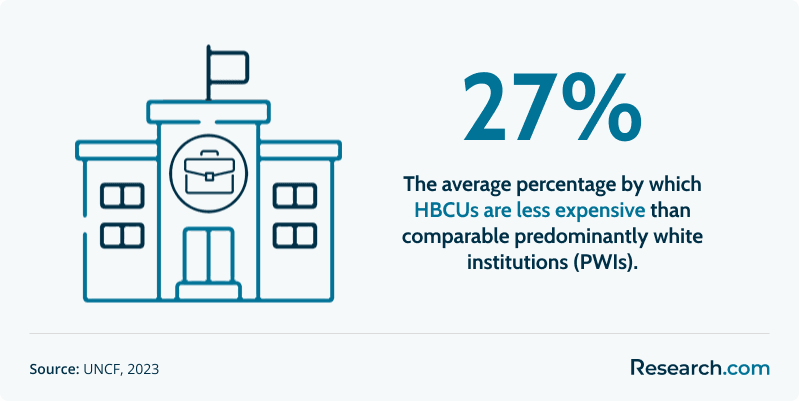
- You gain a significant financial advantage, as an HBCU education costs on average 27% less than comparable degree programs at other institutions.
What can I expect from an HBCU program?
You can expect a fully accredited and rigorous academic program at an HBCU. The curriculum is comparable to any other university, with a bachelor’s degree typically requiring 120 credits and a master’s degree taking 30-60 credits to complete. A full-time bachelor's program is designed to be finished in four years.
What makes the experience unique is the powerful sense of community and accessible faculty mentorship. The education is often enriched with courses that celebrate Black history and culture, providing a valuable perspective.
These programs are also technologically current. With 98% of students and faculty using AI tools, you can be confident you are receiving a modern education that prepares you for today's workforce.
Where can I work with a degree from an HBCU?
Graduates from HBCUs work in every sector of the economy. The following are some of the most common and fastest-growing industries where you can build a successful career.
- Education: This sector projects a 28% hiring growth and is a major pathway for graduates, who make up a significant portion of the nation's Black teachers.
- Healthcare: With a 25.3% hiring growth, this field is expanding as HBCUs produce many of the country's Black doctors, nurses, and public health professionals.
- Government and Administration: Federal and state agencies actively recruit from HBCUs for this stable sector, which has a 23.8% hiring growth rate.
- Financial Services: This growing field shows 8.2% hiring growth, with graduates finding roles in banking, insurance, and investment firms.
- Technology Industry: Corporate diversity initiatives are expanding pipelines into this field, where HBCUs are major producers of Black STEM graduates.
How much can I make with a degree from an HBCU?
Earning potential with a degree from one of the nation's affordable black colleges is highly competitive. Graduates earn an average salary of $95,818 per year, or about $46 per hour, though several key factors influence your specific income.
- Field of Study: Your major is the biggest driver of salary, with specializations like petroleum engineering exceeding $212,000 annually.
- Industry: The industry you enter matters significantly, as technology roles can average around $120,000 per year.
- Experience Level: Your earnings will grow over time, with mid-career professionals earning up to $125,000 in certain fields.
- Geographic Location: Salaries vary by region, with graduates in states like California often earning over $105,000 on average.
- Economic Factors: Broader economic conditions affect all graduates, with entry-level salaries often starting between $55,000 and $65,000.
Popular College Degrees Worth Considering in 2027
HBCUs continue to offer a wide range of academic programs that combine cultural awareness with academic excellence. Below are some of the most popular and impactful college degrees to consider in 2027.
1. Business Administration
Business administration programs foster strong leadership, strategic thinking, and entrepreneurial skills. Students gain hands-on experience in management, finance, and marketing. Graduates often step into business, government, or nonprofit leadership roles.
2. Psychology
Psychology programs explore human behavior, mental health, and cultural awareness. Coursework blends theory, research, and real-world application. Alumni pursue roles in counseling, education, or human services.
3. Counseling
Counseling degrees emphasize empathy, communication, and cultural understanding. Training prepares students to guide others through emotional and personal challenges. Many graduates move on to licensure and careers in schools, clinics, or private practice.
4. Nursing
Nursing programs blend clinical training with compassionate, community-based care. Students develop leadership and problem-solving skills through hands-on experience. Graduates become registered nurses or continue to advanced practice roles.
5. Social Work
Social work programs focus on advocacy, equity, and community service. Students learn to assess needs, connect clients with resources, and promote social justice. Graduates work as social workers, case managers, or community organizers.
- List of the Most Affordable Historically Black Colleges and Universities for 2027 List of Colleges
- How long does it take to complete a degree at an affordable HBCU? Completion Time
- How does an HBCU program compare to a non-HBCU program? How does an HBCU program compare to a non-HBCU program?
- What is the average cost of attending an affordable HBCU? Program Cost
- What are the financial aid options for students enrolling in an affordable HBCU? Financial Aid
- What are the prerequisites for enrolling in an HBCU program? What are the prerequisites for enrolling in an HBCU program?
- What courses are typically offered at HBCUs? What courses are typically offered at HBCUs?
- What types of specializations are available at HBCUs? Specializations
- How to Choose the Best Affordable HBCU How to Choose the Best Affordable HBCU
- What career paths are available for graduates of HBCUs? Career Paths
- What is the job market for graduates of HBCUs? Job Market
- What is the Return on Investment of an HBCU Degree? What is the Return on Investment of an HBCU Degree?
List of the Most Affordable Historically Black Colleges and Universities for 2027
Stretching your tuition dollars matters. These HBCUs keep costs down without cutting rigor. Whether you’re aiming for business, STEM, or education, affordability widens access and options. If you’re eyeing teaching, ask why major in early childhood education at an HBCU—lower debt can amplify long-term career flexibility and impact for graduates.
How do we rank schools?
Recognizing that paying for a degree is a significant investment, our ranking methodology ensures that students can make informed decisions based on comprehensive and transparent information. The ranking draws upon reliable sources such as the IPEDS database, Peterson's database, the College Scorecard database, and The National Center for Education Statistics.
These sources provide a robust foundation of data to evaluate and rank HBCU programs. For more details on our methodology, please visit Research.com’s methodology page.
1. Dillard University - Bachelor of Science in Business Administration
Dillard University offers a comprehensive business program emphasizing experiential learning through required community service and a focus on supply chain management. The curriculum is designed to build a strong foundation in business principles while developing practical, real-world skills for a dynamic global market.
- Program Length: 4 years
- Required Credits to Graduate: 121
- Total Tuition: $19,194 per year
- Accreditation: Accreditation Council for Business Schools and Programs (ACBSP)
2. Alabama A&M University - Bachelor of Science in Business Administration
Alabama A&M University provides a foundational business education that prepares students for the global market. Students tailor their studies by choosing a concentration in either International Business or Management Information Systems to align with their specific career aspirations.
- Program Length: 4 years
- Required Credits to Graduate: 126
- Cost Per Credit: $287 (in-state); $574 (out-of-state)
- Accreditation: Southern Association of Colleges and Schools Commission on Colleges (SACSCOC)
3. North Carolina Central University - Psychology, B.S.
North Carolina Central University delivers a comprehensive psychology program focused on critical thinking, scientific reasoning, and real-world application. The curriculum prepares students for careers in human services or advanced graduate study in the behavioral sciences.
- Program Length: 4 years
- Required Credits to Graduate: 121
- Cost Per Credit: $185 (in-state); $727.67 (out-of-state)
- Accreditation: Southern Association of Colleges and Schools Commission on Colleges (SACSCOC)
4. Winston-Salem State University - Psychology, B.A.
Winston-Salem State University offers a rigorous psychology program emphasizing research competence and applied skills through experiential learning opportunities. Graduates are prepared for diverse careers in social services and business or for advanced study in fields like counseling and neuroscience.
- Program Length: 4 years
- Required Credits to Graduate: 120
- Total Tuition: $6,802 (in-state); $27,296 (out-of-state)
- Accreditation: Southern Association of Colleges and Schools Commission on Colleges (SACSCOC)
5. Delaware State University - Psychology, BS
Delaware State University provides a psychology program that blends theoretical knowledge with hands-on experience through research and community volunteering. The curriculum emphasizes a multicultural perspective and culminates in a required senior research project for all students.
- Program Length: 4 years
- Required Credits to Graduate: 120
- Total Tuition: $11,214 (in-state); $21,204 (out-of-state)
- Accreditation: Middle States Commission on Higher Education (MSCHE)
6. Edward Waters University - Bachelor of Science in Social Work
Edward Waters University prepares students for social work practice in a variety of settings by focusing on policy, research, and the nine core competencies. The program equips graduates with the skills to analyze social influences and improve human well-being.
- Program Length: 4 years
- Required Credits to Graduate: 120
- Total Tuition: $22,888 per year
- Accreditation: Council on Social Work Education (CSWE)
7. Alabama State University - Bachelor of Social Work (BSW)
Alabama State University's BSW program prepares students to empower diverse populations and promote social justice through hands-on practice. A required 450-hour field practicum ensures graduates have the applied skills for entry-level roles in human services.
- Program Length: 4 years
- Required Credits to Graduate: 120
- Cost Per Credit: $220.35 (in-state); $302.75 (out-of-state)
- Accreditation: Council on Social Work Education (CSWE)
8. Howard University - Bachelor of Science in Nursing (BSN)
Howard University offers a BSN program that synthesizes knowledge from liberal arts and sciences to develop critical thinking in nursing practice. The program provides multiple tracks for new students, LPNs, and RNs to achieve their baccalaureate education.
- Program Length: 4 years
- Required Credits to Graduate: 120
- Total Tuition: $30,584 per year
- Accreditation: The Commission on Collegiate Nursing Education (CCNE)
9. Prairie View A&M University - Bachelor of Science in Nursing (BSN)
Prairie View A&M University prepares nurse generalists for professional practice through a comprehensive curriculum split between general studies and upper-division clinical education. Graduates are equipped for leadership roles and are eligible to take the NCLEX licensure exam.
- Program Length: 4.5 years
- Required Credits to Graduate: 127
- Total Tuition: $44,924.16 (in-state); $76,074.64 (out-of-state)
- Accreditation: Southern Association of Colleges and Schools Commission on Colleges (SACSCOC)
10. Florida A&M University - Bachelor of Science in Nursing (BSN)
Florida A&M University's limited-access BSN program trains students for diverse roles as practitioners and leaders through rigorous coursework and clinical practice. The curriculum builds upon a pre-professional foundation in liberal arts to prepare generalist nurses for various healthcare settings.
- Program Length: 4 years
- Required Credits to Graduate: 120
- Cost Per Credit: $153.53 (in-state); $551.55 (out-of-state)
- Accreditation: Accreditation Commission for Education in Nursing (ACEN)
How long does it take to complete a degree at an affordable HBCU?
Degree completion times at affordable HBCUs are the same as at other universities. A full-time student can typically expect to earn a bachelor's degree in four years. A master's degree usually takes one to two years to complete. These timelines are based on standard semester course loads.
Many institutions also offer flexible options to fit your life. You can often find part-time, evening, or accelerated programs designed for working adults. These pathways allow you to balance your career and education. HBCUs have a massive impact, conferring over 32,000 bachelor's degrees and more than 10,000 graduate degrees each year.
The chart below illustrates the significant number of degrees awarded annually by HBCUs across different levels of study.
If you’re mapping prerequisites and pacing, guides like timeline for obtaining a healthcare management degree mirror the same four-year bachelor’s and one-to-two-year master’s cadence you’ll see at HBCUs; the variables are course load and format, not institutional type.
How does an HBCU program compare to a non-HBCU program?
Choosing the right college environment is a key decision. While the degree and academic standards at an HBCU are equivalent to other accredited institutions, the experience itself offers unique and powerful advantages.
Academic and Professional Equivalence
A degree from an accredited HBCU is recognized and respected by employers and graduate schools across the country. You will find rigorous, industry-standard curricula designed to prepare you for your career. These programs are also technologically advanced, with 98% of faculty and students using AI tools to enhance learning. The diploma you earn holds the same professional weight as one from any other comparable university.
The Unique Cultural Advantage
The most significant difference is the supportive, culturally affirming community. At an HBCU, you are part of an environment designed to foster Black excellence. This includes direct access to faculty mentors who are invested in your success and a vibrant campus life that celebrates shared culture and history. This strong sense of belonging often translates into a powerful, lifelong alumni network that provides career-long support.
On the tech side, many HBCUs now weave AI literacy, data analytics, and foundations spanning coding vs cyber security, giving students practical skills alongside the community benefits described above.
What is the average cost of attending an affordable HBCU?
The average cost of attending an affordable HBCU is significantly lower than at comparable institutions, often by 27-34%. The average total tuition is around $26,824 for in-state students and can be as high as $57,629 for out-of-state students at private universities.
Several factors affect the final cost, including your residency status and the specific school you choose. The average cost per credit is about $231 for in-state students and $473 for out-of-state students, with overall tuition ranging from approximately $17,000 to over $94,000. However, the most important figure is the net price you pay after financial aid. Special programs also exist to make even the most affordable black colleges more accessible, such as resources for finding the cheapest bachelor's degree for veterans online.
This visual highlights the significant cost savings students can find at HBCUs compared to other institutions.
What are the financial aid options for students enrolling in an affordable HBCU?
A wide range of financial aid options is available to make an HBCU education affordable. The vast majority of students, around 90%, receive some form of financial assistance to help cover the cost of their degree.
- Federal Pell Grants: These grants do not need to be repaid and are a cornerstone of funding, with 67.9% of HBCU students receiving them.
- Federal Student Loans: These are another major source of aid, used by 64.3% of HBCU students to help cover educational costs.
- Institutional Scholarships: Many HBCUs offer their own scholarships based on academic merit, talent, or specific fields of study.
- Work-Study Programs: These programs allow you to earn money through part-time jobs on campus to help pay for college expenses.
- FAFSA: The single most critical step is completing the Free Application for Federal Student Aid (FAFSA), as this form determines your eligibility for most types of aid. You can complete the FAFSA online at the official government website.
As the chart below shows, HBCU students utilize a mix of funding sources, with grants and loans being the most common.
Aid policies typically apply regardless of program path—short credential or full bachelor’s. Use the same steps if you’re weighing certificate vs degree in human resources at an HBCU: start with FAFSA, stack institutional awards, then cover any remaining gap with work-study or loans.
What are the prerequisites for enrolling in an HBCU program?
Enrollment prerequisites for undergraduate programs vary by school, but they generally follow a standard set of requirements. This section covers what you will typically need to prepare for your application.
- Submit a High School Diploma or GED: This is the foundational requirement for all undergraduate applicants to prove that you have completed secondary education.
- Provide Official Transcripts: Colleges will review your high school transcripts to assess your academic performance, GPA, and the courses you have taken.
- Write Application Essay: Many HBCUs use a holistic review process and require personal essays to better understand your story, goals, and character.
- Secure Letters of Recommendation: You will often need to submit letters from teachers or mentors who can speak to your academic potential and readiness for college.
- Check for Test-Optional Policies: A growing number of HBCUs do not require SAT or ACT scores, which is important context given that only 6% of African American students meet ACT benchmarks.
This focus on a holistic review is part of a larger trend, as many institutions now offer more accessible pathways. For example, there are many MHA online programs no GRE required for graduate students.
What courses are typically offered at HBCUs?
HBCUs offer a full range of courses that are comparable to any other university. As a student, you can expect a curriculum designed to provide both a strong academic foundation and deep expertise in your chosen field.
- General Education Requirements: These foundational courses in English, math, history, and science form the core of every undergraduate degree program.
- Major-Specific Courses: You will take a deep dive into your chosen field of study, whether it's biology, business administration, or computer science.
- Electives: These courses allow you to explore other academic interests outside of your major, from foreign languages to the fine arts.
- Culturally-Enriched Curriculum: Many HBCUs uniquely integrate courses on African American history, literature, and social justice into the core curriculum.
- Career Preparation Courses: You can often take classes focused on professional development, internships, and networking to prepare for the job market.
What types of specializations are available at HBCUs?
HBCUs offer a wide variety of specializations that align with student passions and high-growth career fields. This allows you to choose a focused path that prepares you for a specific industry.
- STEM Fields: HBCUs are a powerhouse in science, technology, engineering, and math, producing almost one in five Black STEM graduates.
- Business and Economics: These popular programs prepare students for successful careers in finance, management, and entrepreneurship.
- Education and Social Sciences: These fields offer traditionally strong pathways to impactful careers in teaching, counseling, and public service.
- Health Professions: Many HBCUs offer excellent nursing and pre-med programs, with 65% of graduates securing employment in medicine and healthcare.
- Programmatic Accreditation: When choosing a specialization, it is crucial to look for programmatic accreditation, such as in reputable CAHIIM accredited HIM programs, to ensure the highest quality standards.
The following chart shows the employment rates for HBCU graduates across various academic domains. This can help you connect your choice of specialization to real-world outcomes.
How to Choose the Best Affordable HBCU
Selecting the most suitable institution is a critical decision based on individual goals and priorities. This section provides a structured framework to guide your evaluation and help you find the program that best aligns with your needs.
- Assess Financial Fit: Look beyond the sticker price and compare the net price after receiving financial aid offers from different affordable black colleges.
- Confirm Academic Fit: Ensure the school has a strong, accredited program for your desired major and specialization.
- Evaluate Cultural and Social Fit: Consider factors like school size, location, and campus culture to find an environment where you will thrive.
- Research Career Support: Look into the quality of the career services office, internship opportunities, and the strength of the alumni network in your target field.
- Connect with the Community: If possible, visit the campus or talk to current students and alumni to get a genuine feel for the institution.
What career paths are available for graduates of HBCUs?
Graduates from HBCUs pursue a vast range of successful careers. The strong academic foundation and supportive network prepare you to become a leader in any field you choose. This section highlights five examples of popular and impactful career paths.
1. Teacher
Teachers educate students in K-12 settings, developing lesson plans and creating a supportive learning environment. They play a critical role in shaping the next generation.
Median Salary: $61,820 per year
2. Registered Nurse
Registered nurses provide direct patient care in hospitals, clinics, and other healthcare settings. They assess patient conditions and administer medications and treatments.
Median Salary: $77,600 per year
3. Social Worker
Social workers help individuals and families cope with challenges in their everyday lives. Many find rewarding work through online social work programs that lead to state licensure.
Median Salary: $50,390 per year
4. Software Developer
Software developers design, build, and maintain computer programs and applications. They are in high demand across nearly every industry in the modern economy.
Median Salary: $110,140 per year
5. Financial Analyst
Financial analysts guide businesses and individuals in making investment decisions. They assess the performance of stocks, bonds, and other types of investments.
Median Salary: $81,410 per year
These paths are often just the beginning. The modern market values adaptability, and many graduates hold between two and six jobs over their careers, continually growing and advancing.
What is the job market for graduates of HBCUs?
The job market for graduates of affordable black colleges is strong and growing. Bachelor's-level occupations are projected to grow by 10% over the next decade. Corporate diversity, equity, and inclusion (DEI) initiatives are creating specific demand for diverse talent, making your degree a unique asset in the hiring process.
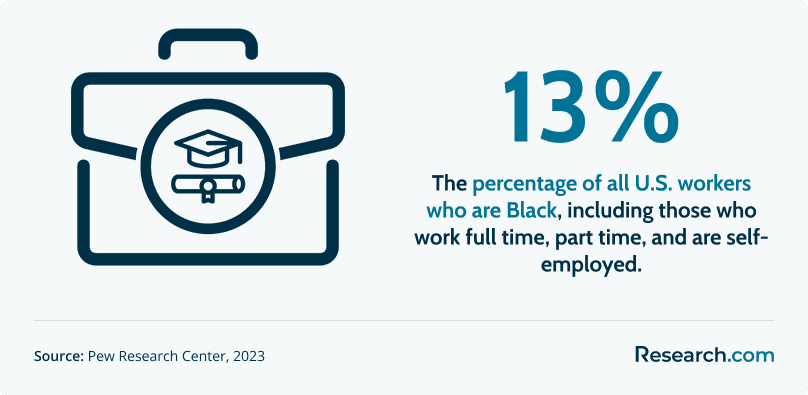
While systemic challenges like retirement savings gaps still exist, the resilience and powerful network gained from an HBCU education equip graduates for long-term success. The modern market values adaptability, and it is wise to explore a full range of possibilities, such as the alternative careers for MSW graduates, to understand the breadth of your options. Black workers make up 13% of the U.S. workforce, and HBCUs are critical to sustaining and growing that representation.
Here’s What Graduates Have to Say about Getting a Degree from HBCUs
- Elijah: "I was already working full-time, so I needed an online program that respected my schedule. My HBCU delivered an education that was not only flexible but also immediately applicable to my career. My manager noticed the new skills I was bringing to our projects, which led directly to a promotion even before I graduated. It was the perfect way to invest in my future without putting my life on hold."
- Caleb: "I was worried an online program wouldn't feel connected, but the virtual study groups became my lifeline. We collaborated on projects and prepped for exams together from different cities. The curriculum at my HBCU was so current that I could talk about new industry trends with my colleagues. It showed me that quality, connected education doesn't have to happen inside a traditional classroom."
- Anthony: "Honestly, I didn't think I could afford a four-year degree. The financial aid office at my HBCU walked me through the FAFSA line by line and helped me secure grants I didn't even know existed. I was able to focus on my studies without constantly worrying about debt. That financial peace of mind was just as valuable as the degree itself."
What is the Return on Investment of an HBCU Degree?
Evaluating an HBCU degree’s return on investment involves assessing long-term career growth, lifetime earnings, and debt management. This section examines how the educational experience, career support, and alumni networking contribute to sustained financial progress. Quantitative comparisons, such as tuition-to-salary ratios and post-graduation employment rates, underscore the economic advantages inherent in these institutions. Comprehensive tools, including analyses on online degrees, further assist prospective students in making data-driven decisions aligned with their financial goals.
Key Findings
- HBCUs offer a significant financial advantage, costing on average 27% less than comparable institutions, which directly addresses the challenge of college affordability.
- Financial barriers are actively managed for students, as 90% of attendees receive financial aid, and a substantial 67.9% receive Federal Pell Grants.
- The return on investment is strong and clear, with graduates earning a competitive average salary of $95,818, demonstrating the powerful economic mobility an HBCU education provides.
- Programs are technologically current and aligned with modern workforce demands, as 98% of students and faculty use AI tools in their coursework.
- These institutions are powerhouses in high-demand fields, producing nearly 20% of all Black STEM graduates and creating direct pathways to influential careers.
- The job market for graduates is strong, with bachelor's-level occupations projected to grow by 10%, making an HBCU degree a strategic investment for long-term career success.
References:
- AfroTech. (2024). Black HBCU graduates are securing jobs at a high rate—but why not in STEM? Retrieved from AfroTech
- College Completion Network. (2024). 2024 REM-MSI-HBCU report. Retrieved from TICAS
- Ellucian. (2024). Survey finds near-universal AI adoption at HBCUs: 98% of students and 96% of faculty already using it. Retrieved from Ellucian
- Inside Higher Ed. (2023, August 18). New analysis finds most families can’t cover college costs. Retrieved from Inside Higher Ed
- Kelly, M. (2024). The role of HBCUs in innovative higher education. Retrieved from Mat Kelly
- LinkedIn News. (2024). Who’s opening doors for Black talent? Sectors that click for HBCU grads. Retrieved from LinkedIn
- National Center for Education Statistics. (n.d.). Fast facts: Historically Black colleges and universities. Retrieved from NCES
- National Center for Education Statistics. (n.d.). IPEDS trend generator: Postsecondary degree attainment. Retrieved from NCES
- National Science Foundation. (2023). HBCU: Historically Black colleges and universities undergraduate program (NSF 23-563). Retrieved from NSF
- Postsecondary National Policy Institute (PNPI). (2024, September). HBCU Fact Sheet: September 2024 update. Retrieved from PNPI
- Rutgers Center for Minority Serving Institutions. (n.d.). The role of HBCUs in higher education. Retrieved from CMSI
- Salary.com. (2024). Bachelor salary overview. Retrieved from Salary.com
- The Journal of Blacks in Higher Education. (2025, September). Three in ten Black Americans over age 25 hold a bachelor’s degree. Retrieved from JBHE
- U.S. Equal Employment Opportunity Commission. (2023). African American women in the federal sector. Retrieved from EEOC
- UNCF. (2017). HBCU impact report. Retrieved from UNCF
- UNCF. (2023). Fact sheet on HBCUs and African American education. Retrieved from UNCF First
- UNCF. (2024). Facts and frequently asked questions. Retrieved from UNCF
- UNCF. (2025). UNCF fact sheet 2025. Retrieved from UNCF
- UNCF. (2025). African Americans and college education by the numbers. Retrieved from UNCF
- Pew Research Center. (2023, August 31). Black workers’ views and experiences in the U.S. labor force stand out in key ways. Retrieved from Pew Research
Other Things You Should Know About Historically Black Colleges and Universities
Yes, reputable Historically Black Colleges and Universities are accredited by recognized regional or national accrediting agencies. This accreditation ensures that the institution meets high standards for academic quality and that the degrees awarded are respected by employers and other universities. Always verify a school's accreditation status on their official website or through the U.S. Department of Education.
Most HBCUs accept transfer credits from other accredited colleges and universities. The specific number of credits accepted and how they apply to your degree will depend on the school's transfer policy and your chosen major. It is best to contact the admissions office directly to get a clear evaluation of your previous coursework.
For 2027, some of the most affordable Historically Black Colleges and Universities (HBCUs) include Elizabeth City State University, Lincoln University, and Alcorn State University. These institutions are known for their low tuition fees while still providing quality education and supportive community environments.
HBCUs have a strong track record of preparing students for success in graduate and professional programs. They are major producers of Black graduates who go on to earn master's degrees and doctorates, particularly in STEM fields. The rigorous curriculum and strong faculty mentorship provide an excellent foundation for advanced academic study.


