
2027 Coding vs. Cyber Security: Explaining the Difference

Co-Founder and Chief Data Scientist
In today’s tech-driven world, “coding” and “cyber security” are often mentioned in the same breath—and for good reason. Both play vital roles in keeping our digital systems running safely and efficiently. However, the two fields are not the same, and it’s easy to confuse them if you’re new to technology careers. Coding focuses on building software and applications, while cybersecurity centers on protecting those systems from threats and attacks. Understanding the difference is crucial if you’re planning a career in tech, as each path requires distinct skills, tools, and mindsets. This article breaks down what sets coding and cybersecurity apart and helps you determine which career might be the best fit for your interests and goals.
What are the benefits of pursuing coding and cyber security careers?
- High demand and job security: With technology driving nearly every industry, skilled coders and cybersecurity experts are in constant demand across the globe.
- Strong earning potential: Both careers offer competitive salaries, with room for advancement as you gain experience and specialization.
- Diverse career options: You can work in sectors like finance, healthcare, government, or entertainment—virtually any field that relies on technology.
- Opportunities for creativity and problem-solving: Coders design innovative solutions, while cybersecurity professionals craft strategies to outsmart evolving threats.
- Continuous learning and growth: Technology evolves quickly, allowing professionals in both areas to keep learning new tools, languages, and methods throughout their careers.
What can you do with degree in coding or cyber security?
A degree in coding or cybersecurity opens doors to a wide range of in-demand and high-impact careers. Whether you want to develop innovative software, protect digital systems, or lead IT strategies, these fields provide diverse opportunities across industries. Here are some paths you can take:
- Software Developer or Engineer: Design, build, and maintain applications, websites, and systems used by businesses and consumers.
- Cybersecurity Analyst: Monitor networks, detect threats, and implement security measures to safeguard sensitive data.
- Penetration Tester (Ethical Hacker): Simulate cyberattacks to identify system vulnerabilities and help organizations strengthen their defenses.
- IT Project Manager: Oversee teams that handle software development or cybersecurity initiatives, ensuring projects meet goals and timelines.
- Data Analyst or Database Administrator: Use coding skills to collect, organize, and interpret data while ensuring its integrity and security.
A degree in either field not only prepares you for these roles but also builds a strong foundation for advancement into leadership or specialized technical positions.
Where can you work with a degree in coding or cyber security?
Graduates with a degree in coding or cyber security can find career opportunities in almost every industry that relies on technology—which is virtually all of them today. From private companies to public institutions, the need for skilled tech professionals continues to grow. Here are some of the top places you can work:
- Technology companies: Join software firms, app developers, or cybersecurity providers that create and protect digital products and services.
- Financial institutions: Work with banks and insurance companies to build secure systems that protect sensitive financial data.
- Healthcare organizations: Help hospitals and health networks safeguard patient records and develop medical software solutions.
- Government and defense agencies: Support national security efforts, protect public infrastructure, and respond to cyber threats.
- Education and research institutions: Manage IT systems, develop learning technologies, or conduct research in computer science and security innovation.
Whether you prefer working in the private sector, public service, or as a consultant, both fields offer flexible and impactful career options.
How much can you earn with a coding or cyber security degree?
Earning potential is one of the biggest advantages of pursuing a career in coding or cybersecurity. Both fields offer competitive salaries that reflect the high demand for skilled professionals and the critical role they play in today’s digital landscape. While pay varies by experience, location, and specialization, here’s what you can generally expect:
- Coders and software developers earn a median annual salary of around $133,080, according to the U.S. Bureau of Labor Statistics (BLS, 2025). Highly experienced developers or those in specialized fields like AI or cloud computing can earn well over $160,000.
- Cyber security analysts have a median annual wage of about $124,910 (BLS, 2024), with senior roles—such as cybersecurity engineers or managers—often exceeding $150,000.
- Freelance or contract roles in both fields can offer even higher rates, depending on project complexity and expertise.
Both coding and cybersecurity careers not only offer strong starting salaries but also opportunities for continuous growth as you gain experience, certifications, and leadership responsibilities.
- What is coding? Coding Overview
- What is cyber security? Cyber Security Overview
- What courses are included in a coding degree program? What courses are included in a coding degree program?
- What courses are included in a cyber security degree program? What courses are included in a cyber security degree program?
- Coding vs. Cyber Security: What skills are essential for professionals? Core Skills
- Coding vs. Cyber Security: What certifications can boost your credentials? Certifications
- Coding vs. Cyber Security: What is the job outlook for graduates? Job Outlook
- Coding vs. Cyber Security: Which is right for you? Coding vs. Cyber Security: Which is right for you?
- Coding vs. Cyber Security: What career advancement opportunities are available for graduates? Career
- Coding vs. Cyber Security: What challenges do professionals typically face? Challenges
- Is an Affordable Online Cyber Security Degree a Smart Investment? Is an Affordable Online Cyber Security Degree a Smart Investment?
What is coding?
Coding is the process of writing instructions that tell a computer, application, or device what to do. These instructions are written in programming languages such as Python, Java, C++, or JavaScript. Coders, also known as programmers or developers, use logic and problem-solving to create software, websites, mobile apps, and even artificial intelligence systems.
At its core, coding translates human ideas into digital solutions—whether it’s designing a user-friendly app, automating a task, or powering the systems behind online services. Learning to code helps you understand how technology works from the inside out, making it a foundational skill for countless modern careers.
For students exploring computer-related paths, it’s worth comparing BS vs BA options. A Bachelor of Science (BS) in Computer Science often emphasizes technical depth and math-heavy coursework, while a Bachelor of Arts (BA) may offer more flexibility and interdisciplinary study opportunities.
What are the career options for those with a coding degree?
The following are various computer coding jobs that you can get into:
- Software Developer/Engineer
- Web Developer
- Quality Assurance (QA)/Tester
- Web and Digital Interface Designer
- Front-End Developer
- Back-End Developer
- User Experience Designer
- Mobile Applications Developer
- Machine Learning Engineer
The chart below shows the top-paying industries for these software development and coding occupations.
What is cyber security?
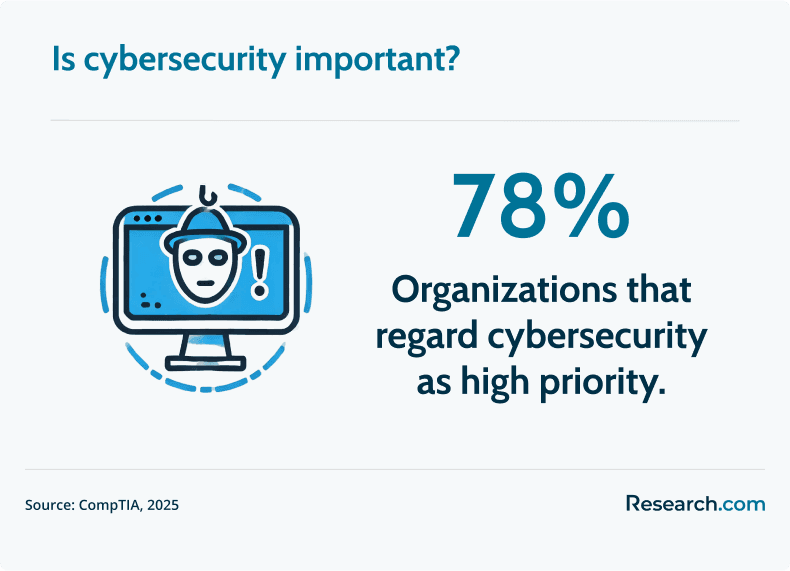
According to CompTIA, 78% of organizations consider cybersecurity a high priority. Cybersecurity is the practice of protecting computer systems, networks, and data from digital attacks, theft, and damage. It involves identifying vulnerabilities, preventing unauthorized access, and responding to security breaches to keep information safe. Cybersecurity professionals use tools and strategies like firewalls, encryption, and threat analysis to defend against hackers and malware.
In today’s connected world, cybersecurity is essential for businesses, governments, and individuals alike. From protecting personal data to securing national infrastructure, the field plays a vital role in ensuring trust and safety in the digital space.
When comparing specializations, it’s helpful to understand the difference between cybersecurity vs cyber intelligence. While cybersecurity focuses on protecting systems, cyber intelligence emphasizes gathering, analyzing, and anticipating threats—often blending data analytics with defense strategy to stay ahead of attackers.
What are the career options for those with a cyber security degree?
The following are examples of the various cyber security jobs you can get into:
- Information Security/Cyber Security Analyst
- Systems Administrator
- Cybersecurity Engineer
- Penetration Tester (Ethical Hacker)/Vulnerability Tester
- Cybersecurity Specialist
- Information Security Manager/Security Architect
- IT Auditor
- Digital Forensics/Incident Response
- Chief Information Security Officer (CISO)/Senior Security Executive
What courses are included in a coding degree program?
A coding degree program equips students with the technical and analytical skills needed to design, develop, and maintain software systems. The coursework combines theory and hands-on practice, allowing students to build a strong foundation in programming and problem-solving. Here’s an overview of the key courses typically included in a coding or software development degree program:
- Programming Fundamentals: Learn core languages such as Python, Java, C++, or JavaScript.
- Data Structures and Algorithms: Understand how to organize and process data efficiently.
- Software Engineering: Explore the full software development lifecycle, from design to deployment.
- Database Management: Learn how to create and manage relational databases using SQL.
- Web and Mobile App Development: Build interactive web applications and mobile software.
Many coding degrees now include optional courses in AI, cloud computing, and security, giving students flexibility to tailor their focus. If you’re deciding between broader technical routes, such as project management certification vs degree, remember that certification builds targeted leadership skills, while a degree provides the comprehensive technical foundation required for long-term growth.
What courses are included in a cyber security degree program?
A cybersecurity degree program prepares students to protect digital systems and data from cyber threats. It blends technical training with analytical and ethical knowledge, helping students understand how to prevent, detect, and respond to security breaches. Below are some of the core cyber security courses online or on-campus that are commonly found in a cybersecurity degree program:
- Network Security: Study how to secure computer networks and detect intrusions.
- Ethical Hacking and Penetration Testing: Learn how to identify and fix vulnerabilities through simulated attacks.
- Digital Forensics: Gain skills in investigating cybercrimes and recovering compromised data.
- Cryptography: Understand encryption methods and how they protect sensitive information.
- Cyber Law and Policy: Explore the legal and ethical aspects of data protection and online security.
Coding vs. Cyber Security: What skills are essential for professionals?
Success in both coding and cybersecurity requires strong technical foundations, but each field demands a unique set of skills tailored to its goals. Coders focus on creativity, logic, and building efficient solutions, while cybersecurity professionals emphasize vigilance, analytical thinking, and risk management. Here’s how the core skill sets differ:
Essential Skills for Coding Professionals
- Proficiency in Programming Languages: Expertise in languages like Python, Java, C++, or JavaScript.
- Problem-Solving and Logical Thinking: Ability to analyze problems and design efficient algorithms or solutions.
- Attention to Detail: Writing clean, error-free code that functions as intended.
- Software Development and Debugging: Understanding of software lifecycles, version control, and testing methods.
- Collaboration and Communication: Working effectively in teams, especially in agile or collaborative environments.
You can also look into the best coding bootcamps to learn essential coding skills.
Essential Skills for Cybersecurity Professionals
- Knowledge of Networks and Systems: Deep understanding of operating systems, firewalls, and network protocols.
- Threat Detection and Response: Ability to identify vulnerabilities and respond quickly to potential breaches.
- Cybersecurity Tools and Compliance Knowledge: Familiarity with tools like Wireshark, Metasploit, and frameworks such as NIST or ISO 27001.
- Ethical Hacking and Penetration Testing: Simulating attacks to uncover and fix system weaknesses.
- Risk Assessment and Management: Evaluating and mitigating potential security risks.
Are you wondering: Do cybersecurity professionals need coding skills? Check out our separate article to find out the answer.
Both fields reward continuous learning and adaptability—skills that help professionals stay ahead in the fast-evolving world of technology.
Coding vs. Cyber Security: What certifications can boost your credentials?
Earning professional certifications is an excellent way to strengthen your resume, validate your expertise, and stay competitive in the fast-changing tech world. Whether you pursue coding or cybersecurity, the right credentials can open doors to higher-paying roles and specialized career paths. Here are some of the most recognized certifications in each field:
Top Certifications for Coding Professionals
- Microsoft Certified – Azure Developer Associate: Validates your ability to design and build cloud-based applications using Microsoft Azure.
- AWS Certified Developer – Associate: Demonstrates proficiency in developing and maintaining applications on Amazon Web Services.
- Oracle Certified Professional, Java SE Programmer: Focuses on advanced skills in Java programming and application development.
- Certified Software Development Professional (CSDP): Offered by IEEE, this credential highlights advanced knowledge of software engineering principles.
- Google Professional Cloud Developer: Recognizes your ability to build, test, and deploy applications on Google Cloud.
Top Certifications for Cybersecurity Professionals
- CompTIA Security+: A foundational certification covering core cybersecurity concepts and practices.
- Certified Information Systems Security Professional (CISSP): One of the most respected credentials for experienced security professionals.
- Certified Ethical Hacker (CEH): Focuses on penetration testing and ethical hacking techniques.
- Certified Information Security Manager (CISM): Geared toward professionals managing enterprise-level security systems.
- CompTIA Cybersecurity Analyst (CySA+): Demonstrates expertise in detecting and responding to security threats.
Whether you aim to become a skilled developer or a cybersecurity expert, certifications can help you showcase your technical abilities, enhance your credibility, and advance your career in the tech industry. Professionals considering advanced security credentials often wonder, CISSP certification is it worth it? For most, the answer is yes—it’s globally recognized, commands higher salaries, and signals mastery in information security management.
Coding vs. Cyber Security: What is the job outlook for graduates?
Both coding and cybersecurity offer strong job prospects, driven by the growing reliance on technology across industries. As businesses continue to expand their digital operations, demand for professionals who can build and protect these systems remains high. Here’s a closer look at the job outlook for each field:
Job Outlook for Coding Graduates
According to the U.S. Bureau of Labor Statistics (BLS, 2024), the overall employment of software developers, quality assurance analysts, and testers is projected to grow 15% from 2024 to 2034, much faster than the average for all occupations. This translates to about 129,200 projected openings for the job each year over the decade. This surge is fueled by the rise of artificial intelligence, mobile applications, and cloud computing. With nearly every industry requiring software solutions, coders can expect a steady flow of opportunities in both private and public sectors.
Job Outlook for Cybersecurity Graduates
The BLS reports that employment for information security analysts is expected to grow 29% from 2024 to 2034, one of the fastest growth rates among all occupations. This translates to about 16,000 openings for information security analysts projected each year, on average, over this 10-year period. The increasing frequency of cyberattacks and the need for stronger digital defenses continue to drive this demand. Graduates can find opportunities in government agencies, financial institutions, healthcare, and technology firms, among many others.
Both career paths promise stability and advancement, but your choice ultimately depends on whether you’re more interested in creating technology—or protecting it.
The table below shows the projected employment growth for various coding and cybersecurity occupations—as well as other computer and IT jobs—from 2024 to 2034 according to the BLS.
| Projected Employment Growth (2024-2034) | Projected Additional Employment (2024-2034) | |
| Software developers | 16% | 267,700 |
| Software quality assurance analysts and testers | 10% | 20,200 |
| Information security analysts | 29% | 52,100 |
| Web developers | 8% | 6,500 |
| Web and digital interface designers | 7% | 9,000 |
| Computer systems analysts | 9% | 45,500 |
| Computer network architects | 12% | 21,400 |
Coding vs. Cyber Security: Which is right for you?
Choosing between coding and cybersecurity depends on your interests, strengths, and long-term career goals. Both fields offer excellent opportunities, but they appeal to different skill sets and professional motivations.
If you enjoy building things from scratch, solving logical problems, and bringing digital ideas to life, coding may be the perfect fit. Coders thrive on creativity, precision, and innovation—developing everything from apps and websites to artificial intelligence systems.
On the other hand, if you’re drawn to investigating, protecting, and outsmarting cyber threats, then going for an on-campus or online cyber security degree might be the best choice for you. This field is ideal for analytical thinkers who like solving puzzles, identifying risks, and safeguarding digital environments.
Ultimately, both careers are in high demand and play essential roles in the tech industry. By assessing your interests—whether they lean toward creating or defending technology—you can choose a path that aligns with your passions and long-term professional goals.
Coding vs. Cyber Security: What career advancement opportunities are available for graduates?
Both coding and cybersecurity offer strong career advancement opportunities for professionals who continue to build their expertise and gain experience. As technology evolves, skilled individuals in these fields can move into higher-level, specialized, or leadership roles with greater responsibility and earning potential.
Career Advancement in Coding
Coders often start as junior developers or software engineers and can advance to roles such as senior developer, software architect, or lead engineer. With experience, they can transition into management or strategic positions like project manager, product manager, or chief technology officer (CTO). Some developers also specialize in areas like artificial intelligence, cloud computing, or data science, where demand and salaries are particularly high.
Career Advancement in Cyber Security
Cybersecurity professionals may begin as security analysts or technicians and advance to cybersecurity engineers, incident responders, or penetration testers. With continued learning and certifications, they can rise to leadership roles such as security architect, information security manager, or even chief information security officer (CISO). Specialized areas like cloud security, digital forensics, and compliance management also offer rewarding paths for career growth and lead to the highest paying cyber security jobs.
In both fields, pursuing professional certifications, gaining hands-on experience, and staying updated with new technologies are key to unlocking higher-level positions and long-term career success.
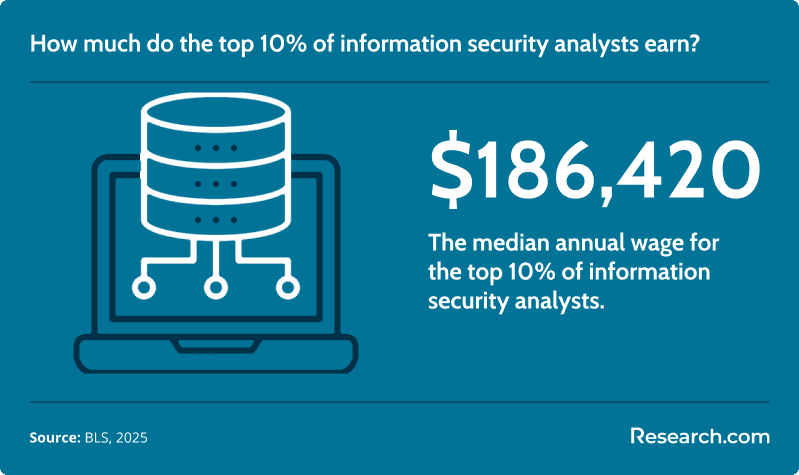
The image below shows that with experience, updated skills, and certifications, a cybersecurity expert can advance into top-paying roles in the field. The highest paid cyber or information security analysts can even earn more than $180,000 per year.
Coding vs. Cyber Security: What challenges do professionals typically face?
While careers in coding and cybersecurity are rewarding, both come with their own set of challenges that require resilience, adaptability, and continuous learning. Understanding these challenges can help aspiring professionals prepare for real-world demands and develop the mindset needed to thrive in the tech industry.
Challenges in Coding Careers
- Constantly Evolving Technologies: Developers must keep up with new programming languages, frameworks, and tools to stay relevant.
- Complex Problem-Solving: Debugging and optimizing code can be time-consuming and mentally demanding.
- Tight Deadlines and Pressure: Coders often work on multiple projects with strict timelines, requiring strong time management skills.
- Collaboration and Communication: Working with diverse teams—designers, clients, and other developers – can sometimes lead to miscommunication or project delays.
Challenges in Cybersecurity Careers
- Rapidly Changing Threat Landscape: New cyber threats emerge daily, demanding continuous learning and quick adaptation.
- High-Stakes Responsibility: A single mistake can lead to serious data breaches or financial loss, adding pressure to the role.
- 24/7 Monitoring and Response: Cybersecurity professionals may need to respond to incidents outside regular work hours.
- Balancing Security and Usability: Implementing strict security measures without compromising user experience can be challenging.
Despite these hurdles, both coding and cybersecurity professionals find their work deeply rewarding – driven by the impact they make in shaping and securing the digital world.
Is an Affordable Online Cyber Security Degree a Smart Investment?
When evaluating the long-term return on investment for tech education, it is essential to weigh tuition costs against future salary potential and career growth. In the realm of cybersecurity, cost-effective online programs provide rigorous curricula and practical experience without compromising quality. For instance, accredited programs that combine flexible learning with industry-relevant skills can help graduates enter a competitive job market while managing overall expenses. Prospective students should review options such as the cheapest cyber security degree online to ensure they choose a program that meets both financial and professional objectives in a rapidly evolving digital landscape.
Key Findings
- As of May 2024, the median annual wage for software developers was $133,080. Highly experienced software developers, quality assurance analysts, and testers can earn over $207,830 per year.
- The employment of software developers, quality assurance analysts, and testers is projected to grow about 15% from 2024 to 2034. Meanwhile, employment of information security analysts is projected to grow 29% from 2024 to 2034, much faster than the average for all occupations.
- Between May 2023 and April 2024, there were nearly 470,000 U.S. job openings that required cybersecurity‐related skills.
- The median annual wage for information security analysts was $124,910 in May 2024.
- The information industry is the highest paying industry for information or cyber security analysts, paying a median salary of $136,390 per year.
- In 2024, the United States Internet Crime Complaint Center (IC3) received 859,532 complaints of suspected internet crime with reported losses exceeding $16 billion—a 33% increase in losses from 2023.
- While 78% of organizations state that cybersecurity is a high priority, but only 49% feel that it is relatively easy to fund cybersecurity activities or feel that budgets for cybersecurity efforts are increasing.
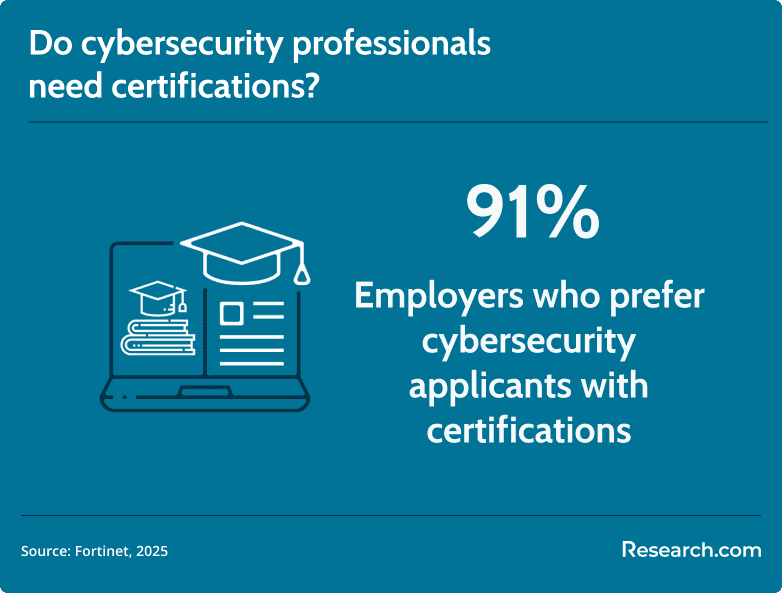
- 91% of organizations prefer hiring cybersecurity candidates with certifications.
Here’s What Graduates Have to Say About Their Coding or Cyber Security Degree
- Danny: "When I first started coding, I was amazed by how much creativity and logic went into building something from scratch. Developing applications that solve real problems is incredibly fulfilling, especially when you see users benefit from your work. The biggest perk is the flexibility—many companies now offer remote or hybrid setups. Of course, staying up to date with new frameworks and languages can be challenging, but that’s what keeps the job exciting."
- Bronson: "Working in cybersecurity is like being a digital detective. Every day presents new challenges, from analyzing threats to responding to security incidents in real time. The responsibility can be intense, but knowing that you’re protecting people’s data and an organization’s reputation makes it worth it. Continuous learning is part of the job, and that’s one of the biggest rewards—you never stop growing."
- Adam: "I started as a web developer but later transitioned into application security, which combines coding with cybersecurity. It’s fascinating to understand how vulnerabilities are created in code and how to prevent them. The best part is the balance between creativity and defense—you’re building something while also protecting it. The challenge is keeping up with fast-evolving threats, but it’s incredibly satisfying to stay one step ahead."
References:
- CompTIA. (2025). State of Cybersecurity 2024. CompTIA.
- Federal Bureau of Investigation. (2025, April 23). FBI Releases Annual Internet Crime Report. FBI.
- Fortinet. (2025). What is Cybersecurity? - 2025 Threat Landscape Report. Fortinet.
- Internet Crime Complaint Center. (2025, April). Federal Bureau of Investigation Internet Crime Report 2024). IC3.
- Keepnet. (2024, September 11). 300 Cyber Security Statistics & Trends. keepnetlabs.com.
- United States Bureau or Labor Statistics. (2025). Occupational Employment and Wage Statistics Query System. BLS.
- United States Bureau of Labor Statistics. (2025, August 28). Occupation Outlook Handbook | Information Security Analysts. BLS.
- United States Bureau of Labor Statistics. (2025, August 28). Occupation Outlook Handbook | Software Developers, Quality Assurance Analysts, and Testers. BLS.
Other Things You Should Know About the Differences Between Coding and Cyber Security
In 2027, certifications like Certified Information Systems Security Professional (CISSP) and CompTIA Security+ for cybersecurity, alongside coding ones like Certified Java Programmer, are crucial. Some certifications, such as CompTIA A+, are beneficial across both fields, ensuring foundational IT skills.
Yes, both fields require logical thinking, problem-solving skills, and familiarity with programming languages. Knowledge in networking and understanding software systems are also crucial, making it easier to transition between coding and cybersecurity.
In 2027, cybersecurity typically demands more ongoing training due to the evolving threat landscape. Professionals must continually update their knowledge on the latest security protocols and threats, while coding has more stable foundational principles, though new languages and technologies require periodic learning.


