
2027 Is the CISSP Certification Worth It: Requirements, Exam Costs & Salary

Co-Founder and Chief Data Scientist
In the cybersecurity field, the Certified Information Systems Security Professional (CISSP) has become the benchmark credential for those targeting leadership roles. If your IT career is stalling—despite strong technical skills—you may lack the strategic credibility that CISSP brings. This certification is designed to bridge that divide, aligning security leadership with organizational goals.
But is a CISSP certification worth it? This decision is fundamentally a business one, and it demands data. Our team of career planning experts with over a decade of experience offers a transparent analysis of costs, requirements, and salary uplift. For context: in 2027, there are 70,082 U.S. job listings explicitly requesting CISSP certification. This guide will help you decide whether CISSP is a sound investment.
Key Things You Should Know About CISSP Certification
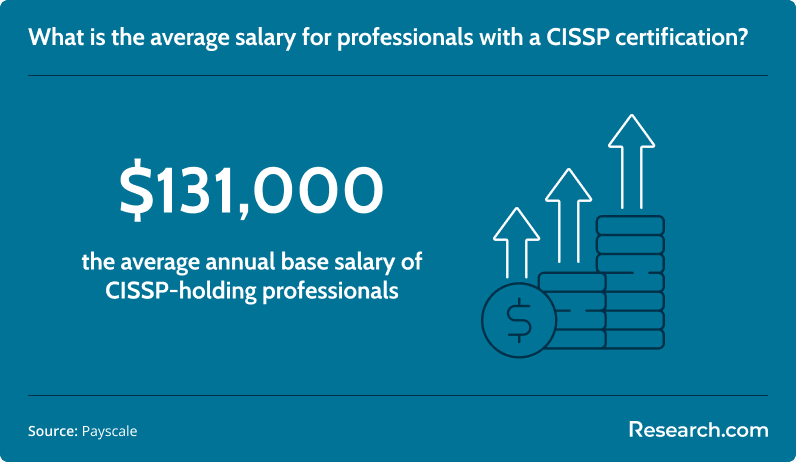
- CISSP holders report an average annual salary of $131,000, representing a significant pay advantage over non-certified peers in the cybersecurity industry.
- This is not an entry-level credential. You must have a minimum of five years of cumulative, paid, full-time professional experience in at least two of the eight specified security domains.
- The CISSP is designed for experienced practitioners who want to pivot from technical roles into senior management and strategic leadership positions.
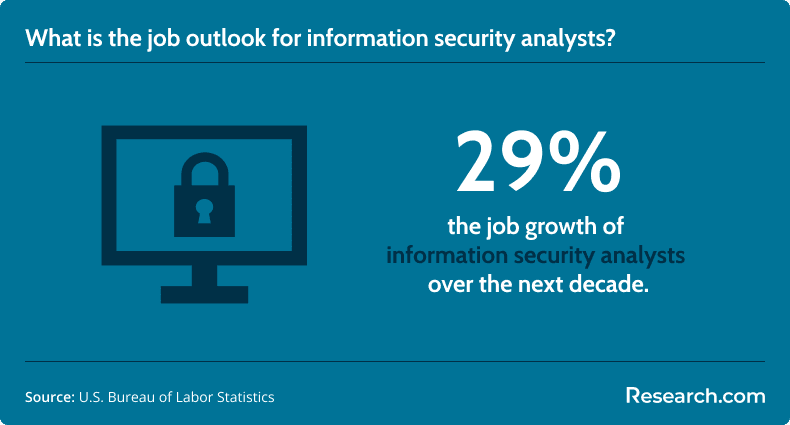
- The field for information security specialists is projected to grow by 29% through 2032, indicating exceptionally strong and sustained demand for this expertise.
- Earning the certification is the first step. Maintaining it requires an annual fee and the completion of continuing professional education (CPE) credits to ensure your skills remain current.
- How much can you earn with a CISSP certification? CISSP Salary
- What is the job outlook for cybersecurity professionals? Job Outlook
- Is the CISSP necessary for a career in cybersecurity? Is the CISSP necessary for a career in cybersecurity?
- What are the experience requirements to qualify for the CISSP? Experience Requirements
- What is the total cost to get and maintain the CISSP? CISSP Cost
- What are the eight domains covered in the CISSP exam? CISSP Coverage
- What kind of jobs can you get with a CISSP? CISSP Jobs
- Which industries pay the most for CISSP holders? Top Industries
- What does a typical career path for a CISSP professional look like? What does a typical career path for a CISSP professional look like?
- Who is the ideal candidate for the CISSP certification? Who is the ideal candidate for the CISSP certification?
- What happens if you pass the exam but don't have enough experience? What happens if you pass the exam but don't have enough experience?
- How do you maintain your CISSP certification after you earn it? How do you maintain your CISSP certification after you earn it?
How much can you earn with a CISSP certification?
You can expect to earn an average annual base salary of $131,000 with a CISSP certification. This figure provides a clear and compelling financial return, directly addressing the value of the investment.
A key detail to remember is that this isn't just a high baseline; it's a significant advantage. A 2024 study found that certified cybersecurity professionals have a 37% pay advantage over their non-certified colleagues.
To put that into context, a non-certified information security analyst earns an average salary of around $98,000. The CISSP credential acts as a powerful multiplier on your existing experience, effectively unlocking a higher tier of compensation.
This substantial salary premium is a primary reason why for many experienced professionals, the answer to "Is a CISSP certification worth it?" is a firm "yes." The strong earning potential is backed by the exceptional stability and growth within the cybersecurity field.
When weighing educational pathways, some professionals also compare the CISSP’s ROI to other credentials, such as an associate of arts and science degree, which offers a versatile foundation but typically yields lower mid-career pay compared to specialized certifications like CISSP.
What is the job outlook for cybersecurity professionals?
The job outlook for cybersecurity professionals is exceptionally strong, providing a secure foundation for your investment in a CISSP certification.
According to the U.S. Bureau of Labor Statistics, employment for information security specialists is projected to grow by 29% until 2034. This rate is categorized as "much faster than the average" for all occupations, signaling a massive and sustained demand for qualified experts.
Additionally, the job portal Indeed reports that there are currently over 5,000 job openings for CISSP-related roles. This figure excludes careers that are closely related to cybersecurity.
The impressive growth isn't just about entry-level positions; it reflects a critical need for experienced leaders who can manage complex security challenges. This high demand creates a structural talent gap at the senior level, which is precisely where CISSP holders have a competitive advantage.
This means that earning the certification positions you to capitalize on a long-term market trend, ensuring your skills remain highly valued for years to come. With such a strong financial return and a secure future, the next logical question is whether the CISSP is an absolute necessity.
Interestingly, professionals transitioning from healthcare or tech often ask can you go into nursing with a biology degree before switching fields. Similarly, CISSP aspirants from adjacent disciplines—like IT or systems administration—can leverage prior experience to move into cybersecurity without starting from scratch.
Is the CISSP necessary for a career in cybersecurity?
No, the CISSP is not strictly necessary to start a career in cybersecurity, but it is the definitive credential for accelerating that career into leadership. It's a common misconception to lump all certifications together.
The CISSP is not a foundational certificate designed to help you land your first job. Instead, think of it as a capstone credential that validates years of hands-on experience and demonstrates your readiness for management and strategic roles.
For professionals just starting their careers or those in more technical, hands-on roles, other certifications may be more appropriate first steps. For example, some of the fastest online CompTIA CySA+ training bootcamps are designed to build the intermediate analytical skills that serve as a strong foundation for a future in cybersecurity.
The key takeaway is this: while you can have a successful technical career without the CISSP, it becomes increasingly essential when you want to pivot into high-level positions like Security Architect, Manager, or CISO. For those roles, it is the globally recognized standard. Now that you understand its value, let's break down exactly what it takes to earn it.
What are the experience requirements to qualify for the CISSP?
To qualify for the CISSP, you must meet a specific set of professional experience requirements established by (ISC)². Here is a breakdown of what you need:
- Core Requirement: You need at least five years of cumulative, paid, full-time professional work experience.
- Domain Experience: This experience must be spread across two or more of the eight official CISSP domains, proving your breadth of knowledge.
- Educational Waiver: You can receive a one-year experience waiver if you have a four-year college degree or another approved credential, reducing the work requirement to four years.
Meeting these experience benchmarks is the most important step in the process. Once you've confirmed your eligibility, the next step is to evaluate the financial costs.
The visual below shows the U.S. states where the majority of information security analysts work.
Some candidates compare this requirement process to other regulated professions, such as pharmacy technician certification vs license, where education and credentialing pathways differ slightly but both serve as validation of skill and reliability.
What is the total cost to get and maintain the CISSP?
The total cost to earn and maintain your CISSP certification is an investment composed of three primary parts. A common mistake is to only budget for the exam itself, but a strategic approach accounts for the entire financial commitment. The key costs to plan for are:
- The one-time exam registration fee.
- The variable cost of training and preparation materials.
- The recurring Annual Maintenance Fee (AMF) required to keep the certification active.
While the exam and maintenance fees are fixed amounts set by ISC2, your choice of preparation method is the biggest variable in your total upfront investment.
Expert Analysis: Budgeting for Your Total Investment
Thinking about the "total cost of ownership" is a key part of making an informed decision. Your largest variable cost is training. While self-study is a lower-cost option that requires immense discipline, many candidates find that enrolling in one of the fastest online CISSP training bootcamps provides the structure and expert guidance needed to pass on the first attempt.
Factoring in this cost, plus the ongoing AMFs, gives you a true financial picture. This complete budget is essential for accurately calculating whether a CISSP certification is worth it for you. Once you have a clear picture of the financial commitment, the next step is to understand the breadth of knowledge you'll need to master.
What are the eight domains covered in the CISSP exam?
The CISSP exam is comprehensive by design, testing your expertise across the eight domains that form the pillars of modern security leadership. Its value comes from this breadth, as it proves you understand how to manage security from both a technical and a business-risk perspective.
A common misconception is that the CISSP is a hands-on hacking exam; in reality, it is a manager's exam focused on high-level strategy.
Here are the eight domains you will need to master:
- Security and Risk Management: This covers the foundational principles of security, including governance, compliance, and policy development.
- Asset Security: This domain focuses on the classification, protection, and lifecycle of information and assets.
- Security Architecture and Engineering: This involves designing and implementing secure systems, from cryptography to physical site security.
- Communication and Network Security: This covers the design and protection of an organization's networks.
- Identity and Access Management (IAM): This domain is about controlling who has access to what data and systems.
- Security Assessment and Testing: This involves designing and performing security tests to find vulnerabilities.
- Security Operations: This covers how to conduct investigations, manage incidents, and implement disaster recovery plans.
- Software Development Security: This domain focuses on integrating security into the software development lifecycle.
Mastering these areas demonstrates your ability to lead an organization's security efforts. With a clear understanding of the investment required, we can now explore the tangible career returns.
Just as these eight domains reflect interdisciplinary expertise, other professions—like education leadership—have similar cross-functional focuses. Programs such as doctorate in education online no dissertation cater to working professionals seeking advancement without committing to research-intensive requirements, much like the CISSP caters to practitioners rather than academics.
What kind of jobs can you get with a CISSP?
The CISSP certification is a direct pathway to senior-level positions that focus on strategy and management. It signals to employers that you are ready to move beyond hands-on technical work and lead security initiatives. Here are some of the top-tier jobs a CISSP unlocks:
- Security Architect: You will be responsible for designing and building secure IT infrastructures from the ground up, ensuring that business goals are met without sacrificing security.
- Security Manager or Director: You will lead teams of security professionals, develop and enforce security policies, and manage the overall security posture of the organization.
- Risk and Compliance Manager: You will oversee the organization's adherence to industry regulations and internal security policies, translating complex legal and business requirements into actionable security controls.
- Chief Information Security Officer (CISO): At the executive level, you will be responsible for the entire information security program, aligning security strategy with business objectives and reporting to other C-suite leaders.
- Senior Security Consultant: You will act as a high-level advisor, helping multiple clients assess risk, design security programs, and respond to major incidents.
These roles all reflect a career pivot from technical execution to strategic oversight, which is why they command such high salaries—often exceeding $130,000 for senior professionals.
For those who want to use their CISSP to become an elite technical expert, pursuing specialized skills through fast track online ethical hacking dual certification programs is a powerful next step. Beyond specific job titles, certain industries offer even greater compensation for this expertise.
The chart below details the median yearly salaries of cybersecurity engineers based on experience.
Which industries pay the most for CISSP holders?
While a CISSP is valuable across the board, certain industries offer the highest salaries because they have the most to lose from a security breach. You can maximize your earning potential by strategically targeting these high-stakes sectors. Here are the top work environments for information security professionals:
- Computer Systems Design and Related Services: This is the largest sector for security professionals. Roles here involve building robust security directly into the core hardware, software, and network infrastructures that other industries depend on.
- Finance and Insurance: This high-stakes industry places an immense value on security leadership. Professionals are tasked with protecting sensitive financial data and critical market systems under intense regulatory pressure.
- Management of Companies and Enterprises: These corporate-level positions focus on enterprise-wide governance and strategy. You'll set the security direction for the entire organization rather than managing a single department's technical assets.
- Information: This sector includes telecommunications, data processing, and other businesses where information itself is the most valuable product, requiring the highest level of asset protection.
- Management and Technical Consulting: In this area, you act as an elite, external expert. CISSP holders are hired by major organizations to assess risk, design mature security programs, and provide high-level strategic guidance.
Compensation in these fields is typically directly proportional to the value of the assets being protected. Now that we've identified the most lucrative roles and industries, let's map out how a career path leads to these outcomes.
What does a typical career path for a CISSP professional look like?
A typical career path leading to and beyond the CISSP certification is a strategic progression through three distinct phases. This trajectory is built on a strong technical foundation that evolves into high-level strategic leadership over a 10-15 year period.
Foundational Years (Years 0-5)
This is where you build hands-on experience in roles like Network Administrator, SOC Analyst, or IT Specialist. The goal is to gain broad technical skills across multiple security domains. Many successful professionals start by mastering the basics with a credential from the shortest CompTIA network online training to build a solid base.
Mid-Career Pivot (Years 5-8)
This is the stage where an experienced professional, having built a strong technical resume, makes a deliberate move toward leadership. Earning the CISSP is the key event in this phase. It validates your years of experience and signals to the market that you are ready for management and strategic responsibility.
Senior Leadership Phase (Years 8+)
With the CISSP, you are now competitive for top-tier roles like Security Architect, IT Director, or CISO. At this stage, your career can branch into either executive management or a role as a highly specialized technical expert, giving you the power to shape your professional future.
Who is the ideal candidate for the CISSP certification?
The ideal candidate for the CISSP is a mid-career IT or security professional with at least five years of direct, hands-on experience who is deliberately seeking to transition into a leadership or strategic role. This certification is designed for the practitioner who is ready to move beyond technical implementation and focus on managing business-level risk.
You are a strong fit for the CISSP if you see yourself in this profile: you have the required five-plus years of professional security experience, your career goal is a management position like Security Director or CISO, and you are more interested in designing security programs than just configuring firewalls.
For this person, who wants to command a top-tier salary like the $131,000 average earned by CISSP holders, the answer to "Is a CISSP certification worth it?" is an unequivocal yes. But what if you have the ambition and knowledge but fall just short of the strict experience requirement? There is a dedicated path for you as well.
What happens if you pass the exam but don't have enough experience?
If you pass the rigorous CISSP exam but don't yet have the required professional experience, you earn the designation of Associate of ISC2. This is not a lesser credential; it's a formal recognition that you have mastered the complex body of knowledge and are on a dedicated path to full certification. This status is a highly strategic move for ambitious professionals planning their long-term careers.
Crucially, becoming an Associate gives you up to six years to gain the necessary hands-on experience. This allows you to signal your proven knowledge to employers, making you a more attractive candidate for roles that will help you meet the final requirements.
During this period, building your skills with foundational credentials from a fast-track CompTIA A+ certification online program can help you secure a position to start accumulating that experience. Once you do earn the full certification, there's a simple process to maintain its value for your entire career.
How do you maintain your CISSP certification after you earn it?
To maintain your CISSP certification, you must fulfill two straightforward requirements that demonstrate your ongoing commitment to the profession. You must pay an Annual Maintenance Fee (AMF) to ISC2 to keep your status active, and you are required to earn 120 Continuing Professional Education (CPE) credits over each three-year certification cycle.
While this requires an ongoing commitment, it is precisely this process that ensures your credential remains relevant and respected in a rapidly changing industry.
Earning CPE credits is a flexible process designed to fit into a working professional's life. You can gain them through activities you may already be doing, such as attending industry conferences and webinars, mentoring other professionals, or contributing to security publications.
This dedication to continuous learning is what protects the value of your investment. It proves to employers that your expertise is current and that you are a leader in the field. This commitment is what guarantees that the answer to "Is a CISSP certification worth it?" will remain a firm "yes" for the entire duration of your career.
Here’s What Graduates Have to Say about Their CISSP Certification
- Lily: "My career had definitely hit a plateau after about eight years as a network engineer. I was good at my job, but I wasn't being considered for management roles. Earning the CISSP was the catalyst I needed; within three months of adding it to my resume, I was interviewing for senior security architect positions that were previously out of reach. It truly opened doors that were closed to me before."
- Derek: "The most surprising benefit of the CISSP wasn't just the job offers, but the confidence it gave me. I used to feel intimidated in high-level meetings that focused on business risk and compliance. Now, I can speak the language of the C-suite and translate complex technical issues into strategic business terms, which has earned me a new level of respect from leadership."
- Kate: "What I value most is the long-term security the CISSP provides. In a tech landscape that changes so quickly, having a credential that focuses on foundational principles and management strategy feels like a solid anchor. I no longer worry about my skills becoming obsolete because the CISSP proves I understand the 'why' behind security, not just the 'how.'"
Key Findings
- The financial return on investment for the CISSP is both significant and quantifiable, with certified professionals earning an average salary of $131,000 and commanding a 37% pay advantage over their non-certified peers.
- The certification's value is directly tied to its high barrier to entry; the non-negotiable five-year experience requirement is a feature, not a bug, as it guarantees a proven level of real-world expertise to employers.
- Demand for the expertise validated by the CISSP is set to grow at an exceptional rate, with the U.S. Bureau of Labor Statistics projecting 29% job growth for information security specialists through 2032.
- The CISSP is most powerful when used as a mid-career pivot, enabling experienced technical professionals to transition into higher-paying management and strategic leadership roles.
- For ambitious professionals who do not yet meet the experience requirements, the "Associate of ISC2" designation provides a formal, six-year pathway to achieving full certification.
- The total cost of ownership extends beyond the initial exam fee, requiring a long-term commitment to Annual Maintenance Fees and 120 Continuing Professional Education credits every three years to maintain the credential's value.
References:
- ISC2. (2024). Research. Retrieved October 7, 2025, from https://www.isc2.org/research
- ISC2. (2025). CISSP experience requirements. Retrieved October 7, 2025, from https://www.isc2.org/certifications/cissp/cissp-experience-requirements
- Payscale. (2025). Certified Information Systems Security Professional (CISSP) Certification Salary. Retrieved October 7, 2025, from https://www.payscale.com/research/US/Certification=Certified_Information_Systems_Security_Professional_(CISSP)/Salary
- Salary.com. (2025). Cybersecurity Engineer Salary. Retrieved October 7, 2025, from https://www.salary.com/research/salary/opening/cybersecurity-engineer-salary
- U.S. Bureau of Labor Statistics. (2025). Information security analysts. Occupational Outlook Handbook. Retrieved October 7, 2025, from https://www.bls.gov/ooh/computer-and-information-technology/information-security-analysts.htm
- Zippia. (2025). Information Security Analyst Salaries. Retrieved October 7, 2025, from https://www.zippia.com/salaries/information-security-analyst/
Other Things You Should Know About CISSP Certification
To be eligible for the CISSP exam in 2027, candidates must have at least five years of cumulative, paid work experience in two or more of the eight CISSP domains. Some educational qualifications may waive one year of work experience.
The CISSP exam is widely considered to be one of the most challenging certification exams in the IT industry. Its difficulty comes from the sheer breadth of knowledge required across the eight domains, as well as its focus on a managerial and analytical mindset rather than simple memorization. Candidates must demonstrate a deep understanding of how to apply security principles to solve business problems.
To obtain CISSP certification in 2027, candidates must have a minimum of five years of cumulative, paid work experience in at least two of the eight CISSP domains. Alternatively, a college degree or additional credential (such as a CompTIA Security+ certification) can substitute for one year of experience. Passing the CISSP examination is also required.
The time required to study for the CISSP exam varies greatly depending on your existing experience and knowledge. Most candidates report spending anywhere from three to six months preparing. Professionals with deep experience in many of the eight domains may require less time, while those who need to learn new areas of the Common Body of Knowledge will need a more extended study period.


