
2027 Best Online EdD Programs without Dissertation Requirement

Co-Founder and Chief Data Scientist
For many experienced educators, the path to a doctorate feels blocked by one major obstacle: the traditional dissertation. With a median completion time of over 15 years from a bachelor's degree, that single requirement can seem like an impractical, career-halting roadblock.
That's why universities created a more direct path for working leaders. This guide, developed by career planning experts with more than a decade of experience, will help you understand the value of rigorous online EdD programs without dissertation requirements. We'll give you the clear, actionable advice you need to find the right fit and take the next step in your career.
What are the benefits of getting an online EdD program without a dissertation?
- This degree prepares you for top-tier leadership positions like school superintendent or college provost, where you can shape educational systems and policy.
- You can expect a significant return on your investment, as postsecondary education administrators earn a median salary of around $103,000.
- The online format offers the flexibility to earn your doctorate without pausing your career, allowing you to apply what you learn in real time.
What can I expect from an online EdD program without a dissertation?
You can expect a rigorous, highly structured program designed specifically for working professionals. Modern online EdD programs are not independent study courses; they are built around a collaborative cohort model. This means you'll move through the curriculum with a consistent group of experienced peers, building a powerful professional network along the way.
A lot of people worry that online means you're on your own, but the support systems are robust. The faculty are top-tier—over 90% hold a doctorate themselves, and the typical advising ratio is a supportive 1-to-14. Your faculty chair often acts as an executive coach, guiding you as you apply theory to solve real-world problems in your capstone project.
Where can I work with an online EdD program without a dissertation?
With this degree, you can work in the same high-level leadership positions as graduates from programs with traditional dissertations. The career path is determined by the EdD credential and your professional experience, not the format of your final project.
- K-12 Leadership: The most common path, with about 65% to 70% of graduates working in K-12 systems as superintendents, principals, or curriculum directors.
- Higher Education Administration: Many graduates pursue executive roles on college campuses, serving as provosts, deans of students, or department chairs.
This is a practitioner's degree designed to create system-level leaders. It is not the typical pathway if your primary goal is to become a full-time, tenure-track research professor at a university.
How much can I make with an online EdD program without a dissertation?
Your earning potential is excellent and is directly tied to the leadership roles the EdD unlocks, not the format of your final project. Postsecondary education administrators earn a median salary of around $103,000, while top-tier positions like school superintendent can command salaries well over $139,000.
The key is to view the degree as the credential that qualifies you for these higher-paying roles. The salary increase is a direct result of leveraging your EdD to secure that next-level leadership position. That's precisely what quality online EdD programs without dissertations are designed to help you achieve.
Best Online EdD Programs without a Traditional Dissertation Requirement for 2027
An online Doctor of Education can be a practical route to senior leadership if you want doctoral-level training without spending years on a conventional dissertation. These programs are usually built for working educators, administrators, healthcare educators, nonprofit leaders, and organizational learning professionals who need a terminal credential tied to real problems of practice.
The key distinction is important: “no dissertation” does not mean “no research.” Most programs replace the traditional dissertation with an applied capstone, doctoral research project, or dissertation-in-practice. Instead of producing a long theoretical study, you investigate a real challenge in your school, college, district, workplace, or community and develop an evidence-based solution.
This guide explains how to compare online EdD programs without a traditional dissertation, what the listed programs offer, how long they take, what they cost, how accreditation affects value, and which career paths may fit after graduation. If standardized testing is also a concern, you may want to compare these options with the best online EdD programs with no GRE GMAT requirement.
Quick Answer: What Is the Best Online EdD Program without a Dissertation?
The best online EdD program without a traditional dissertation is the one that matches your career goal, schedule, budget, accreditation needs, and preferred final project format. Some programs use a dissertation-in-practice, while others use an applied research project or capstone. All require doctoral-level research, but the work is typically integrated into coursework and focused on solving a professional problem rather than writing a purely academic dissertation.
For most working professionals, the strongest options share five features: recognized accreditation, transparent tuition and credit requirements, faculty with relevant practitioner experience, strong doctoral advising, and a final project tied to leadership practice.
How do we rank schools?
Because an EdD is a major academic and financial commitment, our ranking process emphasizes transparent data and practical decision factors. Research.com reviews information from established sources, including the IPEDS database, Peterson's database, the College Scorecard database, and The National Center for Education Statistics.
These sources help evaluate DEGREE programs using comparable institutional and program-level information. To understand how Research.com builds rankings and evaluates programs, visit our methodology page.
Online EdD Programs without a Traditional Dissertation: Program Comparison
| School and Program | Best Fit | Length | Credits | Published Cost Information | Accreditation Listed |
| Marymount University — Online Doctor of Education in Leadership & Organizational Innovation | Professionals interested in ethical leadership, organizational change, and social justice | Less than 3 years | 48 | $1,402 per credit | Southern Association of Colleges and Schools Commission on Colleges (SACSCOC) |
| A.T. Still University — Doctor of Education in Health Professions Education | Healthcare educators and health professions faculty | 2.5–5 years | 55 | Information available upon request | Higher Learning Commission (HLC) |
| Kent State University — Doctor of Education in Interprofessional Leadership | Leaders working across education, healthcare, nonprofit, and community systems | As little as 3 years | 72 minimum total credit hours | $612.62 for Ohio residents; $622.62 for non-Ohio residents | Information available upon request |
| Boston College — Doctor of Education in Educational Leadership | Experienced school leaders pursuing district- or systems-level leadership | 3 years | 39 | Information available upon request | Information available upon request |
| East Tennessee State University — Doctor of Education in Educational Leadership | K-12, higher education, and administrative endorsement candidates | Less than 4 years | 60–72 | $672 for TN residents; $835.50 eRate for non-residents | Council for the Accreditation of Educator Preparation (CAEP) |
| Cornerstone University — Doctor of Education in Organizational Leadership & Development | Leaders seeking an organizational leadership doctorate with a Christian worldview | 4+ years | 60 | $4,740 per semester full-time | Information available upon request |
| Purdue University Global — Doctor of Education in Leadership and Innovation | Professionals in postsecondary, corporate, nonprofit, and organizational learning settings | Information available upon request | 90 total quarter credits | Information available upon request | Higher Learning Commission (HLC) |
| Bradley University — Doctor of Education in Educational Leadership | Higher education administration and leadership professionals | Information available upon request | Information available upon request | Information available upon request | Information available upon request |
| Spalding University — Doctor of Education in Leadership | Working professionals seeking an accelerated interdisciplinary doctorate | 2 years | 60 | $850 per credit hour | Southern Association of Colleges and Schools Commission on Colleges (SACSCOC) |
| East Central University — Doctor of Education in Rural Education | Educators focused on rural school leadership, advocacy, planning, and technology | 3–5 years | 60 | $425.80 for Oklahoma residents; $787.80 for non-residents | Higher Learning Commission (HLC) |
1. Marymount University - Online Doctor of Education in Leadership & Organizational Innovation
Marymount University offers an online EdD for professionals who want to lead organizational change through ethical decision-making, innovation, and social justice. Instead of a traditional dissertation, the program ends with a dissertation-in-practice, which allows students to use research to address a specific challenge in a workplace, school, organization, or community setting.
- Program Length: Less than 3 years
- Required Credits to Graduate: 48
- Cost per Credit: $1,402
- Accreditation: Southern Association of Colleges and Schools Commission on Colleges (SACSCOC)
2. A.T. Still University - Doctor of Education in Health Professions Education
A.T. Still University is a strong fit for professionals who teach, train, assess, or lead in health professions education. The fully online curriculum focuses on curriculum development, instruction, interprofessional education, and simulation-based teaching. Five research courses are built into the program to guide students from proposal development toward a publishable doctoral research project.
- Program Length: 2.5–5 years
- Concentrations: Health Professions Education; Interprofessional Education; and Teaching with Simulation
- Required Credit Hours: 55
- Tuition: Information available upon request
- Accreditation: Higher Learning Commission (HLC)
3. Kent State University - Doctor of Education in Interprofessional Leadership
Kent State University structures its EdD around collaboration across professional fields. The program may appeal to educators, health professionals, nonprofit leaders, and organizational leaders who need to address complex systems-level problems. Its cohort model emphasizes equity, systems thinking, and applied inquiry in professional contexts.
- Program Length: As little as 3 years
- Concentrations: Athletic Training Education; Cultural Foundations of Education; Curriculum and Instruction; Educational Technology; Leadership in Educational Contexts; and Special Education
- Minimum Total Credit Hours: 72
- Cost per Credit Hour: $612.62 (for Ohio residents); $622.62 (for non-Ohio residents)
- Accreditation: Information available upon request
4. Boston College - Doctor of Education in Educational Leadership
Boston College offers a three-year program for experienced education leaders who are preparing for district, executive, or systems-level roles. Developed in partnership with the Massachusetts Association of School Superintendents, the program includes an executive format with in-person weekend classes and summer sessions. Students receive mentorship from practicing superintendents and faculty while working through leadership challenges connected to real education systems.
- Program Length: 3 years
- Required Credits: 39
- Tuition: Information available upon request
- Accreditation: Information available upon request
5. East Tennessee State University - Doctor of Education in Educational Leadership
East Tennessee State University prepares education professionals for leadership in K-12 schools, higher education, and administrative roles. The curriculum emphasizes applied theory, research use, and decision-making in education organizations. Students can select concentrations that align with school leadership, higher education leadership, or administrative endorsement goals.
- Program Length: Less than 4 years
- Concentrations: Higher Education Leadership; School Leadership; and Administrative Endorsement
- Required Credit Hours: 60–72
- Cost per Credit Hour: $672 (for TN residents); $835.50 (eRate for non-residents)
- Accreditation: Council for the Accreditation of Educator Preparation (CAEP)
6. Cornerstone University - Doctor of Education in Organizational Leadership & Development
Cornerstone University designs its EdD for scholar-practitioners in education, business, nonprofit, and organizational leadership settings. The curriculum incorporates a Christian worldview and combines online coursework with three required in-person residencies. The program ends with a practical capstone project focused on a real leadership or organizational development issue.
- Program Length: 4+ years
- Required Credits: 60
- Cost per Semester: $4,740 (full-time)
- Accreditation: Information available upon request
7. Purdue University Global - Doctor of Education in Leadership and Innovation
Purdue University Global offers a 100% online EdD centered on leadership, innovation, ethics, and transformative learning. The program is intended for professionals in postsecondary education, corporate learning, nonprofit leadership, and related organizational settings. Students complete an applied research project that can be connected directly to a workplace or community problem.
- Program Length: Information available upon request
- Total Quarter Credits: 90
- Tuition: Information available upon request
- Accreditation: Higher Learning Commission (HLC)
8. Bradley University - Doctor of Education in Educational Leadership
Bradley University focuses its EdD on higher education administration and leadership. The program may suit professionals aiming for senior roles in colleges, universities, student affairs, academic administration, or institutional leadership. Its structure allows students to complete doctoral research within the coursework sequence, offering a practice-oriented alternative to a traditional dissertation process.
- Program Length: Information available upon request
- Concentration: Higher Education Administration and Leadership
- Required Credits: Information available upon request
- Tuition: Information available upon request
- Accreditation: Information available upon request
9. Spalding University - Doctor of Education in Leadership
Spalding University offers an accelerated EdD for working professionals who want an interdisciplinary leadership doctorate in under two years. The curriculum emphasizes ethical leadership, systems thinking, and applied research. Students complete a focused capstone research study rather than a broader traditional dissertation.
- Program Length: 2 years
- Required Credit Hours: 60
- Cost per Credit Hour: $850
- Accreditation: Southern Association of Colleges and Schools Commission on Colleges (SACSCOC)
10. East Central University - Doctor of Education in Rural Education
East Central University specializes in rural education leadership, making it especially relevant for educators working in rural districts and communities. The program addresses strategic planning, curriculum design, advocacy, and technology leadership in rural school systems. It is described as one of only four such programs in the nation.
- Program Length: 3–5 years
- Track: Administration
- Required Credit Hours: 60
- Cost per Credit: $425.80 (for Oklahoma residents); $787.80 (for non-residents)
- Accreditation: Higher Learning Commission (HLC)
What Does “Online EdD without a Dissertation” Really Mean?
An online EdD without a dissertation typically removes the traditional, extended dissertation model and replaces it with a structured applied project. Common names include capstone project, doctoral research project, dissertation-in-practice, applied research study, or professional practice project.
The difference is not academic difficulty. The difference is purpose. A traditional dissertation often contributes to academic theory, while an EdD project usually focuses on improving practice in a real education or organizational setting. Students still learn research methods, analyze evidence, write extensively, and defend or present their work. The final product, however, is usually designed to be implemented, evaluated, or used by practitioners.
| Traditional Dissertation | Applied EdD Project |
| Often emphasizes original theoretical research | Usually addresses a real problem of practice |
| May be less connected to the student’s current workplace | Often draws from the student’s school, district, organization, or professional setting |
| Can become open-ended if milestones are not tightly structured | Is commonly embedded into courses with staged deliverables |
| Best fit for students who want research-heavy academic inquiry | Best fit for professionals who want leadership impact and applied change |
How long does it take to complete an online EdD program without a dissertation?
Many online EdD programs without a traditional dissertation are designed for completion in about 3 to 4 years, although timelines vary by credit load, transfer policy, enrollment status, residency requirements, and the pace of the final project. Some listed programs are shorter, such as 2 years, while others range from 3–5 years or 4+ years.
The time-saving advantage comes from structure. Traditional doctoral timelines can extend when the dissertation phase is separate, self-directed, and difficult to complete alongside full-time work. Data on traditional doctorates shows a median time to complete an education doctorate of 15.6 years from the time a student finishes a bachelor's degree. By comparison, practice-oriented EdD programs are commonly designed with research milestones built into the curriculum.
That does not make the doctorate easy. It means the path is more defined. Instead of waiting until the end to develop a research topic, many programs ask students to identify a professional problem early, refine it across research courses, and complete a capstone or dissertation-in-practice through scheduled checkpoints. This structure can help students avoid the long delays associated with open-ended dissertation work. Some programs may support completion in about 5.5 years from the start of the program, depending on design and student progress.
The distinction is similar to the choice between thesis vs non thesis masters programs. One path is more research-theory oriented; the other is often more applied and milestone-driven. Online EdD programs without a traditional dissertation follow the same logic by emphasizing professional application, evidence-based leadership, and structured completion.
| Timeline Factor | How It Can Affect Completion |
| Credit requirement | Programs with 39 credits will usually feel different from programs with 72 or 90 total quarter credits. |
| Full-time versus part-time enrollment | Part-time study may be more manageable for working professionals but can extend the timeline. |
| Cohort structure | Cohorts can keep students on schedule, but they may offer less flexibility if you need to pause. |
| Residencies | Required in-person meetings can support networking and advising, but they add travel planning. |
| Final project format | A tightly sequenced capstone can reduce delays compared with an open-ended dissertation stage. |
How does an online EdD program without a dissertation compare to an on-campus one?
In reputable programs, the online and on-campus versions should meet the same academic standards. The degree title, faculty expectations, curriculum quality, and doctoral outcomes should be comparable. In many cases, the diploma does not state that the program was completed online.
The main difference is delivery. Online EdD programs are designed for professionals who cannot relocate or leave full-time roles. This matters because education leaders often need to apply coursework immediately in their own organizations. Online graduate education is also now common: 58% of all postbaccalaureate students participate in distance learning.
| Online EdD | On-Campus or Hybrid EdD |
| Best for working professionals who need location flexibility | Best for students who want regular face-to-face interaction |
| May offer national access to specialized faculty and cohorts | May provide stronger local campus networking |
| Requires strong time management and comfort with digital tools | Requires commuting, relocation, or scheduled campus attendance |
| Often easier to align with full-time employment | May be better for students who prefer structured in-person routines |
Choosing the Right Credential for Your Goals
The EdD is a terminal doctorate for professionals who want to lead organizations, improve systems, evaluate programs, and guide change. It differs from the PhD, which is typically more research-intensive and often geared toward academic research careers.
It also differs from the Education Specialist credential. An EdS is a post-master's degree that may help educators meet state licensure requirements, qualify for district roles, or move on a salary schedule. If your goal is a specific school leadership credential rather than a doctorate, an online EdS degree in leadership may be the more efficient option. The best choice depends on whether you need a terminal doctorate, a licensure-related credential, or a focused advancement pathway.
What is the average cost of an online EdD program without a dissertation?
Total tuition can vary significantly, commonly ranging from around $30,000 to over $100,000 for the full program. Public universities, private universities, residency requirements, credit totals, transfer policies, and fee structures all affect the final cost.
Do not compare programs by per-credit tuition alone. A lower per-credit rate can still produce a higher total price if the program requires more credits. Likewise, a program with a higher per-credit price may be shorter or include fewer total credits. Ask each school for a full cost-of-attendance estimate that includes tuition, mandatory fees, technology fees, residency travel, books, graduation fees, and any dissertation-in-practice or capstone-related costs.
The financial advantage of an online EdD is often the ability to keep working while enrolled. Maintaining full-time income can make the degree more manageable and may improve the overall return on investment. Educators ask a similar question when weighing whether is an online teaching degree worth it; the same principle applies here. The value depends not only on tuition but also on whether the degree helps you qualify for advancement, leadership responsibilities, or new career options.
Cost Questions to Ask Before Enrolling
- What is the total estimated tuition for the entire degree? Do not rely only on per-credit pricing.
- Are there mandatory fees? Technology, library, residency, and graduation fees can change the real cost.
- Can I transfer doctoral or post-master’s credits? Transfer credit can reduce both time and tuition if accepted.
- Will my employer reimburse tuition? School districts, colleges, healthcare systems, and companies may offer assistance.
- Are residencies required? Travel, lodging, and missed work time can add to the expense.
- Does the program charge by semester, credit, or subscription period? The billing model affects budgeting.
What are the financial aid options for students enrolling in an online EdD program without a dissertation?
Most practitioner-focused EdD programs are not fully funded in the way some research-intensive doctoral programs may be. Students should build a funding plan before applying, especially if they intend to work full-time while studying.
- Complete the FAFSA. The FAFSA is the starting point for determining eligibility for federal Stafford and Grad PLUS loans.
- Ask your employer about tuition assistance. School districts, universities, healthcare organizations, nonprofit employers, and corporations may support employees pursuing leadership training.
- Look for institutional scholarships or discounts. Some universities offer educator discounts, partner discounts, or limited doctoral scholarships.
- Compare private loans carefully. Private loans from banks or credit unions may help cover remaining costs, but terms vary and should be reviewed closely.
- Consider workload and income stability. A program that allows you to remain employed may be financially safer than one that requires reducing work hours.
Evaluating EdD funding is similar to assessing what can you do with a business certificate: the credential should be reviewed in relation to short-term cost, long-term career utility, employer support, and the likelihood that you will use the new skills in a higher-responsibility role.
What are the prerequisites for enrolling in an online EdD program without a dissertation?
Admissions requirements vary, but most online EdD programs are designed for experienced professionals rather than recent bachelor’s graduates. Common requirements include a master’s degree from an accredited institution, a minimum GPA often at or above 3.0, relevant professional experience, letters of recommendation, a resume or CV, and a statement of purpose.
The statement of purpose matters because EdD programs are practice-focused. Admissions committees want to know what leadership problem you want to solve, why the doctorate fits your goals, and how your professional background prepares you for doctoral work. If the program uses a cohort model, the committee may also evaluate whether your experience will contribute to peer learning.
The GRE is no longer required by many programs for working professionals. Instead, schools often give more weight to leadership experience, writing ability, professional recommendations, prior graduate performance, and the applicant’s proposed area of inquiry.
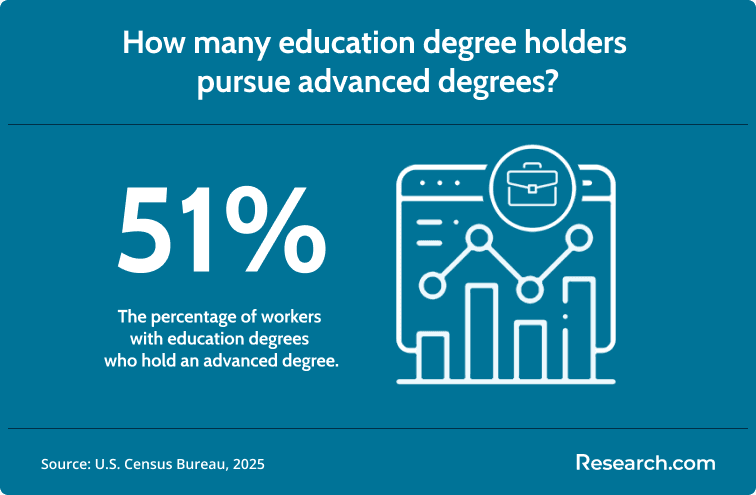
Pursuing an EdD is also consistent with broader education workforce patterns. Among workers with education degrees, 51% already hold an advanced degree. For applicants, the goal is not simply to show interest in doctoral study; it is to show readiness for applied research, leadership responsibility, and sustained writing.
Typical EdD Application Materials
| Requirement | What Schools Usually Want to See |
| Master’s degree | Proof that you can complete graduate-level academic work |
| Minimum GPA | Often 3.0 or higher, depending on the program |
| Professional experience | Evidence of leadership, teaching, training, administration, or organizational responsibility |
| Statement of purpose | A clear explanation of your goals, leadership interests, and possible problem of practice |
| Letters of recommendation | Support from supervisors, faculty, or professional colleagues who can speak to your readiness |
| Resume or CV | A record of career progression, certifications, leadership work, and relevant achievements |
What courses are typically in an online EdD program without a dissertation?
Online EdD curricula usually combine leadership theory, applied research, policy analysis, organizational improvement, and specialized coursework. The goal is to prepare graduates to make evidence-based decisions in complex education or learning organizations.
- Leadership Theory: Students examine leadership models, ethical decision-making, team development, and executive practice in education and organizational settings.
- Organizational Change: Courses focus on how to diagnose problems, lead improvement efforts, manage resistance, and evaluate change initiatives.
- Education Policy and Finance: Students study the legal, economic, and policy structures that shape schools, colleges, agencies, and learning organizations.
- Applied Research Methods: Coursework builds skills in data interpretation, program evaluation, research design, and evidence-based decision-making.
- Equity and Systems Leadership: Many programs ask students to consider how policies, practices, and institutional systems affect student or organizational outcomes.
- Capstone or Dissertation-in-Practice Seminars: These courses help students develop, refine, implement, and present the final applied research project.
Research methods in an EdD are not the same as research training in every PhD program. In a practice-oriented doctorate, students learn to use research to solve problems, evaluate interventions, and make informed leadership decisions. For example, knowledge of curriculum design and evaluation can support roles connected to gifted education masters degree jobs, where professionals may build, assess, and improve specialized learning programs.
Online EdD programs have grown because the format fits working educators and organizational leaders. The practical model is now common, with 70% of all Doctor of Education programs offered in a fully online format.
What types of specializations are available in an online EdD program without a dissertation?
Specializations help align the doctorate with your career target. A superintendent candidate, higher education administrator, special education leader, corporate training executive, and healthcare educator may all pursue an EdD, but they need different coursework and applied project options.
Common specializations include K-12 leadership, higher education administration, curriculum and instruction, special education, educational technology, organizational leadership, health professions education, rural education, and interprofessional leadership. Students planning for college leadership roles may build on knowledge found in the best online master's in higher education programs, while EdD study adds doctoral-level leadership, research, and systems improvement training.
| Specialization | Best For | Possible Final Project Focus |
| K-12 Leadership | Principals, district administrators, aspiring superintendents | Teacher retention, school improvement, student achievement, leadership pipelines |
| Higher Education Administration | College administrators, deans, student affairs leaders | Student persistence, enrollment systems, academic support, institutional policy |
| Curriculum and Instruction | Instructional leaders, curriculum directors, teacher leaders | Curriculum redesign, assessment practices, instructional improvement |
| Special Education | Special education directors, inclusion specialists, district leaders | Service delivery, compliance practices, inclusive instruction, family engagement |
| Health Professions Education | Healthcare faculty, clinical educators, simulation leaders | Clinical teaching, simulation-based learning, interprofessional training |
| Organizational Leadership | Corporate learning, nonprofit, government, or education executives | Workforce learning, change management, leadership development, program evaluation |
Specialization selection should be based on your next role, not just your current job. If you want to move from classroom teaching into district leadership, K-12 leadership may be more useful than a general curriculum track. If you want to move from student affairs into a dean or provost pathway, higher education administration may be a better fit.
How to Choose the Best Online EdD Programs without a Dissertation Requirement
The best online EdD is not automatically the fastest, cheapest, or most recognizable. It is the program that gives you the right doctoral credential for the role you want, at a cost and pace you can realistically complete.
- Confirm institutional accreditation first. Regional or recognized institutional accreditation is the baseline requirement for employer acceptance, transferability, and federal financial aid eligibility.
- Verify whether the program truly avoids a traditional dissertation. Ask whether the final requirement is a capstone, dissertation-in-practice, applied research project, or another doctoral project model.
- Match the specialization to your intended role. A higher education track, rural education track, health professions track, or K-12 leadership track can lead to very different networks and assignments.
- Review faculty backgrounds. Look for faculty who understand your field, not just general education research.
- Compare total cost, not advertised tuition. Include fees, travel, residency costs, books, and the number of required credits.
- Check student support for doctoral writing and research. Strong advising, library support, writing support, and project milestones can reduce completion risk.
- Ask about cohort expectations. Cohorts can offer accountability and peer support, but a fixed schedule may be difficult if your job has unpredictable demands.
- Clarify licensure implications. Do not assume an EdD automatically qualifies you for superintendent, principal, or administrative licensure in your state.
Questions to Ask Admissions Advisors
| Question | Why It Matters |
| What is the final doctoral project called, and how is it completed? | Confirms whether the program replaces the traditional dissertation with an applied model. |
| When do students begin working on the capstone or dissertation-in-practice? | Programs that start early may reduce delays near graduation. |
| What percentage of students finish within the advertised timeline? | Helps you assess whether the stated timeline is realistic. |
| Are residencies required? | Travel affects cost, scheduling, and work-life balance. |
| Does the program meet requirements for licensure or endorsement in my state? | Important for school leadership roles that require state approval. |
| Who supervises the final project? | Advisor fit can strongly affect doctoral progress. |
| What career services are available for doctoral students? | Leadership roles often require networking, portfolio development, and interview preparation. |
Common Mistakes to Avoid When Choosing an Online EdD
- Assuming “no dissertation” means less work. Applied doctoral projects still require research, analysis, writing, and faculty review.
- Choosing only by speed. A 2-year program may be attractive, but the workload can be intense for full-time professionals.
- Ignoring accreditation. An unrecognized credential can limit employer acceptance, financial aid access, and transfer options.
- Comparing per-credit prices without checking total credits. A low credit price does not guarantee a lower total cost.
- Overlooking residency requirements. Even mostly online programs may require campus visits or weekend sessions.
- Assuming the EdD grants licensure. State requirements for principals, superintendents, and other administrators vary.
- Picking a specialization that fits your past instead of your future. Choose the track aligned with your target role, not just your current responsibilities.
- Relying only on rankings. Rankings can help narrow options, but fit, accreditation, cost, advising, and project structure matter more.
What career paths are available for graduates of an online EdD program without a dissertation?
An EdD can support advancement into senior leadership roles in education, training, policy, and organizational development. The degree is especially relevant for professionals who want to lead systems, evaluate programs, supervise teams, manage change, or shape institutional strategy.
| Career Path | Typical Setting | How an EdD Can Help |
| School Superintendent | K-12 districts | Builds preparation in systems leadership, policy, finance, and organizational improvement |
| Provost or Dean | Colleges and universities | Supports leadership in academic affairs, student success, faculty development, and institutional planning |
| Curriculum Director | School districts, education agencies, curriculum organizations | Strengthens expertise in curriculum evaluation, instructional improvement, and evidence-based decision-making |
| Chief Learning Officer | Corporate, nonprofit, healthcare, or government organizations | Applies learning theory, program evaluation, and organizational leadership to workforce development |
| Education Policy Advisor | Government, advocacy groups, think tanks, nonprofits | Develops capacity to interpret research, evaluate policy effects, and guide system-level change |
Careers Beyond Campus: Policy and Advocacy
EdD graduates are not limited to schools and universities. Government agencies, nonprofits, foundations, education technology companies, professional associations, and think tanks also need leaders who can interpret data, evaluate programs, communicate evidence, and improve systems. If you are asking What can you do with an educational policy degree?, an EdD may provide a terminal credential for leadership in that policy and systems-change space.
What is the job market for graduates of an online EdD program without a dissertation?
The market for education and learning leaders is shaped by several forces: pressure to improve student outcomes, demand for data-informed decisions, staffing challenges, technology adoption, compliance needs, and the expansion of workplace learning. EdD graduates who can connect research to practical change may be competitive for leadership roles, although no doctorate guarantees promotion or salary growth.
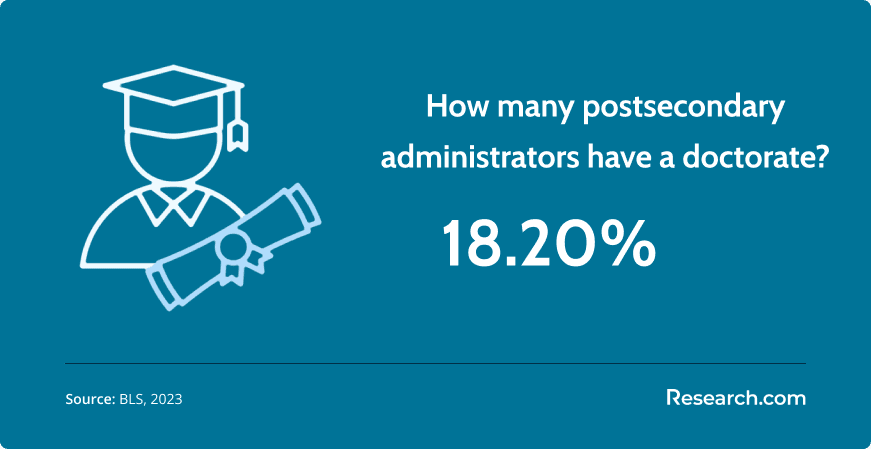
Doctoral credentials are already present in top education administration roles. Data show that 18.2% of postsecondary administrators have a doctorate. Doctoral degree holders also have a reported unemployment rate of 2.6%, and some high-growth areas, including postsecondary health specialties, are projected to expand by 17%.
Expanding Opportunities in Corporate and Non-Profit Sectors
Instructional design, leadership development, program evaluation, and organizational learning are valuable outside traditional schools. Companies, healthcare systems, nonprofits, and public agencies need leaders who can design learning systems, measure outcomes, and guide change across teams. Professionals exploring What can you do with a master's degree in adult education? often find opportunities in training and development; an EdD may prepare them to lead broader learning strategy and organizational improvement initiatives.
Current Trends Affecting Online EdD Programs
- Applied doctoral work is becoming more common. Programs increasingly emphasize capstones, dissertations-in-practice, and workplace-based research instead of traditional dissertation-only models.
- Online doctoral study is mainstream. With 70% of all Doctor of Education programs now offered fully online, students have more national options and more specialized tracks.
- Employers expect data-literate leaders. Education and organizational leaders are increasingly asked to interpret outcomes, evaluate interventions, and justify decisions with evidence.
- Technology and AI are changing leadership work. EdD students should look for programs that address digital learning, responsible technology use, data privacy, instructional innovation, and ethical decision-making.
- Career paths are broadening. EdD graduates may work in schools and colleges, but also in healthcare education, corporate learning, nonprofits, policy organizations, and workforce development.
How Important Is Accreditation for an Online EdD Program without a Dissertation?
Accreditation is one of the most important quality checks when choosing an online EdD. It helps confirm that the institution meets recognized standards for faculty qualifications, curriculum, student support, governance, and academic outcomes. Employers, licensing bodies, transfer institutions, and financial aid systems may all rely on accreditation when evaluating a degree.
Prospective students should verify accreditation directly through the school and recognized accreditation databases rather than relying only on marketing pages. For education leadership programs, also check whether specialized or professional accreditation is relevant to your goal. If you need principal, superintendent, or administrative endorsement, ask the program and your state licensing agency whether the degree meets requirements.
Accreditation also helps when comparing similar formats, including accelerated doctoral programs in education online. A faster program may be worthwhile, but only if it maintains credible standards, adequate advising, and a final project process that employers and institutions will respect.
Here’s What Graduates Have to Say about Their Online EdD Programs without Dissertation Requirement
- Vangie: "My school was having a difficult time keeping teachers, so I used my capstone to work on that problem directly. Rather than writing a theoretical paper that would sit on a shelf, I created, launched, and evaluated a mentorship program in my own building. The online format let me keep serving my community while getting guidance from my chair. The work mattered because it produced something we could actually use."
- Frank: "I wanted to build a project-based learning curriculum, and a traditional dissertation would not have fit what I needed to do. The dissertation-in-practice model gave me a clear way to design the program, test it with students, and collect evidence about its impact. I also needed faculty with very specific expertise, and the online program helped me reach mentors I could not have found nearby."
- Gemo: "I expected an online doctorate to feel disconnected, but my cohort became one of the strongest professional networks I have ever had. We had educators from large urban districts, small rural systems, and everything in between. Our local problems were different, but the leadership work connected us. I left with a doctorate and a group of colleagues I still rely on."
Key Insights
- “No dissertation” usually means no traditional dissertation, not no research. Expect an applied capstone, dissertation-in-practice, or doctoral project tied to a real professional challenge.
- Program fit matters more than program speed. A fast EdD can be valuable, but only if the workload, advising, accreditation, and final project structure match your capacity and goals.
- Accreditation is non-negotiable. Before applying, verify institutional accreditation and confirm any licensure or endorsement requirements with your state or employer.
- Total cost is more important than per-credit tuition. Compare credits, fees, residency expenses, employer tuition support, and the ability to keep working while enrolled.
- The best specialization is the one aligned with your next role. K-12 leadership, higher education, health professions education, rural education, and organizational leadership prepare students for different career paths.
- Applied doctoral projects can create immediate workplace value. The strongest projects solve real problems, use evidence, and produce outcomes that schools, colleges, districts, companies, or nonprofits can apply.
- An EdD can support leadership beyond schools. Graduates may pursue roles in higher education, K-12 systems, policy, corporate learning, healthcare education, nonprofits, and organizational development.
References:
- Indeed Editorial Team. (n.d.). Doctorate in education salary information and career context. Indeed. Retrieved October 12, 2025, from https://www.indeed.com/career-advice/pay-salary/how-much-can-you-make-with-doctorate-in-education
- National Center for Education Statistics. (n.d.). Fast Facts: Distance learning. U.S. Department of Education. Retrieved October 12, 2025, from https://nces.ed.gov/fastfacts/display.asp?id=80 Source access note
- National Center for Science and Engineering Statistics. (2023). Technical Notes - Doctorate Recipients from U.S. Universities: 2021. National Science Foundation. Retrieved October 12, 2025, from https://ncses.nsf.gov/pubs/nsf23300/technical-notes Source access note
- National Center for Science and Engineering Statistics. (2025). Survey of Earned Doctorates (SED) 2024. National Science Foundation. Retrieved October 12, 2025, from https://ncses.nsf.gov/surveys/earned-doctorates/2024 Source access note
- PayScale. (n.d.). Doctor of Education (EdD) degree salary data. Retrieved October 12, 2025, from https://www.payscale.com/research/US/Degree=Doctor_of_Education_(EdD)/Salary Source access note
- U.S. Bureau of Labor Statistics. (n.d.). Employment and unemployment by educational attainment. U.S. Department of Labor. Retrieved October 12, 2025, from https://www.bls.gov/emp/tables/educational-attainment.htm Source access note
- U.S. Bureau of Labor Statistics. (n.d.). Field of degree: Education. Occupational Outlook Handbook. Retrieved October 12, 2025, from https://www.bls.gov/ooh/field-of-degree/education/education-field-of-degree.htm Source access note
- University of St. Augustine for Health Sciences. (n.d.). Doctorate in Education (EdD) salary and career outlook. Retrieved October 12, 2025, from https://www.usa.edu/blog/doctorate-in-education-salary-and-career-outlook/ Source access note
Other Things You Should Know About Online EdD Programs without Dissertation Requirement
Online EdD programs without a dissertation requirement in 2027 may demand a master's degree, relevant field experience, and strong academic references. Specific programs might emphasize professional work or require a portfolio showcasing previous academic and professional achievements instead of a dissertation proposal.
In 2027, top online EdD programs without a dissertation, such as those at the University of Southern California and Baylor University, offer applied project-based capstones. These alternatives focus on solving practical, real-world problems, providing students with relevant experience directly applicable to educational leadership roles.
In 2027, top online EdD programs that replace the traditional dissertation with a capstone project include the University of Southern California, Drexel University, and Northeastern University. These programs focus on practical applications and real-world problem-solving, enabling students to implement knowledge in professional settings.


