
2027 What Can You Do with a Business Certificate

Co-Founder and Chief Data Scientist
With employment in business and financial occupations projected to grow faster than the average, the pressure to stand out is higher than ever. According to the U.S. Bureau of Labor Statistics, these occupations are expected to see about 942,500 job openings until 2034.
Whether you feel your career has hit a plateau or you’re looking for a clear path into the business world, you need a way to gain valuable, job-ready skills without the time and expense of a traditional degree. A high-quality business certificate is a strategic tool that will provide the specialized knowledge that employers actively seek. To help you make an informed decision, our career planning experts with over 10 years of experience have prepared this comprehensive guide.
Key Things You Should Know About Business Certificates
- The business certificate is presented as a flexible career tool that simultaneously addresses the mid-career professional's need for a fast promotion and the career-switcher's need for a low-risk entry point into the business field.
- The article leverages the market trend of skills-based hiring as a core opportunity for certificate holders while directly confronting the danger of unaccredited programs by emphasizing a rigorous evaluation checklist.
- The core guidance strategy is to empower readers with actionable decision-making frameworks, such as a personal ROI calculation and multi-step career path examples, rather than just presenting static data.
- What is a business certificate? Overview
- What jobs can I get with a business certificate? Best Jobs
- How much can you earn with a business certificate? Average Salary
- What is the job outlook for graduates of business certificate programs? Job Outlook
- Where can I work with a business certificate? Where can I work with a business certificate?
- What skills do you need for business certificate jobs? Required Skills
- What are the education requirements to enroll in a business certificate program? Required Education
- What alternative paths are available for business certificate? What alternative paths are available for business certificate?
- What career paths are available to graduates with a business certificate? Career Paths
- How do you get started on your business certificate? How do you get started on your business certificate?
- What advancement opportunities are available after a business certificate program? What advancement opportunities are available after a business certificate program?
- Is a business certificate worth it? Is a business certificate worth it?
- Can a Business Certificate Strengthen Your Network and Career Support? Can a Business Certificate Strengthen Your Network and Career Support?
Choosing a business certificate usually means you want a practical credential without committing to a full degree. Maybe you are trying to qualify for an entry-level office role, move into management support, add finance or marketing skills, or prepare to run your own business. The value of the certificate depends on what it teaches, whether the school is credible, and how closely the curriculum matches the jobs you want.
This guide explains what a business certificate is, what jobs it can support, how to judge salary and return on investment, where graduates work, what skills matter most, and how to choose a program that is worth your time and money.
Quick answer: What can you do with a business certificate?
A business certificate can help you qualify for administrative, operations, bookkeeping, human resources, marketing support, customer service, project coordination, and small-business roles. It is most useful when you need focused business training, want a faster credential than a degree, or plan to stack credits toward future education. It is not a guaranteed job offer, and it usually will not replace a bachelor’s degree for roles that specifically require one.
| Best fit | Why a business certificate can help | When another path may be better |
| Career starters | It builds foundational knowledge in business communication, basic finance, office systems, and management concepts. | A degree may be better if your target employers require one for advancement. |
| Career changers | It gives you a structured way to learn business language and workplace tools without starting a long degree program. | A bootcamp or certification may be better if you need one narrow technical skill quickly. |
| Working professionals | It can fill a skill gap for promotion, team leadership, budgeting, or project support. | A graduate certificate or MBA may fit better if you already have a degree and want senior leadership roles. |
| Aspiring entrepreneurs | It can cover practical topics such as accounting basics, marketing, customer management, and operations. | Mentorship, industry experience, and specialized training may also be necessary depending on the business. |
What is a business certificate?
A business certificate is a non-degree academic credential awarded by a school after you complete a focused set of business courses. Unlike a broad degree, it usually concentrates on a narrower area such as business administration, accounting, entrepreneurship, project management, marketing, human resources, or supply chain operations.
The main purpose is practical skill development. A strong certificate should help you understand how organizations operate, how teams communicate, how money moves through a business, and how decisions are supported by data, planning, and basic financial information.
Business certificate vs. certification vs. degree
| Credential | What it usually means | Best use |
| Business certificate | A short academic program made up of several courses from a college, university, or other approved provider. | Learning job-ready business skills or building credits toward more education. |
| Professional certification | An industry credential earned by meeting eligibility rules and often passing an exam. | Proving tested competence in a specific professional area. |
| Associate’s or bachelor’s degree | A longer academic credential that includes broader coursework and may include general education requirements. | Meeting degree requirements for employers, graduate study, or long-term advancement. |
Why stackable credentials matter
Many schools now build certificate programs so credits may apply later to an associate’s or bachelor’s degree. This is often called a stackable credential pathway. It can lower the risk of starting school because you can complete a shorter program first, use the skills at work, and decide later whether to continue.
Before enrolling, confirm the transfer policy in writing. Some certificate credits apply only within the same institution, some transfer to partner schools, and others may not count toward a future degree at all.
If you are comparing short credentials with formal professional designations, the difference is similar to comparing CFA and CFP pathways: both can be valuable, but they serve different purposes. A certificate teaches targeted skills; a certification typically verifies tested professional competence.
What jobs can I get with a business certificate?
A business certificate can support entry-level and coordinator-level roles that require organization, communication, basic finance, software use, and an understanding of business operations. The exact jobs available to you will depend on your previous experience, local labor market, specialization, and whether the employer requires a degree.
| Job option | What the role does | How a business certificate helps |
| Administrative Assistant | Coordinates calendars, prepares documents, handles correspondence, organizes records, supports meetings, and helps an office run efficiently. | Builds workplace communication, office software, business writing, and basic operations knowledge. |
| Human Resources Coordinator | Supports recruiting, onboarding, employee records, benefits administration, training logistics, and HR documentation. | Introduces organizational structure, employee processes, confidentiality, and business administration practices. |
| Accounts Payable or Accounts Receivable Clerk | Processes invoices, records payments, tracks billing, follows up on accounts, and supports accurate financial documentation. | Provides a foundation in accounting principles, bookkeeping workflows, and financial recordkeeping. |
| Marketing Associate | Assists with campaigns, social media, market research, event coordination, content schedules, and performance reporting. | Connects marketing tasks to business goals, customer behavior, branding, and basic analytics. |
| Office Manager | Oversees office procedures, vendors, supplies, administrative staff, budgets, and daily workplace operations. | Strengthens management, budgeting, process improvement, and communication skills. |
| Project Coordinator | Tracks timelines, updates project documents, schedules meetings, communicates with stakeholders, and supports project managers. | Develops planning, documentation, teamwork, software, and workflow management skills. |
| Small Business Owner or Operator | Manages customers, pricing, vendors, cash flow, marketing, records, and day-to-day decisions. | Provides a practical base in finance, marketing, operations, and business planning. |
Can a business certificate help you start a business?
Yes, especially if you have industry knowledge but limited training in finance, operations, marketing, or customer management. A certificate will not replace a strong business model or market research, but it can help you avoid common early mistakes such as poor pricing, weak recordkeeping, or unclear marketing plans.
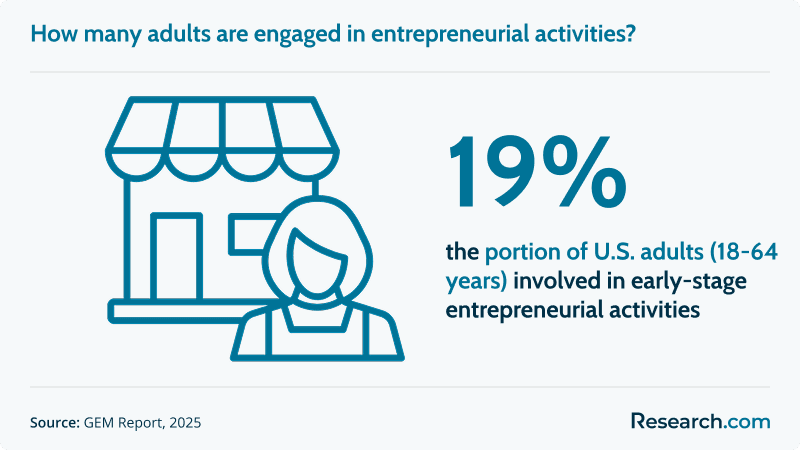
This matters because 19% of U.S. adults are actively engaged in entrepreneurial activities. For people building a company, even basic business education can make daily decisions more structured and less reactive.
Business training can also support creative and media-focused careers. If you are exploring the commercial side of music, film, events, or digital content, it may help to compare certificate-level training with broader options such as entertainment business degree career paths.
How much can you earn with a business certificate?
There is no single salary for “business certificate graduates.” Pay depends on the occupation, employer, industry, location, work experience, and whether the job requires additional education. A certificate can help you qualify for certain roles, but wages are determined by the labor market for that role.
A certificate may lead to a stronger return when it helps you move into a higher-paying role, qualify for promotion, or add skills your current employer needs. It may have a weaker return if you choose a program with high costs, poor employer recognition, or coursework that does not match real job postings.
Research from Georgetown University describes how a certificate can be part of a postsecondary pathway, but your personal outcome depends on the specific field and credential.
How to estimate your personal ROI
- Choose a target job title. Do not calculate ROI from a general idea of “business.” Use actual job titles such as office manager, HR coordinator, bookkeeping clerk, or marketing assistant.
- Review local job postings. Look at required education, preferred software skills, experience expectations, and whether a certificate is mentioned.
- Compare current and target earnings. Estimate the difference between your current pay and the typical pay for the job you want.
- Add the full cost of attendance. Include tuition, fees, textbooks, software, commuting, childcare, and any income lost from reducing work hours.
- Check the timeline. A lower-cost certificate that leads to a modest raise may pay off faster than an expensive program with uncertain job value.
| ROI question | Why it matters |
| Will this certificate qualify me for jobs I could not access before? | If employers already consider you qualified, the certificate may have limited immediate value. |
| Does the program teach tools named in job postings? | Software and applied assignments often matter more than course titles alone. |
| Can credits transfer later? | Transferable credits can increase long-term value if you plan to earn a degree. |
| Will my employer pay for part of it? | Tuition assistance can significantly improve the financial case. |
If you are moving from another field, remember that education level, licensing, and job responsibilities can change earning potential. That same logic appears in comparisons such as doctor of pharmacy versus pharmacist, where credentials and scope of work affect career options.
What is the job outlook for graduates of business certificate programs?
The outlook depends on the occupation attached to the certificate. Business skills are broadly useful, but some areas offer stronger opportunities than others. Programs connected to accounting support, logistics, data-informed operations, project coordination, human resources, and digital marketing may align more closely with current employer needs than very general programs.
The U.S. Bureau of Labor Statistics reports that business and financial occupations remain an important employment category, and many employers continue to need people who can support records, operations, budgets, customers, projects, and compliance.
Industries shaping demand
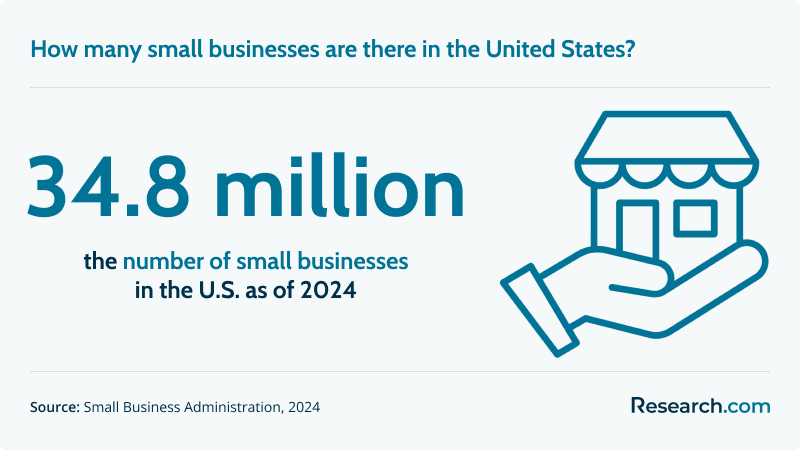
Small businesses continue to create steady demand for people who understand everyday business operations. The small business sector includes approximately 34.8 million small businesses as of 2025, which means many organizations need workers who can manage paperwork, customers, payroll support, scheduling, vendors, and basic financial processes.
Logistics and supply chain work is another area where business knowledge can be useful, especially as companies focus on inventory, purchasing, transportation, and vendor reliability. Students who want a deeper credential in that area may compare business certificates with online graduate certificate programs in logistics and supply chain management.
Current trends affecting business certificate jobs
- Skills-based hiring: Employers are increasingly interested in what candidates can do, not only what degrees they hold. A certificate is stronger when it includes applied projects, software training, and measurable skills.
- AI and automation: Routine administrative and reporting tasks are becoming more automated. Workers who can use digital tools, interpret information, and improve processes are better positioned than those who only perform manual clerical tasks.
- Hybrid and remote operations: Many business support roles now require comfort with collaboration platforms, shared documents, digital calendars, customer systems, and virtual communication.
- Data-informed decisions: Even entry-level workers may be expected to track metrics, prepare reports, or use spreadsheets to support decisions.
Where can I work with a business certificate?
Business certificates are flexible because most organizations need people who can organize information, communicate clearly, manage transactions, support customers, and keep operations moving. Graduates may work in corporate offices, small businesses, healthcare organizations, government departments, nonprofits, schools, startups, and remote-first companies.
- Healthcare and social assistance organizations
- Technology companies and software firms
- Local, state, and federal government agencies
- Nonprofit organizations and community groups
- Professional services firms
- Retail, hospitality, and customer-focused businesses
- Remote-first and hybrid employers
Opportunities beyond traditional offices
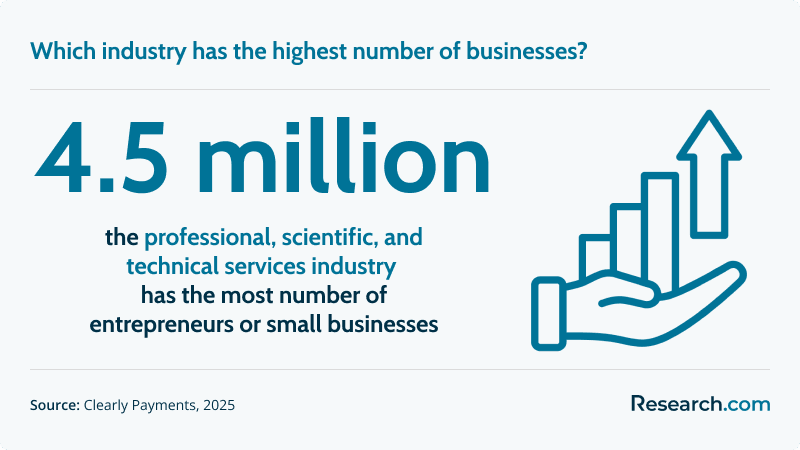
Business support roles are not limited to corporate headquarters. The professional, scientific, and technical services industry includes approximately 4.5 million businesses, and these organizations often need administrative, billing, client service, project coordination, and operations support.
Newer industries also need business talent. For example, the gaming and esports market includes roles related to sponsorships, events, team operations, marketing, and audience development. Students interested in that niche can compare general business certificates with online esports business degree programs.
What skills do you need for business certificate jobs?
Business certificate jobs require a mix of technical skills and workplace judgment. The best programs teach tools and concepts, but employers also look for reliability, professionalism, and the ability to communicate with customers, managers, vendors, and coworkers.
| Skill area | Examples | Why employers care |
| Business communication | Email writing, reports, meeting notes, presentations, customer communication | Clear communication reduces errors and keeps teams aligned. |
| Accounting and finance basics | Invoices, budgets, bookkeeping, expense tracking, financial terminology | Many support roles involve money, records, or budget conversations. |
| Software and digital tools | Spreadsheets, databases, office suites, project tools, customer systems | Business work increasingly depends on accurate digital workflows. |
| Project and operations support | Scheduling, task tracking, documentation, process improvement | Organizations need people who can move work from plan to completion. |
| Analysis and reporting | Basic data review, charts, dashboards, performance summaries | Managers need information they can use to make decisions. |
| Professional skills | Problem-solving, teamwork, adaptability, time management, confidentiality | Technical knowledge is less useful if the employee cannot work responsibly with others. |
Digital and analytical skills are becoming more important
Basic business knowledge is no longer enough for many roles. Employers often expect candidates to handle spreadsheets, manage shared files, use customer or project platforms, and understand simple data. Entrepreneurs also rely on technology for customer outreach, sales tracking, marketing, and market analysis.
When comparing programs, look for courses that include hands-on assignments rather than only readings and exams. A portfolio of spreadsheets, reports, marketing plans, budgets, or project documents can make your certificate more credible in interviews.
The same decision logic applies in other career fields. For example, students comparing CCMA and CMAA credentials must connect training to actual job duties. Business certificate students should do the same by matching coursework to employer requirements.
What are the education requirements to enroll in a business certificate program?
Most undergraduate business certificate programs are designed for accessibility and commonly require a high school diploma or GED. Some may ask for placement tests, basic computer skills, transcripts, or proof of English proficiency, depending on the institution and program level.
Graduate or postgraduate business certificates are different. Those programs usually serve students who already hold a bachelor’s degree and want advanced training in areas such as management, analytics, finance, leadership, or sustainability.
What open enrollment means
Some schools use open enrollment for certificate programs. In practice, this means admission is not highly competitive if you meet the minimum requirements. Open enrollment can be helpful for adults returning to school, workers changing careers, and students who want a direct path into workforce training.
However, easy admission should not be your only deciding factor. You still need to verify accreditation, course quality, faculty qualifications, transfer policies, and career relevance.
| Requirement to check | What to ask before applying |
| Prior education | Is a high school diploma, GED, bachelor’s degree, or prerequisite coursework required? |
| Technology access | Do I need specific software, a webcam, a reliable computer, or proctored testing? |
| Transfer credit | Can prior college credits reduce the number of courses I need? |
| Program level | Is this undergraduate, post-baccalaureate, graduate, or continuing education? |
| Academic support | Are tutoring, advising, library access, and career services available to certificate students? |
Education pathways vary widely across professions. For example, comparisons such as MSW versus LPC routes show how some careers require advanced degrees while others offer more flexible entry points. Business certificates usually sit on the flexible side, especially at the undergraduate level.
What alternative paths are available for a business certificate?
A business certificate is only one way to build career skills. The right option depends on whether you need speed, low cost, employer recognition, college credit, a professional exam credential, or a full academic degree.
| Path | Strengths | Limitations | Best for |
| Self-study | Low cost, flexible, easy to customize | No formal credential and less structure | Motivated learners who need one skill or want to explore before paying for school |
| Business certificate | Structured, shorter than a degree, may offer college credit | Employer value varies by school and specialization | Career starters, career changers, and workers filling a business skill gap |
| Industry certification | Recognized in specific fields and often exam-based | Usually narrower and may require experience | Professionals proving competence in a defined tool, process, or specialty |
| Bootcamp | Fast, intensive, often project-based | Quality and employer recognition vary widely | Learners targeting a specific skill such as analytics, digital marketing, or product operations |
| Associate’s or bachelor’s degree | Broadest recognition and stronger fit for degree-required roles | More time, more courses, and usually higher total cost | Students planning long-term advancement or roles that require a degree |
How to choose the right route
Choose a certificate if you want a structured credential, need business fundamentals, and value a shorter timeline than a degree. Choose self-study if you are exploring and do not need proof of completion. Choose a certification if the jobs you want specifically request it. Choose a degree if your target career path has degree requirements or if you want broader long-term mobility.
The biggest mistake is choosing based only on speed. A fast program is not useful if employers do not recognize it or if the curriculum does not match the work you want to do.
What career paths are available to graduates with a business certificate?
A business certificate is often a starting point rather than a final credential. It can help you enter a role, shift departments, or build confidence with business concepts. Advancement usually comes from combining the certificate with job performance, software skills, industry knowledge, and sometimes additional credentials.
| Starting point | Possible next step | Longer-term direction |
| Administrative Assistant | Office Manager | Operations Manager, Facilities Manager, or Administrative Services Manager |
| Project Coordinator | Project Manager | Senior Project Manager or Program Manager |
| Accounts Payable or Receivable Clerk | Bookkeeper or Accounting Assistant | Senior accounting role with additional education or credentials |
| Marketing Assistant | Marketing Coordinator | Marketing Manager, digital marketing specialist, or brand role |
| HR Assistant | HR Coordinator | HR Generalist, recruiter, benefits specialist, or HR manager |
| Small Business Operator | Owner-manager | Multi-location owner, consultant, franchise operator, or industry specialist |
Entrepreneurship as a career path
Not every career path leads through a corporate promotion ladder. Some students use a certificate to prepare for freelancing, consulting, family business ownership, online selling, or a service-based company. In those cases, the most useful courses often cover accounting, pricing, contracts, marketing, customer relations, and operations.
Creative professionals may also use business training to move into management or ownership. Students interested in entertainment, media, or events may eventually compare certificate options with a fast-track online entertainment business degree.
How do you get started on your business certificate?
Start with the job, not the school. A certificate is most valuable when it is chosen to solve a specific career problem: qualifying for a role, learning a tool, preparing for promotion, or building a foundation for entrepreneurship.
- Define your target outcome. Write down the job title, promotion, business goal, or skill gap you want the certificate to address.
- Study job postings. Identify repeated requirements such as spreadsheets, bookkeeping, HR software, project tools, customer service, marketing analytics, or business writing.
- Compare curricula. Choose programs that teach the skills employers actually request. Avoid programs that sound broad but do not list practical course outcomes.
- Verify accreditation and school reputation. Make sure the institution is legitimate and recognized by employers or transfer schools.
- Ask about credit transfer. If you might continue into a degree, confirm whether certificate credits apply later.
- Calculate the full cost. Include fees, materials, technology, transportation, and lost work time.
- Review support services. Check whether certificate students get advising, tutoring, resume help, job boards, alumni access, or internship support.
- Apply and prepare your schedule. Gather transcripts, complete the application, and plan weekly study time before classes begin.
Questions to ask schools before enrolling
| Question | Why it matters |
| Is the institution accredited? | Accreditation affects credibility, transfer options, and sometimes financial aid eligibility. |
| Who teaches the courses? | Faculty with business experience can make coursework more practical. |
| Are assignments based on real workplace tasks? | Applied projects help you build interview examples and work samples. |
| Do credits transfer into a degree? | This determines whether the certificate can become part of a larger education plan. |
| What career services are available to certificate students? | Some schools reserve stronger career support for degree-seeking students. |
| What software or tools will I learn? | Tool-based skills can make the credential more useful in job applications. |
What advancement opportunities are available after a business certificate program?
Advancement usually comes from using the certificate as a launch point. The credential may help you enter a role or qualify for new responsibilities, but promotions depend on performance, experience, communication, leadership, and continued skill development.
Ways to build on the certificate
- Take on measurable projects at work. Examples include improving a filing system, tracking expenses, coordinating a campaign, or streamlining a workflow.
- Add a specialized credential. After gaining experience, you may pursue a professional certification related to project management, HR, bookkeeping, analytics, or software.
- Stack credits toward a degree. If credits transfer, the certificate can become the first step toward an associate’s or bachelor’s degree.
- Use employer tuition support. Some employers help pay for additional education when it supports your role.
- Build a portfolio. Save examples of budgets, reports, dashboards, project plans, marketing calendars, or process documents when appropriate and permitted.
Professionals who continue into leadership education may later compare graduate options, including specialized programs such as accelerated online MBA programs in sustainability.
Is a business certificate worth it?
A business certificate can be worth it when it is affordable, accredited, skill-focused, and directly connected to your target role. It is especially useful for people who need practical business knowledge quickly, want to test a field before pursuing a degree, or need a credential that supports promotion or a career change.
It may not be worth it if the program is expensive, unaccredited, too general, weak on applied skills, or unrelated to the jobs you want. It also may not be enough for roles where employers clearly require a bachelor’s degree or a professional license.
The strongest programs align with the broader shift toward skills-based hiring and retention strategies, where employers evaluate practical ability as well as formal education.
Business certificate pros and cons
| Potential advantages | Potential drawbacks |
| Shorter than a degree and often easier to fit around work | May not satisfy employers that require a degree |
| Focused on specific business skills | Value depends heavily on school quality and curriculum |
| Can help career changers learn business language | May be too broad if you need a specialized technical skill |
| May offer stackable credits toward future education | Credits do not always transfer, especially between institutions |
| Can support entrepreneurship and small-business management | Does not replace market research, capital, experience, or mentorship |
Your decision checklist
- Do I have a specific career goal? A certificate works best when it is connected to a clear job title, promotion, or business plan.
- Does the curriculum match job postings? Compare course outcomes with employer requirements before enrolling.
- Is the school accredited and credible? A credential from an unknown or unaccredited provider may carry less value.
- Can the credits stack into a future degree? This matters if you may continue your education later.
- Have I calculated total cost, not just tuition? Fees, books, technology, and time away from work affect ROI.
- Will I receive career support? Resume help, advising, employer connections, and alumni networks can improve the practical value of the program.
Can a business certificate strengthen your network and career support?
It can, but only if the program offers more than coursework. Some business certificate programs provide career advising, employer partnerships, alumni communities, resume support, interview preparation, and access to job boards. These services can matter as much as the curriculum, especially for career changers who do not already have business contacts.
When comparing schools, ask whether certificate students receive the same career services as degree students. Also ask whether the program connects students with local employers, internship opportunities, mentors, or professional associations.
If your long-term goal is management or executive leadership, a certificate may be one step in a larger plan. Some students later compare graduate options such as affordable online MBA programs to decide whether further education makes financial and career sense.
Common mistakes to avoid when choosing a business certificate
| Mistake | Better approach |
| Choosing the cheapest program without checking quality | Compare accreditation, curriculum, faculty, transfer options, and student support. |
| Assuming every certificate leads to the same jobs | Select a specialization aligned with your target role, such as accounting, HR, marketing, or logistics. |
| Ignoring employer requirements | Read job postings before enrolling and note whether employers ask for a degree, certificate, experience, or software skills. |
| Overlooking transfer policies | Get written confirmation if you expect certificate credits to apply to a future degree. |
| Focusing only on completion speed | Make sure the program gives you enough practice to use the skills at work. |
| Expecting salary gains automatically | Use the certificate with job applications, networking, portfolio work, and performance improvements. |
| Choosing a program with no career support | Ask about advising, resume help, employer connections, and alumni access before you apply. |
Graduate perspectives
- Alexis: "I came from a design background and knew how to serve clients creatively, but I did not know how to price my work, market myself, or manage the financial side of freelancing. The business certificate helped me turn scattered ideas into a practical plan, and the online format let me keep taking client projects while I studied."
- Sami: "I kept finding jobs that matched my experience, but the listings asked for project management training I did not have. Completing the certificate helped me explain my skills more clearly on my resume and gave me language I could use in interviews. I also appreciated that I could finish it online without stepping away from work."
- Kendall: "Before the program, budget meetings were frustrating because I understood my department’s work but not the financial terminology. After taking finance and accounting courses, I could follow the discussion, ask better questions, and contribute more confidently."
Key Insights
- A business certificate is best for focused, job-ready training; it is not the same as a degree or a professional certification.
- The most realistic job options are usually administrative, operations, HR support, bookkeeping, marketing support, project coordination, and small-business roles.
- Salary depends on the specific occupation, location, industry, and experience level. Calculate ROI using your target job, total program cost, and likely pay difference.
- Stackable certificates can be valuable if credits transfer into a future degree, but transfer is never something to assume.
- Accreditation, applied coursework, software training, and career support are major quality indicators.
- AI, automation, remote work, and skills-based hiring make digital literacy and analytical ability increasingly important for business support roles.
- A certificate is worth it when it solves a clear career problem. It is a weaker investment when chosen only because it is fast, cheap, or broadly labeled “business.”
References:
- Babson College. (2025). GEM USA 2025. Retrieved October 7, 2025, from https://entrepreneurship.babson.edu/gem-usa-2025/
- Clearly Payments. (2025). The number of businesses in the USA by industry in 2025. Retrieved October 7, 2025, from https://www.clearlypayments.com/blog/the-number-of-businesses-in-the-usa-by-industry-in-2025/
- U.S. Bureau of Labor Statistics. (2024, September 4). Occupational Outlook Handbook, Business and Financial Occupations. Retrieved October 7, 2025, from https://www.bls.gov/ooh/business-and-financial/home.htm
- U.S. Small Business Administration Office of Advocacy. (2024, July 23). Frequently asked questions about small business, 2024. Retrieved October 7, 2025, from https://advocacy.sba.gov/2024/07/23/frequently-asked-questions-about-small-business-2024/
- U.S. Small Business Administration Office of Advocacy. (2025, June). United States 2025 state profile. Retrieved October 7, 2025, from https://advocacy.sba.gov/wp-content/uploads/2025/06/United_States_2025-State-Profile.pdf
Other Things You Should Know About Business Certificate Programs
In 2027, a business certificate can qualify you for a variety of entry-level roles, including administrative assistant, sales associate, and customer service representative. These positions typically require strong communication and organizational skills, making them ideal for business certificate holders.
The typical duration to complete a business certificate program in 2027 varies between institutions, but most programs require around 6 to 12 months of study or approximately 15-30 credit hours. Full-time students may finish sooner compared to part-time students.


