
2027 Doctor of Pharmacy vs. Pharmacist: Explaining the Difference

Co-Founder and Chief Data Scientist
A pharmacist is a licensed professional who dispenses medication and helps maintain patient safety and therapeutic effectiveness. This profession makes up a significant portion of the nearly 800,000 individuals employed in this field, with the National Center for Health Workforce Analysis reporting 352,027 pharmacists in active practice across the U.S. in 2024.
Earning a Doctor of Pharmacy (PharmD) is the standard academic pathway to enter this career. Although this seems like a rigorous attainment, modern pharmacy education programs have become increasingly accessible, thus helping students choose this profession more efficiently.
In this guide, I'll outline the difference between PharmD credentials and pharmacists. I will also discuss other pharmacy degrees, the steps to licensure, salary, and outlook to help you better understand what it takes to become part of this field.
Key Things You Should Know About Doctor of Pharmacy vs. Pharmacist
- A PharmD is an educational degree that can lead to a profession as a pharmacist.
- Not all graduates with a Doctor of Pharmacy are pharmacists. They can also explore roles in academia, public health, policy making, and pharmaceutical industries.
- Licensed pharmacists earn an annual salary of around $137,000, while graduates with a PharmD make around $130,000, with variations based on location and other factors.
- Is having a Doctor of Pharmacy the same as being a pharmacist? Doctor of Pharmacy vs. Pharmacist
- How is a Doctor of Pharmacy different from other pharmacy degrees? Degree Options
- How many years does it take to earn a Doctor of Pharmacy? Completion Time
- What are the steps to become a pharmacist? What are the steps to become a pharmacist?
- What specializations can pharmacists take? Specializations
- What is the average salary for pharmacists with a Doctor of Pharmacy? Salary
- What jobs can you get with a Doctor of Pharmacy degree? Career Pathways
- What is the job outlook for pharmacists? Job Outlook
- What are the pros and cons of pursuing a Doctor of Pharmacy? Pros and Cons
- Should you get a PharmD vs. PhD vs. Master of Science? Should you get a PharmD vs. PhD vs. Master of Science?
Is having a Doctor of Pharmacy the same as being a pharmacist?
Having a PharmD is not always the same as being a pharmacist. The degree itself represents the academic preparation required to enter professional practice, while the title refers to a licensed healthcare provider who has completed this education and passed the necessary examinations.
A Doctor of Pharmacy equips students with a strong foundation in biomedical sciences, pharmacology, and patient care. However, graduates must still complete state and national licensure requirements. Only after meeting these standards and obtaining a license can they officially assume the responsibilities and authority of pharmacists.
In other words, earning the degree is a major milestone, but additional steps are needed before one can legally practice. Recognizing how these two terms relate and differ helps clarify the academic and professional journey from pharmacy student to practicing clinician.
To better understand this distinction, it’s helpful to compare PharMD vs. masters in pharmacy, since both involve advanced pharmaceutical training but differ in focus—one prepares for direct patient care, while the other is typically research- or industry-oriented.
How is a Doctor of Pharmacy different from other pharmacy degrees?
Pharmacy education can follow several academic routes, each designed to prepare students for different roles within the field. Understanding how these pathways compare with each other helps clarify which is the best for a career as a pharmacist.
Associate Degree in Pharmacy Technician
Associate programs typically cover 60 to 90 credit hours over two years. Students learn introductory classes in pharmacology, medical terminology, pharmacy calculations, and pharmacy law and ethics. Many programs also combine classroom instruction with lab work and an internship to train students in prescription processing and inventory management.
Graduates are prepared for entry-level roles in retail pharmacies, hospitals, and other healthcare settings, and many programs also prepare them for the Certified Pharmacy Technician (CPhT) exam. For those seeking a faster route, the shortest online certificate programs for pharmacy technician positions can serve as an alternative path to gain basic skills and enter the workforce more quickly.
Bachelor of Science in Pharmaceutical Sciences
A BSPS is a four-year program requiring about 120 credits, and it offers students an in-depth understanding of how drugs are discovered, developed, and brought to market. Students take lessons in medicinal chemistry, pharmacokinetics, drug delivery, pharmaceutical analysis, and regulatory affairs. Laboratory experience and internships are also part of many programs.
Graduates pursue roles as clinical research coordinators, regulatory affairs specialists, quality assurance analysts, or formulation scientists, while some continue to professional or graduate studies in pharmacy, medicine, or related health sciences. Bachelor's degrees in related disciplines, like chemistry, biology, or biomedical sciences, can also serve as strong backgrounds for students preparing to become pharmacists.
Master of Science in Pharmaceutical Sciences or Pharmacology & Toxicology
An MS in Pharmaceutical Sciences emphasizes the design, formulation, and delivery of drugs. Students learn pharmacokinetics in drug development, nanomedicine, and biological drug design. In contrast, an MS in Pharmacology & Toxicology focuses on how drugs and chemicals interact with living systems, emphasizing pharmacodynamics, immunology, and the study of adverse effects.
These common master’s programs in pharmacy-related fields typically require 30 to 45 credits and take two years to complete. Both strengthen students’ research and analytical skills through seminars, laboratory work, and independent projects. Graduates can work as medical scientists, chemists, technical writers, or managers in pharmaceutical and life sciences organizations, as well as leadership roles in research and drug development.
PhD in Pharmacological Sciences
This is an advanced research degree that requires about 90 credits or more and takes five to six years to complete. The program provides in-depth training in drug discovery, development, and evaluation through courses in functional genomics, molecular spectroscopy, biostatistics, and drug development. Students engage in intensive, lab-based research that culminates in a dissertation contributing new insights into disease mechanisms, therapeutic innovation, or drug policy.
This degree prepares graduates for academic, industry, or government careers, including roles as medical scientists, pharmaceutical researchers, and university professors. Other doctoral paths in the pharmaceutical field, such as PhDs in Medicinal Chemistry, Pharmacology, or Pharmaceutics, offer similar research-focused training tailored to specific scientific and technical areas of drug science.
Doctor of Pharmacy
A PharmD is a professional doctoral program that takes about six years. Students complete a comprehensive curriculum that combines foundational sciences with clinical and patient-centered training, including courses in pharmaceutical compounding, self-care and nonprescription medications, pharmacogenomics, and advanced professional practice. Programs also include advanced clinical rotations that allow students to apply their knowledge in real healthcare settings.
Through this, students develop the clinical judgment, communication, and technical skills required for direct patient care. Graduates are prepared to pursue licensure and careers as community or hospital pharmacists, clinical specialists, or professionals in public health, research, and regulatory affairs.
According to the 2024 National Pharmacist Workforce Study (Mott et al., 2025), nearly 56% of practicing pharmacists earned a bachelor’s degree as their highest educational attainment, but 83%% of active pharmacists held PharmDs, which still makes it the most preferred pathway to enter and advance within the profession today.
This chart displays the educational level of pharmacists.
How many years does it take to earn a Doctor of Pharmacy?
Many pharmacy students in the U.S. complete their education in five to six years. In addition, most PharmD programs combine advanced doctorate studies with fundamental undergraduate coursework, allowing them to earn both degrees seamlessly.
The first two years often cover general education and basic science requirements. Then, the following four years emphasize advanced pharmacological courses and practical experiences through labs and rotations under the supervision of a licensed pharmacist.
Some schools also offer accelerated pathways that allow students to finish in four years by enrolling in year-round classes and taking heavier course loads. This option is not for everyone, so it is more suitable for learners who can manage a demanding academic schedule.
Earning a Doctor of Pharmacy degree prepares graduates for licensure as pharmacists and provides them with a solid scientific foundation that can lead to broader healthcare roles, similar to how exploring what can you do with a health education degree can open doors to public health or community outreach positions.
However, even with shorter program options, student debt remains a concern for many graduates. Full-time pharmacists who graduated between 2020 and 2024 carry an average loan balance of $167,542. On average, repayment takes 7.4 years, which is shorter than the expected 20, but many still worry about having enough income to pay off these loans.
These figures suggest that the education cost is a major player in shaping pharmacists’ financial stability and career decisions. More importantly, it highlights the how comparing costs and exploring scholarships or other financial aid programs are crucial factors to take into account before pursuing a pharmacy degree.
What are the steps to become a pharmacist?
Becoming a pharmacist requires completing several academic, experiential, and licensing steps to ensure readiness for professional practice. Below is an overview of the key steps most aspiring pharmacists follow:
- Pursue a Doctor of Pharmacy program and complete clinical rotations.
- Alternatively, complete prerequisite coursework either through a pre-pharmacy program or as part of a bachelor’s degree and then enter a PharmD program.
- Gain hands-on experience by working as a pharmacy aide, technician, or registered intern.
- Pass the North American Pharmacy Licensure Examination (NAPLEX) administered by the National Association of Boards of Pharmacy (NABP).
- Pursue postgraduate training, if desired, such as a two-year residency in clinical pharmacy or a research fellowship to gain specialized expertise.
- Meet state-specific requirements for licensure.
- Consider additional board certifications to demonstrate advanced competence.
Following these steps fulfills the legal and educational requirements for licensure and builds the clinical judgment, technical expertise, and ethical foundation necessary to provide safe and effective patient care as pharmacists.
These requirements resemble the layered process of social work licensure, where completing an accredited program is only part of the journey — passing exams and gaining supervised experience are equally essential to professional practice.
What specializations can pharmacists take?
A pharmacist can pursue certification in a wide range of specialties that allow them to focus on specific patient populations, disease areas, or practice settings. The Board of Pharmacy Specialties (BPS) currently recognizes 15 areas. Common specializations include the following:
- Pharmacotherapy: Specialists focus on optimizing drug treatment plans for various conditions.
- Ambulatory Care Pharmacy: Pharmacists manage chronic diseases in outpatient settings.
- Oncology Pharmacy: Specialists oversee cancer therapies and minimize side effects.
- Critical Care Pharmacy: Pharmacists support patients in intensive care units.
- Psychiatric Pharmacy: Experts help manage mental health medications and therapies.
Pharmacists can also choose to practice across diverse healthcare environments. Top settings include:
- Community Pharmacy: Also called retail pharmacy, this serves as the public’s most accessible point of contact for pharmacy care. More than half (53%) of the pharmacy workforce dispenses medications, counsels patients, and provides over-the-counter drug advice.
- Hospital Pharmacy: Professionals here work with physicians and nurses to develop treatment plans for inpatients. They monitor drug efficacy, manage dosages, and ensure safe medication administration during hospital stays.
- Ambulatory Care Pharmacy: Pharmacists help patients who require ongoing management of chronic conditions. They tailor therapy plans and adjust medications in collaboration with other healthcare providers.
- Long-Term Care Pharmacy: This setting focuses on providing medication management to elderly or chronically ill patients in nursing homes and assisted-living facilities. Pharmacists ensure the safe use of multiple medications and prevent adverse drug interactions.
- Managed Care Pharmacy: Specialists in this field oversee medication use within insurance or healthcare systems to improve cost efficiency and clinical outcomes. They may analyze formulary data, set drug utilization policies, or participate in research on treatment effectiveness.
A Doctor of Pharmacy program provides the academic and clinical foundation needed to qualify for these diverse specialties and roles. Just as exploring what's the easiest healthcare administration degree to get into can help future leaders find the right entry point into the management side of healthcare, choosing a pharmacy specialization allows practitioners to align their skills with their professional goals.
This chart reveals the share of pharmacists practicing in different settings.
What is the average salary for pharmacists with a Doctor of Pharmacy?
According to the U.S. Bureau of Labor Statistics (BLS), a pharmacist earns an annual income of $137,210. The typical salary range for this profession is from $86,930 to $172,040 or more. Similarly, PayScale records that the average PharmD degree salary is around $130,000.
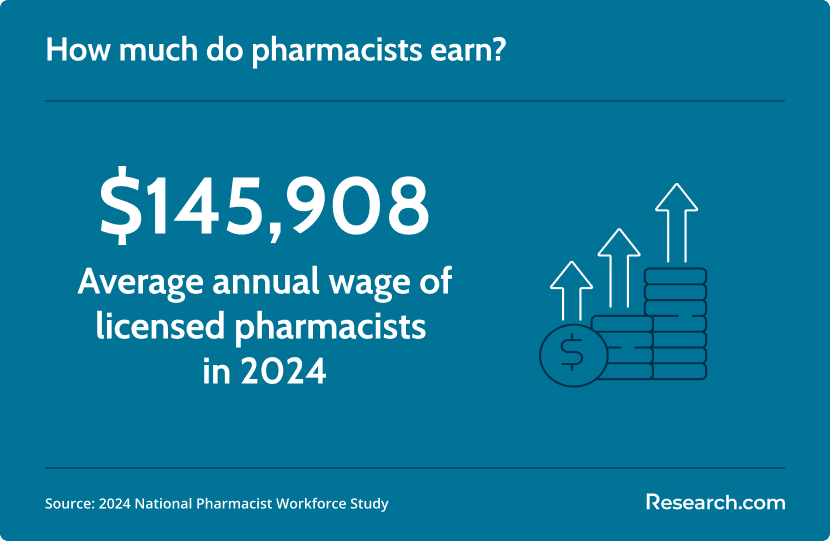
Meanwhile, data from the 2024 National Pharmacist Workforce Study show that the average wage of licensed pharmacists is $145,908. However, the salary of pharmacists or those with a Doctor of Pharmacy varies due to several factors:
- Industry type - Pharmacists in insurance and employee benefit fund industries earn the most, at $173,980 annually. This is because these roles involve complex regulatory work and oversight of high-value healthcare plans, which require advanced expertise.
- Location - Pharmacists in California make the highest salaries, at $162,110 annually, due to the state’s higher cost of living, strong demand for healthcare professionals, and concentration of major healthcare systems.
- Employer type - Community pharmacists earn the least at $123,499, while pharmaceutical industry workers take home $228,036. Hospital, ambulatory care, and managed care pharmacists earn within the $143,000 to $158,000 range.
The abovementioned aside factors like educational attainment, additional certifications, experience, and gender also heavily influence salary. Therefore, it is wise for aspiring pharmacists to consider how these can affect their goals and personal circumstances before entering the field.
These pay structures highlight how professional outcomes can vary by qualification — much like comparing MS vs PsyD in clinical psychology salary, where both paths lead to advanced roles but differ in specialization and earning potential.
What jobs can you get with a Doctor of Pharmacy degree?
A Doctor of Pharmacy opens a wide range of career opportunities beyond traditional retail or hospital settings. With expanding healthcare demands and the integration of data-driven decision-making, pharmacists are increasingly valued for their analytical and leadership skills across diverse industries.
- Industry Pharmacists ($228,036): They contribute to the research, development, and testing of new drugs for safety and efficacy before reaching the market. These professionals work closely with scientists, engineers, and regulatory experts to bring medications from concept to commercial production.
- Pharmacy Directors ($162,289): They oversee the operations of pharmacy departments, managing staff, budgets, and compliance with healthcare laws. Directors develop and enforce policies to improve medication management and patient safety.
- Pharmacy Benefit Managers ($156,381): These professionals negotiate drug pricing and insurance coverage on behalf of healthcare organizations and employers. They analyze cost-effectiveness and design pharmacy benefit plans that balance affordability with patient access.
- Informatics Pharmacists ($156,236): They specialize in integrating pharmacy data systems to improve clinical decision-making and patient safety. Using electronic health records and digital analytics, they ensure accurate medication tracking and support evidence-based treatment plans.
- Pharmaceutical Marketers ($131,656): They develop strategies to promote medications to healthcare providers and the public. By understanding both scientific data and consumer behavior, they craft messages that align with regulatory standards while driving brand awareness.
- Pharmaceutical Sales Representatives ($114,520): They educate physicians and healthcare facilities about new drugs, therapies, and technologies. This role requires strong communication skills and a deep understanding of pharmacology and patient needs.
- Medical Scientists ($112,690): They design and conduct experiments to advance medical knowledge and drug discovery. Many focus on clinical trials that evaluate the effectiveness of new treatments.
- Chemists ($95,940): They analyze the composition of substances used in pharmaceuticals and develop methods for testing drug purity and stability. Chemists collaborate with research teams to refine compounds for therapeutic use.
Retail pharmacists showed the highest number of job postings for the first quarter of 2025. According to the Pharmacy Workforce Center, this role accounted for 9,661 postings, followed by clinical pharmacists (4,414) and hospital pharmacists (3,476). This shows that retail and clinical practice remain the most accessible and in-demand entry points for new graduates.
Alternatively, a pharmacist can even switch to patient-facing roles or interdisciplinary care, reflecting trends similar to those seen among professionals exploring becoming a nurse later in life. This crossover allows them to apply medication expertise directly in clinical settings and patient education.
This chart highlights the annual salaries of pharmacists and similar careers.
What is the job outlook for pharmacists?
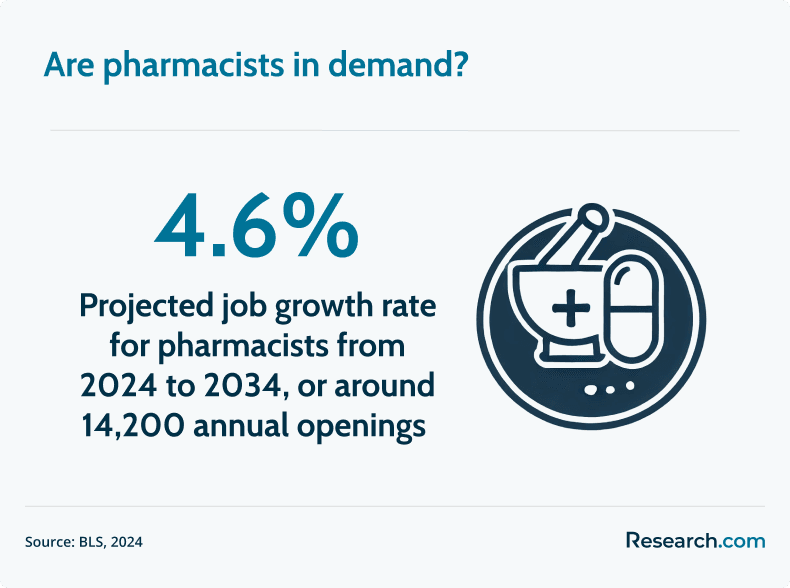
The employment outlook for pharmacists is projected to remain steady, with a 4.6% growth rate between 2024 and 2034. This brings roughly 14,200 job openings each year.
Much of this demand will come from retirements within an aging workforce, as 28.3% of pharmacists are between ages 51 and 60, while 19.2% are 60 or older. This trend creates more opportunities for new graduates with a Doctor of Pharmacy to enter the field.
In addition, healthcare systems are increasingly relying on pharmacists in hospitals and clinics to deliver medication management, patient counseling, and support for chronic care, making them essential members of interdisciplinary healthcare teams.
However, several challenges continue to shape the profession’s landscape. Declining pharmacy school enrollments have raised concerns about future workforce supply, with 71% of experts predicting that this downward trend will persist over the next five years, according to the 2025 Pharmacy Forecast (DiPiro et al., 2025). This could leave some residency programs and clinical positions unfilled despite growing healthcare demands.
At the same time, the pharmacist salary stagnation, especially in retail and community settings where pay increases from 2023 to 2024 were minimal or lagged behind others, can potentially make the field less attractive even as job stability remains strong.
Therefore, the future of the field will largely depend on how effectively pharmacy education and its workforce adapts to these changes and encourages new professionals to step into a growing and increasingly vital role in patient care.
In this way, pharmacy’s steady employment outlook mirrors that of many healthcare leadership roles, such as those studied in how long does it take to become a healthcare administrator, where job stability and long-term growth are tied to an evolving healthcare system.
What are the pros and cons of pursuing a Doctor of Pharmacy?
Pursuing a Doctor of Pharmacy offers both rewarding opportunities and important considerations for anyone planning a career in the pharmaceutical field. While the profession provides a strong balance between patient care, science, and healthcare innovation, it also demands significant time, effort, and financial investment.
Understanding the advantages and challenges can help future pharmacists make informed decisions about their education and long-term plans.
Pros
- Opportunities span across clinical practice, research, education, and the pharmaceutical industry.
- Ongoing demand for medication management and public health services ensures steady employment.
- Pharmacists play a key role in improving health outcomes and promoting medication safety.
Cons
- Completing coursework, clinical rotations, and licensing exams can take six or more years.
- While pharmacists generally earn competitive wages, satisfaction with pay varies.
- Long hours, high responsibility, and patient demands can lead to burnout.
Overall, becoming a pharmacist can be a deeply fulfilling career choice for those passionate about healthcare and science. However, it is crucial to weigh the professional rewards against the educational and financial demands.
Should you get a PharmD vs. PhD vs. Master of Science?
Choosing between a Doctor of Pharmacy, PhD, or MS in pharmacy-related majors can be an overwhelming experience. Each degree serves a distinct purpose within the pharmaceutical and healthcare fields.
Get a PharmD if you…
- want to work as a pharmacist, directly with patients in clinical, hospital, or other healthcare settings.
- are interested in applying drug knowledge to improve medication safety and health outcomes.
- prefer a professional degree that leads to licensure and immediate entry into healthcare practice.
Get a PhD if you…
- aspire to teach at universities or conduct advanced research in pharmacology, drug development, or biotechnology.
- enjoy laboratory work, data analysis, and theoretical study over clinical or patient-facing roles.
- seek leadership positions in research, academia, or pharmaceutical innovation.
Get a Master of Science if you…
- want to strengthen your scientific foundation in pharmacology or pharmaceutical sciences without committing to a doctorate.
- plan to work in regulatory affairs, clinical research, or drug manufacturing.
- prefer a shorter, research-focused degree that offers flexibility across science and industry roles.
Ultimately, a clear understanding of these considerations, as well as your personal strengths, preferred career environment, and long-term goals will help you determine which degree best fits your vision.
Here’s What Graduates Have to Say About Their PharmD Degrees
- Lia: "The clinical rotations in my PharmD program completely changed how I saw pharmacy. Working with patients and collaborating with doctors showed me how every medication decision matters. It was intense and sometimes overwhelming, but those real-world experiences built my confidence fast. Getting my PharmD was the best step I could’ve taken toward becoming a trusted pharmacist."
- Sean: "Earning my PharmD wasn’t easy. I was juggling classes, rotations, and a part-time job all at once. There were times I felt stretched thin, but I kept reminding myself it was an investment in my future. Luckily, it all paid off when I landed a hospital pharmacist position soon after graduation. The stability and fulfillment I’ve found in my career make all of my hard work worth it."
- Cameron: "My PharmD experience helped me grow into more than just a pharmacist—it made me a problem-solver and a leader. I gained hands-on experience in pharmacogenomics and data-driven care, which I now use in pharmaceutical research. It’s exciting to be part of a field that’s always evolving and pushing the boundaries. Without a doubt, earning my PharmD opened the door to a dynamic career."
Key Findings
- Nearly 56% of practicing pharmacists earned a bachelor’s degree as their highest educational attainment, but 83%% of active pharmacists held PharmDs, which still makes it the most preferred pathway to enter the profession.
- Full-time pharmacists who graduated between 2020 and 2024 carry an average loan balance of $167,542.
- More than half (53%) of the pharmacy workforce dispenses medications, counsels patients, and provides over-the-counter drug advice.
- The average wage of licensed pharmacists is $145,908. Community pharmacists earn the least at $123,499, while hospital, ambulatory care, and managed care pharmacists earn within the $143,000 to $158,000 range.
- The employment outlook for pharmacists is 4.6% between 2024 and 2034. This brings roughly 14,200 job openings each year.
References:
- American Association of Colleges of Pharmacy. (2023). First Professional Pharm.D. and Graduate Enrollment Trends. Retrieved October 9, 2025, from https://public.tableau.com/app/profile/aacpdata/viz/FirstProfessionalPharm_D_andGraduateEnrollmentTrends/Final
- National Center for Health Workforce Analysis. (2024, November). State of the U.S. Health Care Workforce, 2024. Health Resources and Services Administration. https://bhw.hrsa.gov/sites/default/files/bureau-health-workforce/state-of-the-health-workforce-report-2024.pdf
- Mott, D. A., Bakken, B. K., Nadi, S., Arya, V., Doucette, W. R., Gaither, C. A., Kreling, D. H., & Schommer, J. C. (2025, June). Final Report of The 2024 National Pharmacist Workforce Survey. Pharmacy Workforce Center. https://www.aacp.org/article/national-pharmacist-workforce-studies
- PayScale. (2025, September 11). Doctor of Pharmacy (PharmD) Degree. Retrieved October 9, 2025, from https://www.payscale.com/research/US/Degree=Doctor_of_Pharmacy_(PharmD)/Salary
- U.S. Bureau of Labor Statistics. (2024). Pharmacists [Interactive data]. Occupational Employment and Wage Statistics (OEWS) Profiles. Retrieved October 9, 2025, from https://data.bls.gov/oesprofile
- U.S. Bureau of Labor Statistics. (2025, August 28). Occupational projections, 2024–2034, and worker characteristics, 2024 (Employment in thousands). Employment Projections. https://www.bls.gov/emp/tables/occupational-projections-and-characteristics.htm
Other Things You Should Know About Doctor of Pharmacy vs. Pharmacist
The PharmD is a professional degree required to become a pharmacist. After earning a PharmD, passing the licensing exam grants the RPh designation, which stands for "Registered Pharmacist." A pharmacist is a healthcare professional licensed to prepare and dispense medications.
In 2027, a Doctor of Pharmacy (PharmD) focuses on clinical patient care, medication management, and pharmaceutical research, while a licensed pharmacist dispenses medications, counsels patients on prescriptions, and ensures regulatory compliance in a pharmacy setting.
In 2027, a Doctor of Pharmacy (PharmD) is a professional doctorate required for licensure as a pharmacist. While all pharmacists must earn a PharmD, those holding the degree may pursue advanced roles and specializations post-licensure. This distinction emphasizes a commitment to comprehensive pharmaceutical education and clinical expertise.


