
2027 What Is the Timeline for Obtaining a Healthcare Management Degree?

Co-Founder and Chief Data Scientist
The decision to pursue a career in healthcare management is an investment in a fast-growing and vital sector. However, the path isn't a single straight line; it's a dynamic timeline influenced by your current education, professional experience, and the specific degree level you choose. Understanding this timeline is crucial, as it allows for the effective planning of finances, career transitions, and work-life balance.
According to the U.S. Bureau of Labor Statistics, employment for medical and health services managers is projected to grow 23% until 2034. In this comprehensive guide, we will break down the academic journey into distinct phases, moving from initial prerequisite requirements through to post-graduation career placement. You can expect to find a detailed analysis of all key factors that impact your overall timeline, ensuring you have a clear roadmap to becoming a successful healthcare leader.
Key Things You Should Know About a Healthcare Management Degree
- A healthcare management degree typically allows entry into jobs such as healthcare administrator, health services manager or chief administrator positions in various medical settings.
- The time required to earn a healthcare management degree varies by academic level. A bachelor’s degree typically takes about four years to complete, a master’s degree usually requires up to two years, and a doctoral degree can take as long as five years, depending on the program structure and enrollment pace.
- Other factors such as a student's pace also affect the timeline to obtain a healthcare management degree.
- What is the timeline for obtaining a healthcare management degree? Timeline
- What are the different degree levels in healthcare management? Degree Levels
- What are the admission requirements for a healthcare management degree program? Admission Requirements
- What subjects are included in a healthcare management degree curriculum? What subjects are included in a healthcare management degree curriculum?
- How long does part-time vs full-time study take for healthcare management degrees? Completion Time
- How much does a healthcare management degree cost on average? Program Cost
- What are common certifications for healthcare management graduates? Certifications
- How do mentorship and networking opportunities affect degree completion time? How do mentorship and networking opportunities affect degree completion time?
- What entry-level jobs are available immediately after obtaining the degree? What entry-level jobs are available immediately after obtaining the degree?
- What is the job outlook for healthcare management degree holders? Job Outlook
What is the timeline for obtaining a healthcare management degree?
The overall timeline for obtaining a healthcare management degree is highly variable, primarily dictated by the educational level pursued and the student's enrollment pace.
Bachelor’s Degree (4 years)
The foundational step for most healthcare management careers is earning a Bachelor of Science in Healthcare Management (BSHM) or a related business or health administration field. This typically takes 4 years of full-time study. However, students in accelerated or degree-completion programs, especially those offered online, can finish in as little as 2–3 years if they transfer previous credits or have relevant professional experience.
Master’s Degree (1.5 to 2 years)
To advance to mid-level and senior management roles, professionals often pursue a Master of Healthcare Administration (MHA) or equivalent CAHME-accredited MHA programs.
- Full-time MHA programs usually take 18–24 months (1.5–2 years) to complete, often including a residency or fellowship.
- Part-time or executive MHA programs, tailored for working professionals, extend the duration to 3–5 years.
Doctoral Degree (3 to 5 years)
For those aiming for executive, academic, or consulting roles, the Doctor of Healthcare Administration (D.H.A.) is the highest credential. This advanced degree typically requires 3–5 years of full-time study beyond the master’s level, encompassing intensive coursework, a dissertation, and a capstone project.
What are the different degree levels in healthcare management?
The degrees in healthcare management follow a standard academic progression, but the specific title varies, especially at the graduate level, depending on the program's focus (administration, business, or public health).
Prospective students often search for the best online MHA programs with no GRE requirement to advance their careers, as many reputable institutions—such as George Washington University, Purdue University, and Ohio University—now offer top-tier MHA or Master of Science (MS) in Health Care Administration programs that waive the GRE or GMAT for admission.
- Associate Degree: This is often a 2-year program providing foundational knowledge and skills, suitable for entry-level roles in healthcare administration or related fields.
- Bachelor's Degree: Typically a 3-4 year program such as a Bachelor of Science (BS) or Bachelor of Arts (BA) in Healthcare Management, Health Services Administration, or related fields. It prepares students for mid-level management roles and covers administrative, technical, and leadership skills.
- Master's Degree: Usually a 1-2 year program for advanced specialization or leadership roles. Common degrees include MHA, Master of Science (MS) in Healthcare Management, Master of Business Administration (MBA) with healthcare focus, and Master of Public Health (MPH). These programs enhance managerial, strategic, financial, and operational expertise.
- Doctoral Degrees: These include DHA, Doctor of Philosophy (PhD), Doctor of Business Administration (DBA), and Doctor of Public Health (DrPH). They are for those pursuing academic, research, or high-level executive careers in healthcare management.
What are the admission requirements for a healthcare management degree program?
Admission requirements for healthcare management degree programs vary by level but generally include the following:
For bachelor's degree programs, applicants typically need a high school diploma or GED, official transcripts, and a minimum GPA (e.g., around 2.0 to 3.0). Some programs require completion of prerequisite courses such as math, statistics, and social sciences. Transfer credits from previous college coursework may be considered.
Applicants to a master's degree programs (e.g., MHA, MBA with healthcare focus) a usually need a bachelor's degree from an accredited institution with a minimum GPA (commonly around 3.0), GRE or GMAT test scores, letters of recommendation, a personal statement, relevant work experience, and proof of English proficiency if applicable (TOEFL/IELTS). Some programs accept degrees from related fields, not necessarily healthcare-specific.
For online healthcare management degrees, admission typically requires a high school diploma or equivalent for undergraduate programs or a bachelor's degree for graduate programs, with additional requirements varying by school such as industry certifications, satisfactory college coursework, and proficiency in English.
Applicants from allied health backgrounds often ask questions similar to can you become a nurse with a health science degree, reflecting the overlap between general health science foundations and healthcare administration pathways.
What subjects are included in a healthcare management degree curriculum?
A healthcare management degree curriculum typically includes a broad range of subjects designed to prepare students for leadership and administrative roles in healthcare. Common subjects include:
- Health Policy and Politics: Analysis of major public health policies, healthcare reform, and the political processes that influence the industry.
- Medical Terminology and Epidemiology: Foundational courses to understand the language of clinical medicine and the study of disease patterns.
- Population Health: Focuses on the health outcomes of groups of individuals, including factors that affect these outcomes.
- Organizational Behavior and Theory: How healthcare organizations function, including management of change, culture, and inter-professional teams.
- Healthcare Leadership: Development of leadership styles, ethical decision-making, and professional development.
- Human Resource (HR) Management: Principles of personnel management, staffing, labor relations, compensation, and retention in healthcare.
- Healthcare Finance and Accounting: Fundamentals of budgeting, financial analysis, cost accounting, and working capital management.
- Reimbursement Systems: Detailed study of how providers are paid by public programs (Medicare/Medicaid) and private insurers.
The curriculum also often integrates practicum experiences or case studies for applied learning. The specific courses and credit hours vary by program but generally cover these interdisciplinary areas bridging business, healthcare, law, and public health.
The curriculum also often integrates practicum experiences or case studies for applied learning. The specific courses and credit hours vary by program but generally cover these interdisciplinary areas bridging business, healthcare, law, and public health. Some programs even align coursework with national frameworks similar to what does MDS stand for in special education, emphasizing structured data, compliance, and quality metrics for institutional improvement.
How long does part-time vs full-time study take for healthcare management degrees?
The typical duration to complete healthcare management degrees varies significantly based on whether the study is full-time or part-time. This flexibility allows working professionals to continue employment while pursuing advanced education in healthcare management.
- Full-time study for a Bachelor's degree in healthcare management usually takes about 4 years to complete, covering 120 semester credit hours. Accelerated bachelor's programs may shorten this time to around 18 months to 3 years depending on the program design.
- Full-time Master's degrees, such as a Master of Health Administration (MHA) or MBA with healthcare focus, generally take 2 to 3 years to complete. Accelerated full-time master's programs can be finished in 1 to 1.5 years, often combining internships or residencies within this timeframe.
- Part-time master's programs typically take longer, often spanning about 3 to 4 years, as students take fewer credit hours per semester to balance work and study. Some part-time Master of Public Health (MPH) programs may extend up to 5 years.
- Part-time study for bachelor's degrees often extends past 4 years, depending on course load, individual pace, and transferred credits.
Program length can also vary depending on professional focus, just as study time differs across other healthcare fields—such as acute care vs critical care NP training tracks, which demonstrate how specialization can influence total study duration.
How much does a healthcare management degree cost on average?
The cost of a healthcare management degree varies widely based on the degree level, the type of institution (public vs. private), and whether the program is online or on-campus.
For Medical Assistants looking to advance, investigating the tuition of the best medical assistant to RN bridge program online is a critical financial step, as the expense of these accelerated nursing tracks will also differ significantly from traditional programs, depending on how much prior education and experience is credited.
Bachelor's Degree in Healthcare Management/Administration
- Public In-State: For a full four-year program, total tuition can be in the $30,000 - $45,000 range.
- Online/Affordable Private: Many online programs offer very competitive flat-rate tuition, with some totaling $40,000 - $65,000. Some are much lower for students who transfer in many credits.
Master of Healthcare Administration
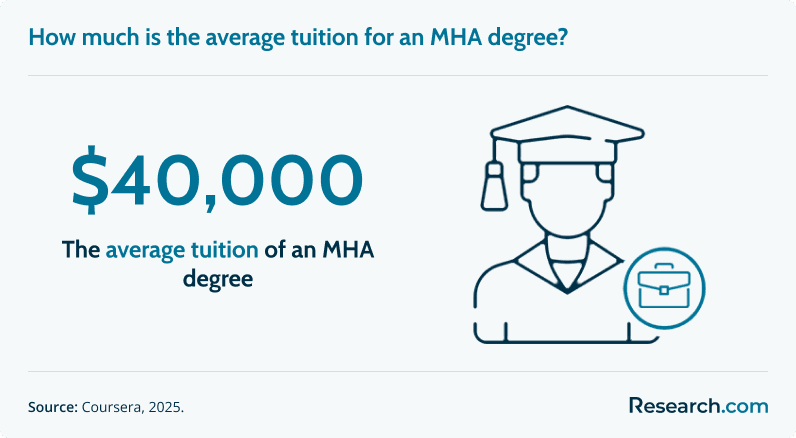
- Affordable/Online Programs: Total tuition can start around $40,000 - $45,000.
- Traditional/Prestigious Programs (Public & Private): Total tuition often ranges from $60,000 to $90,000+.
Doctor of Healthcare Administration
- Total Tuition: Given that these are terminal professional degrees for executives, the total tuition is high, typically falling between $50,000 and $100,000+. Some programs offer a fixed tuition cap, such as around $48,000, for their total tuition to help control costs.
Important Considerations
- Tuition vs. Total Cost: The figures above are primarily for tuition. The total cost of attendance will be higher and includes mandatory fees, books/supplies, health insurance, and living expenses (especially for on-campus programs).
- Financial Aid and Scholarships: The net cost (what you actually pay) can be significantly lower due to federal aid, scholarships, and employer tuition reimbursement (common for part-time graduate students).
- In-State vs. Out-of-State: Public universities charge considerably more for out-of-state and international students. Many online programs, however, offer the same tuition rate regardless of your residency.
What are common certifications for healthcare management graduates?
Graduates in healthcare management often pursue professional certifications to demonstrate specialized knowledge, boost their credibility, and advance their careers. These credentials typically require a combination of education, work experience, and passing an exam.
- Certified Professional in Healthcare Risk Management (CPHRM): Focuses on managing risks and ensuring patient safety within healthcare organizations. Issued by the American Hospital Association.
- Certified Medical Manager (CMM): Validates competence in the administrative management of medical practices and ambulatory service centers. Offered by the Professional Association of Health Care Office Management (PAHCOM).
- Certified in Healthcare Compliance (CHC): Demonstrates expertise in healthcare compliance regulations, helping organizations maintain legal and ethical standards. Provided by the Compliance Certification Board (CCB).
- Certified Professional in Healthcare Information and Management Systems (CPHIMS): Focuses on skills in healthcare IT and management systems, awarded by HIMSS.
- Fellow of the American College of Healthcare Executives (FACHE): A prestigious certification for advanced healthcare managers and executives, requiring experience and continuing education.
- Certification in Healthcare Quality Management (CHCQM): Validates skills in patient safety and quality management. Issued by the American Board of Quality Assurance and Utilization Review Physicians (ABQAURP).
- Certified Healthcare Access Manager (CHAM): For professionals who manage patient access services in healthcare organizations.
Healthcare managers seeking clinical alignment may also compare credentials such as ANCC vs AANP certification, depending on whether they manage nursing-led or broader interdisciplinary healthcare teams.
How do mentorship and networking opportunities affect degree completion time?
Mentorship and networking opportunities positively affect healthcare management degree completion time by providing personalized guidance, academic support, and professional development that help students stay on track and manage challenges effectively.
Mentorship programs have been shown to reduce the risk of failure, support work-life balance, and improve academic progress by addressing time management, study style, and well-being issues among students. They also facilitate timely corrective actions for struggling students, helping many graduate on time or with minimal delays.
The supportive relationship with a mentor creates a safe environment for problem-solving and skill development, which enhances persistence and reduces burnout during the degree program. Additionally, networking within healthcare management programs connects students to industry professionals, opening doors to career opportunities, internships, and collaborative learning that motivate students to complete their degrees efficiently.
For nurses looking to move into management, gaining this formal training through a short-term credential addresses the question of what can you do with a nursing leadership graduate certificate: it qualifies them for roles like Charge Nurse, Clinical Supervisor, or Nurse Manager.
Overall, structured mentorship and active networking play a significant role in ensuring smooth academic progress and timely degree completion while preparing students for post-graduation success in high-demand administrative and leadership roles across the healthcare system.
What entry-level jobs are available immediately after obtaining the degree?
Common entry-level jobs immediately available after obtaining a healthcare management degree, opening doors for diverse RN MBA careers and other paths, include
- Healthcare Department Manager: Oversees specific departments in larger hospitals or healthcare facilities, managing operations, staff, and budgeting. Requires a bachelor's degree and earns a median salary around $117,960.
- Practice Manager: Manages day-to-day operations of medical clinics or physician practices, including budgeting and personnel issues. Typical median salary is about $108,390.
- Finance Manager: Focuses on financial operations in healthcare settings like hospitals or insurance companies, ensuring profitability and compliance. Median salary may go up to approximately $161,700.
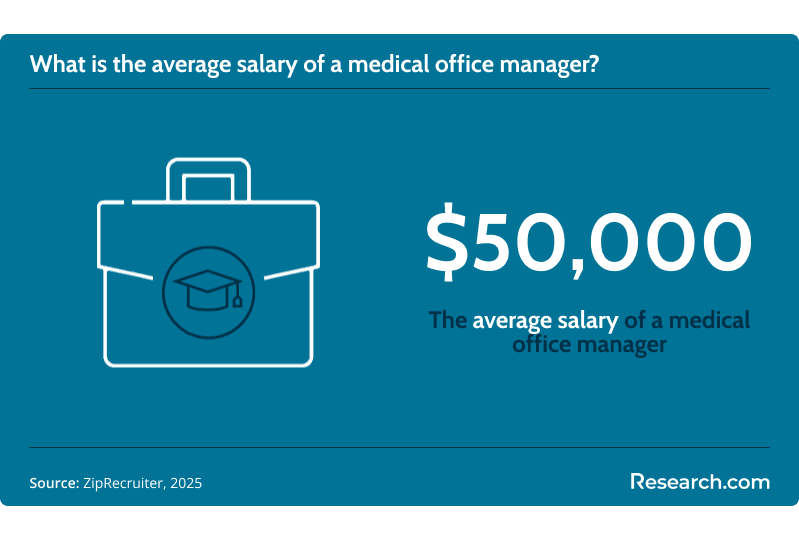
- Medical Office Manager: Handles administrative functions in medical offices including scheduling, billing, and staff coordination. Average salaries vary but typically range from $50,000 to $70,000.
- Entry-level administrative roles: These roles, such as Patient Services Representative, Medical Records Clerk, Billing Coordinator, and Clinical Support Specialist are also common. These roles provide foundational experience in healthcare administration with salaries usually between $30,000 and $55,000.
What is the job outlook for healthcare management degree holders?
The job outlook for healthcare management degree holders is very positive and robust. Employment for medical and health services managers is projected to grow about 23 to 29 percent from 2024 to 2034, a rate much faster than the average for all occupations.
This growth is driven primarily by an aging population, increasing chronic health conditions, advancements in medical technology, and the ongoing need to improve healthcare quality and efficiency. Healthcare managers are vital to the smooth operation of hospitals, clinics, and other medical facilities, overseeing staffing, finances, compliance, and service delivery.
The median annual salary for healthcare managers is approximately $110,680, with higher earnings potential for experienced professionals and those in senior leadership roles. Due to the expanding healthcare sector and the critical role of management, graduates with healthcare management degrees have excellent job prospects, career stability, and opportunities for advancement across various healthcare settings.
Your foundation in the field, whether or not you have considered what can you do with an associate's degree in medical assisting, positions you perfectly to understand the operational side of a clinical environment.
Here's what graduates have to say about their healthcare management degree
- Mina: "That degree completely transformed my understanding of the healthcare system, moving me from the clinical side to a leadership role where I can truly influence patient care on a systemic level. The coursework was challenging but incredibly rewarding, giving me the business acumen and confidence to manage a large departmental budget. I feel prepared to lead change"
- Darren: "I’m so glad I chose healthcare management; the program connected me with vital policy and finance knowledge that I was missing, which quickly made me a valuable asset in my organization. Seeing how my decisions directly impact quality improvement efforts is an emotional highlight of my new role, and the degree made that possible. It opened doors I didn't even know existed"
- Aria: "The blend of core business theory with practical medical case studies was the best part of the curriculum, helping me translate management concepts into real-world healthcare solutions immediately. I now approach complex operational problems with a new sense of purpose and the data-driven skills to find effective answers. Earning this degree has given me immense professional satisfaction"
Key Findings
- A bachelor's degree in healthcare management requires 4 years of full-time study; some online or accelerated programs may reduce this to 2–3 years.
- Full-time master's degrees, such as a Master of Health Administration (MHA) or MBA with healthcare focus, generally take 2 to 3 years to complete.
- Some MHA programs include internships or residencies that may extend the total program length.
- Students with prior coursework or healthcare experience can often shorten completion time through credit transfers.
- A doctoral degree in healthcare management requires 3 to 5 years post-master’s, including advanced coursework, dissertation, and research projects.
References:
- Bureau of Labor Statistics (2021). Medical and Health Services Managers: Occupational Outlook Handbook: U.S. Bureau of Labor Statistics. Medical and Health Services Managers. https://www.bls.gov/ooh/management/medical-and-health-services-managers.htm
- Kasten, J. E. (2020). Big Data Applications in Healthcare Administration. International Journal of Big Data and Analytics in Healthcare, 5(2), 1237. https://doi.org/10.4018/ijbdah.2020070102
- McKinsey and Company. (2024). What to expect in US healthcare in 2024 and beyond. McKinsey and Company.
- Moody, J. (2021, April 1). What’s a Good ACT Score? U.S. News. https://www.usnews.com/education/best-colleges/articles/understand-whats-a-good-act-score-for-college-admissions
- PayScale. (2024a). Bachelor of Science (BS / BSc), Health Care Management Jobs by Salary.
Other Things You Should Know About The Timeline for Obtaining a Healthcare Management Degree
In 2027, online healthcare management degree programs typically offer more flexible and rolling admission deadlines compared to traditional programs, allowing for quicker enrollment. However, exact timelines may vary by institution, so it's advisable to check specific program details.
Yes, it is generally possible to change specializations mid-degree in Master of Healthcare Administration (MHA) programs without significantly extending the timeline, but this depends on the institution’s policies and how far along the student is in the program.
Many MHA programs offer a core set of required courses that cover foundational knowledge, followed by electives or specialization courses. Since specializations typically involve choosing specific elective courses, students can often switch their specialization focus by selecting different electives as long as they meet the credit requirements for graduation.
In 2027, prerequisite courses for a healthcare management degree typically include subjects like biology, statistics, and business fundamentals. These courses ensure students have the foundational knowledge necessary for the program, aligning with industry standards for healthcare management education.


