
2027 What is an MSD Degree in Special Education: Guide to Moderate and Severe Disabilities

Co-Founder and Chief Data Scientist
The demand for highly skilled special education professionals is driven by a critical need in our schools. According to the most recent educational data, 51% of public schools reported needing to fill special education positions, highlighting a significant staffing shortage. At the same time, 72% of 4th graders with disabilities scored below the basic achievement level in reading, underscoring the urgency for expert teachers who can provide effective, evidence-based instruction.
A master's degree in moderate and severe disabilities (MSD) is a specialized credential that directly addresses this challenge. For those asking, "what is an MSD degree in special education," it is a focused program designed to prepare educators for a secure, meaningful career serving students with the most complex needs. This guide offers a path to becoming an indispensable expert in a high-demand field.
Key Things You Should Know About Master's in Special Education Programs
- The median annual wage for special education teachers was $64,270. Earning a master's degree is a key factor that can place you on a higher pay scale in many school districts.
- The average total tuition for a master's degree in special education is approximately $21,700. Costs can range from about $12,900 to over $33,900, depending on the institution.
- A master’s program in special education typically requires 30 to 36 credit hours. Full-time students can often complete their degree in 1.5 to 2 years, with many universities offering flexible options for working professionals.
- There is a critical, nationwide staffing shortage of special education teachers. This creates high demand and strong job security for qualified professionals entering the field.
- About 37,800 openings for special education teachers are expected each year. This provides a wide range of employment options for graduates across the country.
- What does MSD mean in special education? Degree Overview
- What is the difference between a general special education master's and an MSD degree? Master's vs. MSD
- What professional standards guide an MSD degree program? What professional standards guide an MSD degree program?
- What courses are typically required in an MSD program? Typical Courses
- How long does it take to get a master's in special education? Program Duration
- How much does a master's in special education typically cost? Education Cost
- What types of disabilities are considered moderate to severe? What types of disabilities are considered moderate to severe?
- What key skills does an MSD program teach you? Top Skills
- What is an Individualized Education Program (IEP)? What is an Individualized Education Program (IEP)?
- Can Advanced Degrees Accelerate Your Career in Special Education? Can Advanced Degrees Accelerate Your Career in Special Education?
- What is the job outlook for special education teachers? Job Outlook
- How much do special education teachers with a master's degree make? Average Salary
- What are the steps to becoming a licensed teacher after getting your degree? What are the steps to becoming a licensed teacher after getting your degree?
What does MSD mean in special education?
The term "moderate and severe disabilities" (MSD) is a functional classification used by states and school districts to describe students who require extensive support. It is not a specific disability category under the federal Individuals with Disabilities Education Act (IDEA). This distinction is the key to understanding its meaning in the field.
Instead of referring to a single diagnosis, MSD is a practical label that helps educators and administrators identify students who need the most intensive and individualized instruction. This needs-based approach allows schools to allocate the right resources and personnel.
Understanding this classification is central to the question of "What is an MSD degree in special education?," because the degree itself is designed to train you to meet this specific, high level of student need, regardless of the underlying diagnosis.
In short, MSD is about the intensity of support a student requires to succeed, not a specific federal label. Now that you know what MSD means as a classification, let's explore which specific student populations this typically includes. Educators entering this field often begin with foundational training in early learning—making it useful to understand the difference between a certificate and degree in early childhood education, since that early specialization can lead naturally into advanced MSD-focused work later on.
What is the difference between a general special education master's and an MSD degree?
The fundamental difference between these two advanced degrees lies in their scope and focus. While both build your skills, they prepare you for distinct roles and student populations.
- General Special Education Master's: This degree offers breadth. It is designed to cover a wide range of disabilities, typically focusing on students with mild-to-moderate needs, and prepares you to work effectively in more inclusive classroom settings.
- MSD Master's Degree: This degree provides depth. It is a specialization that delivers intensive, focused training on advanced instructional strategies for students with the most complex needs.
For a practicing teacher, the MSD path isn't redundant; it is a strategic move that builds upon an existing foundation to develop true expertise. Understanding this difference is key to knowing what is an MSD degree in special education and how it functions as a specific career accelerator. Teachers comparing graduate paths sometimes also wonder what is the difference between MS and Executive MS, especially when exploring leadership or administrative options alongside classroom-focused credentials.
Understanding the Landscape of Specializations
Choosing a specialization is a strategic decision that sets you on a distinct career path. It’s a less common route, as only 6% of education graduates have a special needs education specialization. This highlights its value.
Specialization in education can take many forms; some educators choose to focus on a specific developmental stage by pursuing a fast-track early childhood education master's degree online, while an MSD degree focuses on the intensity of student need.
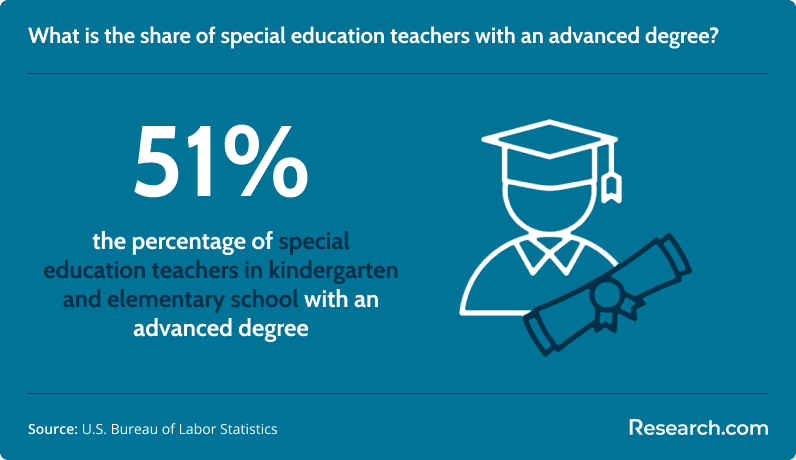
This advanced training is reflected in the field, where a master's degree is a common credential for those seeking to become leaders.
This distinction in purpose is reflected in the rigorous professional standards that guide these specialized programs.
The chart below shows the education levels of special education teachers in the United States.
What professional standards guide an MSD degree program?
A reputable master's in moderate and severe disabilities is guided by rigorous professional standards set by national bodies like the Council for Exceptional Children (CEC). This oversight is a critical feature, ensuring that the curriculum is built on a foundation of evidence-based practices and ethical guidelines.
These standards are what give the degree its professional legitimacy, signaling to school districts nationwide that a graduate possesses skills that are current, effective, and relevant to the complex needs of students.
The focus on national standards is a hallmark of all licensed helping professions. Just as counselors follow specific training protocols, which you can see in the different LCSW vs LPC degree requirements and curriculum, MSD educators are held to a high standard to ensure they are prepared for the complexities of the role.
These standards are designed to ensure that every graduate possesses a specific set of key skills.
What courses are typically required in an MSD program?
The curriculum in a Master's in Moderate and Severe Disabilities program focuses directly on advanced, practical skills for working with students who have the most complex needs. This ensures that you are gaining new, high-level competencies rather than repeating foundational coursework.
You can expect to build an expert-level toolkit through courses like these:
- Advanced Assessment: These courses teach you how to look beyond standard testing methods to accurately evaluate a student's academic, functional, and developmental profile to inform instruction.
- Curriculum Modification: Here, you will learn to adapt and design curricula using evidence-based practices, making grade-level content accessible for students with significant cognitive or physical disabilities.
- Positive Behavior Intervention and Support (PBIS): This coursework provides strategies for creating safe and supportive learning environments, focusing on proactive techniques to improve student behavior and social-emotional skills.
- Assistive Technology: You will explore and learn to implement a wide range of low- and high-tech tools that help students with severe disabilities access the curriculum and communicate more effectively.
- Collaboration with Families and Agencies: These courses prepare you to work effectively as part of a multidisciplinary team, building strong partnerships with parents, caregivers, and external service providers to support student success.
As you can see, the coursework is designed to build a toolkit of evidence-based strategies you can apply immediately. A curriculum this intensive requires a significant investment of time, which we'll cover next. Students with an interest in instructional leadership may also consider the benefit of majoring in early childhood education before specializing, as it builds a developmental understanding that complements MSD strategies.
How long does it take to get a master's in special education?
A master's degree in special education typically requires 30 to 36 credit hours and can be completed in 1.5 to 2 years by full-time students. Recognizing that many graduate students are already working professionals, universities often design their programs with significant flexibility.
This means you have the ability to choose a pace that aligns with your career and personal commitments, with many programs offering part-time and online options that extend the timeline but provide greater balance. This built-in adaptability makes earning the degree a manageable goal for teachers looking to upskill or career-changers entering the field.
Exploring Accelerated and Alternative Pathways
We know that time-to-completion is a critical factor in any career decision. While the 1.5-to-2-year timeline is standard for a master's degree, it's helpful to know that other routes are also available.
For those who want to gain specialized skills on a different timeline, exploring options like graduate certificates can be a valuable step. If you are looking for a quicker way to gain a new credential, you might consider researching the shortest online special education graduate programs to see how they compare.
Alongside the time commitment, the other major part of the investment is the financial cost.
How much does a master's in special education typically cost?
The average total tuition for a master's degree in special education is approximately $21,700. However, it's more helpful to think of this figure as a baseline, as costs can range from about $12,900 to over $33,900. The key takeaway is that the final price is influenced by several factors that you can often control.
An important part of answering "What is an MSD degree in special education?" involves understanding these financial variables. The three primary drivers of cost are the type of institution (public universities are often more affordable than private ones), your residency status (in-state tuition is typically lower than out-of-state), and the program format (online programs can sometimes offer savings on fees and commuting costs).
By researching programs and weighing these factors, you can find a high-quality degree that aligns with your budget. This means you have the power to make a strategic financial decision on your path to specialization.
If you have trouble affording the expenses, you can seek financial aid from various sources, including the Free Application for Federal Student Aid (FAFSA) for federal aid.
If you have trouble affording the expenses, you can seek financial aid from various sources, including the Free Application for Federal Student Aid (FAFSA) for federal aid. Educators seeking flexibility often look into online EdD programs no GRE requirement as a next step after earning their master’s, especially if they plan to move into policy, research, or higher education.
Now that we have a clear picture of the academic program and its cost, let's explore how this education translates into professional practice.
What types of disabilities are considered moderate to severe?
While "moderate to severe" is a functional classification, it most often applies to students with specific diagnoses under the Individuals with Disabilities Education Act (IDEA). An MSD-trained teacher is equipped to work with students who have the following conditions and require extensive, individualized support.
- Intellectual Disability: This involves significant limitations in both intellectual functioning (reasoning, learning, problem-solving) and in adaptive behavior, which covers a range of everyday social and practical skills.
- Autism Spectrum Disorder (ASD): Students with severe ASD may have significant challenges in communication, social interaction, and behavior, requiring highly structured and specialized teaching strategies.
- Multiple Disabilities: This category applies to students who have two or more co-occurring impairments (such as intellectual disability and an orthopedic impairment), the combination of which causes such severe educational needs that they cannot be accommodated in special education programs solely for one of the impairments.
- Traumatic Brain Injury (TBI): An acquired injury to the brain caused by an external physical force, resulting in total or partial functional disability or psychosocial impairment that adversely affects a child's educational performance.
- Deaf-Blindness: This involves concomitant hearing and visual impairments, the combination of which creates severe communication and other developmental and educational needs.
The common factor across these diagnoses is the need for an educator with advanced training. Understanding these specific student needs is the key to seeing why a specialized degree is so different from a general one.
What key skills does an MSD program teach you?
To fully understand the answer to the question, "What is an MSD degree in special education?" it's important to learn what to expect from the program.
An MSD program focuses on building a high-level set of technical, evidence-based skills. This professional credential equips you with a specialized toolkit to effectively serve students with complex needs. Key skills include:
- Individualized Assessment: You will learn to conduct comprehensive evaluations that go beyond standard testing to accurately understand a student's unique strengths and challenges.
- Advanced Curriculum Modification: This involves adapting and designing instructional materials to make grade-level content accessible and meaningful for students with significant disabilities.
- Positive Behavior Intervention: You will master proactive, data-informed strategies to create safe and supportive learning environments that foster social and emotional growth.
- Assistive Technology Implementation: This skill involves selecting and using a range of low- and high-tech tools that help students access the curriculum, communicate, and increase their independence.
- Professional Collaboration: You will develop the expertise to lead multidisciplinary teams, working effectively with families, therapists, and other agencies to create a cohesive support system for each student.
One of the most important applications of these skills is in developing a student's Individualized Education Program, or IEP.
What is an Individualized Education Program (IEP)?
An Individualized Education Program (IEP) is a customized, legally mandated plan that outlines specific educational goals and services for a student with a disability.
For anyone new to the field, the simplest way to think of the IEP is as the central blueprint for that student's entire educational journey. It's not just a lesson plan; it is a legally binding document that the special education teacher is primarily responsible for developing, implementing, and managing in collaboration with parents, general educators, and other professionals.
Mastering the IEP process is one of the most critical functions of the job. It is the work product that translates assessment and expertise into a concrete, actionable strategy for student success. With a full understanding of the degree and the skills it provides, we can now turn to the final step: the career path and its rewards.
Can Advanced Degrees Accelerate Your Career in Special Education?
Investing in advanced academic credentials can open up leadership and specialized roles that extend beyond classroom teaching. An advanced degree, such as a Doctor of Education, not only deepens expertise in educational research and policy but also provides a competitive edge for securing positions in administration, curriculum development, and higher education. This academic advancement supports professionals in navigating complex challenges in the field while influencing systemic improvements. For educators seeking to expedite this journey and maximize career potential, consider exploring fastest online EdD programs.
What is the job outlook for special education teachers?
The job outlook is exceptionally strong due to a persistent, nationwide shortage of qualified educators. This high demand translates directly into remarkable career stability for anyone holding a special education credential.
According to the most recent data from the U.S. Bureau of Labor Statistics, special education teachers held about 559,500 jobs, and the field is projected to have about 37,800 openings each year. Moreover, Indeed currently lists over 7,000 job openings for special education teachers.
Unlike many other areas of education, this is a field where graduates can expect to have a wide range of employment options and a high degree of job security from the moment they become licensed.
Career Outlook in the Broader Helping Professions
This type of stability is a key feature of many purpose-driven fields that require specialized, licensed professionals. The security you find in special education is similar to that in other high-need helping professions.
For career-changers exploring different ways to make an impact, it can be helpful to see how this stability compares to other roles. For example, you can get a broader sense of the opportunities in a related field by asking what jobs can you get with a marriage and family therapy degree.
This high demand and job security are directly reflected in the salary potential for qualified professionals.
The visual below details the number of special education teachers in the country.
How much do special education teachers with a master's degree make?
A master's degree is the single most effective strategy for maximizing your earning potential as a special education teacher, as it places you on a higher step on most school districts' salary schedules.
The median annual wage for special education teachers was a competitive $64,270. This salary is higher than that for both kindergarten and elementary school teachers ($62,310) and career and technical education teachers ($62,910), reflecting the high demand for this specialization.
For anyone weighing the investment, the answer to "What is an MSD degree in special education?" from a financial perspective is clear: it is a direct pathway to the upper range of teacher salaries.
Maximizing Your Earning Potential
While the national median provides a strong baseline, your specific salary will also be influenced by your years of experience and, most significantly, your location. Teacher salaries vary considerably from state to state and even from district to district.
To make the most informed decision, it is essential to research the salary schedules in the specific areas where you plan to work. As the data shows, states with a high cost of living often offer higher compensation to match.
What are the steps to becoming a licensed teacher after getting your degree?
Earning your master's degree is the essential step that qualifies you for state licensure, but the license itself is a separate credential. After graduation, you will follow a structured path to become a practicing teacher, which typically includes these key steps.
- Pass state-mandated exams. Most states require candidates to pass standardized tests, such as the Praxis series, that assess their specific content knowledge and pedagogical skills.
- Complete supervised clinical practice. You will need to complete a period of student teaching or a supervised practicum where you apply your skills in a real classroom under the guidance of an experienced mentor.
- Pass a comprehensive background check. As you will be working with a vulnerable student population, a thorough background check is a standard and required step for ensuring student safety.
This structured journey from graduate to licensed professional is common in many fields; it's a progression you can also see when exploring what is the difference between AMFT and LMFT. Once you’re licensed, you'll find a job market with exceptionally high demand.
Here’s What Special Education Teachers Have to Say about Their Career
- Jeffrey: "I was a general SPED teacher for years and felt like I was hitting a wall with my most complex students. Earning a specialized master's online allowed me to keep my job while I studied, which was crucial. The coursework in assistive technology was incredible; I was able to apply what I learned on Monday in my classroom on Tuesday. Now, I feel truly equipped to help every student succeed, no matter their challenges."
- Angela: "As a working teacher, I couldn't afford to waste time repeating courses I'd already taken in my first master's program. I chose my MSD program specifically because the curriculum was all new, advanced content. It was focused entirely on upskilling, not repeating basics. That efficiency made all the difference and respected my previous experience."
- Louise: "For me, it wasn't about the money but about competence. The feeling of not having the right answer for a student is the worst. My program focused heavily on evidence-based practices for severe disabilities, which was exactly the deep dive I needed. I don't feel like I'm just guessing anymore; I have a whole toolkit of proven strategies to draw from."
Key Findings
- The career path is exceptionally stable, with a high degree of job security driven by a nationwide shortage that creates about 37,800 job openings for special education teachers each year.
- An advanced degree directly impacts earning potential, as 54% of special education teachers in kindergarten and elementary school hold one, positioning them for higher placement on district salary schedules.
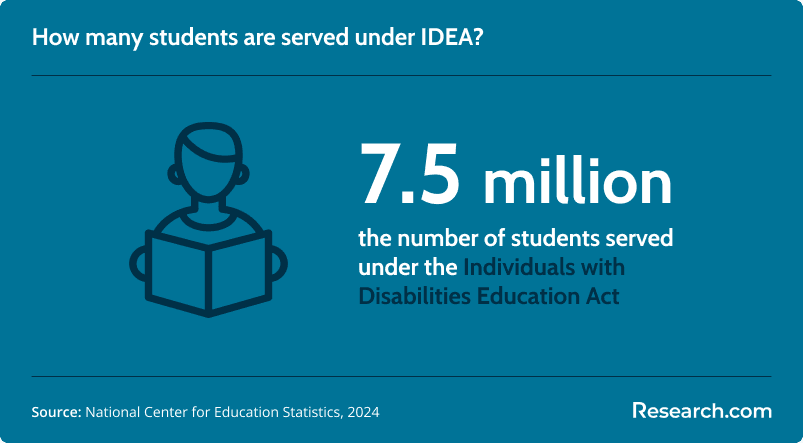
- The degree prepares you to serve a large and vital student population, as 7.5 million students, or 15% of total public school enrollment, were served under the Individuals with Disabilities Education Act (IDEA) in the 2022-23 school year.
- The financial return on investment is clear, with a median annual wage of $64,270 for special education teachers, a figure higher than that for general elementary school or career education teachers.
- The curriculum is designed for specialization, focusing on advanced skills like assistive technology and curriculum modification to ensure it builds upon, rather than repeats, a generalist's foundational knowledge.* The master's degree is the key that unlocks eligibility for state licensure, which is a separate and required final step involving state exams, supervised practice, and a background check.
References:
- National Center for Education Statistics. (2024, December 12). Public school leaders reports suggest no overall change in the number of teaching positions since last school year. Retrieved October 7, 2025, from https://nces.ed.gov/whatsnew/press_releases/12_12_2024.asp
- National Center for Education Statistics. (2024, May). Students with disabilities. Retrieved October 7, 2025, from https://nces.ed.gov/fastfacts/display.asp?id=64
- National Center for Education Statistics. (2024, May). Students with disabilities. Condition of Education. Retrieved October 7, 2025, from https://nces.ed.gov/programs/coe/indicator/cgg/students-with-disabilities
- U.S. Bureau of Labor Statistics. (2024, April 1). Field of degree: Education. Occupational Outlook Handbook. Retrieved October 7, 2025, from https://www.bls.gov/ooh/field-of-degree/education/education-field-of-degree.htm
- U.S. Bureau of Labor Statistics. (2024, September 6). Special education teachers. Occupational Outlook Handbook. Retrieved October 7, 2025, from https://www.bls.gov/ooh/education-training-and-library/special-education-teachers.htm
- Zippia. (2024, June 14). Special education teacher demographics and statistics in the US. Retrieved October 7, 2025, from https://www.zippia.com/special-education-teacher-jobs/demographics/
- ZipRecruiter. (n.d.). What is the average special education teacher salary by state. Retrieved October 7, 2025, from https://www.ziprecruiter.com/Salaries/What-Is-the-Average-Special-Education-Teacher-Salary-by-State
Other Things You Should Know About an MSD Degree in Special Education
In 2027, prerequisites for admission to an MSD master's program typically include a bachelor's degree from an accredited institution, relevant coursework in education or psychology, and a minimum GPA requirement. Some programs may also require letters of recommendation, a personal statement, and evidence of previous work or volunteer experience with individuals with disabilities.
Yes, many programs offer the opportunity to deepen your expertise in a specific area of interest. It is common for universities to provide a specialization track or concentration that focuses on a particular disability category, such as Autism Spectrum Disorder (ASD) or intellectual disabilities, allowing you to become a leading expert in that niche.
An MSD degree in Special Education focusing on Moderate and Severe Disabilities can lead to roles such as special education teacher, curriculum developer, or educational consultant. Graduates may work in public schools, specialized institutions, or governmental organizations focusing on disability services and support.


