
2027 Master's vs. Executive Master's Degree: Explaining the Difference

Co-Founder and Chief Data Scientist
Earning a master’s degree can deepen your expertise, enhance your employability, and increase your earning potential. Your success in graduate school, however, depends on choosing a program that aligns with your experience, interests, and career goals.
If you are just starting your career, a master’s degree in your field may benefit you. However, mid-level to senior-level professionals may find master’s executive degree programs a better fit for them. Your program of choice largely depends on your experience level, academic interests, and professional goals.
To help you get started on your graduate-school journey, I created this in-depth guide to the differences between master’s degree and master’s executive degree programs. Explore their program-curriculum structure, admission requirements, program costs, industry demands, and available occupations.
Key Things You Should Know about Master’s and Executive Master’s Degree Programs
- A master’s degree is usually designed for recent graduates and early-career professionals aiming to deepen their academic and professional knowledge in a specific field.
- An executive master’s degree caters to mid-level to senior-level professionals with significant work experience and want to develop their leadership and strategic-management skills.
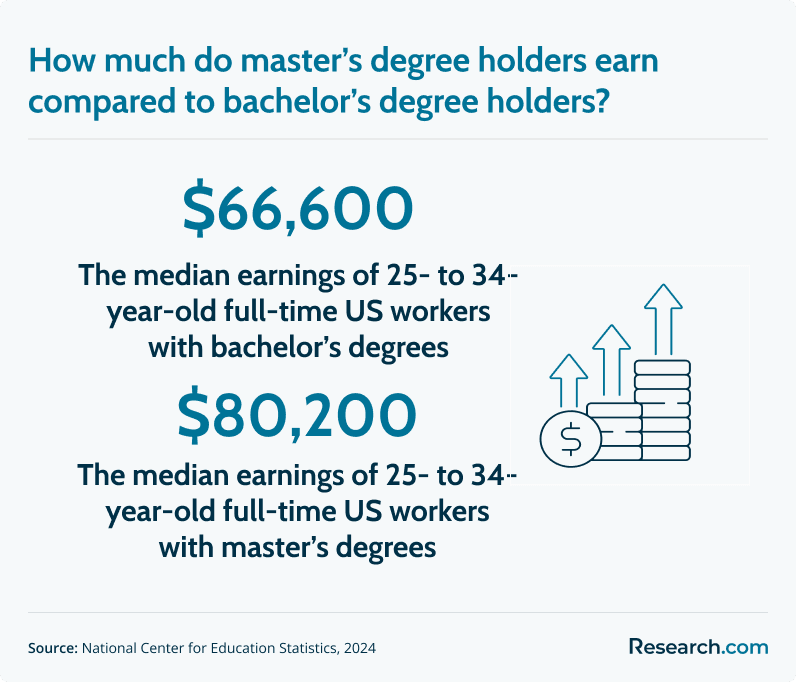
- In 2022, among 25- to 34-year-old full-time workers in the US, those with at least a master’s degree had median earnings ($80,200) that are 20% higher than the median earnings of those with only a bachelor’s degree ($66,600) (National Center for Education Statistics, 2024).
- What is the main difference between a master’s degree and an executive master’s degree? Master's vs Executive Master's
- How do executive master’s programs differ in curriculum from traditional master’s degrees? Differences in Curriculum
- What are the admission requirements for a master’s and an executive master’s degree program? Admission Requirements
- Can mid-career professionals benefit from traditional master’s programs? Can mid-career professionals benefit from traditional master’s programs?
- What type of professionals benefit from executive master’s programs? What type of professionals benefit from executive master’s programs?
- How much does an executive master’s degree cost compared to a regular master’s? Program Costs
- What jobs can you get with a master’s degree and an executive master’s degree? Available Jobs
- What industries prefer graduates of master’s degree programs vs. executive master’s degree programs? What industries prefer graduates of master’s degree programs vs. executive master’s degree programs?
- Are master’s degree programs and executive master’s degree programs accredited? Are master’s degree programs and executive master’s degree programs accredited?
- Are master’s degree programs and executive master’s programs available online? Are master’s degree programs and executive master’s programs available online?
- What are the financing options for master’s and executive master’s degrees? What are the financing options for master’s and executive master’s degrees?
What is the main difference between a master’s degree and an executive master’s degree?
The main difference between a master’s degree and a master’s executive degree lies in their target students and program structure. A traditional master’s degree is designed for students who are early in their careers or seeking to specialize in a particular field, often through research, coursework, or internships. Many students also explore cheap online master’s programs as a cost-effective way to earn their degrees without sacrificing quality.
In contrast, an executive master’s degree caters to more seasoned professionals who already have extensive work experience and aim to advance into leadership or executive roles. These programs emphasize practical, real-world applications of theory, strategic thinking, and organizational leadership. Moreover, executive master’s programs usually offer flexible formats, such as weekend or online classes, to accommodate the schedules of working professionals.
How do executive master’s programs differ in curriculum from traditional master’s degrees?
The curriculum of a master’s degree program differs significantly from that of a master’s executive degree, primarily in focus, structure, and learning approach. While both emphasize advanced knowledge, their goals and teaching methods vary based on student experience and career level. The following are the three main differences:
- Depth vs. Application: Traditional master’s degree programs often focus on academic theory, research, and technical expertise. Executive master’s degree programs emphasize practical application, leadership, and strategic decision-making drawn from real-world business challenges.
- Learning Format: Master’s degree courses follow a structured, semester-based format with lectures and assignments. Executive master’s degree programs use case studies, simulations, and peer collaboration customized for experienced professionals.
- Student Profile: Master’s degree programs may benefit early-career learners seeking specialization. Executive master’s degree programs are designed for mid- to senior-level professionals aiming to enhance management and leadership capabilities.
Both pathways align differently with leadership development goals. Professionals comparing leadership vs management education will find that executive programs emphasize strategic direction, organizational transformation, and team influence—while traditional master’s programs delve into analytical depth and research-oriented management frameworks.
What are the admission requirements for a master’s and an executive master’s degree program?
Admission Requirements for Master’s Degree Programs
Admission to a master’s degree program usually emphasizes academic readiness and potential for graduate-level study. Common requirements include the following:
- Bachelor’s Degree: Applicants must hold an accredited undergraduate degree in a related field, which demonstrates foundational knowledge necessary for advanced coursework.
- Transcripts and GPA: Universities often require official transcripts with a minimum GPA to ensure academic competence and consistency.
- Letters of Recommendation: Academic or professional references provide insight into the applicant’s skills, work ethic, and readiness for graduate-level study.
Notably, while some individuals look for easy college degrees to quickly meet the undergraduate-degree requirement, choosing a program that aligns with long-term academic and professional goals is essential.
Admission Requirements for Executive Master’s Degree Programs
Executive master’s programs focus on leadership experience and professional achievement. Typical requirements for executive masters degrees include the following:
- Extensive Work Experience: Candidates usually need 5 to 10 years of relevant professional experience, such as in managerial or leadership roles.
- Current Employment: Many master’s executive degree programs require applicants to be employed, as coursework often integrates with real-world job responsibilities.
- Personal Statement or Interview: Applicants must articulate career goals, leadership vision, and reasons for pursuing an executive degree through essays or interviews.
Can mid-career professionals benefit from traditional master’s programs?
Traditional master’s degree programs can benefit mid-career professionals seeking to deepen technical expertise, change careers, or qualify for specialized roles. They enhance credibility and competitiveness in roles that value advanced credentials or subject-matter expertise. A master’s degree also provides a strong theoretical and research foundation that can help professionals transition into new industries or academic fields.
However, mid-career learners must consider the program’s structure. Traditional formats often require more classroom time and less scheduling flexibility. For those balancing work and study, selecting a part-time or online option can make a traditional master’s degree both practical and rewarding.
Some may also ask, “Can you go to grad school with a different undergraduate major?” Many programs welcome applicants from various academic backgrounds, depending on the field and prerequisites. Thus, candidates must ensure that they submit strong applications and complete requirements to improve their potential for admission.
What type of professionals benefit from executive master’s programs?
Master’s executive degree programs are designed for experienced professionals wanting to enhance their leadership capabilities, expand their strategic thinking, and drive organizational success. The following types of professionals benefit most from these programs:
- Senior Managers and Executives: These individuals seek to refine their leadership, decision-making, and organizational-management skills to better guide teams and shape company strategy.
- Entrepreneurs and Business Owners: Executive master’s degree programs help business leaders strengthen their understanding of global markets, finance, and innovation. The specialized education can enable them to scale operations and sustain growth.
- Experienced Professionals Transitioning to Leadership Roles: Those with extensive technical and functional expertise can use an executive master’s degree to transition to senior-management positions. In the program, they may gain the strategic- and people-management skills needed for higher-level responsibilities.
For mid-career professionals wondering if they should pursue an advanced business degree or a credential, comparing MBA vs certification paths can help clarify options. While certifications quickly validate specific skills, executive master’s programs provide a broader foundation in leadership, strategy, and organizational transformation.
How much does an executive master’s degree cost compared to a regular master’s?
In the US, a master’s degree program usually costs between $44,640 and $71,140, depending on the academic institution, major, and program duration. The average cost is $62,820. Moreover, the average cost of a master’s degree in education is $44,640. That of a master of arts degree is usually $71,140, and a master of science degree is $61,380 (Hanson, 2024).
The cost of a master’s executive degree also depends on several similar factors. The University of Pennsylvania charged students $238,620 for its executive MBA program, or $39,770 per academic term, in 2025. The University of Chicago-Booth School of Business requires students to pay $215,750 for its executive MBA program. Moreover, the executive MBA program offered by Florida Atlantic University costs between $38,600 and $44,390.
The chart below provides a visualization of the cost of executive MBA programs offered by the featured academic institutions, according to current tuition data provided by these universities.
When weighing costs, consider the long-term return on investment. Evaluating factors like tuition, specialization, and potential earnings mirrors the analysis professionals might do when asking is a construction management degree worth it—the answer often depends on industry demand, salary progression, and career advancement potential.
What jobs can you get with a master’s degree and an executive master’s degree?
Professionals with either a master’s degree or an executive master’s degree can pursue advanced career paths. Notably, their options often differ based on experience level and career goals.
Jobs You Can Get with a Master’s Degree
- Survey Researcher: A survey researcher designs, conducts, and analyzes surveys to collect data about opinions, behaviors, or demographics. They help organizations make informed decisions based on statistical insights. In May 2024, survey researchers in the US had a median annual wage of $63,380 (US BLS, 2025).
- Postsecondary Teacher: Professionals with strong academic backgrounds can teach undergraduate students and contribute to research within their field of expertise. In May 2024, postsecondary teachers in the US had a median annual wage of $83,980 (US BLS, 2025).
- Project Management Specialist: Master’s degree holders are equipped to lead projects across industries. Project managers ensure that objectives are met efficiently and on time. In May 2024, project management specialists in the US had a median annual wage of $100,750 (US BLS, 2025).
Jobs You Can Get with an Executive Master’s Degree
- Chief Executive Officer (CEO): Executive master’s degree graduates often qualify for top leadership roles who shape company strategy and long-term vision. In May 2024, top executives in the US had a median annual wage of $105,350 (US BLS, 2025).
- Management Analyst: Management analysts provide expert guidance to organizations and improve efficiency, profitability, and performance. In May 2024, management analysts in the US had a median annual wage of $101,190 (US BLS, 2025).
- Human Resources (HR) Manager: HR managers oversee recruitment, employee relations, training, and performance management in organizations. In May 2024, HR managers in the US had a median annual wage of $140,030 (US BLS, 2025).
The chart below provides a visualization of the 2024 median annual wages of professionals who potentially hold a master’s degree or a master’s executive degree, according to 2025 data from the US BLS.
For those deciding which field to specialize in, it’s worth noting how discipline impacts salary and scope. For instance, a finance-focused executive graduate may compare outcomes similar to BA vs MBA salary differences—demonstrating how advanced credentials can significantly expand earning potential and leadership reach.
What industries prefer graduates of master’s degree programs vs. executive master’s degree programs?
Different industries value master’s and executive master’s degree graduates based on their experience, specialization, and leadership capabilities. While both degrees open doors to advanced roles, their target sectors often differ.
Industries That Prefer Master’s Degree Graduates
- Education: Master’s graduates are highly sought-after for teaching, research, and academic administration positions.
- Healthcare: Advanced degrees in public health, nursing, or healthcare administration prepare professionals for clinical leadership and policy development roles.
- Technology: A master’s in computer science or information systems equips graduates with specialized technical and analytical skills for software development and data-driven positions.
Industries That Prefer Executive Master’s Degree Graduates
- Business and Finance: Executive MBAs are ideal for senior managers seeking leadership positions in banking, investment, or corporate management.
- Consulting: Executive master’s graduates excel in strategic-consulting, organizational-development, and management-advisory roles.
- Manufacturing and Operations: These industries value executives with advanced management training capable of improving efficiency and overseeing large-scale operations.
Are master’s degree programs and executive master’s degree programs accredited?
Both master’s degree programs and executive master’s degree programs can be accredited, but individual verification is important. Accreditation ensures that a program meets established standards of quality set by recognized accrediting bodies. In the US, regional accreditation is considered as prestigious, while program-specific accrediting agencies may also evaluate specialized degrees, such as those in business or engineering.
Executive master’s programs, designed for working professionals, are held to the same academic standards as traditional master's degree programs when offered by accredited academic institutions.
However, not all institutions or programs are accredited, so prospective students should always research the accrediting body and ensure that it is recognized by corresponding organizations, such as the US Department of Education or the Council for Higher Education Accreditation (CHEA). Accreditation impacts degree recognition, credit transferability, and eligibility for federal financial aid.
Are master’s degree programs and executive master’s programs available online?
Many master’s degree programs and executive master’s degree programs are available online. They offer flexibility for students balancing work, family, or other commitments. Online programs are offered by accredited universities and often provide students with the curriculum and academic standards that are similar to their on-campus versions.
Many programs, such as bachelor's to master's in nursing, are also available online. They enable students to streamline their education and advance their careers efficiently while continuing to meet personal or professional obligations.
Meanwhile, master’s executive degree programs are designed for professionals with significant work experience. They usually feature part-time, flexible formats and may include live virtual sessions, recorded lectures, group projects, and occasional in-person residencies.
Several fields, such as business, education, public health, and technology, commonly offer online options. When choosing an online program, it is important to ensure that it is accredited and aligns with your academic interests, professional goals, and schedule.
What are the financing options for master’s and executive master’s degrees?
Evaluating funding strategies for advanced degree programs involves comparing institutional scholarships, federal and private loan opportunities, employer tuition reimbursement initiatives, and alternative funding sources. Analyze each option by assessing eligibility criteria, interest rates, repayment terms, and long-term benefits relative to your career trajectory. For professionals aiming to balance investment with swift career progression, exploring resources such as the best degrees online can offer additional insights into cost-efficient academic pathways.
Key Findings
- Traditional master’s degree programs often focus on academic theory, research, and technical expertise.
- Executive master’s degree programs emphasize practical application, leadership, and strategic decision-making drawn from real-world business challenges.
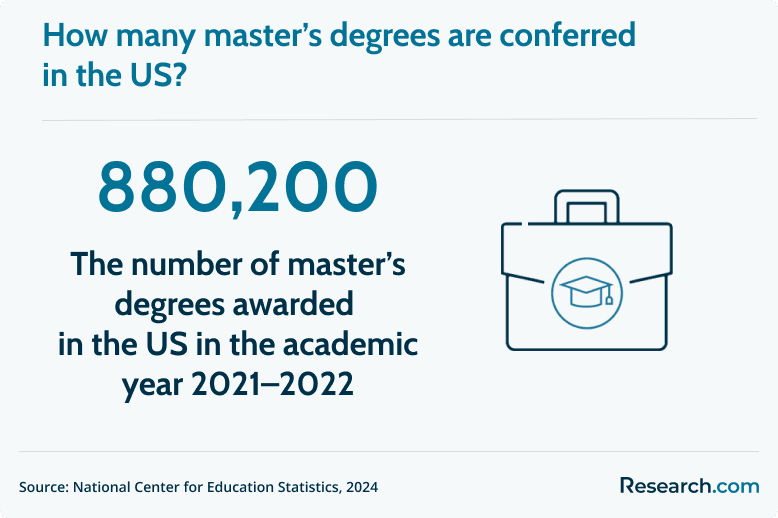
- In the academic year 2021–2022, 880,200 master’s degrees were awarded in the US (National Center for Education Statistics, 2024).
- In 2022, the median earnings of 25- to 34-year-old full-time US workers with master’s degrees was $80,200 (National Center for Education Statistics, 2024). To compare, the median earnings of 25- to 34-year-old full-time US workers with bachelor’s degrees was $66,600 in the same year (National Center for Education Statistics, 2024).
- In May 2024, top executives in the US had a median annual wage of $105,350 (US BLS, 2025).
References:
- Hanson, M. (2024, November 23). Average Cost of a Master’s Degree. Education Data Initiative. https://educationdata.org/average-cost-of-a-masters-degree
- National Center for Education Statistics. (2024, May). Annual Earnings by Educational Attainment. Condition of Education. U.S. Department of Education, Institute of Education Sciences. https://nces.ed.gov/programs/coe/indicator/cba/annual-earnings
- National Center for Education Statistics. (2024, May). Graduate Degree Fields. Condition of Education. U.S. Department of Education, Institute of Education Sciences. https://nces.ed.gov/programs/coe/indicator/ctb/graduate-degree-fields
- Study.eu Team. (2021, December 13). The academic backgrounds of the world’s most powerful CEOs. https://www.study.eu/article/the-academic-backgrounds-of-the-worlds-most-powerful-ceos
- US Bureau of Labor Statistics. (2025, August 28). Human Resources Managers. Occupational Outlook Handbook. https://www.bls.gov/ooh/management/human-resources-managers.htm
- US Bureau of Labor Statistics. (2025, August 28). Management Analysts. Occupational Outlook Handbook. https://www.bls.gov/ooh/business-and-financial/management-analysts.htm
- US Bureau of Labor Statistics. (2025, August 28). Postsecondary Teachers. Occupational Outlook Handbook. https://www.bls.gov/ooh/education-training-and-library/postsecondary-teachers.htm
- US Bureau of Labor Statistics. (2025, August 28). Project Management Specialists. Occupational Outlook Handbook. https://www.bls.gov/ooh/business-and-financial/project-management-specialists.htm
- US Bureau of Labor Statistics. (2025, August 28). Sales Managers. Occupational Outlook Handbook. https://www.bls.gov/ooh/management/sales-managers.htm
- US Bureau of Labor Statistics. (2025, August 28). Survey Researchers. Occupational Outlook Handbook. https://www.bls.gov/ooh/life-physical-and-social-science/survey-researchers.htm
- US Bureau of Labor Statistics. (2025, August 28). Top Executives. Occupational Outlook Handbook. https://www.bls.gov/ooh/management/top-executives.htm
- Whitler, K. A. (2019, October 12). New Fortune 100 CEO Study: The Top Graduate Schools Attended By Fortune 100 CEOs. Forbes. https://www.forbes.com/sites/kimberlywhitler/2019/09/28/new-fortune-100-ceo-study-the-top-graduate-schools-attended-by-fortune-100-ceos
Other Things You Should Know about Master’s and Executive Master’s Degree Programs
A 2027 Executive Master's Degree caters to mid-career professionals with an average of 10-15 years of work experience, offering flexible schedules and an applied focus. A regular Master's Degree suits those earlier in their career, focusing more on theoretical studies and comprehensive academic curriculum.
When choosing between a 2027 Executive Master's Degree and a regular Master's Degree, consider your career stage, time availability, and learning preferences. Executive programs often cater to professionals seeking leadership roles, providing flexibility in scheduling. Regular Master's programs might offer more theoretical and broad-based study suited for recent graduates or those early in their careers.


