
2027 Is a Degree in Construction Management Worth It? Benefits & Salary

Co-Founder and Chief Data Scientist
A career in construction management puts you at the center of the action, transforming blueprints into tangible structures and leading teams to build the world around us. This leadership role also comes with significant financial rewards, with the U.S. Bureau of Labor Statistics reporting a median salary of $106,980 for the profession.
But is a degree in construction management worth it to secure that future? For those with the right skills and ambition, it's one of the most direct paths to a high-impact, high-earning career. This analysis provides a clear-eyed look at the return on investment, from the cost of your education to the long-term benefits. Now that we've set the stage, let's get right to the key takeaways you need to know upfront.
Key Things You Should Know About a Degree in Construction Management
- The median annual wage for construction managers is $106,980, placing it among the higher-paying management professions.
- The field is projected to grow by 9% between 2023 and 2034, indicating a stable and consistent demand for qualified professionals.
- While hands-on experience is vital, a degree is the most reliable tool for advancing into senior leadership roles and maximizing your salary potential.
- The path to this career isn't limited to a single, expensive four-year degree; accessible options like associate's degrees provide a solid entry point.
- This is a field with a strong entrepreneurial spirit, where 36% of construction managers are self-employed, offering a clear path to owning your own business.
- How much do construction managers make? Average Salary
- What is the job outlook for construction managers? Job Outlook
- What are the main benefits of a career in construction management? Advantages
- Which is more important in construction management: a degree or experience? Which is more important in construction management: a degree or experience?
- How much does a construction management degree cost? Average Cost
- Why is accreditation important for a construction management program? Why is accreditation important for a construction management program?
- What is the typical career path and salary progression for a construction manager? Career Paths
- Where do construction managers typically work? Relevant Industries
- What are the different types of construction management jobs? What are the different types of construction management jobs?
- What key skills are essential for a successful construction manager? Top Skills
- Are there alternatives to a formal degree for this career? Degree Alternatives
- Who is a degree in construction management best suited for? Who is a degree in construction management best suited for?
- Can an MBA Enhance Your Construction Management Career? Can an MBA Enhance Your Construction Management Career?
How much do construction managers make?
Construction managers earn a median annual wage of $106,980, according to the U.S. Bureau of Labor Statistics' data from May 2024. This six-figure salary places the role firmly in the upper tier of management professions and provides a powerful financial incentive for those considering this career path.
This salary benchmark is often the first data point people look for when asking: is a degree in construction management worth it? It serves as a clear indicator of the high value the market places on skilled construction leaders.
While this median figure represents the midpoint for all professionals in the field, actual earnings can vary based on experience, location, and specialization.
For comparison, professionals in other fields often weigh similar educational return-on-investment questions—like is an online associates degree in finance worth it, since both areas balance practical skills, management potential, and long-term salary growth tied to formal education.
A high salary is compelling, but long-term career stability is just as important. Let's look at the future demand for this role.
What is the job outlook for construction managers?
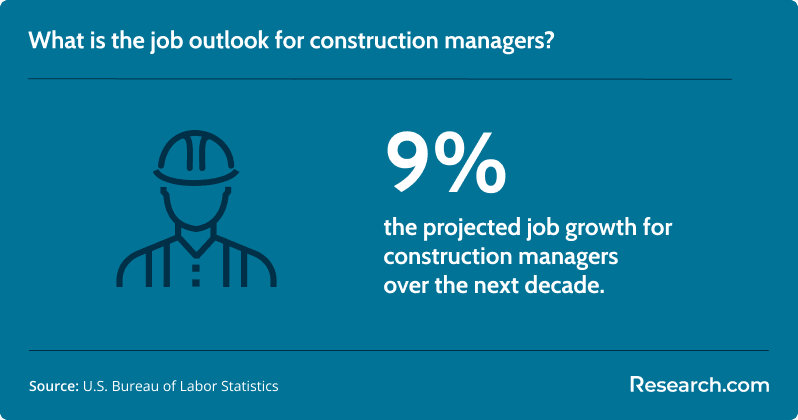
The job outlook for construction managers is excellent, with employment projected to grow by a strong and stable 9% from 2023 to 2034. This growth rate, reported by the U.S. Bureau of Labor Statistics, is significantly faster than the average for all occupations, signaling a robust and sustained demand for skilled leaders in the construction industry.
Additionally, the job portal Indeed shows that there are currently over 12,000 openings for construction management roles.
For anyone starting their career, this positive long-term forecast provides a crucial layer of security for your educational investment. It means that the demand for your skills is not only high today but is expected to remain so for the foreseeable future.
This stability is a key factor in building a resilient and rewarding career. To put this number into perspective, it's helpful to see how it compares to other essential fields—such as nursing, where debates like is ABSN worth it (accelerated Bachelor of Science in Nursing) highlight similar considerations about the payoff of pursuing intensive, career-advancing degrees.
How Construction Management Compares to Other High-Growth Fields
A 9% growth rate signifies a healthy, essential industry that is foundational to economic development. This level of demand is comparable to other critical, high-growth logistical fields.
For example, professionals who pursue a fast-track graduate certificate in supply chain management and logistics online are also tapping into a sector with strong future prospects. The consistent need for new infrastructure, residential housing, and commercial properties ensures that construction management remains a vital and secure career path.
The numbers clearly show a lucrative and stable career. But what is the day-to-day work actually like, and what are the benefits beyond the paycheck?
What are the main benefits of a career in construction management?
Beyond the strong salary and job security, a career in construction management offers significant professional and personal rewards. For many, these qualitative benefits are what make the work truly satisfying and are a key part of determining if a degree is worth it for your long-term fulfillment.
- Tangible Results: In this field, your leadership directly contributes to creating a finished product. You get the unique satisfaction of standing in front of a completed building, bridge, or highway and knowing you played a central role in making it a reality.
- Leadership Development: As the strategic decision-makers on a job site, construction managers are responsible for guiding teams, solving complex problems under pressure, and controlling multi-million dollar budgets, all of which builds a highly respected and transferable leadership toolkit.
- Professional Autonomy: This career empowers you to make critical decisions every day. It’s also a field with a strong entrepreneurial track, where many experienced managers go on to start their own successful firms, giving you direct control over your professional destiny.
- Dynamic Work Environment: Unlike a traditional office job, construction management involves a mix of on-site oversight and office-based planning. No two days are the same, offering constant variety and new challenges that keep the work engaging.
- High-Impact Problem Solving: The role requires you to be a creative and resourceful problem-solver. From logistical hurdles to unexpected site conditions, you are constantly tasked with finding solutions that have a direct and immediate impact on the project's success.
Similarly, many professionals in education fields consider pathways like is it worth becoming a teacher, where intrinsic satisfaction, leadership impact, and career stability are major motivators beyond financial gain.
Now that we've established the clear value of this career path, let's analyze the investment required to get there, starting with the most debated question in the field.
Which is more important in construction management: a degree or experience?
The most accurate answer is that both are critical, but they serve different roles in building an elite career. While hands-on experience is the absolute bedrock of a successful construction manager, a formal degree is the strategic accelerator that qualifies you for top-tier leadership positions and the highest salary brackets.
This synergy is key to long-term advancement. To understand how it works in practice, it's helpful to look at what each component brings to your professional toolkit.
How a Degree Amplifies Your On-the-Job Experience
Data on current construction managers reveals a wide variety of educational paths, with 26% holding a bachelor's degree and another 9% having an associate's degree. While many have built successful careers through experience alone, this data shows that formal education is a common and effective tool for reaching the highest levels of the profession.
Think of it this way: experience teaches you how to solve problems on a job site. A degree teaches you the business, financial, and management principles needed to run the entire operation strategically.
This brings us back to the central question: is a degree in construction management worth it? For the most successful professionals, the answer is yes, because it's the key that unlocks the full value of their hard-earned experience.
Since a degree is a powerful tool for advancement, the next logical question is about the cost of that tool.
Much like graduate students comparing research-heavy and practical programs—such as master's thesis vs non thesis degrees—construction professionals must decide whether they want to focus on direct, field-based experience or pair it with academic credentials for a faster rise into leadership.
The visual below shows the educational attainment of construction managers in the country.
How much does a construction management degree cost?
The cost of a construction management degree varies significantly depending on the type of institution you choose, with accessible pathways available at different price points. An associate's degree from a community college represents the most affordable entry point, often costing between $5,000 and $20,000 for the entire program.
A four-year bachelor's degree requires a larger investment. Tuition at an in-state public university can range from $40,000 to $80,000 for the full degree, while private universities can cost well over $150,000. It’s important to remember that these figures don't include costs for books, housing, or fees.
Many students offset these expenses through financial aid, scholarships, and the growing number of affordable online programs that offer greater flexibility. They can start by applying for the Free Application for Federal Student Aid (FAFSA) to learn the types of federal aid available to them.
Understanding the cost is the first step. The second is ensuring you're investing in a high-quality program that employers will respect.
Why is accreditation important for a construction management program?
Accreditation is the single most reliable signal that a construction management program meets high standards of quality and is respected by the industry.
Specifically, accreditation from a recognized body like the American Council for Construction Education (ACCE) acts as a formal, third-party verification that the curriculum is comprehensive, relevant, and capable of producing competent graduates. For employers, this seal of approval instantly validates the quality of your education.
Choosing an accredited program is a crucial way to de-risk your educational investment. It provides an assurance that you are not just earning a credential but are genuinely mastering the skills and knowledge required for a successful career.
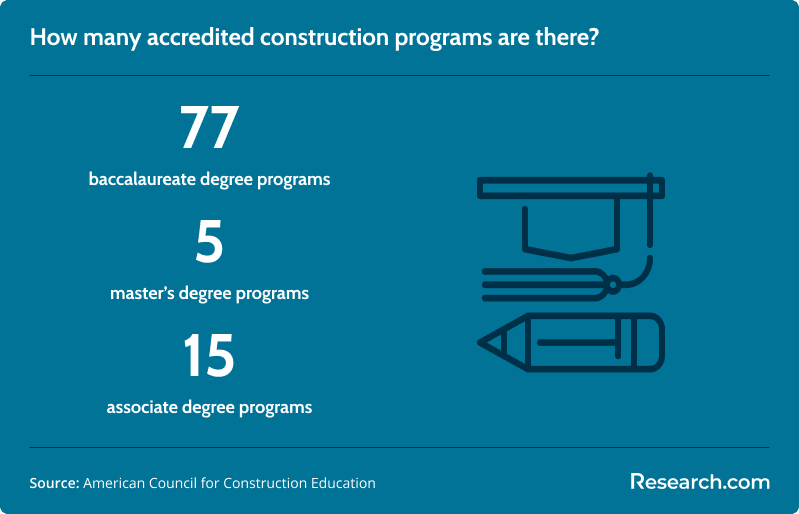
For example, knowing there are currently 15 associate degree programs accredited by the ACCE gives you a clear, pre-vetted list of quality options to start your search.
By prioritizing accreditation, you are making a strategic choice that enhances your resume and gives you a competitive edge in the job market. We've analyzed the value and the investment. Now, let's look at the payoff: a notable salary and career path in the near future.
What is the typical career path and salary progression for a construction manager?
A career in construction management follows a clear, multi-stage progression that rewards experience with greater responsibility and higher compensation. This career ladder provides a predictable path from an entry-level position to a senior leadership role, with average salaries progressing from around $71,345 to over $127,740.
- Project Engineer: Often working alongside an Assistant PM, this is a key entry-level position with a strong technical focus. Project Engineers are typically responsible for interpreting blueprints, managing technical documents, and ensuring that the work on-site aligns with engineering specifications.
- Assistant Construction Project Manager: This is another common starting point where you learn the business and management fundamentals. In this role, you support senior managers by tracking project documentation, coordinating with subcontractors, and helping to monitor on-site progress.
- Construction Project Manager: After gaining a few years of experience, you take on full responsibility for individual projects. This involves managing budgets, setting schedules, leading teams, and serving as the primary point of contact for clients and stakeholders from start to finish.
- Senior Construction Project Manager: With significant expertise, you are entrusted with larger, more complex, and higher-value projects, or you may oversee a portfolio of multiple projects at once. This senior role requires advanced strategic planning and risk management skills.
- Construction Director: At the executive level, you are responsible for the overall strategy, profitability, and success of all construction operations within a company or region. This top-tier position involves high-level business development and organizational leadership.
Where do construction managers typically work?
Construction managers work across a wide variety of settings, offering significant flexibility to choose an environment that aligns with your career goals. While many work for large construction firms, a remarkable 36% are self-employed, highlighting the field's strong entrepreneurial spirit. This is a career where you can realistically aim to be your own boss.
Other common work environments include specialty trade contracting firms (17%), non-residential building construction (16%), and residential building construction (10%).
Whether your interest lies in building skyscrapers, developing housing communities, or managing specialized electrical or plumbing projects, there is a sector that fits your passion. This flexibility demonstrates how valuable and transferable core management skills truly are.
Beyond Buildings: Applying Management Skills in Different Sectors
The core skills learned in a construction management program—budgeting, logistics, team leadership, and seeing a complex project through to completion—are universally valuable. While a CM's goal is a physical structure, the discipline required is applicable in almost any industry.
For instance, a professional who completes one of the shortest master's degree in nonprofit management online programs uses a similar skill set to manage budgets and personnel to achieve a mission-driven outcome.
This proves that a construction management degree doesn't just prepare you for the job site; it equips you with a powerful, transferable toolkit for organizational leadership.
Beyond where you work, it's also important to consider what type of construction you want to manage. The visual below shows the typical work environments of construction managers.
What are the different types of construction management jobs?
While "construction manager" is a single title, the field is broken down into several key specializations. Choosing a niche is a critical strategic decision that allows you to develop deep expertise, making you more valuable in your chosen sector. Understanding these different pathways is the first step in designing a long-term career plan.
- Residential Construction: This specialization focuses on building and remodeling homes, apartment buildings, and other living spaces. It often involves a faster pace and a strong focus on client relationships and budget management for individual homeowners or developers.
- Commercial Construction: This broad category involves creating structures for business, such as office towers, retail stores, warehouses, and hospitals. These projects are typically larger in scale, with more complex engineering and longer timelines.
- Heavy and Civil Engineering Construction: This area focuses on public infrastructure. Managers in this specialty oversee the construction of roads, bridges, tunnels, dams, and utility systems, working closely with government agencies and adhering to strict public regulations.
- Industrial Construction: This highly specialized field involves building large-scale industrial facilities like power plants, manufacturing factories, and refineries. These projects require extensive technical knowledge of specialized equipment and complex safety protocols.
- Sustainable or Green Construction: This rapidly growing specialization focuses on building in an environmentally responsible and resource-efficient manner. It requires expertise in sustainable materials, energy efficiency, waste reduction, and certifications like LEED (Leadership in Energy and Environmental Design).
Reflecting on which of these areas best aligns with your interests is a crucial step. We've covered the what, where, and why of this career. The final step is to decide if it's the right personal fit for you.
What key skills are essential for a successful construction manager?
A successful construction manager needs a balanced toolkit of technical expertise (hard skills) and interpersonal abilities (soft skills). This combination allows you to manage both the logistical complexities of a project and the human dynamics of the teams you lead. Assessing your own strengths in these areas is a great way to gauge your potential fit for the role.
Hard Skills
- Project Planning and Scheduling. This is the ability to create detailed timelines, sequence tasks logically, and use industry-standard software to keep the project on track from start to finish.
- Budget and Financial Control. This involves accurate cost estimation, tracking expenses, managing contracts, and making sound financial decisions to ensure the project remains profitable.
- Technical and Regulatory Knowledge. You need the ability to read and interpret complex blueprints, understand building codes, and be knowledgeable about construction materials, methods, and safety regulations.
Soft Skills
- Leadership and Team Motivation. A construction site is a hub of different trades and personalities. Success depends on your ability to communicate a clear vision and inspire everyone to work together toward a common goal.
- Communication and Stakeholder Management. You must be able to negotiate with clients, collaborate with architects, and give clear directives to your crew. This focus on client-facing skills is so important that it parallels the training one might receive in an accelerated online hospitality management degree, where success also hinges on managing expectations and delivering a quality product.
- Problem-Solving Under Pressure. Projects rarely go exactly as planned. A top-tier manager remains calm and thinks critically to find effective solutions when faced with unexpected weather, supply chain issues, or on-site challenges.
If you feel your skills are a good match, you might still be wondering if a formal degree is the only way to enter this field.
Are there alternatives to a formal degree for this career?
Yes, there are several valid pathways into construction management, each with its own timeline and career trajectory. While a degree is the most direct route to leadership, it's helpful to understand the pros and cons of each option.
- The Formal Degree Path: This is the most strategic and efficient route to a top-tier management role. A degree provides a comprehensive foundation in business, finance, and project management theory that employers highly value. This structured knowledge, similar to what students gain in the fastest online bachelor's degree in supply chain management, is designed to prepare you for leadership from day one.
- The Experience-First Path: This traditional route involves working your way up from a skilled trade. While it provides invaluable, hands-on expertise, the path to a senior management position is typically much longer and less certain without the formal business credentials a degree provides.
- The Certification Path: Industry certifications can be an excellent way to supplement existing experience or specialize in a specific area. They are a great tool for career development, but are generally not a substitute for the broad, foundational knowledge provided by a full associate's or bachelor's degree.
Ultimately, the answer to the question "Is a degree in construction management worth it?" comes down to career velocity. While alternatives exist, a degree is the most proven and efficient accelerator for a long-term career in construction leadership.
With all this information on the table—the value, the investment, and the pathways—let's bring it all together to help you make your final decision.
Who is a degree in construction management best suited for?
A degree in construction management is best suited for a specific type of professional: the practical leader. It is the ideal fit for individuals who are fascinated by the process of building things but whose ultimate ambition is not to work on the tools, but to orchestrate the entire project from a strategic, business-oriented perspective.
This path is for those who enjoy solving complex logistical puzzles and are motivated by the challenge of leading diverse teams toward a common goal. If you are a pragmatic, results-driven person who wants to combine hands-on knowledge with high-level management skills, this degree is designed to be the launchpad for your career.
Final Considerations for Your Career Path
To make your final decision, consider how a degree fits into your specific career stage:
- For the Career Optimizer: If you already have experience in the construction trades, a degree is your most powerful tool for acceleration. It formalizes your practical knowledge with the business, finance, and management credentials needed to move into senior leadership and significantly increase your earning potential. It’s the key to leveraging your past experience for a more profitable future.
- For the Early-Career Aspirant: If you are just starting out, a degree provides the most reliable and structured foundation for a successful career. It gives you a competitive advantage in the job market and sets you on a clear, proven path toward a six-figure salary, bypassing the long and uncertain climb that often comes with an experience-only approach.
Ultimately, this is a business-focused role. For those who find themselves drawn to the high-stakes world of contracts and negotiations that govern large projects, an accelerated online master of business law could be a powerful next step for specialization.
Whichever path you choose, investing in your education is an investment in your own potential. By aligning your natural skills with a strategic educational plan, you are taking control of your career and building a foundation for long-term success.
The chart below explores the typical salary progression of construction managers.
Here’s What Graduates Have to Say about Their Construction Management Degree Program
- Leigh: "I spent seven years in residential construction and wanted to make the leap to larger commercial projects. My experience alone wasn't enough to get my foot in the door. The degree gave me the specific knowledge in commercial building codes and large-scale project planning that made me a credible candidate. It was exactly what I needed to pivot my career."
- Terry: "My goal was always to start my own contracting business, but I didn't have the business acumen. The degree program filled in all my gaps, from business law to accounting and marketing. Two years after I finished the program, I felt confident enough to go out on my own, and my company has been growing ever since."
- Bob: "The best part of the program was that my instructors weren't just academics; they were retired VPs and senior managers from major construction firms. They taught from experience, not just a textbook. Hearing their stories about real-world challenges and how they solved them was more valuable than I can describe."
Key Findings
- The median annual wage of $106,980 serves as a powerful benchmark, confirming that a career in construction management offers a clear and substantial return on educational investment.
- With a projected job growth of 9% through 2034, the field offers a high degree of career stability, ensuring that the demand for qualified managers will remain strong for the foreseeable future.
- While multiple paths exist, the fact that 26% of current managers hold a bachelor's degree highlights that formal education is a primary and proven accelerator for advancing from on-site experience to strategic leadership roles.
- The career path offers a predictable and lucrative progression, with average salaries systematically increasing from around $71,345 for an Assistant PM to over $127,740 for a Construction Director.
- The field has a uniquely strong entrepreneurial spirit, with 36% of construction managers being self-employed, making a degree a direct investment in the potential to become a business owner.
- Ultimately, the primary value of a construction management degree is not to replace hands-on experience, but to amplify its value by providing the business and financial acumen required for top-tier leadership.
Can an MBA Enhance Your Construction Management Career?
An MBA can refine and expand the skill set acquired in construction management by deepening expertise in financial oversight, strategic planning, and organizational leadership. This complementary qualification not only supports accelerated career advancement but also opens pathways to managing larger, more complex projects. Evaluating program quality and curriculum relevance is essential—prospective candidates can explore options like the cheapest MBA online to ensure a balanced approach between cost and academic excellence.
References:
- American Council for Construction Education. (2024). ACCE accredited associate degree programs. Retrieved October 10, 2025, from https://www.acce-hq.org/_files/ugd/683b8d_95c17aaee73a47b1b2e71e23d6eefe5c.pdf
- CareerOneStop. (2025). Construction managers. Retrieved October 10, 2025, from https://www.careeronestop.org/Toolkit/Careers/Occupations/occupation-profile.aspx?&keyword=Construction%20Managers&onetcode=11-9021.00
- Payscale. (2025). Director of construction salary. Retrieved October 10, 2025, from https://www.payscale.com/research/US/Job=Director_of_Construction/Salary
- U.S. Bureau of Labor Statistics. (2025a). Construction managers. Occupational Outlook Handbook. Retrieved October 10, 2025, from https://www.bls.gov/ooh/management/construction-managers.htm
- U.S. Bureau of Labor Statistics. (2025b). Occupational employment and wages, May 2023: 11-9021 construction managers. Occupational Employment Statistics. Retrieved October 10, 2025, from https://www.bls.gov/oes/2023/may/oes119021.htm
Other Things You Should Know About Construction Management Degree Programs
In 2027, construction managers with a degree can expect an average salary ranging from $75,000 to $100,000 annually, varying by location and experience. Advanced education and certifications may lead to higher earnings, alongside benefits such as health insurance, retirement plans, and bonuses.
Admission requirements for a construction management degree in 2027 typically include a high school diploma, a minimum GPA of 2.5, and standardized test scores (SAT or ACT). Some programs may also require completion of specific coursework in math and science.
In 2027, a degree in construction management is valuable as it opens doors to careers with strong projected growth and financial benefits. Degree holders can expect competitive salaries, often above $95,000 annually, with opportunities for advancement in various construction sectors. Furthermore, possessing a degree can enhance skills crucial for overseeing complex projects efficiently.


