
2027 Is an Online Teaching Degree Worth It?

Co-Founder and Chief Data Scientist
An online teaching degree offers a flexible pathway into the classroom, but a critical question can stop you in your tracks: will school districts and principals take it seriously? Recent data shows 87.4% of employers stated they would hire candidates with online degrees, and nearly all of those employers reported paying online degree holders the same starting salaries as those with traditional, in-person degree.
So, is an online teaching degree worth it for your specific career goals? This guide, prepared by career planning experts with more than 10 years of experience, provides a clear framework to help you evaluate programs, understand what employers really look for, and make a confident investment in your future as an educator.
Key Things You Should Know About Online Teaching Degrees
- This is the non-negotiable quality signal that state licensing boards and employers use to validate your degree. Without proper accreditation, your credentials may not be recognized for licensure or employment.
- A degree is only useful if it leads to a teaching license in the state where you plan to work. You must verify this alignment with your state's department of education before you enroll.
- Every legitimate online teaching degree requires a significant, supervised clinical experience in a real classroom in your local community. The quality of a program's support in arranging this is a key indicator of its strength.
- Asynchronous courses offer the most flexibility, allowing you to complete work on your own schedule. Synchronous courses require you to log in for live, scheduled class sessions, which can provide more structure and interaction.
- Only students attending accredited institutions are eligible for federal grants and loans. This is another reason why confirming a school's accreditation status is a critical first step in your research process.
- What is an online teaching degree? Degree Definition
- Who are online teaching degrees best for? Who are online teaching degrees best for?
- What types of teaching degrees can you earn online? Degree Types
- How much does an online teaching degree typically cost? Education Cost
- Do employers take online teaching degrees seriously? Do employers take online teaching degrees seriously?
- Why is accreditation the most important factor for an online degree? Accreditation Importance
- How do online teaching programs handle state licensure requirements? How do online teaching programs handle state licensure requirements?
- How does student teaching work in an online degree program? How does student teaching work in an online degree program?
- What are the key differences between online and on-campus programs? Online vs. On-Campus
- What are the biggest advantages of getting a teaching degree online? Biggest Advantages
- What are the potential challenges or downsides of online learning? Challenges
- How can you choose a high-quality online teaching program? How can you choose a high-quality online teaching program?
- Can online teaching degrees be accelerated for a faster career progression? Can online teaching degrees be accelerated for a faster career progression?
What is an online teaching degree?
An online teaching degree is a structured program of study that is fully equivalent to an on-campus degree, combining virtual coursework and faculty interaction with mandatory in-person clinical experiences like student teaching.
While the academic standards and graduation requirements are the same as their brick-and-mortar counterparts, the key difference lies in how the course material is delivered. Understanding this structure is the first step in determining if this path is right for you.
A key detail to understand is the distinction between learning formats. Most online programs use a mix of two types:
- Asynchronous learning: This format offers the greatest flexibility, allowing you to watch lectures, complete readings, and submit assignments on your own schedule within a given week.
- Synchronous learning: This format requires you to log in at specific, scheduled times for live class sessions, creating a more traditional, interactive classroom experience.
The blend of these formats defines the program's pacing and flexibility. Now that you understand the structure, the next step is to consider who is best equipped to succeed in this environment.
For students interested in branching into specialized educational roles, comparing related paths—such as ABA therapy vs CBT—can help clarify whether teaching or behavioral intervention aligns better with their long-term goals.
Who are online teaching degrees best for?
Online teaching degrees are ideal for self-motivated and highly disciplined individuals who need to balance their education with significant life commitments, such as a full-time job or family responsibilities.
This format is perfectly suited for career changers who cannot afford to stop working while they study or for aspiring teachers who do not live near a quality university. While the flexibility is a major advantage, it also requires strong time-management skills to stay on track without the structured schedule of in-person classes.
This self-directed path comes with a significant payoff. According to the U.S. Bureau of Labor Statistics, the general earnings premium for master's degree holders is 25.4% compared to those with only a bachelor's degree. This potential for a substantial salary increase makes the investment of time and effort a strategic career move.
The Path to Leadership for Current Teachers
For current educators, an online master's degree provides one of the most efficient pathways to career advancement. Many school districts require a master's for teachers to move into administrative or leadership roles.
Online programs allow you to gain these qualifications without having to step away from your classroom and current salary. This format offers access to specialized fields, and finding the fastest master's in educational leadership online can be a strategic way to accelerate your career trajectory and increase your earning potential.
Currently, high school teachers earn a median salary of $64,690 per year. The chart below presents how much educators at various education levels earn.
What types of teaching degrees can you earn online?
You can earn a full range of teaching degrees online, from initial licensure programs for new teachers to advanced degrees for experienced educators seeking specialization or leadership roles. The key is to choose a program that matches your career starting point and your ultimate goals. Understanding the purpose of each degree type is essential for making a strategic choice.
The main categories of online teaching degrees include:
- Bachelor's Degrees: These foundational programs are designed for individuals who do not yet have an undergraduate degree and want to gain their initial teaching license.
- Master of Arts in Teaching (MAT): This degree is specifically for career changers who already have a bachelor's degree in another subject. It provides the focused pedagogical training and clinical experience needed to earn an initial teaching license. For example, a fast track early childhood education master's degree online is a popular MAT pathway for those wanting to enter the field.
- Master of Education (M.Ed.): This degree is typically for currently licensed teachers who want to deepen their expertise in a specific area, such as special education, educational technology, or curriculum and instruction, often leading to a salary increase.
Your choice of degree and specialization directly impacts your career trajectory and earning potential. While passion for a subject is important, it's also practical to consider the financial outcomes associated with different roles in the K-12 system.
Teacher median salaries can also vary by grade level and subject area, making a specialized degree a powerful tool for targeting higher-paying positions within the education sector.
How much does an online teaching degree typically cost?
The cost of an online teaching degree varies widely based on the type of institution you choose—typically public versus private—not the online format itself. With the average debt from graduate school alone being $94,141, the financial commitment is a significant and valid concern.
It's a common misconception that "online" automatically means "cheaper." While you may save on costs like commuting and housing, tuition is often comparable to on-campus programs.
For public universities, the biggest variable is often your residency status; out-of-state tuition can be substantially higher than in-state rates. Private universities, on the other hand, typically charge a single tuition rate for all students regardless of location. The most effective way to evaluate this cost is to frame it as an investment in your future earning potential.
Fortunately, many financial aid options are available to postsecondary students, like grants, scholarships, and loans. You can start by applying for the Free Application for Federal Student Aid (FAFSA) to know which forms of federal aid are available to you.
Balancing Cost with Career Payoff
To determine if the investment is worthwhile, you must compare the cost of the degree against the salary you can expect to earn. A teaching career offers stable and predictable income, which provides a solid benchmark for calculating the long-term return on your educational investment.
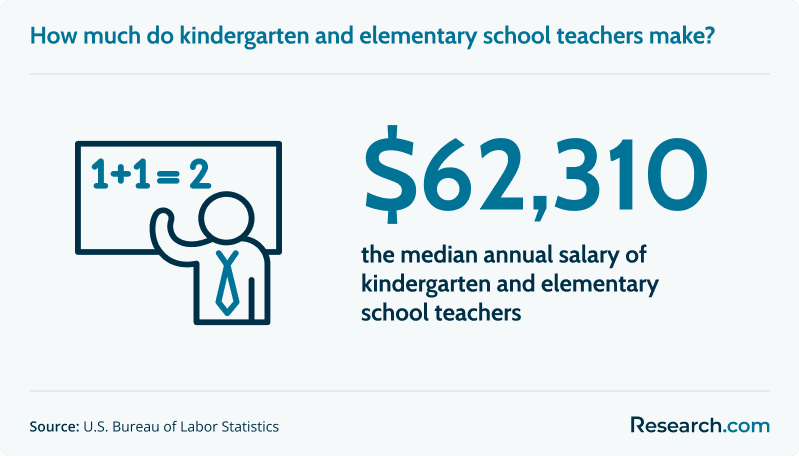
For example, the median salary for elementary school teachers provides a clear picture of the earning potential you are investing in. Similarly, professionals comparing credentials like medical assistant associate degree vs certificate face the same question—how the upfront cost translates into future job stability and pay growth.
Do employers take online teaching degrees seriously?
Yes, employers take online teaching degrees seriously, provided the degree is from a properly accredited and reputable university. When a school principal or hiring committee reviews your application, their concern is not how you learned but what you learned and whether your degree comes from a trusted institution.
The lingering stigma associated with online education stems from unaccredited, for-profit "degree mills," not from established universities that offer online programs with rigorous standards.
Consider the modern classroom itself: a recent survey found that 89% of teachers say they use digital tools to help students learn at their own pace. In a K-12 environment that is already digitally integrated, a degree earned through a sophisticated online platform is seen as relevant and practical.
This means the answer to a question like "Is an online teaching degree worth it?" hinges entirely on your ability to choose a quality program. By focusing on accreditation, you are choosing a credential that employers are prepared to recognize and respect.
In many ways, choosing a credible online teaching degree mirrors professional comparisons like AHIMA vs AAPC, where certification from a reputable body signals genuine expertise rather than a shortcut credential.
Why is accreditation the most important factor for an online degree?
Accreditation is the most important factor because it is the official, third-party guarantee that a program meets rigorous academic and professional standards. This is not just a quality ranking; it is the foundational requirement that state licensing boards, the federal government, and employers rely on to validate a degree.
Without it, you risk investing time and money into a credential that will not qualify you for a teaching license, federal financial aid, or a job in a public school district.
Choosing an unaccredited online program is the single biggest and most avoidable risk you can take in your educational path. It effectively renders your degree worthless in the eyes of the institutions that matter. Therefore, your first step in evaluating any program must be to verify its accreditation status.
The Two Types of Accreditation You Must Look For
To ensure a program is fully legitimate, you need to confirm it has two specific types of accreditation. A high-quality program will proudly display both on its website.
- Regional Accreditation: This is the baseline validation for the university as a whole. It signifies that the entire institution has been vetted by one of the major accrediting agencies recognized by the U.S. Department of Education. You should never consider a university that is not regionally accredited.
- Programmatic Accreditation: This is a more specialized and equally critical seal of approval for the education program itself. For teacher preparation, the "gold standard" is accreditation from the Council for the Accreditation of Educator Preparation (CAEP). This tells you the curriculum, faculty, and clinical training specifically meet the highest professional standards for training effective teachers.
Similarly, future educators weighing counseling-related degrees often compare biblical counseling vs christian counseling to determine whether a program’s accreditation aligns with their intended practice setting and theological framework.
How do online teaching programs handle state licensure requirements?
Reputable online teaching programs handle state licensure by designing their curriculum to meet the specific standards of the states in which they are authorized to operate.
A high-quality program will clearly list the states where its curriculum is an approved pathway to licensure, but the most important step is for you to personally verify this with your state's department of education before you enroll. Admissions advisors are a key resource here, as their job is to help you confirm that the program's requirements will satisfy your state's rules.
In a climate where public confidence in higher education is divided—with a Gallup poll, as seen in the chart below, finding that only 42% of people have a great deal of confidence—this external validation is more critical than ever.
Securing a degree from a program officially approved by your state is not just a bureaucratic step; it is the definitive, objective proof of your credential's quality that future employers will recognize and trust.
How does student teaching work in an online degree program?
For many career-changers, the biggest logistical hurdle of an online degree is the student teaching requirement. Let's clarify exactly how this critical component works: it is always a mandatory, in-person experience that you complete in an approved school within your local community. While your coursework is virtual, your clinical practice is hands-on in a real classroom.
Reputable universities have dedicated placement coordinators to help you secure a position with a qualified cooperating teacher. The quality of this support is a critical indicator of a program's strength.
As an insider tip, when you speak with an admissions advisor, ask pointed questions like, "What is your network of partner school districts in my area?" and "What is the process if a placement doesn't work out?"
This practical, real-world component is not only where you prove your readiness but also serves as a semester-long job interview; many graduates receive their first job offer from their student teaching placement school.
What are the key differences between online and on-campus programs?
The key differences between online and on-campus programs are in the delivery method and learning environment, not in the academic rigor or the quality of the credential itself. An accredited online program covers the same curriculum as its on-campus equivalent. The best choice depends entirely on which environment best suits your learning style and life circumstances.
- Flexibility and Pacing: On-campus programs offer a structured, fixed schedule of classes. Online programs provide unmatched flexibility, especially with asynchronous courses that allow you to complete work on your own time.
- Learning Environment and Interaction: On-campus programs facilitate spontaneous, in-person networking with peers and faculty. Online programs foster interaction through structured digital channels like discussion boards, group projects, and scheduled video calls.
- Geographic Access to Specializations: On-campus programs are limited by geography, restricting you to local options. Online learning breaks this barrier, giving you access to specialized programs from top universities across the country, such as finding the shortest master's degree in science education online even if it's not offered nearby.
- Overall Cost Structure: While tuition is often comparable, online programs can lead to significant savings on ancillary costs such as daily commuting, on-campus housing, and meal plans.
- Access to Support and Resources: On-campus students have physical access to libraries, labs, and face-to-face faculty office hours. Online students utilize extensive digital libraries and connect with instructors and support services through email, virtual meetings, and phone calls.
Ultimately, the answer to "Is an online teaching degree worth it?" depends on which of these environments will best set you up for success. By weighing these differences against your personal needs, you can make a confident and well-informed decision.
What are the biggest advantages of getting a teaching degree online?
The biggest advantages of getting a teaching degree online center on flexibility, accessibility, and potential cost savings. For many career changers and working teachers, these benefits make earning a new or advanced credential a practical and achievable goal.
- Unmatched Flexibility: The asynchronous nature of many online courses allows you to complete coursework on your schedule. This is a critical advantage for anyone balancing their studies with a full-time job or family responsibilities.
- Geographic Accessibility: Online learning breaks down geographic barriers, allowing you to enroll in a top-tier program from a reputable university anywhere in the country. You are no longer limited to the offerings of local institutions.
- Access to Specializations: This national accessibility opens the door to niche programs that may not be available near you. For instance, finding one of the fastest online master's in gifted education programs allows you to develop specific, high-value skills to advance your career.
- Reduced Ancillary Costs: While tuition is often comparable to on-campus programs, you can save significantly on related expenses like daily commuting, parking, relocation, and on-campus housing.
- Development of Tech Skills: Completing a degree online inherently builds your proficiency with digital learning tools, collaboration software, and online communication—skills that are directly transferable to the modern, tech-integrated K-12 classroom.
These advantages provide a powerful incentive, but it's equally important to consider the potential challenges of this learning format.
What are the potential challenges or downsides of online learning?
While online learning offers significant advantages, it also presents unique challenges that are important to consider before you commit. Acknowledging these potential hurdles is the first step in preparing yourself to succeed in a flexible learning environment.
- Requires intense self-discipline. The flexibility of online learning means the responsibility for staying on schedule rests entirely on you. Without the structure of in-person classes, it can be easy to fall behind if you are not a natural self-starter.
- Potential for isolation. While good programs build in opportunities for interaction, online learning can lack the spontaneous social connection and organic networking that occur naturally on a physical campus.
- Risk of choosing a poor-quality program. The online marketplace has both excellent universities and low-quality "degree mills." This makes the initial research and vetting process—especially confirming accreditation—absolutely critical to avoid a worthless credential.
- Limited hands-on learning for some subjects. While student teaching is often in-person, some students may find that specific lab-style or highly collaborative coursework feels less engaging in a virtual format compared to a face-to-face setting.
By honestly assessing these challenges against your own learning style and personality, you can make a clear-eyed decision about whether an online program is the right path for you.
How can you choose a high-quality online teaching program?
You can choose a high-quality online teaching program by following a systematic vetting process that prioritizes legitimacy and practical outcomes over surface-level details like marketing claims or rankings.
This checklist synthesizes all the key advice into an actionable framework, ensuring you make a safe and strategic investment in your future.
Use these steps to evaluate every program you consider:
- Verify Accreditation First: This is the non-negotiable first step. Confirm that the university is regionally accredited and that the education program itself has programmatic accreditation from the CAEP.
- Confirm State Licensure Alignment: Contact your state's department of education or check their website to ensure the program is an approved pathway for initial teacher licensure in the state where you plan to work.
- Investigate Student Teaching Support: Ask admissions advisors detailed questions about their process for securing in-person student teaching placements in your local community. Strong support here is a key sign of a high-quality program.
- Research Faculty and Student Services: Look into the credentials of the faculty who teach in the program. Additionally, confirm that the university offers robust support services for online students, such as tech support, digital library access, and career services.
To those asking, "Is an online teaching degree worth it?," following this process is a reliable way to know if the program is viable, prioritizes real value.
Focusing on High-Demand Fields
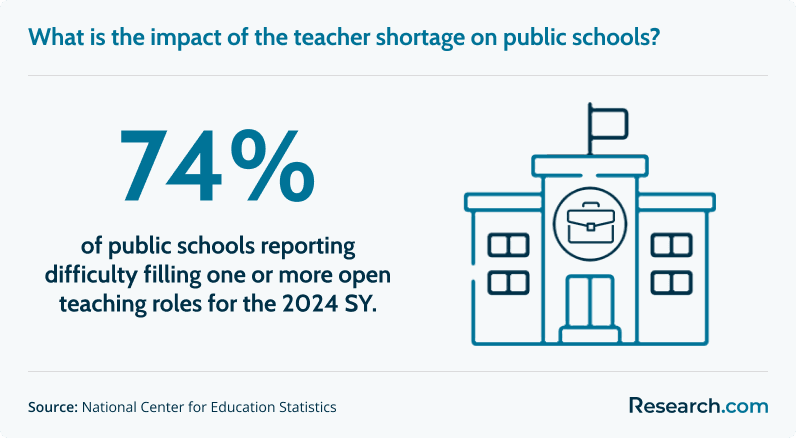
A truly high-quality choice is not just about the program's legitimacy; it's also about its strategic value in the job market. With significant teacher vacancies in public schools, choosing a specialization in a high-need area can make you a more competitive job candidate and provide greater long-term career stability.
Fields like special education, STEM, and teaching English language learners are consistently in high demand. Targeting an accelerated graduate certificate in special education online, for example, is a strategic move that aligns your credential with a clear and urgent need in the education system.
Here’s What Graduates Have to Say About Their Online Teaching Degree
- Lea: "I was so worried that an online degree wouldn't be taken seriously, but my principal was more impressed with the university's accreditation than anything else. The program was rigorous, and I felt completely prepared for my interviews and my first day in the classroom. I landed a job in my target school district less than a month after graduating, which proved to me I made the right choice."
- Grace: "As a full-time paralegal trying to switch careers, I couldn’t just quit my job to go back to school. The asynchronous format of my online program was the only reason I was able to make it work. I did my coursework on evenings and weekends, and the flexibility allowed me to transition into teaching without putting my family's finances at risk."
- Britney: "My biggest question was about student teaching, and the support I got was incredible. My university coordinator had existing relationships with local school districts and helped me secure a placement in a great middle school just a few miles from my house. The in-person experience combined with the online theory was the perfect blend to build my confidence."
Can online teaching degrees be accelerated for a faster career progression?
Online programs designed for rapid completion offer a strategic route for educators seeking to advance sooner. These accelerated pathways enable busy professionals to compress traditional timelines by leveraging intensive coursework and flexible scheduling, without compromising academic integrity. For example, pursuing accelerated EdD programs can fast-track the journey to a terminal degree, opening doors to leadership roles and advanced career opportunities in a shorter timeframe.
Key Findings
- With 26% of all undergraduate students studying exclusively online as of Fall 2021, this educational path has moved from a niche alternative to a mainstream option, significantly reducing the stigma once associated with non-traditional degrees.
- The general earnings premium for master's degree holders is 25.4% over bachelor's degree holders, providing a clear financial incentive that helps justify the investment in an advanced teaching credential.
- The average graduate school debt of $94,141 underscores the high financial stakes, making it critical to choose a program that leads directly to licensure and employment to ensure a positive return on investment.
- Accreditation—both regional for the university and programmatic (CAEP) for the education school—emerges as the single most important factor, serving as the non-negotiable quality signal for state licensing boards and employers.
- Given that a survey found 89% of teachers use digital tools, earning a degree online demonstrates a proficiency with technology that is directly relevant and valuable in the modern K-12 classroom.
- A program's practical support systems, specifically its alignment with your state's licensure rules and its process for securing local, in-person student teaching placements, are more important indicators of quality than university rankings.
References:
- Abilene Christian University. (2023, August 29). What do employers think about online degrees?. Retrieved October 2, 2025, from https://acu.edu/2023/08/29/what-employers-think-about-online-degrees/
- Gallup. (2025). Public confidence in U.S. higher education. Retrieved October 2, 2025, from https://news.gallup.com/poll/692519/public-trust-higher-rises-recent-low.aspx
- U.S. Bureau of Labor Statistics. (2025). Data on earnings by educational attainment. Retrieved October 2, 2025, from https://www.bls.gov/emp/chart-unemployment-earnings-education.htm
- U.S. Bureau of Labor Statistics. (2025). Occupational outlook handbook: Kindergarten and elementary school teachers. Retrieved October 2, 2025, from https://www.bls.gov/ooh/education-training-and-library/kindergarten-and-elementary-school-teachers.htm
- University of Texas at San Antonio. (n.d.). Are online degrees taken seriously by employers?. UTSA Online. Retrieved October 2, 2025, from https://online.utsa.edu/blog-content/are-online-degrees-taken-seriously/
Other Things You Need To Know About Online Teaching Degrees
In 2027, the job outlook for online teaching degree graduates remains strong due to increasing demand for educators skilled in remote teaching. Opportunities exist in public and private schools, educational technology firms, and online course providers, driven by ongoing digital integration in education.
Yes, many online teaching programs in 2026 allow you to transfer applicable credits from previous education. The acceptance of transfer credits will depend on the institution's policies and the accreditation status of your prior coursework. It is essential to consult directly with the program advisors to understand specific transfer requirements.


