
2027 Is an Online Associate in Finance Worth It?

Co-Founder and Chief Data Scientist
A career in finance offers a direct route into the professional world, providing opportunities for growth in nearly every industry. In fact, according to the U.S. Bureau of Labor Statistics, business and financial occupations are projected to generate about 942,500 job openings per year from 2024 to 2034, making it one of the fastest-growing and most stable career fields.
But many aspiring professionals wonder: Is an online associate in finance worth it as a strategic first step? To help you find a clear, data-driven answer, our team of career planning experts with over 10 years of experience has prepared this guide. We will break down the costs, realistic job outcomes, and long-term career potential to help you decide if this degree is the smart investment you need to launch your career.
Key Things You Should Know About an Online Associate in Finance
- Graduates can expect to compete for entry-level roles with a median annual salary of around $49,000, providing a solid return for a two-year degree.
- With an average cost far below that of a traditional four-year university, this degree is one of the most financially accessible routes into the professional finance world.
- An associate's degree typically takes just two years of full-time study, and online programs offer the flexibility to learn around your work and life schedule.
- This degree is not a career endpoint. It is a powerful and cost-effective stepping stone that allows you to transfer credits and complete a bachelor’s degree later on.
- The skills you gain are in demand across various sectors, including banking, insurance, real estate, and corporate finance departments.
- How much can you earn with an associate's degree in finance? Average Salary
- What is the job outlook for entry-level finance roles? Job Outlook
- What are the main benefits of getting an associate's degree online? Advantages
- How much does an online associate's in finance typically cost? Education Cost
- What do you need to get into an associate's degree program? Admission Requirements
- How long does it take to earn an associate's degree? Program Duration
- What entry-level jobs can you get with an associate's in finance? Entry-Level Jobs
- Can you use an associate's degree as a stepping stone to a bachelor's degree? Can you use an associate's degree as a stepping stone to a bachelor's degree?
- Which industries hire graduates with a finance associate's degree? Which industries hire graduates with a finance associate's degree?
- What practical skills do you learn in the program? Top Skills
- How does an associate's degree compare to a bachelor's degree in finance? How does an associate's degree compare to a bachelor's degree in finance?
- Who is an online associate's degree in finance best for? Who is an online associate's degree in finance best for?
- Should I Pursue Further Education After My Online Associate's in Finance? Should I Pursue Further Education After My Online Associate's in Finance?
How much can you earn with an associate's degree in finance?
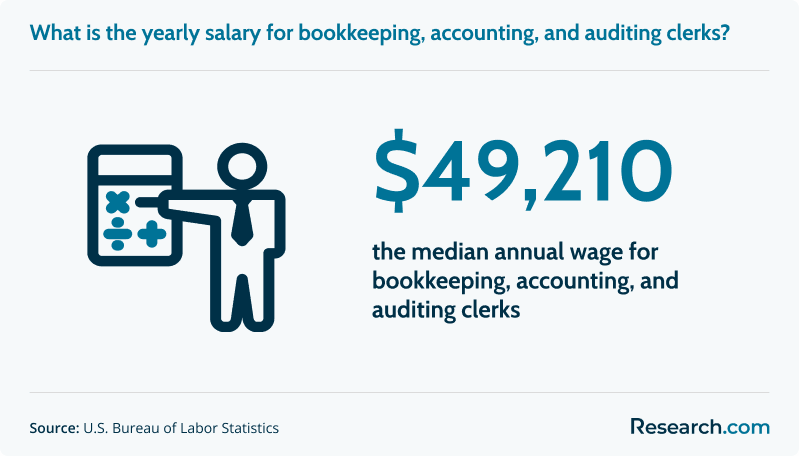
Graduates with an associate's degree in finance can expect to earn a median annual wage of around $49,210. This figure, based on data from the U.S. Bureau of Labor Statistics for roles like bookkeeping, accounting, and auditing clerks, represents a solid starting point for a professional career.
While this isn't the six-figure salary some associate with the finance industry, it's a strong return on a two-year educational investment. It provides a stable financial foundation right after graduation, which is a key factor when asking, "Is an online associate in finance worth it?"
Your starting salary is only the first step on a career ladder that can lead to much higher earnings with experience and advanced education. Now that you have a clear picture of the potential earnings, it's equally important to understand the long-term security of these roles.
Interestingly, compensation patterns in finance sometimes resemble those in technology fields—where comparisons like cyber defense vs cyber security salary also show wide pay ranges depending on specialization, experience, and certifications.
What is the job outlook for entry-level finance roles?
The projected job outlook for bookkeeping, accounting, and auditing clerks is a decline of 6% between 2024 and 2034. It's important to address this statistic directly, as it reflects a key trend in the finance industry: the increasing automation of routine data-entry tasks.
While this number may seem concerning, it doesn't mean the entire field is shrinking. Instead, it signals a shift in the types of skills that are most in demand. This is where understanding the bigger picture becomes crucial.
Similarly, in fields like construction and project management, professionals weigh the benefits of a construction management certificate vs a degree to stay competitive and adapt to shifting job markets—an approach finance professionals can learn from when planning their education and skill development.
Why the Outlook Is Better Than It Looks: Job vs. Industry
A key insider tip is to distinguish between the outlook for a single job title and the health of the overall industry. While specific clerical roles are declining, the broader business and financial sector remains massive and essential.
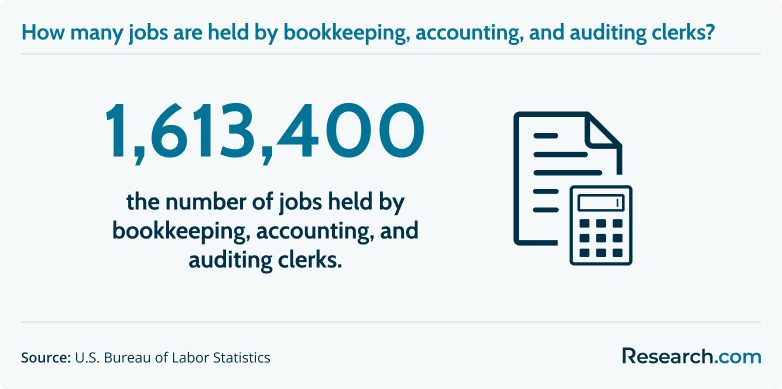
According to the most recent employment data, there were still over 1.6 million jobs for bookkeeping, accounting, and auditing clerks alone, showing the sheer scale of this field. Currently, Indeed reports that there are over 8,000 openings for accounting clerks alone.
Think of an associate's degree not as training for one narrow position, but as your entry ticket into this vast industry ecosystem. It provides the foundational knowledge needed to get your foot in the door, gain practical experience, and then grow into more analytical and strategic roles that are less susceptible to automation.
This means the degree is a launchpad into a durable career field, not just a qualification for a single job.
What are the main benefits of getting an associate's degree online?
Earning your finance associate's degree online is a practical and strategic choice for many students. The main benefits include:
- Significant Cost Savings: Online programs eliminate major expenses associated with on-campus learning, such as commuting, parking, and student housing. This makes the overall cost of the degree much more manageable.
- Unmatched Flexibility: You can complete coursework on your own schedule, whether it's evenings, weekends, or during breaks. This allows you to continue working and earning an income while you study.
- Wider Program Selection: You are not limited by geography, giving you the ability to choose from a broader range of colleges to find the specific program that best fits your career goals and budget.
- Development of Digital Skills: Studying online naturally builds your proficiency with digital tools, online communication platforms, and self-discipline, all of which are valuable skills in the modern business world.
- Equal Academic Value: When you enroll in an accredited online program, you earn the exact same credential as an on-campus student. Employers recognize the validity of degrees from accredited institutions, regardless of the delivery format.
The accessibility of online learning has expanded across disciplines — from business and finance to the arts. For example, students pursuing the best online photography degree also benefit from the same flexible, cost-saving structure that makes remote education appealing.
How much does an online associate's in finance typically cost?
An online associate's degree in finance costs a fraction of a traditional university degree, with the average for a public, two-year program being approximately $27,000 for the entire program. When you compare this to the tuition for just the first two years at many four-year universities, the savings are substantial.
This figure represents the total tuition, and because the program is online, you also save thousands of dollars on costs like housing, commuting, and campus fees. Students who can't afford the expenses can try to obtain financial aid, and can start by applying for the Free Application for Federal Student Aid (FAFSA) to learn about the types of federal aid available to them.
The high level of affordability is a major reason why the answer to the question "Is an online associate in finance worth it?" is often yes for those seeking a low-risk entry into the professional world. With such an accessible price point, the next logical question is what it takes to get into one of these programs.
This cost advantage is similar to the long-term benefits of a construction management degree, where graduates see strong returns on investment compared to the upfront costs of education.
What do you need to get into an associate's degree program?
The admission requirements for an online associate's degree in finance are typically very straightforward, requiring only a high school diploma or a GED. Unlike selective four-year universities with complex application processes, many institutions offering these programs have an open-enrollment policy.
An insider tip is to understand that this policy is intentionally designed to make higher education accessible to a wider range of students. It removes common barriers like minimum GPA requirements or standardized test scores (such as the SAT or ACT).
This means that if you have earned your high school credential, you have a clear and direct path to enrollment. This accessibility empowers you to begin your college education and start building a career in finance without a competitive or stressful application process.
How long does it take to earn an associate's degree?
An associate's degree in finance is designed to be completed in two years for a full-time student. This accelerated timeline is a core part of its value, allowing you to gain career-ready skills and enter the professional workforce much faster than you would with a traditional four-year degree.
For those who need to balance their studies with a job or family responsibilities, a key benefit is the availability of part-time options. While studying part-time will extend the timeline, it provides the flexibility to progress at a manageable pace without putting your life on hold.
This efficient structure, whether you choose a full- or part-time path, is designed to get you from the classroom to your career as quickly as possible.
What entry-level jobs can you get with an associate's in finance?
An associate's degree in finance qualifies you for a range of essential entry-level positions. These roles are the practical starting point for building a successful career, giving you the hands-on experience employers value.
- Bookkeeping, Accounting, and Auditing Clerks: These professionals are the backbone of a company's financial operations. They are responsible for producing and maintaining accurate financial records, processing invoices, and reconciling bank statements to ensure the organization's books are balanced and up-to-date.
- Financial Clerks: Working in settings like banking or insurance, these individuals perform a wide range of administrative and client-facing duties. Their tasks can include processing applications for loans and credit, updating customer financial records, and compiling documents for other financial professionals.
- Bill and Account Collectors: Specializing in accounts receivable, these professionals focus on recovering payments and managing overdue accounts for businesses. They contact customers to arrange for payment, maintain records of communications, and help resolve billing discrepancies.
- Tellers: As the frontline representatives of a bank, tellers are the face of the institution for many customers. They handle routine transactions like deposits, withdrawals, and loan payments, while also answering customer inquiries and identifying opportunities to refer clients to other banking services.
The experience you gain in these foundational roles is the key to career advancement. Mastering these skills is the first step toward senior positions, which you can learn more about in our guide to master's in organizational leadership jobs.
Can you use an associate's degree as a stepping stone to a bachelor's degree?
Yes, absolutely. Using an associate's degree as a stepping stone to a bachelor's degree is not just possible, it's one of the most powerful and cost-effective strategies for higher education.
Many two-year colleges have partnerships with four-year universities called articulation agreements. These agreements guarantee that the credits you earn in your associate's program will transfer seamlessly, counting directly toward your bachelor's degree.
This pathway allows you to gain valuable work experience in one of the 1.6 million clerk roles in the U.S. while completing the first half of your bachelor's degree at a much lower cost.
For anyone with long-term ambitions, this approach is essential. A bachelor's degree is the mandatory prerequisite for graduate studies, so this pathway is the smart first step if your goal is to eventually pursue an online MBA general business.
This means you are not choosing between an associate's and a bachelor's; you are simply planning a smarter, more affordable sequence to achieve your ultimate career goals.
Which industries hire graduates with a finance associate's degree?
Because every business needs to manage its money effectively, graduates with an associate's degree in finance are in demand across many different sectors. You are not limited to a career in banking; your skills are transferable to a wide variety of professional environments.
- Construction: This sector relies on financial professionals to manage massive project budgets, track the costs of materials and labor, and handle payroll for large teams, making financial accuracy essential for profitability.
- Professional and Technical Services: This broad category includes firms in fields like consulting, advertising, and IT, which need skilled finance staff to manage complex client billing, process payments, and oversee company budgets.
- Healthcare and Social Assistance: Hospitals, clinics, and large healthcare systems require finance experts to handle patient billing, process intricate insurance claims, and manage complex departmental budgets in a highly regulated environment.
- Wholesale Trade: In this industry, finance professionals manage the large-scale buying and selling of goods, tracking inventory costs, handling accounts payable and receivable, and ensuring the financial health of the supply chain.
- Retail Trade: From small businesses to large corporations, the retail sector needs finance staff to manage daily sales transactions, reconcile accounts, oversee payroll, and analyze financial performance to make strategic decisions.
It's also important to remember that opportunities extend beyond the corporate world. Government agencies and nonprofit organizations also need skilled finance staff to manage their budgets. For those interested in mission-driven work, you can explore potential career paths by looking into nonprofit management master's degree jobs.
What practical skills do you learn in the program?
An online associate's degree in finance focuses on building a foundation of job-ready skills that you can apply immediately in an entry-level role. The curriculum is designed to move beyond theory and give you the practical tools employers are looking for.
- Accounting Principles: You will learn the fundamentals of financial accounting, including how to prepare key statements, manage business ledgers, and ensure financial accuracy.
- Spreadsheet Software: You will develop proficiency in essential tools like Microsoft Excel to analyze data, build budgets, and create professional financial reports.
- Corporate Finance Fundamentals: You will study the basics of how businesses make financial decisions, manage capital to fund their operations, and evaluate investments.
- Financial Markets: You will learn about the structure of financial markets and the roles of key institutions, giving you a big-picture context for your work.
- Business Ethics and Compliance: You will be trained in professional ethics and regulatory compliance, preparing you to handle sensitive financial information with integrity.
These tangible skills are what make you a valuable candidate, providing a strong foundation for your first job and setting the stage for more advanced learning.
How does an associate's degree compare to a bachelor's degree in finance?
An associate's degree is a fast and affordable entry point into the finance industry, while a bachelor's degree unlocks higher long-term potential. The best way to think about them is not as competing options, but as two different stages of a career plan.
An associate's degree is designed for speed and access, getting you into your first professional job in just two years at a much lower cost. A bachelor's degree, which takes four years, provides deeper knowledge and is the key to higher-level analyst roles and significantly greater lifetime earning potential.
Deciding which is right for you now is central to the question, "Is an online associate in finance worth it?" The answer depends on your immediate financial situation and career goals.
Maximizing Your Bachelor's Degree Pathway
The most strategic approach is often sequential: start with the associate's degree and then transfer your credits to complete a bachelor's. This allows you to enter the workforce, start earning an income, and gain valuable experience, all while completing the first half of your bachelor's degree at a fraction of the cost.
If you choose this launchpad route, a great insider tip is to start thinking ahead about your specialization. As you plan your next steps, consider how different skill combinations can increase your market value.
For instance, you can ask yourself the question "Is accounting and finance a good double major?" or pursue one of them for your bachelor's degree.
Who is an online associate's degree in finance best for?
An online associate's degree in finance is best for two types of aspiring professionals: the practical career-starter and the strategic long-term planner.
The first is the individual who needs the fastest, most affordable, and lowest-risk path to a stable first job in a professional environment. For them, this degree provides a direct on-ramp to the workforce, delivering a solid credential and marketable skills in just two years.
The second is the ambitious planner who wants to achieve a bachelor's degree or higher without accumulating unnecessary debt. They see this degree as the smartest first step on a longer educational path—one that could eventually lead to the highest academic credentials, such as a DBA in management online. By starting with an associate's, they make a savvy financial decision that opens doors rather than closing them.
For both, the answer to the question "Is an online associate in finance worth it?" is a clear yes, because it provides a powerful and flexible foundation for building a successful future.
Should I Pursue Further Education After My Online Associate's in Finance?
Pursuing further education can significantly enhance career potential by deepening industry insights and expanding leadership skills. Graduates may consider transferring credits toward a bachelor's degree in finance or exploring specialized advanced training. When evaluating further study options, examine factors such as curriculum rigor, accreditation, and professional networking opportunities. For those targeting strategic roles, exploring cheap MBA online programs can offer a flexible and cost-effective route to broaden expertise while aligning academic pursuits with long-term career goals.
Here’s What Graduates Have to Say about Their Online Associate in Finance Program
- Gloria: "I was terrified of the massive loans that come with a four-year university. This online associate's program felt like such a smart, safe investment in myself without the financial stress. I was able to graduate with very little debt and a clear path to a stable job. Now I’m working full-time and feel completely in control of my financial future."
- Audrey: "My biggest fear was that a two-year degree would be a dead end and I'd be limiting my future. I was so relieved when my advisor showed me the clear transfer pathway to a state university's bachelor's program. Now I'm working in my field and finishing my bachelor's online, a plan that has saved me so much money."
- Jade: "I saw friends get degrees that didn't really lead to a specific career path. This program was different because it was so focused on the skills needed in the finance industry. I was able to get a job in the insurance sector right after graduating and I already see a clear ladder for promotion within my company."
Key Findings
- An online associate's degree in finance represents a low-risk financial commitment, with an average total cost of approximately $27,000, a fraction of the expense of a traditional four-year university.
- The degree provides a clear and immediate return on investment, qualifying graduates for entry-level positions that offer a median annual wage of $49,210.
- While the outlook for specific clerk roles shows a 6% decline, the degree provides entry into a massive industry with over 1.6 million related jobs, serving as a launchpad to more secure roles.
- The credential's greatest strategic value is its function as a transfer pathway, allowing students to complete the first half of a bachelor's degree at a significantly lower cost.
- The financial management skills gained are highly versatile, with industries like construction offering a median salary of $51,670 for these entry-level finance roles.
- For a total investment of around $27,000, graduates can access a career path with a starting median salary of nearly double that investment per year, making it a highly efficient educational choice.
References:
- Hanson, M. (2025). Education attainment statistics. Education Data Initiative. Retrieved October 8, 2025, from https://educationdata.org/education-attainment-statistics
- U.S. Bureau of Labor Statistics. (2025a). Bookkeeping, accounting, and auditing clerks. Occupational Outlook Handbook. Retrieved October 8, 2025, from https://www.bls.gov/ooh/office-and-administrative-support/bookkeeping-accounting-and-auditing-clerks.htm
- U.S. Bureau of Labor Statistics. (2025b). Business and financial occupations. Occupational Outlook Handbook. Retrieved October 8, 2025, from https://www.bls.gov/ooh/business-and-financial/
- U.S. Bureau of Labor Statistics. (2025c). Financial clerks. Occupational Outlook Handbook. Retrieved October 8, 2025, from https://www.bls.gov/ooh/office-and-administrative-support/financial-clerks.htm#tab-8
- ZipRecruiter. (2025). Associate degree in finance salary. Retrieved October 8, 2025, from https://www.ziprecruiter.com/Salaries/Associate-Degree-In-Finance-Salary
Other Things You Should Know About Online Associate in Finance Programs
In 2027, both a finance associate's degree and industry certifications offer unique value. An associate's degree provides foundational knowledge and broader learning, while certifications offer specialized expertise. Choosing between the two depends on career goals and the specific skills sought by employers in the finance industry.
In 2027, an online associate degree in finance can be a solid starting point for a career in finance, offering foundational knowledge in economics, accounting, and investment. It remains valuable if you plan to continue your education or if you're seeking specific entry-level roles in finance. Consider your long-term career goals and industry demands when making this choice.


