
2027 Cyber Defense vs. Cyber Security: Explaining the Difference

Co-Founder and Chief Data Scientist
Cyberattacks are happening every 39 seconds, targeting everything from hospitals to global corporations. As digital threats grow more advanced, so does the confusion between cybersecurity and cyber defense—two fields that sound similar but serve distinct missions.
This article breaks down their core differences, the skills and degrees each path requires, and how demand for both is reshaping the job market in 2027. Whether you’re choosing a degree or planning your next career move, understanding where these roles overlap—and where they don’t—can help you make a smarter, more strategic decision.
Key Things You Should Know About Cyber Defense and Cyber Security
- They share the same goal but differ in focus. Cybersecurity builds the systems, policies, and controls that prevent attacks, while cyber defense detects, responds to, and neutralizes active threats in real time through monitoring, forensics, and incident response.
- Both degrees open doors to high-demand careers. According to CyberSeek (2025), over 514,000 cybersecurity positions remain unfilled in the U.S. alone, with protection and defense roles making up nearly a quarter of all openings.
- Their required skills and tools vary. Cybersecurity degrees emphasize governance, risk management, and encryption, while cyber defense programs train students in penetration testing, malware analysis, and network defense tactics used in military and intelligence operations.
- What is the difference between cyber defense and cyber security? Cyber Defense vs Security
- Which skills are needed for a cyber defense degree vs a cyber security degree? Key Skills
- How do career paths differ between cyber defense and cyber security? Career Paths
- What courses or subjects will you study in a cyber defense vs cyber security program? Courses & Subjects
- Which industries hire cyber defense professionals vs cyber security professionals? Hiring Industries
- How much do cyber defense and cyber security roles pay? Salary & Outlook
- Can someone with a cyber security degree work in defense-oriented roles? Cross-Role Opportunities
- What certifications complement cyber defense vs cyber security education? Top Certifications
- What challenges or risks exist in cyber defense and cyber security careers today? What challenges or risks exist in cyber defense and cyber security careers today?
- How will emerging trends affect cyber defense vs cyber security roles? How will emerging trends affect cyber defense vs cyber security roles?
What is the difference between cyber defense and cyber security?
The main difference between cyber defense and cyber security lies in their purpose: cyber security prevents attacks, while cyber defense actively fights them once they begin. Cyber security focuses on building secure systems, enforcing policies, and minimizing vulnerabilities. Cyber defense, on the other hand, is the operational side—it monitors, detects, and responds to live threats that bypass security measures.
Cyber security is proactive. It involves risk management, encryption, compliance, and access control to reduce the attack surface. Professionals in this field often design frameworks aligned with NIST or ISO standards and ensure that organizational infrastructure stays resilient against evolving threats. Cyber defense is reactive and tactical. It involves threat hunting, incident response, malware analysis, and digital forensics—skills often used in military, government, or critical infrastructure sectors where response speed is crucial.
Both roles are vital. According to CyberSeek (2025), protection and defense make up 238,516 job openings, nearly a quarter of all cybersecurity-related positions. The WEF (2025) also reports that geopolitical conflicts and AI-driven attacks are accelerating the demand for real-time defense teams. Together, these disciplines form the foundation of modern digital resilience—one builds the walls; the other guards them.
In practice, many professionals use the term interchangeably with cyber security vs data security, but the distinction is important: cybersecurity encompasses overall protection of systems and networks, while data security focuses specifically on safeguarding the integrity and privacy of information itself.
| ASPECT | CYBER DEFENSE | CYBER SECURITY |
| Primary Focus | Detecting, responding to, and mitigating active threats | Preventing cyber incidents through secure systems and controls |
| Approach | Reactive and tactical | Proactive and strategic |
| Typical Roles | SOC Analyst, Threat Hunter, Incident Responder | Security Analyst, Compliance Officer, Risk Manager |
| Core Skills | Malware analysis, network defense, intrusion detection | Risk assessment, encryption, governance, access management |
| Top Employers | Government, defense, energy, and intelligence sectors | Finance, healthcare, IT services, and private corporations |
| Job Openings (U.S., 2025) | ~238,516 | ~514,000 across all cybersecurity roles |
| Median Pay Range | Around $112,871/year | Around $99,400/year |
| Goal | Stop attacks in progress and restore systems | Prevent attacks before they occur |
Which skills are needed for a cyber defense degree vs a cyber security degree?
Both cyber defense and cyber security degrees require a mix of technical, analytical, and problem-solving skills—but the emphasis differs.
Cyber defense students focus on threat detection, incident response, and network monitoring. They learn to recognize attack patterns, perform malware analysis, and use defensive tools in Security Operations Centers (SOCs).
In contrast, cyber security programs prioritize system hardening, data protection, and risk management, ensuring organizations stay compliant with standards like NIST and ISO.
According to ZipRecruiter (2025), the most common skills employers seek in these fields include cybersecurity (22.68%), technical knowledge (11.39%), and vulnerability assessment (10.48%). Both paths also demand collaboration, compliance awareness, and analytical thinking.
However, cyber defense adds specialization in digital forensics, intrusion detection, and incident containment, while cyber security leans toward encryption, cloud protection, and governance frameworks.
Students pursuing either field can strengthen their technical foundation through the fastest online cyberops training bootcamps to gain hands-on experience in real-world simulations.
The chart below shows which skills employers most often mention in cybersecurity-related job postings, reflecting the shared technical and analytical foundation between both degrees.
How do career paths differ between cyber defense and cyber security?
Cyber defense and cyber security share a common foundation in digital protection but diverge in purpose and career trajectory. Cyber security careers focus on building secure infrastructure, enforcing compliance, and preventing system vulnerabilities, while cyber defense careers specialize in real-time monitoring, response, and counteraction once a breach occurs.
Professionals in cyber defense often begin in operational roles and advance into leadership within security operations or intelligence. In contrast, cyber security specialists typically move into architecture, risk management, or executive-level security governance. According to CyberSeek (2025), protection and defense account for nearly 238,516 open positions, showing high demand for hands-on responders. Meanwhile, governance and operations dominate openings in broader cybersecurity functions.
Common Cyber Defense Career Paths:
- Security Operations Center (SOC) Analyst
- Incident Responder or Threat Hunter
- Cyber Forensics Investigator
- Malware or Intrusion Analyst
- Cyber Defense Engineer
Common Cyber Security Career Paths:
- Information Security Analyst
- Risk and Compliance Officer
- Network Security Engineer
- Cybersecurity Architect
- Chief Information Security Officer (CISO)
Many professionals pursue advanced credentials through the fastest online master’s programs in cybersecurity to transition from analyst or defense positions into high-level strategy and leadership roles.
What courses or subjects will you study in a cyber defense vs cyber security program?
Both cyber defense and cyber security programs teach students how to protect digital systems, but the focus of their coursework differs. A cybersecurity degree provides a broad understanding of information assurance, network protection, and policy frameworks, while a cyber defense program emphasizes operational tactics and active threat response.
Cyber security students learn how to design secure systems, implement encryption, and manage compliance with regulations such as GDPR and NIST standards. The curriculum prepares them for careers in risk management, governance, and system architecture. In contrast, cyber defense programs are designed to train specialists who can detect, analyze, and neutralize ongoing attacks. Coursework focuses on hands-on skills in intrusion detection, malware analysis, and network defense operations.
Typical Courses in a Cyber Security Program:
- Information Security Management
- Network and Cloud Security
- Risk Assessment and Compliance
- Cryptography and Secure Systems Design
- Ethical Hacking and Policy Development
Typical Courses in a Cyber Defense Program:
- Threat Intelligence and Incident Response
- Malware and Digital Forensics
- Cyber Operations and Penetration Testing
- Network Defense and Intrusion Detection
- Security Operations Center (SOC) Management
By graduation, students from both programs possess complementary expertise—cybersecurity graduates prevent threats, while cyber defense graduates fight them in real time. Some institutions even combine the two disciplines into interdisciplinary programs similar to artificial intelligence vs cybersecurity, where cross-training in automation, AI detection systems, and digital threat modeling has become essential to modern defense education.
Which industries hire cyber defense professionals vs cyber security professionals?
Cyber defense and cyber security professionals often work in the same industries, but their roles and objectives differ. Cyber security specialists focus on prevention, compliance, and overall system resilience, while cyber defense experts manage active monitoring, incident response, and threat mitigation. Both are essential to modern digital infrastructure.
Industries with the highest demand for cyber security professionals include finance, healthcare, technology, and education, where protecting sensitive data and ensuring regulatory compliance are top priorities. These sectors depend heavily on risk management, encryption, and governance. Meanwhile, cyber defense roles are more prominent in government, defense contracting, energy, and critical infrastructure, where systems face persistent, state-sponsored, or highly targeted attacks that require constant monitoring and rapid response.
According to CyberSeek (2025), the U.S. has more than 514,000 open cybersecurity-related positions, with protection and defense roles accounting for nearly a quarter. As threats become more complex, every sector—from finance to manufacturing—needs both types of specialists to maintain digital resilience.
The chart below illustrates job demand by workforce category, showing how governance, operations, and defense each contribute to the growing need for cybersecurity professionals across industries. As you explore potential career paths, consider programs that bridge both domains—many are structured like construction management degree vs certificate options, where degree programs emphasize leadership and design, while certificate tracks focus on immediate, job-ready technical skills.
How much do cyber defense and cyber security roles pay?
Cyber defense and cyber security roles both offer high-paying, stable careers, but cyber defense professionals generally earn slightly more due to the technical and operational intensity of their work. According to ZipRecruiter (2025), the average annual salary for a Cyber Defense Analyst is $112,871, while a Cyber Security Analyst averages $99,400. Both roles show top earners exceeding $135,000 per year, with entry-level positions starting between $34,000 and $43,000 depending on skill level and location.
Pay varies widely across industries and regions. Defense, government, and critical infrastructure organizations tend to offer higher salaries to cyber defense professionals with security clearances and hands-on experience in real-time operations. Cyber security analysts, meanwhile, earn competitive wages in sectors such as finance, healthcare, and IT services, where compliance and data protection are key. Geographic differences also matter—states like California, Maryland, and Virginia consistently top the cyber security jobs salary rankings due to high demand and cost of living adjustments.
The chart below compares salary ranges for both roles based on U.S. data from ZipRecruiter, reflecting how specialization and experience impact earning potential in today’s cybersecurity workforce.
Can someone with a cyber security degree work in defense-oriented roles?
Yes. Someone with a cyber security degree can transition into defense-oriented roles, and the reverse is also true, provided they acquire the right technical training and certifications. Both disciplines share foundational skills—such as network security, risk analysis, and incident management—but differ in specialization. Cyber security professionals design and maintain secure systems, while cyber defense experts operate within Security Operations Centers (SOCs) to identify and stop active threats.
In practice, these paths overlap across industries. Many government agencies, defense contractors, and private security firms hire cyber security graduates for defense-focused positions after completing advanced training in threat intelligence, malware analysis, or penetration testing. Likewise, cyber defense professionals can move into governance or compliance roles by pursuing additional coursework or a cheapest cybersecurity degree to formalize their credentials.
According to ISACA (2025), 46% of cybersecurity professionals transitioned from unrelated fields, showing that flexibility and continued education are key. Certifications like CompTIA Security+, CISSP, and GIAC often serve as gateways between preventive and defensive specializations, helping professionals cross from one track to the other as technology and job demands evolve.
What certifications complement cyber defense vs cyber security education?
The best certifications for cyber defense and cyber security depend on each field’s technical depth and career focus. Cyber defense certifications validate operational and tactical expertise, while cyber security certifications emphasize governance, risk, and architecture. Employers often require at least one certification to demonstrate professional competence, especially for high-level or specialized roles.
According to CyberSeek (2025), the most in-demand certifications include CompTIA Security+, CISSP, GIAC, and CISM, which appear across thousands of job listings. These credentials strengthen job prospects for graduates of both cyber security and cyber defense degrees. For students pursuing the easiest cybersecurity programs or bootcamps, certifications also offer an accessible way to validate skills before or after completing formal education.
Top Certifications for Cyber Defense Professionals:
- CompTIA Security+
- GIAC Certified Incident Handler (GCIH)
- Certified Ethical Hacker (CEH)
- Offensive Security Certified Professional (OSCP)
- CompTIA Cybersecurity Analyst (CySA+)
Top Certifications for Cyber Security Professionals:
- Certified Information Systems Security Professional (CISSP)
- Certified Information Security Manager (CISM)
- Certified Information Systems Auditor (CISA)
- ISO 27001 Lead Implementer
- NIST Cybersecurity Framework Practitioner
Earning a mix of tactical and strategic certifications helps professionals move between prevention- and defense-based roles as threat landscapes evolve and industry standards advance.
What challenges or risks exist in cyber defense and cyber security careers today?
The greatest challenges facing cyber defense and cyber security professionals today include talent shortages, increasing attack complexity, and high burnout rates. Both fields struggle to keep pace with the rapidly evolving threat landscape, where attackers exploit AI tools, cloud vulnerabilities, and global supply chain weaknesses faster than organizations can adapt.
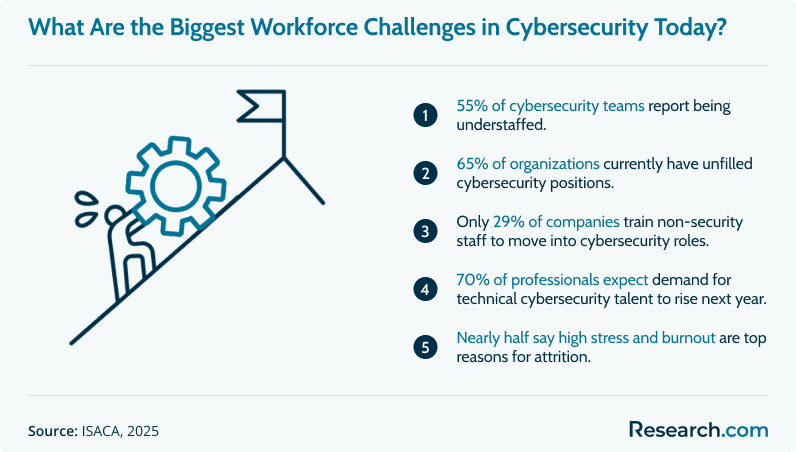
According to ISACA (2025), 55% of cybersecurity teams are understaffed, and 65% of organizations have unfilled roles. This shortage forces professionals to handle overwhelming workloads, heightening stress and fatigue. Another key risk is the escalating sophistication of cyberattacks—from AI-generated phishing to deepfake-driven breaches—that challenges even seasoned defense teams. Meanwhile, cyber security practitioners face budget limitations, outdated infrastructure, and slow internal response times that hinder preventive strategies.
Common Challenges Across Cyber Defense and Cyber Security Careers:
- Global talent shortages and retention issues
- Rising cyberattack frequency and AI-assisted threats
- Limited budgets and delayed modernization
- Stress, burnout, and mental health strain
- Constant upskilling to match emerging technologies
The infographic below summarizes the current workforce challenges that define both cyber defense and cyber security careers, emphasizing how understaffing and stress continue to threaten long-term sustainability in these fields. Professionals in these high-pressure environments often seek continuing education opportunities—many start with a human resources certificate vs degree-style comparison, balancing short-term certifications for immediate advancement with full degrees for career longevity.
How will emerging trends affect cyber defense vs cyber security roles?
Emerging technologies such as artificial intelligence (AI), cloud computing, and quantum encryption are transforming both cyber defense and cyber security roles—but in different ways.
- Cyber security professionals must adapt frameworks and policies to secure complex cloud ecosystems, manage data privacy, and anticipate post-quantum vulnerabilities.
- Cyber defense professionals, on the other hand, are integrating AI-powered analytics to detect intrusions faster, automate responses, and predict attacker behavior before damage occurs.
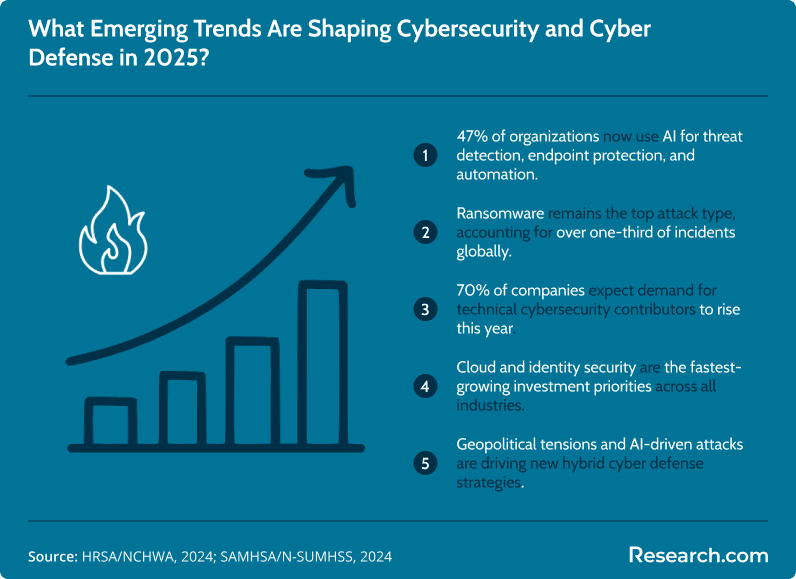
According to Accenture (2025), organizations using automation and AI-driven detection saw a 14% improvement in breach containment speed. Similarly, ISACA (2025) reports that 47% of professionals now use AI for threat detection and endpoint security, while CrowdStrike (2025) highlights the continued dominance of ransomware and state-backed cyber operations. As hybrid warfare blurs the line between physical and digital conflict, defense teams need to evolve beyond traditional SOC models to counter these new threats.
Professionals pursuing a cybercrime degree online or advanced security certification now encounter curricula emphasizing AI ethics, cloud resilience, and quantum-safe encryption—skills that are becoming essential across both fields. The ability to combine these emerging technologies with human judgment will define the next generation of cybersecurity and defense experts.
The infographic below highlights the top five technology-driven trends influencing the evolution of cyber defense and cyber security roles in 2025.
Here's What Graduates Have to Say About Their Cyber Defense and Cyber Security Careers
- Renata: "Studying cyber security online gave me the flexibility to keep my full-time job while earning industry certifications like Security+ and CISSP. The coursework was hands-on, simulating real-world attacks, which helped me land my current role as a Security Analyst in just six months. "
- Darian: "My online cyber defense degree taught me how to think like an attacker. I now work in a government SOC team, using AI tools to detect threats in real time. The virtual labs and simulations felt just as immersive as on-campus training. "
- Leona: "I transitioned from IT support to cyber security through an online master’s program. Learning remotely allowed me to balance family and study while gaining the cloud security and compliance skills employers really want. I’ve since doubled my salary and moved into management. "
Key Findings
- Cyber defense professionals earn an average of $112,871, while cyber security analysts earn $99,400 annually.
- The U.S. has over 514,000 unfilled cybersecurity jobs, with 238,516 focused on protection and defense.
- 55% of cybersecurity teams are understaffed, and 65% of organizations report unfilled positions.
- 47% of organizations now use AI for threat detection and automation.
- Cloud and identity protection are the fastest-growing investment priorities in cybersecurity.
- Ransomware remains the top global attack type, responsible for over one-third of all incidents.
References:
- Accenture. State of Cybersecurity Report.
- Check Point. Security Report 2025.
- CrowdStrike. 2025 Global Threat Report.
- CyberSeek. Cybersecurity Supply and Demand Heat Map.
- ISACA. State of Cybersecurity 2025 Global Press Release.
- Thales Group. 2025 Data Threat Report.
- World Economic Forum (WEF). Global Cybersecurity Outlook 2025.
- ZipRecruiter. Cyber Defense Analyst Salary.
- ZipRecruiter. Cyber Security Analyst Salary.
- ZipRecruiter. Cyber Security Analyst Resume Keywords and Skills.
Other Things You Should Know About Cyber Defense and Cyber Security
In 2027, key tools specific to cyber defense include advanced Intrusion Prevention Systems (IPS) and Machine Learning algorithms for threat prediction. These tools focus on proactive measures, differentiating them from typical cyber security solutions like antivirus or firewalls, which are primarily reactive.
To pursue a career in cyber defense in 2026, a strong foundation in computer science, network architecture, and threat analysis is essential. Cyber security careers generally require knowledge in information technology, encryption, and risk management. Both fields benefit from specialized degrees and certifications tailored to the industry.


