
2027 Cyber Security vs. Artificial Intelligence: Explaining the Difference

Co-Founder and Chief Data Scientist
In today’s digital world, cyber security and artificial intelligence (AI) are two of the most important fields in technology. Cyber security focuses on protecting networks, systems, and data from hackers and digital threats, while artificial intelligence aims to create machines that can think, learn, and make decisions like humans.
Although both play vital roles in keeping our connected world safe and efficient, they differ greatly in purpose, approach, and career paths. Understanding how these two technologies intersect, and how they diverge, can help students and professionals choose the right path for their goals.
This article breaks down the key differences between cyber security and artificial intelligence, explores how they work together, and explains the skills, careers, and opportunities each field offers.
What are the benefits of learning the difference between cyber security vs artificial intelligence?
- A degree in cyber security or artificial intelligence can lead to roles such as security analyst, ethical hacker, AI engineer, or machine learning specialist across industries like tech, finance, and healthcare.
- Professionals in both fields earn strong median salaries at around $120,360 per year for AI engineers and $120,360 for information security analysts, according to the U.S. Bureau of Labor Statistics (2024 data).
- Demand for experts in cyber security and AI continues to rise as businesses prioritize data protection and automation, ensuring long-term job security and advancement.
- Many accredited universities now offer online programs, allowing students to earn a degree while balancing work and personal commitments.
What can I expect from cyber security vs artificial intelligence degree?
Cyber security and artificial intelligence (AI) are two powerful forces shaping today’s digital world. Cyber security focuses on protecting computer systems, networks, and data from unauthorized access, theft, or damage. It involves tools and practices like encryption, firewalls, and ethical hacking to safeguard information.
Artificial intelligence, on the other hand, centers on creating machines and systems that can learn, reason, and make decisions much like humans. AI powers technologies such as automation, predictive analytics, and intelligent assistants.
While cyber security works to defend against digital threats, AI enhances efficiency, helps detect vulnerabilities faster, and supports smarter decision-making. Together, they represent the foundation of modern technology.
Where can I work with a cyber security vs artificial intelligence degree?
Graduates of cyber security programs often find employment across a wide range of industries that rely on data protection and digital infrastructure. Common workplaces include government agencies, financial institutions, healthcare organizations, and technology companies. Many also work for consulting firms or private corporations that require ongoing network monitoring and risk management. Typical roles include information security analyst, penetration tester, network security engineer, and security consultant. Because cyber threats are universal, skilled professionals are needed in almost every industry that handles sensitive data.
Those who earn degrees in artificial intelligence can pursue careers in fields driven by automation, data analysis, and innovation. AI professionals often work in tech companies, research institutions, manufacturing, finance, and healthcare. Common roles include machine learning engineer, AI researcher, data scientist, and robotics developer. Their expertise helps businesses make data-driven decisions, improve efficiency, and create cutting-edge solutions that transform how industries operate.
How much can I make with a cyber security vs artificial intelligence degree?
Graduates of cyber security programs typically earn competitive salaries due to the rising demand for data protection and risk management experts. According to the U.S. Bureau of Labor Statistics (BLS), information security analysts earn a median annual wage of about $120,360 as of 2024, with top professionals in government and finance sectors earning well over $150,000. Entry-level positions, such as junior security specialists, may start around $75,000 to $90,000.
In comparison, artificial intelligence professionals tend to earn even higher salaries, reflecting the technical expertise and innovation required in this field. The average annual salary for AI engineers in the U.S. is around $145,000, with machine learning specialists and AI researchers often exceeding $160,000 depending on experience and industry. Entry-level positions may start between $90,000 and $110,000.
- What is the difference between cyber security and AI? Cyber Security vs AI
- How do cyber security goals differ from AI objectives? How do cyber security goals differ from AI objectives?
- In what ways does AI enhance but also challenge cyber security efforts? In what ways does AI enhance but also challenge cyber security efforts?
- How do the skill sets required for AI vs. cyber security careers compare? Required Skill Sets
- What factors should students consider when choosing between AI and cyber security careers? Evaluating Options
- What degrees or certifications help students start a career in either field? Degrees & Certifications
- Why are cyber security and AI often mentioned together in tech discussions? Why are cyber security and AI often mentioned together in tech discussions?
- How do cyber security and AI impact individuals and businesses differently? How do cyber security and AI impact individuals and businesses differently?
- Which career pays more: cyber security or artificial intelligence? Salary
- Where can you access the most affordable online cyber security degree program? Where can you access the most affordable online cyber security degree program?
- Can someone with a cyber security background transition into AI? Can someone with a cyber security background transition into AI?
What is the difference between cybersecurity and AI?
The fundamental difference between cyber security and artificial intelligence (AI) lies in their core purpose and function.
Cyber security focuses on protecting digital systems, networks, and data from unauthorized access, attacks, and damage. Its main goal is to defend and secure information. Artificial intelligence (AI), on the other hand, focuses on simulating human intelligence through machines that can learn, reason, and make decisions. Its main goal is to analyze data, recognize patterns, and automate tasks.
In short, cyber security is about defense and protection, while AI is about learning and automation. However, they often intersect—AI strengthens cyber security by automating threat detection, and cyber security protects AI systems from being compromised.
For those new to tech careers, it helps to understand the broader context of these disciplines. Many people initially confuse cybersecurity vs coding, but they serve distinct purposes: coding builds digital tools, while cybersecurity protects them. Knowing this distinction makes it easier to appreciate where AI fits into the equation.
| Cyber Security | Artificial Intelligence | |
| Purpose | Protects digital systems and data from cyber threats | Enables machines to learn, reason, and make decisions |
| Main Function | Defense and prevention | Automation and intelligent problem-solving |
| Core Techniques | Encryption, firewalls, intrusion detection | Machine learning, neural networks, natural language processing |
| Human Role | Security analysts monitor, detect, and respond to threats | AI engineers design algorithms and train models |
| Complementarity | AI helps automate threat detection and response | AI systems need cyber security to stay protected from manipulation or attacks |
How do cyber security goals differ from AI objectives?
Cyber security and artificial intelligence (AI) have distinct goals because they serve different purposes in the digital ecosystem.
- Cyber security goals focus on protection and risk management. The main objectives are to safeguard systems, networks, and data from cyber threats, ensure privacy, maintain system integrity, and guarantee availability. In short, cyber security aims to defend against attacks and minimize damage.
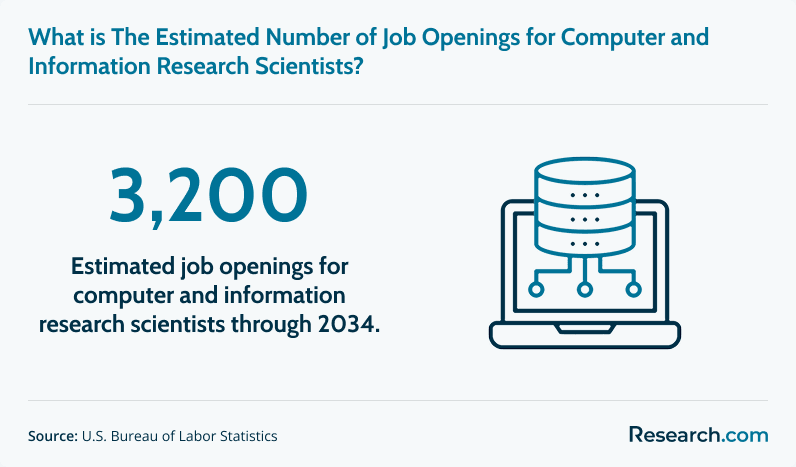
- AI objectives, on the other hand, center on intelligence and automation. AI aims to create systems that can learn from data, make predictions, and perform tasks that normally require human intelligence—such as recognizing speech, detecting patterns, or making decisions. Its goal is to improve efficiency, accuracy, and innovation through intelligent automation. The Bureau of Labor Statistics (BLS) projects approximately 3,200 annual openings for computer and information research scientists through 2034.
So, while cyber security protects digital assets, AI enhances how those assets are managed, analyzed, and used—often making cyber security systems smarter in the process. If you are interested in a career focused on defense and risk management, you may want to look at the best cyber security courses online.
In what ways does AI enhance but also challenge cyber security efforts?
Artificial intelligence (AI) plays a dual role in cyber security. It enhances defenses but also introduces new challenges.
How AI enhances cyber security
- Faster threat detection: AI analyzes vast amounts of data in real time to identify unusual activity or potential breaches much faster than humans.
- Predictive threat analysis: Machine learning models can detect attack patterns and predict future vulnerabilities before they’re exploited.
- Automated response: AI-powered systems can isolate infected devices or block malicious traffic automatically, reducing human response time.
- Improved accuracy: AI reduces false positives in threat detection by learning from past incidents.
- Adaptive defense: As cyber threats evolve, AI continuously learns and adjusts to new attack techniques.
How AI challenges cyber security
- AI-powered cyberattacks: Hackers can use AI to develop smarter phishing schemes, deepfakes, and automated malware that adapt to defenses.
- Data manipulation risks: Attackers can “poison” AI training data, causing systems to make wrong security decisions.
- Complexity and cost: AI systems require constant monitoring, updates, and large datasets, which increase operational challenges.
- Limited explainability: Some AI models act as “black boxes,” making it hard to understand how they reach certain conclusions—problematic for auditing security decisions.
- Dual-use dilemma: The same AI tools that protect systems can be repurposed by attackers to find vulnerabilities faster.
Organizations that integrate AI-driven defenses face similar decision-making trade-offs as those comparing cyber security vs cyber defense—one focuses on broad system protection, while the other prioritizes active threat response and resilience.
How do the skill sets required for AI vs. cybersecurity careers compare?
The skill sets for AI and cyber security careers differ because each field focuses on distinct goals—AI on data-driven intelligence and cyber security on digital protection—though both require strong analytical and technical skills.
AI Career Skill Set
AI professionals need skills centered on data analysis, algorithms, and automation.
- Programming and coding: Proficiency in Python, R, or Java for building algorithms and models.
- Mathematics and statistics: Strong foundation in linear algebra, calculus, and probability for machine learning.
- Machine learning and deep learning: Knowledge of neural networks, supervised and unsupervised learning, and frameworks like TensorFlow or PyTorch.
- Data science and analytics: Ability to clean, process, and interpret large datasets.
- Problem-solving and innovation: Developing models that learn, predict, and optimize real-world outcomes.
Cyber Security Career Skill Set
Cyber security professionals need skills focused on protection, risk management, and system defense. If you're interested in pursuing this field, obtaining a degree in cyber security can provide the necessary foundation. The largest sector employing information security analysts is computer systems design and related services, accounting for 22% of jobs.
- Network and system security: Understanding firewalls, intrusion detection, and encryption protocols.
- Ethical hacking and penetration testing: Ability to identify vulnerabilities and simulate attacks.
- Incident response and digital forensics: Managing breaches, analyzing logs, and mitigating threats.
- Risk assessment and compliance: Knowledge of laws, frameworks, and security standards (like NIST or ISO).
- Attention to detail and critical thinking: Identifying subtle signs of attacks or data breaches.
This chart breaks down the largest industries that employ information security analysts that secure digital assets and maintain business continuity.
What factors should students consider when choosing between AI and cyber security careers?
Students deciding between AI and cyber security careers should weigh several key factors ranging from personal interests to market demand and learning paths.
Here’s a breakdown of what to consider:
Personal Interest and Strengths
- Choose AI if you enjoy math, algorithms, data analysis, and programming.
- Choose cyber security if you prefer problem-solving, digital defense, and identifying system vulnerabilities.
Educational Background
- AI often requires a strong background in mathematics, computer science, and statistics. If you're looking for flexible and cost-effective options, you might want to explore the most affordable online artificial intelligence degree programs.
- Cyber security leans toward networking, IT systems, and security protocols.
Career Goals
- AI careers focus on innovation—building intelligent systems, predictive models, or automation tools.
- Cyber security careers focus on protection—defending data, preventing attacks, and maintaining trust in digital systems.
Industry Demand and Job Stability
- Both fields are growing fast, but cyber security offers more immediate job stability due to constant threats.
- AI offers higher innovation potential and long-term scalability, especially in research, automation, and data-driven industries.
Salary Potential
- AI roles (like machine learning engineers or data scientists) often offer higher average salaries, but require advanced degrees or experience.
- Cyber security roles (like security analysts or ethical hackers) are also well-paid, with demand outpacing supply.
Ethical and Social Impact
- AI influences how society uses technology and handles data ethically.
- Cyber security ensures privacy, safety, and trust in digital interactions.
What degrees or certifications help students start a career in either field?
Students can start a career in AI or cyber security through a mix of formal degrees and industry-recognized certifications, depending on their interests and career goals. For those aiming to enter the field quickly, an accelerated artificial intelligence online degree can be a good option.
Suggested Programs for a Career in Artificial Intelligence
Machine learning professionals are computer and information research scientists. They typically need a master’s or higher degree in computer science or a related field, such as computer engineering.
| Degree Programs |
| Bachelor’s in Computer Science or Data Science |
| Bachelor’s or Master’s in Artificial Intelligence |
| Master’s in Machine Learning or Robotics |
| Ph.D. in AI or Computational Science |
| Certifications |
| Google Professional Machine Learning Engineer |
| IBM AI Engineering Professional Certificate (Coursera) |
| Microsoft Certified: Azure AI Engineer Associate |
| TensorFlow Developer Certificate |
| AWS Certified Machine Learning – Specialty |
Suggested Programs for a Career in Cyber Security
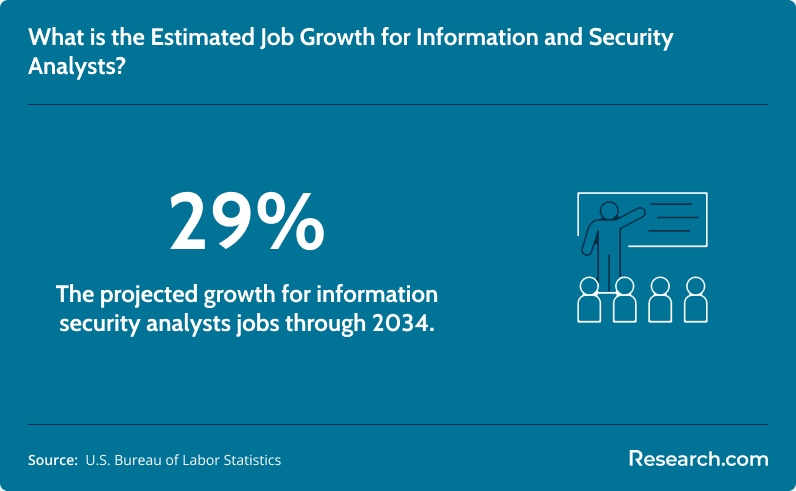
The job outlook for information security analysts is strong, with a 29% projected growth in openings through 2034.
| Degree Programs |
| Bachelor’s in Cybersecurity or Information Technology |
| Bachelor’s in Computer Science (Security Concentration) |
| Master’s in Cybersecurity or Information Assurance |
| Ph.D. in Cybersecurity or Computer Science |
| Certifications |
| CompTIA Security+ |
| Certified Ethical Hacker (CEH) |
| Certified Information Systems Security Professional (CISSP) |
| Certified Information Security Manager (CISM) |
| Cisco Certified CyberOps Associate |
Why are cyber security and AI often mentioned together in tech discussions?
Cyber security and artificial intelligence (AI) are often mentioned together because they increasingly intersect and reinforce each other in modern technology. Both play critical roles in keeping digital systems secure and efficient, but in complementary ways.
Here’s why they’re linked in most tech discussions:
- AI strengthens cybersecurity defenses. AI helps detect and respond to threats faster than traditional tools. Machine learning models can spot unusual network behavior, flag phishing attempts, and predict future attacks before they occur.
- Cyber security protects AI systems. As organizations deploy AI, these systems become targets themselves. Hackers can corrupt training data or manipulate algorithms. Cybersecurity ensures that AI systems remain trustworthy and tamper-proof.
- Automation and scalability. AI automates routine security tasks—like monitoring logs or classifying threats—allowing cybersecurity professionals to focus on complex incidents.
- Shared reliance on data. Both fields depend heavily on data—AI for learning and decision-making, and cybersecurity for identifying breaches or anomalies. Protecting this data is essential for both.
- Growing overlap in careers and technology. Emerging roles such as AI security engineer and cyber threat intelligence analyst require expertise in both domains. If you are looking to advance your expertise in the field of AI, you may want to research fastest online master's in artificial intelligence programs.
How do cyber security and AI impact individuals and businesses differently?
Cyber security and artificial intelligence (AI) affect individuals and businesses in different but complementary ways—one focuses on protection, while the other drives innovation and efficiency. The federal government, excluding postal service, is the largest single employer for computer and information research scientists, employing 29% of the workforce in 2024.
Impact on Individuals
- Cyber security: Protects personal data such as passwords, credit card details, and online identities from hackers or scams. It builds digital trust and safeguards privacy during everyday online activities like shopping, banking, or using social media.
- Artificial Intelligence: Enhances convenience and personalization. Examples include virtual assistants (like Siri or Alexa), smart home devices, and personalized recommendations on streaming or shopping platforms. However, AI can also raise privacy concerns if personal data is misused.
Impact on Businesses
- Cyber security: Prevents data breaches, financial losses, and reputational damage. Businesses depend on cyber security to comply with data protection laws, secure customer information, and maintain operational continuity.
- Artificial Intelligence: Boosts productivity, decision-making, and automation. It helps businesses analyze data faster, predict market trends, personalize customer experiences, and streamline operations.
This chart details the primary sectors that employ computer and information research scientists. It highlights the key industries that rely on these researchers to drive technological advancement. Businesses investing in both areas face a choice similar to MBA vs MS programs—one prioritizes leadership and management skills, the other focuses on technical expertise and innovation.
Which career pays more: cyber security or artificial intelligence?
Both cyber security and artificial intelligence (AI) careers pay well, but AI roles generally offer higher average salaries, mainly because they require deeper specialization in mathematics, programming, and data science. That said, cyber security remains one of the most stable and high-demand tech fields, with strong earning potential as experience grows.
| Cybersecurity (e.g., Analyst, Engineer) | Artificial Intelligence (e.g., ML Engineer, Data Scientist) | |
| Entry-Level | $70,000 – $95,000 | $85,000 – $110,000 |
| Mid-Level | $100,000 – $130,000 | $120,000 – $160,000 |
| Senior/Advanced | $140,000 – $200,000+ | $160,000 – $220,000+ |
Artificial intelligence (AI) roles typically command higher salaries due to the specialized and scarce expertise they require. These positions demand a deep foundation in advanced mathematics, statistics, and complex programming to develop sophisticated machine learning models and algorithms.
Currently, there is a smaller pool of professionals who possess these high-level AI and machine learning skills. This scarcity is further amplified by the fact that AI is heavily integrated into high-value sectors like finance, advanced automation, and healthcare, where the potential for significant financial return drives companies to offer premium compensation for top talent. For more on the opportunities in this field, check out artificial intelligence careers.
In contrast, cyber security remains highly competitive and offers strong earning potential, driven by its constant and universal demand across virtually every organization. Every company, regardless of its sector, needs robust protection against pervasive threats like data breaches and ransomware attacks, ensuring a continuous need for skilled security professionals.
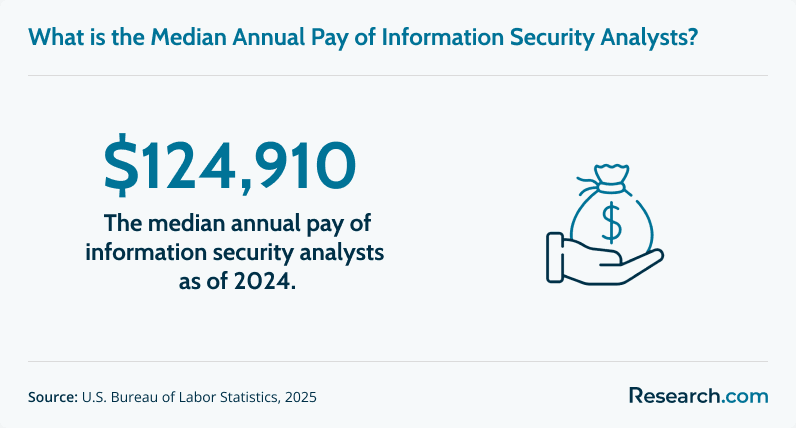
The median annual pay for information security analysts was $124,910 in 2024. While entry-level salaries may differ, senior-level and highly critical roles, such as Chief Information Security Officers (CISOs) or specialized security architects, often achieve salaries that match or even surpass those in the AI field, reflecting the immense responsibility they bear for protecting critical assets and maintaining business continuity.
Where can you access the most affordable online cyber security degree program?
In today’s competitive landscape, affordable and quality education can be a decisive factor in launching or advancing a career in cyber security. Cost-effective online degree programs not only provide essential technical and analytical skills but also offer the flexibility required by working professionals. Evaluating the cheapest cyber security degree online program's value involves considering curriculum relevance, accreditation standards, and potential industry partnerships—all of which contribute to practical job readiness and long-term career growth.
Can someone with a cyber security background transition into AI?
Yes, someone with a cybersecurity background can transition into artificial intelligence (AI). Both fields share overlapping skills in programming, data analysis, and problem-solving, which make the shift achievable with targeted upskilling.
Why the Transition Makes Sense
- Shared technical foundation: Cyber security professionals already understand networks, systems, and data security—key elements in AI model development and protection.
- High demand for AI in cybersecurity: AI-driven threat detection, predictive analysis, and automated defense systems are major growth areas where both skill sets are useful.
- Expanding cross-disciplinary roles: Positions like AI security engineer, threat intelligence data scientist, or machine learning security analyst bridge the two domains.
Skills to Develop for the Transition
- Mathematics and statistics: Learn linear algebra, calculus, and probability for machine learning.
- Programming languages: Strengthen Python and R skills for AI development.
- Machine learning frameworks: Gain experience with TensorFlow, PyTorch, or Scikit-learn.
- Data handling: Learn data preprocessing, model training, and algorithm optimization.
- AI ethics and model security: Understand how to protect AI systems from data poisoning and adversarial attacks.
This kind of career shift mirrors educational progressions like PhD vs masters, where deeper specialization opens advanced research and technical leadership roles. With the right training, cybersecurity experts can evolve into AI specialists without starting over.
Here's What Professionals Have to Say About The Difference Between Cyber Security and Artificial Intelligence
- Daniel: "Transitioning from cyber security to AI opened my eyes to how data can predict and prevent attacks before they happen. In cybersecurity, I focused on defense—protecting what already existed. In AI, I now build systems that learn, adapt, and outthink threats. It’s a thrilling shift from reaction to innovation. "
- Aisha: "I moved from AI development into cyber security to apply my machine learning skills to real-world protection. The biggest change was the sense of urgency—AI is creative, but cybersecurity is immediate and mission-critical. Knowing my work directly safeguards people and data gives me purpose every day. "
- Marcus: "Working in cyber security taught me discipline and precision, but AI brought creativity and exploration to my career. Learning how intelligent systems can strengthen security made me realize both fields depend on curiosity and problem-solving. It’s rewarding to blend protection with progress. "
Key Findings
- The median annual pay for information security analysts was $124,910 in 2024.
- The job outlook for information security analysts is strong, with a 29% projected growth in openings through 2034.
- The largest sector employing information security analysts is Computer systems design and related services, accounting for 22% of jobs.
- The largest sector employing information security analysts is Computer systems design and related services, accounting for 22% of jobs.
- The Bureau of Labor Statistics (BLS) projects approximately 3,200 annual openings for computer and information research scientists through 2034.
References:
- AIPRM. (n.d.). AI statistics.
- AIPRM. (n.d.). Machine learning statistics.
- Bureau of Labor Statistics. (2023). Occupational employment and wages, May 2023: 15-1212 information security analysts. U.S. Department of Labor.
- Bureau of Labor Statistics. (n.d.). Computer and information research scientists. Occupational Outlook Handbook. U.S. Department of Labor.
- Bureau of Labor Statistics. (n.d.). Information security analysts. Occupational Outlook Handbook. U.S. Department of Labor.
- McKinsey & Company. (2023). The state of AI.
- Stanford University, Institute for Human-Centered Artificial Intelligence (HAI). (2024). AI index report 2024.
- Stanford University, Institute for Human-Centered Artificial Intelligence (HAI). (2024). AI index report 2024.
- Stack Overflow. (2024). Stack Overflow developer survey 2024: AI.
Other Things You Should Know About The Difference Between Cyber Security and Artificial Intelligence
In 2027, AI and cybersecurity intersect primarily through AI's role in automating threat detection and response. AI tools analyze vast datasets rapidly, identifying anomalies and predicting potential cyber threats. This integration enhances the proactive capabilities of cybersecurity defenses, offering real-time insights to mitigate risks effectively.
In 2027, AI plays a pivotal role in enhancing cyber security strategies by automating threat detection and response. It improves risk assessment, proactively identifies anomalies, and provides rapid mitigation solutions, making cyber security measures more effective and adaptive to emerging cyber threats.
In 2027, a career in AI-focused cyber security typically requires a bachelor's degree in computer science or a related field, alongside specialized courses in artificial intelligence and cyber security. Certifications like Certified Information Systems Security Professional (CISSP) may enhance employment prospects.


