
2027 MBA vs. Master’s Degree: How to Choose

Co-Founder and Chief Data Scientist
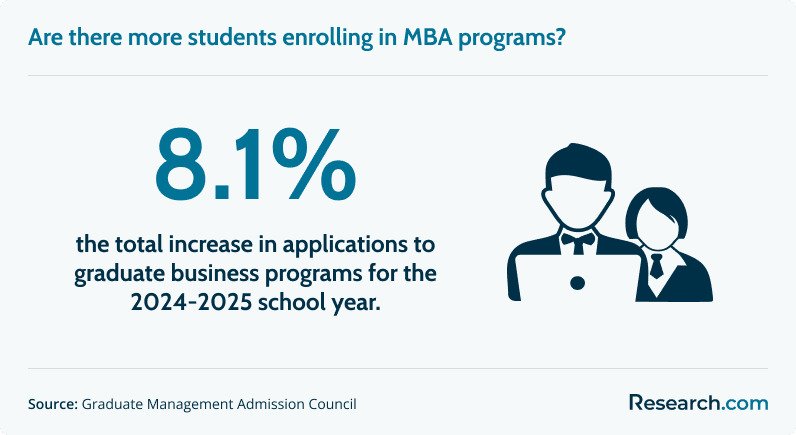
With applications to graduate business programs up 8.1%, the pressure to make the right choice is higher than ever. The real question isn't about which degree is better, but which professional you want to become. Are you a strategic integrator who leads teams and connects business functions, a path perfectly suited for an MBA degree? Or are you a deep practitioner who masters a specific subject?
This guide, prepared by career planning experts with more than 10 years of experience, will give you the clarity to choose the right path for your goals.
Key Things You Should Know About MBA & Master's Degree
- An MBA is designed to build strategic leadership skills, while a master's degree is built for developing deep, specialized expertise.
- A full-time MBA program typically takes two years, whereas most master's programs can be completed in one to two years.
- The investment for both is significant, with average costs often ranging from $60,000 to over $100,000, depending on the program.
- Top MBA graduates often see higher starting salaries, but specialized master's in high-demand fields can offer competitive or even greater pay.
- Top MBA programs almost always require several years of meaningful work experience, while master's programs prioritize a strong, relevant academic background.
- What is an MBA vs. a master’s degree? MBA vs. Master's
- What jobs can you get with an MBA vs. a master’s degree? Jobs
- How much can you earn with an MBA vs. a master’s degree? Earnings
- What is the job outlook for graduates of an MBA vs. a master’s degree? What is the job outlook for graduates of an MBA vs. a master’s degree?
- Where can you work with an MBA vs. a master’s degree? Work Environment
- What skills do you learn with an MBA vs. a master’s degree? What skills do you learn with an MBA vs. a master’s degree?
- What are the education requirements to enroll in an MBA vs. a master’s degree? Educational Requirements
- What are the alternative paths available in an MBA vs. a master’s degree? What are the alternative paths available in an MBA vs. a master’s degree?
- What are the typical career paths for an MBA vs. a master’s degree? What are the typical career paths for an MBA vs. a master’s degree?
- How do you choose the right path for you? How do you choose the right path for you?
- What are the potential challenges of pursuing an MBA vs. a master’s degree? What are the potential challenges of pursuing an MBA vs. a master’s degree?
- What are the networking opportunities like for an MBA and a master's degree? Networking
- Is an MBA or a master’s degree worth it? Is an MBA or a master’s degree worth it?
What is an MBA vs. a master’s degree?
An MBA degree is a generalist program designed to give you a holistic view of how a business operates. The curriculum focuses on core functions like finance, marketing, and operations, using the case-study method to train you in making strategic decisions under pressure. Think of it as learning to be a conductor of an orchestra.
A master's degree, on the other hand, is a specialist program. It’s designed to make you an expert in a single subject, like data science or engineering. The learning is focused on deep research and subject mastery, preparing you to be a virtuoso performer on one instrument.
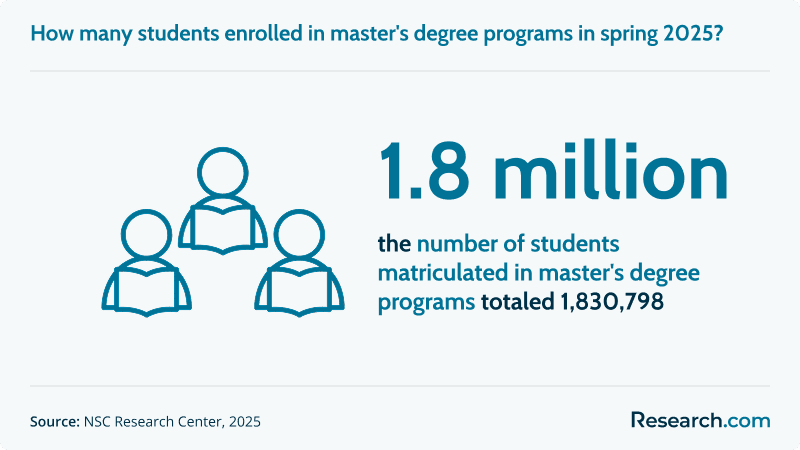
This distinction is crucial, and it's reflected in enrollment numbers—over 1.8 million students are pursuing master's-level expertise, while top MBA programs enroll over 215,000 aspiring leaders.
The Rise of Hybrid Degrees
You should know that the lines are starting to blur. Universities are responding to market demand for professionals with both technical depth and business sense. Programs like a Master's in Business Analytics or Engineering Management are emerging, offering a powerful combination of skills from both worlds. These hybrid degrees are creating a new class of "T-shaped" professionals who can be both practitioners and integrators.
If you’re comparing long-term value between business pathways, it’s similar to analyzing PhD vs MBA—both are prestigious, but one prioritizes academic research and intellectual contribution, while the other focuses on leadership, strategy, and real-world application.
What jobs can you get with an MBA vs. a master’s degree?
An MBA often opens doors to roles that manage people, projects, and strategy. Think of titles like management consultant, brand manager, or investment banker. It’s a powerful tool for a career switcher, allowing someone with a technical background to pivot into a business leadership role.
A master’s degree, in contrast, typically leads to jobs that require applying deep expertise. This is the path to becoming a data scientist, a senior engineer, or a financial analyst who builds the models. This degree is a career deepener, designed to make you a more advanced practitioner in your current field.
Deepening Your Expertise: The Specialist's Job Market
The tech industry is a perfect example of where both paths lead. Companies hire MBAs for roles in product strategy, business development, and marketing. At the same time, they hire master's graduates to build the core technology.
For instance, learning what can you do with a master's degree in artificial intelligence reveals a direct path to becoming a machine learning engineer or an AI research scientist, roles that are foundational to the modern tech economy. Both can lead to leadership, but one leads the business, while the other leads the technology.
How much can you earn with an MBA vs. a master’s degree?
While a top-tier MBA degree often leads to a higher starting salary, that isn’t the full story. A specialized master's degree in a high-demand field like artificial intelligence or quantitative finance can absolutely rival or even exceed that initial income.
The key is to think about salary curves over a career. An MBA salary tends to grow more steeply as you move up the management ladder. A specialist's salary might start very high but grow more slowly along an expert track. The immediate ROI might look different from the 20-year return.
High-Earning Niches: When Specialization Pays a Premium
The idea that an MBA is the only path to a high salary is outdated. The tech and finance industries have created a massive demand for deep specialists. In burgeoning fields, the sports analytics master's degree salary can be exceptionally competitive, proving that niche expertise is highly valued.
Factoring in the Initial Investment
Of course, earnings are only one side of the ROI equation. You have to consider the cost. To better understand the initial investment, consider the average costs for popular master's degrees. An MBA averages around $60,410, while an MS in a field like computer science is about $61,380.
What is the job outlook for graduates of an MBA vs. a master’s degree?
The job outlook for both degrees is strong, but it fluctuates in response to different economic cycles. Demand for MBA graduates is closely tied to corporate hiring cycles and economic confidence. Demand for specialized master's graduates is linked to the growth of specific industries, like tech or healthcare, which can sometimes be counter-cyclical.
With applications to graduate business programs increasing by 8.1%, the demand for MBA-level skills is robust. However, a strong outlook doesn't mean a guaranteed job; it means the opportunities are there for those who are well-prepared.
The Impact of Automation and AI
Looking ahead, you have to consider the impact of technology. Automation and AI are eliminating certain routine analytical jobs, which could pose a risk to specific specializations.
At the same time, this trend is massively increasing the demand for two types of individuals: strategic thinkers who can manage this transition (MBAs) and high-end specialists who can build and maintain these new systems (Master's in AI). The key is to choose a path that puts you in charge of the tools, not in competition with them.
For working professionals evaluating leadership advancement options, it’s worth comparing masters vs executive masters programs—executive tracks are often tailored for those already managing teams and aiming for senior-level influence, whereas traditional master’s programs cater to earlier career development.
Where can you work with an MBA vs. a master’s degree?
An MBA graduate can work in almost any industry because their skills—strategy, finance, leadership—are universally applicable. A master's graduate, however, typically works in an industry that specifically requires their deep technical knowledge.
Think about a large pharmaceutical company. The MBA graduate might be in the marketing department, developing the launch strategy for a new drug. The person with a Master's in Chemistry is in the lab, working on the drug's formulation. Both are essential, but they operate in very different environments.
Beyond the Obvious: Specialized Roles in Every Industry
It's a mistake to think that specialists only work in labs or tech companies. Every industry needs deep expertise. A large bank needs quantitative analysts with finance master's degrees. A media company needs data scientists with statistics master's degrees to understand audience behavior.
This trend isn't just in tech; exploring instructional design master's career options shows how specialized skills are crucial in corporate training and educational technology sectors.
The key is understanding the difference between being in a "tech company" and being in a "tech role"—an MBA can be in finance at Google, while the computer science master's graduate is building the search algorithm.
What skills do you learn?
An MBA degree teaches a portfolio of skills oriented toward leadership. You’ll learn corporate strategy, negotiation, organizational behavior, and advanced finance. These are the tools for integrating the work of others and guiding a business unit.
A master's degree teaches deep, domain-specific skills. You’ll learn statistical analysis, programming languages, or laboratory research methods. These are the tools for being an expert practitioner who can solve complex technical problems.
The most important distinction is the goal of the skill. An MBA student learns finance to decide whether to approve a major project. A finance master's student learns it to build a complex financial model that informs that decision. It’s the difference between using the tool and building the tool.
Building a 'T-Shaped' Skillset
The most valuable professionals in today's market can do both: they understand the technology and can explain its business value. This is often called being a "T-shaped" professional—deep expertise in one area combined with a broad understanding of how to collaborate across functions.
You can use this framework to be strategic. If you have a deep technical background, an MBA can build out the cross-functional top of your "T." If you have a business background, a specialized master's can give you the deep, defensible expertise that will set you apart.
In choosing a direction, many students look for the best specialization in business management, such as finance, operations, or entrepreneurship. Selecting the right focus area ensures your skills stay relevant to industry demand and complement your broader leadership goals.
What are the education requirements to enroll?
The admissions requirements for each path are fundamentally different because they are looking for different qualities. Top MBA programs almost always require three to five years of quality, full-time work experience. They want to see a track record of professional growth and leadership potential.
A master's degree program, however, is primarily focused on your academic background. Many applicants enroll directly from their undergraduate studies. The admissions committee wants to see a high GPA in a relevant major and strong academic references. Work experience is a plus, but it’s rarely the deciding factor.
The Growing Importance of the 'Story'
You also need to understand the narrative focus. An MBA degree application essay is about your leadership journey and career vision. A master's program's statement of purpose is about your passion for the subject and your aptitude for research.
As many schools become test-optional for the GMAT and GRE, this narrative becomes even more critical. With less emphasis on standardized scores, admissions committees are placing more weight on the quality of your work experience (for an MBA) or your undergraduate research and internships (for a master's). Your application needs to tell a compelling story about why you are the right fit for that specific path.
What are the alternative paths available?
A full-time, two-year program isn't the only way to advance your career. There are excellent, flexible alternatives that might be a better fit for your life and budget.
For those leaning toward business leadership, options like Part-Time, Executive, or Online MBAs offer the same core curriculum while allowing you to keep working. For those focused on skills, professional certifications like the CFA for finance or the PMP for project management can provide a significant career boost.
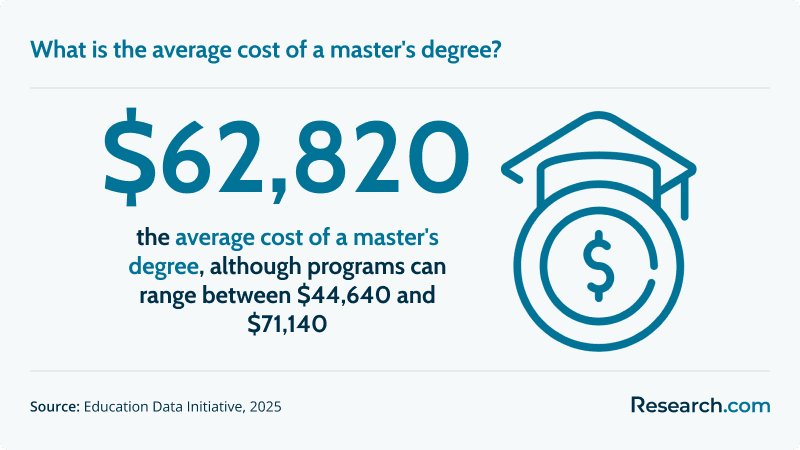
With the average cost of a master's degree at around $62,820, these alternatives can be a more targeted and cost-effective investment.
It's important to understand the trade-off. A degree provides a comprehensive foundation and a powerful network. A certificate validates a specific, marketable skill.
Stackable Credentials: The Future of Learning
The entire field of education is "unbundling," moving away from the all-or-nothing degree model. This is great news for you. It means you can acquire skills as you need them through credible, focused programs.
This approach allows you to build a custom toolkit of expertise over time. For example, many high-quality biotechnology graduate certificate online programs offer specialized skills without the time commitment of a full master's degree. You can "stack" these credentials to stay relevant and adapt to the market without having to step out of the workforce for two years.
What are the typical career paths for an MBA vs. a master’s degree?
The long-term career paths for an MBA degree and a master's degree are fundamentally different. They represent two distinct ladders for advancement within an organization.
The MBA path is a direct route to general management. The typical progression is from a post-MBA role like Senior Consultant or Brand Manager, to Director, to Vice President, and potentially to the C-suite. This is the track for leading business units and having P&L responsibility.
The master's path is the expert track. The progression is from an entry-level specialist role like Engineer I, to Senior Engineer, to Principal Engineer or Research Fellow. This is the track for becoming the go-to technical authority in your field.
Both tracks can lead to senior, influential positions, but the nature of the leadership is different—one leads the business, the other leads the innovation.
The Expert Track: From Practitioner to Thought Leader
It's a common misconception that you have to move into management to get ahead. Modern companies, especially in tech, have realized that forcing their best technical minds into management roles is a mistake.
In response, many have created "dual-career ladders." This structure allows senior technical experts to advance in seniority, compensation, and prestige without ever having to manage a team.
The variety of natural sciences masters jobs in research and development illustrates a path toward becoming a principal investigator or a senior research scientist. These roles carry immense influence and are critical to a company's success.
How do you choose the right path for you?
This is where you need to be honest with yourself. The right choice depends entirely on your personality, work style, and long-term ambitions. No online quiz can give you the answer.
Start by asking yourself these questions:
- What kind of problems do I enjoy solving? Do I prefer organizing complex projects and motivating people, or do I prefer diving deep into a technical challenge until I find the solution?
- How do I want to lead? Do I see myself leading a business unit and managing a budget, or leading a research team and setting the technical direction?
- What is my primary career driver? Is it strategic influence and career flexibility, or is it subject matter mastery and becoming a recognized expert?
The most important question is this: "Where do I get my energy?" Answering that will tell you whether you are wired to be an integrator (MBA) or a practitioner (Master's).
Thinking 20 Years Ahead
Now, zoom out. Don't just think about your next job; think about your last one. When you look back on your career in 20 or 30 years, what do you want to be known for?
Do you want to be remembered as the executive who successfully launched a new product line, or as the expert who developed the core technology that made it possible?
That long-term vision is the most reliable compass you have for making this decision. It cuts through the noise of salary reports and rankings and connects directly to your personal definition of a successful career.
Some students also weigh whether to pursue combined routes, like MBA vs BBA, especially if they’re still early in their education. A Bachelor of Business Administration (BBA) builds foundational management skills, while an MBA elevates them to the strategic and executive level—each serving a distinct career stage.
What are the potential challenges of pursuing an MBA vs. a master’s degree?
When evaluating these advanced degrees, it's essential to consider factors that may not be immediately obvious. MBA programs often demand a rigorous balance of full-time work and intensive coursework, which can stretch your capacity for networking and leadership development. In contrast, master's programs may require a steep dive into specialized subjects, potentially limiting opportunities for cross-industry exposure. Additionally, each path comes with distinct financial challenges beyond tuition, such as varying levels of student debt and hidden costs associated with program delivery formats. Prospective students should also examine program accreditation and teaching methodologies to ensure alignment with their career goals. Financial flexibility is another critical area; for example, exploring options like low cost MBA online can help mitigate the burden of upfront expenses without sacrificing educational quality.
What are the networking opportunities like for an MBA vs. a master’s degree?
The network you build in graduate school is one of the most valuable assets you will walk away with, and the two paths offer very different kinds of networks.
The MBA network is famously broad and diverse. Your classmates will come from finance, marketing, consulting, non-profits, and manufacturing. This cross-industry network is incredibly powerful for career pivoting and gaining a broad perspective on the business world.
The master's degree network is narrower but deeper. Your classmates will all be specialists in your chosen field. This creates a tight-knit community of experts who can help you solve technical problems and find opportunities within your specific industry for the rest of your career.
The simplest way to think about it is this: an MBA network helps you find a job in a different industry. A master's network helps you find your next job in the same industry.
Accessing the 'Hidden Job Market'
This isn't just about social events. The real value of these networks is access. Most senior-level and highly specialized jobs are never posted publicly. They are filled through referrals.
When a hiring manager has a critical role to fill, their first step is to ask their trusted contacts, "Who do you know?" Being part of that tight-knit graduate school network puts you on the shortlist. It’s a powerful tool for long-term career advancement that you simply can't get any other way.
Is an MBA or a master’s degree worth it?
Yes, but only if you choose the right one for your specific goals. The "worth" of a graduate degree isn't a simple number; it's a personal calculation of your return on investment. That includes the financial return, but it also has to include the skills you gain, the network you build, and your long-term career satisfaction.
Here is the final verdict: An MBA degree is worth it if your goal is to become a strategic leader, pivot your career, and build a broad, cross-functional network. A master's degree is worth it if your goal is to become a deep subject matter expert, advance on a technical track, and build a powerful, specialized network.
The right degree is a powerful career accelerator. The wrong one is a very expensive mistake.
The Weight of Investment: A Look at Student Debt
Ultimately, this is a major financial decision, and you have to be clear-eyed about the costs. Understanding the financial commitment is a critical part of the decision, and the data shows this burden can vary significantly.
For example, the average student debt for a master's degree can range from $45,600 for white students to over $57,415 for Black students. This isn't just an abstract investment; it's a tangible commitment that will shape your financial life for years to come.
Here’s What Graduates Have to Say about Their MBA & Master's Degree
- Tim: "Working in public health, I often felt like I had to fight to have my ideas taken seriously. Completing my master's degree changed that almost overnight. The credential gave me immediate credibility in meetings with senior stakeholders and policymakers. It wasn't just about what I learned; it was about having the authority to put that knowledge into action."
- Ben: "I always felt like a generalist, but my online master's in data science gave me a truly deep, defensible skill set. The projects were intense, but I came out of it able to build complex models from scratch. In a world where jobs can feel uncertain, having that level of specific expertise gives me a real sense of security and pride in my work."
- Catrina: "Honestly, I couldn't have done a traditional program with two young kids and a full-time job. The flexibility of the online MBA was everything. I was worried I’d miss out on the networking, but my cohort was incredibly active, and we built real connections. I was promoted to director six months after graduating, something that wouldn't have been possible without the degree."
Key Findings
- With applications to graduate business programs rising by 8.1%, the competition for strategic leadership roles is intensifying, making the decision to pursue an MBA more critical than ever for career accelerators.
- The path of specialization is a major educational route, with over 1.8 million students currently enrolled in master's programs, validating the pursuit of deep expertise as a primary career-building strategy.
- The financial commitment for an MBA is substantial, with the average cost of a program being approximately $60,410, a figure that puts significant pressure on ensuring a positive return on investment.
- Pursuing a specialized Master of Science degree requires a nearly identical investment, averaging $61,380, which challenges the assumption that a non-MBA path is a less expensive option.
- The cost of a graduate degree can vary significantly even within similar categories, with a Master of Arts averaging $66,340, complicating the financial analysis for prospective students.
- The real-world consequence of this investment is significant, as the average master's degree debt for Black graduates is over $57,415, highlighting the critical need to choose a degree that directly aligns with one's career and financial goals.
References:
- AACSB. (2024). Master’s enrollment trends at AACSB schools. AACSB International.
- Education Data Initiative. (2024, November 23). Average cost of a master's degree: 2025 analysis. EducationData.org
- Graduate Management Admission Council. (2024). Application trends survey 2024. GMAC
- National Student Clearinghouse Research Center. (2025). Current term enrollment estimates. NSC Research Center
- U.S. Department of Education, National Center for Education Statistics. (2024). Digest of Education Statistics. NCES
Other Things You Should Know About MBA & Master's Degree
In 2027, school ranking can impact prospective students by affecting the perceived value of the degree, networking opportunities, and potential career prospects. Prospective students might choose higher-ranked schools for their reputed curriculum and alumni network, potentially offering better job placements and higher salaries.
No, you do not need an undergraduate degree in business to get an MBA. Top MBA programs value diversity and actively recruit candidates from many different academic backgrounds, including engineering, sciences, and the humanities. They are far more interested in the quality of your work experience, your demonstrated leadership potential, and your future career goals.


