
2027 Top Specializations to Consider for a Business Management Career

Co-Founder and Chief Data Scientist
There were 391,375 bachelor’s degrees earned in business studies across the US, making it the most popular academic field (Statista, 2024). This growing demand highlights the importance of choosing the right business management specializations that lead to strong career outcomes. As industries evolve with technology, sustainability, and globalization, specialization helps graduates stand out in competitive job markets.
In this article, I will explore the top business management specializations for employment, outlining career paths, required skills, and emerging trends. I will also share practical insights to match students’ strengths and goals with the most in-demand business careers today.
Key Things You Should Know About Business Management Specializations
- Business management specializations provide focused learning in key areas like finance, marketing, or operations, helping students build expertise tailored to their desired career path.
- These specializations enhance leadership, analytical, and strategic skills, preparing graduates to adapt to complex business environments and digital innovation.
- Choosing the right business management specialization requires aligning personal interests and career goals, ensuring long-term growth and professional fulfillment in a competitive marketplace.
- What are the most popular business management specializations to pursue today? Popular Specializations
- Which business management specializations offer the most number of opportunities? Career Opportunities
- How can I choose the best business management specializations for my career goals? How can I choose the best business management specializations for my career goals?
- What education or degree do I need to qualify for business management specializations? Specialization Qualifications
- How long does it take to complete training for business management specializations? Program Length
- What new trends are shaping business management specializations in 2027? New Trends
- What skills are important for success in business management specializations? Important Skills
- How do different business management specializations work together in an organization? How do different business management specializations work together in an organization?
- What types of jobs can I get after studying business management specializations? What types of jobs can I get after studying business management specializations?
- How can business management specializations help me advance in my career? How can business management specializations help me advance in my career?
- Is the investment in business management specializations worthwhile? Is the investment in business management specializations worthwhile?
What are the most popular business management specializations to pursue today?
Business management is one of the most versatile fields of study, offering students the opportunity to develop leadership, strategic, and analytical skills that apply to nearly every industry. As global markets evolve, the demand for professionals who understand both business fundamentals and niche areas of management continues to grow.
Students today can choose from a wide range of business management specializations, each designed to align academic study with real-world career goals and industry needs. The most popular paths for aspiring professionals include:
- Marketing Management: Ideal for creative thinkers who enjoy strategy, communication, and consumer engagement. This specialization teaches students how to analyze markets, craft campaigns, and strengthen brand presence in competitive industries.
- Financial Management: Perfect for detail-oriented students who excel at numbers and forecasting. It covers budgeting, investments, and corporate finance strategies that guide businesses toward profitability and long-term growth.
- Human Resource Management: Best suited for empathetic leaders interested in people management. It focuses on recruitment, employee relations, organizational culture, and talent development, ensuring that teams thrive and perform effectively.
- International Business: Designed for globally minded students, this specialization explores cross-border operations, global marketing, and international trade laws, preparing graduates for careers in multinational organizations.
- Operations and Supply Chain Management: Ideal for problem-solvers who like efficiency and logistics, this specialization teaches students how to streamline production, manage suppliers, and oversee distribution networks to keep businesses running smoothly, and is often pursued through a supply chain management degree to develop in-depth expertise.
Which business management specializations offer the most number of career opportunities?
Business management specializations offering the highest career opportunities are those aligned with industries that demand strategic oversight, innovation, and operational leadership. Business landscapes evolve, and fields such as real estate management, asset and investment management, and operations strategy continue to create strong pathways for advancement.
Notably, the Management of Companies and Enterprises industry employs 552,800 professionals, while the Real Estate sector employs 344,410, highlighting robust opportunities for managers in these fields. These are the business management specializations that offer the highest number of career opportunities:
- Real Estate and Land Management: This specialization prepares graduates to oversee property development, land valuation, and large-scale urban projects.
- Asset and Investment Management: Focused on maximizing returns from tangible and intangible assets. It emphasizes asset valuation, portfolio strategy, and intellectual property management, forming a strong foundation for those pursuing an investment management career path that blends analytical precision with strategic foresight.
- Operations and Supply Chain Management: This specialization equips professionals to streamline production, logistics, and resource allocation. It is integral across manufacturing, retail, and technology sectors that rely on efficiency to sustain competitiveness.
- Financial and Strategic Management: Students specializing in finance and strategy gain analytical and leadership skills essential for navigating corporate growth, mergers, and market expansion. These roles are consistently in demand across global firms seeking profitability and long-term stability.
- Entrepreneurship and Innovation Management: This specialization fosters creativity and risk management, preparing graduates to launch new ventures or drive innovation within established companies. It supports the growing startup ecosystem and the broader shift toward digital transformation.
This chart from the US BLS illustrates the industries with the highest concentration of employment in management occupations.
How can I choose the best business management specializations for my career goals?
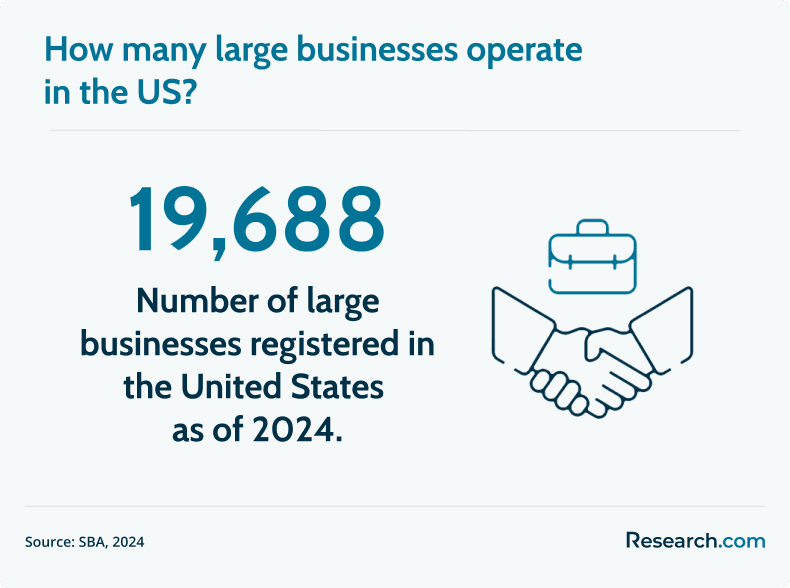
Choosing the best business management specialization requires aligning your personal strengths with long-term market opportunities. With 19,688 large businesses in the US, the professional landscape favors adaptable managers who can lead across diverse organizational settings.
The ideal specialization matches what you do best, whether analyzing data, leading teams, or innovating strategies where demand continues to grow. To make an informed decision, consider the following guiding points:
- Assess Your Interests and Strengths: Identify what drives your enthusiasm, strategic decision-making, financial analysis, or creative leadership, as these preferences shape your academic and career direction.
- Study Market Trends: Research sectors undergoing expansion or digital transformation, such as technology, healthcare, and sustainability, to understand where managerial expertise is most valuable.
- Seek Mentorship and Insight: Engage with professionals, faculty, or career advisors who can provide perspective on specialization paths and their real-world implications.
- Define Your Long-Term Vision: Determine whether you aim to manage corporate teams, lead small enterprises, or launch your own venture.
Some students preparing for business programs also weigh the practical value of other degrees like accounting degree vs certificate, especially when choosing between broad management training and specialized financial education. Understanding these trade-offs helps clarify how a chosen path aligns with both immediate and long-term goals.
What education or degree do I need to qualify for business management specializations?
Students interested in pursuing business management specializations can begin as early as their undergraduate years, building a foundation in core business disciplines such as accounting, marketing, and organizational behavior. A bachelor’s degree equips learners with analytical, communication, and leadership skills essential for entry-level management roles. As career goals evolve, advancing to a graduate program strengthens strategic thinking and industry expertise.
The common degree pathways to qualify for business management specializations include:
- Bachelor of Business Administration (BBA): Offers a comprehensive overview of business operations while allowing students to tailor their studies through electives in areas like finance, human resources, or marketing.
- Master of Business Administration (MBA): Designed for professionals seeking leadership roles, this program emphasizes critical thinking, global business strategy, and organizational management, with opportunities to specialize in high-demand fields.
The abovementioned aside, you may also consider taking up specialized master's degrees. Programs such as an MS in Finance, MS in Supply Chain Management, or MS in Digital Marketing provide targeted expertise and advanced analytical skills, preparing graduates for technical or executive positions within specific sectors.
For those exploring deeper specialization, questions like can you get an MBA in finance highlight how these programs can be tailored to combine advanced management training with focused financial expertise, enhancing career opportunities in competitive markets.
How long does it take to complete training for business management specializations?
The time required to complete a business management specialization depends largely on the level of study, learning format, and individual pace. Students can choose from traditional degree paths or shorter professional programs that fit their schedules and career goals. Those pursuing a full academic route often gain broader knowledge and leadership preparation, while shorter certifications offer practical, job-ready skills.
The typical completion timelines for business management specializations are:
- Bachelor’s Degree: Usually takes 3 to 4 years of full-time study, combining foundational business courses with specialization tracks in areas like finance, marketing, or operations. Many programs also include internships or capstone projects to strengthen real-world experience.
- Master’s Degree: Generally completed in 1 to 2 years, this program focuses on strategic management, innovation, and executive decision-making. Students often engage in case studies, research projects, and industry collaborations that prepare them for senior leadership roles.
- Professional Certifications: These are shorter, career-focused options that typically take 6 to 12 months to complete. Programs such as the Project Management Professional (PMP) or Society for Human Resource Management (SHRM) certification allow professionals to upskill quickly and demonstrate expertise in a specific management area.
Students interested in corporate leadership roles often wonder, how long does it take to complete a healthcare management degree, since timelines can be similar. Healthcare management, like business management, combines leadership training with regulatory, ethical, and financial components relevant to a specialized sector.
What new trends are shaping business management specializations in 2027?
Business management continues to transform rapidly as global markets adapt to new technologies, sustainability goals, and shifting workforce dynamics. The rise of digital ecosystems has redefined how organizations operate, while environmental and ethical considerations are now central to long-term business success.
With nearly 80% of global companies adopting AI to streamline operations and improve efficiency, management education increasingly emphasizes data-driven decision-making, adaptability, and innovation. Students exploring business management specializations in 2027 should pay attention to these emerging trends shaping the field:
- AI, Data Analytics, and Automation: Businesses now rely on managers who can interpret data and integrate automation into decision-making. These skills enhance productivity, forecasting, and competitive advantage.
- Sustainable and Ethical Management: As industries transition toward green operations, leaders must balance profitability with social and environmental responsibility—driving demand for sustainability-focused management experts.
- Remote Leadership and Digital Collaboration: The global workforce has become increasingly hybrid, requiring managers skilled in communication technologies, remote supervision, and cross-cultural teamwork.
- Entrepreneurship and Innovation Management: With digital startups flourishing, students gain value from learning to design business models, attract funding, and manage innovation in fast-changing markets.
- Global Strategy and Cross-Border Operations: Businesses operate in interconnected economies. Managers trained in international trade, cultural intelligence, and global logistics are better prepared to lead multinational teams and projects.
Some of these emerging themes align with broader educational changes seen in graduate degrees in education, where adaptability, ethics, and data literacy are increasingly emphasized across disciplines to prepare leaders for complex, interdisciplinary challenges.

What skills are important for success in business management specializations?
In today’s rapidly shifting business landscape, success depends on how quickly professionals can adapt, learn, and apply new skills. According to the World Economic Forum, 44% of workers’ core skills will change within the next five years.
As emerging technologies and sustainability goals reshape industries, 69 million new jobs will be created, while 83 million may disappear due to automation and economic pressures. This transformation highlights the importance of building strong, future-ready capabilities through business management specializations.
To thrive in this evolving environment, students must cultivate a balance of analytical, strategic, and human-centered competencies that prepare them for leadership and innovation across sectors.
Master these skills to help you with employment and empower you to build meaningful, adaptive careers that grow with the future of business:
- Analytical and Critical Thinking: Enables professionals to evaluate data, anticipate challenges, and make evidence-based decisions that strengthen organizational strategy and competitiveness.
- Financial Literacy: Builds understanding of budgeting, investment, and profitability, key to managing business performance and guiding sustainable financial growth.
- Communication and Negotiation: Enhances collaboration, leadership, and influence by ensuring ideas are conveyed clearly and stakeholder relationships are managed effectively.
- Adaptability and Innovation: Prepares managers to navigate market changes, digital transformation, and global uncertainty with flexibility and continuous learning.
- Emotional Intelligence: Supports positive workplace culture by improving empathy, conflict resolution, and team motivation, critical for leading diverse, high-performing teams.
- Digital and Data Literacy: Strengthens the ability to interpret data, use business analytics tools, and harness emerging technologies such as AI for smarter decision-making.
- Strategic Leadership: Encourages long-term vision, organizational planning, and the ability to align people and processes toward measurable goals.
Students balancing full-time work while pursuing specialization courses may relate to the challenges of part time vs full time student schedules—where time management, discipline, and adaptability become essential skills for professional success and academic progress alike.
How do different business management specializations work together in an organization?
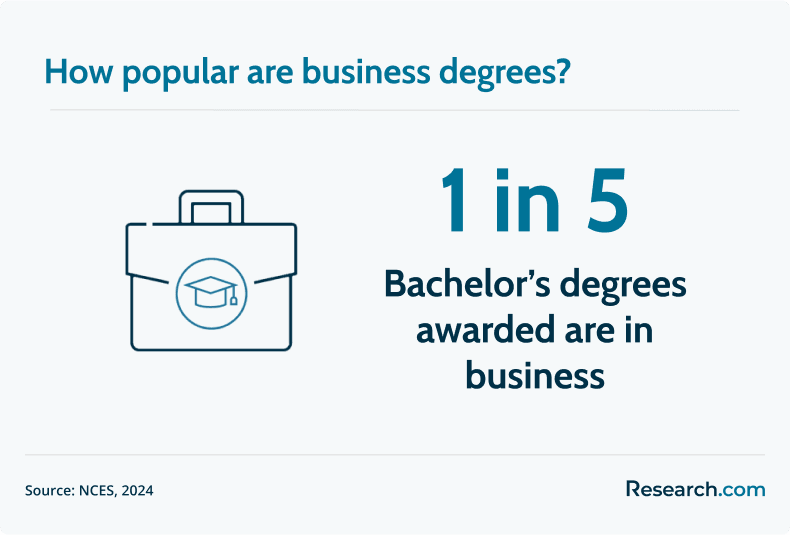
A business degree remains one of the most valuable credentials in today’s fast-changing economy. In fact, one in five bachelor’s degrees awarded in the US is in business, underscoring its enduring relevance and demand.
Yet, beyond numbers, the true strength of business education lies in how its many specializations work together to create cohesive, efficient, and forward-thinking organizations. Each area contributes unique expertise, ensuring that business operations run smoothly and strategic goals are met across all levels.
Within a company, collaboration between specializations fuels innovation, productivity, and growth. From aligning financial plans with marketing strategies to optimizing operations through data insights, every function plays a vital part in overall success.
Here’s how the interconnected business management specializations serve as the foundation of modern organizations, fostering collaboration that fuels innovation, operational efficiency, and long-term sustainable growth:
- Finance and Marketing: Finance ensures marketing teams have the budget for campaigns while monitoring return on investment. Marketing, in turn, drives revenue growth through market insights that inform financial planning.
- Human Resources and Project Management: HR recruits and develops the right talent, enabling project managers, often armed with a project management degree, to form capable teams and deliver projects on schedule and within scope.
- Supply Chain and Operations: These functions collaborate to balance production efficiency with demand forecasts, ensuring timely delivery and resource optimization.
- Information Systems and Management: Technology specialists support data-driven decision-making, helping managers track performance metrics, automate processes, and enhance organizational agility.
- Sustainability and Corporate Strategy: Sustainability experts work with executives to design environmentally responsible policies that align with long-term business goals and brand reputation.
What types of jobs can I get after studying business management specializations?
Graduates of business management specializations have access to a wide range of career opportunities across corporate, nonprofit, and entrepreneurial sectors. These roles leverage specialized knowledge in leadership, strategy, and operations, offering both diversity and competitive salaries.
The common career paths below often serve as gateways to executive leadership roles, rewarding graduates who combine expertise with continuous professional growth:
- Human Resources Manager: Oversees recruitment, training, and organizational development, ensuring workforce efficiency and employee satisfaction, with a median salary of $140,030. Students interested in this path often explore how to be a human resources manager to gain both the skills and credentials needed for success.
- Marketing Manager: Develops branding strategies, manages campaigns, and analyzes market trends to drive growth, earning a median of $161,030.
- Financial Manager: Directs financial planning, risk management, and investment strategies to maximize profitability.
- Operations or Supply Chain Manager: Coordinates production, logistics, and resource allocation to streamline processes and reduce costs.
- Project Manager: Advises organizations on improving performance, implementing strategies, and leading projects to successful completion.
This chart from the US BLS displays average salaries for various business management roles.
How can business management specializations help me advance in my career?
Specializing in a focused area of business management equips students with in‑depth expertise that sets them apart in today’s competitive job market. Employers value precision and innovation, and specialization signals both commitment and mastery. It empowers graduates to offer targeted skills that meet industry demands, increasing both their income potential and opportunities for career growth.
Here’s how business management specialization can assist in career advancement:
- Higher Income Potential: Developing specialized expertise can significantly boost earning power, as in-demand niche skills surpass generalist capabilities in value. For instance, sustainability managers who lead eco-friendly initiatives earn 15 to 25% more than colleagues lacking sustainability expertise, reflecting the premium placed on specialized knowledge.
- Faster Promotion Opportunities: Deep knowledge in a specific area positions graduates as experts, increasing their likelihood of being considered for leadership roles and strategic projects.
- Enhanced Professional Credibility: Specialization builds authority, helping graduates gain trust and influence within their organizations.
- Broader Career Mobility: Expertise in high-demand areas can open doors to opportunities in diverse industries and global markets.
- Strategic Career Growth: Aligning specialization with career goals provides a clear path for long-term advancement and sustained professional impact.
Is the investment in business management specializations worthwhile?
Evaluating the return on investment (ROI) for business management specializations is essential for prospective students aiming for financial prudence and professional advancement. Detailed cost-benefit assessments compare tuition fees, opportunity costs, and potential salary growth linked to targeted expertise. Data from industry studies suggest that specialized programs can lead to accelerated career paths and improved compensation over time, particularly when aligned with market demands and leadership trends. For instance, examining cost-effective options such as the best cheapest online MBA can help balance quality education with financial commitment, ensuring that educational investments translate into measurable career benefits.
What Graduates Say About Their Business Management Specialization
-
Manon: "
Studying a business management specialization in marketing taught me how data and creativity work together to shape consumer behavior. The hands-on projects gave me real-world insight and boosted my confidence to lead campaigns. It truly prepared me for today’s fast-paced business world. "
- Lara: "My specialization in supply chain management helped me understand the importance of strategy, coordination, and sustainability in every business operation. The coursework was challenging but incredibly rewarding, and it sharpened my problem-solving and leadership skills."
- Sandy: "Choosing a business management specialization in entrepreneurship changed how I see opportunities and risk. The collaborative classes and mentorship sessions helped me turn an idea into a viable startup plan. It was both empowering and life-changing. "
Key Findings
- 19,688 large businesses are operating in the US, reflecting significant corporate influence
- AI is a major trend in business management, with 80% of global companies using it to enhance efficiency and streamline operations, reshaping management roles.
- Business remains highly popular, as 1 in 5 bachelor’s degrees awarded is in this field, reflecting strong demand for business expertise.
- The Land Subdivision industry employs about 9,290 managers, highlighting the need for skills in planning, finance, and regulatory compliance.
- Financial managers earn an average of $161,700 annually, making it a lucrative path for those specializing in finance.
References:
- Edge Delta (2024). AI Adoption by Companies: 5 Statistics You Should Know. Retrieved from https://edgedelta.com/company/blog/ai-adoption-by-companies
- NCES (2024). Undergraduate Degree Fields. Retrieved from https://nces.ed.gov/programs/coe/indicator/cta
- SBA (2024). Frequently Asked Questions About Small Business. Retrieved from https://advocacy.sba.gov/wp-content/uploads/2024/12/Frequently-Asked-Questions-About-Small-Business_2024-508.pdf
- Statista (2024). Bachelor's Degrees Earned in the United States 2020/21, by field of research. Retrieved from https://www.statista.com/statistics/185334/number-of-bachelors-degrees-by-field-of-research/
- US BLS (2025). Advertising, Promotions, and Marketing Managers. Retrieved from https://www.bls.gov/ooh/management/advertising-promotions-and-marketing-managers.htm#tab-5
- US BLS (2025). Occupational Employment and Wages, May 2022 11-0000 Management Occupations (Major Group). Retrieved from https://www.bls.gov/oes/2022/may/oes110000.htm
- US BLS (2025). Project Management Specialists. Retrieved from https://www.bls.gov/ooh/business-and-financial/project-management-specialists.htm
Other Things You Should Know About Business Management Specializations
In 2027, top business management specializations include Digital Marketing, Data Analytics, Supply Chain Management, Financial Planning, and Global Business Management. These areas are crucial for effectively navigating the modern business landscape, providing a competitive edge and aligning with current industry demands.
Critical skills for the top 2027 business management specializations include data analysis, strategic planning, and digital literacy. Proficiency in these areas is key as they align with the trends and demands in business analytics, strategic leadership, and digital marketing specializations.
These programs provide insight into international trade, cross-cultural management, and global economic trends. Students learn to interpret global market dynamics and make informed decisions that align with multinational strategies and diverse business environments.


