
Full-Time vs. Part-Time Student: Explaining the Difference in 2027

Co-Founder and Chief Data Scientist
Choosing between being a full-time or part-time student is one of the most important decisions you’ll make in your academic journey. In 2027, with flexible schedules, online learning options, and changing financial realities, understanding what each status means can help you plan your education more effectively.
The difference between full-time and part-time enrollment goes beyond just the number of classes you take—it can affect your tuition costs, financial aid eligibility, graduation timeline, and even your daily routine.
Whether you’re a recent high school graduate starting college or a working professional returning to school, this guide will show you how each option fits your goals and will help you make the most informed choice for your situation.
Key Points to Know About Being a Part-Time or Full-Time Student
- Full-time students typically take a heavier course load each semester, allowing them to complete their degree faster but requiring a greater weekly time commitment.
- Part-time students usually enroll in fewer classes, which provides more flexibility for work or family responsibilities but extends the overall time needed to graduate.
- Financial aid eligibility, tuition costs, and access to campus resources can vary depending on whether you study full-time or part-time.
- Choosing between full-time and part-time enrollment depends on your personal goals, financial situation, and ability to balance academic, professional, and personal priorities.
Affordable Quick Online Degree Programs with High Acceptance Rates for 2027
Many prospective students in 2027 are looking for affordable, fast online degree programs that offer high acceptance rates. Earning an online degree demands both flexibility and convenience, so it’s essential to choose a program that aligns with your personal and academic needs. To make your search easier, we’ve gathered a list of online degree programs known for their high acceptance rates.
1. Nursing
A nursing degree prepares students for hands-on roles in patient care, health education, and clinical support. Online nursing programs often include flexible study options combined with in-person clinical placements, making them ideal for working professionals in the healthcare field.
2. Computer Science
This degree focuses on programming, data structures, algorithms, and emerging technologies like AI and cybersecurity. Graduates often pursue careers in software development, IT consulting, or systems analysis, with growing demand across industries.
3. Healthcare Administration
Designed for future healthcare leaders, this degree teaches management principles, healthcare policy, and organizational leadership. It’s ideal for those aiming to oversee hospitals, clinics, or healthcare networks.
4. Management
A management degree equips students with leadership, communication, and strategic planning skills essential for supervisory or executive roles in various industries.
5. Management Information Systems (MIS)
MIS blends business and technology, teaching students how to manage information systems that drive organizational efficiency. Graduates often become systems analysts, IT managers, or data specialists.
6. Social Work
A degree in social work trains students to support individuals, families, and communities through counseling, advocacy, and social service programs. Online options often include field placements for real-world experience.
7. Economics
Economics programs explore how societies use resources and make financial decisions. Students learn analytical and quantitative skills applicable to careers in finance, policy, and research.
8. Accounting
This degree builds a foundation in financial reporting, auditing, and taxation. Graduates can pursue CPA certification and work in public accounting, corporate finance, or government roles.
9. Business Administration
A versatile degree that covers marketing, finance, operations, and human resources, business administration prepares students for leadership roles across sectors. Online formats often allow specialization in areas like entrepreneurship or project management.
10. Special Education
Special education programs prepare teachers to support students with diverse learning needs. Coursework focuses on individualized instruction, behavior management, and inclusive classroom strategies.
- What qualifies as a full-time or part-time student? Full Time vs Part Time
- How many credit hours or courses are required for full-time or part-time students? Requirement
- What does a typical full-time schedule look like? Full-Time Schedule
- Why might someone decide to become a part-time student? Reasons for Part-Time
- How do full-time and part-time students differ in credit hours and course load? Course Load Differences
- How does tuition and financial aid eligibility vary? Tuition & Financial Aid
- Which option leads to a faster graduation timeline? Faster Graduation
- How does each status affect work-life balance and flexibility? How does each status affect work-life balance and flexibility?
- Do full-time and part-time students have equal access to campus resources and extracurriculars? Do full-time and part-time students have equal access to campus resources and extracurriculars?
- How do employers and graduate schools view each enrollment status today? How do employers and graduate schools view each enrollment status today?
- How does enrollment status impact long-term career outcomes? How does enrollment status impact long-term career outcomes?
What qualifies as a full-time or part-time student?
A student’s enrollment status—whether full-time or part-time—is determined by the number of credit hours they take during a semester. In most colleges, full-time students are enrolled in at least 12 credit hours at the undergraduate level, which typically equals four or more courses.
Graduate students, on the other hand, are often considered full-time when taking 9 or more credit hours each term. Students taking fewer than these minimums are classified as part-time. This flexible status allows learners to take a lighter course load—often one to three classes per semester—while managing work, family, or other commitments.
Understanding your enrollment status is essential, as it affects not only your academic workload but also your eligibility for financial aid, scholarships, and campus benefits.
According to the National Center for Education Statistics (NCES), about 73% of students attended undergraduate programs full-time, accounting for 7.9 million undergraduates, as depicted in the chart below.
Many community colleges also use the same system when defining full- and part-time students in associate programs. Whether you pursue an AA vs AS degree, credit load requirements typically remain consistent, even though the program focus—arts or sciences—may differ.
How many credit hours or courses are required for full-time or part-time students?
Credit hour requirements can vary slightly by institution, but most colleges and universities follow similar standards, including some of the best institutions for non-traditional students flexible learning options.
For undergraduate students, being full-time usually means enrolling in 12 to 18 credit hours per semester, which typically equals four to six courses. Taking fewer than 12 credit hours classifies a student as part-time, often amounting to one to three courses per term.
At the graduate level, the requirements are slightly lower because courses are more intensive. Full-time graduate students generally take 9 or more credit hours per semester, while those enrolled in 6 to 8 credit hours are usually considered part-time.
What does a typical full-time schedule look like?
A typical full-time student schedule involves four to six courses per semester, depending on the institution and program requirements. This usually translates to 12 to 18 credit hours, with classes spread throughout the week. Most full-time students spend around 15 to 20 hours per week in class, not including additional time needed for studying, projects, or group work.
Undergraduate students often balance a mix of core subjects, electives, and major-specific courses, while graduate students may focus on fewer, more intensive classes that require deeper research and independent study. Full-time students typically attend classes four to five days a week, though many also take online or hybrid courses for added flexibility.
Because of the higher course load, full-time students often treat school as a primary commitment, devoting significant time each week to coursework, campus activities, and academic responsibilities.
A recent study found that a slight increase in online enrollment led to a 14% higher chance of graduating within four years. This effect was found among both first generation and non-first generation students.
Why might someone decide to become a part-time student?
Many students choose to study part-time for the flexibility it offers. A part-time schedule allows learners to take fewer courses each semester—often one to three—so they can balance school with work, family, or personal commitments.
This makes it a practical option for working professionals, parents, or adult learners returning to education after a break, including those exploring the best colleges for students with learning disabilities that offer supportive and adaptable learning environments.
Part-time enrollment can also help reduce financial pressure, since students pay for fewer classes at a time and can spread tuition costs over a longer period. Additionally, part-time study provides a manageable workload for those who prefer to learn at a slower pace or want to focus deeply on fewer subjects each term.
Ultimately, becoming a part-time student allows individuals to pursue their academic goals without sacrificing stability in other areas of their lives.
How do full-time and part-time students differ in credit hours and course load?
The main difference between full-time and part-time students comes down to how many credit hours they take each semester and the intensity of their workload.
Full-time students typically enroll in 12 to 18 credit hours per semester at the undergraduate level, which equals about four to six courses. This pace allows them to progress steadily toward graduation—usually completing a degree in about four years.
Students pursuing specialized programs, such as the best degrees for working with animals, may also follow similar credit requirements depending on their field and coursework. Graduate students are considered full-time when taking 9 or more credit hours, often spread across two to four advanced courses.
Part-time students, by contrast, take fewer than 12 credit hours (undergraduate) or fewer than 9 credit hours (graduate), which usually means one to three classes per term. This lighter schedule provides more flexibility but extends the time needed to complete a degree.
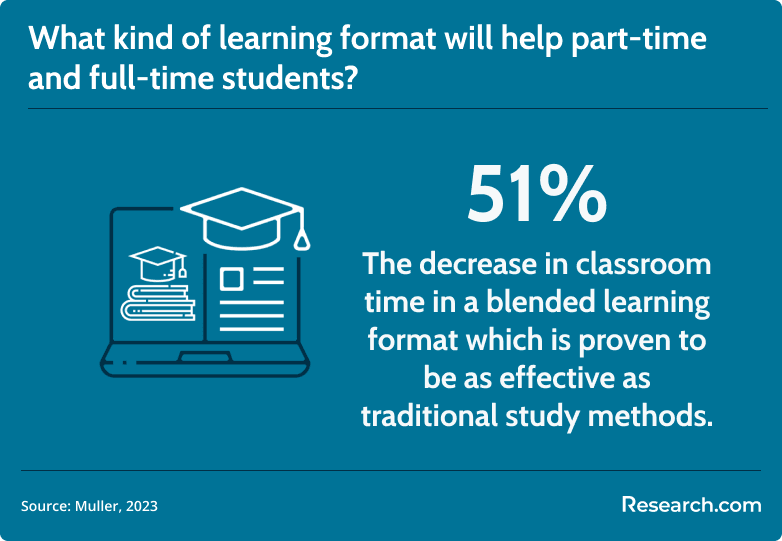
Interestingly, research shows that blended learning formats, which reduce classroom time by about 51%, can help both full-time and part-time students manage their workloads more efficiently. Such flexible options allow full-time learners and part-time students to balance education with work and personal commitments without compromising learning quality.
How does tuition and financial aid eligibility vary?
Tuition and financial aid often differ significantly between full-time and part-time students. Full-time students usually pay a flat tuition rate that covers 12 to 18 credit hours per semester, making it more cost-effective to take a full course load.
In contrast, part-time students typically pay per credit hour, which can make the overall cost per semester lower—but the total cost of completing a degree may be higher if it takes longer to finish.
For example, students pursuing advanced programs such as those leading to a masters in instructional design salary potential may find that part-time enrollment allows them to balance work and study while gradually investing in their education.
Financial aid eligibility also depends on enrollment status. Many federal and state grants, scholarships, and loans require students to maintain at least half-time enrollment (typically 6 credit hours for undergraduates).
Full-time students often qualify for a wider range of aid options, including campus housing support and merit-based scholarships, while part-time students may have limited access to certain forms of aid or institutional funding.
Because policies vary by school and program, it’s always best for students to check with their financial aid office to understand how their enrollment status impacts tuition, scholarships, and loan eligibility.
Which option leads to a faster graduation timeline?
Full-time students generally complete their degrees faster because they take more courses each semester. At the undergraduate level, full-time enrollment allows most students to finish a bachelor’s degree in about four years, while full-time graduate students can typically earn a master’s degree in one to two years.
Students pursuing specialized programs—such as those leading to careers with a technical communication degree—also benefit from maintaining steady academic progress to build strong professional skills and credentials. This steady pace keeps students continuously engaged in coursework and academic milestones.
In contrast, part-time students take fewer credit hours per term—often one to three classes—which naturally extends the time to graduation. Depending on the program and course availability, earning the same degree part-time might take five to eight years or longer.
However, the slower pace can be an advantage for students who prefer to balance school with work or personal obligations without feeling overwhelmed.
How does each status affect work-life balance and flexibility?
The difference between full-time and part-time study greatly impacts a student’s work-life balance and overall flexibility.
Full-time students usually treat school as a primary commitment, spending 15 to 20 hours a week in class plus additional time studying, completing assignments, and participating in activities. This schedule leaves limited time for full-time work or family responsibilities, though some students manage part-time jobs. The benefit, however, is a more immersive academic experience and faster progress toward a degree.
Part-time students, on the other hand, enjoy much more flexibility. With only one to three classes per term, they can more easily work full-time, care for family, or pursue other interests alongside their studies. This approach provides better balance but may extend the time it takes to graduate.
A six-year-long study that began in 2016 revealed that only a few part-time students stay enrolled and graduate after six years. The results showed that the graduation rate increased from 4.5% in year 2 to 23.7% in year 6, as illustrated below.
Students considering part-time programs for career shifts—such as nursing—often ask similar questions to is becoming an LPN worth it before enrolling. The answer depends on time, cost, and how well a flexible schedule supports personal and professional priorities.
Do full-time and part-time students have equal access to campus resources and extracurriculars?
In most cases, both full-time and part-time students have access to essential campus resources such as libraries, academic advising, tutoring services, and online learning platforms. However, the extent of access and participation can vary depending on the institution’s policies and the student’s enrollment status.
Full-time students often enjoy broader access to on-campus facilities—like fitness centers, health services, and student organizations—and may have more opportunities to participate in clubs, leadership programs, and campus events that fit within a daytime schedule.
Part-time students typically still qualify for academic and support resources but might face limited access to certain benefits, such as on-campus housing, meal plans, or full-time student discounts. Because they often have jobs or family commitments, they may also find it harder to attend extracurricular activities held during traditional school hours.
Even so, many colleges now offer evening classes, hybrid courses, and virtual clubs, ensuring that part-time students can stay engaged and connected to the campus community.
In fact, many institutions are now applying the same level of support to career-advancing programs—like those debating degree vs certificate in UX design—so that part-time learners can still access portfolio labs, workshops, and mentorship even without being on campus full-time.
How do employers and graduate schools view each enrollment status today?
In 2027, both employers and graduate schools recognize that students choose full-time or part-time study based on their individual goals, responsibilities, and circumstances. What matters most is not how quickly a degree is earned, but the quality of academic performance, relevance of experience, and commitment to learning demonstrated along the way.
Full-time study is often viewed as a sign of dedication and focus, showing that a student prioritized education and was fully immersed in their program. It can be advantageous for recent high school graduates or those seeking a more traditional, structured college experience.
Part-time study, meanwhile, is increasingly respected—especially among working professionals. Many employers and graduate programs see it as evidence of strong time management, discipline, and motivation, since balancing work, family, and coursework requires exceptional organization and perseverance.
As flexible and online learning options continue to expand, the stigma once associated with part-time enrollment has largely disappeared. Today, success in either path depends more on what students accomplish during their studies than on how many credits they take per term.
Employers also make similar distinctions when reviewing credentials like an MBA certificate vs MBA degree—understanding that both can demonstrate advanced skill-building, but each reflects a different level of academic depth and time commitment.
How does enrollment status impact long-term career outcomes?
Research shows that full-time students may enter the job market earlier, potentially accelerating their career trajectory, while part-time students often build valuable on-the-job experience that complements their academic learning. This blend of work and study can foster a pragmatic skill set and adaptability, which some employers view favorably for management and leadership roles. Additionally, programs that combine flexible learning schedules with career mentoring have gained traction, offering accelerated pathways that balance education and professional growth. For an in-depth look at innovative educational routes that support rapid career advancement, consider the best online degree.
Key Findings
- Only 4.5% of part-time students graduate in the second year of their degree.
- Educators can implement a 51% blended learning format to help students balance studies and other commitments.
- There were about 73% full-time undergraduate students enrolled in 2021.
- The use of online classes in learning formats leads to a 14% increase in the likelihood of graduating among students.
- Undergraduates taking 12 to 18 credits are full-time, while those with fewer than 12 are part-time.
References:
- National Student Clearinghouse Research Center (2023). Persistence Rate Gap Between Full-Time and Part-Time Students Begins Early and Stays Consistent in. Clearinghouse Today Blog. https://www.studentclearinghouse.org/nscblog/persistence-rate-gap-between-full-time-and-part-time-students-begins-early-and-stays-consistent-in-subsequent-years-of-college-enrollment
- Müller, C., Mildenberger, T., & Steingruber, D. (2023). Learning effectiveness of a flexible learning study programme in a blended learning design: why are some courses more effective than others? International Journal of Educational Technology in Higher Education, 20(1).https://educationaltechnologyjournal.springeropen.com/articles/10.1186/s41239-022-00379-x
Other Things You Should Know About Being A Full-Time or Part-Time Student
The rise of hybrid and online learning in 2027 has made it easier for students to tailor their education schedules to their personal circumstances. This flexibility often influences students to opt for part-time study, as it allows them to balance work and personal commitments more effectively while still progressing toward their degrees.
In 2027, financial aid policies continue to adapt to modern learning formats and student needs. Some updates include expanded eligibility for hybrid and online learners, adjustments to FAFSA simplification, and broader access to need-based aid for part-time students.
Many states and institutions are also introducing grants aimed at adult learners returning to school. However, full-time students still qualify for a wider range of scholarships and federal programs.
Since rules differ by region and school, students should regularly check with their financial aid offices to understand how new regulations might influence their tuition coverage and loan options.
Selecting the right enrollment status is essential because it directly affects a student’s academic progress, financial aid eligibility, and personal well-being. A full-time schedule can help students graduate sooner and stay more engaged with campus life, but it also requires significant time and energy.
Part-time study offers flexibility for those balancing work or family, though it can lengthen the path to graduation. Understanding one’s goals, responsibilities, and financial situation ensures a sustainable approach to higher education.
The right balance helps students maintain motivation, manage stress, and achieve long-term success in both academics and personal growth.
Both full-time and part-time study paths can lead to success when aligned with a student’s goals and lifestyle. Full-time students benefit from faster degree completion, deeper academic immersion, and more access to campus experiences.
Part-time learners gain flexibility, real-world work experience, and the ability to manage finances responsibly. What matters most is consistent effort, effective time management, and using available resources to stay on track.
Whether students move quickly through a program or take a gradual approach, both paths can open doors to career advancement, personal fulfillment, and lifelong learning in 2027 and beyond.


