
2027 Accounting Degree vs. Certificate: Explaining the Difference

Co-Founder and Chief Data Scientist
The accounting profession remains a cornerstone of the U.S. financial landscape. As of 2024, accountants and auditors held approximately 1,579,800 jobs nationwide (Bureau of Labor Statistics, 2025).
When exploring entry or career advancement, prospective students face a fundamental choice between pursuing a full accounting degree and a targeted accounting certificate. This decision often dictates career trajectory, regulatory compliance, and long-term earning potential, especially as the industry grapples with talent shortages.
In this article, I will explain the core functional difference between an accounting degree and an accounting certificate, focusing on career paths each credential supports, and analyzing the corresponding starting salary differences.
Key Things You Should Know About Accounting Degree Programs
- An accounting degree provides the broad foundation necessary for advanced roles and CPA licensure, while a certificate offers specialized skills for quicker entry into entry-level jobs.
- Professional careers such as CPA, Auditor, and Financial Manager require a bachelor’s or master’s accounting degree due to complexity and regulatory compliance.
- The cost of an accounting degree is substantially higher, averaging $11,610 annually for public in-state tuition, while an undergraduate certificate costs around $10,800 total.
- The salary gap between the two is over $32,000 annually, with bachelor's degree holders earning a median of $81,680, compared to a certificate median of $49,210.
- Accounting Degree vs. Certificate: What's the functional difference? Degree Vs. Certificate
- Which courses in my accounting degree satisfy the CPA requirement? CPA Licensure
- Which career paths require an accounting degree? Degree Careers
- What is the average cost of an accounting degree compared with an accounting certificate? Average Costs
- What financial aid is available for an accounting degree vs. a certificate? Financial Aid
- How much time does an accounting certificate take compared to a degree? Program Length
- What is the starting salary difference for an accounting degree vs. certificate? Income Potential
- How do public firms view job marketability of degree holders vs. certificate holders? Job Marketability
- How does an accounting certificate satisfy CPA requirements for a career changer? How does an accounting certificate satisfy CPA requirements for a career changer?
- How can an accounting certificate holder compete with degree holders? How can an accounting certificate holder compete with degree holders?
Accounting Degree vs. Certificate: What's the functional difference?
The functional difference between an accounting degree and an accounting certificate lies in their distinct scope and professional utility, especially concerning the CPA license. A degree provides a comprehensive foundation for advanced roles, while a certificate is a focused credential for specific skill acquisition or meeting prerequisites. Many firms require a bachelor’s degree because of the broad knowledge it provides in business finance and taxation.
Understanding what to expect as an account major is crucial for determining the best credential path. The key functional differences are:
- Curriculum Focus: A full degree, like a bachelor's, offers a broad educational experience, including general education, business law, and management, alongside deep accounting content. Conversely, the accounting certificate is highly specialized, targeting job-ready skills in areas like bookkeeping or tax, and requiring fewer credits.
- CPA Pathway: The accounting degree is the standard educational base for the CPA exam and the required 150 credit hours. While an undergraduate certificate is insufficient, a graduate accounting certificate is often used by non-accounting degree holders to complete the necessary upper-level coursework to qualify for the CPA exam.
- Career Role: A degree is the benchmark for entry into staff accountant and auditor positions with clear upward mobility. The accounting certificate offers a fast path, often six months to a year, into entry-level roles such as bookkeeping clerk, or serves to upskill current professionals quickly.
- Time Commitment: A bachelor's degree typically requires 120 credits and four years of study. An accounting certificate is much shorter, usually 12 to 36 credits, and can be completed faster.
The choice depends on goals: the degree is essential for regulated professional practice, while the certificate provides focused, immediate expertise.
Which courses in my accounting degree satisfy the CPA requirement?
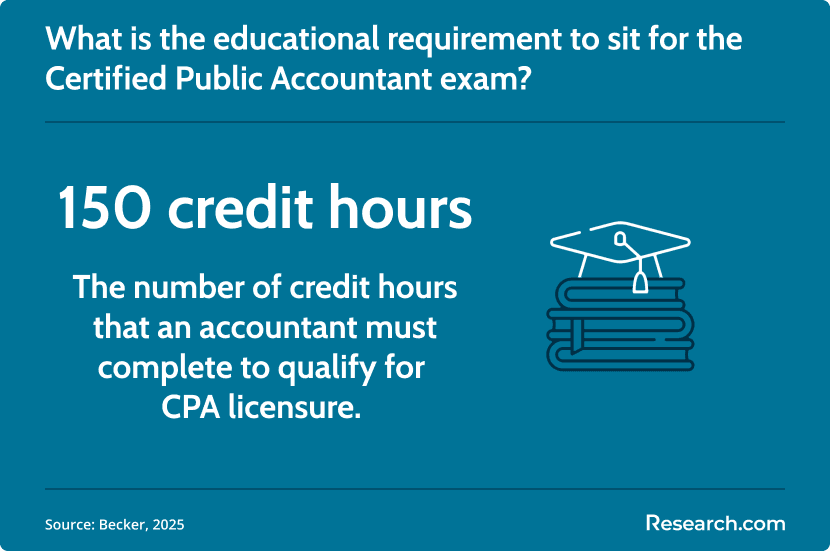
The specific coursework required to fulfill the 150 total credit hours for CPA licensure is mandated by each State Board of Accountancy, though all require a concentration of accounting and business subjects. The accounting degree’s curriculum covers the material tested by the Uniform CPA Examination, but students must strategically choose courses to meet upper-level credit requirements.
Considering online colleges that accept the most transfer credits is an efficient way to reduce the time and cost of reaching 150 hours. The core course categories satisfying CPA educational requirements include:
- Core Accounting Subjects: States typically mandate 24 to 30 semester hours in accounting, with a portion required at the upper-level or graduate level. These courses include Auditing, Taxation, and Financial Accounting and Reporting.
- Business-Related Subjects: Most states require approximately 24 semester units of related business subjects. This content broadens a candidate's knowledge and covers Business Law, Economics, Finance, Statistics, Management, and Marketing.
- Ethics Study: Many boards require a dedicated ethics component, often satisfied by courses in Accounting Ethics or Professional Responsibilities. Maryland, for example, requires a 3-semester credit hour ethics course for licensure.
Students complete the technical coursework through their bachelor's degree, often supplementing with a master's program or additional courses to achieve the final 150-hour credit threshold.
Which career paths require an accounting degree?
A full accounting degree, typically a bachelor's or master's, is generally the minimum educational standard for roles that involve complex analysis, regulatory compliance, and upward mobility. While an accounting certificate or associate's degree can lead to entry-level support positions, the degree is the gatekeeper for professional accountant titles and is an absolute necessity for regulated practice.
The following career paths typically require an accounting degree:
- Certified Public Accountant: This licensed designation is the gold standard, often requiring a bachelor's degree to sit for the exam and is legally necessary to sign external audit reports or submit filings to the Securities and Exchange Commission (SEC).
- Auditor: External auditors, who review and attest to the financial statements of public companies, must be licensed CPAs. Internal Auditors also generally require a bachelor's degree to assume responsibilities for improving processes and minimizing financial risks within an organization.
- Financial Manager and Controller: These high-level executive and managerial roles require deep financial acumen and strategic planning skills, placing a minimum requirement of a bachelor's degree, often preferring a master's. Controllers oversee the entire accounting department, while Financial Managers direct investment activities.
- Budget Analyst: Professionals who develop, monitor, and analyze budgets for large public and private organizations typically need a bachelor's degree to handle the complexity of planning and reporting.
- Tax Accountant or Tax Adviser: Roles focused on complex tax preparation, planning, and advisory services, especially those involving corporate or multi-state taxation, generally require a bachelor's degree due to the intensive legal and compliance knowledge required.
An accounting degree provides the necessary comprehensive education and analytical skills to progress from an entry-level Staff Accountant to a Director or Chief Financial Officer. Students exploring different career paths may find it useful to compare their options with fields such as is a forensic science degree worth it, which also requires a strong academic foundation and specialized certification.
What entry-level jobs can I get with an accounting certificate?
An accounting certificate provides focused skills in financial processes, leading to support roles that typically don't require a bachelor’s degree. These positions are available across industries, establishing the foundation for financial record-keeping. A certificate is an ideal credential for career changers or those looking to test the field, prompting the question: can you get a job with a certificate program?
The entry-level jobs available with an accounting certificate include:
- Bookkeeper: Manages the general ledger, recording transactions, maintaining records, and handling cash flow and payroll. They conduct reconciliations and may assist with budget preparation. Average annual salary is approximately $61,739.
- Accounting Clerk: Clerks process invoices, enter data into accounting software, verify figures, and support senior accountants. The average annual salary is about $61,071.
- Accounting Assistant: Assists with accounts, data entry, payroll, and auditing tasks as general support staff. The average annual salary is around $60,402.
- Tax Preparer: Gathers financial data, completes tax forms, and advises clients on preparation strategies. The median annual salary is $50,560.
These certificate-level roles offer quick job entry, often reporting average salaries near $50,000 per year. However, a bachelor’s degree becomes necessary to advance into roles like Staff Accountant or Auditor.
What is the average cost of an accounting degree compared with an accounting certificate?
The financial investment for an accounting degree is substantially higher than for an accounting certificate, reflecting the difference in credit hours and career value. While a degree is necessary for professional roles, a certificate offers a budget-friendly route for quick skill attainment.
The comparative costs for both educational paths are as follows:
- Cost of a Bachelor's Degree: Average published tuition and fees for full-time, in-state students at a public four-year institution reached $11,610 annually in 2024–2025. Out-of-state students pay $30,780 annually, while private nonprofit tuition averages $43,350 annually (College Board, 2024).
- Total Degree Budget: Beyond tuition, the estimated total budget for an in-state undergraduate living on campus is around $29,910. This increases to $62,990 at a private nonprofit university, demonstrating the full cost of attendance (College Board, 2024).
- Cost of an Undergraduate Certificate: An entry-level accounting certificate (12-36 credits) has a significantly lower total cost. The average cost per credit ranges from $300 to $500, with total program costs often around $10,800. Some community college certificates offer in-state tuition as low as $76 per credit.
- Cost of a Graduate Certificate: Post-baccalaureate accounting certificates, used to meet the CPA's 150-hour requirement, are more costly. These specialized programs (36-48 credits) have average costs per credit ranging from $400 to over $1,125. The total estimated tuition for a 36-credit post-baccalaureate certificate can be around $13,500.
Choosing an online format for either credential can eliminate non-tuition expenses like room and board, which can cost around $13,000 per year.
When evaluating tuition options, prospective students might also compare affordability trends similar to those at cheapest HBCU programs, which are often highlighted for delivering strong academic outcomes at lower total costs.
What are the hidden costs of an online accounting degree?
The upfront tuition for an online accounting degree may appear cost-effective, but the true cost includes mandatory fees and non-tuition expenses. While online study eliminates large costs like room and board, unique mandatory fees can increase the total price.
The overlooked fees and costs include:
- Technology Fees: Mandatory per-course fees are charged to cover virtual learning platforms. These fees, which can be $115−$145 per course, are separate from per-credit tuition.
- Mandatory Materials and Software: Students must often pay fees for digital textbooks and specialized software licenses. These material fees can average around $125−$155 per course.
- Administrative Fees: These include application fees (some charge up to $70), graduation fees (around $150), and official transcript fees (about $10 per document).
- CPA Examination Costs: Students pursuing CPA licensure incur significant professional costs beyond tuition, including paying approximately $250 per section for the CPA exam itself.
- Out-of-State Tuition: Some online programs maintain a higher tuition rate for out-of-state students, substantially increasing the per-credit cost.
Students should seek programs with transparent fee structures, flat-rate tuition, and included digital materials to better manage the true cost of their degree. Candidates comparing program efficiency may also look into best online GIS certificate programs, which often publish detailed fee breakdowns similar to top accounting schools.
The following chart compares the significant differences between average costs of certificates to four-year degrees.
What financial aid is available for an accounting degree vs. a certificate?
The primary distinction in financial aid eligibility lies in the type of certificate and the student’s prior education. Both the degree and an eligible certificate program qualify for Federal Student Aid funds, provided the student is enrolled as a regular student. Eligibility starts with the Free Application for Federal Student Aid (FAFSA).
The differences in aid accessibility are detailed below:
- Federal Grants: Undergraduate degree students are eligible for Federal Pell Grants, which do not need to be repaid. Students who have already earned a baccalaureate degree are generally ineligible for Pell Grants.
- Federal Loans: Both degree-seeking and federally fundable certificate-granting students may be eligible for Federal Direct Loans, including Subsidized and Unsubsidized Loans.
- Post-Baccalaureate Certificate: Students with a bachelor's degree enrolling in a preparatory certificate for CPA requirements are typically ineligible for federal and state grants. Their aid is limited primarily to Federal Direct Loans.
- Accounting Scholarships: External scholarships, like the National Society of Accountants (NSA) Educational Tree Scholarship, are available to students in both degree programs and eligible accounting certificate programs.
- Institution-Specific Aid: Many schools offer scholarships and flexible payment plans for both undergraduate and graduate accounting students.
An undergraduate degree offers broader access to federal grants, while degree and certificate paths primarily rely on federal loan eligibility, especially for post-baccalaureate students. Students seeking nontraditional or flexible financial aid options can explore alternative funding available to programs like best online eds programs, which often share federal eligibility structures similar to accounting graduate programs.
How much time does an accounting certificate take compared to a degree?
The time commitment is the most significant difference between earning an accounting certificate and a degree, providing a clear advantage to those seeking rapid entry into the workforce. A full accounting degree is fundamentally a long-term academic investment, whereas a certificate is a concentrated, short-term commitment to acquiring specific job-ready skills.
The comparative lengths of these credentials are outlined below:
- Undergraduate Certificate Length: An entry-level accounting certificate requires a relatively small number of courses, typically three to seven, totaling 9 to 45 credits. Completion times range from as little as five months to one year for full-time study, or around 16 months on average.
- Bachelor’s Degree Length: A bachelor’s degree in accounting requires a minimum of 120 credits and takes a full-time student approximately four years to complete. Part-time study often extends the duration to five or six years. However, accelerated and competency-based online programs may allow students to finish in under four years.
- Post-Baccalaureate Certificate Length: Certificates aimed at fulfilling the CPA's 150-hour education requirement generally require 24 to 36 credit hours. These programs take an average of 12 to 24 months for full-time enrollment, or up to 36 months for part-time enrollment, depending on the student's prior coursework.
- Master’s Degree Length: A Master of Accountancy (MAcc), which is a common alternative for the CPA’s 150-hour requirement, typically takes a full-time student two years to complete. However, fast-paced online master's programs can often be completed in less than two years.
The certificate pathway is uniquely designed for speed, allowing a student to enter an accounting support role up to three years sooner than a full degree track.
What is the starting salary difference for an accounting degree vs. certificate?
The difference in starting salary between an accounting degree holder and an accounting certificate holder is significant, driven by the professional roles each credential permits. A degree grants access to professional accountant and auditor positions, while a certificate is limited to support roles.
The salary variance based on education is as follows:
- Entry-Level Degree Salary: Accountants and auditors with a bachelor's degree earned a median annual salary of $84,330 in May 2024, according to the BLS.
- Certificate Salary Ceiling: Jobs obtained with an accounting certificate, like bookkeeping and accounting clerk roles, reported a median annual wage of $49,210 in May 2024. This represents a starting salary gap of over $32,000 annually.
- CPA Starting Premium: The highest starting salaries go to licensed professionals. Entry-level CPAs now command an average total compensation of around $70,500.
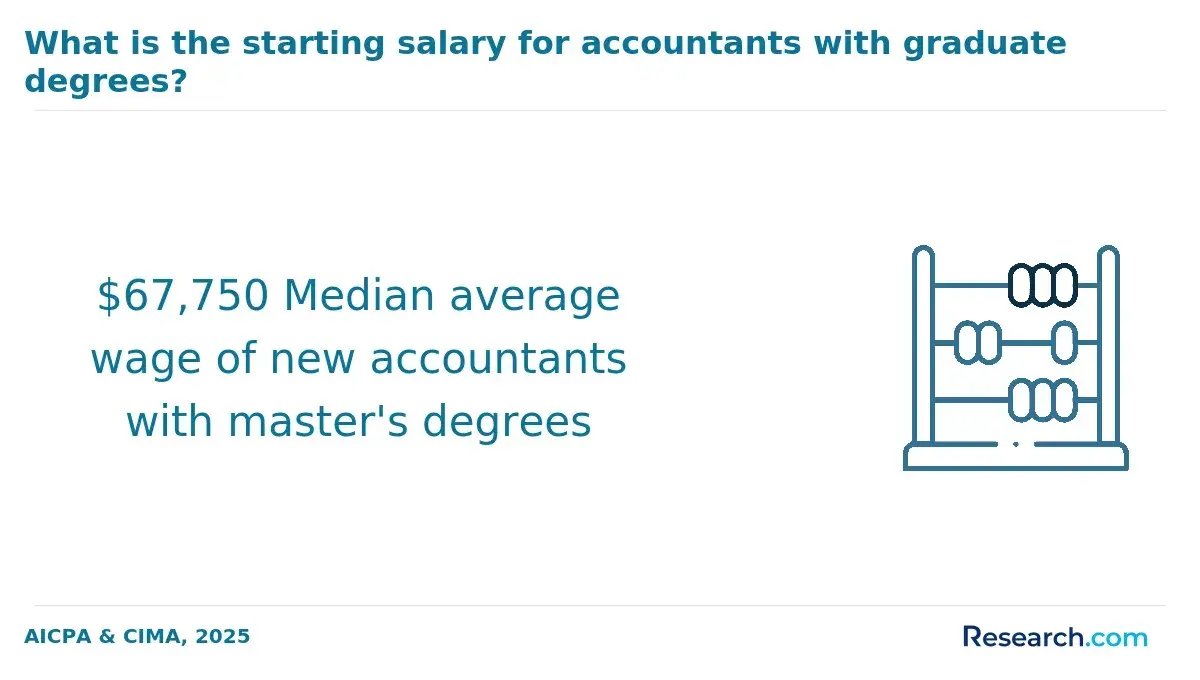
- Master's Degree Advantage: Earning a master's degree further increases earning potential, with master's holders earning 17.8% more than bachelor's holders, averaging an additional $13,884 per year.
The data confirms that the difference in median starting salary is over $32,000 between a certificate holder and a bachelor's degree holder. Furthermore, pursuing the CPA or a master's degree provides a premium of up to 19.2% more annually, making advanced education the clearest driver of long-term earning power.
How does a specialized accounting certificate affect starting salary?
While an undergraduate certificate primarily leads to support roles with lower salaries, specialized, post-degree accounting certificates and professional certifications significantly boost earning potential and open doors to niche careers, reflecting advanced expertise. For instance, certified professionals typically earn a 5% to 34% premium over noncertified peers.
The impact of specialized certifications on salary includes:
- Certified Management Accountant (CMA): CMAs, who specialize in cost accounting and financial planning, demonstrate a high mastery of critical skills. In the Americas, CMAs earned a median base salary of $102,500, compared to $80,000 for non-CMAs, reflecting a substantial premium.
- Forensic Specialization: For those asking what certification do you need to be a forensic accountant, the Certified Fraud Examiner (CFE) credential is essential. CFE-certified professionals earn a notable 32% income premium over their non-certified peers. The average salary for a forensic accountant with a bachelor’s degree is already around $81,340.
- General Certification Premium: Studies consistently show that certified professionals across the accounting field earn 20% to 30% more than their non-certified counterparts. This translates into higher total compensation and career mobility.
Specialized certificates help degree holders access high-demand areas like forensic accounting and management, moving them into a higher salary bracket than general staff accountants.
How do public firms view job marketability of degree holders vs. certificate holders?
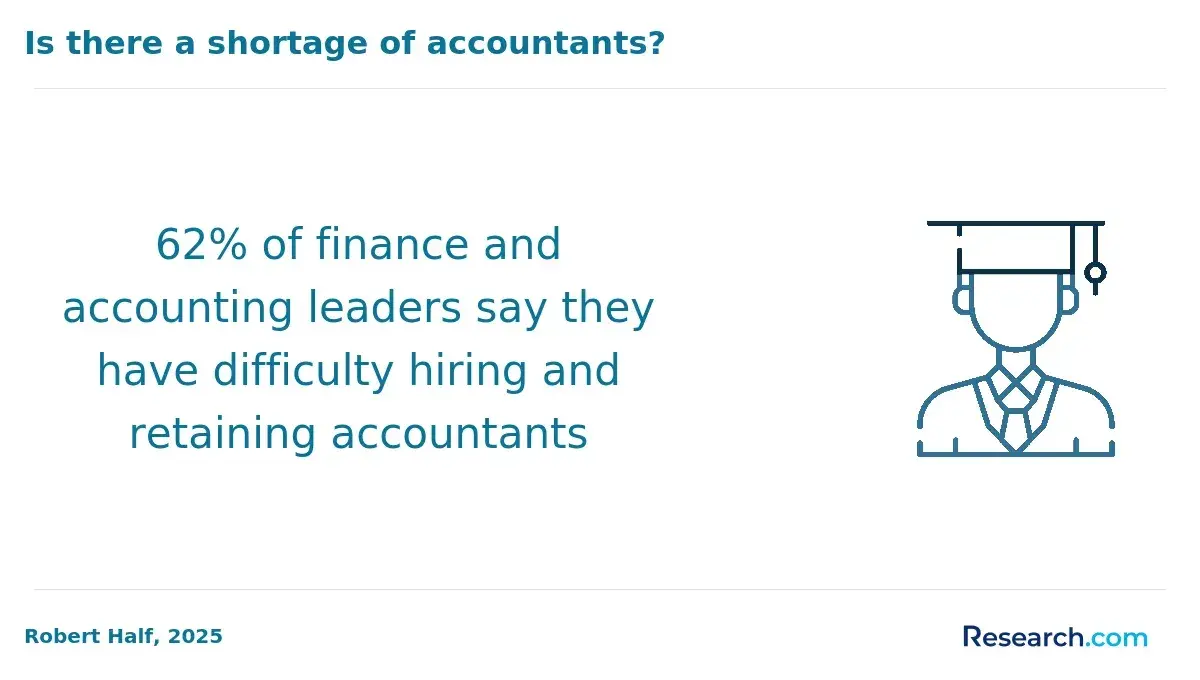
Public accounting firms, particularly the Big Four (Deloitte, EY, KPMG, and PwC), have a clear preference for candidates who hold at least an accounting degree, viewing it as the minimum educational requirement for professional advancement.
A certificate alone is rarely sufficient to secure an entry-level Staff Accountant or Audit Associate position within these major firms. For public accounting, obtaining the CPA license is considered essential for advancement, and a bachelor's degree is the necessary foundation for CPA eligibility in all states.
The view of the certificate depends on its type. A general bookkeeping-focused accounting certificate is seen as training for clerical support roles that lack an upward track within a public firm structure.
However, a specialized post-baccalaureate certificate can be highly valued by public firms when used by a career changer who already holds a non-accounting bachelor's degree. In this context, the certificate serves as the targeted coursework required to sit for the CPA exam, demonstrating a commitment to the technical expertise needed for audit and tax functions.
Ultimately, job marketability in public accounting is tied directly to the CPA credential, which is the 'gold standard' that signifies a willingness to hold oneself to a higher professional standard.
The outlook for accountants looks stronger than ever with faster than average growth than other occupations, as the graph below illustrates.
How does an accounting certificate satisfy CPA requirements for a career changer?
For a career changer holding a non-accounting bachelor’s degree, the accounting certificate is a highly efficient tool specifically designed to meet the requirements for CPA licensure. Since most state boards require specific upper-level accounting and business credits, the post-baccalaureate certificate provides the necessary technical training without the time and cost commitment of a second degree or a master's program.
The certificate serves the CPA educational requirement by:
- Targeting Technical Courses: Certificate programs focus exclusively on the required accounting subjects (Financial Accounting, Auditing, Taxation, and Managerial Accounting) and business-related subjects (Business Law and Economics) mandated by state boards.
- Fulfilling Upper-Level Credits: Most post-baccalaureate certificates require candidates to complete 24 to 36 credit hours of accounting-specific coursework. This volume is enough to satisfy the accounting concentration and upper-level credit mandates imposed by many state boards.
- Providing CPA Exam Readiness: Programs typically structure their curriculum to directly mirror the content of the Uniform CPA Examination sections (like Financial Accounting and Reporting, and Auditing and Attestation), ensuring the student is prepared for the exam in addition to meeting the hour count.
The key benefit is that a career changer can use a certificate to fulfill the prerequisite coursework and become eligible to sit for the CPA exam in as little as 1 to 2 years, depending on their prior education and course load.
How can an accounting certificate holder compete with degree holders?
An accounting certificate holder can strategically compete with bachelor's degree graduates by combining their focused, technical training with specialized certifications and demonstrated competencies. While a bachelor's degree provides the broad foundation employers prefer for entry-level professional roles, a certificate is a fast, targeted credential that helps workers quickly meet skill demands and access niche areas.
The key to competition is specialization and continuous upskilling. Certificate holders should focus on mastering technical skills like specialized accounting software, data analytics, and fraud detection, which are highly valued in the modern industry.
Pursuing professional credentials like the CMA or Certified Internal Auditor (CIA) can offset the lack of a four-year degree by providing official validation of competence and domain expertise. Furthermore, career changers with a certificate should leverage any prior professional experience and robust networking to gain a competitive edge.
For students planning to attend graduate programs, examining the average GMAT scores for top business schools demonstrates the high academic standards required for the most advanced business credentials.
What Accounting Degree or Certificate Holders Say About Their Credentials
- Daniel: "Earning my degree in accounting gave me a clear understanding of financial systems and business operations. The coursework challenged me to think analytically and strengthened my problem-solving skills. I feel confident stepping into any finance-related role. "
- Hannah: "Completing my accounting certificate helped me transition into a more stable and rewarding career. The program focused on practical skills like bookkeeping and tax preparation, which I now use daily. It was empowering to gain expertise that employers truly value."
- Noah: "My accounting degree not only prepared me for the CPA exam but also taught me the importance of ethics in financial management. I appreciated how professors connected classroom concepts to real-world business decisions. It was a rigorous but deeply rewarding experience. "
Key Findings
- Bookkeepers and Accounting Assistants, common roles for certificate holders, report average annual salaries of about $47,698 and $47,651, respectively.
- Accounting Clerks with a certificate often earn around $45,849 annually, handling specialized tasks like Accounts Payable or Accounts Receivable.
- Tax Preparers, another entry-level role, often start with a median annual salary of $50,560 after earning an accounting certificate.
- The CPA credential, which requires an accounting degree, is legally necessary for signing external audit reports and filing with the SEC.
- Professional roles like Auditor and Financial Manager typically require an accounting degree to manage complex regulatory compliance and secure upward career mobility.
- Certificate holders can compete with degree holders by gaining specialized certifications like the CMA or CFE to showcase niche expertise.
References:
- Accounting.com. (2025). Accounting Degree Program Guide. https://www.accounting.com/degrees/overview/
- Becker. (2025). CPA Exam Requirements by State. https://www.becker.com/cpa-review/requirements
- Bureau of Labor Statistics. (2025). Accountants and Auditors: Occupational Outlook Handbook. U.S. Department of Labor. https://www.bls.gov/ooh/business-and-financial/accountants-and-auditors.htm
- College Board. (2024). Trends in College Pricing and Student Aid 2024. https://research.collegeboard.org/media/pdf/Trends-in-College-Pricing-and-Student-Aid-2024-ADA.pdf
- Federal Student Aid. (2024). School-Determined Requirements | 2024-2025 Federal Student Aid Handbook. https://fsapartners.ed.gov/knowledge-center/fsa-handbook/2024-2025/vol1/ch1-school-determined-requirements
- UWorld Accounting. (2024). Requirements for CPA Exam, License, Certification | CPA Eligibility. https://accounting.uworld.com/cpa-review/cpa-career/cpa-requirements-old/
Other Things You Should Know About Accounting Degree and Certificate Programs
In 2027, an accounting degree provides a comprehensive education in accounting theory, principles, and practices, covering a wide range of topics over several years. In contrast, an accounting certificate is typically a shorter program focused on practical skills and specific accounting areas, ideal for professionals seeking specialization or career advancement.
In 2027, an accounting degree typically requires a high school diploma or equivalent, whereas a certificate may have fewer prerequisites, often focusing on specific skills or prior coursework. Degree programs may also require standardized test scores like the SAT or ACT.


