
2027 Most Affordable and Cheapest HBCU Programs

Co-Founder and Chief Data Scientist
Choosing a college can feel overwhelming, especially when you are trying to balance the dream of an HBCU education with the reality of a budget. The fear of debt is real, but it shouldn’t prevent you from joining a community with a massive $14.8 billion economic impact. The secret isn't just finding the cheapest school; it's understanding the true cost after financial aid.
That's where this guide comes in. Our career planning experts, with over 10 years of experience, have built a roadmap to help you find the most affordable HBCU program for you. We’ll cut through the confusion and give you the confidence to make a smart investment in your future.
What are the benefits of getting an affordable HBCU degree program?
- You gain access to a uniquely supportive cultural and professional network that provides a strong foundation for a successful career.
- Graduates can expect strong earning potential, with an average salary of around $95,000 per year depending on the field.
- You earn a credential that is actively sought after by top companies, with many corporations creating specific recruitment pipelines for HBCU graduates.
What can I expect from an affordable HBCU degree program?
You can expect a rigorous, fully accredited academic program that is held to the same high standards as any other reputable university. It’s a common worry that lower cost might mean a lower-quality experience, but that’s not the case here.
Affordability at these institutions is a result of their mission and funding structures, not a reflection of their academic quality. You'll find dedicated faculty and comprehensive student support services designed to help you succeed. The key is to always verify that a program has regional accreditation, which is the gold standard of academic legitimacy.
Where can I work with an affordable HBCU degree program?
Graduates from the most affordable HBCU programs work across all major sectors of the economy, from corporate and government roles to nonprofit and entrepreneurial ventures. These degrees are a launchpad into stable, high-demand fields.
Recent data shows significant hiring growth in sectors that actively recruit HBCU graduates, including a 28% increase in education and a 25.3% increase in healthcare. This demonstrates that your degree prepares you for a dynamic career in industries that are foundational to our communities and economy.
How much can I make with an affordable HBCU degree program?
Earning potential is strong, though it will always vary based on your chosen field, location, and experience level. On average, graduates with a bachelor's degree from an HBCU can expect to earn around $95,000 per year.
It’s also important to think about long-term financial health. While some studies show a slightly lower initial earnings premium for HBCU graduates (59% vs. 76% for non-HBCU grads), starting your career with significantly less debt can give you a powerful head start in building wealth.
Popular College Degrees Worth Considering in 2027
Business Administration
A cornerstone of HBCU education, business administration programs train future leaders in management, finance, and entrepreneurship. Graduates are equipped to excel in roles ranging from business analyst to executive leadership across industries.
Psychology
HBCU psychology programs emphasize both academic theory and cultural awareness, preparing students to understand human behavior in diverse communities. This degree can lead to careers in counseling, research, and human services.
Counseling
With a focus on empathy and social impact, counseling degrees at HBCUs develop skills in mental health support, academic guidance, and community outreach. Many graduates go on to become licensed professional counselors or school advisors.
Nursing
Affordable and career-focused, nursing programs at HBCUs prepare students for vital roles in healthcare. Graduates enter the workforce ready to provide compassionate, evidence-based patient care in hospitals, clinics, and community settings.
Social Work
Social work degrees emphasize advocacy and community empowerment. Students gain practical experience through field placements and learn how to create meaningful change in underserved populations and policy environments.
- List of the Most Affordable and Cheapest HBCU Degree Programs for 2027 List of Programs
- How long does it take to complete an affordable HBCU degree program? Completion Time
- How does an affordable HBCU online degree program compare to an on-campus program? How does an affordable HBCU online degree program compare to an on-campus program?
- What is the average cost of an affordable HBCU degree program? Program Cost
- What are the financial aid options for students enrolling in an affordable HBCU degree program? Financial Aid
- What are the prerequisites for enrolling in an affordable HBCU degree program? What are the prerequisites for enrolling in an affordable HBCU degree program?
- What courses are typically in an affordable HBCU degree program? What courses are typically in an affordable HBCU degree program?
- What types of specializations are available in an affordable HBCU degree programs? Specializations
- How to Choose the Most Affordable and Cheapest HBCU Degree Program How to Choose the Most Affordable and Cheapest HBCU Degree Program
- What career paths are available for graduates of an affordable HBCU degree programs? Career Paths
- What is the job market for graduates of an affordable HBCU degree programs? Job Market
- What is the long-term return on investment of an affordable HBCU degree program? What is the long-term return on investment of an affordable HBCU degree program?
List of the Most Affordable and Cheapest HBCU Degree Programs for 2027
Choosing an affordable historically Black college or university is one of the smartest ways to balance cost and quality in higher education. Whether you’re exploring degrees in healthcare, business, or education, HBCUs provide accredited programs with strong community support and cultural legacy. Students interested in education-focused credentials—like teaching license vs teaching credential comparisons—will also find several programs that prepare them for licensure at lower tuition rates.
How do we rank the programs?
Recognizing that paying for a degree is a significant investment, our ranking methodology ensures that students can make informed decisions based on comprehensive and transparent information. The ranking draws upon reliable sources such as the IPEDS database, Peterson's database, the College Scorecard database, and The National Center for Education Statistics.
These sources provide a robust foundation of data to evaluate and rank most affordable and cheapest HBCU programs. For more details on our methodology, please visit Research.com's methodology page.
1. University of the District of Columbia - Bachelor of Science in Computer Science
The University of the District of Columbia offers a top-ranked program focused on providing real-world experience and state-of-the-art facilities. The curriculum is designed to prepare students for immediate employment or advanced studies in high-demand computing fields.
- Program Length: 4 years
- Required Credits to Graduate: 120
- Cost per Credit: $324 (in-state); $759 (out-of-state)
- Accreditation: Computing Accreditation Commission of the Accreditation Board for Engineering and Technology (ABET)
2. Morris College - Bachelor of Science in Business Administration
Morris College focuses on developing marketable skills and the professional ethics necessary for success in business, industry, and government. The program provides a strong foundation in the free enterprise system and core business functions to prepare students for responsible leadership positions.
- Program Length: 4 years
- Required Credits to Graduate: 122
- Annual Tuition: $13,420
- Accreditation: Southern Association of Colleges and Schools Commission on Colleges (SACSCOC)
3. Prairie View A&M University - Bachelor of Science in Mechanical Engineering
Prairie View A&M University provides a broad mechanical engineering education that covers energy, structures, and motion in mechanical systems. The integrated curriculum prepares graduates to become technical leaders capable of solving complex problems that benefit society.
- Program Length: 4 years
- Required Credits to Graduate: 120
- Cost per Credit: $325 (in-state); $830 (out-of-state)
- Accreditation: Engineering Accreditation Commission of the Accreditation Board for Engineering and Technology (ABET)
4. Allen University - Bachelor of Arts in Social Science
Allen University provides a diverse academic pathway in the social sciences designed to equip students with foundational principles for their careers. The program offers several concentrations, allowing students to tailor their education toward specific fields of service and professional practice.
- Program Length: 4 years
- Required Credits to Graduate: 120
- Annual Tuition: $12,540
- Accreditation: Southern Association of Colleges and Schools Commission on Colleges (SACSCOC)
5. Bowie State University - Bachelor of Science in Business Administration
Bowie State University delivers a career-oriented business education with a wide array of concentrations to fit specific professional goals. The program uses an experiential approach to learning, preparing students for rewarding careers in corporate, government, or nonprofit sectors.
- Program Length: 4 years
- Required Credits to Graduate: 120
- Cost per Credit: $264 (in-state); $706 (out-of-state)
- Accreditation: Accreditation Council for Business Schools and Programs (ACBSP)
6. LeMoyne-Owen College - Bachelor of Science in Computer Science
LeMoyne-Owen College blends a rich liberal arts tradition with modern computing skills to develop responsible and creative IT professionals. The program offers a dedicated Center for Cyber Security, preparing graduates for successful careers in a rapidly evolving technological landscape.
- Program Length: 4 years
- Required Credits to Graduate: 120
- Annual Tuition: $10,776
- Accreditation: Southern Association of Colleges and Schools Commission on Colleges (SACSCOC)
7. Texas Southern University - Bachelor of Science in Administration of Justice
Texas Southern University prepares students for public service careers within a diverse urban environment through its Administration of Justice program. The curriculum emphasizes critical and ethical thinking to develop competence for leadership roles in law enforcement, corrections, and homeland security.
- Program Length: 4 years
- Required Credits to Graduate: 120
- Annual Tuition: $6,941 (in-state); $19,707 (out-of-state)
- Accreditation: Southern Association of Colleges and Schools Commission on Colleges (SACSCOC)
8. Shaw University - Bachelor of Social Work
Shaw University offers a program grounded in a legacy of community advocacy and social justice to prepare students for the social work profession. The accredited curriculum provides a strong generalist foundation that allows graduates to enter the field or pursue an advanced standing Master of Social Work.
- Program Length: 4 years
- Required Credits to Graduate: 120
- Annual Tuition: $11,808
- Accreditation: Council on Social Work Education (CSWE)
How long does it take to complete an affordable HBCU degree program?
A bachelor's degree is designed to be completed in four years of full-time study. However, that timeline is more flexible than you might think.
Your personal path could be shorter or longer depending on your circumstances. If you have prior college credits, you may be able to transfer them in and finish faster. Many schools also offer accelerated terms or competency-based programs that allow you to move more quickly. For instance, even in creative fields, you can find options like accelerated online animation degree programs. Conversely, studying part-time is a great option that extends the timeline to fit around work or family commitments.
Finding the Right Institutional Fit
The type of school you choose also plays a role. The landscape of HBCUs is split almost evenly between public and private institutions. This gives you a rich set of options, as public and private universities often have different academic calendars, program structures, and credit requirements that can influence your path to graduation.
How does an affordable HBCU online degree program compare to an on-campus program?
The most important things are identical. Whether you study online or on-campus, you earn the exact same degree, from the same faculty, under the same institutional accreditation. Employers see the name of your university on your diploma, not the way you attended classes.
The primary differences are the delivery method and the cost structure. Online programs offer incredible flexibility to learn from anywhere, which can also lead to significant savings on housing, transportation, and other campus-related fees.
The Enduring Impact of HBCUs in Modern Higher Education
You should also know that employers increasingly value the skills that online learning cultivates. Excelling in an online program demonstrates digital fluency, self-discipline, and strong time management.
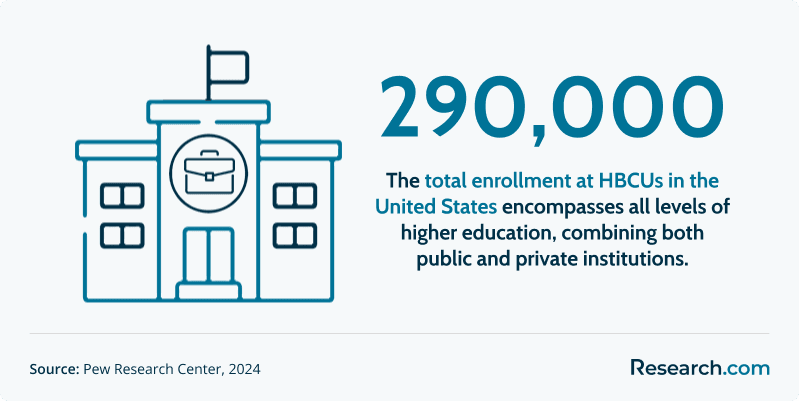
According to Pew Research on HBCUs, these institutions have been central to U.S. higher education for over 150 years and continue to serve nearly 290,000 students across 99 campuses nationwide. Despite shifts in enrollment and funding challenges, HBCUs remain vital in expanding access to education and producing a significant share of bachelor’s degrees earned by Black students.
Some students compare options like Capella University vs WGU RN to BSN when evaluating affordable online degree pathways. This helps them understand how pricing, accreditation, and course delivery models differ across universities—important details when choosing between HBCU and non-HBCU institutions.
What is the average cost of an affordable HBCU degree program?
While tuition varies widely, you might see annual sticker prices for the most affordable HBCU programs ranging from under $10,000 to over $20,000. However, that sticker price is not the number you should focus on. The most important number is the net price.
Let’s break down the key terms you need to know:
- Sticker Price: This is the published annual cost of tuition and fees.
- Total Cost of Attendance: This includes the sticker price plus estimates for books, housing, and living expenses.
- Net Price: This is the number that truly matters. It's the Total Cost of Attendance minus all the grants and scholarships you receive.
The net price is what you and your family will actually pay out of pocket or through loans. Your entire financial aid strategy should be focused on lowering the sticker price down to an affordable net price.
To put costs in perspective, professional programs like graduate pharmacy degrees often exceed $30,000 per year, whereas HBCU undergraduate programs remain significantly more affordable. Understanding this gap reinforces why these institutions play such a crucial role in improving access to higher education for underrepresented students.
What are the financial aid options for students enrolling in an affordable HBCU degree program?
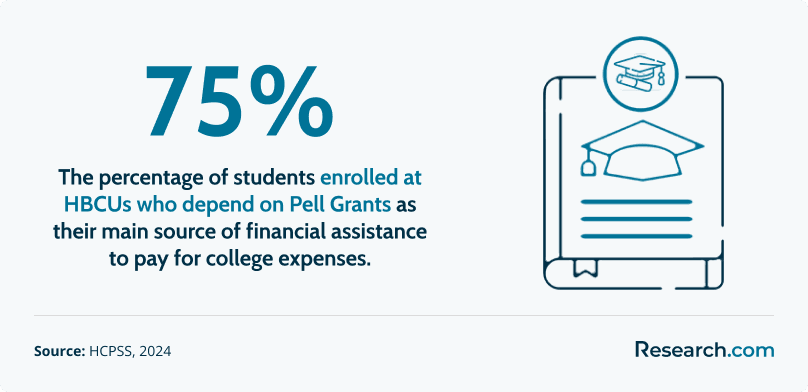
You have many options to help pay for your degree. In fact, about 90% of students at HBCUs receive some form of financial aid. The key is to build your "financial aid stack" from multiple sources.
- Federal Grants: These are funds from the government that you don't have to repay, with the Pell Grant being the most common.
- Federal Loans: These are borrowed funds that must be repaid with interest, but they often have favorable terms.
- Institutional Scholarships: These are awards offered directly by the university based on academic merit, talent, or financial need.
- UNCF Scholarships: The United Negro College Fund is a major source of scholarships specifically for students attending member HBCUs.
- State Aid: Many states offer their own grants and scholarships for residents attending in-state colleges.
A Community of Support
It's important to remember that you are not alone in this process. FAFSA is a critical part of the college experience for the vast majority of students, helping determine eligibility for federal loans, grants, and other aid. This creates a campus environment where seeking and receiving financial support is understood and encouraged.
In addition to traditional aid, students pursuing healthcare or counseling degrees may qualify for specialized funding tied to licensure. For instance, understanding distinctions such as LICSW vs LCSW vs LISW can guide applicants toward state-specific grants or aid programs that support social work education and credentialing pathways.
What are the prerequisites for enrolling in an affordable HBCU degree program?
The core requirements are generally very straightforward. You will typically need to provide a high school diploma or GED, your official transcripts, and sometimes a personal essay or letters of recommendation.
Many HBCUs have a holistic review process, meaning they look at your entire application, not just your grades. They often value life and work experience, and a growing number are test-optional, so you may not need to submit SAT or ACT scores. Always check the specific requirements for each school you're interested in.
Leveraging Your Prior Education
If you have already earned some college credits, you are in a strong position. Transferring is a very common path for students. The most important step is to contact the admissions office early to understand how your credits will transfer. This is especially true if you are looking into specialized fields, as there are many unique pathways like the shortest energy policy degree programs online.
What courses are typically in an affordable HBCU degree program?
Your curriculum is designed to give you both a broad foundation of knowledge and deep expertise in your chosen field. Every accredited bachelor's program is built on a similar structure.
- General Education Core: These are required courses in areas like humanities, social sciences, math, and natural sciences that build critical thinking and communication skills.
- Major Core Courses: These are the foundational, non-negotiable classes that everyone in your specific major must take to master the subject.
- Major Electives: These are courses you choose from within your major, allowing you to tailor your degree to your specific interests and career goals.
A Structure Built for Exploration
This curriculum structure is designed to be flexible. It allows you to explore different subjects through your general education courses before you have to fully commit to a major. For students who want to maximize this flexibility, there are even dedicated pathways like the fastest online general studies degree programs.
What types of specializations are available in affordable HBCU degree programs?
You will find a wide range of specializations that lead to dynamic careers. While options span every field imaginable, many affordable HBCU programs have built national reputations in several key areas.
- Business: Majors like marketing, finance, and management are consistently popular and lead to careers in corporate and nonprofit sectors.
- Education: These programs prepare the next generation of teachers and administrators, with graduates working in schools and districts across the country.
- Healthcare: Specializations in nursing, health sciences, and public health are in high demand.
- STEM: Programs in science, technology, engineering, and math are a particular strength.
Connecting Your Major to High-Growth Fields
HBCUs are leaders in producing top talent, especially in STEM, where they produce almost one in five Black graduates with a bachelor's degree. This creates a direct pipeline into some of the most in-demand and highest-paying sectors of the economy, including specialized, high-tech fields that require fastest online CyberOps training bootcamps.
How to Choose the Most Affordable and Cheapest HBCU Degree Program
When you're ready to choose, use this three-step framework to make a confident decision. This will help you find a program that is not only affordable but also a high-quality investment in your future.
First, and most importantly, verify the program's accreditation. The school must be regionally accredited. This is the non-negotiable gold standard that ensures your degree will be recognized by employers and other universities. This single step is your best defense against predatory diploma mills.
Second, calculate the net price. Once you have your financial aid offers, you can determine the true cost of each program. Compare these net prices, not the sticker prices, to find the best financial fit for you. This is the key to finding the most affordable HBCU option.
Finally, ensure it aligns with your career and academic goals. Look at the faculty, the course offerings in your desired specialization, and the student support services. The right program for you will feel like the best fit academically, financially, and personally.
What career paths are available for graduates of an affordable HBCU degree programs?
Graduates pursue careers in every corner of the economy. Your degree provides a versatile foundation that allows you to pivot and grow as your interests and the job market evolve.
- Healthcare Administrator: You could manage operations in hospitals, clinics, or public health organizations, ensuring efficient and effective patient care.
- Software Developer: With a degree in computer science, you can design, build, and maintain the software and applications that power our world.
- Teacher or School Administrator: You can shape the next generation by working in K-12 education as a teacher, principal, or policy maker.
- Financial Analyst: You could work for banks, investment firms, or corporations, providing the analysis needed to make smart financial decisions.
Your Career is a Marathon, Not a Sprint
It’s helpful to think of your degree as the launchpad for a long and dynamic career, not just your first job. Experts estimate that most people will hold between two and six jobs over the course of their careers. Your goal should be to gain a strong set of foundational skills that allow you to adapt and thrive, whether you're in a mainstream field or a growing niche that requires the shortest sports management online bachelor's degree.
What is the job market for graduates of an affordable HBCU degree programs?
The job market for bachelor's degree holders is strong and projected to continue growing. The U.S. Bureau of Labor Statistics projects that employment in occupations requiring a bachelor's degree will grow by 10% in the coming years, which is faster than the average for all occupations. This means that your degree from even the most affordable HBCU is a direct pathway into a growing segment of the economy.
The Power of Your Network
One of the most valuable assets you gain is access to the vast and supportive HBCU alumni network. This is a community of professionals who are actively invested in each other's success. This network can provide mentorship, job leads, and professional connections for your entire career.
Here’s What Graduates Have to Say about Their Affordable HBCU Degree Program
- Jordan: "People have this idea that an affordable degree means the classes are easy, but my STEM program was incredibly demanding. My professors were experts in their fields and they pushed us to be our best. I graduated with a deep understanding of my subject and landed a job at a top engineering firm before I even had my diploma."
- Simone: "Being the first in my family to go to college, I didn't know who to ask for help. The online community and the mentorship I found were everything. I connected with alumni who were already in my field, and they gave me advice that you just can't get from a textbook. I never felt alone, even though I was hundreds of miles away from campus."
- Kayla: "My biggest fear was debt. I saw what it did to some of my friends, and I was determined to avoid it. By choosing an affordable online HBCU and applying for every scholarship I could find, I managed to graduate with very little in student loans. That financial freedom has allowed me to make career choices based on passion, not just on paying back loans."
What is the long-term return on investment of an affordable HBCU degree program?
Evaluating an affordable HBCU degree requires a careful consideration of lifetime benefits in addition to upfront costs. A comprehensive return on investment analysis examines not only starting salaries, but also career growth, continued professional development, and the lasting impact of alumni networks on long-term earnings. Graduates often enhance their academic credentials with specialized, market-driven courses such as fast degrees online, which can further boost career prospects and expedite advancement. Tailoring your investment analysis to include these additional pathways helps in accurately gauging the enduring value of an HBCU education.
Key Findings
- HBCUs provide a significant return on investment, generating a $14.8 billion annual economic impact and supporting over 136,000 jobs in the U.S.
- These programs are designed to be accessible, with the cost of attendance being roughly 27% lower than at comparable non-HBCUs.
- Financial aid is the norm, not the exception, as 90% of undergraduate students at HBCUs receive some form of financial assistance to lower their net price.
- Graduates are highly sought after in essential sectors, with data showing hiring growth of 28% in education and 25.3% in healthcare.
- HBCUs are powerhouses in STEM, producing nearly one in five Black graduates who earn a bachelor's degree in these high-demand fields.
- The online learning experience is fully integrated with modern technology, evidenced by the fact that 98% of HBCU students and faculty already use AI tools.
References:
- Anders, G. (2024, May 22). Who's opening the doors for Black talent? Sectors that click with HBCU grads. LinkedIn. Retrieved October 14, 2025, from https://www.linkedin.com/pulse/whos-opening-doors-black-talent-sectors-click-hbcu-grads-anders
- Ellucian. (2023, September 19). Survey finds near-universal AI adoption at HBCUs. Retrieved October 14, 2025, from https://www.ellucian.com/newsroom/survey-finds-near-universal-ai-adoption-hbcus-98-students-and-96-faculty-already-using-it
- National Center for Education Statistics. (n.d.). Fast facts: Historically Black colleges and universities. Retrieved October 14, 2025, from https://nces.ed.gov/fastfacts/display.asp?id=667
- Pew Research Center. (2024, October 2). A look at historically Black colleges and universities in the U.S. Retrieved October 14, 2025, from https://www.pewresearch.org/short-reads/2024/10/02/a-look-at-historically-black-colleges-and-universities-in-the-u-s/
- Postsecondary National Policy Institute. (2024, September). Factsheet: Historically Black colleges and universities. Retrieved October 14, 2025, from https://pnpi.org/wp-content/uploads/2024/09/HBCU_FactSheet_Sept24.pdf
- Salary.com. (n.d.). Bachelor salary. Retrieved October 14, 2025, from https://www.salary.com/research/company/bachelor-salary
- Torpey, E. (2018, April). Bachelor's degree outlook. U.S. Bureau of Labor Statistics. Retrieved October 14, 2025, from https://www.bls.gov/careeroutlook/2018/article/bachelors-degree-outlook.htm
- UNCF. (2017). HBCUs make America strong: The positive economic impact of historically Black colleges and universities. Retrieved October 14, 2025, from https://uncf.org/hbcuimpactreport/2017
Other Things You Should Know About Affordable HBCU Programs
In 2027, the most affordable HBCU programs include North Carolina Central University, Elizabeth City State University, and Harris-Stowe State University, recognized for their low tuition rates. These institutions offer a variety of degree options while maintaining budget-friendly pricing, making them accessible choices for students seeking an HBCU experience.
In 2027, the average tuition for the most affordable HBCU programs ranges from $7,000 to $10,000 per year. These costs vary based on the location and specific program offerings at each institution, providing budget-friendly options for students seeking quality education.


