
2027 Teaching License vs. Teaching Credential: Explaining the Difference

Co-Founder and Chief Data Scientist
There are over 3.8 million teachers in the United States, yet many aspiring educators still find themselves confused by the terms teaching license and teaching credential. While these words are often used interchangeably, they can carry different meanings depending on the state or context, and understanding the distinction is essential for anyone planning a career in education.
This guide will break down the key differences, explain how each is obtained, and clarify which one you need based on your teaching goals. By the end, you’ll have a clear roadmap to navigate the certification process and take confident steps toward becoming a licensed educator.
Key things you should know about a teaching license vs. a teaching credential
- A teaching license is the official, state-issued authorization that legally allows you to teach in public schools.
- A teaching credential often refers to the specific qualifications or program completion that make you eligible for a teaching license.
- While the terms can overlap, some states (like California) use “credential” in place of “license,” making it important to know your state’s terminology.
- What is the difference between a teaching license and teaching credentials? License vs. Credentials
- Which credential or license is required to teach in public schools? Public School Requirements
- How long does it take to become a licensed teacher? Completion Time
- What are the steps to getting a teaching license or credential? What are the steps to getting a teaching license or credential?
- Can I teach without a teaching license or credential? Can I teach without a teaching license or credential?
- How much do licensed teachers in the U.S. earn? Average Salary
- What is an initial vs a professional teaching license? What is an initial vs a professional teaching license?
- How often must a teaching license or credential be renewed? Renewal
- How can pursuing an advanced degree enhance my teaching career? How can pursuing an advanced degree enhance my teaching career?
- What career opportunities does a teaching license unlock? What career opportunities does a teaching license unlock?
- What is the job outlook for those who have a teaching license or credential? Job Outlook
What is the difference between a teaching license and teaching credentials?
Understanding the difference between a teaching license and a teaching credential is essential for anyone preparing to enter the education field. Although the terms are sometimes used interchangeably, they represent different aspects of the certification process.
In the simplest terms, a license is the legal authorization to teach, while a credential is the evidence of your training and qualifications.
It's important to note that, in most states, you complete a credential program first and then apply for a license. However, in California and a few other states, the term “credential” is used in place of “license,” giving it the same legal status. For instance, California PPS credential requirements specify specific coursework and supervised field experience for those pursuing school counseling or psychology credentials—showing how definitions and processes can vary by specialization and state.
Knowing which one applies in your state can save you confusion as you plan your career path. This guide explains each term clearly so you can move forward with confidence.
Teaching License
A teaching license is the official authorization issued by a state’s Department of Education that allows you to legally work as a teacher in public schools. It demonstrates that you have met all the requirements set by the state, including education, testing, and background checks. Without a license, most public schools cannot hire you as a full-time classroom teacher. It is essentially your legal permit to practice teaching within that jurisdiction.
Teaching Credential
A teaching credential usually refers to the set of qualifications you earn to become eligible for a license. This can include completing a state-approved teacher preparation program, passing licensing exams, and completing supervised student teaching. The credential proves you have the training and knowledge required to teach effectively. In many cases, it is the educational pathway that leads directly to earning a teaching license.
Which credential or license is required to teach in public schools?
To teach in public schools, you must meet specific state requirements, which usually involve either a license or a credential, depending on where you live. These authorizations ensure that teachers are properly qualified, trained, and prepared for the classroom.
- State-Issued Teaching License: In most U.S. states, teachers must hold a valid teaching license from the Department of Education. This license verifies that you have completed the required education, testing, and background checks.
- Teaching Credential (California): In California, a teaching credential serves the same role as a license and is legally required for public school teaching. It reflects completion of a state-approved teacher preparation program and passing exams.
- Subject or Grade-Level Endorsement: Many states require endorsements attached to your license that specify the subject or grade level you are qualified to teach. These ensure that teachers are assigned to classrooms that match their training.
- Special Education Credential/License: Teachers who work with students with disabilities must often earn an additional credential or license in special education. This guarantees that they are equipped with specialized skills to support diverse learners.
- Alternative Certification: Some states allow provisional or alternative certifications for individuals entering the profession through nontraditional routes. Options like 6-week online college courses can help candidates meet prerequisites more quickly while working toward full certification. These enable candidates to teach while completing full licensing requirements.
How long does it take to become a licensed teacher?
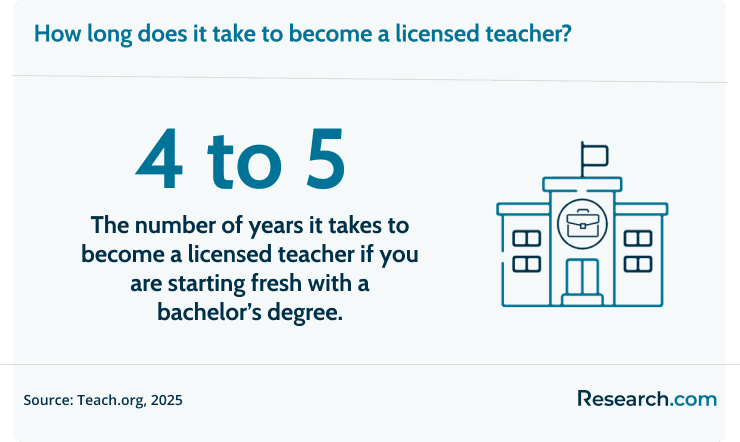
Becoming a licensed teacher typically takes about four to five years if you are starting fresh with a bachelor’s degree. Most states require you to complete a degree in education or a related field along with a state-approved teacher preparation program.
Some candidates choose a dual teaching credential and master's program, which allows them to earn both qualifications simultaneously while saving time. This includes coursework in pedagogy, child development, and subject-specific instruction, as well as supervised student teaching.
For those who already hold a bachelor’s degree, the process can be shorter. Many candidates choose to complete a one- to two-year master’s program in education or a post-baccalaureate teacher preparation program.
Alternative certification programs also exist, allowing candidates to start teaching while working toward full licensure, which can reduce the timeline to about a year. The exact duration depends on your state’s requirements and the pathway you select.
In general, prior education and the route you take will determine whether the journey takes one year or closer to five.
What are the steps to getting a teaching license or credential?
Earning a teaching license or credential involves a series of steps that ensure you are prepared both academically and practically for the classroom. While the exact process can vary by state, the general pathway follows a consistent pattern across the U.S.
- Earn a Bachelor’s Degree: Most states require at least a bachelor’s degree in education or a related field. This provides the foundational knowledge needed to teach effectively.
- Complete a Teacher Preparation Program: You must finish a state-approved program that includes coursework in pedagogy and teaching methods. Many candidates pursue an online master's higher education pathway to complete these requirements, combining flexibility with rigorous training. These programs also require supervised student teaching experience.
- Pass State Certification Exams: Prospective teachers take standardized exams that assess subject knowledge and teaching skills. Passing these tests demonstrates readiness to manage a classroom and deliver instruction.
- Apply for a License or Credential: Once you’ve met the education and exam requirements, you submit an application to your state’s Department of Education. This step often involves fees and documentation of your qualifications.
- Undergo a Background Check: States typically require fingerprinting and background checks before granting a license. This ensures the safety and well-being of students in public schools.
Can I teach without a teaching license or credential?
Yes, in certain situations, you can teach without holding a full teaching license or credential, though options are limited. Private schools, charter schools, and some international schools often have more flexible requirements and may hire teachers based on subject expertise or professional experience rather than state certification.
Additionally, some states offer emergency or provisional permits that allow individuals to teach while completing the requirements for a full license.
However, if your goal is to work in public schools, a teaching license or credential is almost always required. Teaching without one typically restricts your options and may limit salary potential or career advancement. Even in private or alternative settings, having a license or credential can make you more competitive and provide greater job security.
Some teachers begin their careers through alternative certification programs, similar to how professionals enter related fields—such as individuals comparing is it better to get a certificate or degree in early childhood education, where the choice often depends on speed, cost, and long-term goals. The same logic applies here: while a certificate or emergency permit can get you into the classroom faster, earning a full license provides more stability.
Most states also require that your degree and preparation program be accredited by a recognized body, such as the Council for the Accreditation of Educator Preparation (CAEP), to ensure you meet national standards for teacher readiness.
How much do licensed teachers in the U.S. earn?
Licensed teachers in the U.S. earn varying salaries depending on the grade level and type of institution in which they teach. Pay is influenced by factors such as subject area, experience, and location, but national averages provide a useful benchmark for aspiring educators. Below are some of the most common teaching roles and their average annual earnings:
- Preschool Teachers ($37,120): Preschool teachers educate children under the age of five, focusing on early childhood development through play-based learning, social interaction, and basic skill-building.
- Kindergarten and Elementary School Teachers ($62,310): These teachers introduce young learners to foundational subjects such as reading, writing, math, and social studies, while also fostering social and emotional development in the classroom.
- Special Education Teachers ($64,270): Special education teachers work with students who have learning, mental, emotional, or physical disabilities, adapting lessons and using specialized methods to support each child’s needs.
- High School Teachers ($61,667): High school teachers instruct students in grades 9–12, specializing in subject areas such as math, science, or history, and preparing them for college or the workforce.
- Postsecondary Teachers ($83,980): Postsecondary teachers, often called professors or lecturers, teach academic subjects beyond high school, conduct research, and mentor students at colleges and universities.
Overall, the salary range shows that teaching can be both rewarding and diverse, with higher earning potential at the postsecondary level and more modest pay in early childhood education. This mirrors other education-related roles—such as comparing MSW vs LPC salary, where advanced credentials or specialized roles often command higher pay.
While the financial aspect is important, many teachers find the true value of their profession in making a lasting impact on students’ lives. These averages serve as a useful guide, and the chart below shows this variation clearly across different teaching roles.
What is an initial vs a professional teaching license?
Teaching licenses are often issued in stages, starting with an initial license and progressing to a professional license. These levels reflect a teacher’s experience, training, and ability to meet ongoing state requirements.
- Initial Teaching License: This is the entry-level license granted to new teachers after completing their degree, preparation program, and exams. Some candidates accelerate their studies with options like 4 week online college credit courses, helping them qualify for the classroom faster. It typically allows you to teach for a set number of years while gaining classroom experience.
- Professional Teaching License: After meeting additional requirements such as teaching experience, continuing education, or advanced assessments, teachers can upgrade to a professional license. This credential usually offers longer validity, more stability, and sometimes higher pay opportunities.
The main difference between an initial and a professional teaching license is that the initial license is an entry-level credential for new teachers, while the professional license is an advanced credential earned after gaining experience and completing additional requirements.
In short, the initial license allows you to begin teaching, and the professional license recognizes your growth, stability, and ongoing commitment to the profession.
How often must a teaching license or credential be renewed?
The renewal timeline for a teaching license or credential varies by state, but most require renewal every three to five years. During this period, teachers are usually expected to complete continuing education hours or professional development credits to demonstrate ongoing learning.
Some states also require additional assessments, updated background checks, or documentation of classroom experience as part of the renewal process.
For long-term educators, many states offer advanced or professional-level licenses with longer renewal cycles, often up to ten years. These licenses are typically awarded after teachers have met higher standards, such as years of service, advanced degrees, or certifications in specialized areas like a master's in multilingual learner education online.
Renewal at this stage often emphasizes leadership, mentorship, or broader professional contributions to education.
How can pursuing an advanced degree enhance my teaching career?
For educators looking to advance beyond initial licensure and classroom roles, pursuing an advanced degree provides a route to leadership positions, specialized instructional roles, and improved compensation. Advanced qualifications can offer critical training in strategic decision-making, curriculum innovation, and organizational management, distinguishing you in competitive job markets without rehashing the foundational certification process. In addition, targeted programs—such as accelerated EdD programs—can fast track your transition into high-level administrative and academic roles while emphasizing current best practices in education management and policy implementation.
What career opportunities does a teaching license unlock?
Earning a teaching license does more than just qualify you to teach in public schools; it opens the door to a wide range of career paths in education and beyond. From classroom teaching to leadership, consulting, and even roles outside traditional schools, licensed educators have many opportunities to grow and specialize.
Here are some of the most common career opportunities unlocked by holding a teaching license:
- Public School Teacher: A teaching license qualifies you to work in state-funded elementary, middle, and high schools, teaching core academic subjects or electives.
- Special Education Teacher: Licensed teachers can specialize in supporting students with disabilities by creating adapted lessons and individualized education plans.
- ESL (English as a Second Language) Teacher: With the right endorsement, licensed educators can help non-native speakers build English proficiency in schools or community programs. Many who pursue this pathway also explore master's in reading and literacy jobs, which open doors to specialized roles supporting language development and literacy skills.
- Instructional Coordinator: Licensed teachers with experience can move into curriculum development, training other teachers, and improving instructional strategies.
- School Administrator: With additional credentials, licensed teachers can advance into leadership roles such as principal, assistant principal, or district administrator.
- Higher Education Instructor (with advanced degrees): Teaching experience and licensure can provide a pathway to becoming a lecturer or professor in education departments.
- Education Consultant: Licensed teachers often transition into consulting, advising schools, organizations, or government agencies on best practices in instruction and policy.
- Online Teacher or Virtual Educator: A license allows teachers to work with accredited online schools and distance learning programs, especially as digital education expands.
With so many diverse pathways, a teaching license serves as both a foundation and a springboard for long-term professional growth. The profession continues to play a vital role in shaping future generations, and demand remains high across different educational settings.
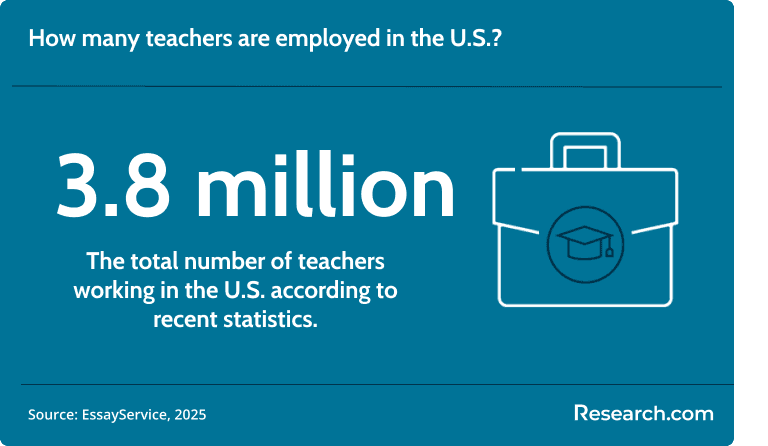
Statistics show that the total number of teachers sits at over 3.8 million, underscoring just how significant and far-reaching this career path is.
What is the job outlook for those who have a teaching license or credential?
The job outlook for licensed teachers remains positive, with thousands of positions projected across different levels of education. Each teaching role carries unique responsibilities, and the number of openings reflects the continued demand for skilled educators nationwide.
- Kindergarten and Elementary School Teachers: About 103,800 openings are projected, showing steady demand for educators at the foundation of children’s learning. These teachers play a critical role in shaping literacy, numeracy, and social development in early school years.
- Special Education Teachers: With around 37,800 openings expected, the demand highlights the growing need for specialists who can support students with disabilities. These professionals design individualized education plans and foster inclusive classroom environments.
- Postsecondary Teachers: Approximately 114,000 openings are projected, making this the fastest-growing area in education. Rising college enrollments and expanding programs are fueling demand for professors and lecturers across disciplines.
- Preschool Teachers: About 65,500 openings are expected, driven by the increasing emphasis on early childhood education. Preschool teachers nurture social, emotional, and academic growth in children under five.
- Middle School Teachers: Around 40,500 openings are projected, ensuring continued hiring to cover this crucial transitional stage of education. These teachers help students prepare academically and socially for the challenges of high school.
These figures highlight that licensed teachers can expect steady demand across all education levels, from early childhood to higher education. Importantly, these are projected job openings per year from 2024 to 2034, reflecting the long-term stability of the teaching profession.
For comparison, professionals in fields like counseling often ask where do counselors work—the answer is similarly broad, covering schools, healthcare, and private practice. Education offers the same variety, with opportunities across both public and private institutions.
The chart below shows this clearly, illustrating how opportunities will remain abundant for those entering or advancing within education.
Here’s what graduates have to say about their teaching degrees:
- Paul: "Studying for my teaching degree online gave me the flexibility to balance coursework with a full-time job. The program prepared me for licensure, and now I’m part of the 3.8 million teachers shaping the future every day. I feel proud knowing my path to the classroom started with that decision. "
- Lenny: "Completing my credential requirements made it possible to stay home with my kids while working toward my dream. Passing the exams and earning my license proved that determination and support can make anything possible. Teaching now feels like more than a job—it’s my calling."
- Norah: "The teaching degree allowed me to focus on practical skills, from lesson planning to classroom management, at my own pace. Transitioning into a licensed teaching role was smooth, and I’ve already seen how my training directly impacts student success. I wouldn’t trade the experience for anything. "
Key Findings
- A teaching license is the legal authorization to teach, while a teaching credential represents the academic and training qualifications needed to earn that license.
- There are over 3.8 million teachers in the U.S., making education one of the largest professional workforces in the country.
- Licensed teachers earn competitive salaries, with the average for kindergarten and elementary school teachers at $62,310 per year.
- Job demand remains steady, with projections showing over 114,000 annual openings for postsecondary teachers between 2024 and 2034.
- Renewal and advancement of licenses or credentials ensure teachers maintain high standards and continue professional growth throughout their careers.
References:
- Indeed. (2025). High school teacher salary in the United States. Indeed
- Lockman, J. (2025). How Many Teachers Are in the U.S. in 2025? EssayService
- Teach.org. (2025). Teacher Certification (Complete Guide). Teach.org
- U.S. Bureau of Labor Statistics. (2025). Occupational Outlook Handbook: Postsecondary Teachers. U.S. BLS
Other Things You Should Know About Teaching License vs. Teaching Credential
Teaching licenses and credentials usually do not transfer directly between states, since each state sets its own requirements for educators. However, many states have reciprocity agreements that allow licensed teachers to apply for certification in a new state without starting over completely.
This often involves submitting transcripts, proof of licensure, and test scores, plus meeting any additional local requirements. While the process can take time, reciprocity makes it much easier for teachers to relocate and continue their careers across state lines.
In 2027, a teaching license generally signifies official permission to teach, typically requiring state-specific exams. A teaching credential validates the completion of educational and fieldwork requirements needed to qualify for teaching. Both are essential for teachers but serve distinct roles in educational certification.
In 2027, teaching licenses are typically issued by state education departments, while teaching credentials are awarded by accredited universities and colleges. Each state has its own governing body for certification, like the California Commission on Teacher Credentialing or similar entities for other states.


