
2027 WGU vs. Chamberlain vs. Capella – Compare Online RN to BSN Programs

Co-Founder and Chief Data Scientist
As a working nurse, you know the pressure is on to earn your BSN. With nearly 48% of new nurses now entering the field with a baccalaureate degree, the need for this credential has never been clearer. The real challenge isn't deciding if you should go back to school, but finding a program that respects your experience and fits into your already demanding life.
This guide was prepared by career planning experts with more than 10 years of experience to help you make that exact choice. We will provide a clear, direct comparison of the online RN to BSN programs at WGU, Chamberlain, and Capella, giving you the information you need to move your career forward.
Key Things You Should Know About Online RN to BSN Programs
- Your most critical decision is choosing between a competency-based model, which prioritizes speed and cost-savings, and a traditional online model, which offers more structure and a standard GPA.
- All three universities—WGU, Chamberlain, and Capella—hold the essential CCNE accreditation, which means their nursing programs are recognized and respected by employers and graduate schools nationwide.
- The healthcare industry is shifting its standards; a recent study showed that 47.2% of newly licensed nurses now enter the field with a BSN, making it the new benchmark for career advancement.
- Earning your BSN is the primary pathway to unlocking higher-paying roles in nursing leadership, management, and specialized fields outside of bedside care.
- The total cost and time to completion are not fixed; they depend entirely on your personal pace and how many transfer credits you bring with you.
- How do WGU, Chamberlain, and Capella compare at a glance? Overview
- Which online RN to BSN program is the most affordable? Program Cost
- How quickly can I complete an online RN to BSN program at these schools? Completion Time
- What are the differences between competency-based and traditional online learning? What are the differences between competency-based and traditional online learning?
- Are online RN to BSN degrees from these schools respected by employers? Are online RN to BSN degrees from these schools respected by employers?
- What are the admission requirements for these online RN to BSN programs? Admissions Requirements
- What are the clinical requirements for these online programs? Clinical Requirements
- What kind of student support can I expect from WGU, Chamberlain, and Capella? What kind of student support can I expect from WGU, Chamberlain, and Capella?
- Which program is best if I plan to go to graduate school? Which program is best if I plan to go to graduate school?
- What jobs can I get with a BSN from one of these universities? Jobs
- Are there other alternative programs to consider? Are there other alternative programs to consider?
- How do I choose the right online RN to BSN program for me? How do I choose the right online RN to BSN program for me?
Registered nurses comparing WGU, Chamberlain, and Capella are usually trying to solve the same practical problem: how to earn a BSN without leaving work, overspending, or choosing a format that makes graduation harder than it needs to be. These three universities are often compared because they offer online RN to BSN pathways built for licensed nurses, but they are not interchangeable.
This guide explains how WGU, Chamberlain, and Capella differ in cost structure, pacing, academic format, accreditation, admissions, student support, graduate school preparation, and career usefulness. The goal is not to name one universal “best” school. It is to help you identify which program model fits your schedule, motivation, budget, and long-term nursing goals.
Quick answer: how do WGU, Chamberlain, and Capella compare?
WGU is usually the strongest fit for self-directed nurses who want a competency-based RN to BSN program with flat-rate tuition. Chamberlain is better for nurses who want a more traditional online classroom with set deadlines, instructor guidance, and a conventional GPA. Capella gives students two formats: GuidedPath for a more structured experience and FlexPath for self-paced competency-based learning.
All three programs are designed for working registered nurses, and all three hold CCNE accreditation for nursing. The main decision is not whether online RN to BSN degrees can be legitimate; it is whether you will be more successful in a self-paced model or a scheduled course model.
Chamberlain’s online RN to BSN program is also Quality Matters-certified, which signals that its online course design has been reviewed against recognized standards for learner engagement, navigation, and instructional quality.
A helpful way to think about the distinction is similar to comparing the difference between pre nursing and nursing: the names may sound close, but the structure, purpose, and outcomes can be very different. In this comparison, WGU emphasizes mastery and acceleration, Chamberlain emphasizes guided structure, and Capella emphasizes choice of format.
| Feature | Western Governors University (WGU) | Chamberlain University | Capella University |
| Learning Model | Competency-Based | Traditional Online | Two Options: GuidedPath (Traditional) & FlexPath (Competency-Based) |
| Cost Model | Flat-Rate, 6-Month Term | Per-Credit-Hour | GuidedPath: Per-Credit; FlexPath: 12-Week Subscription |
| Typical Time | 6-12 Months | As little as 12 Months | 9-12 Months |
| Accreditation | CCNE | CCNE | CCNE |
| Best For | Self-motivated nurses who want the possibility of finishing quickly while controlling total cost. | Nurses who prefer weekly expectations, faculty-led courses, and a traditional GPA. | Nurses who want to choose between a guided academic path and a self-paced model. |
The clearest trade-off is structure versus acceleration. A competency-based program may reduce cost and time for a disciplined student, but it can be difficult for someone who needs weekly deadlines. A traditional online program may cost more or take longer, but it can provide the rhythm and accountability many working nurses need.
Which online RN to BSN program is the most affordable?
The most affordable option depends less on the advertised tuition model and more on how quickly you can finish. WGU’s flat-rate, 6-month term can create strong savings for nurses who complete several courses in one term. Chamberlain’s per-credit-hour pricing is easier to predict upfront, but moving faster does not reduce the total cost in the same way. Capella’s GuidedPath and FlexPath options let students choose between per-credit pricing and a 12-week subscription model.
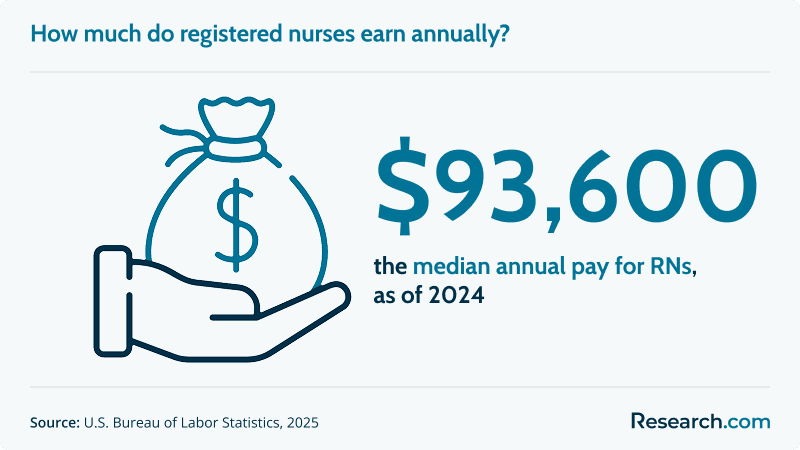
Cost should be evaluated as a career investment, not just a bill. The median pay for registered nurses is around $93,600 a year, but a BSN does not automatically guarantee a raise. Its value depends on your employer, location, role, union or pay scale rules, and whether the degree helps you qualify for advancement, leadership, specialty, or graduate school opportunities.
The real cost question: how many courses can you finish per payment period?
For competency-based programs, the key question is not “What is the cost per credit?” It is “How much can I realistically complete during one paid term or subscription period?” A nurse who can study consistently may finish more quickly and lower the final cost. A nurse with unpredictable shifts, caregiving responsibilities, or limited study time may need more terms, which changes the value calculation.
| Cost Factor | Why It Matters | What to Ask Before Enrolling |
| Transfer credits | More accepted credits can shorten the program and reduce remaining coursework. | How many credits will transfer after an official evaluation? |
| Employer tuition assistance | Hospital reimbursement can lower out-of-pocket costs substantially. | Does my employer reimburse RN to BSN tuition, and are there grade or work-commitment rules? |
| Pacing model | Self-paced formats reward fast progress; traditional formats provide steadier scheduling. | Can I complete multiple courses in one term without sacrificing work or health? |
| Fees and materials | Total cost includes more than tuition. | Are there technology, graduation, resource, transcript, or assessment fees? |
| Repeat or extension policies | Delays can increase final cost. | What happens financially if I need more time? |
The same ROI logic applies when evaluating other credentials, such as asking whether an associate degree in finance is worth it: the best choice is the one that connects cost, completion time, and career use. For nursing, however, accreditation, RN licensure, and employer requirements carry extra weight.
How fast can you complete an online RN to BSN at WGU, Chamberlain, or Capella?
A nurse can potentially complete an online RN to BSN in about a year at any of these schools, but the actual timeline depends on transfer credits, work schedule, motivation, and program format. WGU and Capella FlexPath can be faster for students who already know much of the material and can move rapidly through assessments. Chamberlain’s model is more scheduled, with a path that can be completed in as little as 12 Months.
At WGU and through Capella’s FlexPath, motivated students may finish in as few as six to nine months. That pace is possible only for students who can protect regular study time and handle limited external structure. Chamberlain’s more traditional calendar may be better for nurses who want deadlines, class pacing, and instructor-led progression.
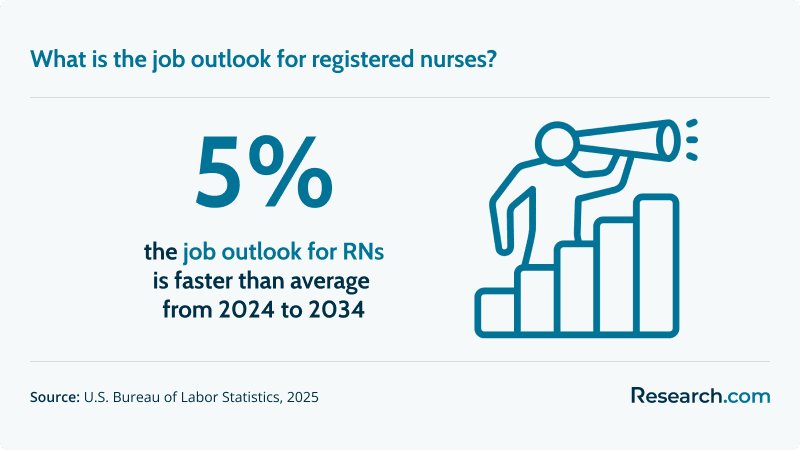
With demand for registered nurses projected to grow by 5%, completing a BSN sooner may help some nurses pursue advancement earlier. Still, speed should not be the only goal. A rushed program can become expensive if you need extensions, fail assessments, or burn out before finishing.
Educational level can also affect long-term options. Nurses planning beyond the BSN often compare the MSN salary vs BSN difference to understand how graduate degrees may open advanced practice, leadership, or specialty roles.
Who is most likely to succeed in an accelerated RN to BSN?
Accelerated, self-paced programs work best for nurses who are organized, comfortable learning independently, and able to study after long shifts without waiting for weekly reminders. They are not easier programs; they simply let experienced nurses prove mastery faster.
A structured online format may be the better choice if you need predictable deadlines, faculty interaction, and a course calendar that keeps you moving. Flexibility can be powerful, but it can also remove the accountability some students need. This is the same trade-off students face when comparing correspondence courses vs online courses: independence helps some learners and overwhelms others.
| Choose a Faster Self-Paced Model If... | Choose a Structured Online Model If... |
| You can study consistently without weekly deadlines. | You are more successful when assignments have fixed due dates. |
| You already have strong academic and clinical foundations. | You want more frequent instructor direction. |
| Your main goal is to finish as quickly as possible. | Your main goal is steady progress with less uncertainty. |
| You are comfortable proving competency through assessments. | You prefer traditional grades, discussions, and course pacing. |
Competency-based vs. traditional online RN to BSN learning
The most important academic difference among these schools is how progress is measured. In a traditional online program, students move through courses on a calendar, complete assignments by deadlines, interact with instructors, and usually receive letter grades. Chamberlain follows this more familiar model, and Capella’s GuidedPath option is also structured.
In a competency-based program, students advance by demonstrating mastery. WGU uses this model, and Capella FlexPath offers a similar self-paced structure. Instead of spending a set number of weeks in every course, students move forward when they can show they understand and can apply the required material.
| Feature | Competency-Based (WGU, Capella FlexPath) | Traditional Online (Chamberlain, Capella GuidedPath) |
| Pacing | Self-paced; you advance after showing mastery of the subject. | Scheduled; you follow course timelines and weekly expectations. |
| Grading | Pass/Fail. | Traditional letter grades (A, B, C). |
| Best For | Experienced nurses who want to use prior knowledge to move faster. | Students who want accountability, structure, and a familiar academic format. |
Why the learning model matters for working nurses
Competency-based education is not a shortcut. It is designed for adults who already bring professional knowledge to the classroom and do not need to spend equal time on every concept. This practical approach is common in many applied sciences careers, where education often focuses on proving job-relevant capability.
Traditional online education can be just as valuable, especially when a student wants instructor feedback, peer discussion, and a documented GPA. If graduate school is part of your plan, the grading model deserves careful attention because some programs prefer or require GPA-based evaluation.
Are online RN to BSN degrees from WGU, Chamberlain, and Capella respected?
Yes, employers can respect online RN to BSN degrees from these schools because the nursing programs are accredited by the Commission on Collegiate Nursing Education (CCNE). For nurses, programmatic accreditation is one of the most important quality checks because it signals that the program has been reviewed against national nursing education standards.
Accreditation matters more than whether the program is online or campus-based. Employers, graduate schools, and state boards are generally more concerned with whether the nursing program is properly accredited, whether the student already holds an active RN license, and whether the degree meets institutional requirements.
How hospitals typically view accredited online BSN programs
Many healthcare systems encourage ADN- or diploma-prepared nurses to complete a BSN because bachelor’s-level preparation supports leadership, evidence-based practice, quality improvement, and population health responsibilities. Hospitals pursuing or maintaining Magnet Recognition Program® status may place additional emphasis on BSN-prepared nursing staff.
That does not mean every employer treats every degree identically. Before enrolling, ask your nurse manager, HR department, or education benefits office whether the school is approved for tuition reimbursement, promotion eligibility, or clinical ladder advancement.
What admission requirements should RN to BSN applicants expect?
The central requirement across WGU, Chamberlain, and Capella is an active, unencumbered Registered Nurse license. Applicants typically also need prior nursing education, such as an ADN or nursing diploma, plus transcripts showing completed prerequisite and general education coursework.
- WGU: Requires an associate degree in nursing (ADN) or a nursing diploma.
- Chamberlain: Requires a minimum GPA of 2.0 from your associate degree or diploma program.
- Capella: Requires an associate degree in nursing.
Prerequisite coursework often includes science classes such as anatomy, physiology, and microbiology. While students in other science-heavy fields may research what jobs you can get with a biochemistry major, RN to BSN applicants should focus on whether their previous nursing prerequisites and general education credits will transfer.
Transcript evaluation is one of the most important steps
Do not estimate your remaining credits based on a website checklist alone. Request an official or preliminary transcript evaluation from each school you are seriously considering. Transfer credit decisions can change your timeline, tuition, course sequence, and graduation date.
| Question to Ask Admissions | Why It Matters |
| How many of my ADN or diploma credits will transfer? | This directly affects how long the BSN will take. |
| Will my previous science courses satisfy prerequisites? | Missing prerequisites can add time and cost. |
| Do I need an active RN license before starting? | Most RN to BSN programs require current licensure. |
| Are there state authorization limits? | Online programs may not enroll students in every state. |
| Will the program meet my employer’s reimbursement rules? | Some employers only reimburse approved or accredited programs. |
Do online RN to BSN programs require clinical hours?
Online RN to BSN programs are different from pre-licensure nursing programs. Because students are already registered nurses, these programs generally do not repeat the same kind of bedside clinical rotations required for initial licensure. Accredited RN to BSN programs do, however, include practice-based learning experiences.
These experiences are usually project-oriented and may focus on leadership, community health, research, evidence-based practice, care coordination, or quality improvement. Depending on the school, projects may be completed online, in the student’s local community, or through an approved workplace setting.
Can you use your current workplace for practice projects?
Many working nurses are able to connect RN to BSN practice experiences to their current job environment. That can make the requirement more practical because the project may address real issues in patient care, workflow, education, safety, or community health.
Before assuming your workplace will qualify, confirm the school’s rules. Ask whether you need a site agreement, supervisor approval, preceptor involvement, or specific documentation. A flexible practice project is still an academic requirement, and schools may have formal approval steps.
What student support does each school provide?
WGU, Chamberlain, and Capella all offer support, but they organize it differently. The best support model depends on how you learn, how much accountability you need, and whether you prefer one primary coach or course-by-course faculty interaction.
At WGU, students are assigned a Program Mentor who helps with planning, pacing, and motivation from enrollment through graduation. Course Instructors provide subject-specific help when students need academic guidance.
Chamberlain uses a more traditional online college support structure, with faculty leading courses and advisors assisting with scheduling, academic planning, and progression.
Capella combines faculty, tutors, and coaching resources, with the exact experience shaped by whether the student chooses GuidedPath or FlexPath.
| Support Preference | Best-Fit Model |
| I want a coach who helps me stay on pace. | WGU’s mentor model may fit well. |
| I want instructor-led classes with familiar deadlines. | Chamberlain’s traditional online format may feel more comfortable. |
| I want to choose between guided and self-paced support. | Capella’s GuidedPath and FlexPath options provide more format choice. |
| I struggle without external deadlines. | A structured model may be safer than a fully self-paced path. |
Match support to your real habits, not your ideal schedule
Many students overestimate how much time and energy they will have after shifts. Be honest about your workload, family responsibilities, commute, night-shift recovery, and stress level. The “best” program is the one you can actually finish.
Which program is better for nurses planning graduate school?
If graduate school is a major goal, Chamberlain or Capella GuidedPath may feel more straightforward because traditional letter grades create a conventional GPA. Some MSN, DNP, CRNA, leadership, or certificate programs use GPA heavily in admissions review.
That said, a pass/fail transcript from an accredited competency-based school does not automatically prevent admission to graduate study. Graduates from accredited competency-based programs can and do apply to advanced nursing programs. Admissions committees often review the full application, including RN experience, recommendations, professional goals, prerequisite performance, and whether the BSN came from a CCNE-accredited program.
With nearly 40% of nurses now pursuing higher degrees, it is wise to think ahead. Nurses considering advanced practice or specialty credentials may later explore FNP graduate certificate jobs or other post-BSN pathways.
Questions to ask if you plan to apply to MSN or DNP programs
- Will the graduate programs I am considering accept a pass/fail BSN transcript?
- Does the RN to BSN program provide a GPA or a transcript explanation?
- Are additional statistics, research, health assessment, or pathophysiology courses required for my target graduate program?
- Does the school’s accreditation meet the admissions requirements of future MSN, DNP, or certificate programs?
- Will I need a certain amount of clinical experience before applying?
Current trends affecting RN to BSN decisions
RN to BSN choices are being shaped by several practical trends: employer preference for BSN-prepared nurses, growth in online education for working adults, greater interest in competency-based learning, and increased use of healthcare technology. Nurses are also seeing more roles tied to care coordination, quality improvement, informatics, population health, and leadership.
Artificial intelligence and data tools are not replacing the need for nurses, but they are changing expectations. BSN coursework that strengthens evidence-based practice, informatics awareness, leadership communication, and systems thinking can help nurses adapt as clinical environments become more technology-driven.
What jobs can you pursue with a BSN from WGU, Chamberlain, or Capella?
A BSN can support movement beyond entry-level bedside roles and may help nurses qualify for leadership, coordination, public health, education, informatics, and management-oriented positions. Common possibilities include Nurse Manager, Case Manager, Public Health Nurse, Clinical Informatics Specialist, quality improvement roles, and staff development positions.
The BSN is not only about becoming more confident at the bedside. It can also help nurses move into roles that require broader knowledge of systems, policy, research, population health, and interprofessional leadership. Actual job eligibility depends on employer requirements, experience, certifications, location, and openings.
BSN career paths beyond bedside nursing
| Role | How a BSN Can Help | What Else May Be Needed |
| Nurse Manager | Supports leadership, staffing, quality, and unit operations responsibilities. | Clinical experience, leadership ability, and employer-specific requirements. |
| Case Manager | Builds preparation in care coordination, patient advocacy, and systems-based practice. | Experience with discharge planning, insurance processes, or specialty populations. |
| Public Health Nurse | Strengthens population health, prevention, and community-focused nursing knowledge. | Public health experience or state/local hiring requirements. |
| Clinical Informatics Specialist | Provides a foundation for connecting clinical workflows with health technology. | Technology experience, informatics training, or additional certification. |
| Quality Improvement Nurse | Connects nursing practice with safety, outcomes, evidence, and process improvement. | Experience with metrics, audits, policy, or performance improvement projects. |
Nurses interested in administration may later compare healthcare leadership degrees and outcomes, including typical MHA degree salary discussions. A BSN can be an early step toward those broader healthcare management paths.
What other RN to BSN alternatives should you consider?
WGU, Chamberlain, and Capella are not the only options. Many public universities, regional state schools, and hospital-affiliated programs offer online RN to BSN pathways. These may be especially attractive if you want lower in-state tuition, a local reputation, or a direct relationship with nearby healthcare systems.
Some nurses who are certain they want advanced practice may also consider ADN-to-MSN bridge programs. Those routes can make sense for a focused long-term plan, but they may be more demanding and less flexible than completing a BSN first.
Nursing career steps build on one another. Just as early-career students may ask what you can do with a CNA license, licensed RNs should ask what credential best supports the next stage: BSN completion, graduate study, specialty certification, leadership, or a non-bedside transition.
When a local or public university may be better
- You want a school with strong recognition among employers in your area.
- You qualify for in-state tuition or a hospital partnership discount.
- You prefer a program connected to local public health, community, or clinical networks.
- You want easier access to campus-based advising, libraries, or faculty.
- You are not in a rush and value a more traditional university experience.
How to choose the right online RN to BSN program
The right choice depends on your learning style, finances, timeline, and future plans. WGU, Chamberlain, and Capella can all be reasonable options for licensed nurses, but each works best for a different type of student.
- Choose WGU or Capella FlexPath if: You are self-motivated, organized, comfortable with independent learning, and focused on speed and potential cost savings.
- Choose Chamberlain or Capella GuidedPath if: You want weekly structure, instructor-led pacing, a traditional GPA, and a more familiar online classroom format.
- Consider another university if: A local public program is less expensive, better recognized by your employer, or more aligned with your state and career goals.
Step-by-step checklist before you apply
- Confirm accreditation. Make sure the nursing program has appropriate programmatic accreditation, such as CCNE.
- Request transcript evaluations. Compare how many credits each school accepts before judging cost or timeline.
- Ask your employer about reimbursement. Get the policy in writing, including grade, school, and repayment requirements.
- Compare the full cost. Include tuition, fees, materials, repeat policies, and possible extra terms.
- Match the format to your schedule. Do not choose self-paced learning unless you can consistently manage your own deadlines.
- Think about graduate school early. If you need a GPA, verify how each program documents academic performance.
- Check practice experience rules. Ask whether projects can be completed through your workplace or local community.
- Talk to graduates or current students. Ask about workload, faculty responsiveness, advising, and how realistic the advertised timeline felt.
Common mistakes to avoid
| Mistake | Better Approach |
| Choosing only by brand name. | Compare accreditation, transfer credits, cost model, pacing, and employer acceptance. |
| Looking only at tuition per credit. | Calculate total cost based on your likely completion speed. |
| Assuming self-paced means easier. | Treat competency-based learning as rigorous independent study. |
| Ignoring graduate school plans. | Check whether future programs require a traditional GPA. |
| Assuming online means no practice requirement. | Ask how project-based practice experiences are completed and approved. |
| Skipping employer approval. | Confirm reimbursement and promotion eligibility before enrolling. |
Choosing a program is choosing a completion strategy
The school matters, but the strategy matters just as much. A nurse who thrives with independence may save time in a competency-based model. A nurse who needs structure may graduate more reliably in a scheduled program. The best RN to BSN program is the one that fits your real life while moving you toward the role you want next.
What graduates say about completing an online RN to BSN
- : "I had worked as a charge nurse for years, but I kept missing out on the unit manager role because I did not have a bachelor’s degree. The program was demanding, but I could fit the work around my shifts. When the position opened again shortly after graduation, I was finally selected. — Jessica"
- : "I felt limited with only my associate degree, and I wanted to understand more of the reasoning behind the care decisions we make every day. The BSN helped me connect practice, evidence, and leadership. I became more comfortable contributing ideas during meetings and advocating for changes on my unit. — Emilia"
- : "I knew I needed a path away from long-term bedside work, and healthcare data had started to interest me. Completing the BSN online gave me the credential I needed to move toward nursing informatics. Within months, I was preparing for a role with regular hours that still used my clinical background. — Kevin"
References
- National Center for ONET Development. (n.d.). 29-1141.00 - Registered nurses. ONET OnLine. Retrieved October 7, 2025, from https://www.onetonline.org/link/summary/29-1141.00
- NCSBN. (n.d.). NCLEX pass rates. Retrieved October 7, 2025, from https://www.ncsbn.org/exams/exam-statistics-and-publications/nclex-pass-rates.page
- OADN. (2024, June). OADN voices June 2024 leadership message. Organization for Associate Degree Nursing. Retrieved October 7, 2025, from https://oadn.org/news/oadn-voices-june-2024-leadership-message/
- Smiley, R. A., Allgeyer, R. L., Shobo, Y., Lyons, K. C., Letourneau, R., & Zhong, E. (2023). The 2022 national nursing workforce survey. Journal of Nursing Regulation, 14(1), S1-S90. https://doi.org/10.1016/S2155-8256(23)00047-9
- U.S. Bureau of Labor Statistics. (2024, September 4). Registered nurses. Occupational Outlook Handbook. Retrieved October 7, 2025, from https://www.bls.gov/ooh/healthcare/registered-nurses.htm
- Additional source record: https://doi.org/10.1016/S2155-8256(23)00047-9
- Additional source record: https://oadn.org/news/oadn-voices-june-2024-leadership-message/
- Additional source record: https://www.ncsbn.org/exams/exam-statistics-and-publications/nclex-pass-rates.page
- Additional source record: https://www.onetonline.org/link/summary/29-1141.00
Key Insights
- There is no single best RN to BSN program for every nurse. WGU favors acceleration, Chamberlain favors structure, and Capella offers both guided and self-paced options.
- Accreditation should be nonnegotiable. All three programs are CCNE-accredited, which is central to employer recognition and graduate school credibility.
- The lowest-cost program is often the one you can finish efficiently. Flat-rate and subscription models can save money only if you complete enough coursework within each paid period.
- Self-paced learning requires discipline. Competency-based programs can be fast, but they are best for nurses who can manage time without frequent deadlines.
- A traditional GPA may matter for graduate school. If MSN, DNP, or certificate programs are part of your plan, ask future schools how they evaluate pass/fail BSN transcripts.
- Transfer credits can change everything. Request evaluations from each school before comparing final cost or timeline.
- Choose based on your real schedule, not the fastest advertised completion time. The right program should fit your work shifts, energy level, support needs, and long-term nursing goals.
Other Things You Should Know About Online RN to BSN Programs
In 2027, WGU's RN to BSN program often aligns clinical experiences with a student's current workplace, optimizing time and relevance. Chamberlain offers comprehensive national placement assistance, while Capella's FlexPath allows personalization of clinical experiences, ensuring alignment with career goals. Each institution thus provides distinct pathways to fulfill clinical requirements.
WGU, Chamberlain, and Capella have distinct credit transfer policies. WGU accepts up to 90 transfer credits, while Chamberlain allows up to 77. Capella evaluates transfer credits individually. It's vital to check specific school guidelines for maximum transferable credits and any restrictions.


