
2027 Data Security vs. Cyber Security: Explaining the Difference

Co-Founder and Chief Data Scientist
In today’s digital-first world, data and systems protection has never been more essential. While data security and cyber security are often used interchangeably, they serve different but interconnected purposes.
Data security focuses on safeguarding the integrity and confidentiality of information itself, while cyber security focuses on the large-scale protection of networks, devices, and digital infrastructure from malicious attacks.
Understanding these fields is important for building effective defense strategies, as cyber threats grow more sophisticated. To help you out, this guide will outline the differences between data security and cyber security to ensure your organization’s resilience and public trust.
Key Things You Should Know about Data Security and Cyber Security
- Cyber security is the practice of protecting computer systems, networks, and data from cyber threats, unauthorized access, and digital attacks. Cyber security professionals use technology, processes, and policies to ensure safety and resilience.
- Data security may be considered as a subfield in cyber security. It is the practice of protecting digital information from unauthorized access, corruption, or theft through encryption, access controls, and other measures that ensure data integrity and confidentiality.
- Job opportunities for several occupations in cyber security and data security are expected to increase from 2024 to 2034. For instance, employment for information security analysts in the US has been forecasted to grow by 29% over the decade (US BLS, 2025).
- What is data security? Data Security
- What is cyber security? Cyber Security
- How do data security and cyber security overlap in organizations? Overlaps
- What are the differences between data security and cyber security? Differences
- What jobs can I get in data security and cyber security? Available Jobs
- How can I pursue a career in data security and cyber security? Career Overview
- What challenges do data security professionals and cyber security professionals face at work? Challenges
- Which regulations govern data security? Which regulations govern data security?
- How does cyber security compliance apply to organizations? How does cyber security compliance apply to organizations?
- What emerging trends are reshaping data and cyber security? What emerging trends are reshaping data and cyber security?
- What are recommended best practices for data security and cyber security for businesses today? What are recommended best practices for data security and cyber security for businesses today?
What is data security?
Advanced technology has made daily task completion easier and faster for individuals and organizations. Notably, using digital products and services require clients and customers to share sensitive information, such as bank-account details and residential addresses. Thus, businesses and consumers must take steps to ensure data protection and privacy.
Data security refers to the practice of protecting digital information from unauthorized access, alteration, or loss throughout its lifecycle. It involves implementing safety measures, such as encryption, access controls, and authentication, to maintain the confidentiality, integrity, and availability of information. Fundamentally, data security ensures that only authorized individuals can access or modify sensitive data, from personal records to business documents.
The concept of data security is increasingly relevant to other fields as well—particularly in health and research. For instance, professionals often ask is a health science bachelor's degree worth it since such programs teach not just clinical knowledge but also data protection and ethics in healthcare technology, preparing graduates to handle sensitive patient data securely.
What is cyber security?
Cyber security is the practice of protecting computer systems, networks, and digital infrastructures from malicious attacks, unauthorized access, and data breaches. It encompasses a wide range of technologies, processes, and policies designed to secure information assets against evolving cyber threats. Cyber security covers the entire digital ecosystem—including hardware, software, and online communication channels.
Cyber security is important in all economic sectors, such as government, healthcare, finance, and education, where protecting sensitive data and ensuring operational continuity are critical. Cyber security professionals implement firewalls, intrusion-detection systems, encryption protocols, and incident-response strategies to defend against cyberattacks.
Individuals seeking to enter the field can gain essential skills and practical training through the best online cybersecurity bootcamps.
How do data security and cyber security overlap in organizations?
Data security and cyber security often work hand in hand to protect an organization’s digital assets. While they focus on different aspects of protection, their applications frequently overlap in several ways, such as the following:
- Access Control Systems: Both fields implement strict user authentication and authorization protocols to ensure that only approved individuals can access sensitive data and systems. This prevents internal and external breaches.
- Encryption Practices: Cyber security and data security professionals use encryption to protect information both in transit and at rest. Even if data is intercepted, it remains unreadable to unauthorized users.
- Incident-response Planning: These roles may work together in developing and executing incident-response strategies that lessen the impact of breaches, recover compromised data, and strengthen system defenses against future attacks.
Individuals exploring these roles often ask, “Do cybersecurity professionals need coding skills to succeed in the field?” While not always required, coding knowledge can significantly enhance problem-solving and threat-detection capabilities.
What are the differences between data security and cyber security?
Although data security and cyber security share the common goal of protecting information, they differ in scope, focus, and implementation. The following are three main distinctions:
- Scope of Protection: Data security focuses specifically on safeguarding information—whether stored, processed, or transmitted. While cyber security protects the broader digital environment, including networks, devices, and software systems.
- Primary Objective: The goal of data security is to ensure data confidentiality, integrity, and availability. In contrast, cyber security aims to defend against cyberattacks that could compromise entire systems or infrastructures.
- Methods and Tools: Data security relies on techniques, such as encryption, masking, and access control, while cyber security involves firewalls, intrusion-detection systems, and threat intelligence to prevent external attacks.
These distinctions parallel other academic and professional comparisons—for example, behavioral therapy vs cognitive therapy, which also focuses on two related but distinct approaches with different goals and techniques, despite both aiming to improve outcomes for individuals.
What jobs can I get in data security and cyber security?
Professionals in data security and cyber security can pursue various roles that protect digital assets, manage systems, and ensure information integrity in diverse industries. Common career paths include the following:
Information Security Analysts
These professionals develop and implement security measures to protect an organization’s computer systems and networks. They monitor for security breaches, conduct vulnerability testing, and respond to incidents to minimize damage. In May 2024, information security analysts in the US had a median annual wage of $124,910 (US BLS, 2025).
Database Administrators and Architects
Database administrators and architects design, manage, and secure databases that store sensitive information. Their work focuses on maintaining data integrity and preventing unauthorized access. They also ensure that databases run efficiently and securely. In May 2024, these professionals had a median annual wage of $123,100 (US BLS, 2025).
Network and Computer Systems Administrators
Network and computer systems administrators oversee the daily operations of an organization’s computer networks. They manage servers, configure hardware and software, as well as apply cybersecurity protocols to prevent system downtime and protect against cyber threats. In May 2024, these professionals had a median annual wage of $96,800 (US BLS, 2025).
Professionals interested in advancing in these roles can explore masters in cyber security jobs salary trends to better understand earning potential and career-growth opportunities.
The chart below provides a visualization of the 2024 median annual wages of data security and cyber security professionals in the US, according to 2025 data from the US BLS.
How can I pursue a career in data security and cyber security?
Building a career in data security or cyber security requires years of completing education and training, gaining practical experience, as well as earning specialized certifications. The following are three key ways to enter these fields:
- Earn a relevant degree. Many professionals start by earning a bachelor’s degree in computer science, information technology, or cyber security. Interested individuals may explore getting an accelerated online cybersecurity training program to gain practical, job-ready skills in a shorter time.
- Gain hands-on experience. Internships, entry-level IT roles, and participation in cyber security competitions help individuals apply theoretical knowledge to real-world scenarios. They build the problem-solving and technical skills employers value.
- Obtain professional certifications. Credentials, such as CompTIA Security+, Certified Information Systems Security Professional (CISSP), and Certified Ethical Hacker (CEH), validate expertise and enhance career opportunities in both data security and cyber security roles.
What challenges do data security professionals and cyber security professionals face at work?
Professionals in data security and cyber security encounter numerous challenges as they protect data and systems from evolving threats. The following are some of the most common challenges:
- Constantly Evolving Threats: Cybercriminals continuously develop new attack methods, which require professionals to stay updated with emerging technologies and threat intelligence to effectively defend against them.
- Balancing Security and Accessibility: Implementing strong security measures can sometimes hinder user convenience or system performance. Experts must find the right balance between protection and usability within organizational operations.
- Resource and Skill Shortages: Many organizations face limited budgets and a shortage of qualified cybersecurity personnel. These obstacles may make it difficult for organizations to maintain robust defenses and respond quickly to incidents.
The chart below provides a visualization of the employment levels of data security and cyber security professionals in the US, according to 2025 data from the US BLS.
Addressing such challenges requires both technical expertise and leadership skills. Many professionals pursue advanced education, such as degrees in leading and managing in nursing, or similar management-oriented programs, to strengthen their ability to handle complex, team-based problem-solving in fast-changing digital environments.
Which laws and regulations govern data security?
Several important laws and regulations shape how organizations protect sensitive data and ensure privacy in the US. These include the following:
- Health Insurance Portability and Accountability Act (HIPAA): HIPAA regulates how healthcare providers, insurers, and other entities manage patients’ medical information. It prevents disclosure without the patient’s consent.
- General Data Protection Regulation (GDPR): The GDPR is a European Union (EU) law that also applies to US companies handling EU citizens’ data. It emphasizes transparency, user consent, and strict penalties for noncompliance.
- California Consumer Privacy Act (CCPA): The CCPA grants California residents control over their personal information, including the right to access, delete, and restrict the sale of their data.
Students interested in understanding these privacy frameworks in depth can benefit from enrolling in accelerated health information management programs online to build expertise in data governance and compliance.
How does cyber security compliance apply to organizations?
Cyber security compliance requires organizations to follow established laws, regulations, and industry standards designed to protect digital assets and sensitive information. Compliance ensures that companies implement proper security controls, risk-management procedures, and data-protection measures to prevent breaches and maintain trust.
For example, several frameworks, such as the National Institute of Standards and Technology (NIST) Cybersecurity Framework and ISO/IEC 27001, guide organizations in building secure systems and documenting their protective initiatives. Noncompliance can result in severe financial penalties, reputational damage, and legal consequences.
By adhering to cyber security compliance standards, organizations not only safeguard their networks and customer data. They also demonstrate accountability and a proactive commitment to maintaining a secure digital environment.
Companies considering different training routes for compliance professionals often compare education providers, asking whether for profit colleges vs non profit institutions offer better long-term value and credibility—an important decision when selecting certification or degree programs in cybersecurity or IT governance.
What emerging trends are reshaping data and cyber security?
Organizations are increasingly leveraging adaptive frameworks that integrate AI-driven threat detection, zero trust architectures, and real-time behavioral analytics. The rapid expansion of cloud environments and IoT devices is driving demand for agile security protocols that anticipate evolving attack vectors. Industry experts advise bolstering continuous professional development and exploring cost-effective educational avenues, such as the cheapest cyber security degree online, to meet future challenges head-on.
What are recommended best practices for data security and cyber security for businesses today?
Implementing effective data security and cyber security measures is essential for protecting sensitive information and digital infrastructure. The following are three recommended best practices:
- Regular Software Updates: Keeping systems, applications, and antivirus programs up to date helps patch vulnerabilities that cybercriminals could exploit to gain unauthorized access.
- Strong Authentication Methods: Using multi-factor authentication (MFA) and enforcing complex password policies add layers of protection, making it harder for attackers to compromise user accounts.
- Employee Training and Awareness: Educating staff about phishing, social engineering, and safe online habits reduces the risk of human error, which is one of the most common causes of security breaches.
Here’s What Professionals Say about Their Data Security and Cyber Security Careers
- Emma: "Working in cyber security has been eye-opening and rewarding. I get to protect organizations from real-world threats every day while staying ahead of constantly evolving technologies."
- David: "As a data security analyst, I’ve learned that safeguarding information isn’t just about encryption. It’s also about building trust between companies and their clients."
- Jessica: "My career in cyber security allows me to merge problem-solving with purpose. Every incident I prevent reminds me how important our work is in keeping the digital world safe."
Key Findings
- Data security refers to the practice of protecting digital information from unauthorized access, alteration, or loss throughout its lifecycle.
- Cyber security is the practice of protecting computer systems, networks, and digital infrastructures from malicious attacks, unauthorized access, and data breaches.
- In May 2024, information security analysts in the US had a median annual wage of $124,910 (US BLS, 2025).
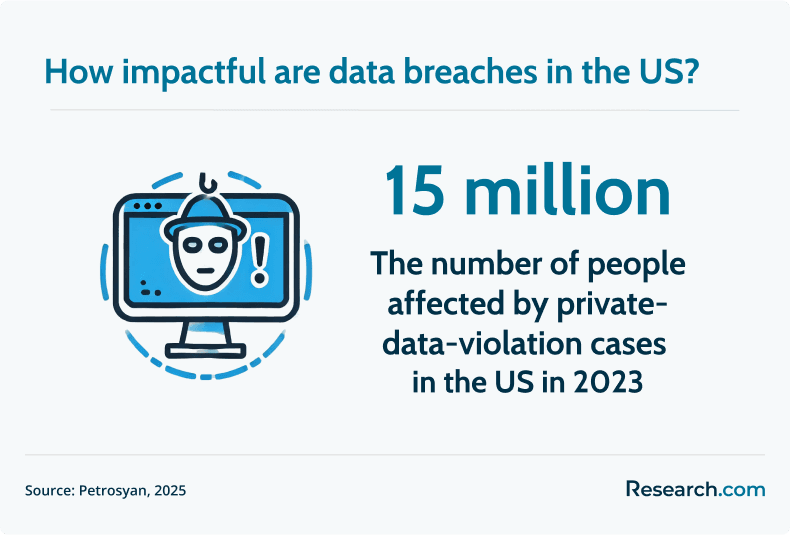
- In 2023, 15 million people in the US were affected by private-data-violation cases (Petrosyan, 2025).
- In 2024, 182,800 information security analysts worked in the US (US BLS, 2025).
References:
- Petrosyan, A. (2025, March 27). United States government and cybercrime - statistics & facts. Statista. https://www.statista.com/topics/3387/us-government-and-cyber-crime/?srsltid=AfmBOopv6ptMDh7CoFGlkOzkG8Ij5oLF23LmVYZfHE8VoLLTEnj0QbZ5#topicOverview
- US Bureau of Labor Statistics. (2025, August 28). Database Administrators and Architects. Occupational Outlook Handbook. https://www.bls.gov/ooh/computer-and-information-technology/database-administrators.htm
- US Bureau of Labor Statistics. (2025, August 28). Information Security Analysts. Occupational Outlook Handbook. https://www.bls.gov/ooh/computer-and-information-technology/information-security-analysts.htm
- US Bureau of Labor Statistics. (2025, August 28). Network and Computer Systems Administrators. Occupational Outlook Handbook. https://www.bls.gov/ooh/computer-and-information-technology/network-and-computer-systems-administrators.htm
Other Things You Should Know About Data Security and Cyber Security
The primary goal of data security is to protect sensitive information from unauthorized access, alteration, or loss. It ensures its confidentiality, integrity, and availability across systems and networks.
In 2027, data security focuses primarily on protecting data from unauthorized access and ensuring data integrity and confidentiality. Cyber security, however, encompasses a broader scope, defending entire systems, networks, and software from a range of cyber threats. Both play crucial roles in a comprehensive security strategy.
In 2027, data security focuses on protecting sensitive information from unauthorized access and breaches, ensuring data integrity and confidentiality. Cyber security encompasses a broader scope, safeguarding digital systems, networks, and devices from cyber threats, including malware and cyberattacks, to maintain overall IT infrastructure security.


