
2027 Thesis vs. Non-Thesis Master's Programs: Which Path Should You Pursue?

Co-Founder and Chief Data Scientist
Choosing between thesis programs and non-thesis programs is one of the most important decisions prospective graduate students face. This choice affects not only how students will complete their degree but also the type of skills, research experience, and career options they gain afterward.
According to the National Center for Education Statistics (NCES), over 880,000 master’s degrees were conferred in the U.S. in 2022 alone—reflecting a steady rise in graduate education demand. This article clarifies the differences between these two academic paths and helps students decide which option best aligns with their goals in 2027.
Key Things You Should Know About Thesis vs. Non-Thesis Master's Programs
- Thesis programs emphasize independent research and academic writing, culminating in a comprehensive scholarly paper.
- Non-thesis programs focus on applied coursework, projects, or internships that develop professional and practical skills.
- The best option depends on one’s career goals—research and academia often favor thesis programs, while professional advancement typically benefits from non-thesis programs.
Affordable Online Degree Programs in 2027
Many students are looking for a cost-effective and fast bachelor’s degree to launch their careers quickly. To support that goal, we’ve compiled a list of ten programs worth considering. Here are the options:
1. Management Information Systems
A degree in Management Information Systems (MIS) prepares students to bridge the gap between business and technology. Students learn to design, implement, and manage information systems that support organizational goals. Online programs in MIS often include courses in database management, cybersecurity, systems analysis, and project management. Graduates are well-positioned for careers as IT managers, systems analysts, or business technology consultants. Many accredited programs offer flexible schedules and access to virtual labs to gain hands-on experience.
2. Social Work
An online degree in Social Work equips students to support communities and individuals in need. Coursework typically covers human behavior, social policy, counseling techniques, and ethics. Many programs include supervised field placements that can be completed locally, ensuring practical experience. Graduates may pursue roles in healthcare, schools, government agencies, or nonprofit organizations. Accredited programs ensure eligibility for licensure, which is crucial for professional practice.
3. Business Administration
Online Business Administration programs provide a broad foundation in management, finance, marketing, and operations. Students develop strategic thinking and leadership skills applicable across industries. Courses often include case studies, team projects, and real-world simulations. Graduates can pursue management roles in corporate, nonprofit, or entrepreneurial settings. Accredited programs may also offer networking opportunities and career services for online learners.
4. Special Education
A Special Education online program prepares educators to work with students with diverse learning needs. Students learn about individualized education plans, teaching strategies, and behavior management techniques. Programs often include field experiences in local schools or virtual classrooms. Graduates are equipped to support learners in public and private educational settings. Accreditation ensures the program meets state licensure requirements for teachers.
5. Economics
Online Economics programs provide students with analytical tools to study markets, policy, and financial systems. Coursework covers microeconomics, macroeconomics, statistics, and econometrics. Many programs emphasize practical applications, including data analysis and policy evaluation. Graduates can pursue careers in finance, government, research, or consulting. Flexible online options make it accessible to working students or those balancing other commitments.
6. Nursing
Online nursing programs, particularly RN-to-BSN or accelerated options, allow students to advance their careers while balancing work. Coursework combines health sciences, patient care, and leadership training. Many programs include clinical practicum hours that can be completed locally. Graduates are prepared for bedside nursing, management, or specialty certifications. Accredited programs ensure eligibility for licensure and professional growth.
7. Accounting
An online Accounting degree equips students with skills in financial reporting, auditing, taxation, and management accounting. Programs often integrate accounting software and case studies to develop real-world competence. Graduates are prepared for careers in corporate finance, public accounting, or government roles. Many programs align with CPA requirements to facilitate licensure. Online delivery provides flexibility for working professionals or students with other obligations.
8. Management
Online Management programs focus on leadership, strategic planning, and organizational behavior. Students learn to manage teams, projects, and operations effectively. Coursework often includes business ethics, human resources, and decision-making simulations. Graduates are prepared for managerial roles in a variety of industries. Accredited programs often provide career support and networking opportunities for online learners.
9. Computer Science
Online Computer Science programs teach students programming, algorithms, software development, and data structures. Many programs also cover emerging fields like artificial intelligence, cybersecurity, and cloud computing. Students often complete projects that demonstrate practical problem-solving skills. Graduates are prepared for careers in software engineering, data science, or IT consulting. Accredited programs ensure the curriculum meets industry standards and supports future certifications.
10. Healthcare Administration
An online Healthcare Administration degree prepares students to manage healthcare organizations, policies, and resources. Courses cover healthcare law, finance, quality management, and operations. Programs often include case studies and capstone projects that simulate real-world healthcare management scenarios. Graduates can pursue leadership roles in hospitals, clinics, insurance companies, or public health organizations. Accreditation ensures programs meet industry standards and support professional advancement.
- What is the difference between a thesis and a non-thesis master’s program? Thesis vs. Non-Thesis
- What are the course requirements for a thesis master’s degree? Thesis Courses
- What kind of final project replaces the thesis in a non-thesis program? Non-Thesis Final Project
- What research skills can you gain from a thesis master’s program? Thesis Skills
- Does a non-thesis master’s degree focus more on practical skills? Non-Thesis Skills
- How do thesis and non-thesis master’s graduates differ in career outcomes? Career Outcomes
- Is a thesis master’s degree more expensive than a non-thesis one? Cost
- Which is faster to complete: thesis or non-thesis master’s programs? Which is faster to complete: thesis or non-thesis master’s programs?
- How do I choose between a thesis and non-thesis master’s program? How to Choose
- What trends are shaping master’s program structures today? What trends are shaping master’s program structures today?
- What are the financial implications of thesis vs. non-thesis master’s programs? What are the financial implications of thesis vs. non-thesis master’s programs?
What is the difference between a thesis and a non-thesis master’s program?
The primary difference between thesis programs and non-thesis programs lies in their structure, purpose, and outcomes.
Thesis Programs
- Require students to design and conduct original research under faculty supervision.
- Culminate in a written thesis that demonstrates mastery of the subject and contributes new knowledge to the field.
- Ideal for students interested in research-intensive careers, such as those leading to PhD programs or academic positions.
- Example: A student pursuing a Master of Arts in Teaching may explore what can you do with a Master's of Arts in Teaching to understand how thesis options can complement their specialization.
Non-Thesis Programs
- Focus on advanced coursework, projects, or internships instead of original research.
- Emphasize the application of theoretical knowledge to professional settings.
- Suited for students pursuing careers in industry, management, or other applied professions.
What are the course requirements for a thesis master’s degree?
Thesis programs generally combine advanced coursework with supervised research, allowing students to build both theoretical and methodological expertise. These programs often vary by discipline, but they maintain a consistent emphasis on developing critical research and analytical skills.
According to NCES, postsecondary institutions awarded about 880,200 master’s degrees in the 2021–22 academic year, with the majority concentrated in five key disciplines: business (23%), education (17%), health professions (17%), computer and information sciences (6%), and public administration and social services (6%).
Many of these fields offer both thesis programs and non-thesis programs, giving students the flexibility to choose between research-focused and application-based study paths depending on their professional objectives.
Typical requirements for thesis master’s programs include:
- Core courses: Foundational subjects in the field.
- Elective courses: Specialized topics aligned with research interests.
- Research methods courses: Training in data analysis, statistics, and scholarly writing.
- Thesis proposal and defense: Presentation of research design and findings before a faculty panel.
- Graduate seminars: Opportunities to present progress and receive feedback.
Students in fields like artificial intelligence may explore related opportunities such as Masters in Artificial Intelligence jobs to see how research experience can enhance employability in technical domains.
What kind of final project replaces the thesis in a non-thesis program?
Non-thesis programs often require students to complete a culminating project or capstone instead of a written thesis. These projects demonstrate a student’s ability to apply academic knowledge to real-world challenges.
Common alternatives include:
- Capstone projects: Research-based analyses addressing specific problems in the student’s field.
- Internships: Practical training experiences with industry partners or organizations.
- Applied research papers: Shorter, targeted research projects focusing on professional applications.
- Portfolio assessments: Compilation of work samples demonstrating mastery of skills.
For instance, students pursuing jobs with a master's degree in emergency management often complete applied projects that simulate disaster response planning or policy development, reflecting the career-oriented nature of non-thesis programs.
What research skills can you gain from a thesis master’s program?
Both thesis and non-thesis master’s programs help graduate students develop their research skills. However, students enrolled in thesis programs gain extensive training in academic research and scientific communication.
Key skills include:
- Data collection and analysis: Designing experiments, surveys, or models.
- Critical thinking: Evaluating theories and forming original interpretations.
- Academic writing: Preparing a publishable-quality thesis document.
- Problem-solving: Addressing complex questions with evidence-based methods.
- Collaboration: Working closely with advisors and committees on long-term projects.
Students in research-oriented fields often find parallels with clinical roles, such as comparing acute care vs critical care trauma NP pathways—both demand strong analytical, evidence-based reasoning and the ability to interpret complex data under expert guidance.
Does a non-thesis master’s degree focus more on practical skills?
Non-thesis programs are designed to provide applied and career-relevant training rather than deep research engagement. These programs suit students seeking to advance in professional settings where hands-on expertise is valued.
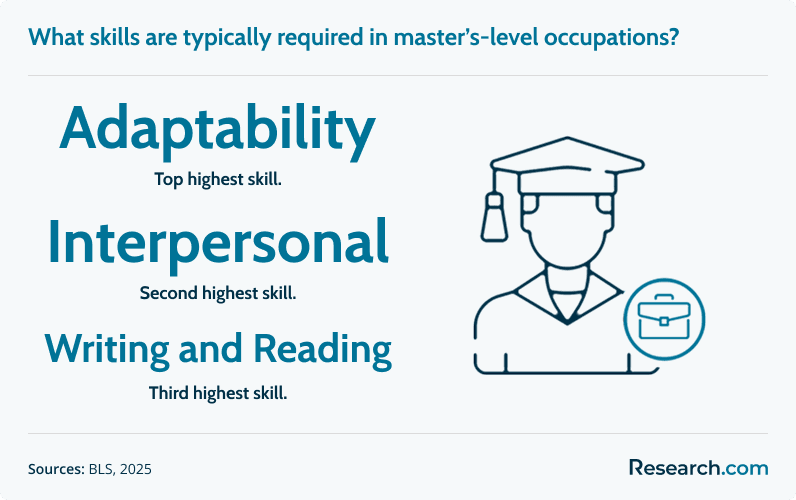
According to recent labor data from the U.S. Bureau of Labor Statistics (BLS), occupations that typically require a master’s degree for entry emphasize key professional skills such as adaptability, interpersonal communication, and strong writing and reading abilities. These align closely with the core outcomes of non-thesis programs, which focus on preparing students to apply knowledge effectively across different workplace environments.
Typical practical skills developed include:
- Project management: Handling complex assignments within deadlines.
- Leadership and teamwork: Managing teams or working collaboratively in organizations.
- Technical proficiency: Using industry-standard tools or software.
- Communication and presentation: Translating theoretical knowledge into actionable strategies.
- Problem-solving in real-world contexts: Applying coursework to industry challenges.
Professionals pursuing careers with a Master's in Natural Sciences often benefit from such applied learning, which strengthens their capacity to innovate and adapt in diverse scientific environments.
How do thesis and non-thesis master’s graduates differ in career outcomes?
Career outcomes vary significantly depending on whether one completes a thesis or non-thesis program. Data from BLS show that several of the fastest-growing occupations through 2034 will require a master’s degree for entry. These include:
- Substance abuse, behavioral disorder, and mental health counselors
- Educational and career counselors
- Nurse practitioners
- Instructional coordinators
- Education administrators across K–12 and postsecondary levels
The figures in the chart below highlight the continued demand for graduate-level qualifications across education, healthcare, and social service fields—areas where both thesis programs and non-thesis programs offer valuable, though distinct, preparation pathways.
Thesis Program Graduates
- Often pursue academic, research, or doctoral opportunities, including positions that require designing and evaluating studies.
- Are qualified for research-intensive roles such as policy researchers, data analysts, or university instructors.
- Tend to align with fields where advanced inquiry and evidence-based decision-making are crucial, such as education administration or instructional coordination.
- Benefit from a strong foundation in academic writing and independent inquiry, which supports long-term professional growth and doctoral study readiness.
Non-Thesis Program Graduates
- Typically enter industry or applied roles, where practical experience and technical knowledge are more valuable than independent research.
- Are well-suited for professional careers in healthcare, counseling, education leadership, and public service—fields projected to generate thousands of master’s-level openings in the coming decade.
- Often complete internships or capstone projects that provide direct pathways into employment.
- Those pursuing healthcare leadership roles may explore what can you do with a Master's in Clinical Nurse Leadership to understand how non-thesis programs translate into high-demand, practice-oriented positions.
Overall, the growing demand for master’s-level professionals underscores the importance of aligning one’s academic track—thesis or non-thesis—with specific industry expectations and long-term career goals.
Is a thesis master’s degree more expensive than a non-thesis one?
The cost difference between thesis programs and non-thesis programs varies depending on tuition structure and duration. In general, thesis programs may incur additional expenses due to research materials, lab fees, or extended enrollment during the research phase. Non-thesis programs, on the other hand, might be shorter but can have higher per-credit costs for professional coursework.
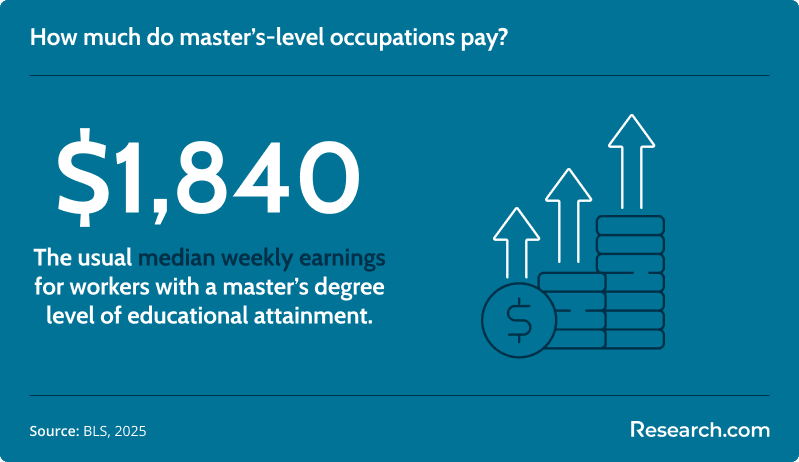
While pursuing either path requires a significant investment, the long-term financial returns can offset these costs. According to BLS, workers with a master’s degree earn a median weekly wage of $1,840, higher than those with only a bachelor’s degree. This earning advantage highlights that both thesis programs and non-thesis programs can lead to higher-paying opportunities—whether in research-focused or practice-oriented careers.
Students should also consider indirect costs such as time commitment, opportunity cost of research, and the need for specialized equipment or travel for data collection. For example, those pursuing education-related degrees, such as careers with a Master's in Reading and Literacy, may find that thesis programs involve additional expenses tied to research in curriculum development or classroom studies. Meanwhile, non-thesis programs may prioritize applied coursework that can be completed in less time and with fewer research-related costs.
Which is faster to complete: thesis or non-thesis master’s programs?
Non-thesis programs are generally faster to complete because they focus on structured coursework rather than prolonged independent research. While both tracks usually take one to two years, thesis programs often extend beyond this range due to the time needed for data gathering, writing, and defense. Students aiming for quicker entry into the workforce often prefer non-thesis programs, while those preparing for doctoral studies may find the additional time in thesis programs a worthwhile investment.
If you’re someone with a background in the sciences, you might find this decision similar to evaluating whether is forensic science a good career—both require weighing time investment, long-term goals, and the kind of analytical work you enjoy most.
How do I choose between a thesis and non-thesis master’s program?
Choosing the right path depends on your academic interests, long-term career goals, and preferred learning style. Both thesis programs and non-thesis programs can enhance career prospects and job stability—an important factor for many graduate students.
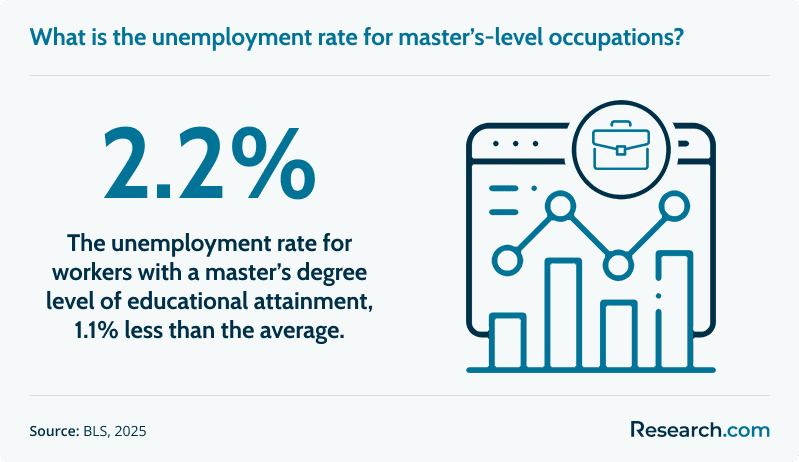
According to BLS, individuals with a master’s degree have an unemployment rate of just 2.2%, which is significantly lower than those with lower educational attainment. This shows that completing a master’s program, regardless of format, strengthens employability in a competitive job market.
- Choose a thesis program if you enjoy research, writing, and theoretical exploration or plan to pursue a PhD or academic career.
- Choose a non-thesis program if you prefer applied learning, faster completion, or direct career advancement in industry.
Consulting with academic advisors, reviewing curriculum outlines, and assessing the job markets in your field can help guide your decision. Aligning your program choice with your long-term goals ensures that your graduate experience remains both relevant and rewarding.
Students with backgrounds in health sciences often face similar choices, such as deciding how to become a nurse with a health science degree—a path that also involves aligning prior coursework, career direction, and professional goals.
What trends are shaping master’s program structures today?
Emerging trends in 2027 highlight the evolving landscape of graduate education.
- Increased flexibility: More universities now offer hybrid or fully online thesis and non-thesis programs.
- Industry collaboration: Partnerships between academia and employers lead to project-based learning models.
- Emphasis on data literacy: Even non-research degrees now integrate analytics and digital competency training.
- Interdisciplinary approaches: Thesis programs increasingly blend multiple fields to tackle complex global issues.
- Career-centered outcomes: Non-thesis programs are designed with employability and real-world relevance in mind.
These shifts underscore how thesis and non-thesis master’s programs continue to adapt to students’ needs and the changing demands of the professional world. The same shift toward practical, career-focused learning can be seen in healthcare education—reflected in comparisons like pre nursing vs nursing major, where institutions balance foundational theory with clinical application to meet evolving workforce expectations.
Here’s What Graduates Have to Say About Thesis vs. Non-Thesis Master's Programs
- Angela: "Completing my thesis program in environmental science gave me the opportunity to conduct field research and collaborate closely with faculty mentors. Writing my thesis helped me strengthen my data analysis and academic writing skills, which later supported my admission to a PhD program. The process was challenging, but it taught me persistence and the value of critical inquiry. Looking back, the mentorship I received shaped my career as a researcher and educator."
- Ryan: "I chose a non-thesis program in business administration because I wanted to focus on applied coursework and real-world problem-solving. The program included capstone projects and internships that allowed me to apply classroom theories to industry settings. After graduating, I immediately transitioned into a management role because I already had hands-on experience. The non-thesis route fit perfectly with my goal of gaining practical skills for rapid career advancement."
- Maria: "As a healthcare professional, I initially struggled to decide between thesis and non-thesis programs. I eventually chose a non-thesis master’s because it allowed me to balance work, study, and family responsibilities. Even without writing a thesis, I gained valuable applied research skills through case studies and project-based learning. My experience proved that both thesis programs and non-thesis programs can lead to meaningful, skill-based growth when aligned with personal goals."
What are the financial implications of thesis vs. non-thesis master’s programs?
Evaluating financial factors involves examining tuition structure, additional fees, and available funding opportunities unique to each program type. Thesis programs may incur added expenses for research materials and extended enrollment, while also offering access to research grants and assistantships. In contrast, non-thesis options often come with higher per-credit fees for structured coursework but might reduce overall time-related costs due to their shorter duration. Prospective students should assess both direct and indirect costs—including opportunity costs—to determine the best return on investment. For further insights on educational investments, consider exploring the best online degrees to get.
Key Findings
- Thesis programs emphasize original research, academic writing, and analytical skills, while non-thesis programs focus on applied knowledge, professional practice, and project-based learning.
- Postsecondary institutions awarded around 880,200 master’s degrees in 2021–22, with most concentrated in business, education, health professions, and information sciences—fields that commonly offer both thesis and non-thesis options.
- The median weekly earnings for master’s degree holders is $1,840, and their unemployment rate is just 2.2%, underscoring the economic and career value of graduate education.
- Occupations that require a master’s degree—such as nurse practitioners, educational counselors, and instructional coordinators—are projected to have thousands of openings annually through 2034.
- Non-thesis programs strengthen adaptability, interpersonal, and communication skills, while thesis programs foster deep research and critical-thinking competencies essential for academic or doctoral pursuits.
- Choosing between the two depends on your preferred learning style, timeline, and whether your future goals lie in research or professional application.
References:
- BLS. (2025, August 28). Top skills by typical education needed for entry. bls.gov.
- BLS. (2025, May 1). Education pays, 2024. bls.gov.
- NCES. (2024). COE - Graduate Degree Fields. nces.ed.gov.
- Torpey, E. (2025, September 11). Education level and projected openings, 2024–34. Bureau of Labor Statistics. bls.gov.
Other Things You Should Know About Thesis vs. Non-Thesis Master's Programs
In many universities, students can switch tracks with approval from their academic department, although the process may require additional coursework or a proposal review. Transitioning from a non-thesis to a thesis program is more common than the reverse since research preparation takes time. It’s best to decide early to align your schedule and funding with the chosen path.
Thesis master's programs typically require 30–36 credit hours, including research credits, while non-thesis programs may require 36–40 credit hours, focusing more on coursework. Verify specific credit requirements with the institution you're considering for accurate 2027 details.
In 2027, thesis master’s programs emphasize research and culminate in a substantial research project, preparing students for doctoral studies. Non-thesis programs focus on coursework and practical skills, suiting those aiming for industry roles. The choice depends on career goals and academic preferences.
Online master's programs in 2027 offer flexible curriculums to accommodate both thesis and non-thesis paths. This often includes a range of elective courses for non-thesis students and digital resources, like virtual labs and online mentoring, for thesis students to facilitate remote research and project work.


