
2027 Leadership vs. Management in Education: Explaining the Difference

Co-Founder and Chief Data Scientist
Leadership and management in education are often mentioned in the same breath, but they represent two distinct forces that shape how schools function and evolve. Leadership in education focuses on vision, while management in education ensures results. Together, they determine whether a school merely operates or truly thrives.
The distinction matters because schools today face complex challenges that demand both strategic foresight and operational precision. Leaders guide teachers and students toward a shared purpose; managers translate that vision into daily action. Understanding how these roles complement rather than compete is key to building stronger educational systems.
In this guide, I will break down what separates leadership from management in education—and why both are essential. You’ll see how vision, innovation, and people-centered thinking balance with organization, accountability, and process.
Key Things You Should Know About Leadership vs. Management in Education
- Education leaders earn around $53,524 annually, while education managers average $67,568, highlighting the strong earning potential of both roles (ZipRecruiter, n.d.).
- With about 20,800 openings projected each year for principals, who serve as both leaders and managers, the demand for skilled professionals in educational administration remains strong (BLS, 2025).
- Whether leading change or managing systems, both roles embody a deeply noble profession dedicated to shaping lives, communities, and the future of learning.
- What is the key difference between leadership vs. management in education? Key Differences
- What degree programs do you need to pursue leadership vs. management in education? Relevant Degrees
- What are the main responsibilities of leadership vs. management in education roles? List of Responsibilities
- What school system issues do leadership vs. management education professionals address? What school system issues do leadership vs. management education professionals address?
- What are the core skills needed in leadership vs. management in education roles? Core Skills
- What is the salary outlook for leadership vs. management in education professionals? Salary Outlook
- What are the career paths for leadership vs. management in education professionals? Career Paths
- What are the challenges for leadership vs. management in education professionals? Challenges
- What emerging trends do leadership and management in education professionals need to know? Education Trends
- Leadership vs. management in education: Which is better for you? Leadership vs. management in education: Which is better for you?
- How Can Advanced Degrees Accelerate Career Growth in Education Leadership and Management? How Can Advanced Degrees Accelerate Career Growth in Education Leadership and Management?
What is the key difference between leadership vs. management in education?
While leadership and management in education often overlap, their core focus sets them apart. Leadership in education centers on purpose and people; it’s about shaping culture and inspiring progress. On the other hand, management in education is about systems and structure, turning goals into consistent, measurable outcomes.
One of their clearest operational distinctions lies in how each drives change. Leadership in education thrives on innovation, guiding teachers and students through transformation with motivation and shared vision. Meanwhile, management in education ensures that this change is sustainable by aligning it with resources, timelines, and compliance requirements.
Both are essential to building schools that balance vision with accountability. If you’re ready to take your career further, check out this average salary EdD degree guide to see how earning an advanced education doctorate can boost your leadership or management path.
What degree programs do you need to pursue leadership vs. management in education?
Both leadership and management in education require specialized training that blends theory with practical application. While leadership in education programs emphasize vision, policy, and change, management in education programs focus on operations, strategy, and administration.
Below are the common degree paths for aspiring education leaders and managers:
Leadership in Education Programs
- Bachelor’s in Educational Studies or Education Administration: Establishes foundational knowledge in teaching, curriculum, and school governance.
- Master’s in Educational Leadership (M.Ed. or M.A.): Prepares educators to take on roles such as principals, deans, or district supervisors.
- Doctor of Education (Ed.D.) in Educational Leadership: Focuses on policy development, transformational leadership, and large-scale educational reform.
Management in Education Programs
- Bachelor’s in Education Management or Business Administration: Equips students with planning, budgeting, and organizational skills.
- Master’s in Education Management or School Administration: Designed for professionals overseeing departments, programs, or entire institutions.
- MBA with an Education Concentration: Ideal for those pursuing leadership roles in educational organizations, NGOs, or higher education administration.
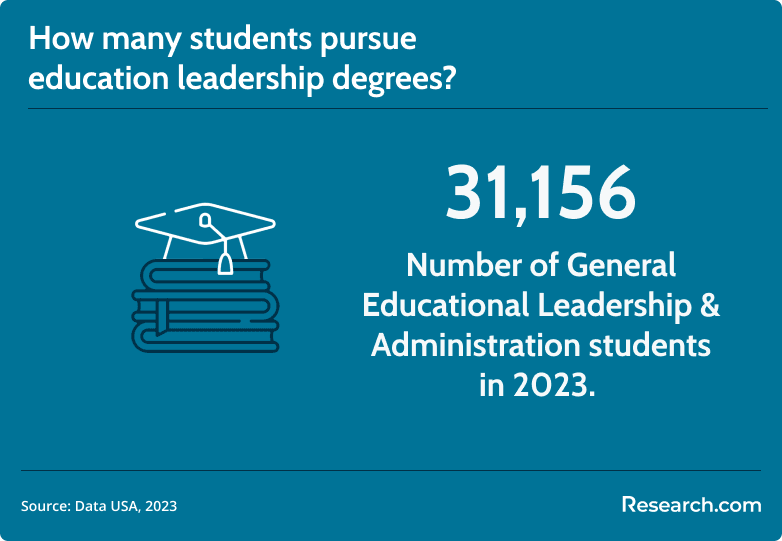
Ultimately, both paths demand a commitment to improving how schools operate and evolve. In 2023 alone, 31,156 students pursued General Educational Leadership & Administration, underscoring the strong interest in advancing careers through programs focused on leadership and management in education.
Applicants weighing an MBA with an education focus against traditional education master’s programs often compare MBA vs masters to decide which path better matches their career plans in policy, operations, or institution-wide leadership.
What are the main responsibilities of leadership vs. management in education roles?
Management and leadership in education share the same mission: advancing student success. However, their responsibilities take different forms in practice. Leaders focus on direction, influence, and innovation, while managers center on systems, performance, and accountability.
Here’s how their responsibilities typically differ in educational settings:
Leadership in Education Responsibilities
- Strategic Vision and School Improvement: Designs strategies for academic growth, equity initiatives, and institutional change.
- Instructional Guidance and Staff Development: Coaches teachers, introduces evidence-based teaching practices, and cultivates leadership potential within faculty teams.
- Stakeholder Engagement and Advocacy: Builds relationships with parents, boards, and community partners to strengthen school reputation.
Management in Education Responsibilities
- Operational Planning and Resource Allocation: Develops budgets, manages facilities, and ensures classrooms and programs have the tools needed for daily success.
- Compliance and Quality Assurance: Oversees adherence to accreditation standards, educational regulations, and school district policies to maintain accountability.
- Data and Performance Oversight: Tracks attendance, test scores, and teacher performance metrics to support decision-making and continuous improvement.
Professionals eager to advance in either capacity can benefit from an online masters in higher education, which provides the expertise and flexibility to lead or manage effectively in modern academic environments.
What school system issues do leadership vs. management education professionals address?
Leadership in education concentrates on long-term change, rethinking how schools serve their students and communities. Meanwhile, management in education focuses on immediate, system-level execution that keeps those visions sustainable.
Here’s how each group contributes to solving critical issues within school systems:
Leadership in Education
- Systemic Change and Vision Alignment: Confronts outdated school models by reimagining how instruction, equity, and technology align with a district’s long-term vision.
- Cultural and Community Relevance: Addresses disconnects between schools and their communities by promoting inclusive leadership that reflects diverse voices and values.
- Future-Ready Learning Environments: Anticipates shifts in workforce and digital demands, preparing schools to adopt forward-thinking programs and interdisciplinary learning models.
Management in Education
- Bureaucratic Complexity and Coordination: Resolves inefficiencies caused by overlapping departments, unclear reporting structures, and slow administrative processes.
- Staffing and Scheduling Bottlenecks: Tackles issues like teacher shortages, substitute coverage, and course scheduling to ensure consistent instructional delivery.
- Performance Monitoring and Accountability: Uses data systems to track progress toward improvement goals, ensuring transparency and measurable outcomes.
For those who want to influence these systemic improvements on a broader scale, pursuing educational policy jobs can be a powerful way to bridge strategy, governance, and real-world school impact.
What are the core skills needed in leadership vs. management in education roles?
Excelling in leadership and management in education requires two distinct but complementary skill sets. Leadership in education relies on influence, vision, and communication to inspire others and shape direction, while management in education depends on organization, analysis, and execution to keep systems running smoothly.
Both roles demand professionals who can balance empathy with efficiency in complex educational environments. Here’s a breakdown of the core skills that define each role:
Leadership in Education Core Skills
- Visionary Thinking: The ability to craft and communicate a compelling direction for the school’s future, aligning teams around shared goals.
- Emotional Intelligence: Understanding and managing relationships with empathy to build trust among staff, students, and the community.
- Change Management: Guiding schools through transitions, such as curriculum updates or digital transformation, while maintaining morale and focus.
Management in Education Core Skills
- Operational Planning: Structuring budgets, schedules, and processes to ensure resources are allocated effectively and objectives are met.
- Data-Driven Decision-Making: Using analytics and performance indicators to assess outcomes, improve systems, and justify strategic choices.
- Regulatory and Policy Compliance: Ensuring the institution meets educational standards, accreditation requirements, and local or national policies.
For professionals looking to strengthen these competencies and advance their impact, check out the best online early childhood development degree programs, which offers flexible (and foundational) learning paths designed to build leadership, management, and teaching expertise.
For visual reference, the chart below breaks down the most essential skills for education managers, highlighting the technical and administrative abilities that keep schools performing at their best.
What is the salary outlook for leadership vs. management in education professionals?
Salaries in education vary widely depending on role, experience, and level of responsibility. Leadership in education positions tend to emphasize vision and policy influence, while management in education roles often reward operational oversight and administrative scope.
Education managers earn an average salary of about $67,568 per year, with top earners reaching up to $99,000. Their pay reflects the complexity of managing budgets, staff, and institutional performance across multiple departments or campuses. .
Education leaders, meanwhile, earn an average of $53,524 annually, though high-performing executives and district leaders can make as much as $127,000. Their compensation often reflects the scale of their influence—those leading system-wide change, policy reform, or innovation initiatives command the highest pay.
Below is a chart showing the salary breakdown of leadership and management in education, offering a clearer view of how each role scales with experience, responsibility, and impact.
Some salary differences also track to credential type; for example, candidates with advanced administrative master’s credentials may command higher pay than generalists—think executive master vs master when assessing long-term earning potential.
What are the career paths for leadership vs. management in education professionals?
Both leadership in education and management in education open doors to diverse and rewarding career paths. Leaders typically advance into roles that shape vision, policy, and learning culture, while managers often move into positions that drive efficiency, compliance, and organizational performance.
Below are some of the most common career paths for each specialization:
Leadership in Education Careers
- School Principal or Superintendent: Oversees academic direction, builds community trust, and leads district-wide improvement initiatives.
- Director of Curriculum and Instruction: Designs, implements, and evaluates curriculum frameworks that align with national education standards.
- Dean or Academic Program Director: Leads departments in higher education institutions, managing faculty development and academic strategy.
Management in Education Careers
- Education Program Manager: Coordinates large-scale programs, funding, and operations across schools or nonprofit organizations.
- Administrative Services Manager: Handles logistics, budgeting, and institutional planning to maintain efficient daily operations.
- Compliance or Policy Manager: Ensures that educational institutions adhere to government regulations, accreditation standards, and internal policies.
As education systems continue to evolve, professionals who combine both visionary and operational skills will be in high demand. Earning an online EdS. degree in leadership can be a powerful next step, equipping educators with the advanced expertise to lead teams, manage systems, and shape the future of learning.
What are the challenges for leadership vs. management in education professionals?
Professionals in leadership in education and management in education navigate a wide range of challenges as the education sector evolves. From balancing innovation and accountability to supporting staff and students through change, both roles demand strategic foresight and adaptability.
Here are some of the most common challenges faced by both education leaders and managers today:
- Resource Constraints: Budget limitations often restrict the ability to hire staff, upgrade facilities, or invest in new learning technologies.
- Policy and Regulatory Changes: Constant updates to education laws and standards can create uncertainty and administrative burden.
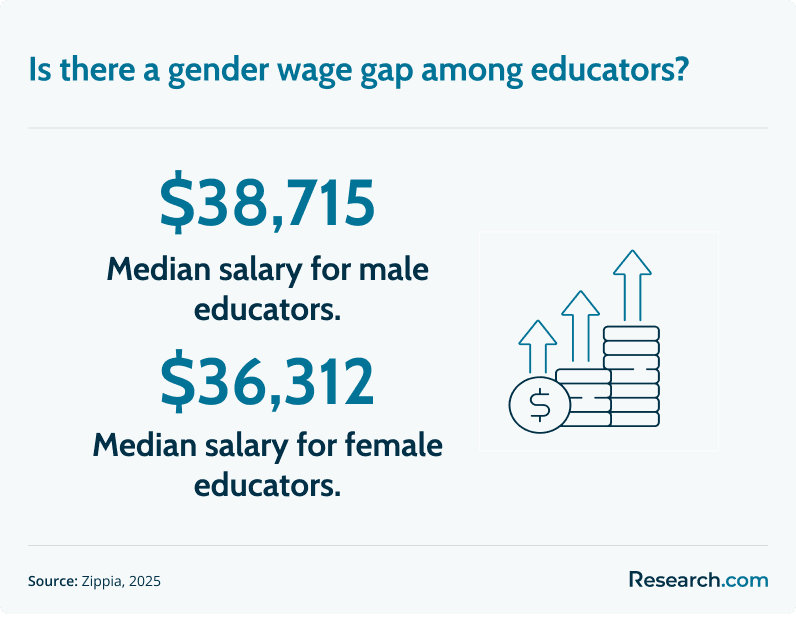
- Educator Wage Gap: Gender pay gap continues to affect morale and career longevity, with male educators earning an average of $38,715 compared to $36,312 for female educators: a difference of $2,403 annually.
- Equity and Inclusion: Leaders and managers must ensure that all students, regardless of background, have equal access to quality education.
- Technology Integration: Adopting digital tools effectively without overwhelming teachers or students requires careful planning and support.
- Data-Driven Decision-Making: Turning large amounts of student and institutional data into actionable insights can be daunting without proper training and systems.
- Change Management: Implementing new curricula, policies, or teaching models demands leadership that can inspire confidence and cooperation.
- Student Mental Health and Wellbeing: Ensuring emotional support systems are in place has become increasingly vital for modern school environments.
By addressing these challenges head-on, education leaders and managers can create environments where both educators and students thrive.
Modern leaders also face choices about data privacy, infrastructure, and instructional tech—often framed as cybersecurity vs artificial intelligence trade-offs—balancing innovation with risk mitigation, staff readiness, and student safety.
What emerging trends do leadership and management in education professionals need to know?
The future of leadership in education and management in education is being shaped by innovation, empathy, and adaptability. As schools evolve to meet new societal and technological demands, today’s leaders must think beyond traditional systems.
Here are some of the most transformative trends reshaping the field of education today according to Park University (2025):
From Chalkboards to Chatbots
The digital transformation of education is accelerating through AI-driven learning platforms, virtual classrooms, and automation tools that streamline teaching and administration. Leaders must balance innovation with security, ensuring equitable access to technology for all learners.
The Rise of Well-Being Leadership
Mental health is no longer a side issue; it’s a leadership imperative. Educational professionals are building systems that prioritize wellness for students, teachers, and staff, embedding empathy and emotional balance into school culture.
Schools Without Walls
Partnerships between schools, businesses, and community organizations are redefining what learning looks like. These collaborations open doors to mentorships, internships, and experiential learning that connect education to real-world impact.
Agility Over Authority
Modern education demands leaders who can adapt on the fly. Whether navigating policy shifts, global disruptions, in-person/hybrid learning structures, or shifting student needs, adaptive leadership is becoming a defining trait of successful institutions.
The Power of Data Literacy
From predicting student success to optimizing resources, data has become the new compass for decision-making. Education leaders and managers must develop analytical fluency to turn information into action.
Never Stop Learning
Continuous professional growth through micro-credentials, leadership workshops, and peer learning is essential. Those who embrace lifelong learning remain agile and effective in shaping future-ready institutions.
Leading With Emotional Intelligence
Empathy, self-awareness, and communication are now as critical as strategic thinking. Emotional intelligence strengthens trust, drives collaboration, and builds the foundation for positive, high-performing educational environments.
Career Readiness 2.0
The shift toward practical, skill-based education is bridging the gap between classroom learning and workforce needs. Schools integrating hands-on training and digital career guidance are setting new standards for student preparedness.
As districts expand mapping, transportation, and facilities analytics, leaders may pursue targeted credentials—such as a best online GIS certificate—to apply geospatial data to boundary planning, equity audits, and community outreach.
Leadership vs. management in education: Which is better for you?
Choosing between leadership in education and management in education isn’t about deciding which is more important; it’s about finding where your strengths and passions align. Both roles are critical to creating thriving learning environments, but they call for different mindsets and skill sets.
Understanding what drives you can help determine whether you’re meant to inspire vision or execute structure:
Be a Part of Leadership in Education If You...
- Thrive on Vision and Innovation: You’re driven by the desire to inspire others, set direction, and bring fresh ideas that transform learning experiences.
- See Potential Everywhere: You focus on empowering teachers and students to reach their highest potential, cultivating motivation through trust and shared purpose.
- See Power in Ambiguity: You enjoy working in dynamic environments, making bold decisions even when the path forward isn’t perfectly clear.
- Value Influence Over Authority: You lead through collaboration and inspiration, not hierarchy—rallying others around a shared mission.
- Want to Shape the Future of Education: You’re passionate about big-picture change—equity, innovation, inclusion, and lifelong learning.
Be a Part of Management in Education If You...
- Excel at Organization and Process: You enjoy bringing order to complexity—creating systems, workflows, and policies that make schools run smoothly.
- Find Satisfaction in Execution: Turning strategies into action plans is your strength. You ensure every program, budget, and policy works exactly as intended.
- Lead Through Accountability: You value measurable progress, clear expectations, and data-driven results that move institutions toward their goals.
- Bridge Between Vision and Reality: You translate broad educational goals into day-to-day operations—balancing innovation with practicality.
- Care About Institutional Stability: You see success in consistent performance, strong infrastructure, and well-supported staff.
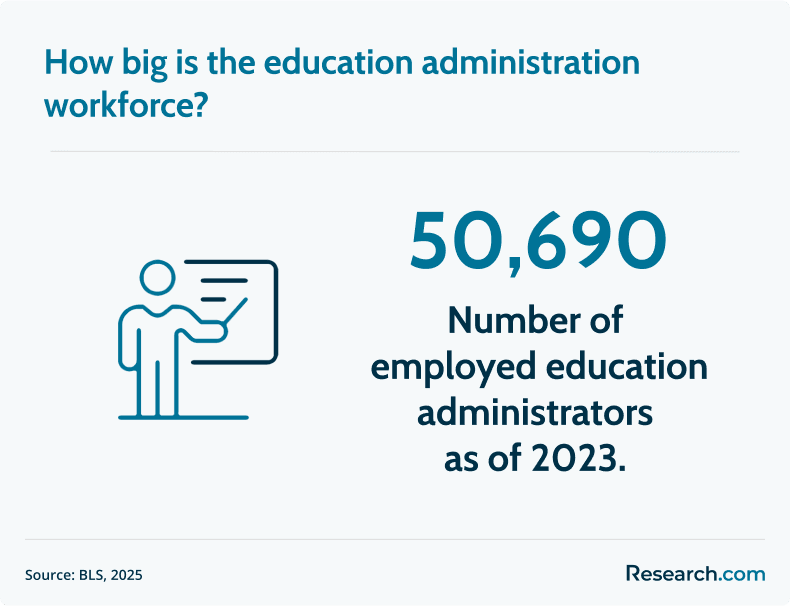
Leaders light the path forward; managers make sure everyone reaches the destination. With 50,690 education administrators currently working as of 2023, the demand for skilled professionals in both areas remains strong—proving that education needs both dreamers and doers to thrive.
How Can Advanced Degrees Accelerate Career Growth in Education Leadership and Management?
Pursuing advanced degrees and specialized certifications equips professionals with the strategic framework needed to integrate innovative practices and enhance operational performance. Targeted programs foster evidence-based decision-making, reinforcing adaptive leadership in evolving educational environments. For busy professionals seeking cost-effective credentials, exploring the cheapest MBA online degree can provide practical insights into strategic management while balancing work and study commitments.
Here’s What Education Leaders and Managers Have to Say About Their Careers
- Monika: "Pursuing leadership in education completely changed the way I view impact. Leading a team of teachers to innovate in the classroom has been deeply rewarding—I get to see real change in how students learn every day. The ability to shape school culture and inspire growth is the best part of my job."
- Diego: "Transitioning into management in education gave me the structure and strategy I was looking for. Overseeing budgets, programs, and compliance might sound technical, but it’s incredibly fulfilling to know that every process I improve directly supports teachers and students. It’s where operational excellence meets purpose. "
- Carson: "After earning my degree in educational leadership, I realized that leadership is less about authority and more about empathy. Guiding a school through digital transformation wasn’t easy, but seeing teachers and students thrive with new tools made every challenge worth it. It reminded me why I chose education in the first place."
Key Findings
- In 2023 alone, 31,156 students pursued General Educational Leadership & Administration, underscoring the strong interest in advancing careers through programs focused on leadership and management in education.
- 8% of education managers agree that proficiency in education programs is the most important skill to thrive in the industry.
- Top earning education managers take home $99,000 annually. On the other hand, top earning education leaders receive $127,000 annually.
- Gender wage gap continues to affect morale and career longevity, with male educators earning an average of $38,715 compared to $36,312 for female educators: a difference of $2,403 annually.
- With 50,690 education administrators currently working as of 2023, the demand for skilled professionals in both areas remains strong—proving that education needs both dreamers and doers to thrive.
References:
- Data USA. (n.d.). General educational leadership & administration. Datausa.io. Retrieved 6 October 2026.
- Park University. (n.d.). The future of leadership in education: 8 trends to watch in 2025. Park.edu. Retrieved 6 October 2026.
- US Bureau of Labor Statistics. (2025). Elementary, middle, and high school principals: Occupational outlook handbook. Bls.gov. Retrieved 6 October 2026.
- US Bureau of Labor Statistics. (2023). Occupational employment and wages, 119,039 — Educational, May 2023. Bls.gov. Retrieved 6 October 2026.
- ZipRecruiter. (n.d.). Education leader salary. Ziprecruiter.com. Retrieved 6 October 2026.
- ZipRecruiter. (n.d.). Education manager salary. Ziprecruiter.com. Retrieved 6 October 2026.
- Zippia. (n.d.). Educational manager jobs: Skills. Zippia.com. Retrieved 6 October 2026.
- Zippia. (n.d.). Educator salaries. Zippia.com. Retrieved 6 October 2026.
Other Things You Should Know About Leadership vs. Management in Education
In 2027, educational leaders measure success by focusing on long-term goals, innovation, and student development. In contrast, managers prioritize efficiency, adherence to standards, and meeting short-term goals to ensure smooth operations within educational institutions.
In 2027, educational leaders tend to focus on fostering a supportive environment and nurturing emotional and social growth, which enhances student well-being. Managers typically concentrate on structuring efficient systems and processes, ensuring resources and strategies are in place to maintain a stable, secure environment conducive to student well-being.


