
2027 Master's vs. Doctorate in Clinical Psychology: Explaining the Difference

Co-Founder and Chief Data Scientist
With 22.8% of adults experiencing mental illness, the need for skilled mental health professionals has never been clearer. This demand creates opportunity, but it also highlights a point of significant confusion: the real-world distinction between a master's in clinical psychology and a doctorate in clinical psychology. These aren't just different degrees; they are pathways to distinct professional identities and career outcomes.
To provide that clarity, our career planning experts with more than 10 years of experience have created this definitive guide. We will break down the essential differences, giving you the direct information you need to understand each path and how it aligns with your personal goals.
Key Things You Should Know About Master's vs. Doctorate in Clinical Psychology
- A master's degree prepares you for licensure as a professional counselor or therapist (LPC, MFT).
- A doctorate is the only path that leads to the legally protected title of "Psychologist."
- The time commitment is 2-3 years for a master's degree versus 5-7+ years for a doctorate.
- Median pay for a master's-level counselor is around $59,190, while for a clinical psychologist it is about $95,830.
- The job outlook for the field is strong, with an 11% projected growth for clinical and counseling psychologists.
- Master's vs. Doctorate in Clinical Psychology: Explaining the Difference Master's vs. Doctorate
- What can you expect from a master's in clinical psychology? What can you expect from a master's in clinical psychology?
- What can you expect from a doctorate in clinical psychology? What can you expect from a doctorate in clinical psychology?
- Doctorate vs. Master's in Clinical Psychology: How does professional licensing differ? Licensing
- What are the admission requirements for these clinical psychology programs? Requirements
- How much does a master's vs. a doctorate in clinical psychology cost? Program Cost
- What are the financial aid options for graduate clinical psychology programs? Financial Aid
- Doctorate vs. Master's in Clinical Psychology: What jobs can you get? Doctorate vs. Master's in Clinical Psychology: What jobs can you get?
- How much can you earn with a master's vs. a doctorate in clinical psychology? Salary
- What is the job outlook for clinical psychology graduates? Job Outlook
- Can Supplementary Behavior Analysis Certification Enhance Your Clinical Psychology Career? Can Supplementary Behavior Analysis Certification Enhance Your Clinical Psychology Career?
- What are the long-term career advancement opportunities for each degree? What are the long-term career advancement opportunities for each degree?
- Master's vs. Doctorate in Clinical Psychology: Which one is right for you? Master's vs. Doctorate in Clinical Psychology: Which one is right for you?
Master's vs. Doctorate in Clinical Psychology: Explaining the Difference
The most important thing to understand is that these two degrees prepare you for different professional licenses and job titles. A master's degree is the standard path to becoming a licensed professional counselor (LPC) or therapist (MFT), while a doctorate is the mandatory requirement to become a licensed clinical psychologist.
This isn't just a longer version of the same training. The educational paths are fundamentally different in their depth and focus, especially regarding psychological assessment and research. While far more master's degrees are awarded each year, validating it as a popular and respected route, the doctorate opens doors to legally protected activities that a master's does not.
A Side-by-Side Comparison
This table gives you a clear, high-level look at the core differences. The rest of the article will explore what these distinctions mean in practice.
| Feature | Master's in Clinical Psychology | Doctorate in Clinical Psychology (PhD/PsyD) |
| Primary Goal | Trains practitioner-focused clinicians for licensure as a professional counselor or therapist. | Trains scientist-practitioners or practitioner-scholars for licensure as a clinical psychologist. |
| Typical Program Length | 2-3 years of full-time study. | 5-7+ years, including a mandatory year-long, full-time internship. |
| Typical Credit Hours | 36-60 semester credits. | 90-120+ semester credits. |
| Core Curriculum Focus | Focuses on psychotherapy techniques, psychopathology, diagnosis, counseling ethics, and multicultural competence. | Includes all master's-level topics plus advanced psychological assessment, research design, statistics, and a dissertation. |
| Supervised Clinical Experience | Requires 600-1,000+ hours of practicum and internship for licensure. | Requires 2,000-4,000+ hours of practicum and internship for licensure. |
| Resulting Professional License | Leads to titles like Licensed Professional Counselor (LPC) or Licensed Marriage and Family Therapist (MFT). | Leads to the legally protected title of Licensed Clinical Psychologist. |
| Primary Admission Focus | A strong academic record with relevant volunteer or work experience in a helping profession. | An exceptional academic record, significant research experience (especially for PhDs), and strong recommendations. |
As the table illustrates, the commitments and outcomes are distinct. The doctorate requires a significantly greater investment of time and academic rigor, which is why it leads to a different professional scope. Now that you have this high-level view, we can explore what the day-to-day experience inside each of these programs actually feels like.
If you’re trying to decide between these graduate paths, it can help to think about masters in psychology vs doctorate, since the same divide in depth, research training, and career scope applies in both fields.
What can you expect from a master's in clinical psychology program?
You can expect a 2-3 year program that is intensely focused on preparing you for clinical practice. The curriculum of a master's in clinical psychology is built around giving you the core skills to work directly with clients. You will learn foundational counseling theories, how to use the DSM for diagnosis, and specific therapeutic techniques grounded in evidence-based practices like Cognitive Behavioral Therapy (CBT).
This is hands-on training that goes far beyond just learning to talk to people. A significant portion of your program will be a supervised practicum or internship where you apply your knowledge with real clients. The curriculum's deep focus on diagnosis and intervention is what distinguishes it from a more research-oriented social psychology online degree.
The Personal and Emotional Journey
It's also important to be prepared for the personal side of this training. It is common for students to experience imposter syndrome as they step into a clinical role for the first time. Learning to manage emotionally difficult cases and maintain professional boundaries is a core part of your development, which is why consistent supervision and a commitment to your own self-care are so crucial for success.
What can you expect from a doctorate in clinical psychology?
A doctorate in clinical psychology is a much longer and more immersive experience, typically lasting 5-7 years or more. You can expect to complete all the same clinical training as in a master's program, but with a significant expansion of skills in two key areas: psychological assessment and research.
Doctoral training provides in-depth instruction on administering and interpreting a wide range of psychological tests, a skill exclusive to licensed psychologists. You will also be trained to be a consumer and producer of research, which involves advanced coursework in statistics and research methods and culminates in a dissertation. The length and intensity of this path mean that managing the unique pressures of research demands alongside clinical work is a real challenge, making burnout a serious consideration.
PhD vs. PsyD: Choosing the Right Doctoral Path
Within doctoral programs, you have a critical choice between two models. The PhD (Doctor of Philosophy) follows a scientist-practitioner model that places equal emphasis on research and clinical practice; these programs are often funded, meaning they may offer tuition waivers and a stipend. The PsyD (Doctor of Psychology) follows a practitioner-scholar model that prioritizes clinical practice.
While both can lead to licensure, it's crucial to know that PsyD programs are often unfunded and can lead to significant debt. For either path, the single most important factor to verify is APA accreditation, as this is a non-negotiable requirement for licensure in most states.
The decision between these two tracks can be compared to PhD vs medical doctor, where both represent doctoral-level achievement but serve different purposes—one emphasizes research and academia, while the other prioritizes applied practice.
Doctorate vs. Master's in Clinical Psychology: How does professional licensing differ?
This is the single most important difference to understand. State licensing boards, not universities, are the gatekeepers to professional practice, and they have very different rules for each degree.
A doctorate is the only path to licensure as a "Psychologist." This is a legally protected title, and it grants the authority to conduct and bill for psychological testing, which is a key differentiator in practice. A master's degree, on the other hand, leads to licensure as a "Professional Counselor" (LPC) or "Marriage and Family Therapist" (MFT). This license allows you to provide psychotherapy and counseling, but not to perform psychological assessments.
Thinking of this as "just a different title" is a major mistake. Your license dictates your legal scope of practice, the services you can offer, your billing rates with insurance companies, and your professional authority. Before you can even apply for a license, state boards require that your degree comes from an institution with the proper psychology program accreditation.
This landscape is also evolving. The rise of telehealth and interstate compacts like PSYPACT are creating new opportunities for licensed professionals to practice across state lines, adding a new layer of flexibility to career planning.
What are the admission requirements for these clinical psychology programs?
While both degree paths require a bachelor's degree, the specific profile of a successful applicant is quite different for each. Master's programs tend to prioritize demonstrated interest in clinical work, while doctoral programs place a heavy emphasis on academic and research potential.
Master's Program Admission Requirements
Admissions committees for master's programs are typically looking for a balance of solid academics and practical experience. Key components include:
- A bachelor's degree: From an accredited institution.
- A strong GPA: Often a 3.0 or higher is the stated minimum.
- Relevant experience: This is crucial. Volunteer or paid work in a social service agency, crisis hotline, or similar setting demonstrates your commitment to the field.
Doctoral Program Admission Requirements
Entry into a doctoral program is significantly more competitive, and the requirements reflect a focus on research and advanced scholarship. Key components include:
- A bachelor's degree: With a very high GPA, often 3.5 or higher.
- Significant research experience: This is non-negotiable for most top programs. Applicants are expected to have worked in one or more psychology research labs.
- Strong letters of recommendation: Particularly from research mentors.
- A clear "fit" with faculty: For PhD programs, you are often admitted to work with a specific professor, so your research interests must align with theirs.
Many programs are now moving toward a "holistic review" process and dropping the GRE requirement. While many applicants have a psychology background, it's a common question to ask do you need a psychology degree to be a therapist, and many programs offer prerequisite pathways for those coming from other fields.
How much does a master's vs. a doctorate in clinical psychology cost?
Annual tuition for a graduate program in clinical psychology can range from around $8,356 for in-state public universities to over $37,700 for private institutions. This is the cost you can generally expect to pay for most master's in clinical psychology programs and for many PsyD programs.
However, the most critical financial factor isn't the tuition, but the funding model. Many PhD programs are fully funded, meaning they waive your tuition and provide a modest stipend in exchange for teaching or research work. This is a sharp contrast to most master's and PsyD programs, where you are responsible for the full cost.
When you're considering a doctorate in clinical psychology, the biggest cost is often the opportunity cost—the 5-7+ years of lost income while you are in school. Beyond tuition, the total cost also includes years out of the workforce, which is why some students explore options like a fast track psychology degree to shorten their time to graduation. Understanding this full financial picture is what makes the next topic—financial aid—so important.
What are the financial aid options for graduate clinical psychology programs?
When it comes to paying for your degree, the options available are structurally different for each path. It's crucial to understand what you are likely to qualify for.
- Graduate Assistantships: This is the most significant form of aid, but it is primarily available to PhD students. These positions typically provide a full tuition waiver and a living stipend in exchange for working as a research or teaching assistant.
- Federal Loans: For most master's and PsyD students, federal student loans are the primary method of financing their education.
- Scholarships and Grants: While some of these exist, it's a mistake to assume you'll get a scholarship. They are far less common for graduate programs than for undergraduate studies and are often highly competitive.
- Loan Forgiveness Programs: This is a critical long-term strategy. Programs like Public Service Loan Forgiveness (PSLF) can forgive the remainder of your federal student loans after 10 years of qualifying payments while working for a non-profit or government agency.
With a clear understanding of the investment and how to finance it, we can now turn to the most important part of the equation: the professional and financial return on that investment.
In some cases, universities may offer combined education options—such as online edd programs without dissertation—for professionals who want a research-oriented doctorate with a shorter completion timeline. These can be valuable alternatives for those balancing work and study.
Doctorate vs. Master's in Clinical Psychology: What jobs can you get?
Your degree directly determines the types of jobs you'll be qualified for. With a master's degree, you will be prepared to work as a therapist or counselor in a wide variety of settings, including community mental health agencies, hospitals, schools, and group practices. The work is focused on providing direct psychotherapy to clients.
A doctorate qualifies you for all of those roles, but it also opens up several additional career paths. With a doctorate, you can establish a private practice, conduct psychological assessments, teach at the university level, or lead research projects. This degree provides significantly more career flexibility and access to roles that are not available to master's-level clinicians. A growing area for both is integrated behavioral health, which places mental health professionals directly in primary care settings.
Where Do Clinical Psychologists Typically Work?
The data shows that licensed psychologists work across a diverse range of industries. As you can see below, a large number are employed in settings like the offices of other health practitioners, showcasing the collaborative nature of modern healthcare.
In many states, the specific roles and licenses available depend on which states offer master’s level licensing in psychology, so it’s essential to verify your intended career path with your state’s licensing board before committing to a program.
How much can you earn with a master's vs. a doctorate in clinical psychology?
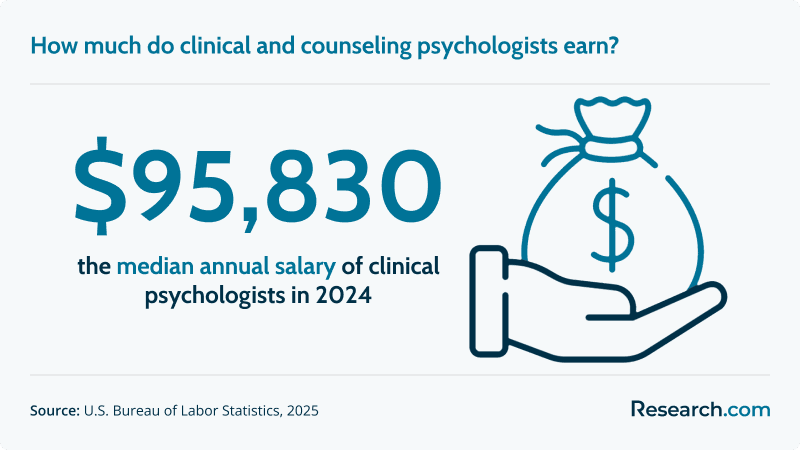
This is the bottom line for many people, and the data shows a clear and significant difference in earning potential. The median salary for master's-level counselors is approximately $59,190 per year. For doctorate-level clinical psychologists, that figure rises to a median of $95,830.
This salary gap isn't arbitrary. It's driven by the financial realities of the healthcare industry. Insurance companies and government programs like Medicare typically offer higher reimbursement rates for services provided by a licensed psychologist.
Furthermore, the ability to conduct and bill for psychological assessments provides a major source of revenue for those with a doctorate in clinical psychology that is not available to clinicians with a master's in clinical psychology. While salary varies greatly by location and work setting, this fundamental difference in billing and scope of practice is what creates the long-term gap in earning potential.
What is the job outlook for clinical psychology graduates?
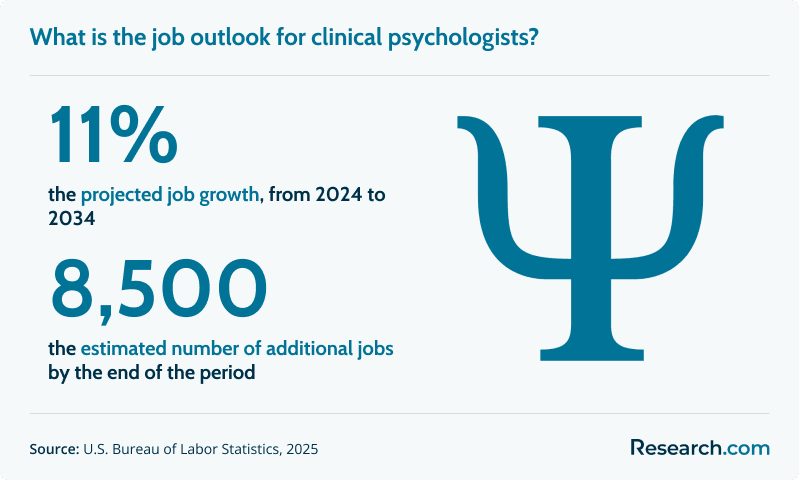
The job outlook for this field is strong, providing a secure foundation for either career path you choose. The U.S. Bureau of Labor Statistics projects that employment for clinical and counseling psychologists will grow by 11% over the next decade, which is much faster than the average for all occupations.
This robust growth is driven by the increasing societal demand for mental health services. However, a strong outlook doesn't mean that it's easy to get any job. Competition for the most desirable positions, particularly in major metropolitan areas, remains high.
The nature of the job market is also expanding. Growth is particularly strong in telehealth services, which offer greater flexibility for practitioners. Furthermore, a new and rapidly growing employment sector is emerging as corporations invest more in workplace mental health, creating new consulting and direct service roles for qualified graduates.
Can Supplementary Behavior Analysis Certification Enhance Your Clinical Psychology Career?
Integrating a behavior analysis certification with a clinical psychology degree can expand your practice and diversify your service offerings. This additional credential equips professionals to address behavioral challenges—particularly in areas such as autism spectrum disorders and developmental disabilities—while enhancing treatment plans with evidence-based interventions. Such dual expertise often results in broader clinical roles and improved earning potential. For professionals seeking cost-effective certification options, consider exploring the cheapest online BCBA programs.
What are the long-term career advancement opportunities for each degree?
Your long-term career path will look quite different depending on the degree you choose. For a clinician with a master's in clinical psychology, advancement typically means moving up the ladder within an organization. After gaining several years of experience, you can advance into roles like clinical supervisor, team lead, or an administrative director of a program or agency.
A doctorate in clinical psychology opens up a much wider range of advancement opportunities. You are qualified for all the same leadership roles, but the doctorate is often a prerequisite for the highest levels of executive leadership, such as directing an entire hospital department or a large clinical organization.
Beyond that, the doctorate allows for advancement into entirely different sectors. You can pursue a career in academia as a tenure-track professor, become a high-level consultant for corporations, or lead major research initiatives. For those with a doctorate, advancement can even mean blending disciplines through specialized psychology dual degree programs that combine clinical expertise with fields like law or public health.
Master's vs. Doctorate in Clinical Psychology: Which one is right for you?
After reviewing all the data, the right choice comes down to a clear-eyed assessment of your own goals, resources, and timeline. There is no single "best" path—only the path that is best for you. To find your answer, I encourage you to sit with these key questions:
- What professional identity do I want? Do I want to be a licensed counselor or therapist, focused on providing psychotherapy? Or is the title, scope of practice, and assessment-focus of a licensed psychologist my ultimate goal?
- What is my realistic timeline? Can I commit to a 5-7+ year immersive academic program, or does my life require a faster, 2-3 year path into the workforce?
- What are my financial realities? Am I in a position to pursue a funded PhD, or am I prepared to take on the significant debt associated with an unfunded master's or PsyD program?
- What is my academic and experiential profile? Does my background align more closely with the research-heavy requirements of a doctoral program or the experience-focused criteria of a master's program?
Answering these questions honestly will point you toward the degree that best fits your life.
A Look at Top Earning Potential
Finally, to give you a complete picture of the financial landscape, it's helpful to see where the highest salaries in the field are found. The data below shows the industries where clinical and counseling psychologists have the highest earning potential, reinforcing the long-term financial benefits of the doctoral path.
Here’s What Graduates Have to Say about Their Master's and Doctorate in Clinical Psychology Programs
- Dana: "I spent ten years in marketing before realizing I needed to do something more meaningful. The online master's program was the only way I could make the change without quitting my job right away. The curriculum was so focused; it gave me a direct path to the skills I needed for licensure. Now, I have a career that I'm truly passionate about, and I was able to build it on my own terms."
- Aubrey: "What surprised me most was how quickly I was able to apply what I was learning. The program wasn't just about theory; it was about evidence-based practice and tangible skills. During my internship, I was already using techniques from my coursework with clients, and my supervisor was impressed. I felt prepared for the real work of being a therapist from day one."
- Grace: "The doctorate was a huge investment of time, and I worried about that. But now, five years post-licensure, I see the payoff in the sheer number of doors that are open to me. I run a small private practice, consult for a local company, and supervise new clinicians. That level of professional autonomy is exactly what I was hoping to achieve."
Key Findings
- The significant salary difference, with a median of $95,830 for clinical psychologists versus $59,190 for counselors, forms the core of the return-on-investment calculation for prospective students.
- With a projected job growth of 11% for clinical and counseling psychologists, both degree paths lead to a secure career in a field with high and sustained demand for services.
- The choice between a 2-3 year master's degree and a 5-7+ year doctoral program represents a fundamental trade-off between speed to market and long-term career options.
- A master's degree is the most direct path to becoming a licensed counselor, while a doctorate is the only path to the legally protected title of "Psychologist" with the ability to conduct psychological testing.
- The growing need for care, highlighted by the fact that 22.8% of adults experience mental illness, validates the decision to enter the mental health field at either the master's or doctoral level.
- Annual tuition costs, ranging from a median of $8,356 for in-state programs to $37,700 for out-of-state, underscore the importance of considering a program's funding model to avoid significant long-term debt.
References:
- Data USA. (2025). Clinical psychology. Retrieved October 15, 2025, from Data USA.
- Data USA. (2025). Clinical, counseling, & applied psychology. Retrieved October 15, 2025, from Data USA.
- Mental Health America. (2025). Quick facts and statistics about mental health. Retrieved October 15, 2025, from MHA.
- National Alliance on Mental Illness. (2025). Mental health by the numbers. Retrieved October 15, 2025, from NAMI.
- U.S. Bureau of Labor Statistics. (2025). Occupational employment and wage statistics (OEWS) Profiles. Retrieved October 15, 2025, from BLS.
- U.S. Bureau of Labor Statistics. (2025). Psychologists. Retrieved October 15, 2025, from BLS.
Other Things You Should Know About Master's vs. Doctorate in Clinical Psychology Programs
Yes, you can earn a master's degree and then apply to a doctoral program later. However, it is important to know that this is not always the most efficient path. Many doctoral programs may not accept all of your master's-level credits, which could mean you have to repeat some coursework, extending your total time in school.
In 2027, a master's in clinical psychology typically requires a shorter internship for practical experience, often under a year. Conversely, a doctorate mandates a more extensive internship, usually a full year-long APA-accredited clinical internship, as part of its comprehensive training for licensure.
For 2027, a minimum GPA of 3.0 is typically required for admission into a master's program in clinical psychology, whereas a doctoral program often demands a higher minimum GPA, usually around 3.5, though specific requirements may vary by institution.


