
2027 Master's vs. Doctorate in Psychology: Explaining the Difference

Co-Founder and Chief Data Scientist
In 2023, 91% of workers in the psychology field held an advanced degree, highlighting the growing importance of higher education in shaping professional expertise and leadership (US BLS, 2025). Earning a master’s in psychology or a doctorate in psychology can open doors to specialized careers in counseling, research, academia, and organizational development, each requiring distinct levels of training, focus, and commitment.
In this guide, I will discuss the key differences between these degrees, from admission and curriculum to career outcomes and earning potential. I will also offer a clear view of which path best aligns with their goals in today’s evolving field of psychology.
Key Things You Should Know About Master's and Doctorate in Psychology
- A master’s in psychology offers applied training in human behavior, assessment, and research, preparing graduates for roles in counseling, consulting, and mental health services.
- A doctorate in psychology focuses on research, theory, and clinical expertise, leading to licensure, academic, and leadership positions.
- Both paths require commitment and careful consideration of time, cost, and career goals to choose the best fit.
- What is the difference between a master’s degree and a doctorate in psychology? Master's vs. Doctorate
- How do master’s and doctorate psychology programs compare in curriculum and focus? Main Similarities
- How long does it take to complete a master’s vs. a doctorate in psychology? Program Length
- Can master’s or doctorate programs be completed faster through accelerated or online formats? Can master’s or doctorate programs be completed faster through accelerated or online formats?
- Can master’s degree credits transfer toward a doctorate in psychology? Credit Transfer
- What career opportunities are available with a master’s vs. a doctorate in psychology? Career Opportunities
- How do salaries differ for graduates with a master’s versus a doctorate in psychology? Salary Difference
- What are the admission requirements for master’s vs. doctorate psychology programs? Admission Requirements
- Can you pursue a doctorate in psychology without a master's degree? Can you pursue a doctorate in psychology without a master's degree?
- What financial aid or scholarships are available for master’s and doctorate programs in psychology? Financial Aid
- How do accreditation and licensure standards influence program quality and career opportunity? How do accreditation and licensure standards influence program quality and career opportunity?
Master’s Degree vs. Doctorate in Psychology: Which Path Fits Your Career Goal?
Choosing between a master’s degree and a doctorate in psychology is not just an academic decision. It determines how long you will study, how much training you will complete, whether you can practice independently, what kinds of roles you can pursue, and how much debt you may take on before entering the field. For 2026 planning, the right choice depends on one central question: do you want to work in applied psychology roles sooner, or do you need doctoral-level authority for independent clinical practice, advanced research, teaching, or specialization?
This guide compares master’s and doctoral psychology programs by curriculum, timeline, admissions, transfer credits, online and accelerated options, career outcomes, salary differences, accreditation, licensure, and financial aid. It is designed for students deciding whether to stop at the master’s level, continue to a doctorate, or apply directly to a doctoral program after earning a bachelor’s degree.
Quick Answer: Master’s vs. Doctorate in Psychology
A master’s in psychology is usually the better fit if you want a shorter graduate path, applied training, and access to supervised counseling, research support, organizational, education, or community-based roles. A doctorate in psychology is usually required if your goal is independent clinical practice as a psychologist, university-level teaching, advanced research leadership, or a highly specialized field such as neuropsychology or forensic psychology.
| Decision Factor | Master’s in Psychology | Doctorate in Psychology |
| Best for | Students seeking applied roles, supervised practice, or a stepping stone to doctoral study | Students pursuing independent practice, research, academia, or advanced specialization |
| Typical length | Two to three years, depending on format and fieldwork | Five to seven years, depending on dissertation, internship, and specialization |
| Training focus | Applied skills, counseling foundations, assessment, research basics, practicum | Original research, advanced theory, specialization, clinical internship, dissertation |
| Practice authority | Often requires supervision and may depend on state licensure rules | Can support independent psychologist licensure when the program meets state requirements |
| Common next step | Enter the workforce, pursue licensure where eligible, or apply to doctoral programs | Licensure, postdoctoral training when required, faculty roles, research leadership, or independent practice |
What a Master’s in Psychology Prepares You to Do
A master’s in psychology provides graduate-level training in human behavior, research methods, assessment, ethics, and applied practice. It can lead to professional roles in mental health support, counseling-related settings, schools, human resources, research teams, nonprofits, and community agencies. In many clinical or counseling roles, graduates work under supervision or pursue a state-specific license tied to their degree area.
- Master’s in Clinical Psychology: Builds skills in assessment, treatment planning, and supervised therapeutic work in settings such as clinics, hospitals, and counseling centers. Students considering a flexible route can compare whether a clinical psychology degree online meets the same practicum and academic expectations required by their state or employer.
- Master’s in Counseling Psychology: Emphasizes helping individuals manage emotional, relational, behavioral, and life-adjustment concerns through counseling techniques and supervised practice.
- Master’s in Industrial-Organizational Psychology: Applies psychology to workplace performance, hiring, leadership, employee engagement, training, and organizational change.
What a Doctorate in Psychology Prepares You to Do
A doctorate is the highest academic credential in psychology and is the standard route for many advanced professional goals. Doctoral programs train students to conduct original research, apply advanced psychological theory, complete intensive practicum or internship experiences, and develop expertise in a defined area of psychology. Graduates may pursue psychologist licensure, university teaching, independent clinical practice, research leadership, consulting, or program administration.
- Ph.D. in Psychology: Focuses heavily on research design, theory, statistics, publication, and scholarly contribution. It is commonly chosen by students interested in academia, research, or scientist-practitioner roles.
- Psy.D.: Places stronger emphasis on clinical training and direct service, making it a common option for students who want to provide psychological assessment and therapy as licensed practitioners.
- Doctorate in Neuropsychology: Combines psychology and neuroscience to evaluate brain-behavior relationships, cognitive functioning, injury-related changes, and neurological or developmental conditions.
How Do Master’s and Doctorate Psychology Programs Compare in Curriculum and Focus?
Master’s and doctoral psychology programs differ because they are built for different professional outcomes. Master’s programs are usually structured around applied competence, supervised experience, and preparation for practice-adjacent or mid-level roles. Doctoral programs go deeper into research, specialization, assessment, theory, and independent professional judgment.
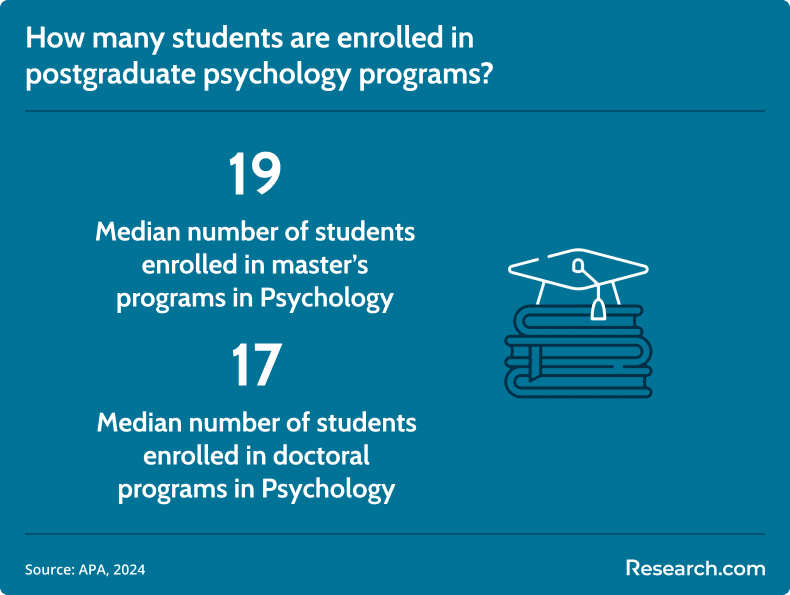
In 2023 to 2024, master’s psychology programs reported a median enrollment of 19 students per program, while doctoral-level programs reported 17 students per program. Smaller doctoral cohorts can support intensive mentoring, faculty research alignment, and specialization, which is one reason applicants often compare top psychology doctoral programs carefully before applying.
| Program Component | Master’s Degree | Doctorate | Why It Matters |
| Coursework | Counseling skills, ethics, assessment basics, research methods, lifespan development, applied psychology | Advanced theory, statistics, diagnostics, research design, specialization seminars, supervision, teaching preparation | The master’s route builds practical foundations; the doctorate develops independent expertise. |
| Field experience | Practicum or supervised placement focused on skill development | Extended practicum, internship, and often postdoctoral preparation depending on licensure goals | Clinical authority depends heavily on supervised hours and state rules. |
| Final requirement | Capstone, thesis, comprehensive exam, or applied project | Dissertation based on original research | A doctorate requires creating new knowledge, not only applying existing research. |
| Training breadth | Often broad and applied, with limited specialization | Specialized training in areas such as clinical, counseling, forensic, health, school, or neuropsychology | Specialization can affect internship options, licensure eligibility, and career direction. |
| Professional role | Supervised practitioner, research assistant, program coordinator, counselor-related role, organizational specialist | Licensed psychologist, researcher, professor, clinical director, advanced consultant | The degree level shapes autonomy and career ceiling. |
- Applied coursework vs. theoretical depth: Master’s students focus more on counseling methods, assessment foundations, ethics, and intervention skills. Doctoral students spend more time with theory development, advanced statistics, research methodology, and specialized psychological science.
- Practicum vs. internship: Master’s practicums introduce supervised client or field experience. Doctoral internships are longer, more intensive, and tied to advanced assessment, diagnosis, treatment planning, and professional readiness.
- Capstone vs. dissertation: A master’s program may end with a capstone, thesis, or exam. A doctorate usually requires a dissertation that makes an original contribution to psychology.
- Generalist vs. specialist preparation: Master’s programs often prepare students for broader applied roles, while doctoral study supports deep expertise in fields such as neuropsychology, forensic psychology, health psychology, clinical psychology, or counseling psychology.
- Course load and duration: Master’s degrees typically take two years and focus on foundational and applied learning. Doctoral programs span five to seven years and combine coursework, research, teaching, clinical training, and dissertation work.
- Mentorship and teaching: Master’s students usually receive professional and academic supervision. Doctoral students may also teach, mentor undergraduates, join faculty research labs, and prepare for academic or leadership responsibilities.
How Long Does It Take to Complete a Master’s vs. a Doctorate in Psychology?
Program length is one of the clearest differences between the two paths. A master’s degree is usually the faster option and can often be completed while working, especially through masters in psychology online programs. These programs typically take two to three years and combine coursework with research foundations, applied assignments, and supervised field experience.
Doctoral programs require a much longer commitment because they include advanced coursework, original research, clinical or applied training, comprehensive exams, dissertation work, and often internship requirements. In 2024, 3,951 students earned research doctorates in psychology, compared with 3,779 in 2023, showing continued interest in advanced scholarly preparation.
| Path | Common Timeline | Typical Structure | Best Fit |
| Full-time master’s | Two-Year Program | Concentrated coursework, practicum or applied project, possible thesis | Students who can study full time and want to enter the workforce sooner |
| Extended master’s | Three-Year Program | Includes internship, thesis, capstone, or additional supervised training | Students who need more field experience or are balancing other responsibilities |
| Part-time master’s | Longer than the standard timeline | Reduced course load across additional terms | Working adults who need flexibility |
| Standard doctorate | Five-Year Program | Coursework, research, dissertation development, practicum, and internship planning | Students prepared for full-time doctoral study and research expectations |
| Extended doctorate | Seven-Year Program | More time for specialization, clinical training, dissertation completion, and internships | Students in intensive clinical or research-heavy programs |
| Accelerated or combined route | Varies by institution | Condensed coursework or joint Master’s/Doctorate Program sequencing | Students with strong preparation who can handle a demanding pace |
Master’s Program Duration
- Two-Year Program: Built for full-time learners who can complete a focused sequence of graduate courses and required fieldwork.
- Three-Year Program: Often includes additional internship, thesis, practicum, or capstone expectations.
- Part-Time Program: Allows working professionals to take fewer courses per term, extending the overall timeline.
Doctorate Program Duration
- Five-Year Program: Combines advanced coursework, research training, dissertation planning, and professional preparation.
- Seven-Year Program: Allows more time for specialized research, clinical training, dissertation completion, and internship requirements.
- Accelerated Track: Compresses requirements into a shorter schedule, usually for students who can manage intensive study and research demands.
- Joint Master’s/Doctorate Program: Integrates master’s-level and doctoral-level requirements to reduce duplication while preserving doctoral standards.
This chart from the National Center for Science and Engineering Statistics presents the number of Research Doctorate recipients in Psychology from 2021 to 2024.
Can Master’s or Doctorate Programs Be Completed Faster Through Accelerated or Online Formats?
Yes, but the amount of time saved depends on the degree level and whether the program includes clinical, research, internship, or licensure requirements. Master’s programs usually offer the most scheduling flexibility. Some online or accelerated options can be completed in as little as 18 months, especially when the program is coursework-focused and the student enrolls full time.
Doctoral programs are harder to accelerate because dissertation research, practicum, internship, and faculty supervision take time. Even when a Psy.D. or online PhD psychology program offers online coursework, students may still need in-person residencies, local clinical placements, lab participation, or supervised field experiences. Hybrid formats can improve access, but they do not eliminate the professional training requirements tied to doctoral psychology.
| Format | Potential Advantage | Possible Limitation | Best Question to Ask |
| Online master’s | Flexible scheduling and access for working adults | Field placements may still require local, in-person supervision | Does the program help students secure practicum sites? |
| Accelerated master’s | May shorten time to graduation | Heavier course loads can be difficult while working full time | Can I realistically manage the pace without weakening my performance? |
| Hybrid doctorate | Online coursework with some in-person training | Residencies, internships, and dissertation work still require major time investment | How are clinical hours, research mentoring, and internship preparation handled? |
| Online doctorate | May reduce relocation barriers | Not every online format aligns with every state licensure requirement | Will this program meet licensure expectations in the state where I plan to practice? |
Can Master’s Degree Credits Transfer Toward a Doctorate in Psychology?
Often, yes. However, transfer credit is never automatic. Doctoral programs review whether prior graduate courses came from an accredited institution, match doctoral curriculum requirements, meet minimum grade standards, and align with the student’s specialization. Transferring credits can reduce repeated coursework, lower total cost, and shorten the overall path, but each program sets its own policy.
Between 2023 and 2024, doctoral psychology programs reported the highest enrollment in clinical psychology (30%) and counseling psychology (27%). These fields often attract students who first complete a master’s degree and later continue into doctoral study. Students comparing the fastest online counseling psychology degree options should confirm whether accelerated credits are graduate-level, accredited, and acceptable to future doctoral programs.
Some doctoral programs may accept up to 30 transfer credits, while others require students to complete all required coursework in residence. The safest approach is to ask for a written transfer evaluation before enrolling, especially if your long-term goal is a doctorate.
| Credit or Experience | Transfer Potential | What Doctoral Programs Usually Check |
| Research Methodology Credits | May replace introductory doctoral research design courses | Course rigor, syllabus, instructor qualifications, and grade earned |
| Statistics Coursework | May count toward quantitative methods requirements | Coverage of graduate-level analysis, software, and research applications |
| Core Psychology Theory Courses | May satisfy foundational requirements | Alignment with cognitive, developmental, social, biological, or clinical content |
| Ethics in Psychology Credits | Often considered because ethical standards overlap across programs | Coverage of professional ethics, legal issues, and field-specific standards |
| Practicum Hours | May be reviewed but are not always accepted toward doctoral clinical requirements | Supervision quality, setting, documentation, and state or accreditation expectations |
| Thesis Work | May strengthen doctoral research preparation | Research design, methodology, faculty supervision, and relevance to future dissertation goals |
| Specialization Electives | May transfer when closely connected to the doctoral concentration | Content match with the doctoral program’s required specialization sequence |
This chart from APA illustrates the average enrollment at the doctorate level from 2023 to 2024.
What Career Opportunities Are Available With a Master’s vs. a Doctorate in Psychology?
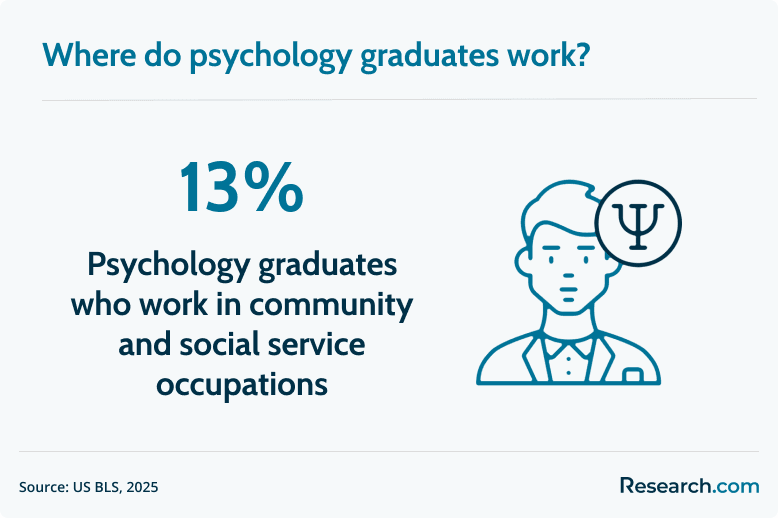
The degree you choose affects both job type and professional independence. A master’s degree can lead to applied roles in counseling-related services, schools, community programs, research support, human resources, and organizational consulting. A doctorate opens the door to psychologist licensure pathways, advanced assessment, independent clinical work, research leadership, faculty positions, and specialized practice. Across psychology graduates, 13% work in community and social service roles.
Before choosing a degree, look at the job title you want and work backward. Some roles require a specific license, supervised hours, internship structure, doctoral accreditation, or state credential. Others value psychology training but do not require psychologist licensure.
| Career Goal | Typical Degree Fit | Role Description | Important Caution |
| Mental Health Counselor | Master’s | Supports clients with emotional, behavioral, stress-related, or relationship concerns using supervised or licensed counseling approaches | Licensure rules vary by state and may require a counseling-specific degree |
| Human Resources or Organizational Consultant | Master’s | Applies psychological principles to hiring, leadership, team performance, training, and workplace culture | Business, analytics, and consulting experience may be as important as the degree |
| School or Educational Psychology Role | Master’s or doctorate, depending on state and position | Supports student learning, assessment, intervention, and school-based services | State education credentials may be required |
| Rehabilitation Specialist | Master’s | Helps individuals adapt after illness, disability, injury, trauma, or major life changes | Some positions require counseling, rehabilitation, or social service licensure |
| Market Research Analyst | Master’s | Uses behavioral data and consumer insights to guide marketing and product decisions | Data analysis and business tools can be essential for competitiveness |
| Clinical Psychologist | Doctorate | Provides psychological assessment, diagnosis, therapy, and treatment planning for complex mental health needs | Independent practice generally requires doctoral training and state licensure |
| Forensic Psychologist | Doctorate | Applies psychological expertise to legal cases, evaluations, risk assessment, and expert testimony | Specialized training and experience in legal settings are important |
| Research Psychologist | Doctorate | Designs and leads studies that advance knowledge of behavior, cognition, development, or mental health | Research productivity, publications, and grant experience affect advancement |
| Neuropsychologist | Doctorate | Assesses brain-behavior relationships and cognitive functioning in clinical or medical settings | Advanced specialization and supervised training are typically expected |
| University Faculty or Department Chair | Doctorate | Teaches, mentors students, publishes research, and leads academic programs | Tenure-track roles are competitive and research expectations vary by institution |
Students who want a clearer picture of work environments can review where therapists work, including clinics, hospitals, schools, nonprofits, private practices, correctional settings, and corporate organizations.
How Do Salaries Differ for Graduates With a Master’s Versus a Doctorate in Psychology?
Salary differences often reflect role level, licensure, specialization, employer type, geographic market, and years of experience. According to the US BLS (2025), workers with a master’s degree earn an average weekly salary of $1,840, while workers with a doctoral degree earn about $2,278 per week. This does not mean every psychology graduate will earn those amounts, but it does show the broader earnings premium associated with higher educational attainment.
Master’s-level psychology graduates may find strong opportunities in counseling-related services, school and community programs, organizational psychology, workforce development, and research support. Doctoral-level professionals may qualify for higher-paying roles because they can pursue independent practice, advanced assessment, research leadership, university teaching, and specialized services.
Specialty choice matters. For example, the average salary of a forensic psychologist can serve as a useful comparison point for students considering advanced practice in law-related psychological evaluation. However, salary should not be viewed in isolation. A longer doctoral path may increase future earning potential, but it can also delay full-time income and increase borrowing.
| Financial Factor | Master’s Path | Doctoral Path |
| Time before full-time work | Usually shorter | Usually longer because of coursework, internship, and dissertation requirements |
| Borrowing risk | Can be lower, depending on tuition and aid | Can be higher because of program length, although assistantships may offset costs |
| Income ceiling | May be limited for roles requiring independent psychologist licensure | Often higher for licensed, specialized, academic, or leadership roles |
| ROI question | Will the degree qualify me for the job I want without needing a doctorate? | Will the higher credential justify the additional years, cost, and opportunity cost? |
What Are the Admission Requirements for Master’s vs. Doctorate Psychology Programs?
Both master’s and doctoral programs evaluate academic readiness, professional purpose, and fit with the program. Doctoral admissions are typically more selective because faculty mentorship, research match, clinical placements, and funding availability can limit cohort size. According to APA (2024), in the 2023 to 2024 academic year, master’s degree programs received a median of 50 applications per program, while doctorate programs received a median of 61 applications.
Master’s in Psychology Admission Requirements
Master’s admissions committees usually want evidence that applicants can succeed in graduate-level psychology coursework and apply psychological concepts responsibly in professional settings.
- Bachelor’s Degree in Psychology or a Related Field: Many programs prefer applicants with undergraduate coursework in psychology, sociology, neuroscience, human development, statistics, or research methods.
- Minimum GPA of 3.0: A 3.0 GPA is a common benchmark, though more selective programs may prefer stronger academic records, especially in psychology and research courses.
- GRE Scores: Some programs remain test-optional, while others use GRE results to evaluate writing, quantitative reasoning, and verbal reasoning.
- Personal Statement: Applicants usually explain their career goals, relevant experience, interest in the program, and readiness for graduate training.
- Letters of Recommendation: Programs commonly request two to three letters from faculty, supervisors, or mentors who can speak to academic ability, professionalism, and interpersonal strengths.
- Research or Internship Experience: Experience in labs, clinics, schools, nonprofits, counseling-related settings, or behavioral research can strengthen an application.
Doctorate in Psychology Admission Requirements
Doctoral admissions focus more heavily on research potential, faculty fit, academic strength, and long-term professional direction. Applicants must show they are ready for several years of intensive scholarship, clinical or applied training, and independent work.
- Academic Background: Applicants may enter with a bachelor’s or master’s degree in psychology or a closely related field, depending on the program.
- Minimum GPA of 3.5 or Higher: Many competitive doctoral programs expect stronger grades than master’s programs, particularly in statistics, research methods, and upper-level psychology courses.
- Substantial Research Experience: Lab work, data analysis, conference presentations, publications, or thesis experience can be especially valuable for Ph.D. applicants.
- Statement of Research Interests: Applicants often need to describe their research questions, theoretical interests, methodology background, and potential faculty mentors.
- GRE Scores: Requirements vary, with some programs test-optional and others still requesting the GRE General Test or Psychology Subject Test.
- Personal Statement: This essay usually connects academic preparation, professional goals, ethical maturity, and reasons for choosing the specific program.
- Letters of Recommendation: Doctoral programs often request three letters, ideally from professors or research supervisors who can assess scholarly potential.
- Interview or Research Proposal: Many programs interview finalists or request additional research materials to evaluate fit, communication, and readiness.
Students interested in school-based practice should also review state credential expectations. For example, some roles may involve requirements comparable to the PPS credential California pathway for pupil personnel services roles in educational settings.
Can You Pursue a Doctorate in Psychology Without a Master’s Degree?
Yes. Many doctoral psychology programs accept applicants directly from a bachelor’s degree program. These direct-entry doctoral tracks typically fold master’s-level coursework into the doctoral curriculum, allowing students to progress toward the Ph.D. or Psy.D. without first completing a separate master’s program.
This path can be efficient, but it is demanding. Applicants need strong grades, research or field experience, clear goals, and a strong match with faculty or clinical training resources. Students who are unsure about their specialization, licensure goals, or interest in research may benefit from completing a master’s degree first before committing to a long doctoral program.
| Path | When It Makes Sense | When It May Be Risky |
| Doctorate without master’s | You have strong undergraduate preparation, research experience, and a clear doctoral goal | You are unsure whether you want clinical practice, research, counseling, industry, or school-based work |
| Master’s first, doctorate later | You want to build credentials, clarify your specialization, improve your application, or enter the workforce sooner | Credits may not fully transfer, and total time may be longer if programs do not recognize prior coursework |
| Terminal master’s only | Your target roles do not require doctoral training or psychologist licensure | You may later discover that advancement requires a doctorate |
- Direct-Entry Doctoral Programs: Admit bachelor’s degree holders and include master’s-level content within the doctoral sequence.
- Strong Academic Preparation: Competitive applicants usually perform well in psychology, statistics, and research-based coursework.
- Research Experience: Undergraduate lab work, thesis projects, or data analysis experience can demonstrate doctoral readiness.
- Clinical or Internship Experience: Supervised exposure to applied settings can help clarify whether doctoral clinical training is the right path.
- Letters of Recommendation: Faculty who know your academic and research abilities can provide stronger support than general character references.
- Clear Research Focus: A defined area of interest helps applicants identify programs and mentors that fit their goals.
- Professional Development: Workshops, assistantships, certifications, or relevant volunteer experience can show initiative and preparation.
Students comparing flexible education models in other fields face similar trade-offs. For example, evaluating Capella vs WGU RN to BSN programs also requires looking beyond convenience to accreditation, outcomes, transfer policies, and career fit.
What Financial Aid or Scholarships Are Available for Master’s and Doctorate Programs in Psychology?
Graduate psychology students often combine several funding sources: scholarships, assistantships, fellowships, employer support, grants, and loans. The right strategy depends on degree level. Master’s students may have fewer assistantship opportunities than doctoral students, while doctoral students may have access to teaching or research funding but face a longer time in school.
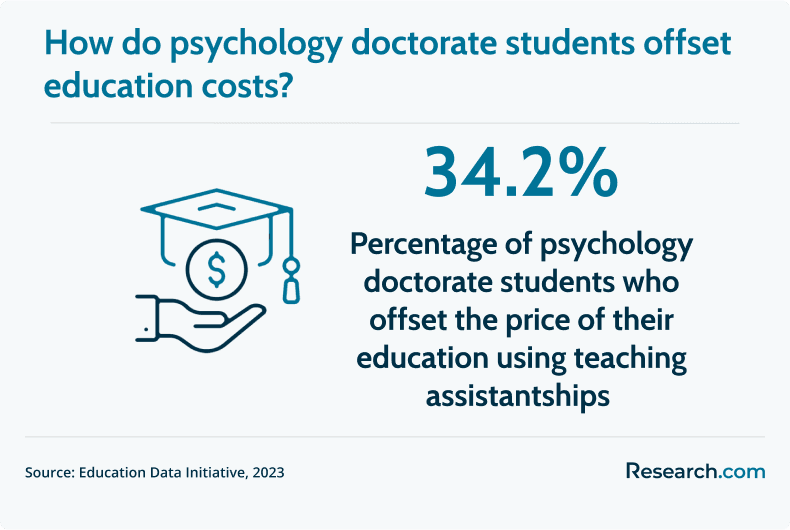
Recent data show that individuals with a master’s degree carry an average student loan debt of $46,798, while average doctoral debt across all racial groups is $63,557. For psychology doctoral students, 34.2% offset expenses through teaching assistantships, which may include stipends and tuition waivers (Education Data Initiative, 2023).
Students should search broadly and verify deadlines early. The APA scholarship search page lists psychology-related awards for graduate and undergraduate students. The U.S. Department of Labor’s scholarship search tool can also help identify need-based, merit-based, state, local, and field-specific funding.
| Funding Option | How It Helps | Best For |
| Graduate Assistantships | May provide stipends and tuition waivers in exchange for teaching, grading, or research work | Doctoral students and some master’s students at research universities |
| University Scholarships | Reduce tuition through merit-based, need-based, or department-based awards | Students with strong academic records or financial need |
| Federal Student Loans | Help pay tuition, fees, books, and living expenses | Students who need financing after scholarships and grants |
| Research Fellowships | Support dissertation work, independent research, or specialized study | Doctoral students with defined research agendas |
| Professional Association Grants | Provide funding through psychology organizations, regional associations, or specialty groups | Students aligned with a specific research area or professional community |
| State and Local Scholarships | Support residents pursuing behavioral science, counseling, education, or public service careers | Students planning to work in local communities or high-need settings |
| Employer Tuition Reimbursement | Allows working professionals to use workplace education benefits | Students employed in healthcare, education, government, nonprofits, or human resources |
How Do Accreditation and Licensure Standards Influence Program Quality and Career Opportunity?
Accreditation and licensure alignment are among the most important factors in choosing a psychology graduate program. A program can look appealing because it is affordable, online, or fast, but if it does not meet the standards required for your intended license or career path, it may limit your options after graduation.
Accreditation means a school or program has been reviewed against recognized academic and professional standards. Licensure alignment means the curriculum, supervised hours, internship structure, and degree title match the requirements of the state where you plan to work. These are separate issues, and students should check both.
For students considering behavior analysis or related specialization, affordability should be evaluated alongside credential alignment. Comparing options such as the cheapest online board certified behavior analyst programs can be useful, but only if the program supports the required supervised experience and exam preparation for the credential being pursued.
| What to Verify | Why It Matters | Who to Ask |
| Institutional accreditation | Affects financial aid eligibility, transfer credits, employer recognition, and graduate school acceptance | Admissions office, accreditor database, registrar |
| Programmatic accreditation | May be required or preferred for doctoral licensure, internships, or certain employers | Program director, licensing board, professional association |
| State licensure alignment | Determines whether the degree can lead to the license you want in your state | State psychology, counseling, school psychology, or behavior analyst board |
| Practicum and internship support | Clinical and counseling careers depend on documented supervised experience | Field placement office, current students, program handbook |
| Transfer credit policy | Can affect total cost and time if you move from master’s to doctorate | Graduate advisor, doctoral program coordinator |
Is a Master’s or Doctorate in Psychology Worth It?
A psychology graduate degree is worth it when it is required for your target role, aligns with licensure rules, fits your financial situation, and gives you access to the training experiences you need. A master’s may offer a faster and less expensive route into applied work. A doctorate may be worth the longer investment if your goals require independent practice, advanced assessment, research authority, university teaching, or specialized clinical leadership.
- Choose a master’s if: You want to enter the workforce sooner, pursue supervised counseling or applied roles, work in organizational settings, strengthen your doctoral application, or avoid the time commitment of a doctorate.
- Choose a doctorate if: You want to become a licensed psychologist, conduct independent research, teach at the university level, specialize deeply, or lead clinical, academic, or research programs.
- Consider another path if: Your main goal is licensed counseling, social work, school counseling, human resources, or data analytics, because another degree may lead more directly to the career you want.
Common Mistakes When Choosing Between a Master’s and Doctorate in Psychology
| Mistake | Why It Can Hurt You | Better Approach |
| Choosing a program before checking licensure rules | You may graduate with a degree that does not meet requirements in your state | Contact the state licensing board before applying |
| Assuming every psychology master’s leads to counseling licensure | Some psychology degrees are research-focused and not designed for counseling licensure | Confirm the exact license the program prepares students to pursue |
| Focusing only on tuition | Low tuition may not mean lower total cost if placement, travel, fees, or delayed graduation add expenses | Compare total cost, aid, assistantships, completion time, and placement support |
| Ignoring transfer credit limits | A master’s may not shorten a doctorate if credits are not accepted | Request transfer policies in writing from doctoral programs |
| Relying only on rankings | A highly ranked program may not match your research interests, state license needs, or schedule | Evaluate faculty fit, accreditation, outcomes, funding, and field placements |
| Assuming salary outcomes are guaranteed | Earnings depend on location, license, specialty, employer, and experience | Use salary data as a planning tool, not a promise |
| Choosing online study without checking in-person requirements | Clinical programs may still require practicum, internship, residencies, or local supervision | Ask how placements are approved and supported in your area |
How to Choose the Right Psychology Graduate Path
- Start with the exact job title you want. Identify whether the role requires a master’s, doctorate, state license, certification, internship, or supervised hours.
- Check your state’s rules. Licensure requirements vary, so confirm degree type, accreditation, coursework, supervised hours, and exam expectations before enrolling.
- Compare total cost, not just tuition. Include fees, travel, lost wages, books, residency requirements, internship expenses, and interest on loans.
- Ask about outcomes. Request information on graduation rates, internship match support, licensure exam preparation, employment settings, and alumni roles.
- Evaluate faculty and specialization fit. This is especially important for doctoral programs, where mentorship and research alignment can shape your training experience.
- Review field placement support. Online and hybrid programs should clearly explain how practicum or internship sites are approved and supervised.
- Plan for the next credential. If you may pursue a doctorate later, choose a master’s program with strong accreditation, research training, and transferable coursework.
What Graduates Say About Their Master’s and Doctorate in Psychology
- Achi: "My master’s program helped me turn an interest in helping people into practical skills I could use in real clinical environments. The mix of theory, supervision, and applied learning gave me a clearer professional direction."
- Deana: "Doctoral study pushed me harder than any academic experience before it, but it also gave me the chance to specialize, conduct meaningful research, and move into leadership opportunities I had not expected."
- Arria: "The master’s degree gave me a stronger understanding of behavior and a more confident approach to working with people. The most valuable part was connecting classroom learning to real-world practice."
Key Insights
- A master’s in psychology is usually the faster route. It typically takes two to three years and can lead to applied, supervised, research support, education, organizational, or community-based roles.
- A doctorate is the stronger fit for independent psychology practice and advanced specialization. Doctoral programs typically take five to seven years and include dissertation research, advanced clinical or research training, and internship requirements.
- Licensure should guide your decision. Before choosing any program, confirm whether the degree meets state requirements for the role and location where you want to work.
- Online and accelerated formats can help, but they do not remove clinical requirements. Practicum, internship, residency, and supervision expectations may still be in person.
- Transfer credits can reduce time and cost, but policies vary widely. Some programs may accept up to 30 transfer credits, while others require all doctoral coursework in residence.
- Doctoral study may increase earning potential, but it also adds time and financial risk. US BLS (2025) reports average weekly earnings of $1,840 for master’s degree holders and $2,278 for doctoral degree holders, but individual outcomes depend on specialization, license, employer, and location.
- The best choice is the one that matches the career outcome, not the highest credential by default. If your goal does not require a doctorate, a well-chosen master’s may offer a more efficient path.
References:
- APA (2024). Graduate Education Data Tool: Applications, Acceptances, and Enrollments. Retrieved from https://www.apa.org/education-career/grad/survey-data/graduate-education-data-tools
- Education Data Initiative (2023). Average Cost of a Doctorate Degree. Retrieved from https://educationdata.org/average-cost-of-a-doctorate-degree
- National Center for Science and Engineering Statistics (2024). Research doctorate recipients, by detailed field of doctorate: 2021–24. Retrieved from https://ncses.nsf.gov/surveys/earned-doctorates/2024#data
- US BLS (2025). Employment Projections. Retrieved from https://www.bls.gov/emp/chart-unemployment-earnings-education.htm
- US BLS (2025). Field of Degree: Psychology. Retrieved from https://www.bls.gov/ooh/field-of-degree/psychology/psychology-field-of-degree.htm
- US BLS (2025). Education and earnings reference chart. Retrieved from https://www.bls.gov/emp/chart-unemployment-earnings-education.htm
Other Things You Should Know About Master's and Doctorate in Psychology
In 2027, master's degree holders typically access roles like mental health counselor, while doctorate recipients qualify for clinical psychologist positions. Doctorate degrees offer broader research and academia prospects, aligning with more advanced clinical job opportunities compared to master's credentials.
A master's in psychology typically requires a thesis as partial fulfillment of the degree, often around 40-60 pages. A doctorate requires a more extensive dissertation, often exceeding 100 pages, and involves original research contributing new knowledge to the field.


